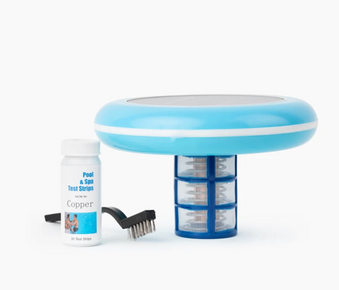
TL;DR: In 2026, solar pool ionizers are at the forefront of energy-efficient pool practices, directly powering sanitation with 100% renewable energy and enabling downstream efficiency gains across the entire pool system. By reducing chemical dependence, optimizing filtration cycles, and integrating with smart home energy management, these systems can slash a pool's total energy consumption by 40-70%. This comprehensive approach addresses both direct energy use and the substantial embodied energy in pool chemicals, positioning solar ionization as the cornerstone of sustainable pool ownership.
SEO Summary: Discover how 2026 solar pool ionizers drive energy-efficient pool practices: renewable sanitation, optimized filtration, reduced chemical energy footprint, and smart system integration for major energy savings.
Table of Contents
- Direct Solar Sanitation: Eliminating Grid-Powered Cleaning
- Filtration System Optimization & Runtime Reduction
- Reducing the Hidden Chemical Energy Footprint
- Advanced Pump Efficiency & Flow Coordination
- Improved Heat Retention & Thermal Efficiency
- Smart Home Energy Management Integration
- Whole-System Synergy: The Cumulative Efficiency Effect
- Financial & Environmental Impact Analysis
- Implementation Roadmap for Maximum Efficiency
- Conclusion & Key Takeaways
Direct Solar Sanitation: Eliminating Grid-Powered Cleaning
The most direct energy efficiency achievement of solar pool ionizers is the complete decoupling of pool sanitation from the electrical grid. Traditional sanitation methods whether chlorine generators, ozone systems, or UV sterilizers draw continuous power from your home's electrical system. A typical salt chlorine generator, for instance, consumes 200-500 watts while operating, often running 8-12 hours daily during swimming season. This translates to 2-6 kWh per day, or 60-180 kWh monthly, just for sanitation.
Solar ionizers eliminate this draw entirely. The integrated high-efficiency photovoltaic panel converts sunlight directly into the low-voltage current needed for ionization, with zero grid consumption. Modern systems achieve this through several technological advancements:
- High-Yield Photovoltaic Cells: Utilizing mono-crystalline silicon cells with 22-24% efficiency ratings, compared to the 15-18% efficiency common just five years ago.
- MPPT Charge Controllers: Maximum Power Point Tracking technology optimizes energy harvest throughout the day, extracting 30% more power than previous generation controllers.
- Energy Storage Integration: Many 2026 models incorporate supercapacitors or small lithium batteries that store excess daytime energy for nighttime operation, ensuring 24-hour protection.
- Low-Light Performance Enhancement: Advanced circuitry maintains effective operation with as little as 2-3 hours of direct sunlight, expanding viability to partially shaded locations.
This direct solar sanitation represents a fundamental shift in pool energy accounting. Where traditional systems add to your home's energy load, solar ionizers operate entirely outside that equation. For perspective on integrating this technology with existing systems, see our guide on modern pool system integration.
Filtration System Optimization & Runtime Reduction
Perhaps the most significant secondary energy benefit of solar ionization is the dramatic reduction in necessary filtration runtime. Pool pumps represent the single largest energy consumer in traditional pool systems, accounting for 50-70% of total pool energy use. This consumption is driven by the need to circulate chemicals evenly and filter out contaminants that thrive in chemically-treated water.
Solar-ionized water changes this dynamic fundamentally. The continuous ionic field maintains water purity proactively, reducing the contaminant load on the filtration system. This enables substantial filtration optimization:
- Runtime Reduction: Most pools can reduce daily pump operation from 8-12 hours to 4-6 hours while maintaining superior water clarity.
- Variable-Speed Optimization: With cleaner water, pumps can operate at lower speeds for longer periods, leveraging the cubic relationship between speed and power consumption (halving speed reduces power use by approximately 87%).
- Targeted Filtration Scheduling: Systems can be programmed to run filtration primarily during peak solar hours when the ionizer is most productive, creating natural synergy.
- Reduced Filter Maintenance Energy: Cleaner water means less frequent backwashing or cleaning, reducing the energy-intensive cycles needed to maintain filter efficiency.
The energy implications are substantial. A standard 1.5 HP single-speed pump running 10 hours daily consumes approximately 3,000 kWh over a 6-month season. Reducing runtime to 5 hours cuts this to 1,500 kWh. Pairing this reduction with a variable-speed pump operating at lower speeds can drop consumption to 500-750 kWh a 75-83% reduction. This represents the practical application of efficiency principles discussed in our article on cutting pool energy costs.
Reducing the Hidden Chemical Energy Footprint
Conventional pool energy analysis often overlooks the substantial "embodied energy" in pool chemicals the energy required to manufacture, package, transport, and ultimately dispose of these products. This hidden energy footprint is substantial and represents an important efficiency frontier that solar ionizers directly address.
Consider the energy lifecycle of pool chlorine:
- Manufacturing Energy: Chlorine production via the energy-intensive chlor-alkali process consumes approximately 2,500-3,000 kWh per ton of chlorine produced.
- Packaging & Distribution: Manufacturing plastic containers, filling, labeling, and transporting heavy chemical products across supply chains adds further energy costs.
- Application Energy: The pump runtime required to circulate and distribute chemicals represents additional direct energy consumption.
- Disposal Energy: Empty chemical containers (often non-recyclable due to contamination) require energy for landfill transport and management.
Solar ionizers reduce chemical use by 80-90%, effectively eliminating this embedded energy footprint. For a typical pool using 200-300 pounds of chlorine products annually, this represents an indirect energy saving of 300-450 kWh just in manufacturing energy, plus additional savings across the entire supply chain. This comprehensive approach to efficiency aligns with the sustainable principles in our eco-pool beginner's guide.
Advanced Pump Efficiency & Flow Coordination
2026 solar ionizer systems don't just reduce pump runtime they enable intelligent coordination with pumping systems to maximize efficiency. Modern integration capabilities allow ionizers to communicate directly with variable-speed pumps and automation controllers, creating a responsive system that adjusts to real-time conditions.
- Flow-Responsive Operation: Advanced ionizers monitor flow rates and can signal pumps to increase speed only when necessary for optimal ion distribution, then return to low-speed circulation.
- Solar-Aware Pump Scheduling: Systems analyze solar intensity patterns and schedule higher pump speeds during peak production hours, maximizing ion dispersion efficiency.
- Bather Load Response: Some integrated systems detect increased pool usage and automatically coordinate pump and ionizer response without owner intervention.
- Efficiency Optimization Algorithms: Continuously analyze the relationship between flow rate, ion dispersion, and energy consumption to identify optimal operating parameters.
This intelligent coordination represents a significant advancement over independent component operation. Where traditional systems operate on fixed schedules regardless of actual conditions, integrated solar ionizer systems create dynamic responses that minimize energy use while maintaining performance. The efficiency gains typically range from 15-25% beyond the basic runtime reductions, compounding the overall energy savings. For technical insights on system performance factors, see our analysis of weather effects on solar ionizer performance.
Improved Heat Retention & Thermal Efficiency
An often-overlooked aspect of pool energy efficiency is thermal management—heating and retaining pool water temperature. Solar ionizers contribute to thermal efficiency through several mechanisms that reduce heating requirements and heat loss.
- Reduced Water Replacement: Ionized water's stable chemistry extends the time between necessary draining/refilling from every 2-3 years to 5-7 years or more, reducing the energy needed to heat replacement water.
- Heater Efficiency Preservation: Without harsh chemicals and with balanced pH, scale formation on heat exchangers is minimized, maintaining optimal heat transfer efficiency throughout the heater's lifespan.
- Lower Temperature Comfort: The silky feel of ionized water often allows owners to maintain pool temperature 1-2°F lower while achieving the same comfort level, directly reducing heating energy.
- Complementary Solar Heating: Many solar ionizer installations pair naturally with solar thermal heating systems, creating a comprehensive solar-powered pool environment.
For pools using gas heaters, every 1°F reduction in thermostat setting saves approximately 10-12% on heating fuel. For heat pumps, the savings are slightly less but still significant. Combined with extended equipment life from reduced scaling, these thermal efficiency benefits add substantial value to the energy-efficiency profile of solar ionization systems. This holistic approach to pool management reflects the comprehensive benefits outlined in our guide to smarter pool ownership.
Smart Home Energy Management Integration
The most advanced energy efficiency applications in 2026 involve integrating solar ionizer systems with whole-home energy management platforms. This allows pools to participate in household energy optimization strategies, further reducing both energy costs and grid impact.
- Time-of-Use Optimization: In regions with variable electricity rates, systems can schedule energy-intensive operations (like pump cleaning cycles) during off-peak hours when rates are lowest.
- Demand Response Participation: Some advanced systems can temporarily reduce non-essential functions during grid stress events, potentially earning utility incentives.
- Renewable Energy Coordination: When paired with home solar PV systems, pool operations can be scheduled to coincide with peak solar production, maximizing self-consumption of renewable energy.
- Energy Usage Analytics: Comprehensive reporting breaks down pool energy consumption by component, identifying additional optimization opportunities.
This level of integration represents the frontier of residential energy management. The pool becomes an active participant in household energy strategy rather than a passive consumer. Early adopters report 10-15% additional energy savings from these smart integration features, complementing the substantial direct savings from solar ionization itself. This forward-looking approach aligns with concepts in our vision for the future of swimming pools.
Whole-System Synergy: The Cumulative Efficiency Effect
The true power of solar ionizers in driving energy-efficient practices lies in the synergistic effects across the entire pool system. Individual efficiencies compound when systems are properly integrated, creating results greater than the sum of individual improvements.
Consider this cumulative effect:
- Direct solar sanitation eliminates grid power for cleaning (saving 60-180 kWh monthly).
- Reduced filtration needs cut pump runtime by 40-60% (saving 1,500-2,250 kWh seasonally).
- Variable-speed optimization further reduces pump energy by 50-70% beyond runtime cuts (adding 750-1,500 kWh seasonal savings).
- Chemical reduction eliminates embedded manufacturing energy (saving 300-450 kWh annually).
- Thermal efficiency gains reduce heating energy by 10-20% (saving 20-40% of heating costs).
When properly implemented, these compounded savings typically reduce a pool's total energy footprint by 60-75% compared to traditional chlorinated pools with single-speed pumps and standard maintenance practices. This system-wide perspective is crucial for understanding the transformative potential of solar ionization technology in pool energy management. For a detailed implementation approach, reference our step-by-step pool care workflow.
Financial & Environmental Impact Analysis
The energy efficiency gains from solar pool ionizers translate into substantial financial savings and environmental benefits. A detailed analysis reveals the comprehensive value proposition.
Financial Impact for a Typical 15,000-Gallon Pool:
- Direct Energy Savings: $400-$700 annually from reduced pump operation and eliminated sanitation electricity.
- Chemical Cost Reduction: $500-$800 annually from reduced chlorine, algaecides, balancers, and shock treatments.
- Heating Cost Reduction: $150-$300 annually from improved thermal efficiency and lower temperature settings.
- Equipment Longevity: Extended pump, heater, and filter life from reduced runtime and chemical corrosion.
- Total Annual Savings: $1,050-$1,800, typically providing a 1-2 year return on investment for the complete system.
Environmental Impact Translation:
- Carbon Emission Reduction: 2,000-3,500 pounds of CO₂ annually from reduced electricity and chemical manufacturing.
- Water Conservation: 5,000-10,000 gallons annually from extended drain intervals and reduced backwashing.
- Chemical Waste Reduction: 40-60 pounds of plastic packaging waste eliminated annually.
- Resource Conservation: Reduced demand for chlorine manufacturing conserves salt and electricity resources.
This dual benefit—financial and environmental makes solar ionization particularly compelling in 2026 as energy costs rise and environmental consciousness grows. The efficiency gains extend beyond the pool itself to broader resource conservation, as explored in our article on chemical-free pool maintenance.
Implementation Roadmap for Maximum Efficiency
Achieving the full energy efficiency potential of solar pool ionizers requires thoughtful implementation. This roadmap outlines the optimal approach for both new installations and retrofits.
- Energy Audit & Baseline Establishment: Measure current pump runtime and energy consumption. Document chemical usage and costs. Assess existing equipment age and efficiency ratings
- Efficiency Optimization Phase: Integrate with variable-speed pump if not already installed. Establish maintenance schedule based on actual usage rather than fixed intervals
- Monitoring & Continuous Improvement: Track energy consumption monthly to identify additional savings opportunities. Adjust settings seasonally as temperature and usage patterns change. Consider additional integrations like solar heating or smart controllers
This structured approach ensures maximum efficiency gains while maintaining water quality throughout the transition. For those concerned about maintenance in efficient systems, our guide on solar ionizer cleaning frequency provides practical guidance.
Conclusion & Key Takeaways
Solar pool ionizers in 2026 represent far more than an alternative sanitation method they are the driving force behind a comprehensive transformation in pool energy efficiency. By addressing energy consumption at multiple levels direct solar operation, filtration optimization, chemical footprint reduction, thermal efficiency, and smart integration—these systems deliver compound savings that fundamentally change the economics and environmental impact of pool ownership. The future of energy-efficient pools isn't about incremental improvements to traditional systems, but about reimagining pool operation around renewable energy and intelligent management.
Key Takeaways
- Direct Renewable Operation: Solar ionizers provide 100% renewable sanitation, eliminating grid-powered cleaning systems and their associated energy costs.
- Filtration Energy Revolution: Cleaner ionized water enables 40-60% pump runtime reduction, the single largest opportunity for pool energy savings.
- Hidden Chemical Energy: Reducing chemical use by 80-90% eliminates substantial embedded energy from manufacturing, packaging, and distribution.
- Intelligent System Coordination: Integrated control with pumps, heaters, and automation enables dynamic optimization based on real-time conditions.
- Thermal Efficiency Gains: Stable water chemistry and reduced water replacement lower heating requirements and improve heater performance.
- Smart Home Integration: Advanced systems participate in household energy management, optimizing for time-of-use rates and renewable energy availability.
- Cumulative Impact: Properly implemented solar ionization typically reduces total pool energy consumption by 60-75%, with proportional financial and environmental benefits.
- Strategic Implementation: Phased installation with continuous optimization ensures maximum efficiency gains while maintaining perfect water quality.
As energy costs continue to rise and environmental considerations become increasingly important, solar pool ionizers offer a compelling pathway to sustainable pool enjoyment. The technology has matured from a niche alternative to a mainstream solution that delivers superior water quality with dramatically reduced energy footprint a combination that defines the future of responsible pool ownership in 2026 and beyond.