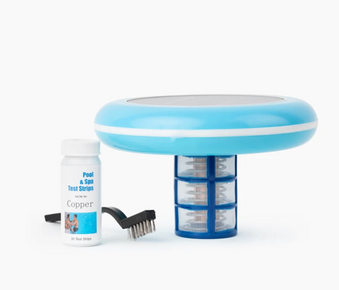
TL;DR: Chemical-free pool maintenance using solar ionizers is achievable by combining copper and silver ion sanitation with minimal oxidizer (hydrogen peroxide or non-chlorine shock), proper filtration, and regular testing. This comprehensive guide covers how to maintain a pool with zero chlorine using solar pool ionizers, alternative oxidizers, water balance protocols, and troubleshooting strategies for crystal-clear, chemical-free water. Learn about natural pool cleaning solutions that eliminate harsh chemicals while maintaining safe, swimmable water year-round.
SEO Summary:
Discover complete chemical-free pool maintenance using solar pool ionizers in this 2026 guide. Learn how to eliminate chlorine through copper and silver ionization, alternative oxidizers, proper water chemistry, filtration optimization, and testing protocols. Includes setup instructions, maintenance schedules, troubleshooting tips, cost analysis, and best practices for maintaining crystal-clear, chemical-free pool water that's healthier for swimmers and the environment.
Table of Contents
- Understanding Chemical-Free Pool Maintenance
- Solar Ionizer Foundation
- Alternative Oxidizers & Sanitizers
- Water Chemistry Management
- Filtration & Circulation Optimization
- Weekly Maintenance Schedule
- Troubleshooting Common Issues
- Final Thoughts & Recommendation
- Key Takeaways
Understanding Chemical-Free Pool Maintenance
Chemical-free pool maintenance doesn't mean zero chemicals—it means eliminating harsh, synthetic chemicals like chlorine and bromine in favor of natural mineral sanitation and gentle oxidizers.
What Chemical-Free Means
In the context of pool care, "chemical-free" specifically refers to eliminating traditional halogen sanitizers (chlorine, bromine) that cause skin irritation, red eyes, chemical odor, and respiratory issues. Instead, chemical-free systems use natural minerals (copper and silver ions), gentle oxidizers (hydrogen peroxide, oxygen-based shock), and enhanced filtration to maintain water quality. You'll still test and balance pH, alkalinity, and calcium hardness, but you eliminate the harsh chemicals that make traditional pools uncomfortable.
How It Works
Chemical-free pool maintenance relies on multiple complementary technologies working together. Solar ionizers provide primary algae and bacteria control through copper and silver ions. Alternative oxidizers break down organic contaminants without chlorine. Enhanced filtration removes particles and debris that would otherwise require chemical treatment. Proper water balance creates conditions hostile to microorganisms. Regular testing ensures all parameters remain in optimal ranges. The result is clean, clear, safe water without chlorine or bromine. Learn more about what solar pool ionizers are and their role in chemical-free systems.
Benefits
Chemical-free pools offer compelling advantages over traditional chlorine systems. No chlorine smell or irritation means more comfortable swimming for everyone, especially children and those with sensitive skin. Softer, more natural water feel enhances the swimming experience. Elimination of chlorine exposure reduces health concerns and respiratory issues. Lower chemical costs save $400-$800 annually. Environmental benefits from eliminating chlorine production, transportation, and disposal. Reduced maintenance time from more stable water chemistry. Many pool owners describe chemical-free water as "spa-like" or "natural spring water" quality.
Realistic Expectations
Chemical-free pool maintenance requires commitment and understanding. It's not "set and forget" you'll test water 2-3 times weekly and maintain equipment regularly. Initial setup takes 2-4 weeks as copper ions build up and you learn the system. You'll need backup oxidizer for heavy use periods or algae outbreaks. Water clarity may take longer to restore after problems compared to chlorine shock. However, once established, chemical-free systems are remarkably stable and forgiving. The effort is comparable to traditional pools but focuses on different parameters.
Solar Ionizer Foundation
Solar ionizers form the cornerstone of chemical-free pool maintenance, providing continuous algae and bacteria control through natural mineral ions.
Choosing Your Ionizer
Select an ionizer appropriately sized for your pool volume. For pools 10,000-35,000 gallons, the standard capacity model provides adequate ion production. For larger pools 35,000-45,000+ gallons, choose the high-capacity unit. For chemical-free systems, proper sizing is critical undersized ionizers won't produce sufficient ions without chlorine backup. Consider the LUXTOR Solar Pool Ionizer or Remington Solar Pool Ionizer for reliable chlorine-free operation.
Installation
Position ionizer to receive maximum sunlight (8-10 hours daily for chemical-free systems, vs. 6-8 hours for hybrid systems). Place near return jets in areas with excellent circulation to ensure even ion distribution. Avoid shaded areas or locations with poor water flow. For pools larger than ionizer capacity, install multiple units better to have excess capacity than insufficient ion production. Secure loosely with tether to prevent drifting to low-circulation areas while allowing movement with water flow.
Initial Copper Buildup
Chemical-free systems require higher copper levels than hybrid chlorine systems. Target 0.4-0.6 ppm copper (vs. 0.2-0.4 ppm for hybrid systems) for adequate protection without chlorine backup. Initial buildup takes 14-21 days as copper accumulates to effective levels. During this period, use hydrogen peroxide or non-chlorine shock weekly to prevent algae while copper builds. Test copper every 2-3 days using test strips and track progress. Once copper reaches 0.4 ppm, you can eliminate chlorine completely.
Electrode Maintenance
Chemical-free systems work electrodes harder than hybrid systems, requiring more frequent maintenance. Inspect electrodes weekly for calcium buildup or corrosion. Clean every 2-3 weeks (vs. 4-6 weeks for hybrid systems) using diluted vinegar solution and soft brush. Replace electrode kits every 18-24 months (vs. 24-36 months for hybrid systems) using quality solar pool ionizer replacement kits. Keep spare electrodes on hand to avoid downtime if replacement is needed unexpectedly.
Copper Level Management
Maintaining proper copper levels is critical for chemical-free success. Test copper 2-3 times weekly (more frequently than hybrid systems). Maintain 0.4-0.6 ppm for optimal algae and bacteria control. If copper drops below 0.4 ppm, increase ionizer sun exposure or add a second unit. If copper exceeds 0.6 ppm, remove ionizer temporarily or position in partial shade. Use metal sequestrant monthly at half-dose to prevent staining while keeping copper active. Never allow copper to drop below 0.3 ppm or algae risk increases significantly.
Alternative Oxidizers & Sanitizers
While ionizers handle algae and bacteria, you need an oxidizer to break down organic contaminants, body oils, and other waste that accumulates in pool water.
Hydrogen Peroxide
Hydrogen peroxide (H₂O₂) is the most popular chlorine alternative for chemical-free pools. It oxidizes organic matter effectively, breaks down into water and oxygen (completely safe), leaves no chemical residue or odor, and is compatible with all pool surfaces and equipment. Use 35% food-grade hydrogen peroxide (not the 3% drugstore variety). Add 8-16 ounces per 10,000 gallons weekly, or 16-32 ounces after heavy use. Peroxide degrades quickly in sunlight, so add in evening for best results. Cost is $20-$40 monthly depending on pool size and usage.
Non-Chlorine Shock
Potassium monopersulfate (MPS) shock oxidizes contaminants without chlorine. It's effective for routine oxidation, allows immediate swimming after application, and doesn't affect pH or alkalinity. However, it's more expensive than peroxide ($30-$50 monthly) and less effective than chlorine shock for severe problems. Use 1 pound per 10,000 gallons weekly, or after heavy swimming. MPS works well in combination with ionizers for regular maintenance but may need peroxide backup for heavy contamination.
Ozone Systems
Ozone generators produce O₃ gas that oxidizes contaminants and kills microorganisms. Ozone is extremely powerful (3,000x stronger than chlorine), leaves no residue, and reduces chemical needs dramatically. However, systems cost $800-$2,500 installed, require professional installation and plumbing modifications, and need periodic UV bulb or corona discharge cell replacement ($100-$300 annually). Ozone works excellently with ionizers for completely chemical-free operation but represents significant upfront investment.
UV Systems
UV sanitizers use ultraviolet light to kill bacteria, viruses, and algae as water passes through the unit. UV is highly effective against microorganisms, chemical-free, and works continuously. Systems cost $500-$1,500 installed, require annual bulb replacement ($100-$200), and need professional installation. UV combined with ionizers provides robust chemical-free sanitation, though UV doesn't provide residual protection (only sanitizes water passing through the unit).
Enzyme Products
Natural enzymes break down oils, lotions, and organic contaminants that cause cloudy water and scum lines. Enzymes are completely natural, reduce oxidizer requirements, and improve water clarity. Add weekly per label directions (typically 4-8 ounces per 10,000 gallons). Cost is $15-$30 monthly. Enzymes work synergistically with ionizers and oxidizers, reducing the workload on both systems.
Recommended Combination
For most chemical-free pools, the optimal combination is solar ionizer (primary algae and bacteria control), hydrogen peroxide (weekly oxidation, $20-$40 monthly), enzyme product (weekly organic breakdown, $15-$30 monthly), and non-chlorine shock (backup for heavy use, $10-$20 monthly). Total monthly cost: $45-$90, comparable to or less than traditional chlorine systems while providing superior water quality.
Water Chemistry Management
Proper water chemistry is even more critical in chemical-free pools than traditional systems. Without chlorine's forgiving nature, balance must be precise.
pH Management
Maintain pH between 7.2-7.6, ideally 7.4. This range optimizes copper ion effectiveness, prevents corrosion and scaling, and ensures swimmer comfort. Test pH 2-3 times weekly using reliable test strips or liquid kit. Adjust with muriatic acid (to lower) or soda ash (to raise). Chemical-free pools tend toward rising pH from aeration and lack of acidic chlorine, so expect to add acid more frequently than traditional pools. Never allow pH to exceed 7.8 or copper may precipitate and stain surfaces.
Total Alkalinity
Maintain alkalinity between 80-120 ppm, ideally 100 ppm. Alkalinity buffers pH and prevents rapid swings that stress the system. Test weekly and adjust with sodium bicarbonate (to raise) or muriatic acid (to lower). Stable alkalinity is crucial for chemical-free systems because you don't have chlorine's buffering capacity. Low alkalinity causes pH instability and copper precipitation. High alkalinity makes pH difficult to adjust and can cause cloudy water.
Calcium Hardness
Maintain calcium hardness between 200-400 ppm, ideally 250-300 ppm. Proper calcium prevents corrosion of equipment and surfaces, reduces copper staining risk, and improves water feel. Test monthly and adjust with calcium chloride (to raise) or partial drain/refill (to lower). Chemical-free pools benefit from slightly higher calcium (300-350 ppm) which helps keep copper in solution and prevents staining.
Copper Ions
Maintain copper between 0.4-0.6 ppm for chemical-free operation. This is higher than hybrid systems (0.2-0.4 ppm) because copper provides primary sanitation without chlorine backup. Test 2-3 times weekly with copper test strips. Adjust by adding/removing ionizer, changing sun exposure, or using multiple units. Never exceed 0.7 ppm to avoid staining risk. If copper drops below 0.3 ppm, add hydrogen peroxide or non-chlorine shock immediately to prevent algae breakthrough.
Phosphates
Keep phosphates below 300 ppb (lower than traditional pools' 500 ppb threshold). Phosphates feed algae, and without chlorine's aggressive oxidation, algae can exploit high phosphate levels quickly. Test monthly with phosphate test kit. Remove phosphates with commercial phosphate remover when levels exceed 300 ppb. Phosphate control is critical for chemical-free success it's your first line of defense against algae.
Testing Schedule
2-3 Times Weekly: pH, copper ions
Weekly: Total alkalinity, visual water clarity check
Monthly: Calcium hardness, phosphates, full chemistry panel
As Needed: After heavy rain, pool parties, or water additions
Consistent testing is non-negotiable for chemical-free pools. Without chlorine's margin for error, you must catch problems early before they escalate. Understanding maintaining pool water stability is essential for success.
Filtration & Circulation Optimization
Chemical-free pools rely heavily on mechanical filtration and circulation to remove contaminants that chlorine would otherwise oxidize.
Filter Requirements
Chemical-free pools need superior filtration compared to traditional systems. Cartridge filters are ideal—they filter to 10-15 microns (vs. 20-40 for sand), require no backwashing (water conservation), and provide excellent particle removal. Clean cartridges every 2-3 weeks (vs. monthly for chlorine pools) using filter cleaner and hose. Replace cartridges annually or when pleats show wear. DE filters also work well, filtering to 3-5 microns for exceptional clarity. Sand filters are least suitable for chemical-free systems due to larger particle size (20-40 microns) and frequent backwashing requirements.
Circulation Time
Run pump 10-12 hours daily minimum (vs. 8-10 hours for chlorine pools). Extended circulation ensures copper ions reach all areas, removes particles before they accumulate, and prevents dead spots where algae can colonize. During peak summer, run pump 12-16 hours daily. Use variable-speed pump on low speed for extended runtime without excessive energy costs. Never run pump less than 8 hours daily or water quality will suffer. Understanding how circulation supports proper maintenance is crucial for chemical-free success.
Return Jet Positioning
Aim return jets slightly downward and toward opposite end of pool to create circular flow pattern. Ensure all areas receive circulation no dead spots in corners, behind ladders, or on steps. Adjust jets seasonally as needed to maintain optimal flow. Consider adding additional return jets if pool has areas with poor circulation. Good circulation distributes copper ions evenly and prevents localized algae growth.
Skimming & Debris Removal
Skim pool daily to remove leaves, insects, and floating debris before they sink and decompose. Empty skimmer baskets 2-3 times weekly (more frequently during fall). Clean pump strainer basket weekly. Debris consumes oxidizer and provides nutrients for algae, so prompt removal is essential. Chemical-free pools can't rely on chlorine to oxidize debris, making mechanical removal more important.
Brushing Schedule
Brush pool walls, floor, and steps 2-3 times weekly (vs. weekly for chlorine pools). Brushing dislodges algae spores before they attach, distributes copper ions to all surfaces, and prevents biofilm formation. Pay special attention to corners, behind ladders, steps, and other low-circulation areas. Use nylon brush for vinyl liners, stainless steel for plaster. Consistent brushing is your best defense against algae in chemical-free systems.
Vacuuming
Vacuum pool weekly to remove settled debris and particles. Use automatic pool cleaner for daily cleaning if budget allows—robotic cleaners are ideal for chemical-free pools as they filter independently and reduce main filter load. Manual vacuuming works well but requires more time. Vacuum to waste when possible to avoid returning debris to pool through filter.
Weekly Maintenance Schedule
Consistent maintenance is the key to chemical-free pool success. Follow this schedule for optimal results.
Monday
- Test pH and adjust to 7.4 if needed
- Test copper ions and verify 0.4-0.6 ppm range
- Test alkalinity and adjust if outside 80-120 ppm
- Record all readings in maintenance log
- Inspect ionizer position and sun exposure
- Empty skimmer and pump baskets
Tuesday
- Check filter pressure gauge
- Backwash or clean filter if pressure is 8-10 psi above baseline
- Verify pump is running properly and for adequate hours
- Inspect return jets for proper flow and positioning
- Skim pool and remove any debris
Wednesday
- Brush all pool surfaces thoroughly (30-45 minutes)
- Inspect for any algae spots or discoloration
- Check water clarity and color
- Test pH and copper ions
- Empty skimmer and pump baskets
Thursday
- Add hydrogen peroxide (8-16 oz per 10,000 gallons) in evening
- Add enzyme product per label directions
- Test pH before adding chemicals
- Run pump overnight to circulate oxidizer
- Skim pool and remove debris
Friday
- Test pH and copper ions
- Adjust chemistry as needed
- Inspect ionizer electrodes for buildup
- Clean electrodes if calcium deposits visible
- Empty skimmer and pump baskets
- Prepare pool for weekend use
Saturday
- Brush all pool surfaces
- Vacuum pool thoroughly
- Clean filter if needed after vacuuming
- Test pH and copper ions
- Skim pool and remove debris
Sunday
- Skim pool
- Empty skimmer and pump baskets
- Visual inspection for any issues
- Test pH if pool had heavy use Saturday
- Plan next week's maintenance needs
Monthly Tasks
- Test calcium hardness and adjust if needed
- Test phosphates and treat if above 300 ppb
- Deep clean filter with filter cleaner
- Inspect all equipment for wear or damage
- Clean ionizer electrodes thoroughly
- Add metal sequestrant at half-dose
- Review maintenance log and adjust schedule as needed
Troubleshooting Common Issues
Even well-maintained chemical-free pools occasionally encounter challenges. Here's how to diagnose and resolve common issues.
Cloudy Water
Symptoms: Water lacks clarity, appears hazy or milky
Solutions:
- Increase pump runtime to 12-16 hours daily, clean filter thoroughly
- Test copper if below 0.4 ppm, increase ionizer sun exposure or add second unit
- Test and treat with phosphate remover if above 300 ppb
- Double hydrogen peroxide dose for one week, add non-chlorine shock
- Adjust return jets, ensure no dead spots, brush pool thoroughly
- Replace cartridges if old or damaged, backwash DE/sand filters
Algae Appearance
Symptoms: Green tint, slippery walls, visible algae spots
Solutions:
- Test immediately if below 0.3 ppm, add second ionizer or use chlorine shock temporarily
- Test and lower to 7.2-7.4 immediately for maximum copper effectiveness
- Brush pool 2-3 times daily until algae clears
- Run pump 24/7 until algae clears, ensure all areas receive flow
- Treat with phosphate remover to eliminate algae food source
- Add hydrogen peroxide at double dose daily, consider temporary chlorine shock if severe
Staining
Symptoms: Blue-green stains on pool surfaces
Solutions:
- Test copper if above 0.6 ppm, remove ionizer for 3-5 days
- Lower pH to 7.2 immediately to keep copper in solution
- Raise calcium hardness to 300-350 ppm to prevent copper precipitation
- Use ascorbic acid treatment (1-2 lbs per 10,000 gallons)
- Add metal sequestrant monthly, maintain pH strictly at 7.2-7.4
pH Instability
Symptoms: pH constantly rises or falls despite adjustments
Solutions:
- Raise alkalinity to 100-120 ppm to buffer pH
- Lower alkalinity to 80-100 ppm if pH is difficult to adjust
- Reduce waterfall, fountain, and spa jet operation time
- Test source water pH and alkalinity may need pre-treatment
- Expect to add acid more frequently than chlorine pools
Final Thoughts & Recommendation
Chemical-free pool maintenance using solar ionizers is not only achievable but delivers superior water quality, swimmer comfort, and environmental benefits compared to traditional chlorine systems. The key is understanding that "chemical-free" doesn't mean "maintenance-free" it means replacing harsh chemicals with natural minerals and gentle oxidizers while maintaining diligent testing and care protocols.
Success with chemical-free pools requires commitment to the system. You'll test water more frequently than chlorine pools, maintain higher copper levels (0.4-0.6 ppm), run your pump longer (10-12 hours daily), and brush more often (2-3 times weekly). However, the rewards soft, natural-feeling water without chlorine smell or irritation make the effort worthwhile for families seeking healthier swimming conditions.
Start with quality equipment. Choose a properly sized ionizer like the VIVOHOME Solar Pool Ionizer or EAAZPOOL Solar Pool Ionizer that can handle your pool volume. Invest in reliable test strips for copper monitoring. Stock hydrogen peroxide and enzyme products for weekly oxidation. Ensure your filtration system is adequate upgrade to cartridge filter if currently using sand.
Allow 2-4 weeks for system establishment. During this period, copper builds to effective levels and you learn your pool's specific needs. Don't get discouraged if water isn't perfect immediately chemical-free systems take time to stabilize but become remarkably consistent once established. Keep backup non-chlorine shock or hydrogen peroxide on hand for heavy use periods or unexpected issues.
Monitor copper levels religiously. This is your primary defense against algae and bacteria without chlorine backup. Test 2-3 times weekly and never allow copper to drop below 0.4 ppm. If copper falls, add oxidizer immediately while you address the ionizer issue. Maintain pH strictly between 7.2-7.6 to keep copper effective and prevent staining.
Remember that chemical-free pools aren't for everyone. They require more attention than traditional chlorine pools and aren't ideal for commercial use, high-bather loads, or pool owners who want minimal involvement. However, for families committed to healthier swimming and environmental responsibility, chemical-free systems deliver unmatched water quality and peace of mind. The principles of eco-friendly pool cleaning practices align perfectly with chemical-free maintenance.
If you're transitioning from chlorine to chemical-free, do it gradually. Start by reducing chlorine to 0.5-1.0 ppm while copper builds. Once copper reaches 0.4 ppm and you're comfortable with testing and maintenance, eliminate chlorine completely. Keep chlorine on hand for emergencies during the first season until you're confident in the system.
Chemical-free pool maintenance represents the future of responsible pool ownership healthier for swimmers, gentler on the environment, and surprisingly affordable once established. With proper equipment, consistent maintenance, and commitment to the process, you can enjoy crystal-clear, chemical-free water that rivals or exceeds the quality of traditional chlorine pools.
Key Takeaways
- Chemical-free pools use solar ionizers plus alternative oxidizers maintain 0.4-0.6 ppm copper ions (higher than hybrid systems' 0.2-0.4 ppm) combined with weekly hydrogen peroxide or non-chlorine shock to eliminate chlorine while maintaining safe, clear water.
- Initial setup takes 2-4 weeks for copper to build to effective levels use hydrogen peroxide or non-chlorine shock weekly during this period to prevent algae, test copper every 2-3 days, and don't eliminate chlorine until copper reaches 0.4 ppm consistently.
- Testing frequency is critical: Test pH and copper 2-3 times weekly (vs. weekly for chlorine pools), alkalinity weekly, calcium hardness and phosphates monthly without chlorine's margin for error, you must catch problems early before they escalate.
- Enhanced filtration and circulation are essential run pump 10-12 hours daily minimum (vs. 8-10 for chlorine pools), clean filter every 2-3 weeks, brush pool 2-3 times weekly, and vacuum weekly to remove contaminants mechanically.
- Hydrogen peroxide is the best oxidizer for most chemical-free pools add 8-16 oz per 10,000 gallons weekly ($20-$40 monthly), apply in evening to prevent UV degradation, and combine with enzyme products for optimal organic breakdown.
- Maintain strict pH control between 7.2-7.6 (ideally 7.4) to optimize copper effectiveness and prevent staining test 2-3 times weekly and expect to add acid more frequently than chlorine pools due to natural pH rise from aeration.
- Keep backup oxidizer on hand for heavy use periods, pool parties, or unexpected algae—non-chlorine shock or extra hydrogen peroxide provides insurance while you troubleshoot issues, and temporary chlorine use won't ruin your chemical-free system if needed for emergencies.
Chemical-free pools demand more attention and consistency, but they reward you with softer water, fewer harsh chemicals, and a more natural swimming experience. By maintaining proper copper levels, testing frequently, optimizing filtration, and using the right oxidizers, you can successfully eliminate chlorine without sacrificing water clarity or safety. Stay proactive, keep backups on hand, and treat chemical-free pool care as a system not a shortcut and long-term success will follow.