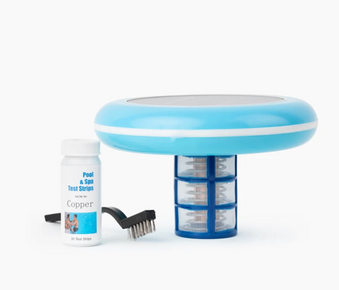
Pool water stability is one of the most important and often overlooked factors in effective pool maintenance. When water chemistry fluctuates too often, pool owners face recurring problems such as cloudy water, algae growth, skin irritation, and unnecessary wear on pool equipment. Maintaining stable water conditions throughout the season is essential for a clean, comfortable, and low-maintenance pool.
Solar pool ionizers offer a smarter approach to water stability by providing consistent, mineral-based sanitation powered by sunlight. Instead of relying solely on chemicals that rise and fall rapidly, ionizers help create a balanced pool environment where water quality remains steady and predictable. This stability represents the foundation of truly effective pool management a state where water conditions don't require constant correction but instead maintain themselves within optimal ranges through intelligent system design rather than manual intervention. The difference between stable and unstable pool water is the difference between enjoying a pool and constantly maintaining it, between clear water that invites swimming and problematic water that demands treatment, between equipment that lasts for years and systems that fail prematurely due to chemical stress.
Table of Contents
- What Pool Water Stability Really Means
- Why Unstable Pool Water Causes Ongoing Problems
- How Solar Pool Ionizers Support Consistent Water Conditions
- The Role of Mineral Balance in Water Stability
- Reducing Chemical Fluctuations With Solar Ionization
- Best Practices for Maintaining Stable Water All Season
- Final Thoughts: Long-Term Water Stability Made Simple
1. What Pool Water Stability Really Means
Water stability refers to the ability of a pool to maintain consistent chemical and physical conditions over time. This includes maintaining pool pH balance, steady sanitizer levels, proper alkalinity, and controlled mineral content. However, true water stability extends far beyond these basic parameters to encompass the entire aquatic ecosystem's capacity to resist change and return to equilibrium after disturbance. In chemical terms, stability represents a dynamic equilibrium where multiple factors pH, sanitizer concentration, total alkalinity, calcium hardness, temperature, total dissolved solids, and oxidation-reduction potential—interact in predictable ways that maintain overall balance. A truly stable pool exhibits what chemists call "homeostasis": the tendency to maintain internal stability despite external fluctuations. This stability manifests in multiple dimensions: chemical (consistent parameter readings), physical (clear, sparkling water), biological (absence of microbial blooms), and sensory (comfortable swimming experience). Understanding water stability requires moving beyond simple parameter ranges to grasp how these elements interact to create resilience against the constant forces of change that affect every pool.
True stability represents more than just numbers within ranges on a pool test strip it embodies a pool ecosystem that maintains equilibrium despite external influences like weather changes, swimmer loads, and environmental contaminants. This equilibrium operates through multiple feedback mechanisms and buffering systems that pool water naturally possesses when properly balanced. The carbonate buffer system (governed by alkalinity) resists pH changes. The chlorine-cyanuric acid relationship maintains sanitizer effectiveness. The Langelier Saturation Index (calculated from pH, temperature, calcium hardness, and alkalinity) predicts whether water will be scale-forming or corrosive. A stable pool maintains these systems in optimal balance, creating what aquatic chemists call "chemical inertia" a tendency to remain in the current balanced state rather than drifting into imbalance. This inertia comes from properly calibrated buffering capacity: enough alkalinity to prevent pH swings but not so much that pH becomes difficult to adjust, enough calcium to protect surfaces but not so much that scaling occurs, enough stabilizer to protect chlorine but not so much that chlorine becomes ineffective. When these systems are properly balanced, the pool water develops a kind of "chemical memory" that returns it to optimal conditions after temporary disturbances like heavy rain, swimmer loads, or chemical additions.
The Multi-Dimensional Nature of Water Stability:
- Chemical Stability: The foundation of all water stability, chemical stability involves maintaining consistent concentrations of all dissolved substances. This includes not just the commonly tested parameters (pH, chlorine, alkalinity, hardness) but also less frequently measured factors like total dissolved solids, oxidation-reduction potential, and specific ion concentrations. Chemical stability creates predictable water behavior additions of acid or base produce expected pH changes, sanitizer additions maintain predictable residuals, and mineral additions remain in solution rather than precipitating. This predictability transforms pool maintenance from guesswork to science, where actions produce consistent results rather than unexpected consequences.
- Physical Stability: Beyond chemistry, water exhibits physical stability through consistent clarity, color, and temperature characteristics. Physically stable water maintains brilliant clarity without cloudiness or turbidity, retains its natural blue hue without green or yellow tints, and shows minimal temperature stratification (layering of warm and cold water). This physical stability results from proper filtration, adequate circulation, and balanced chemistry that prevents particle agglomeration (clumping together of microscopic particles that causes cloudiness). Physical stability is immediately visible and represents the most obvious indicator of overall water health clear, sparkling water that invites swimming rather than concerns.
- Biological Stability: A biologically stable pool maintains consistent microbial populations below problematic levels without dramatic fluctuations. This doesn't mean sterile water all pools contain microorganisms but rather an environment where algae and bacteria cannot establish dominant populations. Biological stability comes from consistent sanitizer levels (whether chlorine, minerals, or other methods), proper circulation that prevents stagnant areas, and balanced chemistry that doesn't provide excessive nutrients for microbial growth. This stability prevents the algae blooms and bacterial issues that plague unstable pools, creating water that remains safe and clear without emergency treatments.
- Sensory Stability: Swimmers experience water stability through consistent comfort water that feels consistently soft or firm (depending on hardness), maintains consistent temperature, lacks chemical odors, and doesn't cause irritation. Sensory stability represents the human experience of water quality: eyes that don't sting, skin that doesn't dry or itch, and swimwear that doesn't degrade prematurely. This stability comes from maintaining consistent chemical levels rather than allowing dramatic fluctuations that affect swimmer comfort.
A stable pool doesn't merely react to changes; it absorbs them without losing balance, returning to optimal conditions through built-in resilience rather than manual correction. This resilience comes from multiple stabilizing factors working together: proper alkalinity buffers against pH changes, adequate circulation distributes chemicals and heat evenly, appropriate sanitizer levels maintain microbial control, and balanced mineral content prevents scaling or corrosion. When these factors are properly calibrated, the pool becomes what engineers call a "self-correcting system" one that naturally returns to equilibrium after disturbances. For example, after heavy rain dilutes chemical concentrations, a stable pool's circulation system distributes the dilute water while its chemical feeders restore proper levels automatically. After a large swimmer load introduces organic contaminants, the pool's oxidation system handles them without dramatic chemical fluctuations. This resilience transforms pool maintenance from constant correction to occasional verification checking that systems are working rather than constantly adjusting them to compensate for instability.
Characteristics of Stable Pool Water:
- Stays clear and visually appealing: Stable water maintains brilliant clarity without cloudiness, haze, or discoloration. This clarity results from multiple factors working together: proper filtration removes suspended particles, balanced chemistry prevents particle agglomeration, adequate circulation prevents stagnation where cloudiness develops, and consistent sanitation prevents microbial blooms that cause cloudiness. Crystal-clear pool water isn't just aesthetically pleasing it's safer (allowing visibility of swimmers and pool bottoms) and indicates proper chemical balance. Stable water also maintains consistent sparkle and reflectivity, with sunlight creating characteristic diamond-like patterns rather than dull, flat appearances.
- Resists algae growth: Algae represents the most common visible sign of water instability. Stable water creates conditions where algae cannot establish dominant populations, even though algae spores are always present. This resistance comes from consistent sanitizer levels (whether chlorine, minerals, or other methods), proper circulation that prevents stagnant areas where algae starts, balanced pH that maximizes sanitizer effectiveness, and controlled phosphate levels that limit algae nutrients. Algae resistance demonstrates biological stability the pool ecosystem maintains balance that prevents any single organism from dominating.
- Feels comfortable for swimmers: Comfort represents the human experience of water stability. Stable water feels consistent: neither too soft nor too hard, with consistent temperature throughout the pool, without chemical odors or irritation. This comfort comes from maintaining chemical parameters within narrow ranges: pH between 7.4-7.6 matches human physiological pH, total dissolved solids below 1500 ppm prevents harsh water feel, and consistent sanitizer levels prevent irritation from fluctuations. Comfortable water encourages swimming rather than limiting it due to irritation concerns.
- Protects pool surfaces and equipment: Stable water maintains the Langelier Saturation Index near zero, meaning water is neither scale-forming (depositing minerals on surfaces) nor corrosive (dissolving surfaces). This balance protects plaster, vinyl, tile, and equipment from chemical damage. Scale formation reduces heater efficiency, clogs filters, pool filtration system, and creates rough surfaces. Corrosion damages metal components, weakens structural elements, and causes staining. Stable water prevents both extremes, extending equipment life and maintaining surface appearance. This protection represents long-term stability water that preserves rather than damages the pool infrastructure.
Without stability, even frequent testing and chemical adjustments may not prevent recurring water issues. This absence of stability creates what pool professionals call "the maintenance treadmill" constant effort that never achieves lasting results, where each chemical correction creates secondary imbalances requiring further treatment. The treadmill typically follows this pattern: a parameter drifts out of range (perhaps pH rises due to carbon dioxide outgassing), requiring correction. That correction affects another parameter (adding acid to lower pH reduces alkalinity), requiring another adjustment. Soon, multiple parameters are fluctuating, each correction creating new imbalances. The water becomes chemically "noisy" constantly changing rather than settling into stability. This noise makes accurate testing difficult (parameters change between testing and treatment), makes chemical additions unpredictable (the same dose produces different results depending on current conditions), and makes maintenance frustrating (problems keep returning despite treatment). Breaking free from this treadmill requires establishing true stability not just correcting individual parameters but creating conditions where parameters naturally remain in balance.
Stability transforms this dynamic, creating conditions where maintenance becomes occasional fine-tuning rather than constant crisis management, where water quality remains predictably excellent rather than unpredictably problematic, and where pool ownership delivers relaxation rather than relentless work. This transformation occurs through multiple mechanisms: establishing proper buffering capacity so pH remains stable, implementing consistent sanitation so microbial control doesn't fluctuate, maintaining adequate circulation so conditions remain uniform throughout the pool, and using systems like solar pool ionizers that provide continuous rather than intermittent protection. With stability established, maintenance shifts from correcting problems to verifying balance, from emergency treatments to preventive adjustments, from constant work to occasional attention. The pool becomes what it should be a source of relaxation and enjoyment rather than a maintenance burden, a beautiful backyard feature rather than a problematic system, an asset that enhances lifestyle rather than consumes time. This is the true meaning and value of water stability: not just chemical parameters on a test strip, but a comprehensive state that makes pool ownership simple, predictable, and enjoyable.

2. Why Unstable Pool Water Causes Ongoing Problems
When stable pool water chemistry constantly shifts, it creates an environment where problems develop quickly. Rapid sanitizer loss, pH swings, and uneven circulation can lead to a cascade of issues that transform pool maintenance from simple upkeep to constant crisis management. This instability represents more than just inconvenience it creates chemical, biological, and physical conditions that actively work against water quality and equipment longevity. Unstable water lacks what chemists call "chemical inertia" the tendency to remain in a balanced state. Instead, it constantly drifts toward imbalance, requiring continuous intervention that often creates secondary problems while attempting to solve primary ones. This dynamic creates what pool professionals term "the instability spiral" a self-reinforcing cycle where each attempt at correction makes stability harder to achieve, where problems multiply rather than resolve, and where maintenance becomes increasingly complex and frustrating despite increased effort.
The Cascade Effects of Water Instability:
- Cloudy or Dull Water: Unstable chemistry causes microscopic particles to clump together rather than remaining suspended for filtration, creating turbidity that scatters light and gives water a milky or hazy appearance. This cloudiness typically results from multiple instability factors: pH fluctuations alter particle surface charges, causing aggregation; inadequate sanitizer levels allow bacterial growth that contributes to cloudiness; poor circulation creates dead zones where particles accumulate; and chemical imbalances cause precipitation of calcium carbonate or other minerals that create microscopic haze. Cloudy pool water isn't just unattractive it reduces safety by obscuring visibility of swimmers and pool bottoms, indicates potential bacterial issues, and often requires clarifiers or flocculants that further disrupt water chemistry.
- Green Algae Outbreaks: Algae thrives in unstable conditions where sanitizer levels fluctuate, creating windows of opportunity for spores to germinate and establish colonies. These outbreaks typically follow specific instability patterns: chlorine depletion during sunny periods allows initial growth, pH fluctuations reduce chlorine effectiveness during critical periods, poor circulation creates stagnant areas where algae establishes, and phosphate accumulation (from debris or chemicals) provides nutrients for explosive growth. Once established, algae consumes sanitizers, clouds water, creates slippery surfaces, and requires aggressive treatment that further destabilizes water chemistry. Different algae types exploit different instabilities: green algae thrives in sunlight when chlorine degrades, mustard algae establishes in shaded areas with poor circulation, and black algae roots into surfaces when water chemistry alternates between corrosive and scaling conditions.
- Increased Chemical Usage: Unstable water requires more chemicals for several reasons: fluctuating pH reduces sanitizer effectiveness, requiring higher concentrations; constant correction of parameters consumes chemicals that stable water wouldn't need; algae and bacteria growth consumes sanitizers faster; and chemical additions often overshoot targets, requiring corrective additions of other chemicals. This increased usage creates multiple problems: higher costs, greater chemical storage and handling risks, more rapid accumulation of total dissolved solids (requiring water replacement), and increased environmental impact from chemical production, transportation, and disposal. The chemical dependency becomes self-reinforcing more chemicals create more instability, requiring yet more chemicals in a escalating cycle.
- Corrosion or Scaling on Pool Surfaces: Unstable water alternates between corrosive (low pH, low calcium hardness, low alkalinity) and scaling (high pH, high calcium hardness, high alkalinity) conditions, damaging pool infrastructure through multiple mechanisms. Corrosion attacks metal components (ladders, rails, light fixtures), etches plaster surfaces, weakens grout, and can cause structural damage over time. Scaling creates rough mineral deposits on surfaces, reduces heater efficiency, clogs filters and plumbing, and creates unsightly white or colored deposits. The Langelier Saturation Index, which predicts whether water is scale-forming or corrosive, fluctuates wildly in unstable water, subjecting surfaces and equipment to alternating damaging conditions rather than the neutral balance that preserves them.
These issues often force pool owners into a cycle of overcorrection, making water stability even harder to achieve. This cycle typically begins with a single parameter drifting out of range perhaps pH creeping upward due to carbon dioxide outgassing on a sunny day. This seemingly minor change sets in motion a chain reaction: the increased pH reduces chlorine's effectiveness (at pH 8.0, chlorine is only about 20% as effective as at pH 7.0), allowing algae spores that are always present to begin germinating. The pool owner, testing the water and noticing reduced chlorine effectiveness or early algae signs, responds with shock treatment. This shock further alters pH and alkalinity (most shock products are highly alkaline), potentially overshooting the correction and creating new imbalances. Soon, multiple parameters are fluctuating pH swings affect chlorine effectiveness, which allows algae growth, which consumes alkalinity, which affects pH stability, creating what mathematicians call a "nonlinear dynamic system" where changes amplify rather than dampen.
The Chemical Domino Effect of Instability:
- Parameter Interdependence Breakdown: In stable water, chemical parameters support each other through predictable relationships: alkalinity buffers pH, calcium hardness supports surface protection, cyanuric acid stabilizes chlorine, and proper circulation distributes all elements evenly. In unstable water, these relationships break down alkalinity fights against pH rather than supporting it, calcium hardness contributes to scaling rather than protection, stabilizer locks up chlorine rather than protecting it, and poor circulation creates chemical gradients rather than uniformity. This breakdown creates chemical chaos where additions produce unpredictable results and corrections create new problems.
- Biological Amplification of Chemical Issues: Microorganisms in unstable water don't merely respond to chemical conditions they actively alter them. Algae consumes carbon dioxide during photosynthesis, high pool pH balance. Bacteria breaking down organic waste produce acids that lower pH. Microbial blooms consume sanitizers, creating demand spikes. These biological processes amplify chemical fluctuations, creating feedback loops where chemical instability promotes biological growth that creates further chemical instability. This biological amplification makes unstable water increasingly difficult to balance as the season progresses.
- Equipment Stress and Feedback: Unstable water stresses pool equipment, creating mechanical problems that further destabilize water chemistry. Scaling in heaters reduces efficiency, requiring longer run times that increase evaporation and chemical concentration. Corroded pumps develop leaks that dilute chemicals. Clogged filters reduce circulation, creating chemical and biological dead zones. These equipment issues create feedback that worsens instability mechanical problems cause chemical problems that cause biological problems that cause further mechanical problems.
- Swimmer-Induced Instability: Swimmers both contribute to and are affected by water instability. They introduce organic contaminants that consume sanitizers and alter pH, but in unstable water, these normal inputs create disproportionate effects. The same number of swimmers might cause minor fluctuations in stable water but dramatic changes in unstable water. Swimmers also experience the consequences: eye irritation from pH or chloramine fluctuations, skin dryness from chemical imbalances, and respiratory irritation from airborne chemical byproducts.
The water becomes chemically "noisy" constantly changing rather than settling into stability. This noise makes accurate testing difficult (parameters change between testing and treatment), makes chemical additions unpredictable (the same dose produces different results depending on current conditions), and makes maintenance frustrating (problems keep returning despite treatment). Chemical noise represents more than just parameter fluctuations it creates uncertainty that undermines effective management. When a pool owner tests water and adds chemicals based on those tests, they assume relatively stable conditions between testing and chemical action. In noisy water, conditions may have changed significantly during that interval, making the chemical addition inappropriate or even counterproductive. This uncertainty forces reactive rather than proactive management treating visible problems rather than preventing them, using higher chemical doses to ensure effectiveness despite fluctuations, and constantly testing to catch rapid changes.
This instability has tangible consequences beyond maintenance frustration: equipment suffers from alternating corrosive and scaling conditions, surfaces deteriorate from chemical stress, and swimmers experience discomfort from pH and sanitizer fluctuations. Breaking this cycle requires addressing not just individual parameters but creating systems that maintain equilibrium naturally exactly what solar ionizers help achieve through consistent mineral protection and reduced chemical dependency. Solar ionization addresses instability at multiple levels: it provides continuous rather than fluctuating sanitation (reducing the chlorine rollercoaster), operates on solar power that correlates production with need (increasing output during sunny periods when instability risks are highest), uses minerals that remain active longer than traditional sanitizers (creating chemical inertia), and reduces overall chemical load (decreasing the chemical noise that drives instability). By establishing consistent background protection against algae and bacteria, solar ionizers remove one of the primary drivers of water instability the biological amplification of chemical fluctuations. This creates conditions where other parameters become easier to stabilize: with consistent microbial control, pH experiences fewer biological influences, alkalinity isn't consumed by correcting biological issues, and circulation patterns aren't disrupted by emergency treatments. This systemic approach to stability represents the solution to ongoing pool problems not fighting individual symptoms but creating conditions where symptoms cannot develop.

3. How Solar Pool Ionizers Support Consistent Water Conditions
Solar pool ionizers work by releasing copper ions into the water using solar energy. These ions remain active far longer than traditional sanitizers, providing ongoing protection against bacteria and algae pool prevention. The underlying technology represents an elegant marriage of ancient purification principles and modern photovoltaic science: using sunlight to generate electrical current that drives controlled electrolysis of copper electrodes, releasing precisely calibrated amounts of copper ions (Cu²⁺) into the water. This process operates on multiple levels of intelligence: the photovoltaic panel converts sunlight to electricity with efficiency that has improved dramatically in recent years, the control circuitry regulates current flow to match solar input and prevent over-production, and the electrode design maximizes ion release while minimizing erosion. Unlike traditional chemical systems where effectiveness depends on manual addition or mechanical feeding, solar ionizers operate autonomously, converting available sunlight directly into sanitation power without external energy inputs or complex programming.
Unlike chlorine that degrades rapidly through sunlight exposure and chemical reactions, copper ions maintain their algaecidal properties for days or weeks, creating a protective background level that persists through varying conditions. This difference in persistence represents a fundamental advantage for water stability. Chlorine undergoes photolysis direct chemical breakdown by ultraviolet light that can destroy 90% of free chlorine within 2-3 hours of midday summer sun. It also experiences rapid consumption through oxidation of organic contaminants, with each swimmer potentially consuming 7-10 grams of chlorine. Copper ions, in contrast, maintain their chemical structure and biological activity through multiple mechanisms: they're not vulnerable to UV photolysis, they're not consumed in oxidation reactions (they work through different biological mechanisms), and they remain in solution through complex formation with water molecules and other ions. This persistence creates what water chemists call "sanitation reserve" a protective capacity that remains available even during periods of high demand or limited production. This reserve transforms water stability from a fragile state requiring constant maintenance to a resilient condition that withstands temporary challenges.
The Mechanism of Extended Mineral Effectiveness:
- Photochemical Stability: Copper ions lack the photolabile chemical bonds that make chlorine vulnerable to sunlight degradation. Their d-orbital electron configuration creates stability under UV exposure that chlorine's simpler molecular structure lacks. This means solar ionizers produce protection that lasts precisely when it's most needed during long, sunny days when traditional sanitizers fail most rapidly. This photochemical stability represents perfect alignment between problem and solution: the system provides maximum protection exactly when conditions are most challenging for microbial growth and traditional sanitation.
- Chemical Inertness in Oxidation Reactions: Unlike chlorine that actively oxidizes organic contaminants (being consumed in the process), copper ions work through different mechanisms enzyme inhibition, membrane disruption, and photosynthetic interference that don't consume the ions. A single copper ion can affect multiple algal cells over time, whereas a chlorine molecule is typically consumed by a single oxidation reaction. This difference in consumption patterns creates dramatically different longevity: chlorine concentrations can drop from 3 ppm to 0 ppm in hours, while copper concentrations might drop from 0.4 ppm to 0.3 ppm over weeks.
- Complexation and Re-release Mechanisms: Copper ions in pool water don't simply remain as free Cu²⁺ ions they form complexes with carbonate, hydroxide, chloride, and organic molecules. Some of these complexes retain biological activity, while others can release active copper ions under changing conditions. This complexation creates a "buffered" mineral system where active copper is available from multiple sources rather than just free ions, extending effective protection beyond what simple concentration measurements might suggest.
- Surface Adsorption and Slow Release: Copper ions adsorb onto pool surfaces, filter media, and even suspended particles, creating reservoirs that can release ions back into the water as concentrations decrease. This adsorption-release equilibrium creates natural regulation: when water copper levels drop due to dilution or filtration, adsorbed copper releases to restore balance. This natural buffering further extends effective protection and contributes to water stability.
This extended effectiveness represents a fundamental shift in how sanitation contributes to water stability: rather than sanitizer levels that peak after addition then gradually decline to zero, mineral levels remain relatively constant, providing continuous protection without dramatic fluctuations. This consistency transforms the chemical dynamics of improving pool water quality. Traditional chlorine systems create what mathematicians call a "sawtooth pattern" sharp increases after addition followed by gradual declines to near-zero before the next addition. This pattern creates windows of vulnerability (when levels are too low) and periods of potential irritation (when levels are too high immediately after addition). Solar ionization creates what engineers call a "plateau pattern" relatively constant mineral levels with gentle variations rather than dramatic swings. This plateau provides continuous protection without vulnerable windows, creating chemical conditions that support overall water stability rather than contributing to instability through constant fluctuation.
The Solar-Powered Self-Regulation System:
- Sunlight-Correlated Production Intelligence: Because ionizers operate continuously during daylight hours, they help stabilize sanitation levels rather than allowing sharp rises and drops. This consistency plays a key role in maintaining overall water balance. The solar-powered operation adds intelligent adaptation: production increases during sunny periods when algae growth potential is highest and decreases during cloudy conditions when risk is lower. This correlation isn't merely coincidental it's engineered intelligence. Algae growth correlates strongly with sunlight availability through photosynthesis requirements, while chlorine degradation also correlates with sunlight through photolysis. Solar ionizers naturally match production to both need (algae growth potential) and challenge (chlorine degradation). This creates what control engineers call "feedforward control" anticipating need based on measured input (sunlight) rather than reacting to measured output (algae presence).
- Temperature-Responsive Adaptation: Beyond sunlight correlation, advanced solar ionizers incorporate temperature responsiveness. Water temperature affects both algae growth rates (warmer water accelerates growth) and chemical reaction rates (warmer water increases all chemical activity). Some ionizers measure water temperature and adjust output accordingly, providing additional protection during warm periods when instability risks increase. This multi-factor adaptation represents sophisticated environmental responsiveness that traditional chemical systems cannot match without complex automation.
- Demand-Responsive Sanitation Algorithms: This self-regulating capability creates what engineers call "demand-responsive sanitation" protection that matches need without manual adjustment. The most advanced systems go beyond simple sunlight correlation to incorporate multiple factors: historical patterns (learning that certain times of day or year typically require more protection), weather integration (anticipating increased need before forecasted hot sunny periods), and even usage patterns (increasing output during typical swimming hours when organic contamination increases). This algorithmic approach represents the pinnacle of smart pool sanitation systems that learn and adapt rather than simply operating on fixed schedules or manual settings.
- Floating Distribution Optimization: The floating design further enhances stability by distributing ions throughout the pool rather than concentrating them in one area, ensuring even protection that prevents localized problems from developing. This distribution intelligence operates through multiple mechanisms: natural movement across the water surface (preventing localized concentration), interaction with pool circulation patterns (ions captured in skimmers and distributed through returns), and natural diffusion processes. The floating design isn't merely convenient it's distributionally intelligent, ensuring that ions reach all pool areas rather than accumulating near a fixed installation point where they could cause staining or uneven protection.
This comprehensive approach to consistent sanitation creates the foundation for broader water stability: when algae and bacteria control remains steady, other parameters become easier to maintain, chemical additions become less frequent and disruptive, and the entire water system settles into predictable equilibrium. The stability benefits extend through multiple levels: chemical stability improves as pH experiences fewer biological influences (algae photosynthesis raises pH, bacterial decomposition lowers it), alkalinity isn't consumed correcting biological issues, and calcium hardness isn't affected by aggressive chemical treatments. Physical stability improves as water clarity remains consistent without algal blooms or bacterial cloudiness, and surface cleanliness prevents the biofilm formation that often precedes other problems. Biological stability creates a foundation where the entire microbial ecosystem remains in balance rather than experiencing explosive growth of problematic species. This multi-level stability creates what systems theorists call a "virtuous cycle" stability begets more stability, as each stable parameter supports the stability of others. For pool owners, this means water that maintains itself with minimal intervention, equipment that operates efficiently without constant adjustment, and swimming experiences that remain consistently enjoyable rather than variably problematic. This is how solar pool ionizers support consistent water conditions: not through dramatic interventions but through continuous, intelligent protection that creates the stable foundation upon which all other water quality factors can balance naturally.

4. The Role of Mineral Balance in Water Stability
Minerals are a crucial part of stable water chemistry. Copper ions released by solar ionizers inhibit algae growth at a cellular level, preventing outbreaks before they begin. This preventive action represents a fundamentally different approach to stability: rather than responding to visible problems with aggressive chemical treatments that disrupt water balance, minerals maintain conditions where problems cannot develop in the first place. The concept of mineral balance extends far beyond simply adding copper to water it involves understanding and managing how minerals interact with every aspect of pool chemistry, for pool owners how they maintain their effectiveness under varying conditions, and how they support rather than undermine overall water equilibrium. When properly implemented, mineral balance creates what chemists call a "chemically buffered system" where multiple factors work together to resist change, where minor fluctuations are automatically corrected through natural chemical equilibria, and where water maintains its desired characteristics despite external influences that would destabilize poorly balanced systems.
The mineral balance extends beyond simple copper concentrations to include how these ions interact with other water components their speciation (chemical form) determined by pH, their solubility affected by alkalinity and hardness, their distribution influenced by circulation patterns. Copper doesn't simply exist as free Cu²⁺ ions in pool water; it forms various complexes and compounds depending on chemical conditions. At optimal pH (7.4-7.6), copper exists primarily as soluble hydroxychloride complexes that are both biologically active and resistant to precipitation. At lower pH, copper becomes more soluble but transforms into forms that are less effective and more likely to cause staining. At higher pH, copper begins precipitating as insoluble copper carbonate, removing it from the active sanitation system while potentially causing blue-green staining. This pH-dependent speciation creates the first critical relationship in mineral balance: maintaining pH within the narrow range where copper remains in its ideal form. Beyond pH, other factors influence mineral balance: alkalinity affects carbonate availability (which affects copper solubility), hardness affects competitive ion interactions, cyanuric acid can complex with copper, and phosphates form insoluble copper phosphate. Managing these interactions represents sophisticated water chemistry that transforms simple mineral addition into comprehensive mineral balance.
Comprehensive Mineral Balance Management:
- pH-Driven Speciation Control: The chemical form (speciation) of copper in water changes dramatically with pH, affecting both effectiveness and safety. At pH 7.4-7.6, approximately 85-90% of copper exists as soluble hydroxychloride complexes that are readily absorbed by algal cells while remaining in solution. Below pH 7.2, copper transforms into more soluble but less effective forms that can cause metal staining. Above pH 7.8, copper begins precipitating as basic copper carbonate, reducing effectiveness while potentially staining surfaces. Maintaining this narrow pH range requires understanding its natural drivers: carbon dioxide outgassing raises pH, acid addition lowers it, and alkalinity buffers against rapid changes. Smart mineral balance involves monitoring pH not as an isolated parameter but as the master variable controlling copper speciation and effectiveness.
- Alkalinity as Mineral Solubility Manager: Total alkalinity (80-120 ppm) functions as the chemical buffer that prevents pH swings, but it also directly affects mineral balance through carbonate concentration. Carbonate ions (CO₃²⁻) react with copper to form copper carbonate, which can either remain soluble (at proper pH and concentration) or precipitate (at high pH or concentration). Proper alkalinity maintains carbonate at levels that support copper solubility without promoting precipitation. This delicate balance requires understanding the carbonate buffer system the equilibrium between carbonic acid, bicarbonate, and carbonate that determines both pH stability and mineral solubility. When properly balanced, this system maintains minerals in their optimal form through automatic chemical adjustments rather than manual intervention.
- Hardness and Competitive Ion Effects: Calcium hardness (200-400 ppm) influences mineral balance through competitive ion effects and scale prevention. Calcium ions compete with copper for binding sites on surfaces and with other ions in solution. At proper levels, calcium helps maintain water's "personality" (neither aggressive nor scale-forming) without interfering with copper effectiveness. In soft water (below 200 ppm), water becomes aggressive seeking to dissolve minerals from surfaces, potentially including copper from ionizer electrodes or pool surfaces. In hard pool water (above 400 ppm), calcium carbonate becomes oversaturated and precipitates as scale, potentially coating ionizer electrodes and reducing their efficiency. Proper hardness maintains the Langelier Saturation Index near zero, creating water that's neutral toward minerals neither dissolving them excessively nor precipitating them unnecessarily.
- Circulation-Mediated Distribution Equilibrium: Mineral balance isn't just about chemical concentrations it's about even distribution throughout the pool. Proper circulation ensures minerals reach all areas, preventing localized high concentrations (which could cause staining) and localized low concentrations (which could allow algae establishment). The floating design of solar ionizers enhances this distribution through natural movement, while pool circulation systems distribute minerals captured in skimmers. This distribution creates what physicists call "concentration homogeneity" consistent mineral levels throughout the water volume rather than gradients that create instability.
When properly managed, this mineral balance creates a self-reinforcing system where each element supports stability rather than undermining it. This self-reinforcement operates through multiple feedback mechanisms: proper pH maintains copper in effective forms, effective copper prevents algae that would alter pH, good circulation distributes minerals evenly, even distribution prevents localized problems that would require chemical corrections, and reduced chemical corrections maintain mineral balance. This creates what systems theorists call a "positive feedback loop for stability" each stable element makes other elements more stable, which in turn reinforces the original stability. Breaking into this loop requires establishing initial balance, but once established, the system tends to maintain itself with minimal intervention. This self-reinforcing quality represents the ultimate goal of mineral balance: not just adding minerals to water, but creating conditions where minerals naturally maintain water stability through chemical equilibria that resist disturbance.
Benefits of Proper Mineral Balance:
- Reduce dependence on shock treatments: Shocking the pool represent major chemical disruptions that temporarily destroy water balance while addressing specific problems (typically algae blooms or chloramine accumulation). Proper mineral balance prevents the conditions that necessitate shocking: continuous copper presence prevents algae establishment, reduced chlorine levels decrease chloramine formation, and stable pH maintains chemical effectiveness. This prevention means shock treatments become rare emergency measures rather than regular maintenance procedures. The reduction benefits water stability directly: shock treatments dramatically alter pH (most are highly alkaline), consume alkalinity, increase total dissolved solids, and require days for water to rebalance. Avoiding these disruptions maintains continuous stability rather than creating cycles of disruption and recovery.
- Support clearer water for longer periods: Clear water results from multiple factors working together: proper filtration, adequate circulation, balanced chemistry, and effective sanitation. Mineral balance supports all these factors: copper ions prevent algal blooms that cloud water, proper pH and hardness prevent mineral precipitation that causes haze, reduced chemical fluctuations mean fewer particles from chemical reactions, and stable conditions support optimal filtration efficiency. This multi-faceted support creates water that maintains clarity through changing conditions rather than clouding with every rainstorm, temperature change, or swimmer load. The clarity isn't just aesthetic it indicates proper chemical balance, effective sanitation, and overall water health.
- Help maintain even sanitation throughout the pool: Uneven sanitation creates vulnerable areas where algae and bacteria can establish, often requiring spot treatments that disrupt overall balance. Proper mineral balance, supported by good circulation, creates consistent conditions throughout the pool. Copper ions distribute evenly (aided by the ionizer's floating movement and pool circulation), maintaining protective levels in all areas rather than concentrating near the ionizer. This even protection prevents the localized problems that often plague pools with poor circulation or chemical distribution. Even sanitation represents more than just algae prevention it means consistent oxidation of contaminants, uniform pH conditions, and predictable chemical behavior throughout the entire water volume.
- Prevent staining and scaling issues: Improper mineral balance can cause copper staining (blue-green discoloration) or calcium scaling (white mineral deposits). Proper balance maintains minerals in solution at concentrations that provide protection without causing aesthetic or functional problems. This prevention extends equipment life (scale reduces heater efficiency, stains affect appearance), maintains surface beauty, and eliminates the need for stain treatments or acid washes that disrupt water chemistry. Preventing these issues represents proactive stability management addressing potential problems before they become visible rather than reacting to them after they require aggressive treatment.
- Enhance swimmer comfort and safety: Proper mineral balance creates water that feels noticeably different softer, silkier, and more natural with none of the chemical harshness associated with traditional pools. Reduced chemical levels mean less eye and skin irritation, fewer respiratory issues from chloramines, and overall more pleasant swimming experiences. This comfort enhancement represents the human dimension of water stability: water that invites rather than tolerates swimming, that enhances rather than detracts from the pool experience, that feels like a natural aquatic environment rather than a chemically treated container.
When combined with proper circulation, mineral sanitation creates a more resilient pool environment. The minerals work synergistically with other stability factors: proper pH keeps minerals in their most effective form, adequate alkalinity prevents pH swings that would alter mineral effectiveness, appropriate hardness prevents scaling that could interfere with mineral distribution, and good circulation ensures minerals reach all pool areas. This integrated system approach transforms minerals from simple additives to integral components of water stability, creating conditions where balance maintains itself through natural chemical equilibria rather than constant manual adjustment. For pool owners, this means water that stays clear and comfortable with minimal intervention—the essence of true stability. This mineral-based stability represents a sophisticated approach to automated pool management that recognizes water as a complex chemical system rather than a simple container to be treated. It leverages natural chemical principles (solubility equilibria, complex formation, diffusion processes) to create conditions that maintain themselves. It transforms pool maintenance from constant chemical adjustments to occasional system verification. And it delivers what every pool owner seeks: beautiful, clean, comfortable water that enhances their lifestyle rather than consuming their time. This is the true role of mineral balance in water stability not as one more chemical to manage, but as the foundation upon which stable, enjoyable pool water is built.

5. Reducing Chemical Fluctuations With Solar Ionization
One of the biggest benefits of solar ionizers is their ability to reduce chemical swings in pool equipment and water systems. Traditional chlorine breaks down quickly due to sunlight and heat, leading to constant adjustments. This degradation follows predictable patterns: rapid loss during sunny midday hours, accelerated consumption during periods of heavy use, and continuous decline even during periods of non-use. The chemistry behind chlorine's instability reveals why traditional pool maintenance is inherently unstable: chlorine molecules (Cl₂ in gas form, or hypochlorous acid/hypochlorite in water) contain chemical bonds that are vulnerable to multiple breakdown pathways. Photolysis direct splitting by ultraviolet light can destroy up to 90% of free chlorine within 2–3 hours of midday summer sun. Oxidation reactions with organic contaminants (swimmer waste, leaves, pollen) consume chlorine molecule by molecule. Temperature acceleration increases all reaction rates, with chlorine degradation approximately doubling for every 10°C (18°F) temperature increase.
These fluctuations create what pool professionals call "the chlorine rollercoaster" peaks of high concentration immediately after addition that can irritate swimmers, followed by troughs of insufficient protection that allow contamination. This cyclical pattern makes true water stability impossible, as the primary sanitizer is constantly changing concentration and effectiveness. The rollercoaster effect represents more than just inconvenience it creates chemical conditions that actively undermine water stability. When chlorine peaks immediately after addition (often reaching 5-10 ppm with shock treatments), it creates multiple problems: high chlorine oxidizes swimmer tissues (causing red eyes and skin irritation), increases pH (most chlorine sources are alkaline), accelerates corrosion of metal components, and damages swimwear and equipment. When chlorine troughs occur before the next addition (often dropping to 0-0.5 ppm), they create vulnerability windows where algae spores can germinate, bacteria can multiply, and water can begin clouding. This constant fluctuation prevents the establishment of chemical equilibrium water never settles into a stable state because the primary disinfectant is always either increasing or decreasing dramatically.
The Chemical Dynamics of Traditional Chlorine Instability:
- Photolytic Degradation Acceleration: Ultraviolet radiation from sunlight directly breaks chlorine molecules through photochemical reactions, with degradation rates following predictable daily and seasonal patterns. Midday summer sun can destroy chlorine at rates exceeding 2-3 ppm per hour, creating dramatic daily fluctuations that require corresponding chemical additions. This photolytic vulnerability means traditional chlorine systems are fighting against fundamental physics attempting to maintain chemical concentrations that sunlight actively destroys. The result is a losing battle that consumes chemicals while never achieving stable protection.
- Organic Demand Variability: Chlorine consumption by organic contaminants varies dramatically based on swimmer loads, environmental debris, and seasonal factors. A single swimmer can consume 7-10 grams of chlorine through sweat, urine, and skin oils. A windy day can introduce leaves and pollen that consume additional chlorine. These variable demands create unpredictable consumption patterns that make consistent chlorine maintenance impossible the same chemical addition might maintain adequate levels on a cool, unused day but prove completely inadequate on a hot, heavily used day.
- Temperature-Dependent Reaction Kinetics: All chemical reactions accelerate with temperature, and chlorine degradation is particularly temperature-sensitive. Warmer water not only increases chlorine consumption through faster reaction rates but also creates ideal conditions for microbial growth that further consumes chlorine. This temperature dependence creates seasonal instability: pools require dramatically different chlorine management in summer versus spring or fall, with adjustments needed not just for sunlight but for water temperature itself.
- Chemical Byproduct Accumulation: As chlorine reacts with organic contaminants, it forms chloramines and other byproducts that reduce effectiveness while creating new problems. These byproducts accumulate over time, requiring shock treatments to break them apart. The shock-buildup-shock cycle creates additional chemical fluctuations: dramatic chlorine spikes during shocking followed by rapid decline as the shock oxidizes accumulated byproducts. This cycle adds another layer of instability to already fluctuating chlorine levels.
Solar ionization allows pool owners to achieve chemical stability through fundamentally different mechanisms that avoid the inherent instability of traditional chlorine systems:
Stability Benefits of Solar Ionization:
- Maintain lower chlorine levels: By providing continuous mineral-based protection against algae and bacteria, solar ionizers allow chlorine reduction from the traditional 1-3 ppm range to 0.5-1.0 ppm. This reduction represents more than just using less chlorine it fundamentally changes water chemistry dynamics. Lower chlorine levels mean less dramatic fluctuations (a 50% drop from 1.0 ppm to 0.5 ppm is less disruptive than from 3.0 ppm to 1.5 ppm), reduced chemical byproduct formation (chloramine production decreases exponentially with lower chlorine), and decreased pH impact from chlorine additions. This lower baseline creates chemical conditions that are inherently more stable: smaller absolute changes mean smaller relative impacts on overall water chemistry.
- Reduce frequent shock treatments: Shock treatments represent the most dramatic chemical fluctuations in modern pool care, often raising chlorine to 10-20 ppm before allowing gradual decline. Solar ionizers prevent the conditions that necessitate shocking: continuous copper presence prevents algae establishment, reduced chlorine levels decrease chloramine formation, and stable conditions prevent the microbial blooms that typically trigger emergency treatments. This prevention transforms maintenance from reactive crisis management to proactive stability maintenance. The stability benefits extend beyond avoiding the shock itself: shock treatments dramatically alter pH (most are highly alkaline), consume alkalinity, increase total dissolved solids, and require days for water to rebalance. Avoiding these disruptions maintains continuous stability rather than creating cycles of disruption and recovery.
- Avoid sudden sanitizer loss: Unlike chlorine that can degrade completely within hours, copper ions from solar ionizers maintain effectiveness for days or weeks. This persistence eliminates the sudden sanitizer loss that characterizes traditional systems, creating continuous rather than intermittent protection. The difference represents fundamental stability: with chlorine, protection disappears if additions are missed or delayed; with solar ionization, protection persists through temporary interruptions. This persistence creates chemical inertia water maintains its protected state even during periods when traditional systems would become vulnerable.
- Create predictable chemical patterns: Solar ionizers operate on sunlight, creating production patterns that correlate with environmental conditions. More sun equals more production, which matches increased algae risk. This correlation creates predictable chemical behavior rather than the unpredictable fluctuations of traditional systems. Pool owners can anticipate ionizer performance based on weather forecasts and seasonal patterns, allowing proactive rather than reactive management. This predictability transforms water chemistry from a guessing game to a science.
- Minimize chemical interaction complexity: Every chemical addition to pool water creates multiple interactions and side effects. Chlorine additions affect pH, alkalinity, calcium hardness, and total dissolved solids. Acid additions to correct pH affect alkalinity. Alkalinity increasers affect pH. Solar ionization reduces the frequency and magnitude of these additions, minimizing the complex chemical interactions that can create instability. Fewer additions mean fewer interactions, which means simpler chemistry that's easier to maintain in stable equilibrium.
This smoother sanitation curve makes water chemistry easier to manage and far more stable over time. With chlorine levels reduced to 0.5-1.0 ppm rather than the traditional 1-3 ppm, several stability benefits emerge: pH remains more stable (chlorine additions, particularly calcium hypochlorite, raise pH), alkalinity experiences less drift, total dissolved solids increase more slowly, and chloramine formation decreases dramatically. These secondary stability benefits create what chemists call "systemic stability" improvements that extend beyond the primary parameter (sanitizer level) to affect all aspects of water chemistry. The pH stability alone represents a major advance: traditional pools often experience daily pH swings of 0.3-0.5 units as chlorine additions raise pH and carbon dioxide outgassing raises it further, requiring frequent acid additions that then lower alkalinity. With solar ionization supporting lower chlorine levels, pH fluctuations decrease to 0.1-0.2 units daily, reducing the need for corrective additions and creating more stable conditions for all chemical processes.
The reduced need for shock treatments further enhances stability shock treatments represent major chemical disruptions that often require days for water to rebalance. Solar ionization prevents the conditions that necessitate shocking, maintaining continuous protection that keeps water balanced. This reduction in chemical fluctuations creates what water chemists call "chemical inertia" a tendency for water to remain in its current balanced state rather than constantly changing. For pool owners, this translates to testing that shows consistent results, maintenance that involves small adjustments rather than major corrections, and swimming experiences that remain consistently comfortable rather than variably irritating. This chemical inertia represents the ultimate goal of water stability: a system that maintains itself through natural equilibria rather than constant manual intervention. It's what transforms pool maintenance from a chore into a simple verification process, from constant work into occasional checking, from a source of frustration into a source of satisfaction. And it's what makes solar ionization not just an alternative sanitizer but a fundamental improvement in how pools are managed a shift from fighting chemical instability to embracing pool chemical stability through smarter technology and more natural approaches.

6. Best Practices for Maintaining Stable Water All Season
To maximize the stability benefits of a solar pool ionizer, pool owners should follow a few best practices that transform simple maintenance into strategic stability management. These practices represent more than just a checklist they embody a philosophy of proactive care that prevents problems before they develop, maintains optimal conditions through regular attention, and creates water that remains consistently balanced regardless of seasonal changes or usage patterns. The approach shifts from reactive correction to proactive maintenance, from treating symptoms to preserving health, from dramatic interventions to gentle stewardship. This maintenance philosophy recognizes that stability isn't a destination achieved through occasional heroic efforts but a continuous state maintained through consistent, intelligent care. By following these best practices, pool owners create systems where water naturally maintaining pool balance, where equipment operates at peak efficiency, and where maintenance becomes simple verification rather than constant correction.
Comprehensive Stability Maintenance Protocol:
- Test water chemistry weekly: Weekly testing represents the foundation of informed stability management, providing the data needed to make precise adjustments before small drifts become major imbalances. Testing should include not just basic parameters (pH, chlorine) but the complete stability profile: total alkalinity (the chemical buffer that prevents pH swings), calcium hardness (affects water's scaling/corrosive tendency), cyanuric acid (stabilizer that protects chlorine from UV degradation), and copper levels (for ionizer effectiveness verification). Advanced testing might include total dissolved solids (affects water feel and chemical effectiveness) and phosphate levels (algae nutrient control). Testing consistency matters: same day each week, same time of day, same location in the pool, using fresh reagents and properly calibrated equipment. This consistency creates reliable data trends rather than isolated readings, revealing patterns that guide smarter maintenance. Weekly testing catches issues early a pH drift of 0.2 units is easily corrected, while a 0.8 unit drift requires aggressive treatment that disrupts stability. This preventive testing represents smart water management: using data to guide small adjustments that maintain equilibrium rather than waiting for problems that require disruptive corrections.
- Maintain proper pH and alkalinity levels: pH and alkalinity represent the twin pillars of chemical stability, controlling not just water comfort but the effectiveness of all other chemicals including copper ions from solar ionizers. pH should be maintained at 7.4-7.6 this narrow range represents the sweet spot where copper remains in its most effective form (soluble hydroxychloride complexes), chlorine is most effective (approximately 50% as hypochlorous acid), and swimmer comfort is optimal (matching human physiological pH). Total alkalinity should be maintained at 80-120 ppm this provides sufficient buffering capacity to prevent pH swings without making pH adjustments difficult. The relationship between pH and alkalinity creates chemical stability: alkalinity acts as a pH shock absorber, preventing the rapid fluctuations that destabilize water chemistry. When properly balanced, this system creates what chemists call "chemical inertia" water resists pH changes, maintaining stable conditions despite external influences. Maintaining these levels requires understanding their natural drivers: pH tends to rise from carbon dioxide outgassing (especially on sunny days with warm water) and chlorine additions (most chlorine sources are alkaline); alkalinity tends to decrease from acid additions (used to lower pH) and rainwater dilution. Regular small adjustments maintain stability far more effectively than occasional large corrections.
- Ensure adequate pump run time for circulation: Circulation represents the physical foundation of water stability, ensuring chemicals distribute evenly, heat spreads uniformly, and debris reaches filters efficiently. Adequate circulation prevents the stagnation zones where algae starts, chemicals concentrate, and temperature stratifies. Pump run time should achieve at least one complete water turnover daily (moving a volume equal to pool capacity through the filter), with many experts recommending 1.5-2 turnovers for optimal stability. This circulation should be distributed throughout the day rather than concentrated in one period many pools benefit from two or three shorter run periods rather than one long continuous run. Circulation optimization goes beyond simple run time: return jets should be angled to create circular currents that eliminate dead spots, skimmer baskets should be kept clean to maintain surface suction, and main drain/skimmer balance should be adjusted for optimal flow. For pools with variable-speed pumps, running at lower speeds for longer periods often provides better stability than short high-speed runs gentle continuous movement maintains chemical distribution without creating turbulent mixing that accelerates chemical degradation. Good circulation creates physical stability that supports chemical stability: evenly distributed chemicals mean consistent protection throughout the pool, uniform temperature prevents convection currents that can stir up sediment, and continuous filtration maximize pool water clarity without the particle accumulation that can trigger chemical treatments.
- Clean the ionizer electrode as needed: Electrode maintenance ensures the solar ionizer operates at peak efficiency, producing optimal copper ions without energy waste or performance decline. Over time, minerals naturally deposit on electrode surfaces through reverse electroplating the opposite of the ionization process intended. These deposits create electrical resistance that reduces ion output while increasing energy consumption. Cleaning frequency depends on water chemistry: pools with high calcium hardness or total dissolved solids may require monthly cleaning, while balanced pools might need only seasonal attention. Cleaning involves removing the electrode assembly, soaking it in a mild acid solution (typically vinegar or manufacturer-recommended cleaner), gently brushing away deposits, rinsing thoroughly, and reinstalling. Proper technique matters: too aggressive cleaning can damage delicate electrode coatings, while insufficient cleaning leaves performance-reducing deposits. Many modern ionizers include visual indicators or electronic alerts when cleaning is needed, eliminating guesswork. Clean electrodes maintain consistent ion production, which maintains consistent mineral levels, which maintains consistent protection this consistency chain represents how equipment maintenance directly supports water stability. A clean electrode might produce 0.4 ppm copper with the same sunlight that a dirty electrode produces only 0.2 ppm this difference can determine whether water remains algae-free or requires corrective treatments.
- Replace worn components using recommended replacement kits: Like all replacement kits for pool mechanical systems, solar ionizers experience gradual performance decline as components wear. Electrodes erode through the ionization process (typically requiring replacement every 2-3 seasons), solar panels degrade from UV exposure (though usually lasting longer than electrodes), and flotation components deteriorate from chemical exposure. Using manufacturer-designed replacement kits ensures compatibility, maintains original performance specifications, and typically includes all necessary components with proper instructions. Replacement timing should follow manufacturer recommendations but also consider performance indicators: decreasing ion production despite clean electrodes, visible electrode erosion, or consistent difficulty maintaining copper levels. Proactive replacement before complete failure maintains continuous protection without interruption replacing electrodes at 80% of expected life is smarter than waiting for 0% effectiveness that allows algae establishment. This component management represents wise investment in continuous stability: small periodic replacement costs prevent the much larger costs (chemical, time, frustration) of water quality failures. When combined with proper water chemistry and circulation, fresh components ensure the ionizer operates as designed, providing the consistent mineral protection that forms the foundation of water stability.
These steps ensure that the ionizer works efficiently and continues supporting stable water conditions throughout the season. Weekly testing provides the data needed for informed adjustments, catching small drifts before they become major imbalances. Maintaining pH and alkalinity within their optimal ranges (7.4-7.6 for pH, 80-120 ppm for alkalinity) ensures copper ions remain in their most effective form while preventing the chemical swings that destabilize water. Adequate circulation distributes minerals evenly while preventing stagnation where problems can develop. Electrode cleaning maintains optimal ion production, while timely component replacement prevents gradual performance decline. Together, these practices create a maintenance routine that supports rather than disrupts stability small, regular actions that maintain equilibrium rather than dramatic interventions that create imbalance.
The Synergy of Integrated Stability Practices:
- Data-Informed Decision Making: Weekly testing provides the information needed to make precise adjustments rather than guesswork corrections. When pH begins drifting upward, a small acid addition corrects it before it affects copper effectiveness. When copper levels drop slightly, increased circulation during sunny hours distributes available ions more effectively. When alkalinity decreases from rainwater, a small addition restores buffering capacity before pH becomes unstable. This data-informed approach prevents the overcorrection that characterizes reactive maintenance adding chemicals based on measured needs rather than visible problems.
- Preventive Rather than Reactive Maintenance: Cleaning electrodes before performance declines, replacing components before failure, adjusting chemistry before imbalances develop this preventive approach maintains continuous stability rather than allowing-disrupt-restore cycles. Preventive maintenance requires less time and fewer chemicals than reactive correction, creates more consistent water quality, and reduces the stress of emergency treatments. It represents a shift in mindset from "fixing what's broken" to "maintaining what's working."
- Systemic Rather than Isolated Management: These best practices work together as a system rather than isolated tasks. Good circulation makes chemical testing more accurate (evenly mixed water), which makes chemical adjustments more precise, which makes equipment maintenance more effective, which makes circulation more efficient. This systemic approach recognizes that pool stability comes from integrated systems rather than individual components, requiring integrated management rather than isolated attention.
- Seasonal Adaptation Intelligence: Effective stability maintenance adapts to seasonal changes: more frequent testing during summer when conditions change rapidly, different circulation patterns as temperatures and usage change, adjusted chemical targets as sunlight intensity varies. This adaptation represents intelligent rather than rigid maintenance recognizing that a one-size-fits-all approach doesn't work for dynamic pool environments. Smart pool owners adjust their practices based on conditions rather than following fixed schedules regardless of circumstances.
This approach represents smart pool management: understanding that stability comes from consistent care rather than heroic corrections, from prevention rather than treatment, from working with water's natural tendencies rather than constantly fighting against them. It recognizes that the most effective maintenance is often the least dramatic small weekly adjustments that prevent large monthly problems, regular equipment care that prevents sudden failures, continuous monitoring that prevents emergency treatments. This smart management transforms pool ownership from a burden to a pleasure, from constant work to simple stewardship, from unpredictable results to consistent excellence. For homeowners using solar ionizer who embrace these best practices, the reward is water that remains stable season after season clear, comfortable, protected water that enhances their lives rather than consuming their time. This is the ultimate goal of stability maintenance: not just preventing problems, but creating conditions where problems cannot develop; not just managing water, but creating water that manages itself; not just owning a pool, but enjoying a beautiful, stable aquatic environment that reflects intelligent care and smart technology working in harmony.

7. Final Thoughts: Long-Term Water Stability Made Simple
Maintaining pool water stability doesn’t require constant intervention it requires consistency. Solar pool ionizers help create that consistency by delivering continuous, mineral-based sanitation that supports balanced water chemistry. This consistent protection represents the foundation upon which true water stability is built: when algae and bacteria control remains steady, other chemical parameters become easier to maintain, equipment operates more efficiently, and swimmers enjoy more comfortable conditions. The ionizer's solar-powered operation adds self-regulation to this consistency producing more protection when conditions demand it, less when risk is lower, always matching output to need without manual adjustment.
For pool owners seeking fewer adjustments, the cleaning of pool, and a more predictable maintenance routine, solar ionizers offer a reliable and effective solution for long-term water stability. This stability transforms pool ownership from a series of problems to be solved into a system that maintains itself, from constant chemical management into occasional fine-tuning, from unpredictable water quality into consistently excellent conditions. The benefits extend beyond mere convenience to encompass better swimmer experiences, longer equipment life, reduced environmental impact, and genuine enjoyment of the pool rather than constant work on it. In an era when smarter solutions are replacing traditional approaches across every aspect of home management, solar pool ionization represents exactly this kind of intelligent advancement technology that delivers better results through simpler, more natural means. For those ready to move beyond the chemical rollercoaster and embrace true water stability, solar ionizers provide the path: consistent protection, balanced chemistry, and simpler maintenance that lets pool owners focus on enjoyment rather than endless adjustment.