TL;DR: Eco pool systems minimize environmental impact through reduced chemical usage, energy-efficient equipment, and sustainable sanitation methods like solar ionization, salt chlorine generators, and natural filtration. This beginner-friendly guide covers all major eco pool technologies including solar pool ionizers, variable-speed pumps, LED lighting, and natural pools, explaining how each works, costs, benefits, and which combinations deliver the best results. Learn about solar ionizers for eco-friendly home pools and discover sustainable pool care that's better for the environment and your wallet.
SEO Summary:
Discover eco pool systems in this complete beginner guide for 2026. Learn about solar ionization, salt chlorine generators, variable-speed pumps, solar heating, LED lighting, natural pools, and sustainable practices that reduce chemical usage by 50-85%, cut energy costs by 30-70%, and minimize environmental impact. Includes technology comparisons, cost analysis, installation guidance, and recommendations for creating an eco-friendly pool that's healthier for swimmers and the planet.
Table of Contents
- What Are Eco Pool Systems?
- Solar Ionization Technology
- Salt Chlorine Generators
- Energy-Efficient Equipment
- Solar Heating & LED Lighting
- Natural & Biological Pools
- Building Your Eco Pool System
- Final Thoughts & Recommendation
- Key Takeaways
What Are Eco Pool Systems?
Eco pool systems prioritize environmental sustainability while maintaining clean, safe, swimmable water. They achieve this through reduced chemical dependency, lower energy consumption, minimal water waste, and use of renewable resources.
Core Principles
Eco pools operate on several fundamental principles that distinguish them from traditional pool systems. They minimize chemical usage through alternative sanitation methods like ionization, UV, or ozone rather than relying solely on high chlorine levels. They reduce energy consumption using variable-speed pumps, solar heating, and LED lighting instead of energy-intensive single-speed pumps and incandescent bulbs. They conserve water through efficient filtration, covers that reduce evaporation, and systems that minimize backwashing frequency. They utilize renewable energy from solar panels for heating, ionization, and pump operation when possible.
Environmental Benefits
The environmental advantages of eco pool systems are substantial and measurable. Reduced chemical runoff protects groundwater, streams, and ecosystems from chlorine and other pool chemicals. Lower energy consumption decreases carbon footprint and reduces demand on electrical grids. Decreased water usage conserves this precious resource, particularly important in drought-prone regions. Elimination of chemical packaging waste reduces plastic consumption and landfill burden. Overall, eco pools can reduce environmental impact by 50-80% compared to traditional pool systems.
Personal Benefits
Beyond environmental advantages, eco pools offer compelling personal benefits. Lower operating costs from reduced chemical and energy expenses save $500-$1,500 annually. Healthier swimming conditions with fewer harsh chemicals benefit skin, eyes, and respiratory health. Softer, more natural water feel enhances swimming comfort and enjoyment. Reduced maintenance time from more stable, self-regulating systems frees up weekends. Peace of mind knowing your pool aligns with sustainable values and protects the environment for future generations.
Common Misconceptions
Several myths about eco pools deserve clarification. Eco pools are not necessarily more expensive while initial investment may be higher, operating cost savings provide rapid ROI. They don't require more maintenance many eco systems are actually easier to maintain than traditional chlorine pools. They're not less effective at sanitation properly designed eco systems provide superior water quality and safety. They're not just for new construction most eco technologies can be retrofitted to existing pools. Understanding eco-friendly pool cleaning practices helps dispel these misconceptions.
Solar Ionization Technology
Solar ionization represents one of the most accessible and effective eco pool technologies for beginners, offering significant chemical reduction with minimal complexity.
How It Works
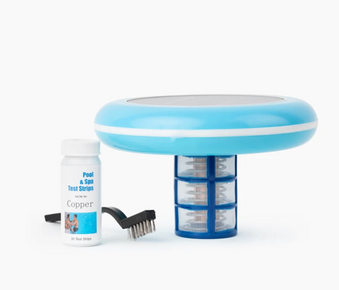
Solar ionizers use photovoltaic panels to generate electrical current that passes through copper and silver electrodes submerged in pool water. This releases mineral ions that destroy algae cells, kill bacteria and viruses, and prevent biofilm formation. The RiverPure Solar Pool Ionizer exemplifies this technology with efficient solar panels and quality electrodes that provide consistent ion production.
The process is entirely solar-powered, requiring no electrical connection or batteries. As long as the unit receives 6-8 hours of sunlight daily, it continuously produces copper and silver ions that maintain algae-free water. Learn more about what solar pool ionizers are and their operation.
Environmental Impact
Solar ionizers deliver impressive environmental benefits. They reduce chlorine usage by 50-85%, dramatically decreasing chemical production, transportation, and packaging waste. Zero electricity consumption means no carbon emissions from operation. Copper and silver are natural minerals that break down safely without accumulating harmful residues. The technology operates for years with minimal consumables only electrode replacement every 2-3 seasons. Over a pool's lifetime, a single ionizer prevents thousands of pounds of chlorine from entering the environment.
Cost & ROI
Initial investment ranges from $150-$400 depending on pool size and model. Annual operating costs are minimal just $30-$50 for replacement electrodes every 2-3 years and $20-$30 for copper test strips. Chemical savings of $300-$800 annually mean the ionizer pays for itself within 6-12 months. Over 10 years, total savings exceed $3,000-$7,000 compared to traditional chlorine-only systems.
Installation & Maintenance
Installation is remarkably simple just float the ionizer in your pool in an area receiving good sunlight. No plumbing modifications, electrical work, or professional installation required. Maintenance involves cleaning electrodes every 4-6 weeks with vinegar solution, testing copper levels weekly with test strips (targeting 0.2-0.4 ppm), and replacing electrode kits every 2-3 seasons using a solar pool ionizer replacement kit.
Best For
Solar ionizers are ideal for pool owners seeking significant chemical reduction without major investment, those wanting simple, low-maintenance eco technology, anyone with adequate sunlight exposure (6-8 hours daily), and pools of all types and sizes from 10,000 to 45,000+ gallons. They work excellently as standalone systems or combined with minimal chlorine, salt systems, or other eco technologies for enhanced results.
Salt Chlorine Generators
Salt chlorine generators (saltwater systems) produce chlorine from dissolved salt through electrolysis, eliminating the need to purchase, store, and handle chlorine products.
How It Works
Salt is added to pool water at concentrations of 2,700-3,400 ppm (about one-tenth ocean salinity). Water passes through a salt cell containing titanium plates. Electrical current splits salt molecules into sodium and chlorine gas, which dissolves as hypochlorous acid—the same sanitizing compound in traditional chlorine. After sanitizing the pool, chlorine converts back to salt, creating a self-regenerating cycle.
Environmental Benefits
Salt systems reduce environmental impact in several ways. They eliminate chlorine product manufacturing, packaging, and transportation emissions. No chlorine containers means less plastic waste in landfills. Reduced chemical handling decreases spill risk and groundwater contamination. The salt itself is a natural mineral with minimal environmental impact. However, salt systems still produce chlorine, so chemical reduction is limited compared to ionization or natural pools.
Cost & Energy Use
Initial investment ranges from $800-$2,500 for the salt cell system plus installation. Salt costs $50-$100 annually (much less than chlorine products). However, salt cells consume 200-500 watts of electricity when operating, adding $200-$400 to annual energy costs. Salt cells require replacement every 3-5 years at $400-$800 each. Total operating costs are similar to or slightly higher than traditional chlorine systems, though convenience and water quality improvements justify the investment for many pool owners.
Combining with Ionizers
Salt systems pair excellently with solar ionizers for enhanced eco performance. The ionizer handles algae control, allowing you to reduce salt cell output by 50-70%. This extends salt cell life to 6-7+ years, cuts electricity consumption in half, reduces salt usage proportionally, and lowers chlorine production to 0.5-1.5 ppm (from typical 1-3 ppm). The combination delivers superior water quality with significantly reduced environmental impact. Learn more about smarter pool sanitation strategies.
Best For
Salt systems suit pool owners wanting automated chlorine production without manual additions, those seeking softer, more comfortable water than traditional chlorine, anyone willing to invest in equipment for long-term convenience, and pools with adequate electrical infrastructure for salt cell operation. They're particularly popular for family pools where reduced chlorine smell and irritation are priorities.
Energy-Efficient Equipment
Pool equipment accounts for significant energy consumption, but modern eco-friendly alternatives dramatically reduce electricity usage and costs.
Variable-Speed Pumps
Traditional single-speed pumps run at full power constantly, consuming 1,500-2,500 watts. Variable-speed pumps adjust motor speed to match actual needs, typically running at lower speeds that use just 200-500 watts for routine circulation. This reduces energy consumption by 50-80%, saving $300-$800 annually on electricity. Variable-speed pumps also run quieter, last longer (10-15 years vs. 5-8 years), and provide better filtration through longer, gentler circulation.
Initial cost is $800-$1,500 (vs. $300-$600 for single-speed), but energy savings provide ROI within 2-3 years. Many utilities offer rebates of $100-$300 for variable-speed pump installation, further improving economics. In many regions, variable-speed pumps are now required by law for new pool construction.
Energy-Efficient Heaters
Pool heating is the largest energy expense for heated pools. Eco-friendly heating options include heat pumps (use electricity to transfer heat from air to water, 3-5x more efficient than gas heaters, cost $2,500-$5,000), solar heaters (use sun's energy to warm water, zero operating cost after installation, cost $3,000-$7,000), and gas heaters with high-efficiency ratings (90%+ efficiency vs. 75-85% for older models, cost $1,500-$3,500).
Heat pumps work best in moderate climates (above 50°F), while solar heaters excel in sunny regions with long swimming seasons. Combining a solar heater for primary heating with a heat pump or gas heater for backup provides optimal efficiency and reliability.
Efficient Filtration
Cartridge filters are the most eco-friendly option, requiring no backwashing (saves thousands of gallons annually), using less energy than DE or sand filters, and providing superior filtration (10-15 microns). They require periodic cleaning but eliminate water waste from backwashing. DE filters offer excellent filtration but require backwashing and DE powder additions. Sand filters are least eco-friendly due to frequent backwashing and lower filtration efficiency.
Automation Systems
Pool automation optimizes equipment operation for maximum efficiency. Smart controllers run pumps at optimal speeds and durations, operate heaters only when needed and at efficient temperatures, manage lighting to minimize energy waste, and monitor chemistry to prevent over-treatment. While automation systems cost $500-$2,000, they typically reduce energy and chemical costs by 20-40% through optimized operation.
Solar Heating & LED Lighting
Solar heating and LED lighting represent straightforward eco upgrades that deliver immediate environmental and cost benefits.
Solar Pool Heating
Solar pool heaters use roof-mounted panels to capture sun's energy and transfer it to pool water. Water circulates through black panels that absorb solar radiation, warming the water by 5-15°F depending on conditions. Systems typically cost $3,000-$7,000 installed but have zero operating costs and last 15-20 years with minimal maintenance.
In sunny climates, solar heating can extend swimming season by 2-4 months while eliminating gas or electric heating costs of $500-$2,000 annually. ROI is typically 3-7 years, after which heating is essentially free. Solar heaters work best when combined with pool covers that retain heat overnight and reduce evaporative cooling.
LED Pool Lighting
LED lights consume 75-85% less energy than incandescent pool lights while lasting 10-15 years (vs. 1-2 years for incandescent). A typical LED pool light uses 20-40 watts compared to 300-500 watts for incandescent. For pools with multiple lights running several hours nightly, annual savings reach $100-$300.
LED lights cost $200-$500 each (vs. $50-$150 for incandescent) but pay for themselves within 2-4 years through energy savings and eliminated bulb replacements. Modern LED lights offer color-changing capabilities, remote control, and programmable effects that enhance pool aesthetics while reducing energy consumption.
Solar Pool Covers
Solar covers (also called solar blankets) serve multiple eco functions. They reduce evaporation by 95%, saving thousands of gallons annually and reducing water heating needs. They capture solar energy, warming pool water by 10-15°F through passive solar gain. They reduce chemical consumption by preventing UV degradation of chlorine. They keep debris out, reducing filtration load and cleaning time.
Solar covers cost $50-$300 depending on pool size and quality. They pay for themselves within one season through reduced water, heating, and chemical costs. Automatic cover reels ($200-$800) make daily cover use more convenient, maximizing benefits.
Renewable Energy Integration
For ultimate eco performance, integrate pool equipment with home solar panels or renewable energy systems. Solar panels can power variable-speed pumps, salt cells, heaters, and lighting with zero grid electricity. While home solar installation is a major investment ($15,000-$30,000), pools represent 20-40% of home energy use, making them ideal candidates for solar power. Many homeowners install solar specifically to offset pool energy consumption.
Natural & Biological Pools
Natural pools represent the ultimate eco pool system, using biological filtration and aquatic plants instead of chemicals for water purification.
How Natural Pools Work
Natural pools divide into two zones: a swimming area and a regeneration zone containing aquatic plants and beneficial bacteria. Water circulates between zones, with plants and microorganisms removing contaminants, consuming nutrients that would feed algae, oxygenating water naturally, and creating a balanced ecosystem. The result is crystal-clear, chemical-free water that's safe for swimming and supports aquatic life.
Design & Construction
Natural pools require larger footprint than conventional pools typically 50-100% larger to accommodate the regeneration zone. Construction costs range from $50,000-$100,000+ depending on size and complexity, significantly more than conventional pools. However, operating costs are minimal just electricity for circulation pump and occasional plant maintenance. No chemicals, no heating (unless desired), and minimal equipment create ongoing savings of $1,000-$2,000 annually.
Maintenance Requirements
Natural pools require different maintenance than conventional pools. Plant care includes seasonal trimming, dividing, and replanting. Sediment removal from regeneration zone occurs annually or bi-annually. Beneficial bacteria populations must be maintained through proper plant health and water balance. Skimming and debris removal are still necessary. Overall maintenance time is similar to conventional pools but focuses on biological balance rather than chemical management.
Aesthetic & Ecological Benefits
Natural pools offer unique advantages beyond eco performance. They create beautiful, pond-like aesthetics that blend with landscaping. They support biodiversity, attracting beneficial insects, birds, and wildlife. They provide year-round visual interest through seasonal plant changes. They eliminate all chemical exposure for swimmers and the environment. They create natural habitat and educational opportunities for children to learn about ecosystems.
Limitations
Natural pools aren't for everyone. They require significant space for regeneration zones, making them impractical for small yards. Water temperature is typically cooler (65-75°F) unless heated, which defeats eco purpose. Water clarity, while excellent, differs from the crystal-clear blue of chlorinated pools—natural pools have a slight greenish tint from plants. They're not suitable for high-bather loads or commercial use. Climate matters—they work best in temperate regions with moderate temperatures and adequate rainfall.
Building Your Eco Pool System
Creating an eco pool system involves selecting technologies that match your priorities, budget, and pool characteristics. Here's how to build an effective eco system as a beginner.
Starter Eco System
For beginners on a budget, start with these high-impact, low-cost upgrades:
- Solar Pool Ionizer: $150-$400 - Reduces chemicals by 50-85%, zero operating cost, simple installation
- Solar Pool Cover: $50-$300 - Reduces evaporation, captures heat, saves water and chemicals
- LED Pool Lights: $200-$500 per light - Cuts lighting energy by 75-85%, lasts 10-15 years
- Total Investment: $400-$1,200
- Annual Savings: $400-$900
- ROI: 6-18 months
This starter system delivers immediate environmental and cost benefits without major investment or complexity. It's perfect for testing eco pool concepts before committing to larger upgrades.
Intermediate Eco System
For pool owners ready for more substantial upgrades:
- Solar Pool Ionizer: $150-$400 - Foundation for chemical reduction
- Variable-Speed Pump: $800-$1,500 - Cuts pump energy by 50-80%
- Salt Chlorine Generator: $800-$2,500 - Automated chlorine production, works with ionizer
- Solar Pool Cover + Reel: $250-$1,100 - Maximizes water and heat conservation
- LED Lighting: $400-$1,000 (2-3 lights) - Complete lighting efficiency
- Total Investment: $2,400-$6,500
- Annual Savings: $800-$1,800
- ROI: 18-48 months
This system provides comprehensive eco performance with automated operation and minimal maintenance. It's ideal for pool owners committed to sustainability who want measurable environmental impact reduction.
Advanced Eco System
For maximum eco performance and long-term sustainability:
- Solar Pool Ionizer: $150-$400 - Chemical reduction foundation
- Variable-Speed Pump: $800-$1,500 - Energy-efficient circulation
- Solar Pool Heater: $3,000-$7,000 - Zero-cost heating from renewable energy
- Heat Pump (backup): $2,500-$5,000 - Efficient heating for cloudy periods
- Cartridge Filter: $400-$1,200 - No-backwash water conservation
- Automation System: $500-$2,000 - Optimized equipment operation
- Solar Cover + Auto Reel: $500-$1,500 - Maximum heat retention
- LED Lighting: $600-$1,500 (3-5 lights) - Complete lighting upgrade
- Home Solar Integration: $15,000-$30,000 (optional) - Renewable power for all equipment
- Total Investment: $8,450-$20,100 (without home solar)
- Annual Savings: $1,500-$3,000
- ROI: 3-7 years
This system achieves 70-90% reduction in environmental impact compared to traditional pools while providing superior water quality, comfort, and automation. It's the gold standard for eco pool systems in 2026.
Retrofit vs. New Construction
Most eco technologies can be retrofitted to existing pools. Solar ionizers, LED lights, solar covers, and variable-speed pumps install easily without pool modifications. Salt systems and solar heaters require plumbing work but are still feasible retrofits. Natural pools and some advanced systems work best in new construction where design can accommodate their requirements. Consult with pool professionals to assess retrofit feasibility for your specific pool.
Prioritization Strategy
If budget is limited, prioritize upgrades by ROI and environmental impact. Start with solar ionizer and solar cover (fastest ROI, immediate chemical and water savings). Add variable-speed pump next (largest energy savings, required in many regions). Upgrade to LED lighting as bulbs burn out (no rush, but significant long-term savings). Consider salt system or solar heating based on your priorities (convenience vs. heating costs). Add automation last (enhances other systems but not essential). Understanding how solar ionizers reduce yearly pool management costs helps with prioritization.
Final Thoughts & Recommendation
Eco pool systems represent the future of responsible pool ownership, combining environmental stewardship with superior water quality, lower operating costs, and reduced maintenance burden. The technology has matured to the point where eco pools are no longer experimental or niche they're mainstream, proven, and accessible to pool owners at all budget levels.
For beginners, the path to eco pool ownership doesn't require overwhelming investment or complexity. Start with a solar pool ionizer like the standard capacity model or high-capacity unit depending on pool size. Add a solar cover to reduce evaporation and capture heat. Upgrade to LED lighting as bulbs burn out. These simple steps deliver immediate environmental benefits and cost savings while you plan larger upgrades.
As budget allows, invest in a variable-speed pump for dramatic energy reduction. Consider solar heating if you're in a sunny climate with high heating costs. Explore salt systems combined with ionizers for automated, low-chemical sanitation. Each upgrade builds on previous ones, creating a comprehensive eco system that reduces environmental impact by 50-80% compared to traditional pools.
The beauty of eco pool systems is that they're not all-or-nothing. Every upgrade, no matter how small, contributes to sustainability and delivers measurable benefits. A pool owner who installs just a solar ionizer and solar cover achieves significant environmental improvement while saving hundreds of dollars annually. Those who invest in comprehensive systems enjoy even greater benefits, but the journey can be gradual and budget-conscious.
Remember that eco pools aren't just about environmental responsibility—they're about better swimming experiences. Softer water with fewer chemicals is gentler on skin and eyes. Quieter variable-speed pumps create peaceful backyard environments. Automated systems free up time for swimming rather than maintenance. Natural aesthetics from solar covers and thoughtful equipment placement enhance rather than detract from pool enjoyment.
The principles of maintaining pool water stability apply equally to eco systems regular testing, proper balance, and consistent maintenance ensure optimal performance. The difference is that eco systems achieve these goals with dramatically reduced environmental impact and operating costs.
Whether you're building a new pool or upgrading an existing one, eco pool systems offer compelling advantages that benefit your family, your budget, and the planet. Start your eco pool journey today with simple, high-impact upgrades, and expand your system as budget and priorities allow. The investment in sustainability pays dividends for years to come.
Key Takeaways
- Eco pool systems reduce environmental impact by 50-80% through reduced chemical usage, lower energy consumption, water conservation, and renewable energy integration while delivering superior water quality and swimmer comfort.
- Solar ionizers provide the best entry point for eco pool beginners $150-$400 investment reduces chemicals by 50-85%, operates on solar power with zero electricity cost, and pays for itself within 6-12 months through chemical savings.
- Variable-speed pumps deliver largest energy savings by reducing pump electricity consumption by 50-80% ($300-$800 annually), running quieter, lasting longer, and providing better filtration ROI achieved within 2-3 years despite higher initial cost.
- Combining technologies maximizes benefits: Solar ionizer + salt system reduces chlorine by 70% and extends salt cell life; ionizer + variable-speed pump + solar cover achieves 60-70% total environmental impact reduction for $1,000-$2,000 investment.
- Start small and expand gradually begin with ionizer and solar cover ($200-$700), add variable-speed pump when budget allows ($800-$1,500), upgrade lighting to LED over time ($200-$500 per light), and consider solar heating or automation as final steps.
- ROI varies by technology: Solar ionizers and covers pay back in 6-18 months, variable-speed pumps in 2-3 years, LED lights in 2-4 years, solar heaters in 3-7 years, and salt systems in 3-5 years prioritize by fastest ROI and highest environmental impact.
- Eco pools aren't more difficult to maintain many systems like ionizers and automation actually simplify maintenance while reducing time spent on chemical balancing, equipment operation, and troubleshooting compared to traditional chlorine-only pools.
By following these key takeaways, you can create a more eco-friendly pool that saves energy, reduces chemical use, and lowers costs over time. Start with simple upgrades, build gradually, and combine technologies strategically to maximize both environmental impact and long-term ROI proving that sustainable pools are not only achievable, but also easier to maintain and enjoy.