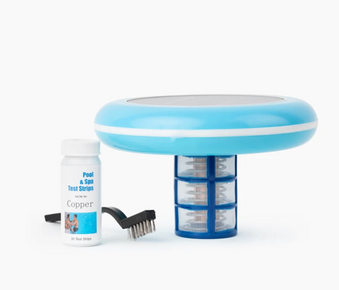
TL;DR: By 2026, solar pool ionizers have evolved from a niche accessory to a core component of smart, sustainable pool care. Innovations in mineral science, system integration, and smart technology are delivering crystal-clear water with up to 85% less chlorine, creating healthier swimming experiences and reducing environmental impact. This guide explores the key innovations shaping the future of pools.
SEO Summary: Explore how solar pool ionizer innovations in 2026 are redefining pool maintenance. This guide covers smart mineral management, integration with salt systems, advanced algae prevention strategies, and the role of ionizers in sustainable water care for both pools and ponds. Discover the future of chlorine-free, automated, and eco-friendly swimming pools.
Table of Contents
1. Smart Mineral Management & Staining Prevention
The most significant innovation for 2026 is the move from simple ion release to intelligent mineral management. While copper ions are incredibly effective against algae, managing their levels is crucial to prevent the blue-green copper staining that was a concern with earlier systems. Modern ionizers are designed with precision controls and smart sensors that maintain the "sweet spot" of 0.2-0.4 ppm, where algae is controlled but surfaces remain pristine.
This intelligent control is achieved through a closed-loop system. A micro-sensor constantly measures free copper ion concentration in the water. This data is fed to a small logic board that modulates the electrical current to the copper electrode. If levels dip below 0.2 ppm, the current increases to boost ion production. If they approach 0.4 ppm, the current reduces or pauses. This precise, real-time modulation ensures consistent sanitization power while completely eliminating the risk of over-mineralization that leads to unsightly stains on pool plaster, vinyl, or tile.
This is part of a broader solar pool ionizer strategy focused on water stability. Future systems integrate automatic pH monitoring, as high pH is a primary driver of staining. By maintaining perfect water balance, the ionizer's minerals stay effectively dissolved in the water, doing their job without any undesirable side effects. This smart management turns a potential drawback into a non-issue.
2. The Hybrid System Revolution
The future is not about choosing one technology over another, but about synergy. The integration of solar pool ionizers with salt systems represents the gold standard for 2026. In this hybrid model, the salt chlorine generator provides a low, steady baseline of chlorine (as low as 0.5-1.5 ppm) to handle bacteria and oxidize organics.
Concurrently, the solar ionizer delivers a constant stream of copper and silver ions for unparalleled algae prevention. This division of labor allows each system to operate at a lower, more efficient level. The salt cell lasts years longer due to reduced workload, and the pool enjoys multi-barrier protection that is more resilient than any single system. This hybrid approach is the core of a modern, low-maintenance pool strategy.
The synergy creates a more stable and comfortable swimming environment. Chlorine's primary job shifts from fighting a constant, losing battle against algae to efficiently oxidizing bather waste and bacteria. This results in significantly lower levels of combined chlorine (chloramines), which are responsible for the "chlorine smell" and skin irritation. The water feels softer, and swimmers experience none of the harsh side effects associated with traditional high-chlorine pools. The operational benefits are equally compelling:
- Extended Equipment Life: Salt cells operating at 40-60% reduced output can last 5-7 years instead of the typical 3-5, delaying a major replacement cost.
- Reduced Chemical Demand: The need for supplemental algaecides, weekly shock treatments, and clarifiers is virtually eliminated, simplifying the chemical regimen.
- Energy Efficiency: With the salt cell and pool pump running less frequently or at lower speeds, overall energy consumption for pool sanitation can drop by 30-50%.
- Predictable Maintenance: The system creates a highly forgiving water balance. pH tends to be more stable, and water clarity is maintained even during periods of heavy use or after rainstorms.
3. From Reactive to Proactive Pool Care
A key innovation is the shift from fighting problems to preventing them entirely. Instead of following the old cycle of waiting for algae to appear and then shocking the pool, solar ionizers maintain a constant, hostile environment for algae spores. This proactive barrier means pool owners rarely, if ever, need to deal with a green pool recovery process.
This principle of prevention is expanding into water balance itself. Future systems are moving toward predictive analytics, using data on weather, bather load, and water temperature to automatically adjust ion output and circulation schedules. Pool care is becoming less about weekend chemistry chores and more about overseeing an automated system that maintains perfect balance around the clock.
The intelligence of these systems stems from integrated sensor arrays and cloud-based algorithms. A smart controller acts as the central hub, continuously analyzing data from multiple inputs to anticipate sanitizer demand before water quality degrades. This transforms pool maintenance from a manual, reactive task into a fully automated, predictive process. The core components enabling this shift include:
- Multi-Parameter Water Sensors: Continuously monitor free chlorine (if used), pH, ORP (Oxidation-Reduction Potential), copper ion levels, and temperature, providing a real-time chemical snapshot.
- Environmental Inputs: Integrate local weather forecasts for temperature, rainfall, and UV index to predict changes in algae growth potential and chemical dilution.
- Usage & Bather Load Tracking: Use motion sensors or calendar integrations to anticipate heavy use (like weekend parties) and pre-boost sanitization cycles.
- Adaptive Control Algorithms: Cloud-based software analyzes all data streams, learning your pool's unique patterns to automatically adjust pump run times, ionizer output, and salt cell production for optimal efficiency and water quality.
4. Applications Beyond the Backyard Pool
The innovation in solar ionization isn't confined to swimming pools. The technology is being effectively adapted for larger-scale water management, demonstrating its versatility. A prime example is its use in farm pond algae treatment, where providing chemical-free, solar-powered control for large volumes of water is a major advantage.
This cross-application drives innovation. The challenges of treating a large, natural pond lead to developments in ionizer durability, optimal placement for circulation in open water, and managing mineral levels in diverse environments. Lessons learned here feed back into making residential pool ionizers more robust and effective, proving the technology's value across the entire spectrum of water care.
The scalability and sustainability of solar ionization are unlocking applications across commercial, municipal, and recreational sectors. As the technology proves its reliability in harsh, large-scale environments, it is being engineered into systems for public water features and critical infrastructure. This expansion is solving problems where traditional chemical treatments are costly, logistically challenging, or environmentally problematic. Key emerging applications include:
- Municipal Fountains & Decorative Water Features: Providing clear, algae-free water in public spaces without the constant handling of chemicals, reducing maintenance costs and public exposure to treatments.
- Commercial Aquaculture & Fish Farms: Managing water quality in holding tanks and ponds to prevent disease without antibiotics or harsh chemicals that could contaminate stock or the surrounding ecosystem.
- Resort & Hotel Infinity Pools: Maintaining the pristine visual appeal of large, often irregularly-shaped luxury pools with minimal operational downtime for chemical adjustments.
- Water Storage & Irrigation Reservoirs: Preventing biofilm and algae growth in tanks and open reservoirs that supply water for agriculture or landscaping, protecting irrigation systems from clogs.
5. The Connected & Automated Pool Ecosystem
By 2026, the solar pool ionizer is no longer a floating accessory but a integrated node in a smart home ecosystem. It connects via Wi-Fi to a central pool controller or smartphone app, providing real-time data on copper ion levels, solar panel efficiency, and electrode health. This connectivity enables true automation.
The system can sync with weather forecasts to boost ion output before a heavy rainstorm that might dilute chemicals. It can communicate with variable-speed pumps to increase circulation during peak sun hours when ion production is highest. If mineral levels drift, the system can send an alert or even coordinate with a smart chemical feeder to adjust pH automatically. This connected approach, central to a modern pool care strategy, makes maintaining perfect water as simple as checking a notification on your phone.
This interconnected ecosystem creates a unified digital dashboard for the entire pool. From a single app, owners can monitor and adjust every critical parameter. The system's intelligence goes beyond simple alerts; it can run self-diagnostics, predict maintenance needs, and even generate seasonal reports on chemical usage and cost savings. The value lies in the seamless coordination of all components, which delivers tangible benefits:
- Unified Control & Monitoring: Manage ionizer, pump, heater, lights, and cleaners from one interface, with all vital stats (chemical levels, pump status, energy use) displayed on a single screen.
- Predictive Maintenance Alerts: Receive notifications for low electrode life, declining solar panel efficiency, or filter pressure build-up before performance drops or problems occur.
- Automated Efficiency Modes: The system can enter optimized energy-saving modes during low-usage periods, adjusting pump speeds and ionizer output to match predicted demand, significantly cutting electricity costs.
- Remote Diagnostics & Support: Service technicians can be granted temporary, secure access to the system's data for remote troubleshooting, often resolving issues without a service call.
Key Takeaways
- The 2026 solar ionizer is an intelligent mineral manager, precisely controlling copper levels to prevent algae without causing staining.
- Hybrid systems combining ionizers with salt chlorine generators are the new standard, offering superior protection, extending equipment life, and reducing chemical and energy use.
- Pool care has shifted from reactive problem-solving (like green pool recovery) to proactive, 24/7 prevention using mineral barriers and predictive analytics.
- Solar ionization technology is proving its value beyond pools in applications like farm pond treatment and public water features, driving broader innovation in durability and system design.
- Connectivity and automation integrate the ionizer into a smart pool ecosystem, enabling centralized control, predictive maintenance, and truly hands-off water management.
Conclusion
The future of swimming pools, as shaped by solar pool ionizer innovations in 2026, is clear, sustainable, and intelligent. The journey from a simple algae-fighting device to an integrated, smart water management system is complete. Pool owners are no longer chemists but overseers of a self-regulating aquatic environment that prioritizes swimmer health, equipment longevity, and environmental responsibility.
These innovations from stain-free mineral science and hybrid system synergy to proactive prevention and smart connectivity deliver on the promise of a simpler, more enjoyable pool ownership experience. The result is water that is not merely sanitized, but truly enhanced: softer, clearer, and fresher. Adopting these technologies means stepping into a future where the pool maintains itself, leaving you with nothing to do but dive in and enjoy.