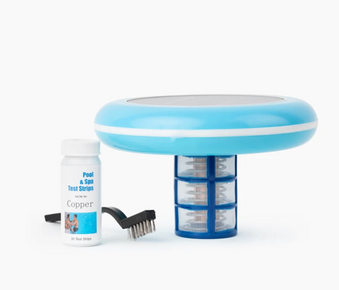
TL;DR: Changing water quality is a reality for many pool owners, whether from seasonal variations, source water fluctuations, environmental factors, or usage patterns. Solar pool ionizers are uniquely suited to handle these variations through stable chemistry that resists change, adaptive operation that responds to conditions, and built-in resilience that maintains water quality through fluctuations. This guide explores how solar ionization helps pools navigate changing water quality, from seasonal shifts to unexpected events, keeping water consistently clear and healthy regardless of what changes around it.
SEO Summary: 2026 guide to solar pool ionizer for pools with changing water quality: handling seasonal variations, source water fluctuations, environmental factors, and adaptive water management.
Table of Contents
- The Challenge of Changing Water Quality
- Seasonal Water Quality Variations
- Source Water Fluctuations
- Environmental Factors and Their Effects
- Usage Patterns and Water Quality
- Stable Chemistry as a Buffer
- Adaptive Operation and Response
- Built-in Resilience Factors
- Management Strategies for Changing Quality
- Conclusion & Key Takeaways
The Challenge of Changing Water Quality
Water quality is not static it changes constantly in response to a wide range of factors. For pool owners, these changes can be a source of frustration and uncertainty. Understanding why water quality changes helps explain why solar pool ionizers are particularly effective at maintaining consistency through fluctuations.
- Seasonal variations affect water quality in predictable ways. Spring brings pollen and increased biological activity. Summer brings heat, more swimmers, and higher contaminant loads. Fall brings leaves and cooling temperatures. Each season requires different management approaches.
- Source water quality fluctuates for many pool owners. Municipal water supplies can change seasonally, with different treatment chemicals and mineral content. Well water quality can vary with rainfall, groundwater levels, and seasonal factors.
- Environmental factors include weather events, nearby construction, pollen counts, and airborne pollutants. A single heavy rain can dramatically alter water chemistry. Wildfire smoke can introduce ash and affect pH.
- Usage patterns create their own variations. A pool party with many swimmers introduces sunscreen, body oils, and other contaminants. A quiet week allows water to stabilize. These swings challenge traditional sanitation methods.
- Chemical additions themselves cause changes. Every time chlorine, algaecide, or clarifier is added, water chemistry is temporarily disrupted. The cumulative effect of these disruptions can be significant.
- Equipment operation affects water quality. Pump runtime, filter condition, and heater use all influence how water behaves. Changes in any of these factors can ripple through the entire system.
Solar pool ionizers address changing water quality through fundamentally stable chemistry that resists fluctuations and adaptive operation that responds to conditions. The comprehensive solar pool ionizer vs traditional systems in 2026 comparison explains why ionization is more resilient to change.
Seasonal Water Quality Variations
Seasonal changes are the most predictable source of water quality variation, yet they challenge traditional pool management. Solar ionizers handle these transitions smoothly through automatic adjustment and stable chemistry.
- Spring brings awakening biological activity. As water warms from 50 to 70 degrees, algae and bacteria become increasingly active. Pollen counts rise, introducing fine particles that can cloud water. Temperature-compensated ionizers gradually increase output to match rising demand, ensuring sanitation keeps pace with biological activity.
- Summer peak presents the greatest challenges. High temperatures accelerate biological growth. Increased swimmer load introduces more contaminants. Sunlight is intense, which in chlorinated pools accelerates chlorine dissipation. Ionized pools maintain stable copper levels regardless of sunlight, and temperature compensation ensures output matches demand.
- Fall transition sees decreasing biological activity but new challenges from falling leaves and cooling water. The ionizer automatically reduces output as water cools, preserving electrode life. Leaf debris may increase particle load, but ionic flocculation helps the filter handle it effectively.
- Winter operation in non-freezing climates continues at reduced levels. Biological activity is minimal, and the ionizer maintains low copper levels sufficient for prevention. In freezing climates, proper winterization protects equipment until spring.
- Seasonal transitions are smooth with temperature-compensated controllers. The system adjusts gradually, avoiding the abrupt changes that can stress water quality in traditionally managed pools.
- Phosphate levels often fluctuate seasonally, with spring and fall bringing higher loads from decaying organic matter. Regular testing and treatment as needed keep nutrients in check.
Seasonal variations are managed automatically by modern ionizers, requiring minimal owner intervention. The seasonal maintenance schedules using solar pool ionizers 2026 provides detailed guidance for each season.
Source Water Fluctuations
Source water quality is a variable that many pool owners overlook, yet it can significantly affect pool chemistry. Solar ionizers offer advantages in managing source water fluctuations.
- Municipal water supplies vary seasonally and even weekly. Surface water sources may have different mineral content than groundwater sources. Treatment chemicals like chlorine and chloramines fluctuate. Alkalinity and pH can vary. Ionized pools tolerate these variations well because they do not rely on the delicate chemical balance required by chlorine systems.
- Well water presents its own challenges. Iron and manganese are common, causing staining and cloudiness when oxidized. Hardness can be high, leading to scale formation. Stable pH in ionized pools helps keep metals in solution, preventing precipitation. Sequestering agents can be used effectively when needed.
- Testing source water before adding significant volume helps anticipate changes. A simple test of pH, alkalinity, calcium hardness, and metals provides valuable information. If source water quality is problematic, pretreatment options are available.
- Pretreatment options include whole-house water softeners for hardness, iron filters for well water, and activated carbon for chlorine and chloramines. For pools with particularly challenging source water, dedicated pretreatment may be worthwhile.
- Rainwater harvesting provides an alternative source with consistently low mineral content. Rainwater is soft, low in dissolved solids, and free from chlorine. Using rainwater for top-ups can actually improve water quality over time.
- Gradual introduction of source water minimizes disruption. Adding large volumes quickly can shock the system. Spreading top-ups over time allows the pool's chemistry to adjust gradually.
Source water fluctuations are manageable with proper testing and gradual introduction. The discussion of transforming water stability through a solar pool ionizer in 2026 explains how stable chemistry tolerates variations that would disrupt chlorinated pools.
Environmental Factors and Their Effects
Environmental factors beyond seasonal changes can significantly affect water quality. Solar ionizers provide resilience against these unpredictable events.
- Heavy rain events are among the most common environmental challenges. Rainwater is acidic, typically with pH around 5.6, which can lower pool pH significantly. It dilutes chemical concentrations and introduces airborne contaminants. Ionized pools recover quickly with systematic post-rain protocols: test pH and copper, adjust as needed, and run extended filtration.
- Wildfire smoke and ash can affect pools in fire-prone regions. Ash is alkaline and can raise pH. Fine particles can cloud water. Testing pH and treating with acid if needed, along with extended filtration, restores water quality. The stable chemistry of ionized pools helps buffer these effects.
- High pollen counts introduce fine organic particles that can cause haze. Ionic flocculation helps clump pollen for filtration, and the ionizer's continuous operation ensures these particles are removed efficiently.
- Nearby construction or landscaping activities can introduce dust and debris. Increased particle load may temporarily challenge the filter, but ionic flocculation helps manage it. Running the pump continuously during active periods prevents accumulation.
- Temperature extremes, whether heat waves or cold snaps, affect biological activity and equipment operation. Temperature-compensated ionizers adjust output automatically, maintaining appropriate sanitation levels through temperature swings.
- Wind events can introduce debris and affect water circulation. Skimmer baskets may fill quickly, and surface debris may increase. Regular monitoring during windy periods prevents problems.
Environmental factors are unpredictable but manageable with solar ionization. The how weather affects solar ionizer performance resource provides detailed information on handling various environmental challenges.
Usage Patterns and Water Quality
How a pool is used dramatically affects water quality. Solar ionizers adapt to changing usage patterns through continuous operation and response to demand.
- Bather load is the most significant usage factor. Each swimmer introduces contaminants: sunscreen, body oils, sweat, and skin cells. A pool party with many swimmers can dramatically increase demand on the sanitation system. Copper consumption increases during heavy use, and ionizers respond by maintaining output, but levels may temporarily decline.
- Post-party recovery is systematic. After heavy use, test copper and pH, increase ionizer output temporarily if needed, run continuous filtration for 24 to 48 hours, and consider non-chlorine shock if water appears dull. The ionic field provides continuous sanitation throughout recovery.
- Quiet periods allow water to stabilize. With fewer swimmers, copper consumption decreases, and levels may drift toward the higher end of the target range. The ionizer's temperature compensation still operates, but output may be reduced if water is cooler.
- Regular versus sporadic use patterns affect long-term trends. Pools used daily have different needs than those used only on weekends. Tracking copper consumption over time reveals these patterns and allows predictive adjustment.
- Children versus adult swimmers introduce different contaminant loads. Children may spend more time in the water and introduce different products. Awareness of usage patterns helps anticipate needs.
- Pets swimming in the pool introduce their own contaminants. Dogs, in particular, can introduce bacteria and organic matter. Copper's broad-spectrum sanitation handles these challenges effectively.
Usage patterns are highly variable, but solar ionizers provide consistent protection through all variations. The solar pool ionizer systems supporting cleaner water in 2026 provides guidance on adapting to different usage scenarios.
Stable Chemistry as a Buffer
Stable chemistry is the foundation of resilience against changing water quality. Solar ionizers maintain stability that buffers against external variations.
- pH stability is the most important buffer. In chlorinated pools, pH swings of 0.2 to 0.4 units weekly are common, making water vulnerable to precipitation and reduced sanitizer effectiveness. In ionized pools, pH drifts slowly and predictably, typically 0.1 to 0.2 units per month. This stability means that when external factors try to change pH, the water resists.
- Alkalinity stability supports pH buffering. Without constant chemical additions, alkalinity remains in its optimal range, providing the buffering capacity that helps water resist pH changes from rain or other sources.
- Copper levels change slowly, providing a stable sanitation baseline. Even when external factors introduce contaminants, the existing copper continues working. The slow change rate means there is always time to respond.
- Calcium stability prevents scaling and corrosion. Stable pH and reduced chemical additions keep calcium in solution, preventing the precipitation that can cloud water and damage equipment.
- Total dissolved solids accumulate slowly, at one-tenth the rate of chlorinated pools. This means that water quality remains stable for years rather than requiring frequent draining to reset TDS.
- The combination of stable parameters creates a system that resists change. When external factors try to push water out of balance, the stable chemistry pushes back.
Stable chemistry is the first line of defense against changing water quality. The discussion of transforming water stability through a solar pool ionizer in 2026 explains how this stability is achieved and maintained.
Adaptive Operation and Response
Beyond stable chemistry, modern solar ionizers actively adapt to changing conditions through intelligent operation and response mechanisms.
- Temperature compensation automatically adjusts output based on water temperature. When water warms and biological activity increases, output increases. When it cools, output decreases. This ensures that sanitation always matches demand, regardless of seasonal or weather-related temperature changes.
- Bather load response is handled automatically by some advanced systems. By detecting changes in water chemistry or using connected sensors, the system can increase output temporarily after heavy use, then gradually return to baseline.
- Weather anticipation through forecast integration allows proactive preparation. If heavy rain is predicted, the system can increase output preemptively, strengthening the ionic field before contaminants arrive.
- Closed-loop control with continuous copper sensors provides the ultimate adaptation. When copper levels drop, output increases immediately. When they rise, output decreases. This real-time response maintains optimal levels through all variations.
- Self-diagnostic capabilities monitor system health and alert owners to developing issues. If solar panel output drops due to shading or soiling, the system notifies the owner before water quality is affected.
- Learning algorithms improve adaptation over time. After a year of operation, the system knows how your pool responds to various conditions and can refine its responses accordingly.
Adaptive operation transforms pool management from reactive to proactive. The automated seasonal adjustments enabled by solar pool ionizers 2026 resource explores these adaptive capabilities in depth.
Built-in Resilience Factors
Several inherent characteristics of solar ionization provide resilience against changing water quality, even without active adaptation.
- * The ionic field persists through disruptions. Unlike chlorine, which can be consumed rapidly by contaminants, copper ions remain active indefinitely. When a contamination event occurs, the existing copper continues working throughout. * Slow change rates mean there is always time to respond. Copper levels change over days and weeks, not hours. This gives owners time to notice issues and take corrective action before water quality is seriously affected. Multiple mechanisms of action provide redundancy. If one pathway for contaminant control is temporarily overwhelmed, others continue working. This multi-faceted approach provides resilience that single-mechanism sanitizers lack. No chemical consumption means no sudden depletion. In chlorinated pools, a heavy bather load can consume chlorine rapidly, leaving the pool under-sanitized within hours. Copper is not consumed by the sanitation process, so levels remain stable even during heavy use. Compatibility with other treatments allows layered protection. If additional measures are needed during extreme events, non-chlorine shock, enzyme treatments, or phosphate removers can be used without interfering with the ionizer. * Forgiveness for owner absence is built in. If you go on vacation for two weeks, your ionized pool will maintain itself. Copper levels will decline slowly, but the ionic field will persist, and the pool will remain safe.
Built-in resilience factors mean that ionized pools handle changing water quality better than traditional systems. The bringing predictable pool maintenance with a solar pool ionizer resource provides guidance on leveraging these resilience factors.
Management Strategies for Changing Quality
While solar ionizers provide exceptional resilience, proactive management strategies further enhance their ability to handle changing water quality.
- Regular testing provides early warning of changes. Weekly copper and pH tests, monthly alkalinity and phosphate checks, and periodic calcium and TDS tests create a complete picture of water quality trends. Record keeping reveals patterns. A simple log of test results, weather events, usage, and adjustments helps identify correlations and predict future needs. After a season of tracking, you'll know how your pool responds to various changes. Anticipatory adjustments based on forecasts can prevent problems. If a heat wave is predicted, you can ensure copper is at the higher end of the target range before it arrives. If heavy rain is forecast, you can be ready to test and adjust afterward. Phosphate management provides an extra layer of protection. Regular testing and treatment keep nutrient levels low, reducing the risk of algae blooms during challenging periods. Filter maintenance ensures that the physical removal system is always ready. Clean filters operate more efficiently, removing particles faster and maintaining clarity through changing conditions. Emergency supplies on hand allow quick response. Keeping a small supply of pH adjuster, non-chlorine shock, and phosphate remover ensures you can address issues promptly when they arise.
Management strategies are simple but effective. The operational guidelines for solar pool ionizer in 2026 provide detailed protocols for each aspect of proactive management.
Conclusion & Key Takeaways
Changing water quality is a reality for every pool owner, but solar pool ionizers provide the tools to handle these variations with confidence. Stable chemistry buffers against external changes. Adaptive operation responds to conditions in real time. Built-in resilience ensures continuous protection through disruptions.
Seasonal variations are managed automatically through temperature compensation. Source water fluctuations are tolerated thanks to stable chemistry that doesn't rely on delicate balance. Environmental factors like rain, pollen, and ash are handled through systematic response protocols. Usage patterns from quiet weeks to pool parties are accommodated by continuous sanitation that adapts to demand.
For pool owners who have struggled with water quality that never seems stable, solar ionization offers a path to consistency. The same water that once fluctuated wildly becomes predictable and manageable. The same pool that required constant attention becomes a source of relaxation rather than stress.
Key Takeaways
- Changing water quality results from seasonal variations, source water fluctuations, environmental factors, and usage patterns. Understanding these causes is essential for effective management. Seasonal variations are handled automatically by temperature-compensated ionizers. Spring warm-up, summer peak, fall transition, and winter operation occur smoothly without owner intervention. Source water fluctuations are tolerated because ionized pools do not rely on delicate chemical balance. Testing source water and introducing it gradually minimizes disruption. Environmental factors like rain, pollen, and ash require systematic response but are manageable with proper protocols.
- Usage patterns from quiet periods to heavy use are accommodated by continuous sanitation that adapts to demand. Post-party recovery protocols restore water quality quickly. Stable chemistry buffers against external changes. pH stability, alkalinity buffering, and slow change rates mean water resists disruption. Adaptive operation through temperature compensation, bather load response, weather anticipation, and closed-loop control actively maintains optimal conditions. Built-in resilience factors including the persistent ionic field, slow change rates, multiple mechanisms of action, and no chemical consumption provide layers of protection. Proactive management strategies enhance resilience. Regular testing, record keeping, anticipatory adjustments, phosphate control, filter maintenance, and emergency supplies all contribute. Solar pool ionizers provide confidence in the face of changing water quality. The combination of stable chemistry, adaptive operation, and built-in resilience means your water remains clear and healthy regardless of what changes around it.
Every pool owner deserves water that remains consistently clear and healthy, even as conditions change around it. Solar pool ionizers make this achievable through technology that adapts to variation, chemistry that resists disruption, and resilience that provides confidence.