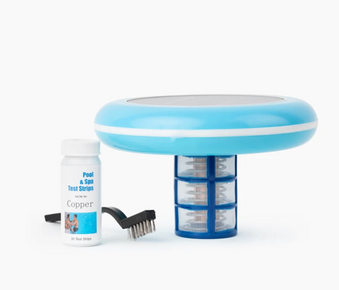
TL;DR: Cleaner water is the fundamental promise of solar pool ionizer systems, and in 2026, this promise is being realized through multiple technological pathways. Unlike chlorine-based sanitation that introduces chemical byproducts while attempting to control contaminants, solar ionization creates water that is genuinely cleaner at the molecular level. Copper and silver ions provide continuous sanitation without forming chloramines or other disinfection byproducts. Ionic flocculation removes microscopic particles that cloud water. Stable chemistry prevents the scale and stain formation that plague traditional pools. This guide explores how solar pool ionizer systems achieve and maintain cleaner water through advanced technology, proper operation, and integrated approaches.
SEO Summary: 2026 guide to solar pool ionizer systems supporting cleaner water: chemical-free sanitation, ionic flocculation, byproduct elimination, stable chemistry, and integrated water quality management.
Table of Contents
- What Cleaner Water Really Means
- Chemical-Free Sanitation: The Foundation of Cleaner Water
- Eliminating Chemical Byproducts
- Ionic Flocculation: Removing the Invisible
- Stable Chemistry Preventing New Contaminants
- Copper Management for Optimal Water Quality
- Filtration Synergy and Particle Removal
- Balancing Sanitation and Oxidation
- Integrated System Approaches
- Conclusion & Key Takeaways
What Cleaner Water Really Means
Cleaner water is a term often used loosely in the pool industry, but for solar pool ionizer systems in 2026, it has specific, measurable meanings. Understanding these dimensions helps pool owners appreciate the full scope of what solar ionization delivers.
- Chemical purity refers to the absence of disinfectant byproducts and unnecessary chemical additives. Traditional chlorine pools contain chloramines, trihalomethanes, and other compounds formed when chlorine reacts with organic matter. Cleaner water means water free from these artificial contaminants.
- Biological cleanliness means the absence of harmful microorganisms including bacteria, viruses, and algae. While this is the primary goal of any sanitation system, cleaner water achieves this without the side effects of chemical over-treatment.
- Physical clarity describes the visual appearance of water. Beyond simply being clear, cleaner water has a brilliance and sparkle that comes from the absence of microscopic suspended particles. This is achieved through effective filtration enhanced by ionic flocculation.
- Mineral balance refers to appropriate levels of calcium, alkalinity, and other dissolved solids. Cleaner water is neither aggressive (which would corrode equipment) nor scale-forming (which would deposit minerals on surfaces).
- Sensory quality encompasses how the water feels and smells. Cleaner water has no chemical odor, does not irritate eyes or skin, and feels silky rather than harsh. These subjective qualities are direct indicators of water purity.
- Stability over time means water that remains clean consistently rather than fluctuating between over-treated and under-treated states. Cleaner water stays clean, requiring less intervention to maintain its quality.
The movement toward low-chemical pools has accelerated dramatically, and solar pool ionizers are the primary technology driving this transformation. Our analysis of low-chemical pool trends provides context for why achieving truly cleaner water has become a priority for modern pool owners.
Chemical-Free Sanitation: The Foundation of Cleaner Water
The fundamental reason solar-ionized water is cleaner than chlorinated water is that it achieves sanitation without adding the chemicals that create byproducts and discomfort. Understanding this distinction is essential.
- Chlorine works through chemical oxidation, reacting with and destroying contaminants. This process consumes chlorine and creates byproducts including chloramines, which cause eye irritation and the characteristic pool smell, and trihalomethanes, which are potential health concerns. Every chlorine addition introduces these issues.
- Copper and silver ions work through biochemical disruption rather than chemical oxidation. Ions bind to cell membranes, inhibit enzymes, and prevent reproduction without being consumed in the process. They remain active indefinitely, providing continuous sanitation without creating byproducts.
- The absence of chloramines is immediately noticeable to swimmers. The red, burning eyes that are accepted as normal in chlorine pools simply do not occur in ionized water. The distinctive pool smell that clings to hair and swimsuits is completely absent.
- No disinfection byproducts means water that is genuinely cleaner at the molecular level. Trihalomethanes and other compounds formed when chlorine reacts with organic matter are not present. Swimmers are not exposed to these artificial chemicals.
- Reduced chemical handling means fewer opportunities for contamination. Every time chemicals are added to a pool, they introduce impurities and create temporary imbalances. With 80 to 90 percent fewer chemical additions, ionized water experiences fewer disruptions to its natural state.
- The silky feel of ionized water is not subjective it has a physical basis. Chlorine strips natural oils from skin, leaving it dry and tight. Ionized water does not react with skin oils, allowing swimmers to emerge with skin that feels naturally moisturized.
Chemical-free sanitation is the foundation upon which all other aspects of cleaner water are built. The sensory transformation that results from this approach is explored in our article on reinventing backyard pools, which documents how swimmers describe the experience of truly clean water.
Eliminating Chemical Byproducts
Chemical byproducts are an unavoidable consequence of chlorine sanitation, and their elimination in ionized pools represents a fundamental improvement in water quality.
- Chloramines form when chlorine reacts with ammonia and nitrogen-containing compounds from sweat, urine, and other organic matter. These compounds are responsible for eye irritation, respiratory discomfort, and the characteristic pool smell. Ionized water produces zero chloramines, eliminating these issues entirely.
- Trihalomethanes are formed when chlorine reacts with organic matter and are classified as potential carcinogens. While levels in well-maintained pools are typically low, their presence is another indicator that chlorinated water is not truly clean. Ionized water contains no trihalomethanes.
- Chlorine dioxide and other oxidant byproducts can form when chlorine interacts with certain contaminants. These compounds can cause respiratory irritation and have unpleasant odors. They are completely absent in ionized pools.
- Chemical residues from algaecides, clarifiers, and other additives accumulate in traditional pools. Each product leaves behind compounds that contribute to total dissolved solids and may interact with other chemicals. Ionized pools eliminate most of these additives entirely.
- Plastic waste from chemical packaging is an indirect but important aspect of water cleanliness. The 40 to 60 pounds of plastic generated annually by a traditional pool represents an environmental burden. Ionized pools reduce this waste by 80 to 90 percent.
- Indoor air quality is dramatically improved when chloramines are eliminated. Enclosed pools with chlorine sanitation require extensive ventilation to remove airborne irritants. Ionized pools have no such requirement, as the air above the water remains fresh and clean.
The elimination of chemical byproducts transforms not just water quality but the entire pool environment. The health benefits of reduced chemical exposure are particularly important for families with young children, as discussed in our family-friendly pools article, which documents how cleaner water benefits sensitive individuals.
Ionic Flocculation: Removing the Invisible
Even water that appears clear can contain microscopic suspended particles that affect its true cleanliness. Ionic flocculation, a natural process enhanced by copper ions, removes these invisible contaminants.
- The flocculation mechanism begins with the electrical charge of suspended particles. Most particles in pool water dust, pollen, dead skin cells, and organic debris carry a negative surface charge that causes them to repel each other and remain suspended. Positively charged copper ions are attracted to these negatively charged particles.
- Particle agglomeration occurs when copper ions bind to particle surfaces, neutralizing their charges. Without repulsive forces, particles collide and stick together, forming larger clusters called floc. These clusters can be 10 to 100 times larger than the original particles.
- Filtration capture becomes dramatically more effective once particles have agglomerated. Standard pool filters can capture these enlarged clusters, removing contaminants that would otherwise pass through the filter media. This is why ionized water achieves clarity that chlorinated water cannot match.
- Quantified improvements in particle removal are substantial. Traditional filters capture 40 to 60 percent of particles in the 1-10 micron range per pass. Ionized pools achieve 80 to 90 percent capture efficiency for the same particle range, meaning the same filtration energy removes two to three times more contaminant mass.
- Visible results of ionic flocculation include the jewel-like sparkle that characterizes well-maintained ionized pools. Water appears not just clear but brilliant, with sharp definition of bottom details and a sense of depth that comes from the absence of light-scattering particles.
- Reduced chemical demand for clarifiers is another benefit of ionic flocculation. Most ionizer owners find that clarifier products become completely unnecessary, as the natural flocculation process outperforms chemical alternatives.
Ionic flocculation is one of the most powerful tools for achieving truly cleaner water. The quest for exceptional water clarity, which depends heavily on this mechanism, is explored in our resource on elevating pool water clarity with solar pool ionizer, demonstrating how advanced systems achieve crystal-clear results.
Stable Chemistry Preventing New Contaminants
Cleaner water is not just about removing existing contaminants it is also about preventing the formation of new ones. The stable chemistry of solar-ionized pools eliminates many of the conditions that create water quality problems.
- pH stability is perhaps the most important factor. In chlorinated pools, pH fluctuates constantly due to chemical additions, swinging 0.2 to 0.4 units weekly. In ionized pools, pH drifts slowly and predictably, typically 0.1 to 0.2 units per month. This stability prevents the conditions that cause scale formation, metal precipitation, and swimmer discomfort.
- Calcium scale prevention results from stable pH and reduced chemical additions. Scale forms when high pH causes calcium carbonate to precipitate out of solution. With stable pH in the optimal range, scale formation is dramatically reduced. This keeps surfaces clean and equipment operating efficiently.
- Metal precipitation is also pH-dependent. Copper, iron, and manganese remain in solution when pH is properly controlled. The stable chemistry of ionized water prevents the sudden precipitation events that can turn water cloudy or create unsightly stains on pool surfaces.
- Alkalinity stability supports overall water balance. Without constant chemical additions, alkalinity remains in its optimal range, providing the buffering capacity that prevents pH swings. This self-reinforcing stability is a hallmark of well-maintained ionized pools.
- Total dissolved solids accumulation slows dramatically. With 80 to 90 percent fewer chemicals added, TDS increases at one-fifth to one-tenth the rate of traditional pools. This extends drain intervals from 2 to 3 years to 8 to 12 years, conserving water and maintaining water quality longer.
- Cyanuric acid elimination removes a major source of water degradation. CYA accumulates in chlorinated pools and must be managed through partial draining. Ionized pools use no CYA, eliminating this contaminant entirely.
Stable chemistry is the foundation of long-term water quality. The principles of water stability and how they contribute to cleaner water are detailed in our resource on transforming pool water stability, which explains the science behind consistent water quality.
Copper Management for Optimal Water Quality
While copper ions are essential for sanitation, proper management ensures they contribute to cleaner water rather than becoming a source of problems. Understanding copper's role is key to achieving optimal results.
- The target copper range of 0.2 to 0.4 parts per million is carefully chosen. At this level, copper provides effective algae and bacteria control while remaining well below the concentration that could cause staining or cloudiness. Levels below 0.2 ppm risk inadequate sanitation; levels above 0.5 ppm increase staining risk without improving water quality.
- pH control is essential for copper effectiveness. Copper solubility decreases as pH rises, meaning that high pH can render copper ineffective even when measured levels appear adequate. Maintaining pH between 7.4 and 7.6 ensures that copper remains in solution and active.
- Temperature compensation in modern controllers automatically adjusts output based on water temperature. This ensures that copper levels match biological demand higher in warm water when algae and bacteria are most active, lower in cool water when demand decreases. This precision prevents both under-treatment and over-treatment.
- Testing frequency of weekly during swim season provides the data needed for fine-tuning. Digital copper meters offer laboratory accuracy, while quality test strips provide adequate precision for routine monitoring. Consistent testing reveals patterns that enable predictive management.
- Sequestering agents can be used when copper management is challenged by source water metals. These products bind to copper and other metals, keeping them in solution and preventing staining. When used, they temporarily reduce free copper, requiring output adjustment to maintain target levels.
- Staining prevention is achieved through the combination of proper copper levels, stable pH, and avoidance of oxidizing shocks. Pools that follow these guidelines rarely experience staining, maintaining the clean appearance that ionized water provides.
Proper copper management ensures that the very element providing sanitation does not compromise water quality. The principles of simpler pool chemistry, which include straightforward copper management, are explored in our guide to simpler chemistry, demonstrating how few parameters actually require attention.
Filtration Synergy and Particle Removal
Solar pool ionizers do not replace filtration they enhance it. The synergy between ionic flocculation and mechanical filtration is central to achieving cleaner water.
- Cartridge filters are the optimal choice for ionized pools. The enlarged particle clusters from ionic flocculation load onto cartridge surfaces more efficiently, extending runtime between cleanings. Cartridge life typically increases by 30 to 50 percent because the gentler loading causes less media damage.
- Sand filters also benefit significantly from ionic flocculation. The larger particle clusters are trapped more effectively in the sand bed, and backwashing removes them more completely. Sand quality lasts longer, and channeling is reduced, maintaining filtration efficiency over time.
- DE filters achieve their highest efficiency with ionized water. Flocculated particles are captured on DE-coated grids with minimal pressure increase, extending filtration cycles dramatically. The result is water clarity that approaches distilled water appearance.
- Filter loading rates become more predictable in ionized pools. With consistent particle agglomeration, filter pressure rises at a steady, predictable rate. This allows scheduling of cleaning rather than reacting to pressure spikes, simplifying maintenance.
- Backwash frequency decreases by 30 to 50 percent for sand and DE filters. The more complete capture of particles means that when backwashing does occur, it removes accumulated debris more effectively. This saves water and reduces maintenance time.
- Pump runtime optimization becomes possible because filtration is more efficient. Many ionized pools achieve superior clarity with 4 to 6 hours of daily filtration, compared to 8 to 12 hours for chlorinated pools. This energy saving is a direct result of filtration synergy.
Filtration synergy means that every drop of energy used for circulation achieves more contaminant removal. The performance enhancements that result from this synergy are detailed in our performance enhancement resource, which quantifies the improvements in water quality and energy efficiency.
Balancing Sanitation and Oxidation
A complete understanding of cleaner water requires distinguishing between sanitation (killing living organisms) and oxidation (breaking down non-living organic matter). Solar ionizers excel at sanitation, but oxidation must be managed separately for optimal water quality.
- Sanitation is the primary role of copper and silver ions. They kill algae, bacteria, and other microorganisms through biochemical disruption. This process does not consume the ions, allowing them to provide continuous protection. Well-maintained ionized pools have excellent biological cleanliness.
- Oxidation addresses non-living organic contaminants including sunscreen, body oils, sweat, and pollen. These compounds are not killed because they are not alive they must be broken down chemically. Ions do not provide oxidation, so separate strategies are needed.
- Non-chlorine shock (potassium monopersulfate) is the most common oxidation tool for low-chemical pools. It breaks down organic contaminants without adding chlorine or affecting copper levels. A monthly treatment during peak swim season is often sufficient, with additional treatments after heavy use.
- Enzyme treatments offer a biological approach to oxidation. These products contain beneficial bacteria that digest organic compounds including sunscreen and body oils. They work continuously, reducing the load on the oxidation system and complementing occasional shocking.
- Enhanced filtration can physically remove organic particles before they break down. Running the pump slightly longer after heavy use allows the filter to capture these contaminants, reducing the need for chemical oxidation.
- Source control through pre-swim showers dramatically reduces oxidation demand. Most sunscreen and body oils transfer to the water in the first few minutes of swimming. A quick rinse before entry can reduce oxidation requirements by 50 percent or more.
Balancing sanitation and oxidation ensures that water is both biologically safe and free from organic buildup. The movement toward low-chemical pools, which includes careful oxidation management, is explored in our analysis of low-chemical trends, demonstrating how this balance is achieved in practice.
Integrated System Approaches
For pool owners seeking the highest levels of water quality, integrated systems that combine solar ionization with complementary technologies offer compelling advantages. These approaches leverage the strengths of each technology while minimizing limitations.
- Ionizer plus low-output salt generator combinations are increasingly popular. The ionizer handles primary sanitation with copper ions, maintaining 0.2 to 0.4 ppm copper. The salt generator operates at 10 to 20 percent of normal output, maintaining a barely detectable chlorine residual of 0.2 to 0.5 ppm. This low level provides oxidation capability without the negative effects of full chlorination, achieving water quality that exceeds either technology alone.
- Ionizer plus ozone systems provide powerful oxidation at the point of contact. Ozone breaks down organic contaminants rapidly, while ions provide residual protection throughout the pool. This combination creates a completely chemical-free oxidation solution with zero ongoing chemical consumption.
- Ionizer plus UV systems add another layer of protection. UV sterilization provides pathogen inactivation without chemicals, and when combined with an ionizer's residual sanitation, creates a robust treatment system. UV addresses microorganisms at the equipment while ions protect throughout the pool.
- Ionizer plus enzyme treatments offer a biological approach to oxidation. Monthly enzyme treatments digest organic compounds, complementing the ionizer's sanitation and reducing the need for chemical shock treatments.
- Automated pH control systems maintain optimal conditions for copper effectiveness. By continuously monitoring and adjusting pH, these systems eliminate the most common variable affecting water quality. When combined with an ionizer, they create a nearly hands-off water management solution.
Integrated system approaches represent the cutting edge of pool water management. The technology advances that make these integrations possible are explored in our overview of technological pool water breakthroughs, which documents how modern systems work together to achieve superior results.
Conclusion & Key Takeaways
Solar pool ionizer systems support cleaner water in 2026 through multiple, reinforcing mechanisms. Chemical-free sanitation eliminates the byproducts that compromise traditional pools. Ionic flocculation removes microscopic particles that cloud water. Stable chemistry prevents the formation of new contaminants. Proper copper management ensures effective sanitation without side effects. Filtration synergy maximizes the efficiency of particle removal. Balanced oxidation addresses non-living organic matter. Integrated approaches combine technologies for optimal results.
The result is water that is genuinely cleaner at every level chemically, biologically, physically, and sensorially. Swimmers experience water that feels silky, has no odor, does not irritate eyes or skin, and sparkles with jewel-like clarity. This is not subjective preference it is objective improvement supported by measurable parameters.
For pool owners, cleaner water means more than just aesthetics. It means less time managing chemistry, lower costs for chemicals and maintenance, longer equipment life, and a pool that is always ready to enjoy. It means confidence that the water is safe without the side effects of chemical over-treatment. It means a pool that truly enhances rather than burdens.
Key Takeaways
- Cleaner water has multiple dimensions including chemical purity, biological cleanliness, physical clarity, mineral balance, sensory quality, and stability over time. Solar ionization addresses every dimension.
- Chemical-free sanitation eliminates the byproducts that compromise traditional pools. No chloramines, no trihalomethanes, no chemical residues just clean, natural water. Our reinventing backyard pools article documents the transformative effects of chemical freedom.
- Ionic flocculation removes microscopic particles that cloud water, achieving clarity that chlorinated pools cannot match. The jewel-like sparkle of ionized water is the visible result of this process.
- Stable chemistry prevents the formation of new contaminants. Stable pH, controlled calcium, and minimal TDS accumulation keep water clean longer. Our water stability resource explains the underlying science.
- Proper copper management ensures effective sanitation without staining. Maintaining 0.2 to 0.4 ppm copper with stable pH delivers optimal results.
- Filtration synergy maximizes particle removal. Ionic flocculation enhances filter efficiency, extending cleaning intervals and improving clarity. Our performance enhancement resource quantifies these improvements.
- Balanced oxidation addresses non-living organic matter through non-chlorine shock, enzyme treatments, enhanced filtration, and source control. These strategies maintain water quality without compromising chemical freedom.
- Integrated system approaches combine ionizers with low-output salt, ozone, UV, or enzyme treatments for optimal water quality. The rise of these hybrid configurations is documented in our analysis of market trends.
- Cleaner water translates directly into better swimmer experience. No eye irritation, no skin dryness, no chemical odor, and water that feels silky and natural. Families with children particularly appreciate these benefits.
- The technology for achieving cleaner water is proven and accessible. Thousands of installations across all climate zones demonstrate that solar pool ionizer systems deliver documented, repeatable results. For those ready to experience truly clean water, our next-generation pool power resource provides guidance on selecting and implementing these systems.
Cleaner water is not a luxury reserved for those willing to accept constant maintenance and chemical handling. Solar pool ionizer systems make genuinely clean water accessible to every pool owner, delivering results that exceed what traditional methods can achieve with far less effort. The technology exists, the benefits are proven, and the time to experience truly clean water is now.