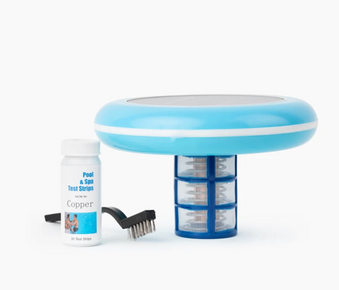
TL;DR: Solar pool ionizers are not merely an alternative sanitation method—they are the foundational technology powering the next generation of pools. These next-generation aquatic environments are defined by energy independence, autonomous operation, zero chemical footprint, and seamless integration with smart home ecosystems. By harnessing renewable solar energy to generate persistent copper and silver ions, these systems eliminate the need for grid-powered sanitation, reduce circulation energy by 70-80%, and enable predictive water quality management that anticipates problems before they occur. This 2026 guide explores how solar ionization is reshaping pool design, construction, and ownership for generations to come.
SEO Summary: 2026 guide to solar pool ionizers powering next-generation pools: energy independence, autonomous operation, zero chemical footprint, smart home integration, and predictive water quality management.
Table of Contents
- The Next-Generation Pool Vision
- Energy Independence: Pools Powered by the Sun
- Autonomous Operation: Pools That Think for Themselves
- Zero Chemical Footprint: Sanitation Without Consequences
- Smart Home Integration: The Pool as Connected Ecosystem
- Predictive Water Quality Management
- Design Freedom: Unconstrained by Chemical Limitations
- Commercial Applications: Next-Generation Public Pools
- The Retrofit Revolution: Upgrading Existing Pools
- The Future Trajectory: 2030 and Beyond
- Conclusion & Key Takeaways
The Next-Generation Pool Vision
What defines a next-generation pool? It is not merely larger size, more elaborate water features, or more expensive finishes. The true next-generation pool is defined by how it operates, how it integrates with its environment, and how it serves its owners. It is energy independent, requiring no grid power for basic sanitation. It is autonomous, managing water quality without daily owner intervention. It has zero chemical footprint, eliminating the environmental and health consequences of traditional sanitizers. It integrates seamlessly with the smart home, communicating with other systems and responding to owner preferences. It anticipates problems before they occur, preventing issues rather than reacting to them.
Solar pool ionizers are the foundational technology that makes this vision possible. They provide the stable, predictable, renewable sanitation platform upon which all other next-generation capabilities are built. Without ionization, energy independence is impossible pools remain tethered to the grid for chemical generation. Autonomous operation is limited by the volatility of chlorine chemistry. Chemical footprint persists through manufacturing, transportation, and disposal. Smart integration is constrained by the need for constant human intervention.
This guide explores how solar pool ionizers are powering each aspect of the next-generation pool vision. For a broader understanding of how this technology fits into modern aquatic design, our next-generation pool system planning guide provides comprehensive design frameworks for architects and builders.
Energy Independence: Pools Powered by the Sun
The first pillar of next-generation pools is energy independence—the ability to operate without drawing power from the electrical grid. Solar pool ionizers achieve this directly by using integrated photovoltaic panels to generate the low-voltage current needed for ion production. But their contribution to energy independence extends far beyond their own operation.
- Direct Solar Sanitation: The ionizer itself consumes zero grid power. A dedicated solar panel converts sunlight directly into the electricity needed to release copper and silver ions from the electrodes. This eliminates the 500 to 1,500 watt load that traditional chlorination systems or salt chlorine generators impose on the home's electrical system. Over a typical swimming season, this represents 500 to 1,500 kilowatt-hours of avoided grid consumption.
- Pump Energy Elimination: Because ionized water stays cleaner and requires no chemical distribution, pump runtime can be reduced by 40 to 60 percent. For pools equipped with variable-speed pumps, this reduction compounds with the efficiency gains of lower-speed operation, achieving 70 to 80 percent total pump energy savings. These savings are enabled by the ionizer but extend to the entire circulation system.
- Heater Efficiency: Ionized water's stable chemistry prevents scale formation on heat exchanger surfaces, maintaining peak heater efficiency throughout the equipment's life. This translates to 10 to 20 percent lower heating energy consumption compared to pools where scale accumulation degrades performance over time.
- Grid-Independent Operation: When combined with modest battery storage, solar-ionized pools can achieve true grid independence. A 2 to 5 kilowatt-hour battery system can power the variable-speed pump during nighttime hours, allowing the pool to operate entirely on stored solar energy. Some advanced installations incorporate larger battery banks that enable the pool to serve as backup power for critical home systems during grid outages.
- Energy-Positive Potential: The most ambitious next-generation pools are designed to be energy positive, generating more renewable energy than they consume. By oversizing the solar array beyond the ionizer's requirements, excess generation can offset pump energy, heating energy, or even contribute to the home's overall energy needs. Our energy-efficient circulation systems with solar pool ionizer provides detailed specifications for achieving net-zero and energy-positive pool operation.
Autonomous Operation: Pools That Think for Themselves
The second pillar of next-generation pools is autonomous operation—the ability to manage water quality without constant owner intervention. Solar pool ionizers, particularly when paired with modern controllers and sensors, transform pools from devices that require daily attention into systems that operate independently.
- Self-Regulating Sanitation: Advanced ionizer controllers continuously monitor water temperature and adjust output automatically to match biological demand. When water warms in summer, output increases. When it cools in fall, output decreases. This temperature compensation ensures optimal sanitation without owner involvement and extends electrode life by preventing overproduction during low-demand periods.
- Automated Seasonal Transitions: Next-generation systems detect seasonal changes automatically and adjust all operational parameters accordingly. Spring warm-up, summer peak, fall transition, and winter hibernation modes engage without any programming. The system knows when to reduce output, when to adjust pump schedules, and when to prepare for freezing conditions based on actual water temperature and weather data.
- Self-Diagnostic Capabilities: Modern ionizers continuously monitor their own health, tracking electrode efficiency, solar panel output, and system performance. When components begin to degrade, the system alerts the owner with specific recommendations: "Solar panel output 18% below expected. Cleaning recommended." or "Electrode efficiency declining. Replacement predicted in 60 days." This self-diagnostic capability transforms maintenance from reactive guesswork to scheduled certainty.
- Bather Load Response: Some systems can detect increased pool usage through water chemistry changes or connected sensors and automatically adjust sanitation levels. After detecting heavy bather load, they may increase ion output for 24 to 48 hours to ensure continued water quality, then gradually return to baseline. This response occurs without owner awareness, let alone intervention.
- Weather Anticipation: By integrating with local weather forecasts, autonomous systems can prepare for conditions before they arrive. Before a forecasted storm, they may increase ion output to strengthen the ionic field against incoming contaminants. Before a heat wave, they may preemptively raise copper targets. Before freezing temperatures, they may activate freeze protection protocols hours in advance. For a deeper dive into these capabilities, our automated seasonal adjustments enabled by solar pool ionizer provides comprehensive technical details.
Zero Chemical Footprint: Sanitation Without Consequences
The third pillar of next-generation pools is zero chemical footprint—sanitation that achieves public health standards without the environmental and health consequences of traditional sanitizers. Solar pool ionizers achieve this by replacing reactive chemical oxidation with persistent mineral ionization.
- Elimination of Chemical Manufacturing: Every pound of chlorine requires significant energy to manufacture through the chlor-alkali process, which consumes approximately 2,500 to 3,000 kilowatt-hours per ton of chlorine produced. By eliminating 80 to 90 percent of chemical consumption, solar ionizers avoid this embedded energy and the associated carbon emissions. A typical pool avoids 300 to 500 kilowatt-hours of manufacturing energy annually.
- Plastic Waste Elimination: Traditional pool chemical packaging generates 40 to 60 pounds of plastic waste annually per pool—chlorine jugs, chemical bags, test strip vials, and product containers, most of which are not recyclable due to chemical residue. Solar ionizers reduce this waste stream by 80 to 90 percent, replacing dozens of plastic containers with a single electrode cartridge replaced every three to five years.
- Chloramine Elimination: Chloramines, the toxic byproducts formed when chlorine reacts with organic contaminants, are responsible for eye burning, respiratory irritation, and the distinctive pool smell. They off-gas into the air, creating indoor air quality problems for enclosed pools and outdoor nuisance for neighboring properties. Ionized water produces zero chloramines, eliminating these health and comfort issues entirely.
- Ecosystem Protection: When traditional pools are backwashed or drained, concentrated chemicals enter local storm drains and ultimately waterways. Chlorine, algaecides, and stabilizers can harm aquatic life, disrupt microbial ecosystems, and contribute to toxic algal blooms in natural bodies of water. Solar-ionized pools present no such threat. The low copper concentrations (0.2 to 0.4 ppm) are well below drinking water standards and do not harm aquatic ecosystems when diluted in stormwater systems.
- Water Conservation: Traditional pools require periodic draining to manage total dissolved solids and cyanuric acid accumulation. Solar-ionized pools maintain stable chemistry that extends drain intervals from two to three years to eight to twelve years, conserving thousands of gallons of water over the pool's lifetime. In drought-prone regions, this water conservation benefit is increasingly valued. Our eco-friendly pool beginner's guide provides a comprehensive overview of the environmental benefits of solar ionization.
Smart Home Integration: The Pool as Connected Ecosystem
The fourth pillar of next-generation pools is seamless integration with the broader smart home ecosystem. Solar pool ionizers in 2026 are designed as native components of the connected home, communicating with a wide range of devices and platforms.
- Voice Control: Modern ionizer controllers integrate with Amazon Alexa, Google Assistant, and Apple HomeKit, allowing owners to check system status, adjust settings, or verify water quality through simple voice commands. "Hey Google, ask my pool what the copper level is" returns an immediate response. This voice integration makes pool management accessible to all household members, not just the designated operator.
- Geofencing: Using smartphone location data, geofencing triggers automated responses when owners leave or approach the home. When the system detects that all residents have left, it may reduce pump operation to minimum levels while maintaining baseline sanitation. When it detects that someone is returning, it may increase output to ensure perfect water quality upon arrival. Some systems coordinate with calendars, preparing the pool for scheduled events or parties.
- Energy Management Integration: As homes incorporate solar panels, battery storage, and smart meters, pool systems can coordinate with home energy management platforms. The pool may automatically shift operation to times of peak solar production, store thermal energy in the water for later use, or reduce consumption during grid peak periods. This integration transforms the pool from a fixed energy load into a flexible resource that contributes to overall home efficiency.
- Maintenance Coordination: Advanced systems integrate with smart home maintenance platforms that track equipment service schedules, order replacement parts automatically, and schedule professional service when needed. If the system predicts electrode replacement in 30 days, it may add replacement cartridges to your shopping list or schedule a service appointment through connected platforms.
- Multi-Property Management: For owners with multiple properties, cloud-based control platforms enable centralized management of several pool systems from a single interface. Whether monitoring a primary residence, vacation home, or rental property, owners can check status, adjust settings, and receive alerts for all properties through one application. Our modern pool system integration guide provides detailed specifications for achieving seamless connectivity.
Predictive Water Quality Management
The fifth pillar of next-generation pools is predictive water quality management—the ability to anticipate problems before they occur rather than reacting to them after water quality degrades. Solar pool ionizers, combined with modern sensors and controllers, make this possible.
- Continuous Monitoring: Next-generation systems employ arrays of continuous sensors that monitor water chemistry in real time. pH sensors, ORP sensors, copper ion-selective electrodes, and conductivity sensors provide constant data streams that reveal trends, patterns, and developing issues before they become visible. Unlike manual testing, which provides snapshots at specific moments, continuous monitoring enables true predictive management.
- Trend Analysis: By analyzing historical data, systems can identify patterns that precede water quality problems. A gradual increase in copper consumption might indicate developing algae activity. A slow pH rise might signal increasing alkalinity that will eventually require correction. A declining ORP trend might suggest organic load accumulation. By detecting these trends early, the system can intervene before problems become apparent to swimmers.
- Predictive Algorithms: Machine learning algorithms trained on data from thousands of pools can predict sanitation needs with remarkable accuracy. These algorithms consider current conditions, historical patterns, weather forecasts, and usage schedules to determine optimal ionizer output, pump runtime, and chemical adjustments. The system doesn't just respond to current conditions it anticipates future conditions and prepares accordingly.
- Proactive Intervention: When predictive algorithms identify potential issues, the system can intervene proactively. It might increase ion output slightly to head off developing algae. It might adjust pump scheduling to address anticipated organic load. It might alert the owner to add a non-chlorine shock before a predicted contaminant event. These proactive interventions prevent problems that reactive systems would only address after water quality had already declined.
- Performance Optimization: Beyond problem prevention, predictive systems continuously optimize performance for efficiency. They might determine that running the pump at slightly higher speed for slightly less time achieves the same water quality with lower total energy consumption. They might identify that maintaining copper at the lower end of the target range during cool weather provides adequate sanitation with extended electrode life. This optimization compounds over time, improving both water quality and operating efficiency. Our future of swimming pools with solar pool ionizer explores these predictive capabilities in greater depth.
Design Freedom: Unconstrained by Chemical Limitations
The sixth pillar of next-generation pools is design freedom—the ability to create aquatic environments that were previously impractical or impossible due to the constraints of chlorine chemistry.
- Water Feature Integration: Chlorine-based sanitation struggles with water features because aeration drives chlorine gas out of solution, rapidly depleting sanitizer levels. Fountains, sheers, and cascades become chemical management headaches. Ionized water does not off-gas, so water features can operate continuously without depleting the sanitizer residual. Designers can incorporate elaborate water features without compromising sanitation.
- Natural Stone and Sensitive Materials: Chlorine chemistry is aggressive toward natural stone, metal finishes, and many decorative materials. Over time, chemical exposure degrades these materials, causing discoloration, etching, and structural damage. Ionized water is non-corrosive, allowing designers to use a wider range of materials without concern for chemical compatibility. Light-colored stone, copper fixtures, and artistic finishes can be specified with confidence.
- Zero-Depth Entry and Beach Entries: Shallow water areas present sanitation challenges for chlorine systems because the high surface-to-volume ratio accelerates chlorine dissipation and UV degradation. Ionized water maintains its sanitizer residual regardless of depth, making zero-depth entries and beach entries practical from a sanitation standpoint.
- Indoor Pool Design: Indoor pools with chlorine sanitation face significant air quality challenges. Chloramines off-gas into the enclosed space, creating respiratory hazards and requiring expensive air handling systems. Ionized pools produce no chloramines, dramatically simplifying indoor air quality management and reducing ventilation requirements.
- Natural Swimming Pool Aesthetics: The trend toward natural swimming pools, which mimic the appearance of natural bodies of water, is enabled by ionization. These designs often incorporate aquatic plants, rock work, and naturalistic features that would be damaged by chlorine. Ionization provides sanitation that is compatible with these aesthetic goals. Our guide to designing pools for everyday comfort includes case studies of projects that leverage this design freedom.
Commercial Applications: Next-Generation Public Pools
The next-generation pool vision extends beyond residential applications to commercial and public pools, where solar ionization delivers even more dramatic benefits.
- Health Department Compliance: Modern ionizer systems with NSF/ANSI 50 certification meet the rigorous standards required for public pools. When configured with redundant sanitation capability, they satisfy health codes while eliminating 80 to 90 percent of chemical consumption. This compliance path has been validated by thousands of commercial installations across North America, Europe, and Australia.
- Operational Cost Reduction: Commercial pools face significant chemical budgets, often exceeding 5,000 to 10,000 dollars annually for larger facilities. Solar ionization reduces this expense by 80 to 90 percent, generating savings that can fund other facility improvements. Combined with energy savings from reduced pump operation, the economic case for commercial ionization is compelling.
- Staff Training Simplification: Traditional commercial pools require certified operators with extensive training in water chemistry management. Solar ionization simplifies operations dramatically, reducing training requirements and making facilities less vulnerable to staff turnover. A new operator can be trained in hours rather than days.
- Patron Experience: Public pools are often criticized for chemical odors, eye irritation, and skin discomfort. Solar-ionized pools eliminate these complaints, improving patron satisfaction and encouraging repeat visits. For recreation centers and water parks, this enhanced experience translates directly to increased revenue.
- Environmental Leadership: Municipalities and institutions increasingly seek to demonstrate environmental leadership. Solar-ionized pools provide a visible, quantifiable example of sustainability in action. They reduce chemical consumption, eliminate plastic waste, conserve water, and operate on renewable energy all measurable outcomes that support environmental certification and public messaging. Our eco-friendly community pool planning guide provides comprehensive specifications for commercial installations.
The Retrofit Revolution: Upgrading Existing Pools
The next-generation pool vision is not limited to new construction. A retrofit revolution is underway as existing pool owners upgrade their systems with solar ionization technology.
- Retrofit Economics: The payback period for retrofitting an existing pool with solar ionization typically ranges from 12 to 24 months, based on chemical and energy savings alone. When equipment life extension and reduced maintenance labor are factored in, the returns become even more compelling. For pools with aging equipment, the retrofit can be coordinated with pump or heater replacement to maximize value.
- Phased Implementation: Owners can implement retrofits in phases to manage capital outlay. The first phase might install the ionizer and optimize pump scheduling for runtime reduction. After accumulating savings, a second phase might upgrade to a variable-speed pump for additional efficiency. A third phase might add smart controllers and sensors for predictive operation. This phased approach allows owners to capture benefits at each stage while spreading investment over time.
- Compatibility Considerations: Most existing pools can be retrofitted with solar ionization regardless of age or equipment type. The ionizer installs in the return line after existing equipment and requires only a sunny location for the solar panel. No pump or filter replacement is required, though upgrading these components enhances overall system performance. Our pool modernization guide provides detailed retrofit protocols for common pool configurations.
- Hybrid Retrofit Strategies: For pools with existing salt chlorine generators, hybrid retrofit strategies are particularly attractive. The ionizer is added as the primary sanitizer, and the salt cell output is reduced to 10 to 20 percent of its previous setting. This combination retains the familiar feel of saltwater while dramatically reducing chemical consumption and extending cell life. Our solar pool ionizer for salt system provides detailed instructions for this approach.
- DIY Retrofit Potential: Many residential retrofits are successfully completed by handy homeowners. Basic systems with straightforward plumbing connections and plug-and-play electrical connections can be installed in two to three hours without professional assistance. More complex installations involving automation integration may benefit from professional installation, but the DIY option keeps costs low for budget-conscious owners.
The Future Trajectory: 2030 and Beyond
As we look toward 2030 and beyond, the trajectory of solar pool ionizers points toward even greater capability, deeper integration, and broader adoption.
- Artificial Intelligence Advancement: Future systems will employ increasingly sophisticated AI that learns not just from your pool but from thousands of pools across diverse climates and usage patterns. This collective intelligence will enable predictions and optimizations far beyond what individual systems can achieve. An AI might recognize that pools in your region with similar characteristics respond best to specific operating parameters and automatically apply that learning to your system.
- Advanced Materials: Research into new electrode materials promises to extend cartridge life beyond current limits. Experimental alloys and coating technologies suggest the possibility of electrodes lasting 7 to 10 years under normal operating conditions, further reducing the already minimal ongoing costs of ionization. Some researchers are exploring electrodes that can be reconditioned rather than replaced, potentially eliminating consumable costs entirely.
- Integrated Water Chemistry Management: Future systems will manage not just sanitation but complete water chemistry including pH, alkalinity, calcium hardness, and total dissolved solids. Automated testing and dosing systems will maintain all parameters within optimal ranges, eliminating manual chemistry management entirely. Some experimental systems are already demonstrating this capability in commercial installations.
- Health and Wellness Integration: Emerging applications include integration with health monitoring systems. Pools could adjust water temperature and chemistry based on the specific needs of swimmers, perhaps providing warmer, more therapeutic water for arthritis sufferers or cooler, more invigorating water for athletes. Integration with wearable devices could enable pools to prepare for your arrival based on your estimated time of return and preferred settings.
- Grid-Interactive Operation: As utilities evolve toward dynamic pricing and demand response programs, future pools will participate actively in grid management. When electricity prices spike, pools will automatically reduce consumption, relying on stored thermal energy or battery reserves. When renewable generation exceeds demand, pools may increase operation to soak up excess energy. This grid-interactive capability could generate revenue or reduce costs beyond the savings already achieved. Our guide to aligning pools with natural energy cycles explores these future capabilities in depth.
Conclusion & Key Takeaways
Solar pool ionizers are not merely a better way to sanitize pool water. They are the foundational technology powering an entirely new generation of pools—pools that are energy independent, autonomously operated, chemically benign, seamlessly integrated, predictively managed, and beautifully designed.
This next-generation vision is not speculative or futuristic. It is being realized today in thousands of residential, commercial, and public pools across the globe. The technology exists. The engineering is proven. The benefits are documented. The only remaining question is whether pool owners, builders, and designers will embrace the opportunity to build better pools.
The pools of the past were chemical-dependent, energy-intensive, and maintenance-burdened. The pools of the present, powered by solar ionization, are already demonstrating what is possible. The pools of the future will surpass even today's capabilities, approaching full autonomy while delivering swimming experiences that are simultaneously more natural, more comfortable, and more sustainable.
Key Takeaways
- Solar ionizers are foundational technology: They provide the stable, renewable sanitation platform upon which all other next-generation pool capabilities are built. Without ionization, true energy independence and autonomous operation are impossible.
- Energy independence is achievable today: Solar-powered sanitation combined with optimized circulation can reduce grid dependence by 70-80%, with battery storage enabling complete grid independence. Our pool energy cost reduction guide quantifies these savings.
- Autonomous operation eliminates daily involvement: Self-regulating sanitation, automated seasonal transitions, and self-diagnostic capabilities transform pools from devices requiring constant attention into systems that operate independently.
- Zero chemical footprint is a defining characteristic: Elimination of chemical manufacturing, plastic packaging, chloramine byproducts, and ecosystem contamination makes solar-ionized pools truly sustainable.
- Smart home integration connects pools to broader ecosystems: Voice control, geofencing, energy management coordination, and maintenance automation transform pools from isolated systems to integrated home components.
- Predictive management prevents problems before they occur: Continuous monitoring, trend analysis, and machine learning algorithms enable proactive intervention that reactive systems cannot match. Our evolution of water control guide explores these capabilities.
- Design freedom expands creative possibilities: Water features, sensitive materials, zero-depth entries, and indoor pools become practical without the constraints of chlorine chemistry.
- Commercial applications deliver transformative benefits: Health department compliance, operational cost reduction, simplified training, and enhanced patron experience make ionization compelling for public pools. Our commercial pool standards guide provides specification templates.
- The retrofit revolution is democratizing access: Existing pool owners can upgrade to next-generation capabilities with compelling economics and flexible implementation options. Our investment strategies guide provides financial analysis for retrofit decisions.
- The future trajectory promises even greater capability: AI advancement, advanced materials, integrated chemistry management, health integration, and grid-interactive operation will continue to expand what pools can achieve. Our future of pool care guide provides a forward-looking perspective.
Solar pool ionizers are powering the next generation of pools. The technology is proven, the benefits are compelling, and the opportunity is available to every pool owner ready to embrace a better way. The future of swimming is cleaner, more comfortable, more sustainable, and more intelligent. And it is powered by the sun.
For pool owners ready to join this next generation, our guide to choosing a solar pool ionizer provides the information needed to select the right system for your specific situation and begin your journey toward next-generation pool ownership.