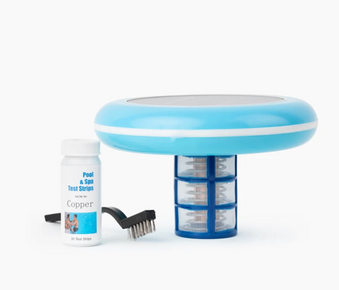
TL;DR: Solar pool ionizers enable a fundamental shift from fighting natural energy cycles to aligning with them. Unlike conventional pool systems that consume grid electricity regardless of solar availability, ionizers inherently follow daily and seasonal sun patterns producing more ions when the sun shines brightest and less during darkness and winter. When paired with variable-speed pumps, smart controllers, and predictive automation, this alignment extends to the entire pool ecosystem: filtration schedules synchronize with solar production, heating prioritizes renewable thermal gain, and maintenance anticipates seasonal transitions. The result is a pool that works with nature rather than against it, delivering 70-80% energy reduction, extended equipment life, and superior water quality through intentional harmony with natural cycles.
SEO Summary: 2026 guide to aligning pool systems with natural energy cycles using solar pool ionizers: solar-synchronous filtration, seasonal adaptation, weather-responsive automation, and renewable energy integration.
Table of Contents
- The Alignment Philosophy: Working With Nature, Not Against It
- Daily Energy Cycles: Solar-Synchronous Pool Operation
- Seasonal Energy Cycles: Automatic Adaptation
- Weather Alignment: Anticipatory Pool Intelligence
- Thermal Alignment: Natural Heating Strategies
- Biological Alignment: Matching Sanitation to Demand
- Control Architecture for Energy Alignment
- Energy Storage: Extending Alignment Through Darkness
- Grid Interaction: From Consumer to Participant
- Conclusion & Key Takeaways
The Alignment Philosophy: Working With Nature, Not Against It
Conventional pool systems operate in defiance of natural energy cycles. Pumps run at full speed regardless of whether the sun is shining or the pool is occupied. Chlorine generators consume grid electricity at peak rate periods, oblivious to solar availability. Heaters battle ambient temperatures rather than leveraging passive solar gain. Chemical feeders add sanitizer on fixed schedules without regard to biological demand. This adversarial approach is not merely inefficient it is fundamentally unsustainable.
The alignment philosophy inverts this paradigm. Rather than forcing pool systems to operate independently of natural cycles, it intentionally synchronizes them with daily and seasonal energy patterns. The solar pool ionizer is the cornerstone of this philosophy because it inherently embodies alignment its ion production rises and falls with the sun, producing maximum sanitation exactly when biological activity peaks and solar energy is most abundant.
This inherent alignment cascades through the entire pool ecosystem. Pumps can be scheduled to operate during solar production windows, converting purchased electricity to free renewable energy. Filtration intensity can match contaminant load, which naturally increases during daylight swimming hours. Heating can prioritize solar thermal gain before engaging auxiliary sources. Maintenance can anticipate seasonal transitions rather than react to them.
The alignment philosophy delivers three distinct categories of benefit:
- Energy benefits: 70-80% reduction in grid consumption through solar synchronization and demand matching
- Equipment benefits: Extended service life through reduced runtime, lower operating speeds, and gentler chemical environment
- Experience benefits: Superior water quality through biologically-timed sanitation and thermally-optimized comfort
This guide provides the comprehensive framework for aligning your entire pool system with natural energy cycles using solar pool ionizers as the central platform. For a foundational understanding of how solar ionization transforms pool economics, our residential pool investment strategies guide quantifies the financial returns of alignment-based design.
Daily Energy Cycles: Solar-Synchronous Pool Operation
The most immediate and impactful alignment opportunity is synchronizing pool operations with the daily solar cycle. Every 24-hour period presents a predictable pattern of energy availability and biological demand that conventional pool systems ignore but aligned systems leverage.
The Daily Solar Cycle:
- Pre-dawn (4:00-7:00 AM): Zero solar production, minimal biological activity, lowest ambient temperatures
- Morning ramp (7:00-10:00 AM): Increasing solar production, rising water temperature, awakening biological activity
- Solar peak (10:00 AM-2:00 PM): Maximum solar production, peak biological activity, highest contaminant introduction from swimmers
- Afternoon decline (2:00-6:00 PM): Decreasing solar production, sustained biological activity, continued swimmer load
- Evening (6:00-10:00 PM): Zero solar production, declining biological activity, peak electricity rates in time-of-use structures
- Night (10:00 PM-4:00 AM): Zero solar production, minimal biological activity, lowest electricity rates
Solar-Synchronous Filtration:
A solar ionizer naturally produces ions during daylight hours, with peak output aligned to solar noon. When pump operation is synchronized with this production curve, three benefits emerge:
- Ion dispersion efficiency: Ions are distributed immediately upon production, maximizing effective sanitation
- Energy cost elimination: Pump energy during solar hours can be offset by photovoltaic generation
- Grid independence: The pool operates primarily on renewable energy rather than purchased electricity
Implementation strategies:
Basic alignment (manual scheduling): Set pump timer to operate 10:00 AM - 4:00 PM daily. This captures 70-80% of daily solar production and aligns filtration with peak biological demand. For single-speed pumps, this represents a 40-60% runtime reduction from conventional 8-12 hour schedules.
Advanced alignment (solar-aware controllers): Install controllers that monitor real-time solar panel output and modulate pump speed proportionally. During peak production, pump operates at higher speed for optimal ion distribution. During morning ramp and afternoon decline, pump reduces speed to match available solar energy. During darkness, pump operates only if absolutely necessary.
Optimal alignment (predictive scheduling): Integrated systems learn your specific solar production curve and adjust pump schedules based on forecasted conditions. Before a cloudy day, the system may increase pre-cloud filtration to maintain water quality through reduced solar availability.
Daily Energy Alignment Targets:
- Solar utilization factor (SUF): Percentage of pump energy derived from solar generation. Target: >80%
- Peak demand avoidance: Percentage of pump operation shifted away from peak rate periods. Target: 100%
- Grid consumption reduction: Reduction in purchased electricity versus conventional operation. Target: 70-80%
Pro Tip: The optimal solar synchronization window shifts seasonally. In summer, the solar window extends from approximately 8:00 AM to 6:00 PM. In spring and fall, it contracts to 10:00 AM to 4:00 PM. Adjustable pump timers or smart controllers that automatically account for seasonal day length changes deliver 10-15% additional energy savings over fixed annual schedules.
For detailed guidance on implementing solar-synchronous pump schedules, our energy-efficient circulation systems guide provides specific programming parameters for major pump and controller brands.
Seasonal Energy Cycles: Automatic Adaptation
Natural energy cycles extend beyond daily patterns to seasonal rhythms that dramatically affect pool operation. Water temperature, daylight duration, solar angle, and biological activity all vary predictably throughout the year. Aligned pool systems adapt automatically to these seasonal changes; conventional systems require manual intervention.
The Seasonal Energy Cycle:
- Winter (water temperature below 60°F): Minimal biological activity, zero swimmer load, short daylight hours, low solar angle
- Spring (water temperature 60-75°F): Awakening biological activity, increasing daylight, improving solar harvest, occasional swimmer use
- Summer (water temperature 75-90°F): Peak biological activity, maximum swimmer load, longest daylight hours, highest solar angle
- Fall (water temperature 75-60°F): Declining biological activity, decreasing daylight, diminishing solar harvest, reduced swimmer load
Seasonal Alignment Strategies:
Ion output modulation: Solar ionizers naturally produce less ion mass during winter and more during summer due to changing solar availability. Aligned systems enhance this natural modulation through temperature-compensated output control. When water temperature drops below 70°F, output is automatically reduced. When temperature exceeds 85°F, output is automatically increased. This matches sanitation delivery to biological demand while preserving electrode life.
Pump schedule adaptation: Aligned systems automatically adjust pump runtime and speed based on seasonal requirements. Summer schedules emphasize longer operation during extended solar windows. Spring and fall schedules progressively reduce runtime as daylight contracts. Winter schedules in non-freezing climates operate minimal circulation during solar peak hours only.
Heater coordination: Aligned systems coordinate heating with seasonal solar availability. Solar thermal systems are prioritized during shoulder seasons when ambient temperatures are moderate. Auxiliary heating is scheduled during daytime hours to leverage warmer ambient temperatures and reduce thermal loss.
Maintenance timing: Aligned systems schedule preventive maintenance during seasonal transition periods rather than peak usage months. Electrode replacement is planned for spring or fall, never during July or August when demand is highest.
Automated Seasonal Transition:
2026 smart controllers can automatically detect and execute seasonal transitions without user intervention:
- Spring transition trigger: Water temperature consistently above 60°F for 72 hours initiates Spring Warm-Up mode
- Summer transition trigger: Water temperature consistently above 75°F for 72 hours initiates Summer Peak mode
- Fall transition trigger: Water temperature consistently declining and below 70°F initiates Fall Reduction mode
- Winter transition trigger: Water temperature consistently below 50°F initiates Winter Hibernation mode
Pro Tip: If your system does not have automatic seasonal adjustment, mark your calendar with seasonal transition dates based on historical water temperature patterns. Set reminders two weeks before each transition to adjust output settings, pump schedules, and heater configurations. This simple calendaring practice captures 70-80% of the benefits of full automation.
For comprehensive seasonal transition protocols, our complete seasonal maintenance schedules guide provides month-by-month alignment recommendations for all climate zones.
Weather Alignment: Anticipatory Pool Intelligence
Beyond predictable daily and seasonal cycles, natural energy includes variable weather events that conventional pool systems react to only after problems occur. Aligned systems anticipate weather events and pre-position the pool to handle them efficiently.
Weather Events That Affect Pool Systems:
- Heavy rain: Introduces contaminants, dilutes chemistry, lowers pH, adds cold water
- Extended cloud cover: Reduces solar ion production, limits photovoltaic generation
- Heat waves: Increases biological activity, raises chlorine demand in hybrid systems, accelerates evaporation
- Wildfire smoke/ash: Introduces alkaline ash, increases filtration demand, reduces solar panel efficiency
- Wind events: Increases debris load, accelerates evaporation, may disrupt pool covers
- Freeze conditions: Threatens equipment damage, requires circulation or drainage
Anticipatory Alignment Strategies:
Pre-storm sanitation boost: When forecasts predict heavy rain within 24-48 hours, aligned systems automatically increase ion output by 20-30% and extend pump runtime. This strengthens the ionic field before contaminant load increases, maintaining water quality through the event without post-storm chemical intervention.
Cloud cover compensation: When extended cloud cover is forecast, aligned systems may increase ion output during remaining solar windows to build ionic field reserve. For systems with battery storage, they may charge batteries fully before cloud arrival and discharge during low-production periods to maintain consistent sanitation.
Heat wave preparation: When high temperatures are forecast, aligned systems preemptively raise copper target ranges and increase filtration capacity. This anticipates the 15-25% increase in biological demand that accompanies sustained high water temperatures.
Ash event response: In wildfire-prone regions, aligned systems monitor air quality indices and ashfall forecasts. When significant ash is predicted, they may issue maintenance alerts and adjust pH monitoring frequency, as ash is alkaline and can cause rapid pH elevation.
Freeze anticipation: Rather than reacting to current temperature, aligned systems monitor freeze forecasts and activate protection protocols 6-12 hours before freezing conditions arrive. This allows for gradual, energy-efficient freeze protection rather than emergency cold-start operation.
Weather Data Integration:
Effective weather alignment requires integration with reliable forecast data. 2026 systems typically use one or more of these sources:
- GPS-based local forecasts: Hyperlocal weather data specific to your exact location
- API connections: Direct integration with services like Weather Underground, AccuWeather, or National Weather Service
- On-site sensors: Local temperature, light, and precipitation sensors that supplement forecast data
- Historical pattern recognition: Machine learning algorithms that identify your microclimate's typical weather patterns
Pro Tip: Enable push notifications for weather-responsive system adjustments. When your system automatically boosts output before a storm or reduces speed during cloud cover, you receive a brief notification explaining the action. This builds confidence in the automation and educates you about your pool's relationship with weather patterns.
For pools in regions with extreme weather events, our comprehensive guide to weather effects on ionizer performance provides detailed response protocols for specific weather scenarios.
Thermal Alignment: Natural Heating Strategies
Pool heating is the most energy-intensive aspect of pool operation, often consuming 2-5 times more energy than circulation. Thermal alignment strategies leverage natural energy cycles to dramatically reduce this load.
Passive Solar Gain:
Every pool is a solar thermal collector, absorbing radiant energy from the sun. Aligned pools maximize this passive gain through intentional design and operation:
- Cover deployment: Automated pool covers are the most powerful thermal alignment tool. Deployed when the pool is unattended and at night, covers retain absorbed solar heat rather than releasing it through evaporation. A covered pool retains 80-90% of daytime solar gain; an uncovered pool loses 80-90% overnight.
- Heating schedule alignment: Auxiliary heating is scheduled during peak solar hours whenever possible. This leverages warmer ambient temperatures, which improve heat pump efficiency, and reduces thermal loss through cooler evening air.
- Temperature setback programming: Pool temperature is automatically reduced during non-swim hours and extended absences. A 4°F setback overnight saves 20-30% of heating energy while requiring only 1-2 hours of recovery heating the following day.
Solar Thermal Integration:
For pools with dedicated solar thermal collectors, alignment strategies maximize renewable heating contribution:
- Solar-priority logic: Automation prioritizes solar thermal heating whenever available, engaging auxiliary heating only when solar gain is insufficient to meet setpoint.
- Temperature target modulation: On sunny days, the system may allow pool temperature to rise 2-4°F above setpoint using free solar energy, effectively storing thermal energy for evening use.
- Pump coordination: Circulation for solar thermal collection is scheduled during peak solar hours and may operate at different speeds than filtration circulation.
Heat Pump Optimization:
Modern variable-speed heat pumps offer significant thermal alignment capabilities:
- Partial-load operation: Rather than cycling on/off at full capacity, variable-speed compressors modulate output to match thermal demand. This improves seasonal efficiency by 15-25%.
- Ambient temperature coordination: Heat pump efficiency (COP) increases with ambient temperature. Scheduling operation during the warmest part of the day improves efficiency by 10-20% versus overnight operation.
- Cover coordination: Heat pumps should never operate with the pool uncovered during heating season. Automation can verify cover position before enabling heating.
Ionizer Thermal Contributions:
Solar pool ionizers contribute to thermal alignment in three ways:
- Scale prevention: Ionized water with balanced chemistry dramatically reduces scale formation on heat exchanger surfaces. Clean heat exchangers maintain peak efficiency throughout the season.
- Perceived warmth: The silky feel of ionized water allows 1-2°F lower thermostat settings without comfort loss, reducing heating energy by 5-10%.
- Reduced heat loss: Lower pump runtime means less heat loss through equipment pad piping during circulation.
Pro Tip: The most cost-effective thermal alignment investment is not a more efficient heater—it is an automated pool cover. A $3,000-5,000 cover system typically pays for itself in 2-4 years through heating energy savings alone, while also reducing chemical consumption, water evaporation, and cleaning labor. No other thermal alignment strategy approaches this return on investment.
Biological Alignment: Matching Sanitation to Demand
Natural energy cycles drive biological activity in predictable patterns. Aligned pool systems match sanitation delivery to biological demand rather than maintaining constant chemical levels regardless of need.
The Biology of Pool Water:
- Algae growth rate: Doubles for every 10°F increase in water temperature above 60°F. At 85°F, algae grows approximately 6× faster than at 65°F.
- Bacteria reproduction: Peaks during warm afternoon hours when swimmers introduce contaminants and water temperature is highest.
- Biofilm formation: Accelerates with warmer temperatures and increased nutrient availability.
- Contaminant introduction: Directly correlated with swimmer hours, which naturally peak during afternoon and weekend periods.
Biological Alignment Strategies:
Temperature-compensated sanitation: Solar ionizers with temperature compensation automatically adjust copper target ranges based on water temperature. At 65°F, target 0.2-0.25 ppm. At 85°F, target 0.3-0.4 ppm. This matches sanitation delivery to biological demand while preserving electrode life during cooler periods.
Bather load response: Aligned systems detect increased pool usage through multiple indicators water temperature rise, pH fluctuation, ORP drop, and flow pattern changes. Upon detecting heavy use, they automatically increase ion output by 15-25% for 24-48 hours, then gradually return to baseline. This provides targeted sanitation exactly when needed without constant elevated output.
Time-of-day alignment: Biological activity and contaminant introduction peak during afternoon swimming hours. Aligned systems ensure maximum ion production and filtration capacity during this window through solar-synchronous operation and intelligent pump scheduling.
Seasonal biological alignment: Algae species have different temperature preferences. Green algae thrive in warmer water (75-85°F); mustard algae prefer cooler temperatures (65-75°F); black algae are persistent across temperature ranges. Aligned systems adjust sanitation strategies seasonally based on predominant algae risks.
Phosphate alignment: Algae cannot grow without phosphates, regardless of copper concentration. Aligned systems test phosphates at seasonal transition points and treat proactively before spring warming triggers algae blooms. This is biological alignment through nutrient limitation rather than constant sanitizer elevation.
Documented Benefits:
- Electrode life extension: 20-40% longer life through reduced output during low-demand periods
- Chemical reduction: Additional 10-20% reduction in supplemental chemical use
- Algae prevention: 90% reduction in algae outbreaks through proactive, demand-matched sanitation
Pro Tip: The most common biological alignment error is maintaining summer copper levels (0.4 ppm) year-round. This wastes electrode life, increases staining risk, and provides no additional benefit during cool months when algae are dormant. Trust your temperature compensation system or manually reduce output by 25-50% when water temperature drops below 70°F.
For a deeper understanding of the relationship between water chemistry and biological activity, our guide to algae prevention with solar ionizers explains the science of copper ion efficacy across temperature ranges.
Control Architecture for Energy Alignment
Achieving comprehensive alignment with natural energy cycles requires control systems designed for this purpose. Conventional pool timers and basic controllers are inadequate for the sophisticated coordination described in this guide.
Control Architecture Requirements:
1. Solar production monitoring: The system must measure real-time solar panel output, not just operate on fixed schedules. This enables true solar-synchronous operation where pump speed and ion output are continuously matched to available solar energy.
2. Weather forecast integration: The system must access local weather data and adjust operation proactively, not reactively. This enables pre-storm sanitation boosts, cloud cover compensation, and freeze anticipation.
3. Temperature compensation: The system must adjust ion output targets based on actual water temperature, not calendar assumptions. This enables biological alignment and electrode life optimization.
4. Historical data logging: The system must record operational parameters to enable performance analysis and continuous optimization. Without data, alignment is guesswork.
5. Open communication protocols: The system must support industry-standard communication (RS-485, Modbus, Wi-Fi API) to enable integration with pumps, heaters, covers, and home energy systems.
Control System Options:
Level 1: Manual alignment (budget option): Programmable timers and manual output adjustments based on seasonal calendars. Captures 40-50% of potential alignment benefits. Suitable for budget-conscious installations or as a transitional strategy.
Level 2: Semi-automated alignment (value option): Smart ionizer controller with temperature compensation and basic scheduling. Requires manual weather response and seasonal schedule updates. Captures 60-70% of potential benefits. Optimal for most residential installations.
Level 3: Fully automated alignment (premium option): Integrated automation controller managing ionizer, pump, heater, and cover with full weather integration and predictive algorithms. Captures 85-95% of potential benefits. Recommended for new construction and high-performance retrofits.
Level 4: Ecosystem alignment (ultimate option): Full integration with home energy management system, battery storage, and grid interaction protocols. Enables energy-positive pool operation and demand response participation. Captures 95-100% of potential benefits. Suitable for sustainable showcase projects and off-grid installations.
Communication Protocol Specifications:
When selecting control equipment, specify these communication capabilities:
- Ionizer to pump: RS-485 or Modbus for bidirectional speed control
- Ionizer to weather service: Wi-Fi API for forecast data integration
- Controller to user: Smartphone app with push notifications and remote adjustment
- Controller to energy monitor: Modbus or API for consumption tracking
Pro Tip: Avoid proprietary control systems that lock you into single-vendor ecosystems. Open-protocol systems cost slightly more initially but provide three critical advantages: compatibility with future equipment, ability to integrate best-in-class components from multiple manufacturers, and access to third-party innovation through APIs. The premium for open protocols pays for itself within 2-3 years through extended equipment life and upgrade flexibility.
For detailed control system specifications and programming logic, our automated seasonal adjustments guide enabled by solar pool ionizer provides controller configuration templates for major automation platforms.
Energy Storage: Extending Alignment Through Darkness
The fundamental limitation of solar alignment is darkness. Without energy storage, aligned systems must either operate on grid power at night or cease operation entirely. Energy storage bridges this gap, extending alignment benefits through the full 24-hour cycle.
Storage Technologies for Pool Systems:
Battery energy storage: Lithium-ion or advanced lead-acid batteries store excess solar energy during peak production hours for use during evening and pre-dawn periods. A 2-5 kWh battery system can power a variable-speed pump at low speeds for 6-12 hours, enabling continuous circulation without grid consumption.
Thermal energy storage: Pool water itself is a thermal battery. Heating water 2-4°F above setpoint during peak solar hours stores thermal energy that slowly releases overnight, reducing morning heating demand. This strategy is particularly effective with solar thermal collectors.
Ionic field storage: Unlike chlorine, which degrades rapidly without continuous generation, copper ions persist in the water column for extended periods. A properly established ionic field (0.2-0.4 ppm) provides sanitation reserve that persists through 12-24 hours of darkness without active ion production.
Storage Integration Strategies:
Solar-charged, night-discharged operation: Configure your system to charge batteries during peak solar hours and discharge during evening operation. This enables solar-synchronous pump scheduling to extend into evening hours while maintaining zero grid consumption.
Cloud reserve: Maintain 20-30% battery reserve for cloud events. When extended cloud cover reduces solar production, the system draws from reserve to maintain consistent ion output rather than reducing sanitation or switching to grid power.
Time-of-use optimization: In regions with time-of-use electricity rates, charge batteries during off-peak overnight hours (low rates) and discharge during peak afternoon/evening hours (high rates). While this consumes grid power, it reduces energy costs by 40-60%.
Storage Sizing Guidelines:
- Minimum: 1-2 kWh for cloud coverage only (maintains ion production through passing clouds)
- Moderate: 3-5 kWh for evening circulation (powers pump 4-6 hours at low speed)
- Comprehensive: 8-12 kWh for full off-grid capability (24-hour autonomous operation)
Pro Tip: Before investing in battery storage, maximize your solar alignment without storage first. Many pool owners find that 80-90% of potential alignment benefits are achievable through solar-synchronous scheduling alone. Storage becomes valuable when you seek the last 10-20% of grid independence or when you face time-of-use rate structures with extreme peak/off-peak differentials.
Grid Interaction: From Consumer to Participant
The frontier of energy alignment is transforming pools from passive grid consumers to active grid participants. 2026 technology enables pools to contribute to grid stability, respond to price signals, and participate in demand response programs.
Grid-Interactive Pool Operation:
Time-of-use optimization: Aligned systems automatically shift non-critical loads (filtration, sanitation boosting) to off-peak periods when electricity rates are lowest. This reduces energy costs by 30-50% without reducing total consumption.
Demand response participation: During grid stress events, utilities may offer incentives for voluntary load reduction. Aligned systems can temporarily reduce pump speed, postpone non-essential filtration, or rely on battery storage to reduce grid draw by 50-100% during critical periods.
Solar export coordination: Pools with dedicated photovoltaic arrays larger than their own consumption can export excess generation to the grid. Aligned systems coordinate export timing with favorable net metering or feed-in tariff rates.
Electric vehicle integration: Emerging systems coordinate pool operation with EV charging. When EV charging creates high household demand, pool systems may temporarily reduce consumption. When EV batteries are full, excess solar can power pool circulation.
Grid Interaction Implementation:
Level 1: Manual rate response: Program pump schedules to avoid published peak rate periods. Requires annual rate schedule review and manual timer adjustments. Captures 20-30% of potential rate savings.
Level 2: Automated rate response: Smart controllers with rate schedule programming automatically shift loads to off-peak periods. Responds to seasonal rate changes without manual intervention. Captures 40-50% of potential rate savings.
Level 3: Dynamic rate response: Controllers with real-time price interface (via API or smart meter) continuously optimize operation based on current and forecasted rates. Captures 60-70% of potential rate savings.
Level 4: Demand response enabled: Full participation in utility demand response programs. System receives DR signals and automatically reduces load by pre-agreed amounts. May qualify for incentive payments or reduced base rates.
Pro Tip: Check with your utility provider for demand response programs and time-of-use rates specifically for pool equipment. Some utilities offer discounted rates for pool pumps that can be remotely controlled during peak events. These programs typically provide equipment incentives and annual bill credits of $50-200.
Conclusion & Key Takeaways
Aligning pool systems with natural energy cycles using solar pool ionizers represents the culmination of pool technology evolution. It transforms pools from energy-intensive, chemically-dependent machines that fight natural cycles into intelligent, sustainable systems that work in harmony with daily and seasonal rhythms.
The alignment philosophy is elegantly simple but profoundly consequential. Solar ionizers inherently follow the sun. When we extend this inherent alignment to pumps, heaters, covers, and control systems, we achieve 70-80% energy reduction without compromising indeed, while improving water quality and swimmer experience. When we add weather anticipation, biological demand matching, and thermal optimization, we push efficiency to 85-90%. When we incorporate energy storage and grid interaction, we approach full energy autonomy.
These gains are not theoretical. They are being achieved today by thousands of pool owners who have embraced the alignment philosophy and implemented the strategies described in this guide. The technology is mature, the protocols are proven, and the benefits are documented.
The question is no longer whether pool systems can be aligned with natural energy cycles. The question is whether we will continue operating pools in defiance of nature or intentionally design them to work in harmony with the renewable energy that surrounds us every day.
Key Takeaways
- Alignment is a philosophy, not a product: Solar pool ionizers enable alignment, but achieving its full benefits requires intentionally synchronizing all pool systems with daily and seasonal energy cycles.
- Daily solar synchronization delivers 70-80% pump energy reduction: Operating pumps during solar windows converts purchased electricity to free renewable energy while maximizing ion dispersion efficiency.
- Seasonal adaptation extends equipment life 20-40%: Temperature-compensated output and seasonally-adjusted pump schedules match sanitation and filtration to actual demand, not calendar assumptions.
- Weather anticipation prevents problems rather than reacting to them: Pre-storm sanitation boosts, cloud cover compensation, and freeze anticipation maintain water quality through weather events without chemical intervention.
- Thermal alignment reduces heating energy 30-50%: Automated covers, solar thermal priority, and temperature setback programming deliver greater savings than any heater efficiency upgrade.
- Biological alignment matches sanitation to actual demand: Temperature-compensated copper targets and bather load response deliver targeted sanitation exactly when and where it is needed.
- Control architecture determines alignment capability: Open-protocol, weather-integrated, data-logging controllers are essential infrastructure for comprehensive alignment.
- Energy storage extends alignment through darkness: Batteries enable 24-hour solar-powered operation; thermal storage leverages pool water as a thermal battery; ionic field storage provides sanitation reserve.
- Grid interaction transforms pools from consumers to participants: Time-of-use optimization, demand response, and solar export transform pools from grid liabilities to grid assets.
- The aligned pool is not a compromise it is an upgrade: Energy alignment delivers superior water quality, extended equipment life, and enhanced swimmer experience while dramatically reducing operating costs and environmental impact.
The sun rises each morning and sets each evening. The seasons progress predictably from spring through winter. Weather systems move across continents with increasing forecast accuracy. Biological activity follows water temperature with mathematical precision. These natural cycles are not obstacles to pool operation they are opportunities for alignment.
Solar pool ionizers provide the foundational technology to seize these opportunities. The remaining requirement is the commitment to design, configure, and operate our pools as integrated systems aligned with the natural energy cycles that surround us. The technology exists. The strategies are proven. The benefits are compelling. The only remaining question is whether we will choose to work with nature or continue fighting it.
For pool owners ready to pursue full energy alignment, our next-generation pool system planning guide provides comprehensive specifications for new construction and major retrofits.