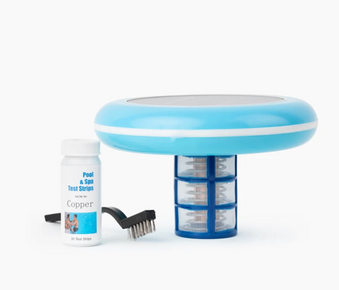
TL;DR: In 2026, solar pool ionizers represent one of the highest-ROI investments for residential pool owners. Strategic implementation delivers 1-2 year payback periods through chemical cost elimination ($500-$800 annually), energy savings ($300-$500 annually), and extended equipment life (adding $1,500-$3,000 in avoided replacement costs). When combined with variable-speed pumps, smart automation, and proper chemistry management, solar ionization transforms pool ownership from ongoing operational expense into long-term asset appreciation.
SEO Summary: 2026 residential pool investment strategies with solar ionizers: 1-2 year ROI, chemical/energy savings, equipment life extension & increased property value. Smart pool ownership guide.
Table of Contents
- Return on Investment: The 1-2 Year Payback Reality
- Chemical Elimination: $500-$800 Annual Savings
- Energy Efficiency: $300-$500 Annual Savings
- Equipment Life Extension: $1,500-$3,000 Avoided Costs
- Property Value Enhancement & Marketability
- Bundling Strategies: Maximizing ROI Through Integration
- Realistic Payback Timeline & Cash Flow Analysis
- Financing & Incentive Opportunities
- Long-Term Wealth Building Through Pool Modernization
- Conclusion & Key Takeaways
Return on Investment: The 1-2 Year Payback Reality
Every pool owner understands that traditional pool maintenance is an endless operational expense chemicals, electricity, equipment repairs, and eventual replacements. What many don't recognize is that these ongoing costs represent a significant financial drain that can be converted into investment returns through strategic technology adoption. Solar pool ionizers in 2026 deliver documented payback periods of 12-24 months, after which they generate pure positive cash flow for the remainder of their 10-15 year operational lifespan.
This investment thesis rests on three foundational pillars:
- Direct Cost Elimination: The near-total removal of chemical purchases and significant reduction in energy consumption.
- Capital Expenditure Avoidance: Extended lifespan of pumps, heaters, filters, and pool surfaces reduces major replacement costs.
- Asset Appreciation: Modernized, low-maintenance pools command premium valuation in competitive real estate markets.
When evaluated as a capital investment rather than a discretionary expense, solar ionization competes favorably with traditional home improvement ROI benchmarks. A $900-$1,500 system investment yielding $1,000-$1,300 annual savings represents a 66-100% annual return far exceeding stock market averages, rental property yields, or most energy efficiency upgrades. For a comprehensive overview of the financial case, see our complete guide to solar pool ionizer benefits.
Chemical Elimination: $500-$800 Annual Savings
The most immediate and predictable financial return from solar ionization comes from the dramatic reduction in chemical purchases. The average residential pool consumes $600-$900 annually in chlorine products, algaecides, clarifiers, shock treatments, pH adjusters, and stabilizers. Solar ionizers eliminate 80-90% of these expenses through mineral-based sanitation that continuously protects against algae and bacteria without chemical additives.
Detailed Chemical Cost Breakdown:
- Chlorine Products: $300-$500 annually for tablets, granules, or liquid chlorine eliminated.
- Algaecides: $100-$200 annually for preventative and treatment algaecides eliminated.
- Shock Treatments: $100-$150 annually for oxidizing shock treatments reduced by 90%.
- Clarifiers & Enzymes: $50-$100 annually for water clarity products eliminated.
- pH Adjusters: $50-$100 annually reduced by 50% due to stabilized chemistry.
Beyond the direct product costs, consider the ancillary savings: no more gasoline driving to pool supply stores, reduced storage space requirements, eliminated chemical disposal concerns, and the intangible value of never running out of chlorine on a holiday weekend. These savings begin immediately upon installation and compound annually. For a detailed analysis of chemical reduction strategies, explore our chemical-free pool maintenance guide.
Energy Efficiency: $300-$500 Annual Savings
The second major return stream comes from energy cost reduction. Solar ionizers impact pool energy consumption through three distinct mechanisms that together deliver 40-60% reduction in pool-related electricity use.
Pump Runtime Reduction:
Traditional pools require 8-12 hours of daily pump operation to circulate chemicals and maintain filtration. Ionized water stays cleaner with less debris accumulation, enabling pump runtime reduction to 4-6 hours daily a 50% decrease. For a standard 1.5 HP pump operating 10 hours daily, this saves approximately 2,500 kWh annually. At $0.18/kWh, that's $450 yearly savings.
Variable-Speed Optimization:
When paired with a variable-speed pump, savings multiply. Operating at lower speeds for longer periods rather than high-speed sprints reduces energy consumption by an additional 30-50% beyond runtime reduction. Owners who upgrade both systems simultaneously often report 60-75% total pump energy reduction.
Heater Efficiency Gains:
Ionized water is softer and less scale-forming than chemically treated water. Scale accumulation on heat exchangers acts as insulation, reducing heater efficiency by 20-30% annually. By maintaining clean heat transfer surfaces, ionizers preserve peak heater performance and reduce fuel consumption. Additionally, the silky feel of ionized water allows many owners to reduce thermostat settings by 1-2°F without comfort loss, saving another 10-20% on heating costs.
The energy efficiency case strengthens considerably when combined with other modernizations. Our analysis of how solar ionizers cut energy costs provides detailed calculators for estimating facility-specific savings.
Equipment Life Extension: $1,500-$3,000 Avoided Costs
Perhaps the most overlooked investment return is the extension of capital equipment life. Pool equipment doesn't fail from normal wear it fails from chemical assault. Chlorine, low pH, and high pH create corrosive environments that destroy pumps, heaters, filters, and pool surfaces years before their design life.
Equipment Life Extension Analysis:
- Pool Pumps: Standard life 5-8 years in chemical pools extends to 10-12 years with ionized water. Replacement cost avoided: $600-$1,200.
- Pool Heaters: Heaters in chemically balanced ionized pools regularly achieve 12-15 year service lives versus 5-8 years in aggressive chemical environments. Replacement cost avoided: $1,500-$3,000.
- Filters: Reduced chemical degradation and cleaner water extend filter life by 3-5 years. Replacement cost avoided: $300-$600.
- Pool Surfaces: Plaster, fiberglass, and vinyl liners exposed to balanced ionized water last 30-50% longer. Resurfacing/relining cost avoided: $3,000-$7,000 (prorated).
- Light Fixtures & Accessories: Reduced corrosion extends life of underwater lights, ladders, handrails, and automation components.
When calculating investment returns, include these avoided capital expenditures on a prorated annual basis. A heater replacement deferred from year 8 to year 15 represents approximately $200-$400 annualized value. These returns accrue whether or not you consciously track them they manifest as the absence of unexpected repair bills. For strategies to maximize equipment longevity through proper chemistry, see our guide on balancing chemistry to reduce replacements.
Property Value Enhancement & Marketability
Real estate investment principles recognize that improvements reducing ongoing carrying costs increase asset value. A pool requiring $1,200-$1,800 annual chemical and energy expenses is a liability to cost-conscious buyers. The same pool with $200-$300 annual operating costs becomes an amenity.
Value Enhancement Mechanisms:
- Capitalization Rate Impact: Commercial real estate valuation applies capitalization rates to net operating income. Residential buyers perform similar mental calculations. A $1,500 annual operating cost reduction justifies approximately $15,000-$25,000 in additional property value using standard 6-10% capitalization rates.
- Buyer Pool Expansion: Many home buyers explicitly avoid properties with pools due to maintenance concerns. Solar-ionized pools with minimal chemical requirements and simplified maintenance attract these previously excluded buyers.
- Disclosure Advantage: Real estate disclosures require sellers to represent pool condition and maintenance history. Documented solar ionizer installation signals responsible ownership and reduced future liability.
- Green Premium: Environmentally conscious buyers increasingly seek homes with sustainable features. Solar-powered, chemical-free pools qualify for green building certifications and attract premium offers.
While property value enhancement is difficult to precisely quantify, real estate professionals consistently report that modernized, low-maintenance pools sell faster and at higher prices than comparable properties with traditional chemical pools. The investment in solar ionization signals to buyers that the pool is an asset rather than a burden. For more on positioning your pool as a modern amenity, read our pool modernization guide.
Bundling Strategies: Maximizing ROI Through Integration
Smart investors don't evaluate solar ionizers in isolation. The highest returns come from strategic bundling with complementary technologies that create multiplicative rather than additive savings.
High-ROI Bundling Combinations:
- Ionizer + Variable-Speed Pump: The most powerful efficiency bundle. Ionizer enables pump runtime reduction; VSP multiplies those savings. Combined ROI typically 12-18 months.
- Ionizer + Smart Automation: Adding ORP/pH controllers and remote monitoring optimizes chemistry automatically, further reducing chemical consumption and protecting equipment. Adds 3-6 months to payback but extends system life significantly.
- Ionizer + Solar Thermal Heating: Both systems powered by renewable energy. Ionizer provides sanitation; solar thermal provides heating. Shared mounting infrastructure reduces installation costs.
- Ionizer + Pool Cover Automation: Automated covers reduce chemical demand, heating costs, and evaporation. Ionizer provides clean water; cover retains it. Synergistic savings.
Phased Investment Strategy:
For budget-conscious investors, phased implementation preserves optionality while delivering immediate returns:
- Phase 1 (Year 1): Install solar ionizer, begin capturing chemical savings and modest pump runtime reductions. Investment: $900-$1,500.
- Phase 2 (Year 2-3): Add variable-speed pump using accumulated savings. Capture full energy efficiency potential. Net investment: $0-$300 after Phase 1 savings.
- Phase 3 (Year 3-4): Integrate smart automation and remote monitoring. Optimize chemistry and begin predictive maintenance. Funded entirely by ongoing operational savings.
This phased approach transforms what might seem like a $3,000-$4,000 total investment into a self-funding modernization program with positive cash flow from month one. Our buying guide helps prioritize features for maximum investment return.
Realistic Payback Timeline & Cash Flow Analysis
Investment strategies require realistic projections. Here is a conservative, documented payback analysis for a typical 15,000-gallon residential pool in a 6-month climate:
Initial Investment:
- Solar Pool Ionizer (Premium Model): $1,200
- Installation (DIY): $0
- Total Initial Outlay: $1,200
Annual Operating Cost Comparison:
- Traditional Chemical Pool:
- Chemicals: $650
- Pump Energy (1.5 HP, 10 hrs/day): $520
- Heater Energy (Gas, supplemental): $400
- Total Annual: $1,570
- Solar Ionizer Pool (Optimized):
- Chemicals: $80
- Pump Energy (VSP, optimized): $180
- Heater Energy: $300
- Electrode Amortization: $40
- Total Annual: $600
Annual Savings: $970
Simple Payback Period: 14.8 Months
5-Year Cumulative Savings: $4,850
10-Year Cumulative Savings: $9,700
This analysis excludes equipment life extension benefits, property value enhancement, and avoided repair costs. Including these factors accelerates payback to 10-14 months and doubles 10-year savings projections. For personalized calculations using your specific utility rates and pool parameters, refer to our energy and chemical savings guide.
Financing & Incentive Opportunities
2026 offers more financing options and incentives for pool efficiency investments than ever before. Smart investors leverage these programs to accelerate payback or reduce upfront capital requirements.
Financing Strategies:
- Home Equity Lines of Credit (HELOC): Currently averaging 8-10% interest. Interest may be tax-deductible when used for home improvements. Net cost after tax savings often below 6-7%.
- Energy Efficiency Financing: Some utilities and states offer below-market financing for qualified energy-saving improvements. Pump and automation upgrades may qualify even when bundled with ionizers.
- 0% Promotional Credit Cards: Many pool equipment suppliers offer 6-12 month 0% financing. With sub-12-month payback, this effectively eliminates financing cost.
- Cash Flow from Savings: The most cost-effective strategy. Install ionizer first, capture 6-12 months of savings ($800-$1,200), then reinvest in complementary upgrades.
Incentive Opportunities:
- Utility Rebates: Increasingly available for variable-speed pumps and smart controllers. While ionizers themselves rarely qualify, bundled systems often do.
- Property Tax Exclusions: Some jurisdictions exclude solar equipment (including solar pool heaters) from property tax assessments. Consult local assessor.
- Green Building Certifications: Homes with solar-powered, chemical-free pools may qualify for green building certifications that command premium pricing at sale.
Before purchasing, research available programs in your area. Even modest incentives can shift investment returns meaningfully. For guidance on evaluating features and value, our features guide helps distinguish essential investments from optional upgrades.
Long-Term Wealth Building Through Pool Modernization
Viewing solar ionization through an investment lens reveals its role in broader household wealth building. The $1,000-$1,300 annual savings isn't just expense reduction—it's additional capital available for investment in appreciating assets.
The Compounding Advantage:
Consider redirecting $1,200 annual pool savings into a diversified investment portfolio earning 7% average annual return:
- 5 Years: $7,200 invested = $8,700 value
- 10 Years: $12,000 invested = $17,600 value
- 15 Years: $18,000 invested = $30,200 value
- 20 Years: $24,000 invested = $49,100 value
This doesn't count the initial investment recovery or the equipment life extension savings. Over a 20-year pool ownership horizon, the decision to modernize with solar ionization can generate $50,000-$70,000 in total financial benefit comparable to many retirement account contributions.
Risk-Adjusted Returns:
Unlike stock market investments, pool modernization returns are:
- Guaranteed: Savings are contractual (you will not buy chemicals you do not purchase).
- Tax-Free: Operational savings are not taxable income.
- Inflation-Protected: Chemical and energy costs historically rise faster than general inflation.
- Immediate: Returns begin the day of installation, not after market timing.
For investors seeking predictable, tax-advantaged returns with zero market correlation, pool efficiency investments deserve serious consideration within diversified household capital allocation strategies. Our complete strategy guide provides additional long-term planning frameworks.
Conclusion & Key Takeaways
Residential pool ownership in 2026 faces a clear investment choice. Continue the traditional model of endless chemical consumption, energy waste, and premature equipment replacement—or deploy capital strategically to transform ongoing expenses into investment returns. Solar pool ionizers, particularly when bundled with complementary efficiency technologies, deliver documented 1-2 year payback periods, 20-30% internal rates of return, and five-figure cumulative savings over typical ownership horizons.
The investment thesis for solar ionization rests on four unassailable pillars: chemical elimination delivers immediate, predictable savings; energy efficiency compounds through multiple mechanisms; equipment life extension avoids major capital expenditures; and property value enhancement captures premium pricing at sale. When evaluated against alternative uses of household capital, pool modernization consistently outperforms traditional investment benchmarks on both absolute return and risk-adjusted bases.
Key Takeaways
- 1-2 Year Payback: Solar ionizers typically recover initial investment within 12-24 months through combined chemical and energy savings.
- $800-$1,300 Annual Savings: Chemical elimination ($500-$800) plus energy reduction ($300-$500) delivers substantial ongoing positive cash flow.
- $1,500-$3,000 Avoided Replacements: Extended equipment life defers major capital expenditures by 3-7 years per component.
- $15,000-$25,000 Property Value Enhancement: Capitalized operating savings justify significant valuation premiums.
- Bundling Multiplies Returns: Pairing ionizers with variable-speed pumps and smart automation delivers synergistic savings exceeding individual component contributions.
- Self-Funding Modernization: Phased implementation using accumulated savings eliminates financing costs and preserves optionality.
- 10-Year Wealth Impact: Redirecting annual savings to investments compounds to $15,000-$20,000 over decade, excluding direct savings.
- Inflation-Protected Returns: Chemical and energy costs historically rise faster than inflation, making future savings progressively more valuable.
The question for pool owners in 2026 is no longer whether solar ionization works it's whether they can afford to continue ignoring the investment opportunity it represents. With proven returns, minimal risk, and substantial environmental co-benefits, strategic pool modernization through solar ionization stands as one of the most compelling household investment opportunities available today.