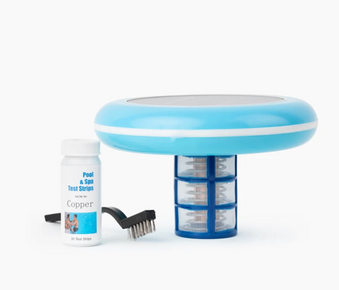
TL;DR: A 2026 solar pool ionizer is a smart, sustainable upgrade that drastically cuts chemical use and energy costs by using solar power to purify water with copper and silver ions. It delivers softer, healthier water, simplifies maintenance, and future-proofs your pool against rising costs and environmental concerns. This technology represents the next evolution in efficient, eco-conscious pool ownership.
SEO Summary: Explore how 2026 solar pool ionizer technology saves energy, reduces chemical reliance, and creates a sustainable swimming pool. This guide covers modern benefits, smart integration, installation, and long-term cost savings for eco-friendly pool care.
Table of Contents
- The Evolution of Pool Care: Why 2026 is the Year of the Solar Ionizer
- Modern Ionizer Science: How 2026 Technology Works
- The 2026 Financial Breakdown: Calculating Your True Savings
- The Environmental Dividend: Beyond Chemical Reduction
- 2026 Installation Guide: Placement and Optimization
- Integrating with the Smart Pool Ecosystem
- Advanced Water Management: Hybrid Systems & Maintenance
- Conclusion & Key Takeaways: Future-Proof Your Pool
The Evolution of Pool Care: Why 2026 is the Year of the Solar Ionizer
Pool maintenance has evolved from basic chlorination to complex chemical balancing, creating ongoing expense and environmental impact. In 2026, a confluence of factors makes solar ionization not just an alternative, but the intelligent default for forward-thinking pool owners. Rising energy costs, increased awareness of chemical byproducts (like chloramines), and advancements in renewable technology have all matured simultaneously.
The modern solar ionizer is no longer a niche gadget but a robust, primary sanitization system. It represents a shift from reactive, additive-based care to proactive, process-based purification. Where traditional methods constantly fight contamination by adding more chemicals, ionizers create a stable, inhospitable environment for algae and bacteria to begin with. This paradigm shift is key to achieving true efficiency and sustainability. For a historical perspective on this evolution, see our post: From Chlorine to Ions: The History of Pool Sanitation.
Modern Ionizer Science: How 2026 Technology Works
Understanding the refined science behind today's ionizers is crucial to appreciating their effectiveness.
The Core Purification Mechanism
A high-efficiency photovoltaic panel generates a precise low-voltage direct current. This current flows to a chamber housing high-purity copper-silver alloy electrodes. Through electrolysis, positively charged ions (Cu+ and Ag+) are released into the pool water circulation.
- Copper Ions (Cu+): These are the primary algaecide. They penetrate algal cell walls, disrupt enzyme functions critical for photosynthesis and reproduction, and cause the cells to clump together for easy filtration.
- Silver Ions (Ag+): These are potent microbial agents. They bind to and denature proteins in bacteria and viruses, effectively disabling their metabolic processes and preventing replication.
This ionic field is persistent and disperses evenly, providing continuous protection. The required concentration is remarkably low (typically 0.2-0.4 ppm for copper), making it safe for swimmers while deadly for contaminants.
2026 Advancements in Efficiency
Current-generation systems feature significant upgrades:
- Precision Pulse Technology: Instead of a constant current, advanced controllers use pulsed DC. This modulates ion release for optimal dispersion and extends electrode life by over 300% compared to older models.
- Self-Diagnostic Systems: Microprocessors monitor solar input, water flow, and electrode resistance. They can alert you to issues like low flow (a clogged filter) or an electrode nearing end-of-life.
- Weather-Adaptive Output: Using light and temperature sensors, the unit can preemptively increase ion production before a forecasted heatwave or storm that would boost contaminant load.
The 2026 Financial Breakdown: Calculating Your True Savings
The financial argument for solar ionization is stronger than ever. Let's move beyond anecdote and look at a detailed annual comparison for an average 20,000-gallon pool.
Pro Tip: The highest savings are realized in sun-drenched regions with long swim seasons, but even moderate climates see a rapid return on investment due to reduced chemical and energy use.
Annual Cost Comparison (Estimated)
-
Traditional Chlorine/Bromine System:
- Sanitizer Chemicals (Chlorine): $500 - $800
- Shock Treatments, Algaecides, Stabilizer: $200 - $300
- Additional Energy for Extended Pump Runtime: $150 - $250
- Total Annual Cost: $850 - $1,350
-
2026 Solar Ionizer System (after initial purchase):
- Minimal Supplemental Sanitizer (e.g., occasional shock): $50 - $100
- pH & Alkalinity Balancers (still required): $50 - $100
- Electrode Replacement (every 3-4 years): ~$40/year (prorated)
- Energy Savings from Reduced Pump Runtime: ($100 - $200 saved)
- Total Annual Cost: $40 to $0 (net savings on energy)
This results in annual savings of $800 to $1,350+, allowing the system to pay for itself typically within 1 to 2 swimming seasons. Furthermore, you avoid the "chemical price spikes" that often occur during peak summer demand.
The Environmental Dividend: Beyond Chemical Reduction
The environmental benefits and solar pool ionizer supporting healthy pool environment create a powerful secondary value proposition aligned with 2026 sustainability goals.
- Zero Operational Emissions: The system's entire power comes from the sun, eliminating the carbon footprint associated with electrically powered UV or ozone systems.
- Reduced Industrial Footprint: Less demand for packaged chlorine reduces the environmental burden of its manufacturing (which involves significant energy and salt) and transportation.
- Elimination of Harmful Byproducts: Chlorine reacts with organic matter to form chloramines (which cause eye/skin irritation and that distinctive "pool smell") and trihalomethanes (potential carcinogens). Ionization minimizes this reaction chain at its source.
- Water and Resource Conservation: Softer, ionized water is less corrosive and scaling, prolonging the life of heaters, pumps, and liners, thereby reducing resource consumption for replacements.
By choosing a solar ionizer, you're not just maintaining a pool; you're stewarding a small, self-cleaning ecosystem. Learn more about creating a holistic eco-pool in our guide: Building a Sustainable Backyard Oasis: More Than Just Water.
2026 Installation Guide: Placement and Optimization
Proper installation is straightforward but critical for maximizing performance. Modern kits are designed for DIY installation in 2-3 hours.
Step-by-Step Optimal Setup
- Solar Panel Placement: Mount the panel in a location receiving maximum unobstructed sunlight, preferably between 10 AM and 4 PM. South-facing roofs, fences, or dedicated poles are ideal. Ensure it's angled for your latitude to capture winter sun.
- Flow Chamber Installation: Install the ionizer chamber on the pool's return line, after the filter and heater. This ensures clean, debris-free water passes over the electrodes and that heated water doesn't degrade ion potency. Use the included unions for easy future service.
- Electrical Connection: Run the weatherproof cable from the panel to the chamber. Most systems use simple, polarized plugs or color-coded terminals no complex wiring needed.
- System Startup & Balancing: Turn on the pool pump. Adjust the variable output control to the manufacturer's setting for your pool's volume. Test and balance your pool water's pH (7.2-7.6) and alkalinity (80-120 ppm), as these levels ensure ion effectiveness and prevent scaling.
Note: During the initial 2-week period, you may need to use a small amount of traditional sanitizer as the ionic field establishes itself. Use test strips to monitor copper ion levels until they stabilize in the target range.
Integrating with the Smart Pool Ecosystem
The 2026 smart home seamlessly includes automated pool management. A modern ionizer is a key node in this network.
- App-Based Control & Monitoring: Leading models pair with a dedicated app to display real-time ion production, solar charge status, and electrode health. Receive push notifications for "Low Sunlight" or "Check Flow."
- Automation with Other Systems: Through IFTTT or proprietary APIs, your ionizer can communicate with other devices. For example, it can signal your variable-speed pump to increase runtime after heavy pollen drop detected by a smart weather station.
- Predictive Maintenance: The system tracks cumulative electrode usage and solar cycles, providing a reliable forecast for when service or replacement will be needed, allowing you to plan rather than react.
This integration transforms the future pool care with solar pool ionizer from a manual chore into a managed, data-informed process.
Advanced Water Management: Hybrid Systems & Maintenance
For absolute water perfection or in challenging environments (like heavy leaf debris or very high bather loads), a hybrid approach is the pinnacle of 2026 pool care.
The Best of Both Worlds: Ionizer + Oxidizer
While ions sanitize (kill living organisms), they do not oxidize (break down non-living organic waste like body oils, sweat, and sunscreen). A hybrid system pairs the ionizer with a low-dose oxidizer:
- With a Salt Chlorine Generator (SCG): The SCG is set to a very low output (e.g., 10-20% of a standalone system), producing just enough chlorine to oxidize waste. The ionizer handles the bulk of sanitization, resulting in chlorine levels often below 0.5 ppm too low to smell or feel.
- With an Ozone or UV System: These are powerful secondary oxidizers that leave no residual in the water. The ionizer provides the persistent sanitizing residual, while ozone or UV destroys organics as water passes through the equipment.
Pro Tip: A hybrid system is remarkably resilient. It provides multiple layers of protection, ensuring crystal-clear water even during pool parties or extended rainy periods. Discover the ideal setup for your needs in our comparison: Ionizer, SCG, or Hybrid? Choosing Your 2026 Pool Sanitation Path.
Simplified Ongoing Maintenance
- Weekly: Test pH and alkalinity. Visually inspect the solar panel for debris.
- Monthly: Test copper ion level with a simple test strip. Clean the pool filter as normal.
- Seasonally: Check electrode condition through the clear viewing window (on most models). There is no need to winterize the system beyond ensuring water is drained from the chamber if freezing occurs.
Conclusion & Key Takeaways: Future-Proof Your Pool
Adopting a solar pool ionizer in 2026 is a decisive step toward sustainable, cost-effective, and enjoyable pool ownership. It moves you away from the cycle of buying, measuring, and adding chemicals, and into the realm of automated, energy-independent purification. This technology is no longer a complement to traditional care it is a sophisticated, primary solution that aligns with both modern environmental values and the desire for simpler home maintenance.
Key Takeaways
- Definitive Cost Savings: Solar ionizers reduce annual pool chemical expenses by 80-90% and lower pump energy costs, typically paying for themselves within two seasons.
- Proven, Advanced Science: Modern systems use precise pulse technology and smart controls to efficiently dispense copper and silver ions, providing continuous protection against algae and bacteria.
- Tangible Health & Environmental Benefits: They eliminate harsh chemicals, chloramine byproducts, and carbon emissions, creating softer water that's gentler on skin, eyes, and the planet.
- Smart Home Ready: 2026 models offer app integration and compatibility with automation systems, making them a central part of a modern, efficient backyard.
- Hybrid System Superiority: For ultimate results, pairing an ionizer with a low-output oxidizer (like a salt generator) creates the most resilient, low-maintenance, and swimmer-friendly water quality available.
- Simple Ownership: Installation is a manageable DIY project, and ongoing maintenance is minimal compared to traditional chemical management.
- A Future-Proof Investment: As energy and chemical costs rise, a solar-powered system protects you from market volatility and aligns with global sustainability trends, securing the value and enjoyment of your pool for years to come.
The future of pool care is clear, sustainable, and powered by the sun. A 2026 solar pool ionizer is the key to unlocking it.