
Maintaining a clean, safe, and comfortable swimming pool can be a significant and ongoing challenge for many pool owners. The dream of a sparkling, trouble-free oasis often clashes with the reality of murky water, relentless algae blooms, unpredictable pH swings, and the constant need to add harsh chemicals. These issues create a cycle of extra work, unexpected expenses, and frustration, turning what should be a source of relaxation into a demanding chore. This burden is felt by both residential owners hoping for a simple backyard retreat and commercial operators managing large aquatic facilities under tight budgets.
Solar pool ionizer technology is fundamentally transforming this experience, offering a smarter path forward. It provides an effective method to keep pools healthier, naturally algae-free, and vastly easier to manage, all while dramatically reducing reliance on traditional, harsh chemicals. By harnessing the sun as its sole energy source, a solar ionizer introduces a gentle, continuous process that supports balanced water chemistry from within. This eco-friendly approach simplifies the entire maintenance paradigm, delivering clearer water, lower costs, and more free time for everyone who owns or cares for a pool.
Table of Contents
- Introduction: Why Healthy Pool Environments Matter
- The Science Behind Solar Ionization and Pool Health
- Key Benefits of Solar Ionizers for Pool Owners
- Solar Pool Ionizer Water Chemistry: Balancing pH, Hardness & Clarity
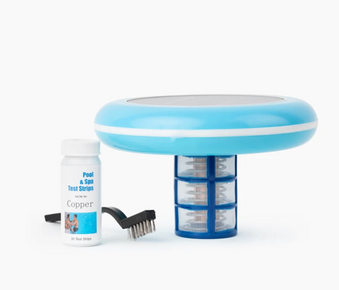
- Pool Equipments, Longevity & Replacement Kits for Maintenance
- Powerful Algae Prevention & Fixing Your Green Pool Naturally
- Final Thoughts: A Smarter, Cleaner, Healthier Pool Future
1. Introduction: Why Healthy Pool Environments Matter
The concept of "healthy" pool water represents a fundamental shift in perspective for pool ownership. It moves the goal from simply achieving a visually clear blue surface to cultivating a holistic aquatic environment that prioritizes three critical pillars: human safety, infrastructure preservation, and operational simplicity. This trifecta defines what a well-maintained pool should deliver, and understanding the consequences of neglecting any one pillar reveals why traditional methods often fall short and why solar ionization presents such a compelling alternative.
Pillar 1: Swimmer Safety: Beyond "No Algae"
Swimmer safety in a pool context extends far beyond the absence of visible debris or algae. It encompasses the chemical and biological integrity of the water itself. Poor water chemistry directly creates hazards:
- Chemical Irritation & Health Risks: Improperly balanced water, particularly with high chlorine levels or imbalanced pH, is the primary cause of red, burning eyes, dry and itchy skin, and respiratory discomfort. The strong "chlorine smell" is actually chloramines, irritating compounds formed when chlorine binds to swimmer waste like sweat and urine. Beyond discomfort, poorly sanitized water can harbor pathogens like Pseudomonas aeruginosa (causing "hot tub rash" and ear infections), E. coli, or the chlorine-resistant parasite Cryptosporidium, posing genuine health risks.
- Physical Hazards from Poor Clarity: Cloudy water isn't just unsightly; it's a serious safety issue. It obscures the view of the pool bottom, making it difficult to see a struggling swimmer, especially a child. This impaired visibility can delay rescue efforts in a critical situation.
- Slippery Surfaces: Algae growth, even before it turns the water green, creates a slimy biofilm on pool steps, ladders, and vinyl liners. This biofilm is extremely slippery, increasing the risk of slips and falls, particularly for elderly swimmers or children.
Pillar 2: Equipment Longevity: The Hidden Cost of Chemistry
The water in your pool is the operating environment for thousands of dollars worth of mechanical equipment. Unhealthy water chemistry acts as a corrosive or clogging agent that systematically shortens the lifespan of this investment.
- Corrosion from Low pH and High Chlorine: Water with a low pH (acidic) is corrosive. It actively attacks metal components: heater cores (often copper), pump seals and impellers, ladder screws, and light fixtures. High chlorine levels accelerate this corrosion exponentially. Replacing a corroded heater can cost over $1,000.
- Scaling from High pH and Hardness: Conversely, water with high pH and high calcium hardness leads to scale. Calcium carbonate precipitates out of the water, forming a rock-like crust. This scale is a superb insulator; when it coats a heater's heat exchanger, the heater must work much harder, overheat, and fail prematurely. Scale also clogs filter elements, pipes, and pump impellers, reducing efficiency and flow.
- Degradation of Surfaces: Corrosive water etches and pits plaster, causing permanent roughness that harbors algae. It causes vinyl liners to become brittle and fade. Scaling water stains tiles and creates rough deposits on all surfaces.
Pillar 3: Ease of Upkeep: The Time and Labor Burden
The daily reality for many pool owners is a time-consuming and often frustrating cycle of upkeep driven by reactive problem-solving. This burden manifests in several ways:
- The Chemical Treadmill: Owners become chemists, constantly testing and adjusting. This involves handling and storing corrosive acids (muriatic) and bases, measuring powders and liquids, and trying to interpret confusing test results. A single parameter out of range can trigger a cascade of adjustments.
- Physical Labor Intensity: Fighting algae means weekly, sometimes daily, brushing of walls and floors. Cloudy water requires adding clarifiers, running the filter continuously, and frequent backwashing or cleaning of filter cartridges, which is a messy, water-intensive process. Vacuuming is a regular chore.
- Unpredictability and Stress: Despite best efforts, pools can "turn" suddenly after a rainstorm, a pool party, or a few days of hot weather. This unpredictability creates stress, as owners can never fully relax or go away without worrying about returning to a green pool.
- Financial Drain: Upkeep costs are high and recurring. Money is spent not only on the volume of chemicals but also on specialized algaecides, phosphate removers, clarifiers, and stain treatments that are often needed to correct problems caused by the underlying unstable chemistry.
The Solar Ionization Alternative: A Synergistic Solution
Solar ionization directly and effectively addresses each of these three pillars, not as separate issues, but as interconnected parts of a single system.
- For Swimmer Safety: By releasing a constant, low level of copper ions, it provides continuous, proactive disinfection that is unaffected by sunlight. This drastically reduces the need for high chlorine levels, thereby minimizing chloramine formation and chemical irritation. The water feels softer, smells fresher, and is genuinely safer from pathogens. By preventing pool algae, it eliminates slippery biofilms.
- For Equipment Longevity: Solar ionization promotes remarkably stable water chemistry. With chlorine use reduced by 50-80%, the primary drivers of pH swings and corrosion are minimized. The water is less chemically aggressive. Furthermore, the process can help interfere with scale formation. The result is water that is neither corrosive nor scaling, dramatically extending the life of heaters, pumps, filters, and pool surfaces.
- For Ease of Upkeep: This is where the transformation is most dramatic. Solar ionization automates the most labor-intensive part of pool care: biological control. It prevents algae 24/7, eliminating brushing battles and emergency chemical treatments. Stable chemistry means testing becomes a simple weekly verification rather than a daily puzzle. Filter run times can often be reduced because the water stays cleaner. Maintenance shifts from a reactive, labor-heavy chore to a predictable, minimal oversight routine. The financial cost shifts from ongoing chemical purchases to a one-time investment in technology and an inexpensive annual replacement kit.
In essence, solar ionization redefines healthy pool water. It creates an environment where safety is enhanced by natural, consistent sanitation, where equipment is protected by stable, balanced chemistry, and where upkeep is simplified through automation and prevention. It transforms the pool from a high-maintenance problem to a low-maintenance asset, finally aligning the reality of pool ownership with the original promise of effortless enjoyment.

2. The Science Behind Solar Ionization and Pool Health
The operation of a solar ionizer is a masterclass in elegant engineering, where simplicity delivers powerful, consistent results for simplified pool maintenance. It eliminates complex electronics, timers, and external power supplies in favor of a direct, physics-driven process that is both reliable and perfectly attuned to the needs of a swimming pool. The system functions as a self-contained ecosystem, seamlessly integrating with your existing pool equipment and circulation to provide continuous, natural sanitation and algae prevention.
Stage 1: Harvesting Sunlight: The Autonomous Power Plant
The process begins with the integrated solar panel. This is not a large, grid-tied array, but a compact, ruggedized photovoltaic cell specifically designed for the aquatic environment. Its sole purpose is to act as a dedicated, off-grid power station for the ionization process. When photons from sunlight strike the panel, they energize electrons within its semiconductor material, creating a flow of direct current (DC) electricity. This current is low-voltage typically between 1.5 and 4.5 volts making it completely safe and ideal for the delicate electrochemical reaction to follow. Crucially, the system is intelligent in its simplicity: the stronger the sunlight, the more electrical current is generated. This creates a perfect, automatic correlation. On a bright, hot day when algae growth potential is at its peak, the ionizer receives maximum power and produces its highest output. On a cloudy day, production scales back appropriately. It self-regulates without any switches or programming, directly supporting consistent water chemistry.
Stage 2: The Electrochemical Heart: The Ionization Chamber
The generated electricity is channeled through waterproof wiring into the core of the device: the ionization chamber. This chamber is plumbed directly into your pool's return line, ensuring all filtered water passes through it before flowing back into the pool. Inside this chamber reside the two electrodes the cathode and anode of the solar ionizer that perform the transformative work:
The Anode (The Sacrificial Producer): This is a rod or cylinder made of high-purity copper, or sometimes a copper-silver alloy. It is connected to the positive (+) terminal of the solar circuit. When the electrical current flows, it creates an electrochemical potential at the anode's surface. This causes copper atoms to oxidize they lose electrons and become positively charged copper ions (Cu²⁺). These ions are then repelled by the anode's own positive charge and are released into the stream of water flowing through the chamber. This is a controlled, sacrificial process; the anode physically erodes over time as it donates its material to the water, which is why it is the key component in replacement kits for pool ionizers.
The Cathode (The Circuit Completer): This is typically a rod made of a durable, non-corrosive metal like stainless steel or titanium, connected to the negative (-) terminal. Its primary role is to receive electrons and complete the electrical circuit, allowing current to flow. While it does not dissolve, it is essential for maintaining the proper voltage and current needed for efficient ion release from the anode and is also included in comprehensive replacement kits.
Stage 3: The Active Agents: Copper Ions at Work
The released copper ions are minuscule, measured in parts per million (a target range of 0.2 to 0.4 ppm is standard). Once in the pool water, they become relentless, microscopic guardians with several modes of action critical for pool owners:
- Algae Suppression at the Cellular Level: This is the core of algae prevention. Copper ions are absorbed by algae cells. Once inside, they bind to and disable critical enzymes involved in photosynthesis and respiration. They disrupt the cell's energy production, effectively starving it. They also prevent algae spores from successfully germinating. This creates an environment where algae cannot establish a foothold, stopping problems before they become visible blooms and helping you fix your green pool faster by preventing recurrence.
- Microbial Control: Copper (and silver, if present) ions have inherent antimicrobial properties. They damage the cell walls of bacteria and interfere with their reproductive processes, reducing the overall population of pathogens in the water and providing a secondary layer of hygienic protection.
- Water Clarification: Copper ions carry a positive charge. Many of the tiny, haze-causing particles in pool water (dead organic matter, dust, some minerals) carry a negative charge. The ions attract these particles, causing them to clump together (flocculate) into larger masses that can be easily trapped by the filter or sink to the bottom for vacuuming, resulting in naturally clearer water and directly combating cloudy water.
The Critical Advantage: Steady-State Protection vs. Chemical Spikes
This is where solar ionization fundamentally diverges from traditional chemical care and simplifies pool maintenance. Chlorine-based systems operate on a cycle of spikes and decay. You add chlorine, it peaks, then is rapidly consumed by contaminants and destroyed by UV light, creating a daily "valley" of low protection that disrupts water chemistry. Algaecides are often added weekly or as emergency treatments, creating another short-lived spike.
Solar ionization provides steady-state protection. The ion release is continuous whenever the sun shines. More importantly, the copper ions, once in the water, remain active for weeks. They are not degraded by sunlight. This creates a persistent, residual sanitizing field that is always present. There is no daily crash, no vulnerable window. The protection is constant, 24 hours a day, seven days a week, which is fundamental to maintaining pool pH balance and managing water hardness by reducing the chemical additions that cause swings.
This ongoing, gentle ion release cultivates a stable, balanced aquatic environment. It prevents the violent biological and chemical fluctuations that characterize traditional pools. Algae is not repeatedly killed off in dramatic shocks; it is prevented from ever starting, leading to an algae free pool. The water chemistry is not constantly rocked by large doses of acidic or basic chemicals. The result is an ecosystem that is inherently healthier, more stable, and more closely aligned with natural, balanced bodies of water. It is a sustainable, "set-and-forget" approach to sanitation that works in harmony with nature's rhythms, using the sun's energy to maintain a clean, clear, and healthy pool with minimal intervention, transforming the entire experience of cleaning the pool from a chore into a simple check-in.

3. Key Benefits of Solar Ionizers for Pool Owners
Solar ionizers deliver a comprehensive set of advantages that collectively redefine the pool ownership experience. These benefits address the core financial, labor, and environmental pain points of traditional pool care, creating a smarter, more sustainable system. Each advantage builds upon the others, creating a virtuous cycle of efficiency and ease.
Drastically Reduced Chemical Use
This is the most transformative benefit. Traditional pool maintenance is chemically intensive, requiring constant additions of chlorine, algaecides, pH balancers, and shock treatments. A solar ionizer fundamentally changes this dynamic. The copper ions it releases provide continuous, background sanitation that is unaffected by sunlight. This persistent ion field handles the primary task of preventing algae and suppressing bacteria. Consequently, the pool's dependence on chlorine as the primary sanitizer plummets. Chlorine use can typically be reduced by 50% to 80%. Its role shifts from being the overworked, frontline defender to a specialized oxidizer, focused solely on breaking down non-living organic waste like body oils and sunscreen. This massive reduction means fewer chemical containers to store, handle, and pour, and a significant decrease in the chemical load in the water itself, which directly improves swimmer comfort by reducing chloramine formation the cause of red eyes, skin irritation, and strong chemical odors.
Significantly Lower Maintenance Effort
Maintenance effort is directly tied to problem frequency. By preventing algae at the source, solar ionizers eliminate the most labor-intensive pool chores. There is no more weekly battle with a brush to scrub green walls or vacuum algae debris from the floor. Since algae is not growing, filters do not clog with biological matter as quickly, meaning less frequent backwashing or cartridge cleaning. Furthermore, by promoting clearer water through ion-based flocculation (where tiny particles clump together for easier filtration), the pool maintains its sparkle with less intervention. The overall maintenance routine shifts from reactive, physical labor (fighting visible problems) to proactive, simple monitoring (checking stable conditions). What was once several hours of work per week can become less than an hour of simple verification.
Substantial Long-Term Cost Savings
The financial benefits are realized across multiple categories and compound over time:
- Chemical Savings: The 50-80% reduction in chlorine, along with the elimination of algaecide purchases and reduced need for shock and clarifiers, can save a typical pool owner $300 to $800 or more per swimming season.
- Energy Savings: Cleaner, ionized water places less strain on the filtration system of the pool. Filters stay cleaner longer, and pump run time can often be reduced by 1-3 hours per day without sacrificing water clarity, leading to measurable savings on monthly electricity bills.
- Equipment Longevity Savings: Reduced chemical corrosion and scale buildup mean critical equipment like heaters, pumps, and filters last significantly longer. Avoiding a single premature heater replacement (a $1,000+ expense) can pay for the ionizer system many times over.
- Reduced "Emergency" Costs: By preventing algae blooms and cloudy water crises, you eliminate the need for expensive emergency chemical treatments or professional service calls.
Genuine Eco-Friendly & Energy Efficient Operation
The environmental profile of a solar ionizer is exceptional. Its power source is 100% renewable sunlight it operates completely off-grid, adding zero load to your home's electrical system and creating no operational carbon emissions. By drastically reducing the volume of manufactured chemicals needed, it also minimizes the environmental footprint associated with their production, packaging, and transportation. Perhaps most importantly, it reduces chemical discharge into the environment. Water from backwashing or draining a chemically intensive pool introduces chlorine byproducts and synthetic compounds into the local watershed. A pool maintained with solar ionization has a far lower concentration of these pollutants, making it a more responsible choice for the surrounding ecosystem.
Supports Consistent, Predictable Pool Maintenance
Perhaps the greatest psychological benefit is the transformation from stress to predictability. Traditional chemical-based care is inherently reactive and unstable. Levels swing, algae appears unexpectedly, and problems often arise at the most inconvenient times. A solar ionizer provides constant, automated protection. It works 24/7 to maintain a baseline of cleanliness, preventing issues from ever gaining momentum. This creates remarkable stability in water chemistry. With fewer chemical additions causing pH swings, balance is easier to maintain. This predictability allows for a simple, scheduled maintenance routine. Testing becomes a verification of stability rather than a hunt for problems. Pool owners gain peace of mind, knowing the system is actively protecting their investment whether they are home, at work, or on vacation. Maintenance shifts from a stressful guessing game to a manageable, predictable part of home care.
In summary, solar ionizers don't just offer incremental improvements; they facilitate a systemic change. They reduce the chemical, labor, and financial inputs required while increasing the output of cleanliness, reliability, and enjoyment. They turn pool maintenance from a high-effort, high-cost, high-stress obligation into a low-input, predictable, and sustainable component of home ownership.

4. Solar Pool Ionizer Water Chemistry: Balancing pH, Hardness & Clarity
For pool owners, understanding pool water chemistry often feels like learning a foreign language with high stakes missteps lead to cloudy water, damaged equipment, and unhappy swimmers. The interplay between pH, alkalinity, hardness, and sanitizer levels is complex and unforgiving. Traditional chemical-based maintenance, with its constant additions of acidic chlorine tablets, basic shock, and various balancers, acts like a series of shocks to the system, making stability nearly impossible to achieve. Solar ionization intervenes in this cycle not by adding another variable to manage, but by introducing a stabilizing force that simplifies the entire chemical equation.
Maintaining Pool pH Balance: Achieving Chemical Stability
pH balance is the cornerstone of pool water health. It measures how acidic or basic the water is on a scale from 0 (very acidic) to 14 (very basic), with 7.4 to 7.6 being the ideal range for swimmer comfort and chemical efficacy. The primary disruptor of pH stability is the constant addition of treatment chemicals. Trichlor tablets are highly acidic. Liquid chlorine (sodium hypochlorite) is highly basic. Every time you add these to fight algae or shock the pool, you force a significant pH swing that must then be corrected with muriatic acid or soda ash.
Solar ionization fundamentally changes this dynamic. By releasing copper ions that provide continuous algae prevention, it slashes the pool's dependence on these pH-volatile chemicals. Chlorine use can drop by 50-80%, which means 50-80% fewer chemical events that violently disrupt the pH. The result is a far more stable baseline. The water is no longer on a chemical rollercoaster. With solar ionization, pH still needs to be monitored, but adjustments become infrequent, minor corrections rather than constant battles. This stability makes the water more comfortable for swimmers (no more burning eyes from pH swings) and allows other chemicals, like the minimal chlorine used, to work at their maximum efficiency.
Managing Water Hardness: Preventing the Scale-Corrosion Seesaw
Water hardness, the concentration of dissolved calcium and magnesium, is a critical but often overlooked parameter. It exists in a delicate balance: Too Low (Below 200 ppm): The water is "aggressive" or corrosive. It will seek to dissolve calcium to satisfy itself, leaching it directly from pool plaster, gunite, and tile grout, causing permanent etching, pitting, and surface deterioration. Too High (Above 400 ppm): The water is "scaling." The excess calcium precipitates out as solid, rock-like calcium carbonate. This forms scale on tile lines, inside plumbing, and, most destructively, as an insulating blanket on heater elements, leading to inefficiency and failure.
In traditional pools, chemical treatments exacerbate hardness problems. Calcium-based chlorine products (cal-hypo shock) directly increase hardness. Acid additions to control pH can make water more aggressive, accelerating corrosion. Solar ionization promotes stability. By reducing the need for calcium-hypochlorite shock and minimizing acidic corrections, it removes key drivers of hardness fluctuation. Furthermore, the presence of copper ions in the water can subtly interfere with the crystallization process of scale, making it less likely to form hard, adherent deposits. This helps keep hardness-related issues in check, protecting both the pool's surfaces and its expensive mechanical equipment from the twin threats of corrosion and scaling.
Preventing Cloudy Water: From Reaction to Clarification
Cloudy water is rarely just one thing; it's usually the final symptom of multiple underlying imbalances. It can be caused by: High pH causing mineral precipitation. High calcium hardness leading to micro-crystals. High total dissolved solids (TDS) from over-chemicalization. Ineffective filtration due to organic overload
Solar ionization attacks cloudiness on multiple fronts. First, by preventing algae, it removes a major source of organic particles and filter-clogging biomass. Second, by stabilizing pH and mitigating hardness swings, it reduces the chemical conditions that cause minerals to cloud the water. Third, and most directly, copper ions act as a natural clarifier. They carry a positive electrical charge that attracts the negatively charged microscopic particles (dust, dead organic matter, some minerals) that cause haze. These particles clump together (flocculate) into larger masses that are easily trapped by the filter or settle to the bottom for vacuuming. This process, happening continuously, polishes the water to a sustained, brilliant sparkle that chemical clarifiers can only achieve temporarily.
The Result: Simplified Care and Sustained Health
This integrated approach transforms water care from a complex, reactive science into a streamlined, preventative practice. The solar ionizer handles the destabilizing burden of biological control automatically. This allows the pool owner to focus on simple, periodic monitoring of pH, alkalinity, and hardness parameters that are now inherently more stable and easier to manage. Instead of constantly "fixing" the water, you are gently "guiding" a stable system. This natural method reduces the time, cost, and guesswork involved, while directly supporting the long-term health of the pool. Surfaces last longer, equipment runs more efficiently, and the water remains consistently inviting clear evidence of a truly balanced and healthy aquatic environment.

5. Pool Equipments, Longevity & Replacement Kits for Maintenance
Adopting a solar-powered pool system represents a major leap forward in maintenance efficiency, but it does not create a maintenance-free utopia. Rather, it shifts the type and focus of care required. While the daily chemical workload vanishes, the mechanical and electrochemical components of the system itself require informed, proactive stewardship. This care is not burdensome, but it is essential for realizing the long-term benefits and reliability that solar technology promises. Understanding this shift from managing water chemistry to maintaining a precision device is key to successful long-term ownership.
Reduced Systemic Strain: How Cleaner Water Protects Your Equipment
The primary mechanical benefit of a solar ionizer is the dramatic reduction in workload it creates for your pool's core equipment. This occurs through several mechanisms:
- Filter Longevity: In a traditional pool, filters are the frontline soldiers catching algae, dead bacteria, and organic debris. They clog rapidly, requiring frequent backwashing (which wastes water and energy) or cleaning. A solar ionizer prevents algae and reduces overall organic load, meaning the filter's job becomes far easier. It captures fewer biological contaminants and more of the benign, larger particles that copper ions help clump together. This leads to longer intervals between cleanings, less wear on filter media (cartridges, grids, or sand), and more consistent water pressure.
- Pump Efficiency: A clean filter creates less hydraulic resistance. The pump doesn't have to work as hard to push water through the system. This reduces strain on the pump motor and bearings, lowers energy consumption, and can extend the pump's operational lifespan. Furthermore, with less need to run the pump continuously to combat algae, overall run-time hours can often be reduced.
- Heater Protection: This is where the savings can be most significant. Scale formation inside a heater's heat exchanger is its number one enemy. Scale acts as an insulator, forcing the heater to work harder, overheat, and fail prematurely. By helping to stabilize water chemistry (particularly calcium hardness and pH) and by interfering with scale crystallization, a functioning solar ionizer significantly reduces the rate of scale buildup. This keeps the heater operating at peak efficiency and can prevent a very costly ($800-$2,000+) replacement for years.
The Inevitable Wear: The Consumable Nature of the Ionizer Itself
While it protects other equipment, the solar ionizer has its own consumable component: the sacrificial anode. This is not a design flaw but the core of its operational principle. The anode, typically made of copper or a copper-silver alloy, is engineered to erode. As it releases positively charged copper ions into the water to sanitize your pool, it physically shrinks in size. Over a single season, it can lose 30-50% of its mass. This gradual dissolution is how it works. However, a critically undersized anode has a drastically reduced surface area, which severely limits its ion output. The system may still appear active (the solar light may glow), but its sanitizing power becomes a mere fraction of its designed capacity, leaving your pool vulnerable.
Similarly, the cathode, though it does not dissolve, can fall victim to its own success. As it completes the electrical circuit, it attracts mineral scale from the water. A thick, insulating layer of calcium carbonate can coat it, increasing electrical resistance and choking the current flow, again reducing the system's efficiency.
The Essential Reset: The Role of Replacement Kits
This is where replacement kits transition from an optional accessory to an essential part of the maintenance regimen. A high-quality replacement kit collection is a comprehensive service pack that performs a complete system reset. It typically includes:
- A new, full-size anode to restore 100% ion production capacity.
- A cleaned or new cathode to eliminate scale-based resistance and restore optimal electrical flow.
- A new protective basket/housing to ensure unobstructed water flow and structural integrity, as plastic components can become brittle from UV and chemical exposure.
- New seals and hardware to prevent leaks and ensure a proper, secure fit during reassembly.
Installing a kit annually, typically at the season's opening, is the single most important act of care for the ionizer. It returns the electrochemical cell to its original factory specifications, guaranteeing maximum performance for the coming months. For the cost of a few bottles of algaecide, you renew the core sanitizing "engine" of your pool.
The Compounding Benefits of Proactive Maintenance
Committing to this simple, scheduled maintenance yields powerful, compounding returns:
- Prevents Costly Failure Chains: A neglected ionizer fails silently. As algae begins to return, the owner's response is often to dramatically increase chlorine and shock treatments. This chemical overload stresses all other equipment (pumps, heaters, surfaces) that the ionizer was meant to protect, potentially triggering a cascade of repairs.
- Ensures Consistent Water Quality: A well-maintained ionizer delivers reliable copper ion levels (0.2-0.4 ppm). This consistency is what keeps algae at bay and chlorine use low, creating the stable, comfortable water environment that is the ultimate goal.
- Maximizes Financial ROI: The small, planned investment in a replacement kit (typically $60-$120) protects the much larger investment in the ionizer unit itself (often $250-$500) and safeguards the thousands of dollars invested in the rest of the pool equipment. It is the epitome of "an ounce of prevention."
- Simplifies Overall Pool Care: A reliably functioning ionizer is the cornerstone of a low-maintenance pool. It ensures that the other aspects of care testing chemistry, running the pump remain simple, predictable tasks rather than emergency responses to green water or cloudy outbreaks.
In essence, maintaining your solar ionizer is the final, critical step in achieving the promised "effortless" pool. The system automates the chemistry, but you ensure the hardware's vitality. This small, disciplined investment of time and resources secures the performance of the entire aquatic ecosystem, guaranteeing cleaner water, longer equipment life, and true peace of mind for seasons to come.

6. Powerful Algae Prevention & Fixing Your Green Pool Naturally
Algae prevention stands as the most immediate and visually dramatic benefit of solar ionization, addressing the single most common frustration in pool ownership. The technology's effectiveness lies not in attacking visible algae, but in creating an aquatic environment where algae cannot establish itself in the first place. This proactive, preventative approach is fundamentally more effective and less labor-intensive than the traditional cycle of allowing algae to bloom and then fighting it with heavy chemical weapons.
Proactive Prevention: How Copper Ions Create an Algae-Proof Environment
The power of solar ionization for algae control stems from the specific biochemical action of copper ions (Cu²⁺). When a solar ionizer is operating correctly, it maintains a low, consistent concentration of these ions in the pool water typically between 0.2 and 0.4 parts per million. At this level, which is safe for swimmers and pool surfaces, the ions perform a continuous, multi-faceted defense:
- Spore Suppression: Algae begins as microscopic spores that constantly enter the pool via wind, rain, or contaminated objects. Copper ions create a hostile environment for these spores. The ions interfere with the spore's ability to germinate and begin its growth cycle, stopping the problem before a single cell can multiply.
- Cellular Sabotage: If a spore does begin to grow, copper ions are absorbed into the algae cell. Once inside, they act as potent metabolic disruptors. They bind to and deactivate critical enzymes responsible for photosynthesis (the process algae use to convert sunlight into energy) and respiration. Without these enzymes, the algae cell is effectively starved of energy and cannot grow, repair itself, or reproduce.
- Biofilm Disruption: Algae doesn't just float; it attaches to surfaces in a slimy, protective layer called a biofilm. Copper ions help break down this biofilm matrix, making it harder for algae to anchor to pool walls, floors, and steps, and exposing any attached cells to the sanitizing ions in the water.
This constant, cellular-level warfare ensures pool surfaces and water remain clean. The slippery feel on steps and walls a hallmark of early algae growth disappears. The persistent threat of the water turning a faint green after a hot day or a rainstorm is eliminated. The pool maintains a stable, brilliant blue clarity because the biological trigger for cloudiness (blooming algae cells) is neutralized.
Corrective Action: Helping to "Fix" a Green Pool Faster
For a pool that has already succumbed to an algae bloom, integrating a solar ionizer into the recovery process is a game-changer. The traditional method is a brute-force assault: super-chlorinate ("shock") the pool to kill the algae, then use algaecides and clarifiers, followed by intense filtering and vacuuming to remove the dead matter. This is hard on the water, equipment, and swimmers.
A solar ionizer supports a smarter, more balanced recovery:
- Enhanced Sanitation Support: While you perform a necessary shock treatment of pool to kill the existing bloom, the ionizer immediately begins establishing its protective copper ion field. This provides a secondary, persistent sanitizing action that supports the chlorine and helps prevent immediate re-infestation from surviving spores.
- Discouraging Regrowth: As the chlorine residual from the shock treatment fades (often within 24-48 hours), the copper ions remain active. They create an ongoing environment that is hostile to new algae growth, making it much harder for the problem to recur. This is the critical difference instead of a temporary chlorine peak followed by a vulnerable period, you establish a lasting protective barrier.
- Improved Filtration and Clarity: The copper ions act as a natural flocculant. They cause the microscopic dead algae cells and other debris to clump together into larger particles. These larger particles are then much easier for the filter to trap or will settle to the bottom for easy vacuuming, speeding up the clearance of cloudy, green water.
This approach often means you can use a slightly lower dose of shock chlorine and forgo harsh algaecides, as the ionizer handles the long-term prevention. Recovery becomes less chemically extreme and more sustainable.
The Holistic Benefit: A Healthier Swimming Experience
The ultimate result of this balanced approach is a transformation in the pool environment:
- Healthier Swimmers: With algae prevented, there is no need for frequent, high-dose chemical treatments. This drastically reduces the presence of chloramines the irritating byproducts of chlorine that cause red eyes, dry skin, and respiratory discomfort. The water feels softer and more natural.
- Reduced Chemical Exposure: The ongoing need for weekly algaecides, extra shock, and stain treatments vanishes. Swimmers, especially children, are exposed to far lower levels of synthetic chemicals.
- A Consistently Inviting Oasis: The anxiety of a potential algae outbreak disappears. The pool remains predictably clear and clean, ready for enjoyment at any time. This reliability transforms the pool from a high-maintenance concern back into a true leisure asset, providing a consistently algae-free environment that is both visually perfect and hygienically sound.
In summary, solar ionization excels in algae control by deploying a silent, persistent army of copper ions that defend the water at the most fundamental biological level. It prevents problems with remarkable efficiency and supports gentler, faster recovery when needed, culminating in a swimming experience that is safer, more comfortable, and consistently pristine.
7. Final Thoughts: A Smarter, Cleaner, Healthier Pool Future
Solar ionization represents a modern, intelligent approach to pool maintenance one that prioritizes cleaner water, balanced water chemistry, and minimal chemical dependency. It signifies a decisive shift away from the reactive, input-heavy methods of the past toward a proactive, systems-based model. For pool owners seeking an easier, more natural, and more sustainable solution that aligns with a contemporary lifestyle, solar ionizers offer a powerful and practical answer. They replace the constant manual labor of chemical management with automated, solar-powered processes, effectively outsourcing the hardest part of pool care to the sun itself.
The superiority of this approach is evident in its holistic impact on the pool ecosystem. From helping maintain stable pool pH balance by reducing the corrosive/additive cycle of chlorine, to managing water hardness by promoting mineral stability and interfering with scale formation, to preventing cloudy pool water through continuous ion-based clarification, solar-powered systems deliver integrated, long-term benefits that disparate traditional methods simply cannot match. Each benefit reinforces the others, creating a virtuous cycle of efficiency. With simple, proper upkeep primarily the annual replacement of the system's consumable anode and periodic cleaning and the use of manufacturer-designed replacement kits, solar ionizers become a durable, long-term investment. They can keep pools healthier, consistently clearer, and fundamentally easier to maintain for a decade or more, paying for themselves many times over in saved chemicals, energy, equipment repairs, and, most valuably, time.
Ultimately, this technology redefines the relationship between the pool owner and the pool. It transforms the pool from a high-maintenance appliance that demands constant attention into a resilient, self-regulating feature of the home that provides pure enjoyment. A healthier pool environment, one that is safe, comfortable, and crystal clear, does not start with stronger chemicals or more frequent labor. It starts with smarter technology that works in harmony with natural principles. Solar ionization, by harnessing the sun's energy to foster a balanced aquatic environment, is unequivocally leading the way toward this smarter, more sustainable future of pool ownership.
2 comments
i have an ionizer in pool but it has consumed water inside the container is that normal …….or …. how do i remove water from inside container of ionizer
I have a pool ionizer, so do I take it out when I winterize my pool. If I’m covering the pool I guess I will have to remove it