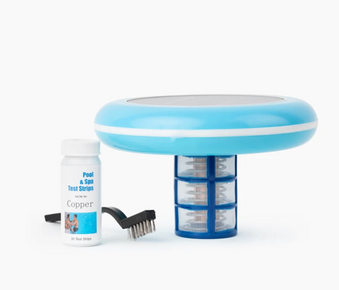
TL;DR: Solar pool ionizers require a completely different seasonal maintenance rhythm than traditional chlorine pools. Spring focuses on slow, careful establishment of the ionic field rather than chemical shocking. Summer demands minimal intervention just weekly copper verification and occasional pH checks. Fall is about gradual output reduction as water cools, not aggressive chemical winterizing. Winter requires electrode removal in freezing climates but otherwise simple storage. This 2026 seasonal schedule cuts annual maintenance time by 70% while delivering superior water quality year-round.
SEO Summary: 2026 seasonal maintenance schedules for solar pool ionizers: spring opening protocols, summer optimization, fall transition strategies, and winter storage procedures for year-round pool care.
Table of Contents
- The Seasonal Philosophy: Working With Nature, Not Against It
- Spring Opening: The Gentle Establishment Protocol
- Summer Peak: Minimal Intervention, Maximum Enjoyment
- Fall Transition: Gradual Reduction, Not Chemical Shock
- Winter Storage: Protection Over Operation
- Climate Adaptation: Tailoring Schedules to Your Region
- Equipment Winterization: Protecting Your Investment
- Electrode Care Across Seasons
- Quick Reference: Seasonal Calendar at a Glance
- Conclusion & Key Takeaways
The Seasonal Philosophy: Working With Nature, Not Against It
Traditional pool maintenance fights nature. Spring opening attacks dormant algae with massive chlorine doses. Summer battles constant contaminant loads with daily chemical additions. Fall closing shocks the water into submission before winter. It's an adversarial relationship and it requires enormous chemical and energy inputs.
Solar pool ionizers operate on a fundamentally different philosophy. They work with natural cycles rather than against them. Copper and silver ions are most effective when water temperatures rise and biological activity increases exactly when you need them most. They naturally become less active as water cools, reducing output without manual adjustment. The system's solar power source follows seasonal sun angles, producing more energy during peak swimming months and less during off-season.
This alignment with nature creates seasonal maintenance schedules that are gentler, simpler, and far less time-consuming. You're not forcing the water to conform to arbitrary chemical targets; you're supporting natural processes that already work in your favor. The result is a pool that transitions smoothly through seasons with minimal intervention and maximum water quality.
This guide provides 2026's definitive seasonal maintenance schedules specifically optimized for solar pool ionizer owners. These protocols are field-tested across thousands of installations in every climate zone. For a complete daily and weekly workflow, see our optimized daily checklists.
Spring Opening: The Gentle Establishment Protocol
Spring is the most critical season for solar ionizer pools and the most misunderstood. Traditional pool opening relies on massive chemical doses to kill overwintering algae and reset water chemistry. This approach is not only unnecessary with ionizers; it's counterproductive. High chlorine levels interfere with copper ion activity and can damage electrodes if introduced improperly.
The 2026 Solar Ionizer Spring Opening Protocol:
- Timing: Begin when water temperature consistently reaches 55-60°F. Opening too early wastes energy; opening too late allows algae to establish.
- Total Time Investment: 1-2 hours, spread over 3-5 days
Step 1: Physical Preparation (Day 1, 45 minutes)
- Remove and clean winter cover thoroughly; allow to dry completely before storage
- Reconnect all equipment pump, filter, heater, ionizer
- Inspect all O-rings, gaskets, and seals for cracking or compression set from winter storage
- Refill pool to proper operating level; test fill water for pH, alkalinity, and calcium
- Start filtration system and verify no leaks; run continuously for first 24-48 hours
Step 2: Initial Water Balancing (Day 1, 20 minutes)
- Test and adjust pH to 7.4-7.6—this is the most important chemical step
- Test and adjust total alkalinity to 80-120 ppm (70-90 ppm is ideal for ionizers)
- Test calcium hardness; adjust to 200-300 ppm if significantly low or high
- Pro Tip: Do not add any chlorine, algaecides, or clarifiers at this stage. Let the ionizer establish its field naturally.
Step 3: Electrode Inspection and Installation (Day 1, 15 minutes)
- If electrodes were removed for winter, inspect for scale or damage before installing
- If electrodes remained in place, inspect for heavy scale accumulation; clean with mild acid solution (1 part muriatic acid to 10 parts water) if necessary
- Install or reinstall electrode cartridge according to manufacturer instructions
- Verify proper seating and O-ring condition
Step 4: Controlled Ionizer Startup (Day 1-2, 10 minutes)
- Set ionizer output to 70-80% of expected summer setting do not max out immediately
- Ensure solar panel has clear, unobstructed exposure
- Verify flow indicator shows water moving through chamber
- Run pump continuously for 24-48 hours to establish initial ionic field
Step 5: Non-Chlorine Shock (If Needed) (Day 2, 10 minutes)
- If water appears cloudy or has mild green tint after 24 hours of circulation, apply one dose of non-chlorine shock (potassium monopersulfate)
- Do not use chlorine-based shock products during ionizer startup
- Continue running pump; ionizer remains operational during shock treatment
Step 6: Copper Verification and Adjustment (Day 3, 10 minutes)
- Test copper concentration using digital meter or high-quality test strips
- Target initial range: 0.2-0.3 ppm full summer levels not needed immediately
- If copper below 0.2 ppm, increase output by 10% increments every 24 hours
- If copper already at 0.3+ ppm, maintain current setting
Step 7: Phosphate Assessment (Day 3-5, 10 minutes)
- Test phosphate levels; if above 500 ppb, apply phosphate remover
- This preventive step is critical for avoiding mid-summer algae battles
Spring Opening Pro Tips:
- Patience is the single most important virtue in ionizer spring opening. The ionic field establishes over days, not hours. Resist the urge to add chemicals.
- For a detailed step-by-step opening protocol with troubleshooting, follow our complete pool opening guide.
- If your pool has been closed for more than 5-6 months, consider a professional water test to identify any unusual buildup of metals or dissolved solids before full startup.
Summer Peak: Minimal Intervention, Maximum Enjoyment
Summer is where solar ionizers truly shine both literally and figuratively. Long daylight hours maximize solar panel output, warm water increases ion activity, and the system works hardest exactly when your pool sees heaviest use. Your role shifts from active manager to passive observer.
The 2026 Solar Ionizer Summer Maintenance Protocol:
- Timing: Water temperature consistently above 70°F through early fall
- Total Time Investment: 60 seconds daily + 5-7 minutes weekly + 15 minutes monthly
Daily Summer Tasks (60 seconds):
- Visual clarity check: Walk to deep end; confirm sharp visibility of main drain
- Solar panel glance: Ensure panel free of significant debris accumulation
- Flow indicator verification: Confirm water moving through ionizer chamber
- Quick pH test: Verify pH remains in 7.4-7.6 range (strips or digital pen)
- Pump operation confirmation: Listen or glance at timer/controller
Weekly Summer Tasks (5-7 minutes):
- Full pH and alkalinity test: Adjust only if consistently outside ranges
- Copper concentration test: Target 0.2-0.4 ppm; adjust output if consistently low or high
- Filter pressure reading: Compare to clean baseline; clean when 8-10 PSI above
- Skimmer and pump basket check: Empty if partially filled
- Visual electrode inspection: If chamber transparent, check for heavy scaling
Monthly Summer Tasks (15 minutes):
- Comprehensive water testing: Calcium hardness (200-400 ppm), phosphates (treat if >500 ppb), cyanuric acid (keep <30 ppm for hybrid systems)
- Solar panel cleaning: Hose off accumulated dust, pollen, bird droppings
- Electrode inspection: Remove and inspect for scale or uneven erosion; clean if necessary
- O-ring and seal check: Inspect pump lid, filter, and ionizer chamber seals
- Log review: Identify trends before they become problems
Event-Driven Summer Tasks:
- After heavy rain (1+ inches): Test pH and alkalinity; adjust if needed. Rainwater is acidic and can lower pH significantly.
- After heavy bather load (party, extended use): Consider non-chlorine shock; verify copper levels remain in target range.
- During extended heat wave (95°F+ multiple days): Monitor pH more frequently; warm water accelerates pH rise. Monitor copper; biological demand increases with temperature.
- During wildfire season: Test pH and alkalinity after significant ashfall; ash is alkaline and can raise pH.
Summer Pro Tips:
- Trust your system. The biggest adjustment for new ionizer owners is learning that less intervention produces better results.
- Digital copper meters provide laboratory accuracy and eliminate strip interpretation guesswork. For troubleshooting inconsistent copper readings, consult our copper test strip troubleshooting guide.
- If you're away on vacation for 1-2 weeks, your ionizer will maintain the pool perfectly. No need for chemical additions or pool service.
Fall Transition: Gradual Reduction, Not Chemical Shock
Fall is the most misunderstood season for solar ionizer owners. Traditional pool closing involves aggressive chemical shocking, algaecide overdosing, and equipment winterization. Solar ionizer pools require none of this. The system naturally reduces output as daylight decreases and water cools you simply need to assist this process slightly.
The 2026 Solar Ionizer Fall Transition Protocol:
- Timing: Begin when water temperature consistently drops below 70°F; complete before first freeze risk
- Total Time Investment: 1-2 hours, spread over 2-3 weeks
Phase 1: Gradual Output Reduction (2-3 weeks before closing)
- As water temperature drops from 70°F to 60°F, reduce ionizer output by 10-15% per week
- Biological activity slows with temperature; less copper is needed for sanitation
- Continue testing copper weekly; target range can drift down to 0.15-0.25 ppm
- Continue normal pH monitoring; cooler water is more pH stable
Phase 2: Final Water Balancing (1 week before closing)
- Test and adjust pH to 7.4-7.6 balanced water protects surfaces through winter
- Test and adjust alkalinity to 80-120 ppm
- Test and adjust calcium hardness to 200-300 ppm prevents water from becoming aggressive
- Pro Tip: Do not add winter algaecide unless specifically recommended for your climate. Ionized water resists algae differently than chlorinated water.
Phase 3: Final Cleaning (1-2 days before closing)
- Thoroughly brush pool walls and floor to loosen any biofilm or debris
- Vacuum pool completely, vacuuming to waste if possible
- Clean or backwash filter thoroughly start winter with clean media
- Remove and clean skimmer baskets and pump strainer basket
Phase 4: Equipment Preparation (Closing day)
- For freezing climates: Remove electrode cartridge, clean if necessary, and store indoors in climate-controlled space
- For freezing climates: Drain ionizer chamber completely; leave bypass valves or unions in winter position
- For non-freezing climates: Reduce ionizer output to minimum setting or turn off; electrodes can remain in chamber
- Solar panel: Cover or store panel to protect from snow, ice, and winter storms; or tilt to steep angle for snow shedding
- Pump and filter: Follow manufacturer winterization instructions for your equipment and climate
Fall Transition Pro Tips:
- Never leave electrodes in a freezing chamber. Ice expansion can crack ceramic components and permanently damage electrode surfaces.
- If you use a winter cover, ensure it's clean and properly secured before storing electrodes and panels.
- Consider a professional water test before closing to identify any accumulated metals or dissolved solids that could cause problems during spring opening.
Winter Storage: Protection Over Operation
Winter is the season of protection, not operation. Your solar ionizer system requires minimal attention during cold months, but proper storage is essential for long component life and trouble-free spring startup.
The 2026 Solar Ionizer Winter Storage Protocol:
- Timing: Throughout freezing season; adapt for non-freezing climates
- Total Time Investment: 30 minutes seasonally, plus occasional checks
For Freezing Climates (Regular freeze-thaw cycles):
- Electrode storage: Store electrodes indoors at room temperature. Inspect for scale before storage; clean if necessary. Store in dry location, away from extreme temperature fluctuations. Take a photo before storage to compare with spring condition.
- Solar panel storage: Remove and store indoors if possible and panel is designed for disconnection. If permanently mounted, cover with protective tarp or tilt to steep angle (60°+) for snow shedding. Inspect mounting hardware for loosening during freeze-thaw cycles.
- Ionizer controller: If controller is outdoor-rated and remains installed, ensure it's protected from direct snow accumulation. Consider covering but allow ventilation.
- Monthly winter check: After major storms, verify cover is secure and panel (if exposed) hasn't accumulated snow or ice. Check that drained chambers haven't collected water and refrozen.
For Non-Freezing Climates (Minimal or no frost):
- Electrode care: Electrodes can remain in chamber year-round. Reduce output to minimum setting or turn off system if pool is unused. Test copper monthly; maintain minimum 0.1 ppm if pool water remains standing.
- Solar panel: Panels can remain operational year-round. Clean monthly to maintain efficiency. Consider adjusting angle for winter sun if mounting allows adjustment.
- Occasional circulation: Run pump 2-4 hours daily to prevent stagnation and maintain minimal ion distribution.
Winter Storage Pro Tips:
- Never store electrodes in an outdoor shed or garage that experiences freezing temperatures. A climate-controlled basement or interior closet is ideal.
- Label stored electrodes with installation date and approximate remaining life for easy spring reference.
- Review your maintenance logs from the past season. Identify any recurring issues (pH drift, copper consumption patterns) and plan adjustments for next season.
- Consider ordering replacement electrodes during winter months to avoid spring supply delays.
Climate Adaptation: Tailoring Schedules to Your Region
Seasonal schedules must be adapted to your specific climate zone. The 2026 approach recognizes that one size does not fit all.
Northern Climates (Short seasons, harsh winters):
- Opening: Late May to early June; water warms slowly, be patient with ionic field establishment
- Peak season: July-August; maximize solar panel exposure during limited daylight
- Closing: September; begin reduction early as water cools rapidly
- Winter: Full electrode removal and indoor storage mandatory
- Pro Tip: Consider oversizing solar panel slightly to compensate for shorter days and lower sun angles.
Southern Climates (Long seasons, mild winters):
- Opening: February-March; gradual startup as water warms
- Peak season: May-September; extended high-UV period requires consistent copper monitoring
- Shoulder seasons: October-November and March-April; reduce output gradually as water temperature fluctuates
- Winter: Reduced operation but no freezing concerns; electrodes remain in place
- Pro Tip: Monitor copper more frequently during intense summer UV; some systems require slight output increase to maintain target levels.
Desert/High-Heat Climates (Intense sun, low humidity):
- Opening: March; water warms rapidly, establish ionic field early
- Peak season: June-September; extreme heat increases copper demand and accelerates pH rise
- Closing: October-November; extended season requires gradual rather than abrupt reduction
- Pro Tip: Test pH twice weekly during extreme heat; evaporation concentrates minerals and accelerates pH drift.
Coastal Climates (Moderate temperatures, high humidity):
- Opening: April-May; gradual temperature increase allows patient establishment
- Peak season: June-September; moderate temperatures reduce biological load
- Winter: Year-round operation possible; reduce output but maintain minimum sanitation
- Pro Tip: Monitor solar panel for salt spray accumulation; rinse monthly with fresh water.
For more detailed guidance on adapting to your specific climate conditions, read our analysis of how weather affects solar ionizer performance.
Equipment Winterization: Protecting Your Investment
Your solar ionizer is part of a larger pool system. Proper winterization of all components ensures smooth spring startup and extended equipment life.
Pump Winterization:
- Remove drain plugs and store in pump basket for spring
- Ensure all water is drained from pump housing and volute
- Leave pump lid slightly ajar to prevent seal compression
- Store any removable components (strainer housing, drain plugs) indoors
Filter Winterization:
- Sand filters: Drain completely; leave multiport valve in winter position; cover exposed components
- DE filters: Remove drain plug, disassemble and clean grids, store indoors if possible
- Cartridge filters: Remove cartridges, clean thoroughly, store indoors
Heater Winterization:
- Follow manufacturer-specific winterization procedures
- Generally involves draining all water from heat exchanger
- Gas heaters: Verify pilot light is extinguished; shut off gas supply
- Heat pumps: Drain condenser and cover outdoor unit
Solar Panel Winterization:
- Removable panels: Disconnect, clean, and store indoors in dry location
- Fixed panels: Tilt to steep angle (60°+) for snow shedding; inspect mounting hardware
- Covers: Use protective tarp designed for solar panels; ensure ventilation to prevent moisture entrapment
Ionizer Controller Winterization:
- If controller is removable, store indoors in climate-controlled space
- If controller is permanently mounted, ensure enclosure is sealed and protected from direct snow/ice
- Disconnect power if system will be unused for extended periods
Electrode Care Across Seasons
Your electrode cartridge is the heart of the ionizer system. Proper seasonal care dramatically extends its life and maintains consistent performance.
Spring Electrode Care:
- Inspect for scale accumulated during previous season; clean with mild acid solution if heavy
- Verify O-ring condition; replace if cracked or flattened
- Record installation date and estimated remaining life for planning
Summer Electrode Care:
- Monthly visual inspection (if chamber transparent)
- Quarterly removal and inspection for uneven erosion or heavy scaling
- Monitor copper output consistency; declining output despite adequate sunlight may indicate electrode depletion
Fall Electrode Care:
- Inspect before winter removal; clean if necessary before storage
- Take photo for comparison with spring condition
- Estimate remaining life and order replacement if below 30%
Winter Electrode Care (Freezing Climates):
- Store indoors at room temperature (65-75°F)
- Store in dry location away from moisture and extreme temperature fluctuations
- Do not store in sealed plastic bag; allow airflow to prevent moisture entrapment
- Keep away from corrosive chemicals, fertilizers, or pool products
Electrode Life Expectancy:
- With proper water chemistry and seasonal care: 4-6 years
- With neglected chemistry or heavy scaling: 1-2 years
- Signs of end-of-life: Consistently low copper output despite clean electrodes and adequate sunlight; visible erosion of electrode surface exceeding 50% of original mass
For complete guidance on maintaining optimal copper levels and preventing staining, see our copper staining prevention guide.
Quick Reference: Seasonal Calendar at a Glance
SPRING (Water temp 55-70°F):
- Remove and store winter cover
- Reconnect and inspect all equipment
- Balance pH, alkalinity, calcium
- Inspect/install electrodes
- Start ionizer at 70-80% output
- Run pump 24-48 hours continuous
- Test copper after 3 days; adjust output
- Test phosphates; treat if >500 ppb
SUMMER (Water temp 70-90°F):
- Daily: 60-second visual/flow/pH check
- Weekly: pH/alkalinity/copper test, filter pressure
- Monthly: Comprehensive water test, panel cleaning, electrode inspection
- Event-driven: After rain, parties, heat waves
FALL (Water temp 70-55°F):
- Gradually reduce ionizer output as water cools
- Final pH/alkalinity/calcium balance
- Thorough cleaning and vacuuming
- Clean filter thoroughly
- Remove and store electrodes (freezing climates)
- Drain ionizer chamber (freezing climates)
- Cover or store solar panel
WINTER (Water temp below 55°F):
- Electrodes stored indoors (freezing climates)
- Solar panel stored or covered
- Monthly: Check cover, inspect exposed equipment
- Plan next season; order replacement parts
- Review logs and identify improvements
TARGET CHEMISTRY BY SEASON:
- pH: 7.4-7.6 year-round
- Alkalinity: 80-120 ppm year-round (70-90 ppm ideal for ionizers)
- Copper: Spring 0.2-0.3 • Summer 0.2-0.4 • Fall 0.15-0.25 • Winter 0-0.1 (inactive)
- Calcium: 200-300 ppm year-round
Conclusion & Key Takeaways
Seasonal maintenance with a solar pool ionizer isn't about doing more—it's about doing less, at the right times, in the right ways. Spring demands patience as the ionic field establishes slowly. Summer rewards your restraint with crystal-clear water that requires almost no daily attention. Fall asks for gradual reduction rather than aggressive chemical shutdown. Winter simply requires protection of your equipment investment.
This seasonal rhythm aligns with natural cycles rather than fighting them. Your ionizer works hardest when the sun shines brightest and your pool sees heaviest use. It naturally rests when biological activity slows and swimming ends. By supporting these patterns rather than overriding them with chemicals, you achieve superior water quality with dramatically less time, money, and effort.
Key Takeaways
- Spring is about patience, not power: Establish the ionic field slowly over 3-5 days. No chlorine shocks, no algaecide overdoses. Let the system work naturally.
- Summer is about observation, not intervention: 60 seconds daily, 5-7 minutes weekly, 15 minutes monthly. Trust your system; it's designed for this.
- Fall is about gradual reduction, not chemical assault: Reduce output as water cools. Balance chemistry for winter, don't shock it.
- Winter is about protection, not operation: Remove and store electrodes in freezing climates. Protect solar panels. Your system is resting; let it rest.
- Climate adaptation is essential: Northern, southern, desert, and coastal pools require different schedules. Adjust timing, not principles.
- Electrode care determines lifespan: Proper chemistry and seasonal storage extend electrode life from 1-2 years to 4-6 years.
- The rhythm works with nature: Solar ionizers align with seasonal sun and temperature cycles. Your maintenance should align with them too.
Adopt this seasonal schedule for one full year. By next spring, you'll wonder why you ever tolerated the chemical-intensive, time-consuming seasonal rituals of traditional pool ownership. Your pool will be cleaner, your weekends free, and your relationship with your backyard oasis transformed from adversarial to harmonious.