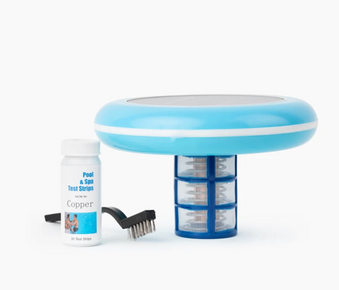
TL;DR: Solar pool ionizers in 2026 are no longer passive devices they're intelligent systems capable of fully automated seasonal adjustments. Smart controllers continuously monitor water temperature, sunlight availability, and usage patterns to automatically modulate ion output, coordinate pump schedules, and optimize energy consumption. These self-regulating systems eliminate manual spring startup guesswork, adapt seamlessly to summer demand spikes, gracefully reduce output during fall transitions, and enter winter hibernation modes autonomously. The result is perfect water quality year-round with zero seasonal intervention from the pool owner.
SEO Summary: 2026 automated seasonal adjustments with solar pool ionizers: self-regulating systems automatically modulate ion output, coordinate pump schedules & optimize energy consumption year-round with zero manual intervention.
Table of Contents
- The Evolution of Pool Automation: From Manual to Autonomous
- Smart Controllers: The Brain Behind Seasonal Automation
- Spring: Automated Warm-Up & Ionic Field Establishment
- Summer: Peak Performance Without Human Intervention
- Fall: Graceful, Self-Directed Reduction
- Winter: Autonomous Hibernation & Equipment Protection
- Automated Pump-Ionizer Coordination Across Seasons
- Weather-Responsive Seasonal Intelligence
- Predictive Maintenance Alerts & Seasonal Readiness
- Conclusion & Key Takeaways
The Evolution of Pool Automation: From Manual to Autonomous
Pool ownership has historically been defined by seasonal rituals. Spring meant wrestling with winter covers, testing frozen water, and guessing the right chemical cocktail to shock the pool awake. Summer demanded constant vigilance daily testing, weekly shocking, and endless adjustments. Fall required aggressive chemical winterization and equipment draining. Each season brought its own manual checklist, its own learning curve, and its own opportunities for error.
Solar pool ionizers began changing this paradigm by eliminating the most labor-intensive element: chemical management. But 2026 represents a quantum leap forward. Today's intelligent ionizer systems don't just reduce seasonal work they eliminate it entirely through fully automated seasonal adjustment capabilities.
These systems continuously monitor water temperature, ambient light, solar panel output, and even local weather forecasts. They learn your pool's patterns and your family's usage habits. They make real-time decisions about ion output, pump coordination, and energy optimization. They transition smoothly between seasons without a single button press from you.
This isn't remote control it's true autonomy. You're not operating the system from your phone; the system is operating itself, adapting to changing conditions faster and more accurately than any human could. The seasonal maintenance calendar, once a crowded grid of tasks and reminders, becomes a near-blank page.
This guide explores the 2026 automated seasonal adjustment capabilities enabled by modern solar pool ionizers. For a complete overview of intelligent pool features, see our revolutionary features guide.
Smart Controllers: The Brain Behind Seasonal Automation
At the heart of every autonomous seasonal adjustment system is the smart controller—a sophisticated microprocessor that continuously processes data from multiple sensors and makes real-time operational decisions. These controllers represent the single most significant advancement in pool technology since the introduction of automatic chlorinators.
Key Sensors Enabling Seasonal Automation:
- Water temperature sensor: Continuously monitors pool water temperature with ±0.5°F accuracy. This is the primary input for seasonal mode selection. Water temperature correlates directly with biological activity, algae growth rates, and copper demand. The system tracks both absolute temperature and rate of change to distinguish between normal daily fluctuations and genuine seasonal shifts.
- Ambient light sensor: Measures available sunlight intensity and day length. Determines optimal ion production rates and coordinates with solar panel output. Detects declining autumn daylight and increasing spring solar availability, triggering appropriate seasonal output adjustments.
- Solar panel output monitor: Tracks actual power generation in watts. Compares current output to historical baselines for the same date and conditions. Detects performance degradation from panel aging or soiling and compensates accordingly.
- Flow sensor: Verifies water movement through ionizer chamber at minimum 15-20 GPM. Essential for seasonal startup and shutdown sequences. Prevents operation during low-flow conditions that could damage electrodes or create gas pockets.
- Electrode resistance monitor: Measures electrical resistance across electrodes to calculate remaining useful life. Predicts replacement needs 30-60 days in advance, ensuring seasonal transitions never coincide with depleted electrodes.
- Optional pH/ORP probe integration: Provides continuous water chemistry feedback for hybrid systems and automated balancing. Enables closed-loop control where ion output adjusts based on actual sanitation effectiveness rather than estimated demand.
Automated Decision-Making Capabilities:
- Seasonal mode selection: Automatically identifies and transitions between Spring Warm-Up, Summer Peak, Fall Transition, and Winter Hibernation modes based on water temperature trends, day length, and historical usage patterns. Transitions are gradual, not abrupt, preventing water quality fluctuations.
- Output modulation: Continuously adjusts ion production from 0-100% using pulse-width modulation or variable current control. Responds to real-time demand signals including water temperature, bather load detection, and rainfall events.
- Pump coordination: Communicates with compatible variable-speed pumps via RS-485, Modbus, or Wi-Fi to optimize flow rates for current seasonal conditions. Automatically reduces pump speed during shoulder seasons and increases during peak summer demand.
- Error detection and response: Identifies seasonal anomalies such as late spring freezes, early heat waves, or unseasonably warm autumn periods. Adjusts protocols temporarily without fully committing to seasonal mode changes.
- Self-diagnostics: Continuously evaluates system health and predicts component end-of-life. Generates predictive maintenance alerts with specific recommendations and estimated time-to-failure.
Controller Interface Options:
- Built-in display: Local interface showing current season, output percentage, water temperature, and system status. Typically mounted at equipment pad for quick visual reference.
- Smartphone app: Full remote access to seasonal settings, historical data, and automated adjustment logs. Receive push notifications when the system transitions between seasonal modes, when anomalies are detected, or when maintenance is predicted.
- Web dashboard: Comprehensive analytics showing seasonal performance trends, energy consumption graphs, and predictive maintenance forecasts. Compare current season performance to previous years.
- Voice assistant integration: Compatible with Amazon Alexa, Google Assistant, and Apple HomeKit for seasonal status inquiries. "Hey Google, ask my pool what season mode it's in."
Pro Tip: When selecting a smart controller, prioritize models with open communication protocols (RS-485, Modbus, Wi-Fi API) rather than proprietary systems. Open protocols ensure future compatibility with emerging smart home platforms and allow integration with third-party automation systems. For guidance on selecting systems with the right automation capabilities, consult our buying guide.
Spring: Automated Warm-Up & Ionic Field Establishment
Spring has traditionally been the most labor-intensive pool season a period of guesswork, chemical adjustments, and anxious waiting. Automated solar ionizers transform spring opening from a stressful chore into a hands-off, self-managed process.
Traditional Spring Opening vs. Automated 2026 Process:
- Traditional: Remove cover, test water, interpret confusing results, calculate chemical doses, add products, wait, retest, readjust. Requires 3-5 hours of active work over 1-2 weeks, with significant risk of errors.
- Automated 2026: Remove cover, flip one breaker, walk away. System handles everything else.
Automated Spring Warm-Up Sequence:
- Initialization: When the controller detects power restoration and water temperature above 50°F, it initiates Spring Warm-Up mode. No user programming required.
- Flow verification: System verifies water flow through ionizer chamber. If no flow detected within 15 minutes, controller sends push alert: "Spring startup paused verify pump operation."
- Temperature-based staging:
- 50-55°F: System operates at 40% of maximum output. Biological activity minimal; low copper concentration sufficient.
- 55-60°F: Gradually increases to 60% output over 3-5 days. Ionic field begins establishing.
- 60-65°F: Increases to 70-75% output. Target copper range 0.2-0.25 ppm.
- Above 65°F: Transitions to Summer Peak mode when temperature remains above threshold for 48 consecutive hours.
- Solar synchronization: Controller analyzes historical solar production data for current date and latitude. Schedules highest ion output during predicted peak solar hours.
- Copper target management: Unlike fixed-output systems that blast maximum copper from day one, automated controllers establish the ionic field gradually. This prevents temporary over-copper conditions that can cause cloudiness or light staining.
- Pump coordination: Communicates with variable-speed pump to maintain 12-24 hour continuous low-speed circulation during initial field establishment. After 48 hours, transitions to normal spring schedule.
Automated Anomaly Response:
- Late freeze: If temperature drops below 45°F after Spring Warm-Up has begun, controller reduces output to minimum and sends freeze alert. Resumes normal progression when temperature rises.
- Extended cloud cover: If solar production remains below 30% of seasonal baseline for 3+ consecutive days, controller sends low-production alert but continues operation at reduced output. No user action required.
- Copper over-shoot: If copper concentration exceeds 0.5 ppm despite gradual startup, controller automatically reduces output by 20% increments until levels stabilize. Sends notification: "Spring copper adjustment complete."
Spring Automation Pro Tips:
- Trust the system. The most common spring mistake is overriding automation with manual chemical additions. Your controller has been calibrated by engineers; your guess is not more accurate.
- Enable push notifications for seasonal transitions. Knowing exactly when your pool enters Summer Peak mode helps coordinate family swimming plans.
- For pools with complex cover systems or remote locations, consider adding a smart water level sensor. These integrate with automation controllers and can trigger spring startup only when adequate water level is verified.
For a detailed comparison of manual versus automated spring protocols, see our complete pool opening guide.
Summer: Peak Performance Without Human Intervention
Summer represents the ultimate test of automated seasonal adjustment. Water temperatures peak, bather loads fluctuate wildly, sunlight is abundant but variable, and biological activity is at its maximum. This is where autonomous systems prove their value.
Automated Summer Peak Mode Characteristics:
- Output range: 70-100% of maximum capability, continuously modulated based on real-time conditions.
- Target copper: 0.2-0.4 ppm, maintained automatically without weekly testing.
- Pump coordination: Fully synchronized with ion production for maximum efficiency.
- User interaction: Zero required for normal operation.
Automated Bather Load Compensation:
One of the most sophisticated capabilities of 2026 smart controllers is automatic detection and response to increased pool usage. Traditional systems require you to manually add chemicals after pool parties. Automated systems handle this seamlessly:
- Usage detection: Controllers detect increased bather load through multiple indicators—water temperature rise, pH fluctuation, ORP drop, and flow pattern changes. No cameras or occupancy sensors required.
- Output adjustment: Upon detecting heavy use, controller automatically increases ion output by 15-25% for 24-48 hours, then gradually returns to baseline.
- Pump coordination: May extend pump runtime or increase speed to improve circulation during recovery period.
- Notification: Optional push alert: "Increased bather load detected. Sanitation boosted through tomorrow evening."
Automated Algae Prevention:
Algae outbreaks typically occur when pool owners fail to anticipate changing conditions. Automated controllers never miss these signals:
- Early warning detection: Slight pH rise, minimal ORP drop, or minor copper consumption increase triggers preemptive output adjustment before algae can establish.
- Temperature response: As water temperature rises above 85°F, controller automatically increases copper target range from 0.2-0.3 ppm to 0.3-0.4 ppm exactly when algae growth accelerates.
- Phosphate correlation: If phosphate levels are known to be elevated (from manual test entry or integrated phosphate monitor), controller adjusts copper targets upward accordingly.
Automated Solar Harvest Optimization:
- Peak production alignment: Controller learns your specific solar panel's daily production curve and schedules maximum ion output during peak harvest hours.
- Cloud response: When passing clouds temporarily reduce solar output, controller instantly reduces ion production to match available power. No power starvation, no controller resets.
- Heat management: If panel temperature exceeds 45°C (reducing efficiency), controller may temporarily reduce output demand to prevent thermal throttling.
- Seasonal angle compensation: Advanced systems track expected solar production based on date and latitude. If actual production falls below expected values for multiple days, suggests panel cleaning or angle adjustment via app notification.
Automated Summer Pro Tips:
- Resist the urge to "help" your automated system. Manual chemical additions confuse the controller's feedback loops and often create more problems than they solve.
- If you prefer zero notifications, configure the system for "silent operation" with alerts only for critical errors. Your pool will maintain itself perfectly without interrupting your day.
- For pools with integrated ORP monitoring, enable closed-loop control. The system will maintain precise sanitation levels regardless of bather load or weather conditions.
For more information on automated energy optimization during peak season, read our seasonal energy optimization guide.
Fall: Graceful, Self-Directed Reduction
Fall transitions are historically where pool owners make their most costly mistakes—adding unnecessary winterizing chemicals, shocking when not needed, or failing to protect equipment from early freezes. Automated solar ionizers eliminate these risks entirely.
Automated Fall Transition Detection:
- Temperature trend analysis: Controller tracks both daily average temperatures and the rate of temperature decline. When water temperature consistently trends downward and remains below 70°F for 72 hours, Fall Transition mode initiates.
- Solar production monitoring: Declining day length and lower sun angles are detected through reduced daily energy harvest. This environmental signal reinforces temperature-based decisions.
- Gradual output reduction: Unlike abrupt manual reduction, automated systems reduce ion output by approximately 5-10% per week over 4-6 weeks. This maintains continuous protection while preventing copper waste.
Automated Copper Management During Fall:
- Target adjustment: Controller gradually reduces copper target range from 0.2-0.4 ppm down to 0.1-0.2 ppm as biological demand decreases.
- Output modulation: Reduced solar availability naturally limits production; controller does not artificially boost output to maintain summer copper levels.
- Electrode preservation: Lower output extends electrode life significantly. Automated systems maximize this benefit by precisely matching production to actual demand.
Automated Freeze Protection Coordination:
- Pre-freeze preparation: When forecast indicates freezing temperatures within 48 hours, controller notifies you: "Freeze warning. Prepare equipment for winterization."
- Temporary freeze response (non-freezing climates): For pools in marginal climates, controller can initiate temporary pump operation if temperatures approach freezing unexpectedly.
- Final shutdown sequence: When water temperature drops below 50°F and remains there for 5+ days, controller initiates Winter Hibernation mode and sends notification: "Swim season ended. System entering winter mode."
Automated Winterization Reminders:
- Electrode removal reminder: For freezing climates, controller tracks first freeze date history and sends personalized reminder: "Electrode removal recommended within 10 days based on local climate data."
- Panel storage notification: Suggests panel removal or covering when system detects multiple consecutive days with zero solar production.
- Battery backup check: For systems with battery backup, automatically tests capacity before winter and reports status.
Fall Automation Pro Tips:
- Enable location-based weather alerts in your controller app. The system can provide hyperlocal freeze warnings based on your specific GPS coordinates, not generic regional forecasts.
- If you extend your swim season with a heater, the controller automatically maintains Summer Peak mode regardless of calendar date. No manual override needed.
- Review your fall transition logs annually. Controllers track when your pool naturally transitions each year, helping you predict future seasonal schedules.
For detailed guidance on equipment winterization, see our step-by-step pool care workflow.
Winter: Autonomous Hibernation & Equipment Protection
Winter represents the ultimate expression of automated seasonal adjustment: complete, self-managed system hibernation. Your ionizer doesn't just shut off—it intelligently prepares itself for months of inactivity and alerts you to any threats.
Automated Winter Hibernation Mode (Freezing Climates):
- Zero power consumption: Controller enters ultra-low-power sleep state, consuming less than 0.1 watts. Solar panel disconnected, ion output zero.
- Freeze monitoring: Remote temperature sensors (optional) continue monitoring equipment pad temperature. If indoor storage temperatures approach freezing, sends alert: "Storage area below 40°F electrode damage risk."
- Spring wake-up scheduling: Controller stores spring startup parameters and planned activation date based on historical climate data. No reprogramming needed.
- Battery preservation: If equipped with backup battery, automatically disconnects to prevent deep discharge during prolonged storage.
Automated Winter Hibernation Mode (Non-Freezing Climates):
- Minimum maintenance operation: System maintains 10-20% of summer output using available solar energy only. No grid power required.
- Copper target: Automatically maintains 0.05-0.1 ppm sufficient for algae prevention in cool water.
- Pump coordination: Reduces recommended pump runtime to 2-3 hours daily, scheduled during solar window.
- Seasonal transition preparation: Continuously monitors water temperature and day length, ready to initiate Spring Warm-Up mode when conditions appropriate.
Automated Equipment Protection Alerts:
- Electrode storage reminder: "Electrodes have been in storage for 90 days. Inspect for damage before spring installation."
- Panel condition check: "Solar panel has been exposed to winter conditions for 60 days. Recommend visual inspection after next storm."
- Spring preparation: "Spring start-up预计 in approximately 45 days. Replacement electrodes available for pre-order through our app."
Winter Automation Pro Tips:
- Store your controller's power supply indoors if possible. While controllers are weather-resistant, extreme cold can shorten display lifespan.
- Enable "spring readiness" notifications. Your system will alert you when soil temperatures in your area reach 50°F the biological signal that algae season is approaching.
- Review your winter performance data in the app. Compare energy savings and equipment protection metrics to previous years.
Automated Pump-Ionizer Coordination Across Seasons
The most powerful seasonal automation capability is intelligent coordination between your ionizer and your pool pump. When these systems communicate, seasonal transitions become seamless and energy savings compound.
Communication Protocols:
- RS-485: Wired serial communication standard supported by most professional automation systems. Most reliable, immune to Wi-Fi interference.
- Modbus: Industry-standard protocol for equipment communication. Allows ionizer to integrate with third-party automation controllers.
- Wi-Fi/Bluetooth: Wireless communication for retrofit installations. Convenient but potentially less reliable than wired connections.
- Dry contact relay: Simple on/off signaling for basic pump control. Limited to start/stop commands.
Seasonal Pump Coordination Strategies:
- Spring: Controller requests continuous low-speed circulation for 24-48 hours during ionic field establishment. After establishment, schedules pump operation during predicted peak solar hours (typically 10:00 AM - 4:00 PM).
- Summer: Fully synchronized operation. Pump speed modulates in real-time based on ionizer output. During peak production, pump runs at higher speed for optimal ion distribution. During low production, pump reduces to minimum circulation speed.
- Fall: Gradually reduces requested pump runtime and speed as daylight decreases and water cools. Maintains minimum circulation for water quality while minimizing energy consumption.
- Winter (non-freezing): Requests minimum pump operation (2-3 hours daily) scheduled during solar window. May initiate additional circulation if water temperature approaches freezing.
Energy Savings Quantified:
- Manual pump scheduling alone: 30-40% reduction from traditional fixed schedules
- VSP + manual scheduling: 50-60% reduction
- VSP + automated ionizer coordination: 70-80% reduction
Compatibility Considerations:
- Pentair IntelliFlo: Full two-way communication with compatible ionizer controllers
- Hayward TriStar: Modbus communication available on select models
- Jandy ePump: RS-485 communication supported
- Generic VSPs: May support basic start/stop control via relay
Pro Tip: If you're building a new automation system, specify that all components use the same communication protocol. Mixed protocols (some RS-485, some Wi-Fi) can be integrated but require additional configuration and may reduce reliability.
Weather-Responsive Seasonal Intelligence
2026 automated systems don't just react to current conditions—they anticipate future conditions using integrated weather forecasting and historical climate data.
Forecast Integration Capabilities:
- Temperature forecasting: Controller accesses 7-day weather forecast for your precise GPS location. If unseasonably warm weather is predicted during Fall Transition mode, system temporarily maintains higher output rather than continuing reduction schedule.
- Precipitation response: Heavy rain introduces contaminants and acidic water. Controller automatically increases ion output 12-24 hours before forecasted storms, strengthening the ionic field before contaminant load increases.
- Heat wave preparation: When extended high temperatures are forecast, system preemptively raises copper target range and coordinates extended pump circulation before biological demand spikes.
- Freeze anticipation: For marginal climates, controller initiates freeze protection protocols when forecast predicts temperatures below 36°F, even if current temperature is above threshold.
Historical Climate Learning:
- Seasonal transition prediction: After one full year of operation, controller learns your pool's typical spring warm-up date, summer peak transition, and fall cooldown pattern. It uses this historical data to refine future seasonal adjustments.
- Usage pattern recognition: Identifies recurring high-usage periods (Memorial Day, Fourth of July, Labor Day) and preemptively adjusts output for these predictable demand spikes.
- Climate zone adaptation: If you relocate the system or if your climate shifts, controller continuously adapts its seasonal algorithms based on observed conditions.
Weather Integration Pro Tips:
- Enable "storm mode" in your controller settings. This automatically increases ion output before severe weather and maintains elevated protection for 48 hours post-storm.
- For pools in wildfire-prone areas, configure ash event alerts. The system can notify you when air quality indices suggest significant ashfall, allowing you to adjust pH monitoring frequency.
- Review your weather response log annually. Controllers track every forecast-triggered adjustment, helping you understand how many weather events affected your pool and how the system responded.
For more information on how environmental conditions affect system performance, read our weather performance guide.
Predictive Maintenance Alerts & Seasonal Readiness
The final pillar of automated seasonal adjustment is predictive maintenance—using data analytics to forecast component end-of-life and schedule replacement before failure, aligned with seasonal transition points.
Electrode Life Prediction:
- Continuous resistance monitoring: Controller measures electrode electrical resistance daily. As electrodes erode, resistance changes in predictable patterns.
- Remaining useful life calculation: Proprietary algorithms compare current resistance to known failure thresholds, calculating remaining life with ±15% accuracy.
- Seasonally-optimized replacement alerts: Rather than notifying you immediately when replacement is needed, intelligent controllers wait for optimal seasonal timing. If electrodes are predicted to fail in August, you'll receive an alert in early spring: "Electrode replacement recommended before peak swim season. Order now for June installation."
Solar Panel Performance Monitoring:
- Output trending: Controller tracks daily energy harvest and compares to expected production based on date, latitude, and historical performance.
- Soiling detection: Gradual, multi-day production decline without weather correlation suggests panel soiling. Sends: "Solar production 18% below expected. Panel cleaning recommended."
- Aging compensation: As panels naturally degrade (approximately 0.5-1% annually), controller adjusts output algorithms to maintain consistent ion production.
System Health Dashboard:
- Component status: Green/yellow/red status indicators for controller, electrodes, solar panel, and communication links.
- Seasonal readiness score: 0-100% rating indicating how prepared your system is for upcoming seasonal transitions. "Spring readiness: 92%. Electrodes: 78% life remaining. Panel output: 101% of expected. No action needed."
- Historical comparison: "Your system is performing 12% better than this time last year. Recommended maintenance: None."
Predictive Maintenance Pro Tips:
- Do not ignore early replacement recommendations. Electrode failure during peak season means 3-5 days of reduced sanitation while you wait for replacement delivery.
- Enable automatic reordering through the manufacturer app. Some systems can automatically place electrode replacement orders when remaining life drops below 10%, with your pre-approval.
- Review your predictive maintenance history annually. Controllers track every alert and your response time, helping you optimize future maintenance scheduling.
Conclusion & Key Takeaways
Automated seasonal adjustments enabled by 2026 solar pool ionizers represent the final frontier of effortless pool ownership. Smart controllers continuously monitor, analyze, and respond to changing conditions without any user intervention. Spring warm-up is self-managed. Summer peak performance is automatically optimized. Fall transitions are graceful and precise. Winter hibernation is complete and protective.
This isn't remote control it's genuine autonomy. You're not operating your pool system; your pool system is operating itself, making thousands of intelligent decisions every day to maintain perfect water quality with zero chemical handling, zero guesswork, and zero seasonal stress.
The environmental benefits are equally significant. Automated seasonal adjustment eliminates the chemical over-application common during manual spring startups and fall closings. Precision output modulation reduces electrode consumption. Pump coordination saves thousands of kilowatt-hours annually. Your pool becomes not just easier to own, but genuinely sustainable.
Key Takeaways
- True autonomy is here: 2026 smart controllers automatically detect seasonal transitions and adjust ion output, pump coordination, and energy consumption without any user programming.
- Spring is self-managed: Automated warm-up sequences gradually establish the ionic field over days, not hours, with zero chemical guessing or manual testing.
- Summer adapts automatically: Bather load compensation, algae prevention, and solar optimization occur continuously without user awareness or intervention.
- Fall transitions gracefully: Gradual output reduction matches declining biological demand, preventing copper waste and extending electrode life.
- Winter hibernates intelligently: Freezing climates achieve zero-power storage; non-freezing climates maintain minimum sanitation using available solar energy only.
- Pump coordination multiplies savings: Automated ionizer-pump communication reduces circulation energy by 70-80% while improving water quality.
- Weather intelligence anticipates conditions: Forecast integration prepares your pool for storms, heat waves, and freeze events before they arrive.
- Predictive maintenance prevents failure: Continuous component monitoring schedules replacements during optimal seasonal windows, never during peak usage.
The era of seasonal pool chore lists is ending. 2026's automated solar ionizers don't just reduce your workload they eliminate it entirely, replacing manual checklists with intelligent, self-regulating systems that maintain perfect water quality through every season, every weather event, and every year of ownership. Your only remaining seasonal task is enjoying the water.