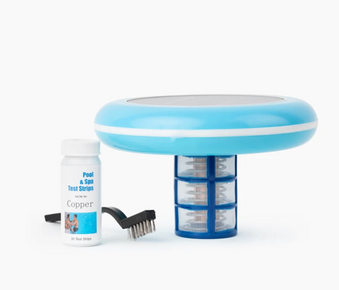
TL;DR: Community pools face unique environmental and operational challenges high bather loads, strict health regulations, budget constraints, and growing resident demand for sustainable amenities. Solar pool ionizers enable community pools to eliminate 80-90% of chemical usage, reduce energy consumption by 50-70%, extend equipment life, and eliminate chlorine odor complaints all while maintaining public health compliance. This 2026 guide provides HOAs, property managers, and community planners with comprehensive strategies for designing, budgeting, and operating eco-friendly community pools using solar ionization technology.
SEO Summary: 2026 eco-friendly community pool planning with solar pool ionizers: HOA pool strategies, chemical reduction, energy savings, regulatory compliance, and sustainable community amenity development.
Table of Contents
- The Community Pool Sustainability Challenge
- The Financial Case: ROI for Community Pools
- Regulatory Compliance & Public Health Certification
- System Design & Sizing for Community Pools
- Redundancy & Backup Sanitation Requirements
- Commercial-Grade Automation & Remote Monitoring
- Chemical Elimination & Operational Savings
- Energy Efficiency & Carbon Footprint Reduction
- Resident Experience & Amenity Value
- Implementation Roadmap for Community Pools
- Conclusion & Key Takeaways
The Community Pool Sustainability Challenge
Community pools occupy a unique and difficult position in the aquatic ecosystem. Unlike residential pools serving a single family, community pools must accommodate hundreds of swimmers weekly, maintain strict public health compliance, operate within tight HOA or municipal budgets, and increasingly satisfy resident demand for environmentally responsible amenities. These competing pressures create a sustainability challenge that traditional pool management cannot adequately address.
The Magnitude of Community Pool Environmental Impact:
- Chemical consumption: A typical 25,000-gallon community pool consumes 500-800 pounds of chlorine products annually, plus algaecides, clarifiers, pH adjusters, and shock treatments. This represents 5-10 times the chemical footprint of a residential pool.
- Energy usage: Community pools operate longer seasons and longer daily hours than residential pools. Pump energy alone often exceeds 15,000-25,000 kWh annually—equivalent to the total electricity consumption of 2-3 average American homes.
- Water consumption: Evaporation, backwashing, and required dilution for total dissolved solids management consume 50,000-100,000 gallons annually per community pool.
- Waste generation: Chemical packaging, test strip vials, and replacement filter elements generate significant solid waste streams.
- Air quality impact: Chloramine off-gassing from heavily used community pools contributes to local air pollution and creates respiratory health concerns for swimmers and staff.
The Operational Challenge:
- Staff training: Traditional chemical management requires certified pool operators and continuous training. Staff turnover creates recurring training costs and operational inconsistencies.
- Chemical storage: Community pools require dedicated chemical storage facilities with ventilation, spill containment, and security measures significant space and compliance burdens.
- Emergency response: Chemical spills, chlorine gas releases, and over-chlorination incidents require emergency protocols and create liability exposure.
- Resident complaints: Chlorine odor, eye irritation, and skin dryness are the most common resident complaints about community pools, creating negative amenity perception.
Solar pool ionizers address every element of this challenge simultaneously. They dramatically reduce chemical consumption, eliminate chloramine formation, simplify operations, and deliver superior water quality all while operating on renewable energy. For community planners and property managers, solar ionization is no longer an experimental alternative but a proven, code-compliant solution ready for mainstream adoption.
For a comprehensive overview of how solar ionizers benefit all pool types, see our guide to smarter pool ownership.
The Financial Case: ROI for Community Pools
Community pool decision-makers must justify capital expenditures through demonstrated return on investment. Solar pool ionizers deliver compelling financial returns through multiple, compounding savings streams.
Capital Investment Requirements:
- Commercial-grade solar ionizer system: $3,500-$7,500 depending on pool volume and configuration
- Installation (licensed contractor): $1,500-$3,000
- Integration with existing automation: $500-$2,000 if required
- Total typical investment: $5,500-$12,500 per community pool
Annual Chemical Cost Savings:
- Traditional community pool chemical budget: $3,000-$6,000 annually for chlorine, algaecides, clarifiers, shock, pH adjusters
- Solar ionizer community pool chemical budget: $300-$900 annually for minimal supplemental chemicals and occasional shock
- Annual chemical savings: $2,700-$5,100
- 5-year chemical savings: $13,500-$25,500
Annual Energy Cost Savings:
- Traditional community pool pump energy: $1,500-$3,000 annually (8-12 hours daily operation)
- Solar ionizer optimized pump schedule: $450-$900 annually (4-6 hours daily operation with VSP)
- Annual energy savings: $1,050-$2,100
- 5-year energy savings: $5,250-$10,500
Labor & Training Savings:
- Reduced testing frequency: From daily to 3x weekly; estimated 2-4 hours weekly labor savings
- Simplified operations: Eliminates chemical dosing calculations and reduces training requirements
- Annual labor savings: $1,500-$3,000
- 5-year labor savings: $7,500-$15,000
Equipment Life Extension Savings:
- Heater life: Extends from 5-7 years to 10-12 years by eliminating corrosive chemical environment
- Pump life: Extends from 6-8 years to 10-12 years through reduced runtime and chemical exposure
- Filter element life: Extends replacement intervals by 30-50%
- Annualized equipment savings: $800-$1,500
- 5-year equipment savings: $4,000-$7,500
Total Annual Savings: $6,050-$11,700
Simple Payback Period: 6-18 months
5-Year Cumulative Savings: $30,250-$58,500
10-Year Cumulative Savings: $60,500-$117,000
Pro Tip: When presenting financial cases to HOA boards or municipal finance committees, emphasize that solar ionization converts variable operating expenses (chemicals, energy, emergency repairs) into predictable capital investment with guaranteed returns. These savings compound annually while equipment costs remain fixed.
For detailed community pool financial modeling, see our pool investment strategies guide adaptable for commercial-scale analysis.
Regulatory Compliance & Public Health Certification
Community pools operate under strict regulatory oversight that residential pools do not. Health departments, building codes, and insurance requirements mandate specific equipment certifications and operational protocols. Solar ionizers for community applications must meet substantially higher standards than residential systems.
Essential Certifications for Community Pool Ionizers:
- NSF/ANSI 50 Certification: This is non-negotiable. NSF/ANSI 50 is the nationally recognized standard for pool equipment sanitation performance. It verifies that the ionizer consistently delivers specified ion output under varying flow rates and water conditions. Uncertified units cannot legally serve as primary or supplemental sanitizers in licensed public pools. Always verify the specific model appears on NSF's official listing.
- UL 1081 or ETL Certification: Commercial electrical safety certification for pool pumps and equipment. Ensures the unit meets stringent safety requirements for continuous high-duty-cycle operation.
- Uniform Plumbing Code (UPC) Compliance: Verifies that installation methods and materials meet commercial plumbing standards.
- Local Health Department Approval: Many jurisdictions maintain approved equipment lists. Submit manufacturer's NSF/ANSI 50 documentation during permitting. Some regions require additional testing or validation.
- Copper/Silver Ion Output Verification: Commercial units must provide certified performance data showing ion production rates at specified flow rates, typically validated by third-party laboratories.
Regulatory Compliance Considerations:
- Secondary sanitation requirement: Most health codes require that no single equipment failure can result in complete loss of sanitizer residual. Solar ionizers in community pools must be paired with a backup sanitation system capable of maintaining public health standards independently.
- Continuous monitoring requirements: Many jurisdictions now require automated ORP/pH monitoring with data logging for commercial pools. Solar ionizer systems should integrate with these monitoring requirements.
- Documentation and record-keeping: Health departments require comprehensive, tamper-resistant logs of water quality parameters. Digital logging systems with remote health department access are increasingly preferred.
- Flow switch interlocks: Commercial codes mandate flow-proving switches that prevent ion generation without adequate water flow. This is a safety requirement, not optional.
- Electrical disconnect requirements: Lockable visible disconnects within sight of equipment, not just remote circuit breakers, are required for commercial installations.
Working With Health Departments:
- Engage early. Invite health department officials to review proposed systems during planning phase, not after installation.
- Provide manufacturer NSF/ANSI 50 certification documentation proactively.
- Demonstrate redundant sanitation configuration and explain failover protocols.
- Present digital monitoring and logging capabilities that exceed minimum requirements.
- Request reference facilities where similar systems have been approved.
Pro Tip: Some manufacturers offer regulatory assistance packages including pre-written permit applications, code compliance checklists, and direct consultation with health department officials. Prioritize vendors who provide these services.
For comprehensive guidance on commercial pool standards, see our standard practices for commercial pools.
System Design & Sizing for Community Pools
Community pool ionizer systems cannot be sized using residential rules of thumb. The dramatically higher bather loads, extended operating hours, and regulatory requirements demand professional engineering calculations and robust system design.
Community Pool Sizing Factors:
- Peak bather load: Commercial systems must be sized for maximum anticipated occupancy, not average use. A 50,000-gallon community pool with 100 swimmers requires significantly more ion output than an equivalently sized residential pool. Standard design practice: 2-3x the ion output capacity of residential systems for equivalent volume.
- Turnover rate requirements: Commercial pools typically require 4-6 hour turnover rates versus 8-12 hours for residential. Higher flow rates require larger ionizer chambers or multiple parallel units to maintain adequate contact time.
- Solar array capacity: Community installations often require expanded solar panel arrays to maintain adequate ion production during extended operating hours (often 12-16 hours daily) and through cloudy periods. Minimum recommendation: 2x the panel area of residential systems for equivalent volume.
- Redundancy configuration: Community systems typically specify dual ionizer chambers plumbed in parallel, each capable of maintaining minimum sanitation independently. This allows maintenance without system shutdown.
- Flow rate compatibility: Commercial ionizer chambers must be rated for continuous flow rates of 80-150 GPM versus 30-60 GPM for residential units.
Design Process for Community Pools:
- Step 1: Professional site assessment. Engage manufacturer's engineering team or qualified commercial pool consultant. Assessment includes pool volume, circulation system specifications, average and peak bather loads, seasonal operating hours, local climate data, and existing equipment inventory.
- Step 2: Load calculation. Engineer calculates required ion output based on peak bather load and turnover requirements, not volume alone. This determines number and size of ionizer chambers and solar panel capacity.
- Step 3: System configuration. Specify chamber configuration (single, parallel, or series), panel mounting and orientation, controller integration, and backup power requirements.
- Step 4: Integration planning. Coordinate with existing automation systems, chemical feeders, and filtration equipment. Specify communication protocols and control interfaces.
- Step 5: Permitting support. Engineer provides stamped drawings and specifications for permit applications.
Component Selection Guidelines:
- Ionizer chambers: Commercial-grade chambers feature larger electrode cartridges (2-4x residential size), heavy-duty housings, and serviceable internals. Expect 5-7 year electrode life versus 3-5 years residential.
- Solar panels: Commercial installations require commercial-grade panels with 25-year performance warranties, not residential panels. Consider ground-mounted arrays for easier maintenance and angle adjustment.
- Controllers: Specify controllers with remote telemetry, data logging, and integration capabilities. Commercial controllers should have NEMA 3R or higher environmental ratings.
- Flow switches: Industrial-grade paddle or thermal dispersion switches with adjustable setpoints and failure mode indication.
Pro Tip: Oversizing is more forgiving than undersizing in commercial applications. Additional ion output capacity can always be reduced via controller settings; inadequate capacity requires expensive retrofits. Design for 20-30% excess capacity above calculated requirements.
For detailed sizing worksheets and engineering consultation resources, contact manufacturers specializing in commercial pool applications.
Redundancy & Backup Sanitation Requirements
The single most important distinction between residential and community solar ionizer installations is the mandatory requirement for redundant sanitation. Public health codes universally require that no single equipment failure can result in complete loss of sanitizer residual. This is not optional it is the foundation of responsible community pool management.
Approved Redundant Sanitation Configurations:
- Ionizer + low-output chlorine feeder: The most common and cost-effective configuration. A peristaltic pump or erosion feeder maintains 0.5-1.0 ppm free chlorine as backup, while the ionizer provides primary algae and bacteria control. Chlorine consumption is reduced by 80-90% compared to traditional chlorination.
- Dual ionizer arrays: Two independent ionizer systems sized so either unit alone can maintain minimum sanitation levels. Provides complete chemical-free operation with full redundancy. Higher initial cost but eliminates chemical handling entirely.
- Ionizer + UV or ozone: Some facilities pair ionizers with UV sterilization or ozone oxidation systems. UV/ozone provides pathogen inactivation without chemical addition but does not maintain residual sanitizer in distribution piping. Requires careful engineering.
- Ionizer + bromine feeder: Alternative for spas or warm-water pools where bromine may be preferred. Less common for community pools.
Redundancy Design Requirements:
- Automatic failover: Advanced automation systems detect ionizer failure (through flow switch, power loss, or output monitoring) and immediately activate backup sanitation with alarm notification to staff.
- Independent power sources: Backup systems should be on separate electrical circuits to prevent single breaker trip from disabling both sanitation methods.
- Staggered maintenance schedules: Plan electrode replacement and backup system maintenance at different times to ensure continuous coverage.
- Regular failover testing: Documented monthly testing of automatic failover functionality is considered best practice and may be required by health authorities.
Operational Protocols:
- Normal operation: Ionizer provides primary sanitation; backup feeder maintains minimal chlorine residual (0.5 ppm) or remains in standby mode.
- Ionizer maintenance mode: During electrode replacement or service, backup system automatically increases output to maintain full sanitation.
- Ionizer failure response: Automatic failover activates backup; staff receives immediate notification; repair prioritized within 24-48 hours.
- Documentation: All failover events, maintenance activities, and backup system operations must be logged and retained for regulatory inspection.
Pro Tip: For community pools committed to complete chemical elimination, dual ionizer arrays offer the most elegant solution. While initial investment is higher, the elimination of chemical purchasing, handling, storage, and training costs often provides superior long-term ROI compared to hybrid configurations.
Commercial-Grade Automation & Remote Monitoring
Community pools cannot rely on manual operation and periodic testing. 2026 standards require continuous, automated monitoring and control of water chemistry parameters with remote telemetry and data logging capabilities.
Essential Automation Components:
- ORP (Oxidation-Reduction Potential) controllers: Continuous ORP monitoring (target 650-750 mV for commercial pools) provides real-time verification of sanitation effectiveness. ORP controllers automatically adjust ionizer output and activate backup sanitation as needed. High-end controllers feature self-cleaning probes and automatic calibration.
- pH controllers: Automated pH adjustment is mandatory in commercial settings. pH fluctuates rapidly with bather load and directly affects copper ion efficacy and swimmer comfort. Automated pH control eliminates the most common water quality complaint and reduces staff workload.
- Flow-paced chemical feed: Advanced systems adjust chemical feed rates proportionally to flow rate and bather load sensing, maintaining consistent water quality despite varying usage patterns.
- Remote telemetry: 2026 standards increasingly require cloud-based monitoring that allows health officials and facility managers to verify compliance remotely. Systems should provide secure, role-based access for staff, management, and regulatory authorities.
- Data logging and reporting: Commercial controllers must maintain tamper-resistant digital logs of all water quality parameters, equipment status, and alarm events. Automated report generation simplifies health department inspections and compliance documentation.
Integration Capabilities:
- Building management systems (BMS): Commercial pool controllers should integrate with facility-wide BMS using standard protocols (BACnet, Modbus, LonWorks). This allows centralized monitoring of all building systems.
- Chemical inventory tracking: Advanced systems monitor chemical consumption and automatically generate reorder notifications when supplies reach minimum levels.
- Predictive maintenance: AI-enabled controllers analyze performance trends and predict component failures before they occur, scheduling maintenance during off-hours.
- Mobile alerts: Critical alarms (sanitation failure, high/low pH, flow loss) should be immediately escalated via SMS, email, and push notifications to designated staff.
Commercial Controller Selection Criteria:
- Industrial reliability: Commercial controllers should have MTBF (mean time between failures) ratings of 50,000+ hours and be designed for continuous 24/7/365 operation.
- Expandability: Choose systems with modular I/O that can accommodate future sensors and control points.
- Cybersecurity: Remote-accessible controllers must meet current cybersecurity standards with encrypted communications, multi-factor authentication, and regular firmware updates.
- Local support: Verify that automation vendors have local service representatives capable of responding to critical failures within 24 hours.
Pro Tip: When specifying automation systems, require open communication protocols rather than proprietary systems. Open protocols ensure you are not locked into a single vendor for future expansions and allow integration with best-in-class components from multiple manufacturers.
Chemical Elimination & Operational Savings
For community pool operators, the most tangible benefit of solar ionization is the dramatic reduction in chemical handling, storage, and associated operational burdens.
Chemical Reduction Quantified:
- Chlorine consumption: Reduce by 80-90%. Typical community pool drops from 500-800 pounds annually to 50-100 pounds.
- Algaecides: Eliminate 100%. Copper ions provide continuous, effective algae prevention.
- Clarifiers: Eliminate 90%. Ionic flocculation improves filtration naturally.
- Shock treatments: Reduce by 80%. Occasional non-chlorine shock after heavy use only.
- pH adjusters: Reduce by 50%. Ionized water is more chemically stable.
Operational Burden Elimination:
- Chemical storage: Eliminate need for dedicated chemical storage rooms with ventilation, spill containment, and security requirements. Convert this space to useful amenity areas or maintenance shops.
- Chemical ordering: Eliminate weekly chemical ordering, delivery coordination, and inventory management. One annual electrode replacement versus dozens of chemical deliveries.
- Staff training: Simplify operator training from complex water chemistry certification to basic system monitoring. Reduce training time by 70% and eliminate risks from staff turnover.
- Emergency preparedness: Eliminate chemical spill response plans, hazmat training, and emergency shower stations. Reduce liability exposure significantly.
- Testing frequency: Reduce from multiple times daily to once or twice daily. Automated ORP/pH monitoring reduces manual testing further.
Hidden Cost Savings:
- Insurance premiums: Some carriers offer reduced rates for facilities that eliminate or significantly reduce hazardous chemical storage. Request insurance review after installation.
- Waste disposal: Eliminate costs associated with disposal of expired chemicals and hazardous waste.
- Personal protective equipment: Reduce PPE consumption (gloves, goggles, aprons, respirators) by 80-90%.
- Plumbing repairs: Non-corrosive water extends life of valves, fittings, and equipment pads, reducing maintenance calls.
Staff Testimonial: "We spent 15-20 hours per week on chemical management ordering, testing, adjusting, documenting. After installing solar ionizers, we spend maybe 3-4 hours. That's 800 hours annually we redirected to facility maintenance and resident service." Community Pool Director, Orlando, FL
For comprehensive guidance on chemical-free pool operation, see our chemical-free maintenance guide.
Energy Efficiency & Carbon Footprint Reduction
Community pools are among the most energy-intensive amenities in residential developments and municipal facilities. Solar pool ionizers address this through multiple, compounding efficiency mechanisms.
Direct Energy Elimination:
- Sanitation energy: Traditional chlorination systems (salt generators, erosion feeders, liquid pumps) consume 500-1,500 watts during operation. Solar ionizers consume zero grid power for sanitation 100% renewable energy.
- Annual sanitation energy savings: 4,000-8,000 kWh per community pool.
Pump Energy Reduction:
- Cleaner water, less filtration: Ionized water maintains lower particle loads, allowing reduced pump runtime. Typical community pool pump reduction: 8 hours daily → 5 hours daily (37% reduction).
- Variable-speed pump optimization: When paired with VSPs, ionized water allows operation at lower speeds for longer periods. Energy reduction: 50-70%.
- Annual pump energy savings: 8,000-15,000 kWh per community pool.
Heater Efficiency Improvement:
- Scale prevention: Ionized water minimizes calcium scale buildup on heat exchanger surfaces, maintaining peak heater efficiency throughout equipment life. Scale accumulation of 1/16 inch reduces efficiency by 20-30%.
- Reduced heating demand: Crystal-clear ionized water absorbs and retains solar heat more effectively than chemically treated water.
- Annual heating energy savings: 5-15% reduction.
Water Conservation:
- Reduced backwashing: Cleaner filter media extends runtime between backwash cycles, reducing water consumption by 20-30%.
- Extended drain intervals: Stable chemistry prevents total dissolved solids accumulation that necessitates partial draining. Extend intervals from 2-3 years to 5-7 years.
- Annual water savings: 15,000-30,000 gallons per community pool.
Carbon Footprint Impact:
- Annual CO₂ reduction: 10,000-20,000 pounds per community pool (combined energy and chemical manufacturing emissions).
- Equivalent to: Removing 1-2 passenger vehicles from the road annually.
- 10-year CO₂ reduction: 100,000-200,000 pounds a significant contribution to community sustainability goals.
Green Building Certification Contributions:
- LEED points: Solar ionization contributes to LEED credits in Energy & Atmosphere, Water Efficiency, and Materials & Resources categories.
- Living Building Challenge: Aligns with petal requirements for net-zero energy and chemical elimination.
- WELL Building Standard: Addresses chemical reduction and indoor air quality requirements.
Pro Tip: For communities pursuing green building certifications, document all energy, water, and chemical savings with pre- and post-installation data. Many certification programs require verified performance data, not projections.
For detailed energy savings analysis, see our guide to cutting pool energy costs.
Resident Experience & Amenity Value
Community pools exist to serve residents. Technical performance metrics chemical consumption, energy efficiency, regulatory compliance are meaningless if residents don't enjoy the amenity. Solar ionizers dramatically improve the actual swimming experience.
Elimination of Chlorine-Related Complaints:
- Eye irritation: Chloramines cause the burning, red eyes associated with traditional pools. Solar-ionized water eliminates this entirely. Residents who previously avoided the pool due to eye sensitivity become regular swimmers.
- Skin dryness: Chlorine strips natural oils from skin, causing dryness and exacerbating conditions like eczema. Ionized water maintains skin's natural moisture barrier.
- Chlorine odor: The distinctive "pool smell" is actually chloramines, not chlorine. Its absence is immediately noticeable and frequently cited as the most appreciated improvement by residents.
- Respiratory irritation: Chloramine off-gassing triggers asthma symptoms and respiratory discomfort. Community pools with solar ionizers report significant reductions in resident respiratory complaints.
- Faded swimwear: Oxidizing chemicals accelerate fabric degradation and color loss. Ionized water preserves swimwear appearance.
Enhanced Swim Experience:
- Water feel: Residents consistently describe ionized water as "silkier," "softer," and "more natural." This qualitative improvement drives higher pool usage and satisfaction scores.
- Visual clarity: Ionic flocculation creates exceptional water clarity. Residents notice and appreciate the difference.
- Temperature perception: Ionized water feels warmer at the same temperature, allowing slightly lower thermostat settings without comfort loss.
Amenity Marketing Value:
- Differentiation: "Chemical-free pool" or "eco-friendly swimming" are powerful marketing messages for communities competing for residents. Feature prominently in amenity marketing materials.
- Sustainability credentials: Solar ionization demonstrates tangible commitment to environmental responsibility, increasingly important to resident demographics.
- Health and wellness positioning: Position your community as prioritizing resident health through reduced chemical exposure.
Resident Feedback Examples:
- "I used to avoid our community pool because my eyes would burn for hours after swimming. Now I bring my grandkids twice a week."
- "My daughter has eczema and always reacted to chlorinated pools. She swam for two hours with zero irritation. We moved here specifically because of the pool system."
- "I never realized pools could smell like nothing. It's just fresh air and water."
Pro Tip: Conduct resident satisfaction surveys before and after solar ionizer installation. Quantify improvement in satisfaction scores and pool usage rates. This data is invaluable for justifying future capital improvements and demonstrating amenity value to prospective residents.
Implementation Roadmap for Community Pools
Successful community pool solar ionizer implementation requires structured planning, stakeholder alignment, and methodical execution. Follow this 2026 roadmap for optimal results.
Phase 1: Feasibility & Planning (2-3 months)
- Form committee: Include property management, HOA board representatives, maintenance staff, and interested residents.
- Conduct facility audit: Document current chemical consumption, energy usage, labor hours, equipment age, and resident satisfaction metrics.
- Engage manufacturers: Request proposals from 2-3 commercial-grade ionizer manufacturers. Provide them with facility audit data.
- Verify regulatory requirements: Contact local health department to confirm certification requirements and redundant sanitation expectations.
- Develop financial analysis: Calculate investment requirements, projected savings, payback period, and 10-year ROI.
- Present to decision-makers: Prepare comprehensive proposal with technical, financial, and resident experience sections.
Phase 2: Design & Procurement (1-2 months)
- Select vendor: Evaluate proposals based on equipment quality, NSF certification, commercial experience, local support, and total cost of ownership.
- Complete engineering: Vendor engineering team performs detailed system design and sizing calculations.
- Submit permits: File electrical, plumbing, and building permits as required by local jurisdiction.
- Order equipment: Allow 2-4 weeks lead time for commercial-grade components.
- Schedule installation: Coordinate with pool season closure or low-usage periods.
Phase 3: Installation & Commissioning (1-2 weeks)
- Licensed installation: Engage qualified electrical and plumbing contractors with commercial pool experience.
- System integration: Connect ionizer with automation controllers, flow switches, and backup sanitation systems.
- Staff training: Vendor provides comprehensive training for maintenance staff on system operation, monitoring, and troubleshooting.
- Commissioning: Full system test under operating conditions. Verify all sensors, controllers, and communication links function properly.
- Regulatory inspection: Schedule health department inspection and approval before public reopening.
Phase 4: Operation & Optimization (Ongoing)
- Monitoring period: Increased monitoring frequency during first 2-4 weeks as ionic field establishes.
- Data collection: Track chemical consumption, energy usage, and labor hours. Compare to baseline data.
- Resident communication: Inform residents about new pool system, its benefits, and any changes to pool experience.
- Continuous improvement: Adjust pump schedules, ionizer output, and automation settings based on operational data.
- Annual review: Evaluate system performance, document savings, and plan electrode replacement schedule.
Pro Tip: Consider a pilot program for communities with multiple pools. Retrofit one pool with solar ionization and maintain another as traditional control. Compare operational costs and resident satisfaction for one full season before expanding to additional pools. This data-driven approach builds confidence and demonstrates ROI to skeptical stakeholders.
Conclusion & Key Takeaways
Eco-friendly community pool planning in 2026 must move beyond incremental improvements slightly more efficient pumps, marginally better chemical feeders to fundamental reimagining of how community pools operate. Solar pool ionizers enable this transformation. They eliminate the chemical dependency that drives operational costs, environmental impact, and resident complaints. They harness renewable energy to power sanitation. They simplify operations and reduce staff training requirements. They deliver swimming experiences that residents genuinely prefer.
For HOAs, property managers, and municipal planners, the question is no longer whether solar ionization work it's whether they can afford to continue operating community pools under the traditional chemical-intensive model. The financial case is compelling: 6-18 month payback, 5-year cumulative savings exceeding $50,000, and 10-year savings approaching $100,000 or more. The environmental case is urgent: thousands of pounds of chemicals eliminated, tens of thousands of kilowatt-hours saved, hundreds of thousands of gallons of water conserved. The resident experience case is undeniable: elimination of the complaints that consume staff time and diminish amenity value.
Solar pool ionizers have matured from experimental technology to proven, code-compliant, commercially-available solutions. Every major pool equipment manufacturer now offers commercial-grade ionization systems. Health departments across North America have approved thousands of installations. Major hospitality brands, university recreation centers, and large-scale residential communities have adopted ionization as their standard sanitation technology.
The transition requires thoughtful planning, appropriate engineering, and investment in quality equipment. But the path is clear, the benefits are documented, and the resources are available. For community pool decision-makers committed to sustainability, operational excellence, and resident satisfaction, solar pool ionizers are not just an option—they are the responsible choice.
Key Takeaways
- Compelling financial returns: Community pools achieve 6-18 month payback through chemical elimination ($3,000-$6,000 annually), energy savings ($1,000-$2,000 annually), labor reduction ($1,500-$3,000 annually), and equipment life extension ($800-$1,500 annualized).
- Regulatory compliance is achievable: Commercial-grade NSF/ANSI 50 certified systems with redundant sanitation configurations meet or exceed health department requirements. Early engagement with regulators ensures smooth approval.
- Proper sizing is essential: Community pools require engineering-level design based on peak bather load and turnover rates, not volume alone. Oversizing with 20-30% excess capacity provides operational flexibility.
- Redundancy is mandatory: No community pool can rely solely on ionization without backup sanitation. Dual ionizer arrays or ionizer + low-output chlorine feeder configurations satisfy code requirements.
- Automation enables commercial viability: Continuous ORP/pH monitoring, remote telemetry, and automated data logging transform pool management from reactive to predictive.
- Chemical elimination transforms operations: Eliminate chemical storage facilities, reduce staff training requirements, and remove hazardous material liability from community association responsibilities.
- Energy and water savings are substantial: 50-70% pump energy reduction, zero-grid sanitation, 20-30% water conservation, and 10,000-20,000 pounds annual CO₂ reduction per community pool.
- Resident experience drives value: Elimination of chlorine odor, eye irritation, and skin dryness transforms community perception of the pool amenity. Quantifiable improvements in satisfaction scores and usage rates.
- Structured implementation ensures success: Phased approach from feasibility through commissioning maximizes ROI and minimizes operational disruption.
The community pools of 2026 and beyond will not be judged solely by their size, location, or architectural features. They will be judged by their sustainability, their operational efficiency, and the experience they deliver to residents. Solar pool ionizers enable community pools to excel in all three dimensions simultaneously. The technology is proven, the benefits are clear, and the time for adoption is now.