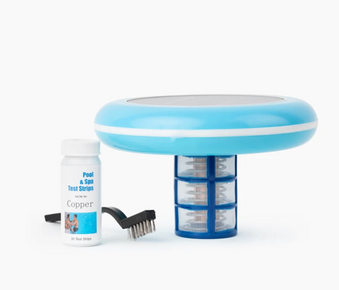
TL;DR: Commercial pool operations in 2026 require rigorous, code-compliant standards for solar pool ionizer integration. Key practices include NSF/ANSI 50 certification verification, redundant sanitation systems for continuous operation, flow-switch safety interlocks, automated chemistry controllers, and daily log maintenance. Properly implemented solar ionization in commercial settings reduces chemical costs by 40-60%, minimizes chlorine odor complaints, and extends equipment life while maintaining strict public health compliance.
SEO Summary: 2026 standard practices for commercial solar pool ionizers: NSF certification, redundant sanitation, flow safety interlocks, automated control, and daily compliance logging for public pools.
Table of Contents
- Certification & Compliance Standards
- Redundant Sanitation System Requirements
- Safety Interlocks & Flow Protection
- Automated Chemistry Control & ORP Monitoring
- Documentation, Logging & Compliance Records
- System Sizing & Configuration Standards
- Installation Protocols for Commercial Facilities
- Maintenance Schedules & Replacement Planning
- Staff Training & Emergency Procedures
- Conclusion & Key Takeaways
Certification & Compliance Standards
Commercial pool operations in 2026 face stringent regulatory requirements that residential systems simply don't encounter. The foundational standard for any commercial solar ionizer installation is NSF/ANSI 50 certification the nationally recognized standard for pool equipment sanitation performance. Unlike residential units, commercial ionizers must undergo rigorous third-party testing to verify they consistently deliver specified ion output under varying flow rates and water conditions.
- NSF/ANSI 50 Listing: Verify the ionizer model appears on NSF's official listing. Uncertified units cannot legally serve as primary or supplemental sanitizers in licensed public pools.
- UL or ETL Safety Certification: Commercial units require independent electrical safety certification for continuous high-duty-cycle operation.
- Local Health Department Approval: Many jurisdictions maintain approved equipment lists. Submit manufacturer's NSF documentation during permitting.
- Copper/Silver Ion Output Verification: Commercial units must provide certified performance data showing ion production rates at specified flow rates.
Understanding these certification requirements is essential before selecting equipment. For a comprehensive overview of what features matter most when choosing commercial-grade systems, refer to our solar pool ionizer buying guide.
Redundant Sanitation System Requirements
The single most important distinction between residential and commercial solar ionizer installations is the mandatory requirement for redundant sanitation. Public health codes universally require that no single equipment failure can result in complete loss of sanitizer residual. This means solar ionizers in commercial pools must be paired with a secondary sanitation system capable of maintaining public health standards independently.
- Ionizer + Low-Output Chlorine Feeder: The most common configuration. A peristaltic pump or erosion feeder maintains 0.5-1.0 ppm free chlorine as backup, while the ionizer provides primary algae and bacteria control.
- Dual Ionizer Arrays: Large commercial pools often install two independent ionizer systems sized so either unit alone can maintain minimum sanitation levels.
- UV or Ozone Secondary Systems: Some facilities pair ionizers with UV sterilization or ozone oxidation, providing pathogen inactivation without additional chemicals.
- Automatic Failover Controllers: Advanced installations use automation systems that detect ionizer failure and immediately activate backup sanitation with alarm notification.
For facilities considering the transition from traditional sanitation methods, our comparison of saltwater vs. solar pool ionizer systems provides valuable context for designing redundant configurations that maximize both reliability and efficiency.
Safety Interlocks & Flow Protection
Commercial solar ionizer installations require multiple layers of safety protection beyond residential standards. These interlocks prevent equipment damage and ensure consistent sanitation under the demanding conditions of public pool operation.
- Flow Switch Interlocks: Every commercial ionizer must have a flow-proving switch that prevents ion generation unless adequate water flow (typically >30 GPM per 8" chamber) is verified. This prevents gas accumulation and electrode damage during low-flow conditions.
- High-Temperature Shutdown: Commercial units require automatic output reduction or shutdown when water temperature exceeds 104°F (40°C), common in therapy pools and during extreme summer conditions.
- Low-Water Cutoff: Integrated with pool water level controls, ionizers must cease operation if water level drops below skimmer operating range.
- Electrical Disconnect Requirements: Commercial codes mandate lockable visible disconnects within sight of the equipment, not just remote circuit breakers.
Proper maintenance of these safety systems is critical for commercial operations. Our step-by-step pool care workflow includes specific protocols for testing and documenting safety interlock function in commercial settings.
Automated Chemistry Control & ORP Monitoring
Manual chemistry adjustment is unacceptable in commercial pool operations. 2026 standards require continuous, automated monitoring and control of water chemistry parameters to maintain consistent sanitation despite highly variable bather loads.
- ORP (Oxidation-Reduction Potential) Controllers: Continuous ORP monitoring (target 650-750 mV) provides real-time verification of sanitation effectiveness. ORP controllers can automatically adjust ionizer output and activate backup sanitation as needed.
- pH Controllers: Automated pH adjustment is mandatory in commercial settings, as pH fluctuates rapidly with bather load and directly affects copper ion efficacy.
- Flow-Paced Chemical Feed: Advanced systems adjust chemical feed rates proportionally to flow rate and bather load sensing.
- Remote Telemetry: 2026 standards increasingly require cloud-based monitoring that allows health officials and facility managers to verify compliance remotely.
Automated control systems represent a significant advancement in commercial pool management. The energy efficiency benefits of integrated automation are explored in our article on how solar pool ionizers cut energy costs, which demonstrates the compounding savings of smart system coordination.
Documentation, Logging & Compliance Records
In commercial pool operations, if it isn't documented, it didn't happen. Regulatory compliance requires meticulous record-keeping that demonstrates continuous adherence to water quality standards and equipment maintenance schedules.
- Daily Water Chemistry Logs: Record pH, ORP, copper ion concentration (target 0.3-0.5 ppm for commercial pools), temperature, and residual chlorine from backup systems. Digital logging systems with tamper-resistant records are preferred.
- Equipment Maintenance Records: Document electrode replacements, sensor calibrations, flow switch tests, and all service activities with dates and personnel signatures.
- Bather Load Tracking: Many jurisdictions require documentation of pool usage patterns to correlate with water quality data.
- Incident Reports: Any water quality exceedance, equipment failure, or patron complaint must be documented with corrective actions taken.
For facilities transitioning to solar ionization, establishing proper documentation protocols is essential. Our chemical-free pool maintenance guide provides templates and best practices adaptable to commercial record-keeping requirements.
System Sizing & Configuration Standards
Commercial solar ionizer systems cannot be sized using residential rules of thumb. The dramatically higher bather loads, extended operating hours, and regulatory requirements demand professional engineering calculations.
- Peak Bather Load: Commercial systems must be sized for maximum anticipated occupancy, not average use. A 50,000-gallon public pool with 100 swimmers requires significantly more ion output than an equivalently sized residential pool.
- Turnover Rate Requirements: Commercial pools typically require 4-6 hour turnover rates versus 8-12 hours for residential. Higher flow rates require larger ionizer chambers or multiple parallel units.
- Solar Array Capacity: Commercial installations often require expanded solar panel arrays to maintain adequate ion production during extended operating hours and cloudy periods.
- Backup Power Considerations: Critical facilities may require battery backup systems to maintain sanitation during grid outages.
Proper sizing requires understanding both current needs and future expansion plans. Our complete strategy guide for cleaner pools includes commercial sizing worksheets and engineering considerations for facilities of all scales.
Installation Protocols for Commercial Facilities
Commercial solar ionizer installation follows substantially different protocols than residential work. These standards ensure reliability, safety, and code compliance in public accommodation settings.
- Licensed Electrical Contractors: Commercial installations require licensed electricians familiar with NFPA 70 (NEC) Article 680 requirements for pool equipment. DIY installation is never acceptable.
- Permitted Work: Most jurisdictions require electrical and plumbing permits for commercial pool equipment modifications, with final inspections by code authorities.
- Equipment Pad Layout Standards: Commercial installations require minimum clearances around equipment for service access, often specified in manufacturer installation manuals.
- Pipe Material Specifications: Commercial codes may require specific pipe materials and joining methods not typically used in residential work.
- Seismic Restraint: In seismic zones, commercial equipment requires anchoring and bracing per applicable building codes.
For facilities planning commercial installations, understanding the full scope of requirements is essential. Our guide on how to modernize your pool covers retrofit considerations applicable to commercial upgrades.
Maintenance Schedules & Replacement Planning
Commercial solar ionizers operate under continuous duty cycles that demand more aggressive maintenance schedules than residential systems. 2026 standard practices include daily, weekly, monthly, and quarterly protocols.
- Daily: Verify ORP/pH controller readings, check flow indicator, log copper concentration, inspect solar panels for debris.
- Weekly: Clean electrode chambers if flow reduction noted, test and calibrate sensors, inspect flow switch operation, verify backup sanitation.
- Monthly: Thorough electrode inspection, clean solar panels, check all electrical connections, verify emergency shutdown procedures.
- Quarterly: Professional system inspection, comprehensive water chemistry analysis, staff retraining, documentation review.
Commercial facilities should maintain spare electrode cartridges and critical components on-site to minimize downtime. Understanding the relationship between water chemistry and component life is essential for effective replacement planning. Our comprehensive guide on copper staining prevention provides valuable insights into maintaining optimal ion levels while extending electrode longevity.
Staff Training & Emergency Procedures
The most sophisticated commercial ionizer installation fails without properly trained operators. 2026 standards require documented training programs for all personnel responsible for pool operations.
- Basic System Operation: Understanding of ionizer function, normal operating parameters, and indicator interpretation.
- Water Chemistry Fundamentals: Relationship between pH, copper efficacy, and ORP readings.
- Emergency Response Procedures: Steps to take during equipment failure, water quality exceedance, or patron complaint.
- Documentation Requirements: Proper log entry procedures and record retention.
- Troubleshooting Protocols: Common problem identification and escalation procedures.
Emergency procedures must be clearly posted and regularly reviewed. For facilities new to solar ionization technology, our eco-pool beginner's guide offers foundational training material adaptable for commercial operator education programs.
Conclusion & Key Takeaways
Solar pool ionizers have matured into viable, code-compliant sanitation technology for commercial pool applications in 2026 but only when installed and operated according to the rigorous standards that public health protection demands. The days of treating commercial ionizers as simply "larger residential systems" are over. Today's standard practices recognize solar ionization as sophisticated technology requiring proper engineering, redundant safety systems, continuous monitoring, meticulous documentation, and trained operators.
Commercial facilities that adopt these standards realize substantial benefits: 40-60% reduction in chemical costs, elimination of chlorine odor complaints, extended equipment life, and enhanced patron satisfaction. However, these benefits accrue only to facilities that respect the technology's requirements and invest in proper implementation.
Key Takeaways
- Certification Is Non-Negotiable: Commercial ionizers must carry NSF/ANSI 50 certification and appropriate electrical safety listings. Uncertified equipment creates liability and regulatory non-compliance.
- Redundancy Is Required: No commercial pool can rely solely on ionization. Redundant sanitation capable of independent operation is mandatory.
- Safety Interlocks Protect Patrons & Equipment: Flow switches, high-temperature cutoffs, and low-water protection are not optional features.
- Automation Enables Consistency: Continuous ORP/pH control with remote telemetry is the 2026 standard for commercial water quality management.
- Documentation Is Compliance: Comprehensive, tamper-resistant digital logs are essential for regulatory inspections and liability protection.
- Professional Sizing Prevents Failure: Commercial systems require engineering-level sizing based on peak bather load and turnover requirements.
- Licensed Installation Is Mandatory: Permitted work by qualified contractors ensures code compliance and warranty validity.
- Aggressive Maintenance Extends Life: Daily, weekly, and monthly maintenance protocols are required for commercial duty cycles.
- Training Transforms Technology into Results: Documented operator training programs are as important as the equipment itself.
As solar ionization technology continues to advance, commercial standards will evolve accordingly. Facilities that embrace these 2026 standard practices position themselves for regulatory compliance, operational efficiency, and patron satisfaction. Those that attempt to adapt residential approaches to commercial demands will face equipment failures, compliance citations, and unnecessary expense. The choice in 2026 is clear: professional standards for professional applications.