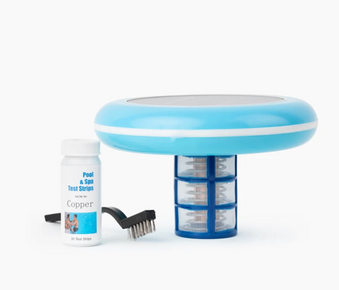
TL;DR: Choosing between a saltwater chlorine generator (SWG) and a solar pool ionizer in 2026 depends on your priorities. Saltwater pools offer powerful, familiar sanitation with higher ongoing energy costs and chemical byproducts. Solar ionizers provide a gentle, low-energy, chemical-minimal experience but may require a supplemental oxidizer. The optimal choice often involves a hybrid system that strategically combines the strengths of both technologies for the ultimate in efficiency, comfort, and water clarity.
SEO Summary: Compare saltwater vs solar pool ionizers for 2026. Detailed analysis of pros, cons, costs, maintenance, water feel, and why hybrid systems are gaining popularity for optimal pool care.
Table of Contents
- Core Technology: How They Work in 2026
- Head-to-Head Comparison: Pros and Cons
- 2026 Cost Analysis: Initial, Operational & Lifetime
- Maintenance & Daily Management Compared
- The Swimmer's Experience: Water Quality & Feel
- The 2026 Frontier: Why Hybrid Systems Are Winning
- Decision Guide: Which System is Right For You?
- Conclusion & Key Takeaways
Core Technology: How They Work in 2026
Saltwater Chlorine Generator (SWG)
A saltwater system is a chlorine-based sanitizer. You add salt (sodium chloride) to the pool water at a concentration of 2,500-4,000 ppm. The salt cell, powered by your home's electricity, uses electrolysis to convert the dissolved salt into chlorine (hypochlorous acid). This chlorine sanitizes the pool, then eventually reverts back to salt, creating a continuous cycle. The key point: You are still swimming in a chlorinated pool, just one where the chlorine is generated on-site from salt rather than added in liquid, tablet, or granular form.
Solar Pool Ionizer
A solar ionizer operates on a completely different principle. It uses a dedicated solar panel to power a low-voltage current across copper and silver electrodes. This process releases positively charged copper and silver ions into the water. Copper acts as a potent algaecide, while silver is a powerful bactericide. This ionic field provides continuous sanitation without producing chlorine. The system runs entirely on solar power and introduces trace minerals into the water, not traditional chemicals.
Head-to-Head Comparison: Pros and Cons
Saltwater Pool Generator (SWG)
Pros:
- Powerful, Familiar Sanitation: Provides strong, residual chlorine that effectively sanitizes AND oxidizes (breaks down non-living contaminants).
- Consistent Performance: Works independently of weather; generates chlorine day or night as long as the pump runs and the cell has power.
- Widely Understood: Maintenance and water balance are well-documented and familiar to most pool professionals.
- Soft Water Feel: Saltwater is noticeably softer and less irritating than traditional chlorine pools, though not as silky as ionized water.
Cons:
- High Energy Consumption: The salt cell requires significant electricity to operate, adding to your pool's energy bill.
- Corrosive Byproducts: The process creates chlorine and a high pH byproduct (sodium hydroxide), which can be corrosive to certain stone, metal fixtures, and equipment if not properly managed.
- Ongoing Chemical Costs: Requires balancing and maintaining pool pH balance and alkalinity frequently (pH tends to rise), and you must still buy salt, stabilizer (CYA), and occasional acid.
- Cell Replacement: The expensive salt cell (often $700-$900) degrades and typically needs replacement every 3-7 years.
Solar Pool Ionizer
Pros:
- Ultra-Low Energy & Chemical Use: Operates on free solar energy and reduces chemical use by 80-90%.
- Gentlest Water Quality: Produces no chlorine smell, no red eyes, and is ideal for those with sensitive skin, eczema, or asthma.
- Non-Corrosive: Does not produce harsh chemical byproducts, making it safer for pool finishes, heaters, and surrounding materials.
- Reduces Pump Runtime: With cleaner water, filtration pump time can be significantly reduced, saving even more energy.
- Minimal Maintenance: No cells to clean of scale frequently; electrodes last for years.
Cons:
- Requires Supplemental Oxidation: Ions sanitize but do not oxidize. A secondary system (like a minimal SWG, ozone, or periodic non-chlorine shock) is often needed for complete water clarity.
- Weather Dependent: Ion production slows on cloudy days, though modern models with efficient panels and capacitors mitigate this.
- Metal Sensitivity: Copper levels must be monitored to prevent potential staining on light-colored plaster or vinyl (easily avoided with proper maintenance).
- Less "Instant" Shock Capacity: Recovering from a severe algae bloom can be slower than with a massive chlorine shock.
2026 Cost Analysis: Initial, Operational & Lifetime
Initial Installation Cost
- Saltwater System: High-quality SWG unit: $1,200 - $2,000 + installation. Requires a licensed electrician in many areas due to high-voltage operation.
- Solar Ionizer System: Complete kit: $400 - $900. Typically a straightforward DIY installation with no electrical permits needed.
5-Year Operational & Lifetime Cost (for a 15,000-gallon pool)
-
Saltwater System (Estimate):
- Annual Electricity for Cell: $150 - $300
- Annual Chemicals (Salt, Acid, Stabilizer): $200 - $400
- Salt Cell Replacement (Year 5): $700 - $900
- 5-Year Total: ~$3,000 - $4,500
-
Solar Ionizer System (Estimate):
- Annual Supplemental Chemicals (Shock, Balancers): $50 - $150
- Annual Electricity Savings (from reduced pump runtime): ($100 - $200) (a credit)
- Electrode Replacement (Year 4): $80 - $150
- 5-Year Total: ~$400 - $1,000
Financial Verdict: The solar ionizer has a significantly lower total cost of ownership over 5 years, often less than the cost of a single salt cell replacement.
Maintenance & Daily Management Compared
Saltwater System Maintenance
- Weekly: Test and adjust pH (often needs lowering with acid), test chlorine and salt levels.
- Monthly: Inspect and potentially acid-wash the salt cell to remove calcium scale buildup.
- Seasonally: Balance other parameters; winterize the cell in freezing climates.
- Pain Point: Constant pH and automated pool management and the physical chore of cleaning the scaled cell.
Solar Ionizer Maintenance
- Weekly: Test pH and alkalinity (more stable than SWG).
- Monthly: Test copper ion level with a simple strip; visually check solar panel.
- Annually/Every Few Years: Replace electrode cartridge.
- Pain Point: Ensuring proper water flow and managing phosphates to keep the system working efficiently.
The Swimmer's Experience: Water Quality & Feel
- Water "Feel": Solar ionizers consistently win here. The water is described as "silky," "soft," and "like spring water." Saltwater is softer than traditional chlorine but can still have a slight chemical slickness.
- Smell & Sensation: Ionized pools have zero chlorine smell and do not irritate eyes or skin. Saltwater pools have a mild, clean smell and are less irritating than traditional pools, but some swimmers still report minor dryness.
- Visual Clarity: Both can achieve brilliant clarity. The ionizer's water often has a distinctive, jewel-like sparkle due to the lack of dissolved chemicals.
The 2026 Frontier: Why Hybrid Systems Are Winning
The debate isn't always either/or. The most advanced, trouble-free pools in 2026 often use a hybrid approach. This involves using a solar ionizer as the primary sanitizer (for algae and bacteria) and a very small, low-output saltwater generator as a supplemental oxidizer.
The Hybrid Advantage: You set the SWG to produce a minimal 0.2-0.5 ppm of chlorine just enough to oxidize bather waste and sunscreen. The ionizer does the heavy lifting of sanitation. The result is the sublime feel of an ionized pool, with the powerful oxidizing backup of chlorine, but at a level too low to smell, feel, or cause irritation. It combines the strengths and mitigates the weaknesses of both systems. Learn more about this setup: The Ultimate Guide to Pool Sanitation Systems.
Decision Guide: Which System is Right For You?
Choose a Saltwater Generator (SWG) if:
- You prefer the security of a well-known, chlorine-based system.
- Your pool is in a heavily shaded area with limited direct sun.
- You have a very high bather load (e.g., a large family or frequent parties).
- Initial budget is less of a concern than avoiding a supplemental system.
Choose a Solar Pool Ionizer if:
- Minimizing chemical use and energy costs is your top priority.
- Swimmers have chemical sensitivities or you desire the softest possible water.
- You have good sun exposure on your property.
- You are comfortable with a slightly more nuanced (but less frequent) maintenance routine.
- You want the lowest possible long-term cost of ownership.
Seriously Consider a Hybrid System if:
- You want the absolute best of both worlds: effortless water clarity and the gentlest swim experience.
- You are building a new pool or doing a major equipment upgrade.
- You want a truly "set-and-forget" pool with maximum resilience against problems.
Conclusion & Key Takeaways
The choice between saltwater and solar ionization in 2026 reflects a broader choice in pool ownership philosophy. Saltwater offers powerful, familiar convenience with higher operational costs. Solar ionization offers a sustainable, gentle, and cost-effective alternative but often works best as part of a planned system. For a growing number of pool owners, and the benefits the pool owners overlook. The hybrid model represents the intelligent synthesis a future-proof approach that leverages technology for ultimate efficiency and enjoyment.
Key Takeaways
- Different Technologies: SWGs make chlorine; ionizers release sanitizing metals. They work in fundamentally different ways.
- Cost Winner: Solar ionizers have a far lower lifetime cost, saving thousands on energy and chemicals over 5-10 years.
- Feel Winner: Solar ionizers provide a noticeably softer, chemical-free swimming experience that is gentler on skin, eyes, and hair.
- Maintenance Trade-off: SWGs require more frequent pH adjustment and cell cleaning; ionizers require monitoring different parameters (copper, phosphates).
- The Hybrid Trend: Combining a solar ionizer with a minimal SWG is emerging as the pro-level standard for achieving perfect, low-maintenance water.
- Your Priorities Decide: Match the system to your top goals: lowest cost and softest water (Ionizer), powerful convenience (SWG), or the ultimate balanced result (Hybrid).
Evaluate your site conditions, budget, and personal preferences against these key points. For most homeowners seeking a modern, sustainable, and cost-effective pool, a solar ionizer either standalone or as part of a hybrid system represents the most forward-thinking choice for 2026 and beyond.