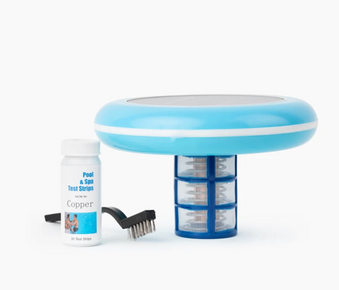
TL;DR: The movement toward low-chemical pools has accelerated dramatically in 2026, and solar pool ionizers are the primary technology driving this transformation. Pool owners are increasingly rejecting the traditional model of heavy chlorine use, seeking alternatives that reduce chemical exposure, simplify maintenance, and deliver a more natural swimming experience. Solar ionization achieves 80 to 90 percent chemical reduction while improving water quality, extending equipment life, and lowering operating costs. This guide explores how solar pool ionizers are driving the low-chemical revolution, the technologies that make it possible, and what pool owners can expect from the transition.
SEO Summary: 2026 guide to how solar pool ionizers are driving low-chemical pools: 80-90 percent chemical reduction, natural swimming experience, simplified maintenance, and proven alternatives to chlorine.
Table of Contents
- The Low-Chemical Pool Movement
- 80-90 Percent Chemical Reduction: What It Means
- Chemicals You No Longer Need
- The Residual Chlorine Question
- Managing Oxidation Without Chlorine
- Hybrid Approaches: Minimal Chlorine, Maximum Benefit
- Transitioning Your Pool to Low-Chemical Operation
- Health Benefits of Reduced Chemical Exposure
- Environmental Impact of Low-Chemical Pools
- Conclusion & Key Takeaways
The Low-Chemical Pool Movement
The low-chemical pool movement is not a fringe trend it is a mainstream shift in how pool owners approach water sanitation. Growing awareness of chemical exposure risks, increasing sensitivity to chlorine among swimmers, and a general desire for more natural living have combined to create unprecedented demand for alternatives.
- Consumer awareness: Information about the effects of chlorine and its byproducts is more accessible than ever. Pool owners understand that chloramines cause eye irritation and respiratory discomfort. They know that chlorine reacts with organic matter to form disinfection byproducts. They are seeking alternatives that reduce these exposures.
- Sensitivity concerns: An increasing number of swimmers report sensitivity to chlorine. Children with eczema, adults with asthma, and individuals with general chemical sensitivities find traditional pools uncomfortable or inaccessible. Low-chemical pools open the swimming experience to these individuals.
- Natural living trend: The broader cultural shift toward natural living reducing processed foods, eliminating unnecessary chemicals, choosing organic extends to pool ownership. Pool owners want their backyard oasis to feel natural, not chemical.
- Regulatory pressure: In some regions, environmental regulations are beginning to address pool chemical discharge. Backwashing chlorinated water into storm drains is increasingly restricted. Low-chemical pools reduce or eliminate these concerns.
- Market response: The pool industry has responded to these trends with genuine innovation. Solar pool ionizers have matured from niche products to mainstream solutions, available from major manufacturers and stocked by local pool supply stores.
Solar pool ionizers are the technology best positioned to drive this movement forward. They deliver the chemical reduction that pool owners seek while maintaining or improving water quality. They are proven, reliable, and accessible to every pool owner.
For a comprehensive overview of how solar ionization transforms the pool ownership experience, our guide to smarter pool ownership explores the full range of benefits enabled by low-chemical operation.
80-90 Percent Chemical Reduction: What It Means
When we say solar pool ionizers achieve 80 to 90 percent chemical reduction, what does that actually mean for a typical pool owner? The numbers tell a compelling story.
- Chlorine reduction: A traditional pool using chlorine tablets, granules, or liquid typically consumes 200 to 300 pounds of chlorine products annually. A solar-ionized pool reduces this to 20 to 40 pounds, primarily for occasional shocking or backup sanitation. This represents an 80 to 90 percent reduction.
- Algaecide elimination: Copper ions themselves are effective algaecides, eliminating the need for separate algaecide products. The 10 to 20 gallons of algaecide that a traditional pool might use annually are completely eliminated.
- Clarifier reduction: Ionic flocculation naturally improves water clarity, reducing or eliminating the need for clarifier products. Most ionizer owners use zero clarifiers after the initial transition period.
- pH adjuster reduction: Because ionized water is chemically stable, pH drift is slower and more predictable. The volume of acid or base required decreases by 50 to 70 percent.
- Shock treatment reduction: Weekly shocking is eliminated. Occasional non-chlorine shock after heavy use may still be beneficial, but total shock treatments drop from 30 to 50 per year to 5 to 10.
In dollar terms, this reduction translates to savings of $400 to $700 annually for a typical residential pool. For commercial pools, the savings are even more dramatic often $2,000 to $5,000 per year.
Beyond the direct chemical savings, the reduction in chemical handling, storage, and testing creates additional value. Fewer trips to the pool store. Less space devoted to chemical storage. No more emergency runs for chlorine on Sunday morning. The mental load of pool ownership lightens considerably.
For pools seeking to quantify their potential savings, our resource on energy and chemical savings provides detailed calculators and worksheets.
Chemicals You No Longer Need
Understanding which chemicals are eliminated helps pool owners appreciate the full scope of simplification that solar ionization delivers.
- Cyanuric acid (stabilizer): Traditional pools require cyanuric acid to protect chlorine from UV degradation. CYA accumulates over time and must be managed through partial draining. Ionized pools do not require CYA at all copper does not degrade in sunlight. Any CYA present from previous chlorine use gradually dilutes and eventually becomes negligible.
- Algaecides: Copper ions provide continuous algae prevention, eliminating the need for separate algaecide products. This eliminates an entire category of chemical testing and adjustment.
- Clarifiers: Ionic flocculation naturally improves water clarity by causing fine particles to clump together for efficient filtration. Most ionizer owners find that clarifiers are completely unnecessary after the initial transition.
- Calcium hardness increaser (often): While calcium hardness still matters for scale prevention, it becomes a parameter you monitor annually rather than manage frequently. Without the calcium inputs from certain chlorine products and without the pH swings that cause precipitation, calcium levels remain stable for years.
- Most pH adjusters: Not completely eliminated, but dramatically reduced. pH in ionized pools drifts slowly and predictably, requiring far less frequent adjustment.
- Most shock treatments: Weekly shocking is eliminated. Occasional non-chlorine shock after heavy use may be beneficial, but the volume and frequency are dramatically reduced.
The elimination of these chemicals transforms the pool maintenance routine. Where traditional pool owners juggle multiple products with complex interactions and testing requirements, ionizer owners manage essentially three parameters: copper, pH, and alkalinity. The simplification is profound.
For families with young children, our article on family-friendly pools explores how chemical elimination benefits those most vulnerable to chemical exposure.
The Residual Chlorine Question
A common question from pool owners considering the transition to low-chemical operation is whether any chlorine is still needed. The answer depends on the pool and the owner's preferences.
- Ionizer-only operation: Many residential pools operate successfully with ionizers as the sole sanitizer. Copper and silver ions provide effective algae and bacteria control when maintained at proper levels. No chlorine is added. This is true low-chemical operation.
- Oxidation requirements: The distinction between sanitization and oxidation is important here. Ions sanitize they kill living organisms. They do not oxidize they do not break down non-living organic matter like sunscreen, body oils, and sweat. In pools with heavy bather loads, these organics can accumulate, leading to water quality issues.
- Supplemental oxidation options: For pools that need oxidation, there are options that add minimal chemical load. Non-chlorine shock (potassium monopersulfate) provides oxidation without adding chlorine. Enzyme treatments break down organics biologically. Occasional use of these products maintains water quality while keeping chemical load low.
- Minimal chlorine backup: Some pool owners choose to maintain a very low chlorine residual 0.5 ppm or less as insurance. At this level, chlorine is barely detectable and does not cause the irritation associated with higher levels. This hybrid approach provides oxidation capability while maintaining 90 to 95 percent chemical reduction.
- Commercial requirements: Commercial and public pools typically require redundant sanitation, which often includes a minimal chlorine residual. Even in these applications, chemical reduction of 80 to 90 percent is achievable while meeting health code requirements.
The residual chlorine question is ultimately a matter of personal preference and pool usage patterns. Owners who prioritize absolute minimal chemical use can achieve zero-chlorine operation with attention to oxidation management. Those who prefer the security of a backup can maintain trace chlorine levels with minimal impact.
For pools considering hybrid approaches, our guide to salt system integration provides detailed information on combining technologies.
Managing Oxidation Without Chlorine
For pool owners who choose ionizer-only operation, managing oxidation becomes the primary chemical task. Fortunately, several effective strategies exist.
- Non-chlorine shock (potassium monopersulfate): MPS is the most common oxidation tool for low-chemical pools. It breaks down organic contaminants without adding chlorine or affecting copper levels. A monthly treatment during peak swim season is often sufficient. After heavy use, an additional treatment restores water quality quickly.
- Enzyme treatments: Enzyme products contain beneficial bacteria that digest organic compounds including sunscreen, body oils, and lotions. They work continuously, reducing the load on the oxidation system. Monthly enzyme treatments complement occasional MPS shocking for comprehensive organic management.
- Enhanced filtration: Because ionized water enables more efficient filtration, running the pump slightly longer after heavy use can physically remove organic particles before they break down. A simple schedule extension for 24 hours after a party often maintains water quality without chemical addition.
- Source control: Encouraging swimmers to shower before entering the pool reduces the organic load significantly. Most sunscreen and body oils transfer to the water in the first few minutes of swimming. A quick rinse before entry can reduce oxidation demand by 50 percent or more.
- Monitoring organic load: While not directly measurable with standard test kits, organic load can be inferred from water clarity, foaming, and the frequency of needed shocking. With experience, pool owners learn to anticipate oxidation needs based on usage patterns.
The key insight is that oxidation management in low-chemical pools is occasional and predictable, not the constant battle that characterizes chlorine pools. A few minutes of attention per month maintains water quality that would require weekly shocking in a traditional pool.
For pools new to low-chemical operation, our chemical-free maintenance guide provides detailed protocols for oxidation management.
Hybrid Approaches: Minimal Chlorine, Maximum Benefit
For pool owners who want the security of a chlorine backup without the full chemical load, hybrid approaches offer the best of both worlds. These combinations maintain 90 to 95 percent chemical reduction while providing oxidation insurance.
- Ionizer plus low-output salt generator: This is the most popular hybrid configuration. The ionizer handles primary sanitation, maintaining copper at 0.2 to 0.4 ppm. The salt generator operates at 10 to 20 percent of normal output, maintaining a barely detectable chlorine residual of 0.2 to 0.5 ppm. This low level provides oxidation capability without the negative effects of full chlorination.
- Benefits of the ionizer-salt hybrid: Pool owners report the best of both worlds: the silky feel of ionized water with the oxidation insurance of chlorine. Salt consumption drops by 80 to 90 percent, extending cell life dramatically. pH remains more stable than with full salt operation because the low output produces minimal sodium hydroxide byproduct.
- Ionizer plus mineral chlorine: Some manufacturers offer mineral chlorine systems that use a small amount of chlorine combined with silver ions. Adding an ionizer to these systems provides copper for algae control while the mineral chlorine handles oxidation. This combination can achieve very low chlorine levels.
- Ionizer plus ozone: Ozone systems provide powerful oxidation at the point of contact but leave no residual. Combined with an ionizer that provides residual sanitation, this creates a completely chemical-free oxidation solution. Higher initial cost but zero ongoing chemical consumption.
- Ionizer plus UV: UV sterilization provides pathogen inactivation without chemicals, and when combined with an ionizer's residual sanitation, creates a robust treatment system. UV addresses microorganisms while ions provide continuous protection throughout the pool.
Hybrid approaches are particularly attractive for pool owners transitioning from existing salt systems. Adding an ionizer to an existing salt pool and dialing back the salt cell output delivers immediate benefits with minimal investment.
For detailed guidance on hybrid configurations, our salt system integration guide provides comprehensive information.
Transitioning Your Pool to Low-Chemical Operation
Making the transition from a traditional chlorinated pool to low-chemical operation requires careful planning but is straightforward with the right approach.
- Step 1: Balance water chemistry: Before installing an ionizer, bring your pool's chemistry to ideal ranges. pH should be 7.4 to 7.6. Alkalinity 80 to 120 ppm. Calcium hardness 200 to 300 ppm. If cyanuric acid is high (above 50 ppm), consider partial dilution as CYA is not needed and may interfere with copper activity.
- Step 2: Install the ionizer: Install the ionizer chamber in the return line after the filter and any heater. Mount the solar panel in a sunny location. Connect the controller according to manufacturer instructions. The process typically takes 1 to 2 hours for a handy homeowner.
- Step 3: Initial ionizer setup: Set the ionizer to 70 to 80 percent of expected output. Run the pump continuously for 24 to 48 hours to establish the initial ionic field. Test copper after 72 hours and adjust output as needed to reach 0.2 to 0.4 ppm.
- Step 4: Gradual chlorine reduction: Do not stop chlorine abruptly. Reduce chlorine additions gradually over 2 to 3 weeks as the ionic field establishes. Monitor water quality closely during this transition period.
- Step 5: Establish new maintenance routine: Once copper stabilizes in the target range, transition to low-chemical maintenance. Test copper weekly, pH weekly, and alkalinity monthly. Use non-chlorine shock after heavy use as needed.
Most pools complete the transition within 3 to 4 weeks. After that, the benefits of low-chemical operation become immediately apparent. The water feels different. The air smells different. Maintenance becomes dramatically simpler.
For a detailed step-by-step transition guide, our solar pool ionizer start up guide provides comprehensive instructions.
Health Benefits of Reduced Chemical Exposure
The health benefits of low-chemical pools extend beyond the obvious elimination of eye irritation and skin dryness. Reduced chemical exposure has implications for overall wellness.
- Respiratory health: Chloramine off-gassing is a known trigger for asthma attacks and respiratory irritation. In indoor pools, the effect can be severe enough to cause lung damage in competitive swimmers. Eliminating chloramines makes the pool environment safer for everyone, particularly those with respiratory sensitivities.
- Skin health: Chlorine strips the skin of natural oils, disrupting the skin barrier and exacerbating conditions like eczema and dermatitis. Swimmers in ionized pools report clearer, more comfortable skin. Parents of children with eczema often find that ionized pools are the only pools their children can tolerate.
- Eye health: Chronic exposure to chloramines can damage the cornea and contribute to dry eye syndrome. The immediate relief from eye irritation is obvious, but the long-term benefits of eliminating this exposure are significant.
- Swallowing water: Children inevitably swallow pool water. In chlorinated pools, this means ingesting chemical disinfectants and their byproducts. Ionized water contains only trace minerals at concentrations well below drinking water standards, eliminating this concern.
- Chemical storage hazards: Chlorine products are hazardous materials that pose poisoning risks, particularly to children. Storing these chemicals safely requires space, ventilation, and security. Eliminating most chemical storage removes this hazard from the home.
For families with young children or members with health sensitivities, these benefits often outweigh all others. The pool becomes accessible to everyone, not just those who tolerate chemicals well.
Our article on family-friendly pools explores these health benefits in greater depth.
Environmental Impact of Low-Chemical Pools
The environmental benefits of low-chemical pools extend beyond the immediate reduction in chemical use. Solar ionization addresses multiple environmental concerns simultaneously.
- Chemical manufacturing: Chlorine production is energy-intensive, consuming approximately 2,500 to 3,000 kilowatt-hours per ton of chlorine produced. By eliminating 80 to 90 percent of chlorine consumption, ionized pools avoid this embedded energy and the associated carbon emissions.
- Chemical transportation: Every pound of chlorine must be manufactured, packaged, and transported to distribution points and ultimately to pool owners. This supply chain consumes fuel and generates emissions. Reducing chemical consumption by 80 to 90 percent reduces this environmental burden proportionally.
- Plastic waste: Traditional pool chemical packaging generates 40 to 60 pounds of plastic waste annually per pool. Most of this packaging is not recyclable due to chemical residue. Solar ionizers reduce this waste stream by 80 to 90 percent.
- Waterway protection: When traditional pools are backwashed or drained, concentrated chemicals enter local storm drains and ultimately waterways. Chlorine, algaecides, and other chemicals can harm aquatic life. Ionized pools present no such threat copper levels are well below drinking water standards.
- Water conservation: Ionized pools maintain stable chemistry that extends drain intervals from 2 to 3 years to 8 to 12 years, conserving thousands of gallons of water over the pool's lifetime.
For environmentally conscious pool owners, these benefits transform the pool from an environmental liability into a sustainable amenity. The pool can be enjoyed without guilt, knowing that its impact has been dramatically reduced.
For a comprehensive overview of environmental benefits, our eco-pool beginner's guide provides detailed information on sustainable pool practices.
Conclusion & Key Takeaways
The solar pool ionizer is driving the low-chemical pool revolution in 2026, and the movement shows no signs of slowing. Pool owners are increasingly rejecting the traditional model of heavy chlorine use, seeking alternatives that reduce chemical exposure, simplify maintenance, and deliver a more natural swimming experience.
The technology has matured to meet this demand. Solar ionizers are proven, reliable, and accessible. They deliver 80 to 90 percent chemical reduction while maintaining or improving water quality. They eliminate most of the chemicals that traditional pools require, simplifying maintenance and reducing costs. They provide health benefits for swimmers and environmental benefits for the planet.
The transition to low-chemical operation is straightforward. With proper planning and execution, any pool can make the switch. The result is a pool that feels different, smells different, and requires dramatically less attention a pool that truly becomes a backyard sanctuary rather than a chemical maintenance project.
Key Takeaways
- The low-chemical pool movement is mainstream: Growing awareness of chemical risks, increasing sensitivity among swimmers, and a cultural shift toward natural living have created unprecedented demand for low-chemical alternatives. Solar pool ionizers are the technology best positioned to meet this demand.
- 80 to 90 percent chemical reduction is achievable: Chlorine use drops from 200 to 300 pounds annually to 20 to 40 pounds. Algaecides, clarifiers, and most pH adjusters are eliminated. Shock treatments drop from weekly to occasional.
- Many chemicals are eliminated entirely: Cyanuric acid, algaecides, clarifiers, and most pH adjusters are no longer needed. The chemical management task simplifies dramatically.
- Residual chlorine is optional: Many pools operate successfully with ionizers alone. Those desiring oxidation insurance can maintain trace chlorine levels or use non-chlorine alternatives.
- Oxidation can be managed without chlorine: Non-chlorine shock, enzyme treatments, enhanced filtration, and source control provide effective oxidation management for ionizer-only pools.
- Hybrid approaches offer flexibility: Ionizer plus low-output salt generator combinations maintain 90 to 95 percent chemical reduction while providing oxidation insurance. Our salt system integration guide provides detailed information.
- Transitioning is straightforward: Balance chemistry, install the ionizer, establish the ionic field, and gradually reduce chlorine over 2 to 3 weeks. Most pools complete the transition within a month.
- Health benefits are substantial: Eliminating chloramines improves respiratory health. Gentler water benefits skin conditions. No chemical storage hazards. The pool becomes accessible to everyone.
- Environmental benefits are significant: Reduced chemical manufacturing, transportation, and packaging. Protection of waterways from chemical discharge. Water conservation through extended drain intervals. Our eco-pool beginner's guide explores these benefits.
- The low-chemical revolution is here: The technology is proven, the benefits are documented, and thousands of pool owners have already made the switch. The time to join the low-chemical movement is now. Our guidance on selecting a solar pool ionizer helps you choose the system that will deliver these benefits for your pool.
Every pool owner deserves the benefits of low-chemical operation. Cleaner water with less effort. More comfortable swimming with fewer chemicals. A pool that is genuinely enjoyable rather than a constant source of maintenance. Solar pool ionizers make this vision achievable, and the technology to realize it is available today.