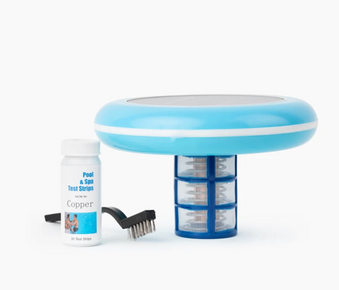
TL;DR: Water stability is the foundation of effortless pool ownership, and solar pool ionizers transform unstable, chemically volatile water into a balanced, predictable, self-regulating aquatic environment. Unlike chlorine-based systems that create constant pH fluctuations, oxidant demand swings, and chemical byproduct accumulation, ionized water maintains remarkable chemical consistency through the stable presence of copper and silver ions. This 2026 guide explores how solar ionization achieves unprecedented water stability, eliminates the chemical roller coaster of traditional pools, and creates conditions where water chemistry remains within optimal ranges for weeks with minimal intervention.
SEO Summary: 2026 guide to transforming water stability with solar pool ionizers: eliminating chemical fluctuations, maintaining consistent pH, reducing total dissolved solids, and creating self-regulating aquatic environments.
Table of Contents
- What Is Water Stability and Why It Matters
- The Chemical Roller Coaster of Traditional Pools
- How Solar Ionizers Create Chemical Stability
- pH Stability: Eliminating Constant Adjustment
- Total Dissolved Solids: Slowing the Accumulation
- Oxidant Demand: Predictable and Consistent
- Eliminating Chemical Byproducts
- Daily Practices for Maintaining Stability
- Troubleshooting: When Stability Wavers
- Conclusion & Key Takeaways
What Is Water Stability and Why It Matters
Water stability refers to the tendency of pool water chemistry to remain within optimal ranges without constant intervention. A stable pool requires fewer chemical additions, experiences fewer quality fluctuations, and provides a consistently pleasant swimming experience. Instability manifests as frequent pH adjustments, unexpected chlorine demand, recurring algae outbreaks, and water that never quite feels right.
The Dimensions of Water Stability:
- pH stability: The tendency of pH to remain within the optimal 7.4 to 7.6 range without continuous acid or base addition. pH stability is the most visible indicator of overall water stability.
- Sanitizer stability: The consistency of sanitizer levels over time. Stable sanitizer does not require daily adjustment and maintains effective levels between tests.
- Total dissolved solids stability: The rate at which dissolved minerals and chemicals accumulate. Slow accumulation means longer intervals between required water changes.
- Oxidant demand stability: Predictable, consistent demand for oxidation rather than sudden spikes following heavy use or weather events.
- Biological stability: Resistance to algae and bacterial growth without continuous chemical intervention.
Water stability matters because it directly affects every aspect of pool ownership. Stable pools require less time, less money, and less chemical handling. They provide consistently pleasant swimming experiences without the unpredictability that plagues unstable pools. They protect equipment from the corrosive effects of chemical swings. And they give owners confidence that their pool will be ready to enjoy whenever they are.
For a comprehensive overview of how solar ionization transforms the entire pool ownership experience, our guide to smarter pool ownership explores the full range of benefits enabled by water stability.
The Chemical Roller Coaster of Traditional Pools
To understand the transformation that solar ionization enables, one must first understand the inherent instability of chlorine-based sanitation. Traditional pools are characterized by constant chemical fluctuations that create a roller coaster of water quality.
The Chlorine Instability Cycle:
- Chlorine addition: Owner adds chlorine to achieve target level. Initial reading shows proper sanitation.
- Rapid dissipation: Sunlight, heat, and organic contaminants consume chlorine rapidly. Within hours, levels drop below effective range.
- Under-sanitation period: Pool operates with inadequate sanitizer. Bacteria and algae begin to multiply.
- Reactive addition: Owner tests, discovers low chlorine, and adds more. The cycle repeats.
This cycle creates constant quality swings. Water is over-sanitized immediately after chemical addition, then under-sanitized before the next addition. Swimmers experience the pool at different quality levels depending on when they enter. The pool never achieves steady-state operation.
pH Instability in Chlorine Pools:
Chlorine chemistry inherently destabilizes pH. Different forms of chlorine have different pH effects. Liquid chlorine sodium hypochlorite is highly alkaline with a pH around 13, raising pool pH with each addition. Trichlor tablets are acidic, lowering pH as they dissolve. Pool owners constantly add acid to counteract the pH rise from liquid chlorine or add base to counteract the pH drop from tablets. This acid-base tug-of-war creates continuous pH fluctuation.
Total Dissolved Solids Accumulation:
Every chemical addition leaves behind dissolved solids that accumulate over time. Chlorine adds chloride ions. pH adjusters add sodium or other ions. Algaecides add various compounds. These dissolved solids accumulate until they interfere with water chemistry, requiring partial draining and dilution typically every two to three years.
Cyanuric Acid Buildup:
Stabilized chlorine products contain cyanuric acid to protect chlorine from UV degradation. Cyanuric acid does not dissipate it accumulates steadily. When levels exceed 50 to 100 parts per million, chlorine effectiveness is dramatically reduced, forcing partial draining. This is a primary driver of water replacement in traditional pools.
Byproduct Formation:
Chlorine reacting with organic matter creates chloramines and other disinfection byproducts. These compounds accumulate in the water, causing eye irritation, skin discomfort, and the characteristic pool smell. They also contribute to total dissolved solids and may have health implications with long-term exposure.
For pools struggling with these stability challenges, our guide to balancing chemistry and reducing replacements provides strategies for transitioning to more stable alternatives.
How Solar Ionizers Create Chemical Stability
Solar pool ionizers achieve water stability through fundamentally different mechanisms than chlorine-based systems. Rather than continuously adding and losing reactive chemicals, ionizers establish a persistent ionic field that maintains itself with minimal intervention.
The Persistent Ionic Field:
Copper and silver ions, once released into pool water, remain active for extended periods. Unlike chlorine which degrades rapidly, ions persist in the water column indefinitely until they are removed by filtration or precipitate out of solution. This persistence creates a stable baseline of sanitation that does not fluctuate throughout the day.
Self-Regulating Ion Release:
Modern ionizer controllers with temperature compensation automatically adjust output based on water temperature. When water warms and biological demand increases, output increases. When water cools, output decreases. This self-regulation maintains consistent copper levels without manual adjustment, creating stability that reactive chemical addition cannot match.
No Chemical Consumption by Organics:
Chlorine is consumed by every organic contaminant it encounters. Copper ions are not consumed they remain active after neutralizing bacteria or algae. The same copper ion can sanitize multiple organisms over its lifetime. This dramatically reduces the rate at which sanitizer is depleted, contributing to stability.
Minimal Chemical Input:
An ionized pool receives 80 to 90 percent less chemical input than a chlorinated pool. With fewer chemicals added, there are fewer opportunities for chemical interactions and imbalances. The water chemistry is disturbed less frequently and recovers more quickly.
Predictable Copper Consumption:
Copper consumption follows predictable patterns based on water temperature, bather load, and filtration efficiency. Once an owner understands their pool's patterns, copper levels become highly predictable. This predictability enables proactive adjustment rather than reactive correction.
The stability enabled by solar ionization transforms pool ownership from constant firefighting to occasional verification. Revolutionary pool care features explores the technologies that make this stability possible.
pH Stability: Eliminating Constant Adjustment
pH stability is the most noticeable benefit of solar ionization for most pool owners. The constant pH adjustment required by chlorine pools becomes a distant memory.
Why pH Stays Stable in Ionized Pools:
- No chlorine chemistry: Chlorine additions directly affect pH. Liquid chlorine raises pH; trichlor tablets lower it. Ionizers add no chemicals that alter pH, eliminating this primary source of pH fluctuation.
- No continuous acid demand: Salt chlorine generators produce sodium hydroxide as a byproduct, constantly raising pH and requiring continuous acid addition. Ionizers produce no such byproducts.
- Reduced aeration effects: While aeration from waterfalls and fountains still affects pH, the effect is less pronounced because there is no chlorine off-gassing to compound the pH shift.
- Stable alkalinity: With fewer chemical additions, alkalinity remains more stable. Stable alkalinity buffers pH against swings, creating a self-reinforcing stability cycle.
Quantified pH Stability:
- Traditional chlorine pool: pH typically drifts 0.2 to 0.4 units per week, requiring acid addition every 3 to 7 days.
- Salt chlorine generator pool: pH rises continuously due to sodium hydroxide production, requiring acid addition every 2 to 4 days.
- Solar ionized pool: pH typically drifts 0.1 to 0.2 units per month, requiring adjustment every 4 to 8 weeks.
Maintaining pH Stability:
While ionized pools are inherently pH stable, certain practices enhance this stability:
- Maintain proper alkalinity: Alkalinity between 80 and 120 parts per million buffers pH effectively. Alkalinity below 60 ppm allows pH to swing; alkalinity above 120 ppm can cause pH drift.
- Monitor source water: Fill water with high alkalinity or extreme pH can destabilize the pool. Test fill water and adjust before adding large volumes.
- Manage aeration: Waterfalls, fountains, and spillovers increase pH by driving off carbon dioxide. If pH rises slowly, this is normal. If rise accelerates, reduce aeration or increase monitoring frequency.
- Test weekly, adjust monthly: With ionized pools, weekly pH testing confirms stability. Adjustments, when needed, are typically monthly rather than weekly.
The dramatic improvement in pH stability is one of the most frequently cited benefits by ionizer owners. For a deeper understanding of water chemistry fundamentals, our chemical-free pool maintenance guide provides comprehensive chemistry management protocols.
Total Dissolved Solids: Slowing the Accumulation
Total dissolved solids TDS represent everything dissolved in pool water except the water itself. As TDS accumulates, water becomes harder to manage, clarity may decline, and eventually draining and refilling become necessary. Solar ionization dramatically slows TDS accumulation.
Sources of TDS in Traditional Pools:
- Chlorine products: Every pound of chlorine adds approximately 0.9 pounds of dissolved solids chloride ions and associated sodium or calcium.
- pH adjusters: Acid additions add chloride ions; base additions add sodium or other ions.
- Algaecides and clarifiers: Various chemical compounds accumulate over time.
- Stabilizer cyanuric acid: CYA accumulates with no degradation pathway, requiring dilution.
- Calcium from hardness management: Calcium chloride additions increase TDS directly.
Sources of TDS in Ionized Pools:
- Copper and silver ions: Minimal addition approximately 200 to 500 grams annually, negligible contribution to TDS.
- pH adjusters: Reduced by 50 to 70 percent compared to traditional pools.
- Occasional shock treatments: Minimal compared to weekly shocking in traditional pools.
- No CYA accumulation: Ionized pools do not require cyanuric acid; any existing CYA gradually dilutes.
- Fill water minerals: The primary source of TDS in ionized pools, as in all pools.
Quantified TDS Accumulation:
- Traditional chlorine pool: TDS increases 200 to 300 parts per million annually, requiring partial draining every 2 to 3 years.
- Salt chlorine generator pool: TDS increases 300 to 500 parts per million annually due to continuous salt addition, requiring more frequent dilution.
- Solar ionized pool: TDS increases 30 to 50 parts per million annually, extending drain intervals to 8 to 12 years or longer.
TDS Management Strategies:
- Source water management: If fill water has high TDS, consider using filtered or softened water for top-ups. A whole-house or pool-dedicated water softener can dramatically reduce TDS accumulation.
- Minimize chemical additions: Every chemical added increases TDS. Maintain optimal copper levels to minimize need for supplemental chemicals.
- Regular testing: Test TDS annually to track accumulation rate and predict when dilution may eventually be needed.
- Rainwater harvesting: Rainwater has very low TDS and can be used for top-ups, effectively diluting accumulated solids.
The dramatically slower TDS accumulation in ionized pools represents significant water conservation and reduced maintenance over the pool's lifetime. For pools with high source water TDS, our eco-pool beginner's guide provides additional strategies for managing water quality.
Oxidant Demand: Predictable and Consistent
Oxidant demand refers to the rate at which sanitizer is consumed by organic contaminants. In traditional pools, oxidant demand is highly variable, spiking after heavy use, rain, or temperature changes. In ionized pools, oxidant demand becomes predictable and consistent.
Why Oxidant Demand Differs:
- Sanitizer not consumed: Copper ions sanitize without being consumed. A copper ion that inactivates a bacterium remains active and can sanitize additional organisms. Chlorine is consumed in the reaction and must be continuously replenished.
- Continuous action: The ionic field provides continuous sanitation regardless of demand. When organic load increases, the existing ions continue working they do not need to be replenished.
- Predictable consumption patterns: Copper is slowly removed by filtration and precipitation, not consumed by organic matter. Removal rates are predictable based on filtration efficiency and water chemistry.
Quantified Oxidant Demand:
- Traditional pool: Chlorine demand varies from 2 to 5 ppm per day depending on conditions, requiring daily or every-other-day testing and adjustment.
- Ionized pool: Copper removal rate 0.02 to 0.05 ppm per day, requiring weekly testing and occasional adjustment.
Managing Oxidant Demand:
While ionized pools have inherently stable oxidant demand, certain practices optimize performance:
- Maintain target copper: Consistent copper levels ensure consistent sanitation capacity. Test weekly and adjust output as needed.
- Supplemental oxidation for organics: Non-living organic contaminants like sunscreen and body oils are not oxidized by copper ions. Occasional non-chlorine shock after heavy use maintains water quality without affecting copper stability.
- Enzyme treatments: Enzyme products break down organic compounds, reducing their impact on water quality without affecting oxidant demand.
- Monitor after events: After heavy rain, parties, or extended heat waves, test copper and adjust output temporarily to account for increased demand.
The predictability of oxidant demand in ionized pools transforms pool management from reactive crisis response to proactive, scheduled maintenance. Our optimized daily pool management checklists provide practical routines that leverage this predictability.
Eliminating Chemical Byproducts
Chemical byproducts are an unavoidable consequence of chlorine sanitation. Their elimination in ionized pools represents a fundamental transformation of water quality.
Chloramines The Primary Byproduct:
Chloramines form when chlorine reacts with ammonia and nitrogen-containing compounds from sweat, urine, and other organic matter. These compounds are responsible for:
- The characteristic pool smell that clings to swimmers and hangs in the air
- Red, burning eyes that make swimming uncomfortable
- Respiratory irritation, particularly problematic for asthma sufferers
- Skin dryness and irritation
- Faded swimwear and bleached hair
Ionized water produces zero chloramines. Without chlorine, there is no reaction to form these irritating byproducts. The air around an ionized pool smells fresh and clean. Swimmers emerge with clear eyes and comfortable skin.
Trihalomethanes and Other Disinfection Byproducts:
Chlorine also reacts with organic matter to form trihalomethanes THMs and other disinfection byproducts DBPs. These compounds have been linked to various health concerns with long-term exposure. Ionized water produces no THMs or DBPs.
Chemical Residue Elimination:
Traditional pool chemicals leave residues on surfaces, in equipment, and on swimmers. Chlorine residue can be felt on skin after swimming. Chemical films can form on pool surfaces, affecting appearance and potentially degrading materials over time. Ionized water leaves no such residue.
Equipment Protection:
Chemical byproducts are corrosive to pool equipment. Chloramines attack seals, gaskets, and metal components. The aggressive oxidative environment of chlorine pools significantly shortens equipment life. Ionized water is non-corrosive, protecting heaters, pumps, filters, and lighting from chemical degradation.
Environmental Impact:
When traditional pools are backwashed or drained, chemical byproducts enter local waterways. Chloramines, THMs, and other DBPs can harm aquatic life. Ionized pools discharge water with minimal environmental impact, as copper and silver concentrations are well below drinking water standards.
The elimination of chemical byproducts transforms not just water quality but the entire pool environment. For families with young children, swimmers with sensitivities, or anyone who values a natural swimming experience, this transformation is profound. Our guide to family-friendly pools with solar pool ionizer explores these benefits in depth.
Daily Practices for Maintaining Stability
While solar ionizers create inherently stable water, certain daily practices help maintain and enhance that stability. These practices take minimal time but provide maximum benefit.
Visual Clarity Assessment:
Begin each day with a 30-second visual assessment. Walk to the deep end and observe water clarity. Crystal-clear water indicates stable chemistry and effective filtration. Any haze or cloudiness signals developing instability that should be investigated.
pH Quick Check:
Test pH daily until you understand your pool's pattern. Once stability is confirmed, reduce to two to three times weekly. pH is the most sensitive indicator of developing instability. A pH reading outside the optimal 7.4 to 7.6 range should be investigated promptly.
Solar Panel Verification:
Glance at your solar panel to ensure it is clean and unobstructed. Adequate solar production maintains copper levels. A shaded or dirty panel will reduce ion output, potentially allowing copper levels to drift below target.
Flow Confirmation:
Verify that water is flowing through the ionizer chamber. Flow indicators, hand warmth, or controller displays confirm operation. Without flow, ion production stops and copper levels will gradually decline.
Pump Schedule Verification:
Confirm that your pump is operating according to schedule. Inadequate circulation allows stagnant zones where stability can be compromised.
These daily practices require less than two minutes but provide early warning of developing instability. Our step-by-step pool care workflow using solar pool ionzer integrates these practices into a comprehensive maintenance routine.
Troubleshooting: When Stability Wavers
Even the most stable pools occasionally experience temporary instability. This systematic approach helps identify and resolve issues quickly.
Symptom: pH Drifting Rapidly
- Check alkalinity: Low alkalinity below 60 ppm allows pH to swing wildly. Raise alkalinity to 80 to 120 ppm using sodium bicarbonate.
- Check for aeration sources: New waterfalls, fountains, or spillways can increase aeration and pH rise. Reduce operation or accept slightly faster pH drift.
- Check source water: Recent fill water additions may have different chemistry. Test source water and adjust pool accordingly.
- Check for chemical contamination: Has anyone added chemicals without your knowledge? Chlorine or algaecides can destabilize pH.
Symptom: Copper Levels Fluctuating
- Check solar panel: Inconsistent sunlight or panel soiling reduces ion production. Clean panel and verify unobstructed exposure.
- Check flow: Intermittent pump operation reduces ion distribution. Verify pump schedule and flow switch operation.
- Check for dilution: Recent heavy rain or fill water addition may have diluted copper. Test and adjust output temporarily.
- Check for precipitation: High pH above 7.8 can cause copper to precipitate out of solution. Lower pH to 7.4 to 7.6.
Symptom: Clarity Declining Despite Stable Copper
- Check filter pressure: High pressure indicates filter loading. Clean or backwash filter.
- Check pump runtime: Inadequate filtration allows particles to accumulate. Increase runtime temporarily.
- Check for phosphates: Phosphates above 500 ppb can fuel algae growth that affects clarity. Test and treat.
- Check for organic accumulation: After heavy use, consider non-chlorine shock to oxidize accumulated organics.
Symptom: Algae Appearing Despite Stable Copper
- Check copper level: Confirm copper is at least 0.2 ppm. If below target, increase output.
- Check phosphates: Phosphates provide algae food regardless of copper. Test and treat aggressively.
- Check for dead spots: Areas with poor circulation may have localized copper depletion. Improve circulation or brush affected areas.
- Check for chlorine interference: If using hybrid system with chlorine backup, high chlorine can oxidize copper. Reduce chlorine output.
Symptom: Staining Suspected
- Check copper level: Copper above 0.5 ppm increases staining risk. Reduce output immediately.
- Check pH: High pH above 7.8 promotes copper precipitation. Lower pH to 7.4 to 7.6.
- Test for metals: Iron or manganese in fill water can cause staining. Test source water.
- Apply sequestering agent: If staining has occurred, sequestering agent can bind metals and prevent further deposition.
For comprehensive troubleshooting including copper-specific issues, our copper staining prevention and remediation guide provides detailed protocols.
Conclusion & Key Takeaways
Transforming water stability through a solar pool ionizer is not about occasional improvement it is about fundamentally changing how pool water behaves. The chemical roller coaster of traditional pools constant pH swings, unpredictable oxidant demand, byproduct accumulation, and continuous chemical addition gives way to a stable, predictable, self-regulating aquatic environment.
This transformation delivers practical benefits that touch every aspect of pool ownership. Less time testing and adjusting. Less money spent on chemicals. Less water wasted through frequent draining. Less equipment damage from corrosive chemistry. And a swimming experience that is consistently pleasant rather than unpredictably variable.
The technology is proven, the principles are established, and the results are documented. Solar pool ionizers transform unstable, chemically volatile water into a balanced, predictable, self-regulating environment that delivers exceptional quality with minimal intervention.
Key Takeaways
- Water stability is the foundation of effortless ownership: Stable pools require less time, less money, and provide consistently pleasant swimming experiences without unpredictability.
- Traditional pools are inherently unstable: Chlorine chemistry creates constant fluctuations in pH, sanitizer levels, and water quality, requiring continuous intervention.
- Solar ionizers create stability through persistence: Copper and silver ions remain active indefinitely, creating a stable sanitation baseline that does not fluctuate.
- pH stability improves dramatically: Ionized pools require pH adjustment every 4 to 8 weeks compared to every 2 to 7 days for chlorinated pools.
- TDS accumulation slows by 80 to 90 percent: Drain intervals extend from 2 to 3 years to 8 to 12 years or longer, conserving thousands of gallons of water.
- Oxidant demand becomes predictable: Copper removal follows consistent patterns based on filtration and precipitation, not variable organic consumption.
- Chemical byproducts are eliminated: No chloramines, no THMs, no corrosive residues means better swimmer experience and longer equipment life.
- Daily practices maintain stability: Visual assessment, pH checks, solar panel verification, and flow confirmation take minimal time but provide early warning of developing issues.
- Systematic troubleshooting resolves instability: When stability wavers, a logical progression checking pH, alkalinity, copper, filtration, and phosphates identifies root causes efficiently.
- The transformation is permanent: Once established, the stability of ionized water persists as long as copper levels are maintained within target range. Our guide to choosing a solar pool ionizer helps select the system that will deliver this transformation.
Water stability is not merely a technical characteristic it is the foundation of a better pool ownership experience. Solar pool ionizers deliver this stability reliably, affordably, and sustainably. The transformation is available to every pool owner ready to leave the chemical roller coaster behind.