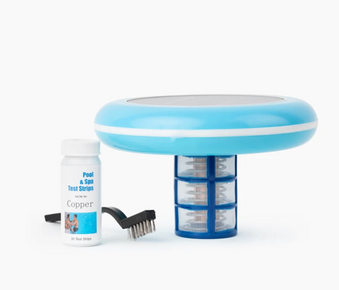
TL;DR: The choice between solar pool ionizers and traditional sanitation systems in 2026 is not a simple matter of personal preference it is a decision between outdated technology and modern innovation, between constant maintenance and autonomous operation, between chemical dependency and chemical freedom. Traditional systems including chlorine, salt chlorine generators, bromine, and ozone each have distinct characteristics, but all share fundamental limitations that solar ionization overcomes. This comprehensive comparison examines how solar ionizers stack up against every major sanitation alternative across the metrics that matter most: water quality, operating cost, environmental impact, swimmer comfort, and ownership experience.
SEO Summary: 2026 comparison of solar pool ionizers vs traditional systems: chlorine, salt systems, bromine, and ozone compared across water quality, cost, maintenance, environmental impact, and swimmer experience.
Table of Contents
- The Comparison Framework: What Matters Most
- Solar Ionizer vs Traditional Chlorine
- Solar Ionizer vs Salt Chlorine Generators
- Solar Ionizer vs Bromine Systems
- Solar Ionizer vs Ozone Systems
- Solar Ionizer vs UV Systems
- Cost Comparison: Initial and Operating
- Maintenance Comparison: Time and Effort
- Swimmer Experience Comparison
- Conclusion & Key Takeaways
The Comparison Framework: What Matters Most
Comparing pool sanitation systems requires evaluating them across multiple dimensions. A system that excels in one area may fall short in another. Understanding these trade-offs is essential for making an informed decision.
- Water quality: The fundamental purpose of any sanitation system is to maintain safe, clear, inviting water. Metrics include bacteria and algae control, water clarity, chemical byproduct formation, and consistency of results.
- Swimmer comfort: How does the water feel? Does it irritate eyes or skin? Does it have unpleasant odors? Is it comfortable for sensitive individuals including children, the elderly, and those with respiratory conditions?
- Operating cost: What are the ongoing expenses for chemicals, energy, and replacement parts? How do these costs compare over a 5-year or 10-year ownership period?
- Maintenance effort: How much time and attention does the system require daily, weekly, and seasonally? Is maintenance straightforward or complex? Does it require professional service?
- Environmental impact: What are the system's effects on resource consumption, chemical manufacturing, plastic waste, and ecosystem health? Does it align with sustainability goals?
- Equipment longevity: How long do system components last before requiring replacement? What is the total cost of ownership including equipment replacement?
- Reliability and predictability: Does the system perform consistently or are there unexpected failures, outbreaks, or quality fluctuations? Can you trust it to maintain water quality when you're away?
- Installation complexity: How difficult is it to install the system? Does it require professional installation, electrical work, or plumbing modifications?
Solar pool ionizers have matured to the point where they compete favorably with traditional systems across every one of these dimensions. Our performance enhancement resource provides detailed data on how ionizers measure up against these metrics.
Solar Ionizer vs Traditional Chlorine
Traditional chlorine systems using tablets, granules, or liquid remain the most common pool sanitation method. Comparing them to solar ionization reveals fundamental differences in every aspect of operation.
- Sanitation mechanism: Chlorine works through chemical oxidation, reacting with and destroying contaminants. This process consumes chlorine, requiring constant replenishment. Copper ions work through biochemical disruption, remaining active indefinitely after release.
- Water quality: Chlorine produces chloramines as byproducts, causing eye irritation and the characteristic pool smell. Ionized water produces no chloramines, resulting in consistently comfortable swimming. Clarity is superior in ionized pools due to ionic flocculation.
- Chemical consumption: Chlorine pools consume 200 to 300 pounds of chemicals annually. Ionized pools reduce this by 80 to 90 percent, using only occasional pH adjusters and non-chlorine shock.
- pH stability: Chlorine additions constantly affect pH, requiring frequent adjustment. Liquid chlorine raises pH; trichlor tablets lower it. Ionized water maintains stable pH, drifting slowly and predictably.
- Cyanuric acid: Chlorine requires cyanuric acid for UV protection, which accumulates and necessitates periodic draining. Ionized pools use no cyanuric acid, eliminating this maintenance burden.
- Energy consumption: Chlorine systems themselves consume no direct energy, but they require extensive pump runtime for chemical distribution. Ionized pools enable 40 to 60 percent pump runtime reduction.
- Equipment longevity: Chlorine is corrosive to pumps, heaters, and pool surfaces, shortening equipment life by 30 to 50 percent. Ionized water is non-corrosive, extending equipment life significantly.
- Storage and handling: Chlorine requires careful storage away from children, pets, and incompatible chemicals. Ionized pools eliminate 80 to 90 percent of chemical storage.
The comparison overwhelmingly favors solar ionization for owners seeking reduced maintenance, lower costs, and a better swimming experience. Our low-chemical pools resource article documents the experience of thousands of owners who have made the switch.
Solar Ionizer vs Salt Chlorine Generators
Salt chlorine generators (salt systems) are often presented as a low-maintenance alternative to traditional chlorine. While they eliminate chlorine purchasing and handling, they share many of chlorine's fundamental limitations and introduce new ones.
- Sanitation mechanism: Salt systems convert dissolved salt into chlorine through electrolysis. The water still contains chlorine, just generated on-site rather than added manually. Ionizers use no chlorine at all, relying on copper and silver ions.
- Water quality: Salt water is softer than traditional chlorinated water but still contains chlorine and produces chloramines. Swimmers report less irritation than traditional chlorine but more than ionized water. Ionized water has no chlorine at all.
- Chemical consumption: Salt systems require regular salt addition typically 200 to 400 pounds annually and occasional acid to control pH rise. Ionizers use no salt and minimal acid.
- pH stability: Salt systems continuously produce sodium hydroxide as a byproduct, causing pH to rise constantly. Owners add acid every few days to compensate. Ionized water maintains stable pH with monthly adjustments.
- Energy consumption: Salt cells consume 200 to 500 watts during operation, adding 500 to 1,500 kilowatt-hours annually to energy bills. Ionizers consume zero grid power.
- Equipment longevity: Salt systems are corrosive to stone, metal fixtures, and equipment. Cell replacement costs $700 to $900 every 3 to 7 years. Ionizers have no salt cell and cause no corrosion.
- Total dissolved solids: Salt systems continuously add dissolved solids, requiring periodic dilution through partial draining. TDS accumulation is 80 to 90 percent slower in ionized pools.
- Installation: Salt systems require electrical connection and professional installation in many areas. Ionizers are typically DIY-friendly with no electrical connection required.
For owners considering salt systems, a hybrid approach combining an ionizer with a low-output salt generator offers the best of both worlds. Our pool salt system integration guide explains how to achieve 90 to 95 percent chemical reduction while retaining oxidation capability.
Solar Ionizer vs Bromine Systems
Bromine is an alternative halogen sanitizer commonly used in spas and some pools. Comparing bromine to solar ionization reveals both similarities and important differences.
- Sanitation mechanism: Like chlorine, bromine works through oxidation and is consumed in the process. It produces bromamines rather than chloramines, which have less odor but can still cause irritation. Ionizers use non-consumed copper ions.
- Temperature performance: Bromine remains effective at higher temperatures than chlorine, making it popular for spas. Copper ions also perform well at elevated temperatures, with modern controllers providing temperature compensation.
- Chemical consumption: Bromine tablets are typically more expensive than chlorine, and consumption is similar. Ionizers reduce chemical costs by 80 to 90 percent.
- pH stability: Bromine has less effect on pH than chlorine, but pH still requires management. Ionized water offers superior pH stability.
- Equipment impact: Bromine is less corrosive than chlorine but still more aggressive than ionized water. Equipment life is reduced compared to ionized pools.
- Cost: Bromine is typically the most expensive chemical sanitation option. Ionizers have higher initial cost but lower long-term operating expenses.
- Spa applications: For spas, bromine remains popular, but ionizers with temperature compensation are increasingly common. Hybrid spa systems combining ionizers with minimal bromine offer reduced chemical use.
Bromine remains a viable option for specific applications, particularly spas, but solar ionization offers superior economics and swimmer experience for most pools. Our reinventing backyard pools article discusses how modern ionizers are increasingly used in spa applications as well.
Solar Ionizer vs Ozone Systems
Ozone systems provide powerful oxidation but lack residual sanitation. Comparing them to solar ionization reveals complementary strengths rather than direct competition.
- Sanitation mechanism: Ozone is a powerful oxidizer that destroys contaminants on contact. However, it has a very short half-life and provides no residual protection. Ionizers provide continuous residual sanitation throughout the pool.
- Residual protection: Ozone systems require a secondary sanitizer typically chlorine or bromine to maintain residual protection. Ionizers alone provide complete residual sanitation.
- Water quality: Ozone produces no chemical byproducts and can achieve exceptional water clarity. Combined with an ionizer, the combination is powerful: ozone oxidizes organics, ions provide residual sanitation.
- Energy consumption: Ozone generators consume 100 to 300 watts, adding to energy costs. Ionizers consume zero grid power.
- Installation complexity: Ozone systems require professional installation and regular maintenance of UV lamps or corona discharge cells. Ionizers are simpler to install and maintain.
- Cost: Ozone systems have higher initial costs than ionizers and require lamp replacement every 1 to 2 years. Ionizer electrode replacement is every 3 to 5 years at lower cost.
- Best application: Ozone is excellent for commercial pools or those with high bather loads where oxidation demand is high. For residential pools, an ionizer alone is often sufficient, or an ionizer-ozone hybrid can be considered.
Ozone and ionization are complementary technologies that work well together. Our smarter water systems guide discusses hybrid configurations that leverage the strengths of multiple technologies.
Solar Ionizer vs UV Systems
Ultraviolet systems provide pathogen inactivation without chemicals but, like ozone, lack residual protection. Comparing UV to ionization highlights similar complementarity.
- Sanitation mechanism: UV light damages microorganism DNA, preventing replication. It provides no residual protection and only treats water passing through the UV chamber. Ionizers provide continuous protection throughout the pool.
- Residual requirement: UV systems must be paired with a residual sanitizer typically chlorine. Ionizers can serve as that residual sanitizer, creating a powerful combination.
- Water quality: UV produces no chemical byproducts and does not affect water chemistry. Combined with an ionizer, the water remains chemical-free while being continuously protected.
- Energy consumption: UV lamps consume 100 to 300 watts and require annual replacement. Ionizers consume zero grid power and have longer-lived components.
- Effectiveness: UV is highly effective against microorganisms but does nothing for algae or non-living contaminants. Ionizers address both living and non-living through different mechanisms.
- Installation: UV systems require plumbing integration and electrical connection. Ionizers are simpler to install, especially for retrofits.
- Cost: UV systems have moderate initial costs but ongoing lamp replacement expenses. Ionizers have lower operating costs over time.
Like ozone, UV is an excellent complement to ionization rather than a competitor. For pools seeking maximum protection, an ionizer-UV hybrid offers multiple barriers to contamination. Our next-generation pool power resource explores these integrated approaches.
Cost Comparison: Initial and Operating
Cost is often the deciding factor in technology selection. Comparing total cost of ownership over 5 and 10 years reveals the economic advantages of solar ionization.
- Initial investment:
- Traditional chlorine: $200 to $500 for basic feeder, minimal equipment
- Salt chlorine generator: $1,200 to $2,000 plus installation
- Ozone system: $1,500 to $3,000 plus installation
- UV system: $1,000 to $2,500 plus installation
- Solar pool ionizer: $900 to $1,500 DIY installation
- Annual operating costs (residential pool):
- Traditional chlorine: $600 to $900 chemicals, $300 to $500 pump energy
- Salt chlorine generator: $200 to $400 salt/acid, $500 to $700 pump energy plus cell amortization
- Ozone system: $100 to $200 chemicals, $500 to $700 pump energy plus lamp replacement
- UV system: $100 to $200 chemicals, $500 to $700 pump energy plus lamp replacement
- Solar pool ionizer: $80 to $150 chemicals, $100 to $200 pump energy, $40 electrode amortization
- 5-year total cost:
- Traditional chlorine: $4,500 to $7,000
- Salt chlorine generator: $4,000 to $6,000
- Ozone system: $4,500 to $7,500
- UV system: $4,000 to $6,500
- Solar pool ionizer: $1,500 to $2,500
- 10-year total cost:
- Traditional chlorine: $9,000 to $14,000
- Salt chlorine generator: $8,000 to $12,000
- Ozone system: $9,000 to $15,000
- UV system: $8,000 to $13,000
- Solar pool ionizer: $3,000 to $5,000
The cost advantage of solar ionization is substantial and grows over time. Our investment strategies resource provides detailed financial analysis and payback calculations.
Maintenance Comparison: Time and Effort
Maintenance requirements vary dramatically between systems, affecting both the time commitment and the ownership experience.
- Daily tasks:
- Traditional chlorine: Test chlorine and pH (10 to 15 minutes)
- Salt chlorine generator: Test chlorine and pH (10 to 15 minutes)
- Ozone system: Test residual sanitizer and pH (10 to 15 minutes)
- UV system: Test residual sanitizer and pH (10 to 15 minutes)
- Solar pool ionizer: Visual check, optional pH test (60 seconds)
- Weekly tasks:
- Traditional chlorine: Shock treatment, alkalinity test, calcium test
- Salt chlorine generator: Acid addition (2 to 3 times weekly), cell inspection
- Ozone system: Shock treatment, equipment check
- UV system: Shock treatment, lamp inspection
- Solar pool ionizer: Copper test, pH test, filter pressure check (5 to 7 minutes)
- Monthly tasks:
- Traditional chlorine: Equipment inspection, acid wash as needed
- Salt chlorine generator: Cell cleaning, acid wash
- Ozone system: Equipment maintenance, lamp cleaning
- UV system: Lamp cleaning, equipment check
- Solar pool ionizer: Alkalinity test, electrode inspection (15 minutes)
- Annual tasks:
- Traditional chlorine: Equipment servicing, potential repairs
- Salt chlorine generator: Cell replacement every 3 to 7 years
- Ozone system: Lamp replacement every 1 to 2 years
- UV system: Lamp replacement annually
- Solar pool ionizer: Electrode replacement every 3 to 5 years
- Seasonal tasks:
- All chlorine-based systems: Complex opening and closing procedures with significant chemical handling
- Solar pool ionizer: Simplified opening and closing with minimal chemical handling
The maintenance advantage of solar ionization is clear: less frequent tasks, simpler procedures, and fewer emergencies. Our predictable pool maintenance resource provides detailed comparison of maintenance requirements.
Swimmer Experience Comparison
The ultimate test of any pool system is the experience of those who swim in it. Solar ionization delivers a superior experience that must be felt to be fully appreciated.
- Water feel:
- Chlorine pools: Water feels chemically treated, can cause skin tightness
- Salt pools: Softer than chlorine but still chemical feel
- Bromine pools: Similar to chlorine, sometimes described as "softer"
- Ozone/UV with chlorine: Same feel as chlorine due to residual sanitizer
- Ionized pools: Silky, soft, natural feel often compared to spring water
- Eye irritation:
- Chlorine pools: Common, often severe with prolonged exposure
- Salt pools: Reduced but still present due to chloramines
- Bromine pools: Less than chlorine but can still occur
- Ozone/UV with chlorine: Same as chlorine
- Ionized pools: None reported by swimmers
- Skin effects:
- Chlorine pools: Dryness, irritation, can exacerbate eczema
- Salt pools: Less drying but still some effect
- Bromine pools: Similar to chlorine
- Ionized pools: No drying, skin feels moisturized after swimming
- Odor:
- Chlorine pools: Distinctive chloramine smell, clings to hair and skin
- Salt pools: Reduced but still present
- Bromine pools: Different odor, still noticeable
- Ionized pools: No odor, air feels fresh and clean
- Hair and swimsuit effects:
- Chlorine pools: Fading, damage, discoloration
- Salt pools: Reduced but still some effect
- Ionized pools: No damage, colors remain vibrant
- Respiratory comfort:
- Chlorine pools: Can trigger asthma, respiratory irritation
- Salt pools: Reduced risk but still present
- Ionized pools: No respiratory effects, safe for sensitive individuals
The swimmer experience advantage is often the deciding factor for families with children, sensitive individuals, or anyone who simply wants to enjoy their pool without discomfort. Our family-friendly pools article documents the experiences of families who have made the switch.
Conclusion & Key Takeaways
The comparison between solar pool ionizers and traditional sanitation systems in 2026 reveals a clear pattern: ionizers outperform every conventional alternative across the metrics that matter most to pool owners. They deliver superior water quality with lower operating costs, less maintenance, better swimmer comfort, and reduced environmental impact.
Traditional systems are not without merit they are familiar, widely available, and understood by every pool professional. But familiarity is not the same as superiority. The limitations of chlorine-based sanitation chemical volatility, byproduct formation, equipment corrosion, constant maintenance are inherent to the technology itself, not shortcomings of implementation.
Solar ionization addresses these limitations at their source. By replacing reactive chemical oxidation with persistent mineral ionization, it eliminates the fundamental problems that have defined pool ownership for generations. The result is a pool that is cleaner, more comfortable, and dramatically easier to maintain.
Key Takeaways
- Solar ionizers outperform traditional chlorine: Better water quality, 80 to 90 percent chemical reduction, no chloramines, stable pH, extended equipment life, and superior swimmer experience. Our low-chemical pools resource documents these advantages.
- Salt systems share chlorine's limitations: Despite eliminating chlorine handling, salt systems still produce chlorine, cause pH rise, consume significant energy, and require expensive cell replacement. Ionizers avoid all these issues.
- Bromine is expensive and still chemical: Higher chemical costs, similar maintenance requirements, and continued byproduct formation make bromine less attractive than ionization for most applications.
- Ozone and UV are complementary, not competitive: These technologies excel at oxidation but lack residual protection. Combined with ionizers, they create powerful hybrid systems.
- Cost advantage is substantial: Over 5 years, solar ionization saves $2,000 to $5,000 compared to traditional systems. Over 10 years, savings exceed $5,000 to $10,000.
- Maintenance requirements are dramatically lower: Daily tasks drop from 15 minutes to 60 seconds. Weekly shocking is eliminated. Chemical handling nearly disappears.
- Swimmer experience is transformed: Silky water, no eye irritation, no odor, no skin dryness, and respiratory comfort make ionized pools genuinely enjoyable for everyone.
- Equipment life extends significantly: Pumps, heaters, filters, and surfaces last 30 to 50 percent longer in the non-corrosive environment of ionized water.
- Environmental impact is reduced: Lower chemical manufacturing, less plastic waste, reduced energy consumption, and water conservation make ionizers the sustainable choice.
- The choice is clear: For new pool construction or existing pool retrofits, solar pool ionizers represent the most advanced, cost-effective, and enjoyable sanitation technology available in 2026. Our selection guide helps you choose the right system for your specific situation.
The era of accepting chlorine's limitations as inevitable is ending. Solar pool ionizers offer a proven, practical, and superior alternative. The only question is whether you will continue managing your pool the old way or embrace the technology that is transforming pool ownership for thousands of satisfied owners.