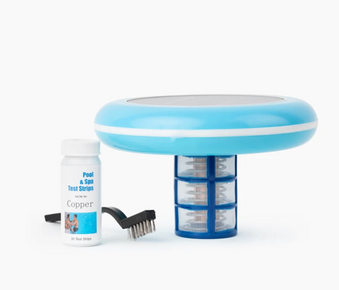
TL;DR: Smarter water systems represent the convergence of intelligent automation, real-time monitoring, and predictive analytics in pool management. Solar pool ionizers are the foundation of these smarter systems, providing stable, predictable chemistry that enables sophisticated control. From AI-powered controllers that learn your pool's behavior to closed-loop sensors that continuously adjust water chemistry, the technology available in 2026 transforms pool ownership from reactive maintenance to proactive management. This guide explores how solar pool ionizers integrate with modern automation, sensors, and smart home platforms to create truly intelligent water systems.
SEO Summary: 2026 guide to smarter water systems with solar pool ionizers: AI-powered control, real-time monitoring, predictive analytics, smart home integration, and closed-loop chemistry automation.
Table of Contents
- The Rise of Intelligent Pool Water Systems
- AI-Powered Controllers and Predictive Analytics
- Real-Time Water Chemistry Monitoring
- Closed-Loop Chemistry Management
- Smart Home and Voice Control Integration
- Predictive Maintenance and Self-Diagnostics
- Intelligent Energy Optimization
- Remote Management and Data Analytics
- Advanced Sensor Technology for Water Systems
- Conclusion & Key Takeaways
The Rise of Intelligent Pool Water Systems
Pool water management has historically been a reactive discipline. Test the water, interpret the results, add chemicals, wait, retest. This cycle of measure and respond defined pool ownership for generations. The concept of a smarter water system one that anticipates problems, automates responses, and continuously optimizes itself seemed like science fiction.
The year 2026 marks the arrival of truly intelligent pool water systems. These systems do not merely respond to conditions they predict them. They do not merely follow schedules they optimize them. They do not merely report data they learn from it.
- From reactive to predictive: Traditional systems react to problems after they occur. Smarter systems analyze trends, weather forecasts, and usage patterns to anticipate issues before they affect water quality. A predictive system might detect early indicators of algae development and increase sanitation days before visible algae appear.
- From manual to autonomous: Where pool owners once performed daily tests and adjustments, smarter systems handle these tasks automatically. Sensors continuously monitor water chemistry, and controllers adjust treatment in real time. The owner's role shifts from operator to supervisor.
- From isolated to integrated: Smarter water systems do not operate in isolation. They communicate with pumps, heaters, lighting, and home automation platforms. They respond to weather forecasts, coordinate with energy management systems, and provide visibility from anywhere in the world.
- From generic to personalized: These systems learn the unique characteristics of your pool. They understand how your specific water responds to temperature changes, bather load, and seasonal transitions. Over time, they become increasingly optimized for your particular installation.
Solar pool ionizers are the foundation upon which these smarter water systems are built. Their stable, predictable chemistry provides the reliable platform that sophisticated automation requires. Without this stability, the volatility of chlorine would make many of these advances impractical. Our article on how pool technology advances with solar ionizers explores this foundational role in greater depth.
AI-Powered Controllers and Predictive Analytics
Artificial intelligence has entered the pool equipment room, transforming controllers from simple timers into learning systems that continuously improve their understanding of your pool.
- Pattern recognition capabilities: AI-powered controllers analyze historical data to identify patterns in your pool's behavior. They learn how quickly copper is consumed at different water temperatures. They understand how your pool responds to rain events, bather load, and seasonal changes. They recognize the subtle early indicators of developing problems before those problems become visible.
- Predictive sanitation logic: Rather than simply responding to current copper levels, AI controllers predict future demand based on forecasted conditions. If a heat wave is predicted, the system increases output preemptively. If heavy rain is forecast, it strengthens the ionic field before contaminants arrive. This predictive capability maintains water quality through events that reactive systems would only address after the fact.
- Continuous learning algorithms: The AI algorithms improve over time. After a year of operation, the system knows your pool far better than any human could. It has learned the optimal copper level for your specific water chemistry, the most efficient pump schedule for your circulation system, and the ideal response to your usage patterns. This learning capability compounds, with system performance improving throughout its service life.
- Fleet learning benefits: Advanced systems aggregate anonymized data from thousands of pools to improve performance across all installations. When the system learns something from one pool like an optimal response to a specific weather pattern that knowledge can be applied to other pools with similar characteristics. This collective intelligence accelerates learning for every connected system.
- Practical outcomes for owners: For pool owners, AI-powered control means water that is consistently perfect with minimal intervention. No more unexpected algae outbreaks, no more emergency chemical additions, no more guesswork about when to adjust output. The system simply handles it, learning and improving as it goes.
The stable chemistry that makes AI control possible is a direct result of solar ionization. Our resource on transforming water stability with solar ionization explains why this foundation is essential for intelligent control.
Real-Time Water Chemistry Monitoring
Continuous, real-time monitoring is the sensory nervous system of smarter water systems. It provides the data that enables predictive analytics and closed-loop control.
- Continuous vs. spot monitoring: Traditional pool owners test water at specific moments, providing snapshots of chemistry. Real-time monitoring provides continuous data streams that reveal trends, patterns, and developing issues. The difference is analogous to a security camera versus a still photograph one captures events, the other captures moments.
- Parameters measured: Modern monitoring systems track multiple parameters simultaneously. pH sensors provide continuous readings. ORP sensors measure oxidation-reduction potential, indicating sanitation effectiveness. Copper ion-selective electrodes measure copper concentration directly. Temperature sensors enable compensation calculations. Conductivity sensors track total dissolved solids trends.
- Early warning capabilities: Continuous monitoring detects developing issues before they become visible. A gradual increase in copper consumption might indicate early algae activity. A slow pH drift might signal alkalinity changes. A declining ORP trend might suggest organic load accumulation. These early warnings allow intervention before problems affect water quality.
- Data visualization: Modern systems present monitoring data through intuitive dashboards. Owners can view real-time readings, historical trends, and predictive alerts through smartphone apps or web interfaces. Graphs show how parameters have changed over hours, days, or months, revealing patterns that would be invisible with spot testing.
- Integration with control systems: Real-time monitoring is most powerful when integrated with automated control. Sensors feed data directly to controllers, which can then adjust treatment without human intervention. This creates the closed-loop systems described in the next section.
The value of real-time monitoring is enhanced by the stable chemistry of solar-ionized pools. With fewer variables and more predictable behavior, the data from continuous sensors is more meaningful and actionable. Our overview of how solar ionizers drive low-chemical pools explains how reduced chemical complexity improves monitoring effectiveness.
Closed-Loop Chemistry Management
Closed-loop chemistry management represents the ultimate expression of smarter water systems. These systems continuously monitor water chemistry and automatically adjust treatment to maintain optimal parameters without human intervention.
- How closed-loop systems work: Sensors continuously measure water chemistry parameters. Controllers compare readings to target ranges. When deviations are detected, the system automatically activates corrective measures. If copper drops below 0.2 ppm, the system increases ionizer output. If pH rises above 7.8, it injects acid. These adjustments occur continuously, maintaining water quality within narrow bands that manual methods cannot achieve.
- Precision benefits: Closed-loop control maintains parameters far more precisely than manual adjustment. Where a human might allow pH to drift to 7.9 before noticing and correcting, a closed-loop system might hold pH at 7.55 ±0.05 continuously. This precision improves swimmer comfort, protects equipment, and reduces chemical consumption.
- Predictive capabilities: Advanced closed-loop systems don't just respond to current conditions they predict future needs based on trend analysis. If the system detects that copper consumption has been increasing for three consecutive days, it may increase output preemptively rather than waiting for levels to drop below target. If it observes that pH consistently rises during afternoon swimming hours, it may schedule acid addition before those hours rather than after.
- Integration with ionizer control: Closed-loop chemistry management integrates seamlessly with modern solar ionizers. The ionizer controller receives continuous copper concentration data from sensors and adjusts output dynamically to maintain optimal levels. This eliminates the need for manual copper testing and adjustment, transforming the ionizer from a device that requires periodic attention into a truly autonomous system.
- Benefits realized: The benefits of closed-loop control are substantial. Water quality becomes more consistent. Chemical consumption decreases because adjustments are precise rather than approximate. Equipment life extends because water chemistry remains consistently balanced rather than fluctuating between extremes. Owner involvement reduces from weekly testing to occasional system verification.
Closed-loop systems represent the cutting edge of pool automation. Our resource on simpler pool chemistry with solar ionizers provides additional context on how stable chemistry enables this level of automation.
Smart Home and Voice Control Integration
Smarter water systems do not operate in isolation they are fully integrated members of the smart home ecosystem. Solar pool ionizers in 2026 are designed to communicate seamlessly with the broader connected home.
- Voice control capabilities: Modern ionizer controllers integrate with Amazon Alexa, Google Assistant, and Apple HomeKit. Owners can check system status, adjust settings, or verify water quality through simple voice commands. "Hey Google, ask my pool what the copper level is" returns an immediate response. This voice integration makes pool management accessible to all household members, not just the designated operator.
- Geofencing automation: Using smartphone location data, geofencing triggers automated responses when owners leave or approach the home. When the system detects that all residents have left, it may reduce pump operation to minimum levels while maintaining baseline sanitation. When it detects that someone is returning, it may increase output to ensure perfect water quality upon arrival. Some systems coordinate with calendars, preparing the pool for scheduled events or parties.
- Energy management coordination: As homes incorporate solar panels, battery storage, and smart meters, pool systems can coordinate with home energy management platforms. The pool may automatically shift operation to times of peak solar production, store thermal energy in the water for later use, or reduce consumption during grid peak periods. This integration transforms the pool from a fixed energy load into a flexible resource that contributes to overall home efficiency.
- Maintenance platform integration: Advanced systems integrate with smart home maintenance platforms that track equipment service schedules, order replacement parts automatically, and schedule professional service when needed. If the system predicts electrode replacement in 30 days, it may add replacement cartridges to your shopping list or schedule a service appointment through connected platforms.
- Multi-property management: For owners with multiple properties, cloud-based control platforms enable centralized management of several pool systems from a single interface. Whether monitoring a primary residence, vacation home, or rental property, owners can check status, adjust settings, and receive alerts for all properties through one application.
The integration capabilities of modern systems are extensive. Our piece on how solar ionizers reinvent backyard pools explores how this connectivity transforms the pool into an integrated component of the outdoor living space.
Predictive Maintenance and Self-Diagnostics
Smarter water systems don't just monitor water chemistry they monitor their own health and predict when maintenance will be needed. This predictive maintenance capability transforms equipment care from reactive guesswork to scheduled certainty.
- Electrode life prediction: The controller continuously tracks cumulative amp-hours of operation and monitors electrode resistance. By analyzing these data against known failure patterns, it can predict with remarkable accuracy when electrodes will need replacement. Months before replacement is needed, the system alerts the owner, allowing time to order parts and schedule the replacement at a convenient time.
- Solar panel performance monitoring: The system tracks solar panel output and compares it to expected production based on date, time, and weather conditions. If output drops below expected levels, the controller alerts the owner to potential issues such as panel soiling, shading, or degradation. This early warning prevents unexpected sanitation shortfalls.
- Flow and pressure sensing: Integrated flow and pressure sensors monitor the circulation system. If flow drops below required levels, the system alerts the owner to potential pump problems, filter loading, or valve misalignment. Pressure rise rate predicts when filter cleaning will be needed, allowing scheduling rather than reactive response.
- Controller self-diagnostics: The controller continuously verifies its own operation, checking sensor function, communication links, and internal electronics. If any component begins to fail, the system alerts the owner with specific diagnostic information, enabling targeted repairs rather than guesswork.
- Maintenance scheduling automation: Based on predictive data, the system can generate a maintenance calendar, scheduling electrode replacement, filter cleaning, and other tasks at optimal intervals. Some systems integrate with smart home platforms to automatically order replacement parts and schedule service appointments.
Predictive maintenance is made possible by the data-rich environment of smarter water systems. Our resource on predictable pool maintenance provides additional strategies for leveraging these capabilities.
Intelligent Energy Optimization
Energy efficiency has always been a benefit of solar ionization, but smarter water systems take energy optimization to new levels through intelligent, adaptive control.
- Solar-synchronous operation: The system automatically schedules pump operation during peak solar hours, maximizing the use of renewable energy. During summer, this may mean extended low-speed operation throughout daylight hours. During spring and fall, the system compresses operation into a narrower solar window. The schedule adapts automatically to seasonal changes without owner programming.
- Cloud response logic: When cloud cover reduces solar output, the system intelligently adjusts pump speed to match available power. Rather than switching to grid power, it reduces speed, maintaining circulation while avoiding grid consumption. When clouds pass, speed increases again automatically.
- Time-of-use optimization: In regions with time-of-use electricity rates, the system learns the rate structure and shifts non-essential operation to off-peak periods. Battery charging, extended filtration, and other discretionary loads are scheduled when electricity is cheapest.
- Battery coordination: For pools with battery storage, the system optimizes charging and discharging based on solar availability, electricity rates, and anticipated demand. Batteries are charged during peak solar hours and discharged during evening operation, enabling 24-hour solar-powered circulation.
- Energy reporting and analytics: Modern controllers provide detailed energy reporting, showing consumption by component, solar production, grid purchases, and carbon impact. This data enables owners to understand their pool's energy profile and identify further optimization opportunities.
The energy optimization capabilities of smarter water systems deliver substantial savings. Our overview of solar-powered pool care with ionizers provides detailed analysis of achievable energy reductions.
Remote Management and Data Analytics
The ability to monitor and manage pool systems remotely has transformed pool ownership, particularly for second homes, rental properties, and owners who travel frequently.
- Smartphone applications: Dedicated smartphone apps provide complete visibility into pool operation. Owners can view real-time copper levels, pH readings, water temperature, and system status. Graphs show trends over time, revealing developing patterns before they become problems. Push notifications alert owners to important events, maintenance needs, or system anomalies.
- Web-based dashboards: For desktop access, web-based dashboards provide comprehensive data visualization and control. Owners can review historical data, compare performance across seasons, and generate reports on energy consumption, chemical savings, and system operation.
- Remote adjustment capabilities: When adjustments are needed, owners can make them from anywhere. Increase ionizer output, modify pump schedules, or change target parameters all from a smartphone. This capability is invaluable for responding to unexpected events while away from home.
- Multi-user access: Systems support multiple user accounts with customizable permissions. Property managers can have full control while owners have view-only access. Service providers can be granted temporary access for maintenance. Family members can check status without accessing critical settings.
- Telemetry and data logging: Continuous telemetry provides a complete record of pool operation. This data is invaluable for troubleshooting, optimizing performance, and documenting water quality for commercial or regulatory purposes. Some systems offer unlimited cloud storage with advanced analytics and reporting.
Remote management capabilities are particularly valuable for those who cannot be physically present to monitor their pool. Our analysis of the rise of solar pool ionizers discusses how these capabilities are driving adoption among modern pool owners.
Advanced Sensor Technology for Water Systems
The advances in smarter water systems described above would be impossible without parallel advances in sensor technology. Modern sensors are more accurate, more reliable, and more affordable than ever before.
- Ion-selective electrodes: The development of affordable ion-selective electrodes for copper has been a breakthrough for ionizer automation. These sensors can measure copper concentrations as low as 0.1 ppm with accuracy approaching laboratory instruments. When integrated with ionizer controllers, they enable closed-loop control, automatically adjusting output to maintain target copper levels.
- Multiparameter sensor probes: Modern sensor suites measure multiple parameters simultaneously. A single probe might measure pH, ORP, copper concentration, temperature, and conductivity. This multiparameter capability reduces installation complexity and provides a more complete picture of water chemistry. Some advanced sensors use optical or electrochemical arrays that can detect specific contaminants or predict developing problems.
- Wireless and self-cleaning sensors: Recent sensor advances include wireless communication and self-cleaning mechanisms. Wireless sensors can be placed at multiple points in the circulation system, providing data on chemical distribution throughout the pool. Self-cleaning sensors use ultrasonic vibration or mechanical wipers to prevent biofilm buildup that would otherwise degrade accuracy. These features reduce maintenance requirements and improve long-term reliability.
- Automatic calibration and drift management: Despite advances, sensors still require periodic calibration and are subject to drift over time. Modern control systems address this through automatic calibration routines and drift compensation algorithms. Some systems can detect when a sensor is drifting out of specification and alert the owner before accuracy degrades significantly.
- Emerging predictive sensors: Next-generation sensor technologies can detect developing problems before they affect water quality. Optical sensors can detect early algae growth by measuring chlorophyll fluorescence. Electrochemical sensors can detect organic contaminant loads before they create demand spikes. These predictive capabilities will enable even more proactive water management in the future.
The sensor technologies that enable smarter water systems are evolving rapidly. Our resource on elevating water clarity with solar ionizers discusses how advanced sensing contributes to crystal-clear water.
Conclusion & Key Takeaways
Smarter water systems represent the culmination of decades of evolution in pool technology. From reactive chemical management to predictive AI-powered control, from manual testing to continuous monitoring, from isolated equipment to integrated smart home ecosystems, the transformation is profound.
Solar pool ionizers are the foundation upon which these smarter systems are built. Their stable, predictable chemistry provides the reliable platform that sophisticated automation requires. Without this stability, the volatility of chlorine would make many of these advances impractical. With it, the possibilities are nearly limitless.
The benefits for pool owners are substantial. Less time managing water chemistry. Lower operating costs through optimized energy and chemical use. Fewer unexpected problems through predictive maintenance. Greater peace of mind through remote monitoring and control. And water quality that is consistently perfect rather than occasionally problematic.
These smarter systems are not future concepts they are available today. Thousands of pool owners are already enjoying the benefits of AI-powered control, real-time monitoring, and closed-loop automation. The technology is proven, the benefits are documented, and the path to a smarter water system is clear.
Key Takeaways
- Smarter water systems transform pool ownership: They shift from reactive to predictive, from manual to autonomous, and from isolated to integrated. The result is water quality that is consistently perfect with minimal owner effort.
- AI-powered controllers learn and adapt: These systems analyze historical data, recognize patterns, and predict future needs. They improve over time, becoming increasingly optimized for your specific pool.
- Real-time monitoring provides continuous visibility: Sensors track chemistry 24/7, revealing trends and detecting developing issues before they become visible. This data enables proactive rather than reactive management.
- Closed-loop automation maintains perfect balance: Continuous monitoring combined with automatic adjustment keeps parameters within optimal ranges without human intervention. The precision is far beyond manual methods.
- Smart home integration connects everything: Voice control, geofencing, energy management, and maintenance coordination make the pool a seamless part of the connected home. Our reinventing backyard pools article explores this integration.
- Predictive maintenance prevents surprises: Systems monitor their own health and predict when maintenance will be needed. This transforms equipment care from reactive to scheduled.
- Intelligent energy optimization reduces costs: Solar-synchronous operation, cloud response, and time-of-use optimization minimize grid consumption. Battery coordination enables 24-hour solar operation.
- Remote management provides peace of mind: Smartphone apps and web dashboards allow owners to monitor and control their pools from anywhere. Alerts notify of important events.
- Advanced sensors enable precision control: Ion-selective electrodes, multiparameter probes, and self-cleaning sensors provide the data that makes smarter systems possible.
- Solar ionizers are the essential foundation: The stable, predictable chemistry of solar-ionized water makes all these advances practical. Without this stability, the volatility of chlorine would limit what automation can achieve. Our overview of pool technology advances explains why this foundation matters.
The era of smarter water systems has arrived. Solar pool ionizers are making these systems accessible to every pool owner, transforming the backyard pool from a maintenance burden into an intelligent, self-regulating aquatic sanctuary. The technology exists, the benefits are proven, and the time to embrace smarter water management is now.