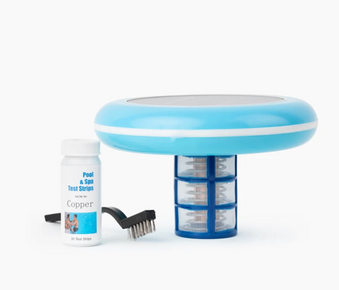
Keeping pool water consistently clear and free from algae is one of the biggest challenges pool owners face. Traditional sanitation methods often rely on heavy chemical dosing, which can fluctuate quickly and require constant adjustment. Solar pool ionizer systems offer a smarter, more balanced solution by using natural mineral ions powered by sunlight to maintain clean, algae-resistant water.
These systems work continuously to support and maximize pool water clarity, reduce chemical dependence, and create a more stable swimming environment. Understanding how solar pool ionizers function and how to use them effectively can help pool owners enjoy clearer water with less effort throughout the season. The transition from chemical-dependent maintenance to mineral-based protection represents a paradigm shift in pool care moving from reactive treatment of visible problems to proactive prevention of potential issues, from constant chemical adjustments to steady mineral protection, and from environmentally intensive practices to sustainable, solar-powered solutions. This approach doesn't just address algae; it transforms the entire pool ecosystem into one that naturally resists contamination while maintaining brilliant clarity and swimmer comfort.
Table of Contents
- Why Algae Control Is the Key to Clear Pool Water
- How Solar Pool Ionizer Systems Create Natural Resistance to Algae
- The Role of Sunlight in Continuous Pool Sanitation
- Mineral-Based Protection Versus Traditional Chemical Methods
- Supporting Water Clarity Through Balanced Circulation
- Best Practices for Maintaining Stable Water All Season
- Final Thoughts: A Smarter Path to Clear Pool Water
1. Why Algae Control Is the Key to Clear Pool Water
Algae is often the root cause of cloudy pool water. Once it begins to grow, it spreads quickly, clings to surfaces, and disrupts water balance. Without consistent prevention, even well-maintained pools can experience algae outbreaks. This microscopic plant life exists in various forms green algae that turns water pea-soup green, mustard algae that resembles sand or pollen, black algae that roots into pool surfaces, and pink slime (actually bacteria) that forms slippery films. Each type presents unique challenges, but all share the ability to rapidly transform clear water into cloudy, uninviting conditions. Algae doesn't merely affect appearance; it actively degrades water quality by consuming sanitizers, altering pH, creating habitats for bacteria, and making surfaces dangerously slippery. The battle against algae represents the central challenge of pool maintenance because algae growth indicates failure in the fundamental sanitation system if algae can establish itself, the water isn't being adequately protected against all microbial threats.
The Multifaceted Impact of Algae on Pool Water Quality:
- Visual Degradation and Cloudiness: Algae colonies scatter light, creating the cloudy or green appearance that makes water uninviting. Green algae (Chlorophyta) contains chlorophyll pigments that give water a green tint, while other algae types create yellowish, brownish, or black discolorations. Beyond mere color, algae increases turbidity by creating microscopic particles that remain suspended in water, blocking light penetration and creating a dull, murky appearance. This visual degradation isn't just aesthetic it reduces safety by obscuring swimmers and pool bottoms, making accidental collisions or drownings more difficult to detect.
- Chemical Balance Disruption: Algae actively alters pool chemistry through multiple biological processes. During photosynthesis, algae consumes carbon dioxide, raising pH levels dramatically sometimes increasing pH by 0.5-1.0 units daily. This pH increase reduces chlorine effectiveness, creating a vicious cycle where algae growth makes sanitation less effective, allowing more algae growth. Algae also consumes sanitizers directly, with heavy blooms potentially consuming several parts per million of chlorine daily. Additionally, dying algae releases phosphates and other nutrients back into the water, fueling further algal growth and creating conditions that demand increasingly aggressive chemical treatment.
- Surface Contamination and Safety Hazards: Algae doesn't just float in water it attaches to pool surfaces, forming slippery biofilms on walls, floors, steps, and ladders. These slippery surfaces create significant fall hazards, particularly on steps and entry areas. The biofilm also provides attachment points for bacteria and other microorganisms, creating complex microbial communities that are difficult to eradicate. Black algae is particularly problematic as it roots into plaster or grout surfaces, requiring aggressive brushing and often chemical spot treatments that damage pool finishes over time.
- Filtration System Overload: Algal blooms produce millions of microscopic cells that quickly overwhelm pool filtration systems. As filters become clogged with algae, flow rates decrease, reducing circulation and creating dead zones where algae grows even faster. The organic load from algae also consumes filter media capacity, requiring more frequent backwashing or cleaning that wastes water and chemicals. In severe cases, algae can actually grow inside filter systems, creating persistent contamination sources that reinfect the pool after cleaning.
- Swimmer Comfort and Health Impacts: Algae affects swimmers directly through multiple mechanisms. The slippery surfaces increase accident risks. Some algae types release compounds that irritate skin, eyes, and respiratory systems. Decomposing algae creates organic compounds that combine with chlorine to form chloramines, causing the distinctive "chlorine smell" and eye irritation many associate with poorly maintained pools. Algae also indicates potential bacterial contamination, as algal blooms often accompany increased bacterial populations that can cause skin infections, ear infections, or gastrointestinal issues if water is accidentally ingested.
Effective algae control is not about constant treatment it’s about creating conditions where algae cannot thrive. Solar pool ionizer systems help maintain those conditions naturally. This preventive approach represents a fundamental shift from traditional pool maintenance philosophy. Instead of waiting for algae to appear then attacking it with escalating chemical force (the reactive approach), solar ionizers create an environment where algae simply cannot establish dominant populations (the preventive approach). This environment operates through multiple mechanisms: continuous copper ion presence disrupts algae cellular processes, stable water chemistry prevents the fluctuations that algae exploits, and consistent circulation ensures protection reaches all pool areas. By focusing on prevention rather than treatment, solar ionizers transform algae control from a constant battle into a background process something that happens automatically rather than something that demands constant attention and chemical intervention.
The Preventive Algae Control Mechanisms of Solar Ionizers:
- Cellular Level Disruption: Copper ions released by solar ionizers penetrate algal cell walls and disrupt essential biological processes. They bind to chlorophyll molecules, reducing photosynthetic efficiency. They interfere with enzyme systems essential for metabolism and reproduction. They generate reactive oxygen species that cause oxidative damage to cellular components. This multi-point attack prevents algae from establishing viable colonies, keeping populations below visible thresholds even though algae spores are always present in pool environments.
- Continuous Protective Presence: Unlike chlorine that degrades rapidly (often within hours under sunlight), copper ions maintain their algaecidal properties for days or weeks. This extended effectiveness creates continuous background protection that eliminates the vulnerable windows that characterize traditional chemical systems. With solar ionizers, there's no daily cycle of chlorine depletion and replenishment instead, there's constant mineral protection that prevents algae from gaining the foothold it needs to begin exponential growth.
- Environmental Condition Management: Solar ionizers work synergistically with proper water chemistry to create conditions unfavorable to algae. By maintaining consistent pH levels (copper is most effective at pH 7.4-7.6), supporting proper alkalinity (which prevents pH swings algae could exploit), and working alongside reduced chlorine levels (which decreases the chemical fluctuations algae thrives on), solar ionizers help create chemically stable water where algae cannot exploit temporary imbalances.
- Surface Protection Strategy: Copper ions have a natural affinity for negatively charged surfaces, meaning they concentrate where algae typically attaches pool walls, floors, and steps. This targeted protection prevents the surface biofilm formation that often serves as the starting point for larger algal blooms. The floating design of solar ionizers enhances this surface protection by distributing ions across the entire pool surface as the device moves naturally with wind and currents.
- Sunlight-Correlated Protection: Solar ionizers produce more copper ions during sunny periods precisely when algae growth potential is highest due to increased photosynthesis opportunities. This intelligent correlation between production and need creates what engineers call "demand-responsive sanitation": more protection when conditions favor algae growth, less when risk is lower. This natural regulation requires no timers, controllers, or manual adjustments it's built into the fundamental physics of photovoltaic conversion.
This comprehensive preventive approach transforms algae control from the most challenging aspect of pool maintenance into one of the simplest. Instead of constantly testing for algae, treating visible blooms, and correcting the chemical imbalances those treatments create, pool owners with solar ionizers maintain clear water through consistent background protection. The system works automatically during daylight hours, requiring only occasional maintenance (electrode cleaning every few months, component replacement every few seasons) to maintain peak performance. The result is water that remains consistently clear and inviting, surfaces that stay clean without aggressive brushing, and maintenance that focuses on prevention rather than emergency treatment. This shift from reactive to preventive algae control represents more than just convenience it represents smarter pool management that recognizes algae not as an enemy to be repeatedly defeated, but as an opportunist to be consistently denied opportunity. By creating conditions where algae cannot thrive, solar ionizers make clear pool water not an occasional achievement but a consistent reality.

2. How Solar Pool Ionizer Systems Create Natural Resistance to Algae
Solar pool ionizers release copper ions into the water using energy collected from sunlight. These ions interfere with algae’s ability to reproduce, preventing pool algae before it becomes visible. The mechanism operates at the cellular level: copper ions penetrate algal cell walls and disrupt critical biological processes including photosynthesis, enzyme function, and DNA replication. Unlike chlorine that oxidizes organic material through chemical force, copper works through subtle biochemical interference that algae cannot easily develop resistance against. The ions' positive charge creates another advantage they're attracted to the negatively charged surfaces where algae typically attaches and grows, providing targeted protection exactly where it's most needed. This intelligent targeting represents a fundamental improvement over traditional sanitizers that must achieve high concentrations throughout the water column to be effective near surfaces. The result is protection that's both more efficient and more effective, using less material to achieve better results through intelligent biological targeting rather than chemical saturation.
Detailed Cellular Mechanisms of Copper Ion Algae Control:
- Photosynthetic Apparatus Disruption: Copper ions bind to chlorophyll molecules within algal cells, altering their molecular structure and reducing their ability to capture light energy for photosynthesis. This binding occurs at the magnesium center of chlorophyll molecules, where copper competitively displaces magnesium a substitution that maintains the pigment's green color but renders it functionally ineffective for converting sunlight into chemical energy. The disruption extends beyond simple chlorophyll binding: copper ions interfere with Photosystem II's electron transport chain, blocking the conversion of light energy to chemical energy at multiple points. They also inhibit the enzyme RuBisCO (ribulose-1,5-bisphosphate carboxylase/oxygenase), which is essential for carbon fixation in the Calvin cycle. This multi-point attack on photosynthesis starves algae of the energy needed for growth and reproduction, effectively placing algal cells on an "energy diet" that prevents population expansion even when nutrients are abundant.
- Enzymatic System Inhibition: Beyond photosynthesis, copper ions disrupt numerous enzymatic systems essential for algal metabolism. They bind to sulfhydryl (-SH) groups present in many enzymes, altering their three-dimensional structure through the formation of copper-thiolate complexes that render enzymes inactive. Copper competes with essential metal cofactors like magnesium, zinc, and manganese in metalloenzymes, displacing these necessary elements and disrupting enzyme function. The ions generate reactive oxygen species through Fenton-like reactions (Cu⁺ + H₂O₂ → Cu²⁺ + OH⁻ + •OH), creating oxidative stress that damages cellular components including proteins, lipids, and nucleic acids. This widespread enzymatic disruption affects everything from nutrient uptake to waste elimination to cellular division, creating systemic dysfunction throughout algal cells that prevents coordinated growth and reproduction.
- Membrane Integrity Compromise: Copper ions compromise the structural integrity of algal cell membranes through multiple complementary mechanisms. They bind to phospholipid head groups in membrane bilayers, increasing membrane permeability and allowing essential cellular components to leak out while permitting unwanted substances to enter. They catalyze lipid peroxidation through oxidative stress, damaging the fatty acid chains that form membrane bilayers and creating structural weaknesses. They disrupt membrane potential by interfering with ion pumps and channels that maintain electrochemical gradients essential for nutrient transport and waste elimination. This multi-faceted membrane damage makes cells vulnerable to osmotic stress, prevents proper compartmentalization of cellular processes, and creates entry points for additional copper ions and other damaging substances, further weakening algal viability.
- Genetic and Reproductive Interference: At the molecular level, copper ions interfere with algal reproduction through several sophisticated pathways. They bind to DNA molecules at multiple sites, particularly at guanine-cytosine rich regions, causing cross-linking that prevents proper replication and transcription. Copper generates reactive oxygen species that cause oxidative damage to genetic material, creating mutations and strand breaks that disrupt cellular programming. The ions disrupt microtubule formation during cell division by binding to tubulin proteins, preventing proper chromosome separation and cytokinesis. This reproductive interference operates at population dynamics level even if individual algal cells survive copper exposure, their ability to reproduce and expand populations is severely compromised, keeping algal concentrations below visible thresholds.
Advanced Targeting and Efficiency Advantages:
- Electrostatic Surface Targeting: The positive charge of copper ions (Cu²⁺) creates natural affinity for negatively charged surfaces exactly where algae typically attaches and grows. Pool surfaces, particularly plaster, tile, and vinyl, develop negative surface charges in water through ionization of surface groups. Algal cells themselves carry negative surface charges due to carboxyl, phosphate, and other ionizable groups on their cell walls. This charge attraction means copper ions concentrate precisely where they're most needed: at the interface between pool surfaces and water, and on algal cell surfaces. This targeting represents intelligent delivery that traditional sanitizers cannot match chlorine molecules have no such charge-based targeting and must achieve high concentrations throughout the water column to be effective at surfaces.
- Multi-Species Effectiveness Spectrum: Copper ions demonstrate effectiveness against all major algae types that plague swimming pools, though through slightly different mechanisms optimized for each. To fix green pool water, copper primarily disrupts photosynthesis the energy source this algae type depends on most heavily. For mustard algae (Phaeophyta, actually yellow-green algae), copper works through membrane disruption and enzyme inhibition, bypassing the protective pigments that make this algae chlorine-resistant. For black algae (cyanobacteria, actually photosynthetic bacteria), copper penetrates the protective mucilaginous sheath and disrupts the unique photosynthetic apparatus of cyanobacteria. For pink slime (actually bacterial biofilm, often Methylobacterium), copper works through antibacterial mechanisms similar to its medical applications. This broad-spectrum effectiveness means a single system addresses all common pool algae problems without requiring different treatments for different algae types.
- Concentration Efficiency: Copper achieves algae control at concentrations far lower than traditional sanitizers require. Effective copper levels range from 0.3-0.4 ppm (parts per million), while chlorine typically requires 1-3 ppm for similar protection. This concentration efficiency results from multiple factors: copper's multi-mechanism action (attacking algae through several pathways simultaneously), its surface targeting (concentrating where needed rather than dispersing throughout water), and its persistence (remaining active rather than being consumed). This efficiency means less chemical introduction into the pool environment, lower chemical costs over time, reduced accumulation of total dissolved solids, and decreased environmental impact from chemical production, transportation, and disposal.
Unlike chemicals that dissipate rapidly, mineral ions remain active longer, offering steady protection throughout the day. This continuous presence is what makes ionizer systems especially effective for algae resistance. Chlorine can degrade completely within hours under strong sunlight, creating windows of vulnerability when algae spores can germinate. Copper ions, in contrast, maintain their effectiveness for days or weeks, creating a protective background level that persists through varying conditions. This persistence transforms algae control from intermittent coverage to continuous protection, eliminating the vulnerable periods that characterize traditional chemical systems. The continuous presence also means algae never gets the "break" it needs to establish colonies under constant copper pressure, algae populations remain below visible thresholds rather than exploding into green water episodes. This steady-state protection represents the ideal approach to algae control: consistent conditions where algae cannot gain a foothold rather than alternating periods of vulnerability and aggressive treatment.
The Extended Effectiveness Advantage of Mineral Ions:
- Photochemical Stability: Unlike chlorine that undergoes rapid photolytic degradation when exposed to ultraviolet light (with degradation rates reaching 90% within 2-3 hours of midday summer sun), copper ions are remarkably stable under sunlight. Their d-orbital electron configuration creates chemical bonds that resist photochemical breakdown, meaning solar ionizers produce protection that lasts precisely when it's most needed during long, sunny days when algae growth potential is highest. This photochemical stability represents perfect alignment between solution and problem: the system provides maximum protection exactly when conditions are most challenging for traditional sanitizers and most favorable for algae.
- Chemical Consumption Differences: Chlorine is consumed through oxidation reactions each chlorine molecule typically oxidizes one organic molecule and is converted to chloride ion in the process. Copper ions work through different mechanisms (enzyme inhibition, membrane disruption, etc.) that don't consume the ions. A single copper ion can affect multiple algal cells over time, whereas a chlorine molecule is typically consumed by a single oxidation reaction. This fundamental difference in consumption patterns creates dramatically different longevity: chlorine concentrations can drop from 3 ppm to 0 ppm in hours, while copper concentrations might drop from 0.4 ppm to 0.3 ppm over weeks under similar conditions.
- Complexation and Re-Release Mechanisms: Copper ions in pool water don't simply remain as free Cu²⁺ ions; they form various complexes with carbonate, hydroxide, chloride, cyanurate, and organic molecules present in pool water. These interactions play a key role in improving pool water quality. Some of these complexes retain biological activity against algae, while others can release active copper ions under changing water conditions. This complexation creates what chemists call a “buffered” mineral system, where active copper is available from multiple sources rather than just free ions. For example, copper carbonate complexes can release copper ions as pH changes, while copper-cyanurate complexes can release copper as cyanuric acid levels fluctuate. This buffering extends effective protection and supports consistent water clarity and sanitation beyond what simple concentration measurements might suggest.
- Surface Adsorption Equilibrium: Copper ions adsorb onto pool surfaces, filter media, and even suspended particles, creating reservoirs that can release ions back into the water as concentrations decrease. This adsorption-release equilibrium creates natural regulation: when water copper levels drop due to dilution from rainfall or removal through backwashing, adsorbed copper releases to restore balance. This natural buffering further extends effective protection and contributes to water stability by preventing rapid concentration changes that could create vulnerability windows.
This comprehensive approach to algae resistance represents a fundamental advancement in pool sanitation technology. By combining sophisticated cellular-level disruption mechanisms with intelligent targeting and extended effectiveness, solar pool ionizers create conditions where algae simply cannot establish problematic populations. The system works preventively rather than reactively, addressing algae before it becomes visible rather than after it requires emergency treatment. It works efficiently, using lower concentrations of more persistent minerals rather than higher concentrations of rapidly degrading chemicals. And it works intelligently, leveraging natural charge attractions to target protection exactly where it's most needed. For pool owners, this means water that remains consistently clear without constant chemical intervention, surfaces that stay clean without aggressive brushing, and maintenance that focuses on prevention rather than emergency response. This is how solar pool ionizer systems create natural resistance to algae: not through chemical warfare that algae can sometimes overcome, but through intelligent biological interference that keeps algae perpetually on the defensive, unable to establish the colonies that turn clear water cloudy and transform maintenance from simple care into constant battle.

3. The Role of Sunlight in Continuous Pool Sanitation
Sunlight powers solar ionizers, making them both efficient and environmentally friendly. As long as the ionizer receives daylight exposure, it continues releasing ions into the pool. This solar-powered operation represents perfect synergy between need and solution: algae growth potential increases with sunlight (through photosynthesis requirements), and ionizer production increases with sunlight (through photovoltaic conversion). This correlation creates what engineers call "demand-responsive sanitation" protection that automatically increases when need is highest, decreases when risk is lower, and requires no manual adjustment based on weather conditions or time of day. The photovoltaic panels convert sunlight directly into electrical energy that drives the ionization process, with modern panels achieving conversion efficiencies that make even indirect or filtered sunlight sufficient for operation. This direct solar power eliminates the energy costs associated with traditional sanitation systems while creating a truly sustainable approach to pool maintenance.
The Photovoltaic Science Behind Solar Ionizer Operation:
- Photovoltaic Conversion Technology: Modern solar ionizers utilize advanced photovoltaic cells that convert sunlight directly into electrical energy through the photoelectric effect. When photons from sunlight strike the semiconductor material in the solar panel (typically monocrystalline or polycrystalline silicon), they dislodge electrons, creating direct current electricity. This electricity is then channeled to the ionizer's electrodes, where it drives controlled electrolysis that releases copper ions into the water. The efficiency of modern photovoltaic panels has improved dramatically in recent years, with many systems achieving 18-22% conversion efficiency meaning they convert nearly one-fifth of incident sunlight into usable electrical energy. This efficiency makes solar ionizers effective even on partly cloudy days or during morning/evening hours when sunlight intensity is reduced.
- Intelligent Power Management Systems: Advanced solar ionizers incorporate microprocessors that optimize power usage based on available sunlight. These systems monitor voltage and current output from the solar panel, adjusting electrode operation to match available energy. During periods of intense sunlight, they maximize ion production. During lower light conditions, they maintain essential operation while conserving energy. Some systems include maximum power point tracking (MPPT) technology advanced circuitry that continuously adjusts electrical load to extract maximum power from the solar panel regardless of changing light conditions. This intelligent power management ensures consistent ion production across varying weather conditions and times of day.
- Low-Light Performance Optimization: Unlike some solar devices that require direct, intense sunlight, modern solar ionizers are engineered to operate effectively across a wide range of light conditions. Specialized photovoltaic cells capture not just direct sunlight but also diffuse light (scattered by clouds) and reflected light (bouncing off water surfaces). The floating design enhances light capture by naturally orienting toward sunlight as it moves across the pool surface. This low-light optimization means solar ionizers continue providing protection even on overcast days when algae growth potential remains significant though at reduced production levels that naturally match reduced risk.
- Energy Storage and Continuous Operation: Some advanced solar ionizer models incorporate minimal energy storage (typically small capacitors rather than batteries) to maintain brief operation during momentary shading or cloud cover. This ensures continuous ion release even when sunlight is temporarily interrupted, supporting smarter pool sanitization without relying on complex power systems. The design avoids traditional batteries that would add weight, complexity, and maintenance requirements, instead using clever energy management to smooth out production variations without bulky storage systems. This approach maintains the system's simplicity and reliability while ensuring consistent protection throughout daylight hours.
This solar-powered operation delivers multiple advantages that extend far beyond simple energy savings:
Comprehensive Benefits of Solar-Powered Operation:
- Requires no external electricity: Complete energy independence means solar ionizers can be installed anywhere with sunlight access, regardless of electrical outlet availability. This makes them ideal for pools in remote locations, pools with limited electrical infrastructure, or pools where adding electrical service would be costly or complicated. The absence of electrical cords eliminates safety hazards around water, reduces installation complexity, and allows complete freedom in poolside placement. This energy independence also means zero operating energy costs once installed, the system operates entirely on free solar energy with no impact on utility bills.
- Provides consistent daytime sanitation: Solar ionizers operate continuously whenever sufficient sunlight is available, typically from morning through evening throughout the swimming season. This continuous daytime operation perfectly matches pool usage patterns most swimming occurs during daylight hours when contamination risks are highest. The system provides maximum protection precisely when the pool is most likely to be used and contaminated. This timing alignment represents intelligent design: protection is available when needed most, without the energy waste of operating overnight when risk is lower and no one is swimming.
- Reduces energy costs: Traditional pool sanitation systems consume significant electricity. Salt chlorine generators typically use 100-500 watts continuously during operation. Traditional chlorine feeders may require pump operation that consumes additional energy. Solar ionizers eliminate these energy costs completely, representing annual savings of $50-$200 or more depending on local electricity rates and pool size. Over the system's lifespan (typically 5+ years), these savings often exceed the initial purchase price, making solar ionizers not just environmentally responsible but economically advantageous. The energy savings extend beyond direct operating costs to include reduced cooling loads (electrical equipment generates heat that increases pool house or pool equipment room temperatures) and potential reductions in pool heating costs (less evaporation from cooler-running equipment).
- Minimizes carbon footprint: By operating entirely on renewable solar energy, solar ionizers eliminate the carbon emissions associated with grid electricity production. Depending on local energy sources, this can represent significant environmental benefits: in regions where electricity comes primarily from coal or natural gas, each kilowatt-hour avoided prevents approximately 0.5-1.0 kg of CO₂ emissions. For a typical pool season, solar ionizers might prevent 100-300 kg of CO₂ emissions compared to electrically powered alternatives. This environmental benefit aligns with growing consumer interest in sustainable products that reduce household carbon footprints without sacrificing performance or convenience.
- Enhances system reliability: Solar-powered systems have fewer failure points than electrically powered alternatives. No electrical connections mean no corrosion at terminals, no short circuits from water intrusion, and no power supply failures. The simplicity of solar operation increases overall system reliability fewer components mean fewer things that can break. This reliability is particularly valuable for pool sanitation, where system failures can quickly lead to algae outbreaks that require expensive and disruptive corrective treatments. Solar ionizers provide consistent protection season after season with minimal maintenance beyond occasional electrode cleaning and component replacement.
By using sunlight as a power source, solar pool ionizer systems deliver reliable sanitation without increasing utility bills. The energy independence extends beyond cost savings to include environmental benefits: no grid electricity consumption means no associated carbon emissions, no strain on electrical infrastructure during peak summer periods, and complete operation during power outages (as long as sunlight is available). The solar design also creates built-in intelligence: production naturally follows daily and seasonal sunlight patterns, providing more protection during long summer days when algae risk is highest and less during shorter winter days when risk decreases. This natural regulation eliminates the need for timers, controllers, or manual adjustments based on changing conditions the system self-adjusts to match protection to need through the fundamental physics of photovoltaic conversion. For pool owners, this means reliable protection without the complexity, cost, or environmental impact of electrically powered alternatives.
Intelligent Self-Regulation Through Natural Sunlight Patterns:
- Daily Production Cycles: Solar ionizers naturally follow daily sunlight patterns, producing maximum ions during midday hours when sunlight intensity peaks and algae photosynthesis is most active. This daily cycle creates intelligent protection timing: maximum copper release occurs precisely when UV degradation of traditional chlorine is fastest and when algae growth potential is highest. As evening approaches and sunlight fades, ion production gradually decreases matching reduced algae risk as photosynthesis slows and pool usage typically declines. This daily self-regulation requires no programming or manual adjustment; it's inherent in the system's solar-powered design.
- Seasonal Adaptation: Solar ionizers automatically adjust to seasonal sunlight variations. During long summer days with intense sunlight, they produce more copper ions to match increased algae risk from warmer water and longer daylight periods. During shorter fall and spring days, they produce less, matching reduced algae risk from cooler water and shorter days. This seasonal adaptation means pool owners don't need to manually adjust system settings or chemical dosing as seasons change, reducing reliance on frequent adjustments guided by pool test kits. the system naturally provides appropriate protection levels based on available sunlight. This automatic seasonal adjustment represents sophisticated environmental responsiveness that electrically powered systems cannot match without complex sensors and controllers.
- Weather-Responsive Operation: Solar ionizers naturally respond to weather conditions, increasing production during clear sunny days when algae growth potential is highest and decreasing during cloudy periods when risk is lower. This weather responsiveness creates what engineers call "proportional control" protection levels proportional to need based on environmental conditions. Unlike traditional systems that operate at fixed rates regardless of weather, solar ionizers automatically match protection to current risk levels. This intelligent response prevents both under-protection during sunny periods (when algae risk is high) and over-protection during cloudy periods (when chemical waste and potential irritation increase).
- Geographic Optimization: Solar ionizers automatically optimize for local geographic conditions. In southern regions with intense sunlight, they produce more ions to match higher algae risk from warmer temperatures and stronger UV radiation. In northern regions with less intense sunlight, they produce correspondingly less. This geographic optimization means the same basic system works effectively across different climates without manual adjustment it naturally delivers appropriate protection levels based on local sunlight availability. This makes solar ionizers universally applicable despite regional variations in climate and sunlight intensity.
This comprehensive solar-powered approach represents a paradigm shift in pool sanitation technology. Rather than treating sunlight as a problem to overcome (as traditional chlorine systems must, since sunlight degrades chlorine), solar ionizers harness sunlight as both the energy source for operation and the timing mechanism for intelligent protection delivery. This creates systems that are simultaneously simpler (no electrical connections, no programming required), smarter (automatically adjusting to daily, seasonal, and weather patterns), more sustainable (zero operational energy consumption), and more reliable (fewer components, no electrical failures). For pool owners, this translates to crystal-clear pool water with less work, lower costs, and better environmental stewardship. The solar advantage extends beyond mere energy savings to create fundamentally better pool sanitation: systems that work with natural cycles rather than against them, that prevent problems rather than treat symptoms, and that deliver reliable protection through elegant simplicity rather than complex technology. This is the true role of sunlight in continuous pool sanitation: not just as an energy source, but as the intelligent regulator that makes solar ionizers uniquely effective, efficient, and environmentally responsible solutions for maintaining clear, algae-resistant pool water.

4. Mineral-Based Protection Versus Traditional Chemical Methods
Traditional chemical sanitation often works in cycles high doses followed by rapid depletion. Solar ionizers create a more stable sanitation layer that complements low chlorine levels rather than replacing them entirely. This hybrid approach leverages the strengths of both systems: copper ions provide continuous background protection against algae and bacteria, while low levels of chlorine handle the rapid oxidation of organic contaminants introduced by swimmers. The combination creates what sanitation experts call "overlapping protection" multiple mechanisms working together to ensure no gaps in defense. When chlorine levels momentarily dip (as they naturally do between additions), copper maintains protection. When sunlight reduces copper production slightly (on cloudy days), chlorine provides primary sanitation. This redundancy creates a safety net that prevents minor fluctuations from becoming major problems, transforming pool maintenance from crisis management to fine-tuning.
The Chemistry of Hybrid Mineral-Chemical Systems:
- Complementary Action Mechanisms: Chlorine and copper work through fundamentally different chemical pathways that complement rather than compete with each other. Chlorine (as hypochlorous acid) acts as a powerful oxidizer, rapidly breaking down organic contaminants through electron transfer reactions. Copper ions work through multiple biochemical interference mechanisms: enzyme inhibition, membrane disruption, and photosynthetic interference. This complementary action means the systems don't work against each other copper doesn't consume chlorine, and chlorine doesn't degrade copper (under proper pH conditions). Instead, they address different aspects of water quality: chlorine handles immediate oxidation needs while copper provides continuous background protection against microbial growth.
- Optimized Concentration Ranges: In hybrid systems, chlorine can be maintained at lower levels (typically 0.5-1.0 ppm versus traditional 1-3 ppm) because copper handles much of the algae prevention burden. This reduction has multiple benefits: decreased chloramine formation (since chloramine production correlates with chlorine concentration), reduced pH fluctuations (most chlorine sources are alkaline and raise pH), and lower overall chemical load. Copper is maintained at 0.3-0.4 ppm levels effective for algae prevention but well below thresholds that could cause staining or other issues. These optimized ranges create water that's effectively protected while minimizing chemical side effects and swimmer irritation.
Comprehensive Benefits of Mineral-Chemical Hybrid Systems:
- Reduced chemical adjustments: With copper providing continuous background protection, chlorine levels remain more stable, requiring fewer additions and adjustments. Traditional chlorine-only pools often require daily or every-other-day chlorine additions to compensate for rapid degradation. Hybrid systems typically require chlorine additions only 1-2 times per week under normal conditions. This reduction represents significant time savings (perhaps 30-60 minutes weekly) and chemical savings (30-50% less chlorine usage). Fewer adjustments also mean fewer opportunities for overcorrection a common problem where pool owners add too much chemical then must add another chemical to correct the overcorrection.
- Less skin and eye irritation: Lower chlorine levels and reduced chloramine formation dramatically decrease swimmer irritation. Chloramines (formed when chlorine reacts with nitrogen compounds from sweat, urine, and other contaminants) are primarily responsible for the "chlorine smell" and eye irritation associated with modern pool care. By maintaining lower chlorine levels and providing continuous copper protection that reduces microbial loads (and thus chloramine precursors), hybrid systems create water that's gentler on eyes, skin, and respiratory systems. Many swimmers report being able to open eyes underwater without stinging a clear indicator of reduced chemical irritation.
- Improved water clarity: The combination of copper's algae prevention and chlorine's oxidation creates conditions for exceptional water clarity. Copper prevents the algal blooms that cause green water and surface films. Chlorine oxidizes the fine organic particles that cause cloudiness. Together, they create water that maintains brilliant sparkle and transparency with minimal use of clarifiers or flocculants. This clarity isn't just aesthetic it indicates proper chemical balance, effective sanitation, and overall water health.
- More predictable water conditions: Hybrid systems create chemical stability that makes water behavior more predictable. Testing shows consistent results rather than dramatic daily fluctuations. Chemical additions produce expected outcomes rather than unexpected reactions. Maintenance follows regular patterns rather than emergency responses. This predictability transforms pool care from a guessing game into a science, where informed decisions based on testing produce reliable results. For pool owners, this means confidence in water quality, reduced stress about potential problems, and more enjoyment of their pool investment.
- Extended equipment and surface life: Reduced chemical concentrations and more stable water chemistry decrease wear on pool equipment and surfaces. Lower chlorine levels mean less corrosion of metal components (ladders, rails, light fixtures). More stable pH means less etching of plaster or degradation of vinyl liners. Reduced need for shock treatments means fewer dramatic chemical swings that stress all pool materials. This preservation extends equipment lifespan, maintains surface appearance, and reduces long-term maintenance and replacement costs.
This balance makes pool care simpler and more comfortable for swimmers. The reduced chemical dependency has multiple positive effects: fewer containers of hazardous chemicals in storage, decreased chemical handling risks, lower environmental impact from chemical production and disposal, and reduced chemical costs over the swimming season. The improved water comfort represents perhaps the most noticeable benefit for swimmers water that feels softer, smells fresher, and causes none of the irritation that makes traditional pools uncomfortable for many people. This comfort enhancement encourages more frequent swimming, longer swim sessions, and greater overall enjoyment of the pool investment. The predictability of mineral-based systems transforms pool maintenance from a guessing game into a science: with consistent copper levels and reduced chlorine fluctuations, water chemistry becomes more stable and easier to manage, testing shows consistent results, and maintenance involves small regular adjustments rather than dramatic emergency treatments.
Comparative Analysis: Traditional vs. Hybrid Systems
- Chemical Consumption Patterns: Traditional chlorine systems typically follow a "sawtooth" consumption pattern sharp increases after chemical addition followed by rapid decline to near-zero before the next addition. This creates vulnerable windows and irritation peaks. Hybrid systems follow a "plateau" pattern relatively stable copper levels with gentle chlorine fluctuations that rarely drop to zero. This stable pattern provides continuous protection without vulnerable windows or irritation peaks.
- Maintenance Time Requirements: Traditional systems often require daily attention: testing, adjusting, skimming, and checking equipment. Hybrid systems typically require only weekly testing and adjustment, with daily tasks limited to simple skimming. This time savings (perhaps 2-3 hours weekly during peak season) represents significant quality-of-life improvement for pool owners.
- Problem Response Dynamics: In traditional systems, problems (algae blooms, cloudiness) typically require aggressive emergency treatments: shocking the pool, algaecides, clarifiers. These treatments themselves disrupt water balance, often creating secondary problems. In hybrid systems, continuous copper protection prevents most problems from developing, and small adjustments correct minor imbalances before they become visible issues. This represents a shift from reactive crisis management to proactive stability maintenance.
- Swimmer Experience Differences: Traditional pool water often feels harsh, smells strongly of chlorine, causes eye and skin irritation, and leaves hair and swimwear damaged. Hybrid system water typically feels softer, has minimal chemical odor, causes little irritation, and is gentler on hair and fabrics. These experiential differences significantly affect how much pools are used and enjoyed.
- Environmental Impact Comparison: Traditional chemical production, transportation, and disposal create significant environmental impacts. Chlorine manufacturing is energy-intensive and produces hazardous byproducts. Chemical transportation adds carbon emissions. Chemical disposal (through backwashing or drainage) introduces compounds into local watersheds. Hybrid systems reduce these impacts through lower chemical usage and solar-powered operation.
The transition from traditional chemical methods to mineral-based hybrid systems represents more than just a change in products it represents a fundamental shift in pool maintenance philosophy. Traditional approaches view pool water as something to be controlled through chemical force, constantly battling natural processes. Hybrid approaches work with natural processes, using minerals to create conditions where problems cannot develop and using minimal chemicals only for specific purposes they're uniquely suited for. This shift creates multiple benefits: simpler maintenance, better water quality, improved swimmer experience, reduced environmental impact, and lower long-term costs. For pool owners tired of the chemical rollercoaster and constant maintenance demands, mineral-based hybrid systems offer a smarter approach that delivers better results with less work proving that sometimes the best solutions aren't about using more chemicals, but about using smarter combinations that work with nature rather than against it.

5. Supporting Water Clarity Through Balanced Circulation
Proper circulation ensures mineral ions distribute evenly throughout the pool. Without good circulation, certain areas may receive less protection, allowing algae to develop. This distribution challenge represents one of the most common failure points in pool sanitation systems even perfect chemistry cannot protect areas where chemicals don’t reach. Solar ionizers address this challenge through multiple distribution mechanisms: the floating design allows natural movement across the water surface, pool circulation captures and redistributes ions through skimmers and returns, and natural diffusion processes gradually spread ions throughout the water column. To maintain this balanced distribution over time, proper maintenance including timely replacement kit for ionizer components is essential. However, these mechanisms all depend on adequate water movement; without circulation, ions concentrate near the ionizer, creating localized high concentrations that could cause staining while leaving distant areas vulnerable.
The Science of Mineral Distribution in Pool Water:
- Multi-Layer Distribution System: Effective mineral distribution operates through three complementary layers: primary distribution from the floating ionizer's natural movement, secondary distribution through mechanical circulation systems, and tertiary distribution through natural diffusion processes. The floating ionizer moves randomly across the water surface, propelled by wind, thermal currents, and swimmer activity, releasing ions at different locations. Pool circulation captures these ions through skimmers, transports them through the filtration system, and returns them through strategically positioned jets. Natural diffusion gradually spreads ions from areas of higher concentration to areas of lower concentration through molecular motion. Together, these layers create comprehensive distribution that reaches all pool areas, but only when adequate water movement supports all three mechanisms.
- Concentration Gradient Management: Without proper circulation, copper ions create concentration gradients high levels near the ionizer, decreasing levels with distance. These gradients create multiple problems: localized high concentrations near the ionizer can cause staining on nearby surfaces, while distant areas receive insufficient protection. Proper circulation homogenizes these gradients, creating uniform concentrations throughout the pool. This uniformity is essential for consistent protection and water clarity all areas receive adequate copper levels for algae prevention without any areas reaching concentrations that could cause cosmetic or functional problems.
- Dead Zone Elimination Strategy: Dead zones areas with minimal water movement represent the greatest challenge for mineral distribution and algae prevention. These areas typically occur behind ladders, in corners, under steps, and near returns positioned incorrectly. In dead zones, minerals don't circulate, contaminants accumulate, and algae establishes colonies that can then spread throughout the pool. Proper circulation eliminates dead zones through strategic flow patterns that ensure all water eventually moves through the main circulation path. This requires both adequate pump power and intelligent return jet for pool positioning to create circular currents that sweep all areas rather than allowing stagnation.
- Surface-to-Depth Distribution Balance: Minerals must distribute not just horizontally across the pool surface but vertically through the water column. Surface distribution comes naturally from the floating ionizer, but depth distribution requires circulation that creates mixing throughout the water column. Without vertical mixing, minerals concentrate at the surface while lower water layers receive less protection. Proper circulation creates turnover that moves water from all depths through the filtration system, ensuring minerals distribute from surface to bottom. This vertical distribution is particularly important for pools with diving areas or variable depths where algae can establish at different levels.
Running the pump long enough each day, maintaining clean filters, and positioning return jets correctly helps solar ionizer systems work at full efficiency. Circulation optimization involves both quantity (run time) and quality (flow patterns). Adequate run time ensures at least one complete water turnover daily (moving a volume equal to pool capacity through the filter), with many experts recommending 1.5-2 turnovers for optimal protection. This circulation should be distributed throughout daylight hours when the ionizer is producing minerals, maximizing distribution of newly generated ions. Clean filters maintain flow rates and prevent channeling (water bypassing filter media), ensuring proper filtration of particles that could cloud water or provide surfaces for algae attachment. Proper return jet positioning creates circular currents that move water past the ionizer's typical floating patterns and eliminate dead zones where circulation is minimal. When these circulation factors are optimized, solar ionizers achieve their full potential: minerals distribute evenly, protection becomes uniform, and water maintains the brilliant clarity that indicates proper sanitation and chemical balance.
Circulation Optimization Strategies for Solar Ionizer Systems:
- Pump Run Time Calculations and Strategies: Determining optimal pump run time begins with calculating pool turnover rate the time required to move a volume equal to pool capacity through the filtration system. This calculation considers pump flow rate (gallons per minute), pool volume (gallons), and plumbing efficiency (accounting for friction losses). For most residential pools, achieving one complete turnover requires 8-12 hours of pump operation daily. However, for optimal mineral distribution and algae prevention, many experts recommend 1.5-2 turnovers (12-16 hours for typical pools). This extended run time ensures newly generated copper ions distribute completely rather than accumulating near the ionizer. Run time should be distributed throughout daylight hours when the ionizer is active running 4 hours morning, 4 hours midday, and 4 hours afternoon often works better than 12 continuous hours. For pools with variable-speed pumps, running at lower speeds for longer periods often provides better distribution with less energy consumption than short high-speed runs.
- Filter Maintenance for Optimal Flow: Clean filters are essential for maintaining circulation efficiency. As filters load with debris, flow resistance increases, reducing circulation rates even if the pump continues running. This reduced flow means minerals distribute less effectively, dead zones develop, and water clarity suffers. Filter maintenance frequency depends on pool filtration system: cartridge filters typically require cleaning every 4-6 weeks during peak season, sand filters require backwashing when pressure rises 8-10 psi above clean pressure, and DE filters require regular backwashing and periodic breakdown cleaning. Beyond basic cleaning, filter media replacement when efficiency drops below 80% of original specifications maintains optimal flow. Clean filters not only support mineral distribution but also remove particles that could cloud water or provide surfaces for algae attachment, working synergistically with solar ionizers to maintain clarity.
- Return Jet Positioning and Flow Pattern Design: Proper return jet positioning creates flow patterns that support mineral distribution and eliminate dead zones. Jets should typically be angled downward at approximately 45 degrees and oriented to create a gentle circular current around the pool perimeter. This circular flow carries minerals from the ionizer's location throughout the pool while preventing stagnation in corners and behind obstacles. For rectangular pools, positioning returns on one long side angled toward the opposite corner often creates effective circulation. For freeform pools, returns should be positioned to create overlapping circular patterns that cover all areas. The goal is creating laminar flow that moves all water eventually through the main circulation path rather than turbulent flow that mixes water aggressively near returns but leaves other areas stagnant.
- Skimmer and Main Drain Balancing: Proper suction balance between surface skimmers and the main drain ensures optimal water capture for redistribution through the filtration system. Skimmers should be adjusted to create a visible vortex (indicating proper surface suction) without drawing excessive air. Main drain suction should supplement skimmer flow without dominating it. This balance ensures surface water (where the ionizer operates and where most contaminants enter) receives adequate attention while deeper water also circulates. Periodic adjustment maintains this balance as conditions change skimmers may need more attention during leaf season, while main drains may need adjustment after heavy rains that introduce bottom sediment.
- Variable-Speed Pump Optimization: For pools equipped with variable-speed pumps, intelligent programming can optimize mineral distribution while minimizing energy consumption. A typical strategy might include higher-speed runs during morning hours to distribute overnight accumulation, moderate-speed runs throughout daylight hours to distribute newly generated ions, and low-speed runs overnight to maintain basic circulation. Some advanced pumps can be programmed to increase speed when the ionizer's solar panel indicates peak production (available on integrated systems), ensuring immediate distribution of maximum ion output. This intelligent speed control represents the pinnacle of circulation optimization matching pump operation to actual distribution needs rather than operating on fixed schedules.
The Relationship Between Circulation and Water Clarity:
- Particle Suspension and Filtration Efficiency: Proper circulation keeps microscopic particles suspended in water where filters can capture them. Without adequate circulation, particles settle as sediment, creating cloudy bottoms and requiring vacuuming rather than filtration. The gentle, continuous movement created by optimized circulation maintains particle suspension without creating turbulent mixing that actually reduces filtration efficiency by driving particles into corners or causing them to clump together. This balance between suspension and capture is essential for maintaining water clarity with minimal intervention.
- Chemical and Thermal Homogenization: Circulation creates homogeneous water conditions by distributing chemicals, heat, and minerals evenly. Without circulation, pools develop chemical and thermal stratification different layers with different characteristics. Surface water may have adequate sanitizer while deeper water has none. Warm water may layer on top of cool water. Minerals may concentrate in some areas while being absent in others. This stratification creates conditions where algae can establish in poorly protected layers then spread throughout the pool. Proper circulation eliminates stratification, creating uniform conditions that support consistent protection and clarity.
- Surface Cleaning Through Skimming Action: Adequate surface circulation moves debris toward skimmers for removal before it sinks and decomposes. This skimming action is particularly important for solar ionizer systems because surface debris can physically block the ionizer's movement or shade its solar panel. Proper surface flow patterns ensure leaves, insects, and other debris move efficiently to skimmers rather than accumulating near the ionizer or sinking to provide nutrients for algae. Clean surfaces not only look better but also support better mineral distribution and ionizer operation.
- Prevention of Biofilm Formation: Continuous water movement prevents the stagnant conditions where biofilm (slippery microbial films) forms on pool surfaces. Biofilm not only creates safety hazards but also provides attachment points for algae and interferes with mineral effectiveness. The gentle friction of moving water helps prevent biofilm establishment, particularly when combined with the antimicrobial action of copper ions. This prevention represents another synergy between circulation and solar ionization each enhances the other's effectiveness at maintaining clean, clear water.
When these circulation factors are optimized, solar ionizers achieve their full potential: minerals distribute evenly, protection becomes uniform, and water maintains the brilliant clarity that indicates proper sanitation and chemical balance. This optimization represents more than just running pumps longer it involves thoughtful design and maintenance of the entire hydraulic system to support the unique requirements of mineral-based sanitation. The effort invested in circulation optimization pays multiple dividends: more effective algae prevention, better water clarity, reduced chemical usage, and simpler maintenance. For pool owners using solar ionizers, understanding and optimizing circulation is the key to transforming good technology into great results turning a promising sanitation alternative into a reliable system that delivers consistently clear, algae-resistant water with minimal effort and maximum enjoyment.

6. Best Practices for Maintaining Stable Water All Season
Solar pool ionizers require minimal intervention, but a consistent maintenance routine is essential for sustained performance. This proactive approach transforms the system from a passive device into a reliable partner, ensuring continuous algae-free operation and water clarity. The maintenance philosophy shifts fundamentally from chemical management with its daily testing and balancing to simple equipment care. This transition liberates pool owners from the constant vigilance of traditional methods, replacing it with periodic, intuitive tasks that preserve the system's original efficacy throughout its lifespan.
The Science of Performance Preservation:
- Electrode Efficiency and Mineral Output: The electrode is the system's active heart, where electrolysis generates copper and silver ions. Over time, dissolved minerals in the water, primarily calcium carbonate, form an insulating scale on the electrode surface. This scale acts as a physical barrier, reducing the effective surface area and increasing electrical resistance, which diminishes ion production. Regular cleaning removes this scale, restoring direct contact between the electrode and water. The frequency of scaling depends on local water hardness, pH balance, and total dissolved solids and managing pool hard water (above 250 ppm calcium) may require monthly cleaning, while soft water may allow 3-4 months between cleanings. This maintenance directly correlates with consistent algae resistance, as clean electrodes maintain specified ion output levels.
- Copper Level Dynamics and System Calibration: Maintaining proper copper concentration (0.3-0.5 ppm) is critical for effective algistatic action without risking staining. Copper levels are not static; they are influenced by bather load, splash-out, backwashing, rainwater dilution, and the ionizer's own production rate. Periodic testing, especially during system startup, after heavy rainfall, or following significant water addition, verifies that the ionizer is effectively compensating for these losses. Testing ensures the system operates within the therapeutic window sufficient for algae inhibition but below the threshold where copper saturation could lead to precipitation and surface discoloration on pool finishes.
- Solar Panel Optimization and Energy Harvesting: The solar panel converts sunlight into the electrical energy that powers the electrolysis process. Any reduction in light capture from dust, pollen, bird droppings, or shading directly reduces ion production. Seasonal inspection and cleaning maintain peak photovoltaic efficiency. Additionally, panel orientation should be verified to ensure maximum sun exposure throughout the day; a panel that has shifted or become entangled may not face the sun optimally. In regions with deciduous trees, falling leaves in autumn can completely cover panels, necessitating more frequent checks during seasonal transitions.
- Component Degradation and Preventive Replacement: Even with proper care, components experience gradual wear. The electrode itself erodes over seasons as metal is sacrificially released into the water. Most electrodes require replacement every 2-3 swimming seasons to maintain specified output. O-rings and seals can degrade from UV exposure and chemical exposure, potentially leading to water ingress. Using manufacturer-recommended replacement kits ensures compatibility and preserves the system's watertight integrity and performance specifications, preventing the gradual decline that can compromise long-term algae resistance.
This maintenance routine, requiring only a few hours per season, delivers maximum return on investment by preventing the slow, often unnoticed decline in performance that leads to algae breakthroughs. The tasks are simple, logical, and directly connected to system function, making maintenance an intuitive process rather than a mysterious chore. By adhering to this care protocol, the solar ionizer provides reliable, season-after-season protection, solidifying its role as a cornerstone of sustainable pool sanitation.
Detailed Maintenance Protocol for Peak Performance:
- Electrode Cleaning Procedure and Scale Management: Proper electrode cleaning begins with removing the unit from the water and disassembling the electrode chamber. Scale removal should be performed with a mild acid solution (one part white vinegar to four parts water) or a commercial descaling agent never abrasive pads or tools that could scratch the delicate metal surface. Soaking for 15-20 minutes typically dissolves carbonate deposits. After cleaning, a thorough rinse with fresh water removes all acid residue before reassembly. For pools with persistent scaling issues, pre-treatment of make-up water with a scale inhibitor or more frequent maintaining pool pH balance and alkalinity can reduce scale formation at its source, extending intervals between cleanings.
- Copper Testing Methodology and Interpretation: Accurate copper testing requires a reliable test kit or test strips designed for the 0.1-1.0 ppm range. Testing should be conducted monthly under stable conditions, and weekly during the first month of operation or after any major water change. Draw samples from 18 inches below the surface and away from return jets to avoid testing localized high concentrations. If levels fall below 0.3 ppm, increase the ionizer's daily run time or clean the electrode. If levels exceed 0.7 ppm, reduce run time and consider partial water dilution. Documenting test results over time reveals patterns related to bather load, weather, and system settings, enabling predictive adjustments rather than reactive ones.
- Solar Panel Inspection and Efficiency Audit: A comprehensive panel check involves visual inspection for physical damage, cleaning with a soft cloth and mild soapy water, and verification of unobstructed sun exposure from 9 AM to 3 PM. Also check the connecting cable for frays or damage, and ensure the connection to the ionizer body is tight and free of corrosion. For integrated floating models, ensure the panel is firmly attached and floats level with the water surface. In early spring and late fall, increase inspection frequency to address debris accumulation from seasonal plants and trees.
- System Diagnostics and Performance Verification: Beyond routine tasks, periodic system diagnostics can preempt failures. At season start-up, verify ion production by observing fine bubbles (hydrogen) at the electrode, indicating active electrolysis. Use a multimeter to check the solar panel's voltage output in full sun, comparing it to manufacturer specifications. Listen for unusual sounds from the unit that might indicate pump or internal component issues. This holistic check ensures all subsystems energy capture, electrical conversion, and electrolysis are functioning in harmony.
- Seasonal Storage and Off-Season Preservation: In climates with freezing winters, proper off-season storage prevents damage. Remove the ionizer from the pool, clean it thoroughly, and allow all components to dry completely. Store the unit indoors in a cool, dry place, disconnected from any power source. For the electrode, some manufacturers recommend a light coating of food-grade silicone lubricant on O-rings to prevent drying and cracking. This careful preservation extends the system's lifespan and ensures reliable performance upon spring reactivation.
The Relationship Between Maintenance and Consistent Water Quality:
- Preventing the "Creeping Failure" Scenario: Without maintenance, solar ionizers experience gradual performance decay mineral output drops 5-10% per month due to scaling, leading to copper levels that slowly drift below the algistatic threshold. This "creeping failure" is insidious because water may remain clear for weeks after protection has become inadequate, until an algae spore introduces a bloom that exploits the weakened defenses. Consistent maintenance creates a performance buffer, ensuring copper levels remain well within the effective range even with normal fluctuations, preventing this common failure pattern.
- Synergy with Other Pool Chemistry Parameters: A well-maintained ionizer simplifies overall pool chemistry management. When copper ions are consistently present, the demand for oxidative shock (chlorine or non-chlorine shock) decreases, pH tends to be more stable, and alkalinity adjustments are less frequent. However, this synergy depends on the ionizer performing optimally. Neglected maintenance disrupts this balance, forcing owners to compensate with other chemicals, thereby eroding the low-chemical advantage that makes solar ionization appealing.
- Economic Optimization of System Lifespan: The minimal time investment in maintenance yields substantial economic returns. A cleaned electrode operates at lower electrical resistance, drawing less current from the solar panel and reducing wear on electronic components. Timely replacement of sacrificial anodes (electrodes) prevents the accelerated corrosion of more expensive system parts. This proactive care can extend the system's functional lifespan from a typical 3-5 years to 7-10 years or more, maximizing the return on the initial investment.
- Adaptive Maintenance Based on Environmental Cues: Sophisticated maintenance moves beyond a fixed calendar schedule to respond to environmental conditions. After a period of intense heat and evaporation (which concentrates minerals and increases scaling potential), clean the electrode sooner. Following a heavy rainstorm that dilutes pool water, test copper levels promptly. When tree pollen is high, inspect the solar panel weekly. This adaptive approach aligns maintenance effort with actual need, optimizing both system performance and owner time.
When this maintenance philosophy is embraced, the solar ionizer transcends its role as mere equipment and becomes a reliable partner in pool care. The clear, cause-and-effect relationship between simple tasks (a clean electrode produces more ions) and desired outcomes (consistent algae-free water) makes maintenance intuitive and rewarding. This approach guarantees that the system delivers on its promise season after season: transforming pool maintenance from a constant chemical balancing act into a manageable routine of occasional care, resulting in sustainably clear, inviting water with minimal effort and maximum reliability.

7. Final Thoughts: A Smarter Path to Clear Pool Water
Solar pool ionizer systems provide a reliable, eco-friendly approach to maintaining clear, algae-resistant pools. By delivering continuous mineral-based sanitation powered by sunlight, they reduce chemical dependence and simplify pool maintenance. This approach represents more than just alternative sanitation it embodies a smarter philosophy of pool care that works with natural systems rather than against them, that prevents problems rather than treating symptoms, and that creates water that's not merely sanitized but truly healthy and inviting. The benefits extend beyond clear water to include environmental responsibility, swimmer comfort, equipment preservation, and maintenance simplification. In an era when homeowners increasingly seek sustainable solutions that align with environmental values, solar ionization offers a perfect match: technology that harnesses natural processes to solve practical problems without the drawbacks of traditional chemical approaches.
For pool owners seeking clearer water, fewer algae problems, and a more sustainable solution, solar pool ionizers offer an effective and modern alternative. This alternative doesn't require compromising on water quality or increasing maintenance complexity; in fact, it typically delivers better results with less work. By continuously releasing copper and silver ions, these systems actively support balanced pool water, reducing chemical swings while maintaining clarity and safety. The transition to solar ionization represents an evolution in pool ownership: from constant chemical management to simple system maintenance, from unpredictable water quality to consistent clarity, from environmental concern to environmental contribution. As more pool owners discover these benefits, solar ionizers are moving from niche alternative to mainstream solution, recognized for their effectiveness, simplicity, and alignment with contemporary values of sustainability and smart technology. For those ready to leave behind the chemical rollercoaster and embrace clearer, more natural pool water, solar pool ionizers provide the path: steady protection, brilliant clarity, and simpler maintenance through the intelligent application of sunlight and minerals.