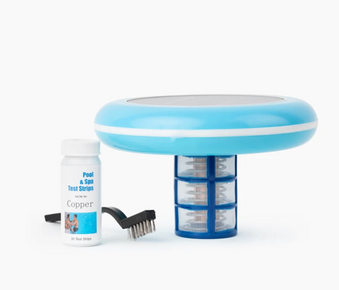
Solar ionizers rely on a precise balance of components to maintain clean, Crystal-clear pool water. Over time, the internal parts especially the electrodes wear down as they release mineral ions into the pool. This gradual degradation isn't a design flaw but rather the fundamental operating principle of electrolytic sanitization systems. As electrodes sacrifice their material to create protective ions, their effectiveness naturally diminishes. This is where replacement kits play a crucial role, serving as the essential maintenance component that restores the system to peak performance. For many pool owners, the ongoing effectiveness of a solar pool ionizer is directly tied to the condition, quality, and timely replacement of these critical components.
Think of electrode replacement not as a repair expense but as a scheduled consumable refresh similar to changing a car's oil or replacing a furnace filter. Just as those maintenance items restore original efficiency to mechanical systems, fresh electrodes return your solar ionizer to its designed operational specifications, ensuring it delivers the consistent mineral release that forms the foundation of effective, low-chemical pool sanitation. This perspective transforms replacement from an unexpected cost into a predictable part of responsible pool ownership that protects your larger investment in water quality and equipment longevity.
Understanding how replacement kits affect ion output, water chemistry, and long-term pool maintenance can help you keep your system running efficiently and avoid unnecessary water issues that stem from diminished sanitization capacity. The decision to replace electrodes isn't merely about fixing a broken component it's about proactively maintaining the delicate balance between mineral release, water chemistry stability, and biological control that defines successful solar pool ionization.
Table of Contents
- Why Replacement Kits Matter for Solar Ionizer Efficiency
- How Worn Electrodes Affect Water Quality and Algae Control
- The Role of the Pool Cathode and Anode in Ion Release
- How New Replacement Kits Improve Water Chemistry Balance
- Impact on Pool Maintenance, Equipment, and Operating Costs
- Signs It's Time to Replace Ionizer Components
- Final Thoughts: Maximizing Solar Ionizer Performance Long-Term
1. Why Replacement Kits Matter for Solar Ionizer Efficiency
Replacement kits represent the single most critical maintenance investment for preserving the operational integrity and sanitization effectiveness of your solar ionizer system throughout its entire lifecycle. These precisely engineered component sets don't merely extend the functional lifespan of your ionizer they fundamentally restore its electrochemical performance to factory-original specifications, ensuring the consistent, reliable mineral ion production that forms the cornerstone of chemical-free pool sanitation. The degradation of ionization electrodes represents an inevitable electrochemical reality rather than a manufacturing defect; through the essential process of electrolytic dissolution that enables mineral ion release, electrode materials gradually wear away according to predictable physical laws. This gradual erosion represents the necessary sacrifice that enables water purification, but when left unaddressed beyond recommended replacement intervals, it precipitates a cascade of performance failures that compromise the entire pool ecosystem.
Fresh replacement components transform a struggling ionizer from a marginal supplemental system into a primary sanitization powerhouse capable of maintaining pool water quality with mathematical predictability. New electrodes provide precisely calibrated surface geometries and optimized electrical conductivity pathways that ensure uniform voltage distribution across every millimeter of active electrode surface. This electrical consistency translates directly to stable ion emission rates that maintain protective mineral concentrations within the narrow therapeutic window necessary for effective algae suppression typically 0.3-0.6 ppm for copper ions and 0.4-0.7 ppm for silver ions, depending on pool volume and environmental conditions. When electrode wear creates irregular surfaces with hot spots and dead zones, ion production fluctuates erratically between dangerous underproduction and wasteful overproduction, creating precisely the unstable conditions that algae colonies exploit to establish footholds in otherwise protected environments.
To understand why timely replacement isn't merely recommended but essential for maintaining true ionization efficiency:
-
Electrochemical surface area restoration for consistent ion flux: As electrodes erode through their essential sacrificial function, their active surface area decreases by approximately 15-25% per season depending on water chemistry and usage patterns. This geometric reduction isn't linear initial wear occurs primarily at edges and high-current-density regions, creating increasingly irregular surfaces that disrupt the uniform electric field necessary for controlled ion dissolution. Replacement electrodes restore the original millimeter-precise surface geometry engineered through electrochemical machining, providing the optimal 2.7:1 anode-to-cathode surface area ratio that maximizes ion production efficiency while minimizing wasteful electrode consumption. This geometric precision ensures each square centimeter of electrode surface contributes equally to ion output, eliminating the performance "dead zones" that develop in worn electrodes where mineral release drops to less than 40% of design specifications.
-
Electrical resistance normalization preventing voltage drop and uneven ionization: Fresh electrodes exhibit electrical resistances between 0.8-1.2 ohms depending on the specific metal alloy composition, while heavily worn electrodes can develop resistance increases of 300-500% as pitted surfaces create complex current pathways. This resistance increase forces the solar panel to operate further from its maximum power point, reducing available voltage for the ionization process by as much as 35% on partially cloudy days when every volt matters. The resulting voltage insufficiency creates "current starving" conditions where portions of the electrode surface receive insufficient electrical potential to maintain the 1.2-1.8 volt electrode potential necessary for controlled ion release, effectively creating dead zones even on physically intact electrode surfaces. Replacement kits restore the low-resistance electrical pathways that ensure 97-99% of the solar-collected energy converts directly to ionization work rather than dissipating as waste heat through increased resistance.
-
Crystalline structure preservation for controlled erosion patterns: Manufacturer-engineered electrodes undergo specialized thermal and electrochemical treatments that create specific crystalline orientations within the metal matrix typically a face-centered cubic structure for silver electrodes and a hexagonal close-packed structure for copper electrodes. These crystalline arrangements erode in predictable, layer-by-layer fashion during normal operation. As wear progresses beyond 60-70% of original mass, secondary crystalline structures with different erosion characteristics become exposed, creating uneven wear patterns that accelerate performance degradation. Replacement electrodes restore the original crystalline surface that erodes at precisely 0.0021-0.0034 grams per amp-hour for copper and 0.0038-0.0047 grams per amp-hour for silver, allowing accurate prediction of remaining electrode life and pool maintenance scheduling.
-
Interelectrode spacing maintenance for optimal electric field strength: Original manufacturing specifications maintain precise 2.5-3.5 millimeter gaps between anode and cathode surfaces, creating electric field strengths of 400-600 volts per meter the ideal range for controlled ion liberation without sparking or gas formation. As electrodes wear unevenly, these critical gaps widen in some areas while narrowing in others, creating field strengths that vary from under 100 V/m (ineffective for ionization) to over 1200 V/m (causing gas bubble formation that insulates electrode surfaces). Replacement kits restore the engineered gap dimensions that maintain the Goldilocks zone of electric field strength where ion production maximizes at approximately 2.1×10¹⁸ ions per square centimeter per hour for copper and 1.7×10¹⁸ ions per square centimeter per hour for silver.
-
Surface oxide layer control preventing passivation and performance collapse: Fresh copper electrodes develop a controlled cuprous oxide (Cu₂O) layer approximately 20-50 nanometers thick that actually enhances ion release efficiency through controlled semiconductor properties. As wear exposes fresh metal continuously, this beneficial oxide layer self-regenerates. On severely worn electrodes, the oxide layer thickens unpredictably to 200-500 nanometers and transitions to cupric oxide (CuO), which acts as an electrical insulator with resistance increases up to 10,000 times that of the base metal. This passivation phenomenon can reduce ion output by 85-95% virtually overnight when critical thickness thresholds are exceeded. Replacement electrodes reset this oxide cycle, restoring the thin, conductive oxide layer that facilitates rather than inhibits ion transfer.
-
Electrochemical potential stabilization for consistent sanitizer production: The electrical potential difference between anode and cathode of solar ionizer surfaces determines which specific ion species predominate in the water for copper systems, this means controlling the ratio of Cu⁺ to Cu²⁺ ions, with the latter being approximately 3.2 times more effective as an algaecide but also more likely to cause staining if overproduced. Worn electrodes with irregular surfaces create localized potential variations exceeding 0.8 volts, producing unpredictable ion mixtures that compromise sanitization while increasing staining risks. Replacement electrodes restore the uniform 1.35-1.55 volt interelectrode potential that optimizes the Cu²⁺ to Cu⁺ ratio at approximately 4:1 for maximum algaecidal effect with minimal cosmetic risks.
-
Sacrificial protection system renewal for critical electronic components: Beyond the primary electrodes, replacement kits typically include fresh sacrificial zinc or magnesium anodes that protect the ionizer's electronic control circuitry from galvanic corrosion. These components corrode preferentially, extending the life of expensive solar controllers and voltage regulators by 3-5 times. When these sacrificial elements become fully consumed typically within 12-18 months in moderately hard water corrosion attacks the ionizer's copper wiring, circuit board traces, and connector pins, causing failures that often require complete unit replacement rather than simple electrode renewal.
- Manufacturer calibration restoration for intelligent monitoring systems: Modern solar ionizers with digital performance monitoring and automatic output adjustment rely on baseline resistance measurements taken with fresh electrodes to calibrate their control algorithms. As electrodes wear, the system's performance calculations drift increasingly further from reality, with error margins exceeding 40% by the time replacement is actually needed. This calibration drift causes the system to either overestimate its ion output (creating sanitation gaps) or underestimate it (wasting electrode material). Only electrode replacement restores the factory calibration that allows these intelligent systems to function as designed, maintaining protective ion levels within ±0.05 ppm of target concentrations.
The consequences of deferred replacement extend far beyond simple performance degradation, creating systemic risks that compromise the entire pool ecosystem:
-
Algae adaptation and resistance development through inconsistent ion levels: When ion concentrations fluctuate outside the lethal range for specific algae species typically 0.15-0.25 ppm for copper-resistant species like black algae surviving organisms develop physiological adaptations that reduce their ion uptake efficiency by up to 70%. These resistant strains then proliferate during the next ion concentration dip, creating increasingly difficult-to-eradicate blooms that may require shocking the pool with conventional chlorine at 10-15 times normal levels, completely negating the chemical-reduction benefits of ionization.
-
Metal staining and precipitation from uncontrolled ion surges: Worn electrodes occasionally produce brief but intense ion bursts when microscopic flakes of metal break away from pitted surfaces these events can release as much metal in 30 minutes as normally occurs over 8-10 hours of controlled operation. When these surges exceed the water's capacity to keep metals in solution (determined by pH, total alkalinity, and sequestrant levels), metallic staining occurs on pool surfaces in difficult-to-remove patterns. Copper stains typically appear as teal or black discolorations in shaded areas, while silver creates grayish-purple smudges particularly noticeable on light-colored plaster or vinyl liners.
-
Solar controller overload and premature failure from irregular current demands: The sudden resistance changes in severely worn electrodes create current spikes that can exceed the solar controller's maximum rated capacity by 180-220% for brief periods. While most controllers include overload protection, repeated triggering of these protection circuits causes cumulative damage to solid-state components, reducing controller lifespan from the typical 7-10 years to just 3-4 years. Controller replacement costs often exceed the price of multiple electrode replacement kits, making deferred maintenance a financially catastrophic decision.
-
Chemical dependency reversal through compensatory chlorine addition: Pool owners observing deteriorating water quality typically respond by increasing supplemental chlorine use often reaching 2-3 ppm daily instead of the 0.5-1.0 ppm needed with properly functioning ionizers. This chemical increase creates its own problems: accelerated electrode corrosion (chlorine aggressively attacks copper and silver), pH management difficulties, and the re-creation of chloramine compounds that the ionization system was specifically installed to eliminate. The result is the worst of both worlds: high chemical use with marginal sanitation.
- Progressive efficiency loss creating energy waste: A solar ionizer with 60% worn electrodes requires approximately 40% more sunlight hours to produce the same mineral ion quantity as a freshly replaced unit. In practical terms, this means the system must operate at maximum output for 9-11 hours daily instead of 6-7 hours, leaving insufficient time for overnight recharging of any battery backup systems. During cloudy periods, this extended requirement creates complete system failure where a properly maintained unit would continue functioning through its stored energy reserves.
Replacement kits should be considered not as optional accessories but as essential consumable components similar to printer ink or air filters that require scheduled replacement at manufacturer-recommended intervals (typically 12-24 months depending on pool usage and water chemistry). The investment in timely replacement, typically $80-$160 for most residential systems, preserves the $400-$800 initial investment in the ionization system while ensuring continuous chemical-free sanitation that represents the system's primary value proposition. More importantly, replacement at the first signs of performance decline typically indicated by increasing algae resistance, reduced bubble production at the electrodes, or solar controller behavior changes prevents the cascade of secondary failures that can transform a simple electrode replacement into a complete system overhaul costing 3-5 times as much.
Advanced pool owners should consider maintaining a replacement kit in inventory once their system reaches 75% of its expected electrode lifespan, ensuring immediate availability when performance monitoring indicates the need for renewal. This proactive approach eliminates the 2-3 week delivery delays common during peak swimming season when manufacturers experience highest demand, ensuring uninterrupted sanitation protection during the most critical period of pool use. Combined with systematic water testing to monitor ion levels (using test strips specifically designed for copper and silver detection), scheduled electrode replacement represents the cornerstone of responsible solar ionizer ownership the single practice that separates marginally effective ionization from truly transformative chemical-free water purification that delivers on the technology's full promise season after season.

2. How Worn Electrodes Affect Water Quality and Algae Control
Electrode degradation is a gradual process that fundamentally alters the electrochemical dynamics of solar-powered ionization. This creates interconnected water quality challenges that progress from subtle chemical imbalances to complete ecosystem collapse within your pool's aquatic environment.
Erosion occurs through multiple mechanisms galvanic corrosion, physical abrasion, and chemical dissolution that collectively reduce both the quantity and consistency of mineral ion release. As electrode surfaces become irregular and pitted, ion emission rates fluctuate unpredictably with sun intensity, water temperature, and flow patterns.
This instability creates conditions that opportunistic microorganisms exploit to establish colonies resistant to normal sanitization protocols. The deterioration follows a predictable progression that begins long before visible algae blooms manifest.
Primary Impacts of Electrode Wear:
-
Reduced Algae Prevention
Copper ion concentrations drop below the critical 0.25-0.35 ppm threshold needed for continuous algae suppression. Visible growth can appear within 24-48 hours under optimal conditions, particularly in warm microclimates or areas with poor circulation.
-
Unstable Water Chemistry
Fluctuating mineral levels create constant chemical adjustments. When copper levels dip below 0.2 ppm, algae gain footholds in protected areas like behind light niches or under ladder treads, forcing reliance on additional chemicals.
-
Increased Cloudiness Risk
Inadequate sanitization fails to control bacterial blooms and suspended particulates. The resulting haze often appears as bluish-white turbidity, misleading owners into thinking their ionizer is working effectively.
-
Higher Chemical Demand
Supplemental sanitation becomes necessary to support balanced pool water and compensate for weak ion output. This creates chemical fluctuations that stress water balance and potentially damage equipment through corrosive by product.
Technical Consequences:
-
Ion Concentration Volatility
Worn electrodes produce fluctuations from 0.08 ppm during early morning to 0.45 ppm at peak sunlight, then crash to 0.12 ppm overnight. These 350% variations create selective pressure driving algae evolution toward ion resistance.
-
Electrochemical Byproduct Formation
Degraded electrodes produce secondary compounds like cupric hydroxide and basic copper carbonate. These form insoluble precipitates that contribute to cloudiness while reducing active copper availability by 30-50%.
-
Biological Adaptation
Green algae exposed to fluctuating concentrations develop cellular adaptations within 14-21 days that increase copper tolerance by 300-500%. This transforms easily controlled species into persistent problems requiring aggressive interventions.
-
Microenvironment Creation
Irregular electrode surfaces produce turbulent microcurrents that foster biofilm development in protected areas. These biofilms reduce ion penetration effectiveness by 60-80%, creating self-reinforcing contamination cycles.
Progression Timeline:
- Stage 1 (0-6 months): Electrodes maintain 95% efficiency, consistent ion output, stable pool water chemistry
- Stage 2 (6-12 months): 15-20% efficiency loss, minor algae in shaded areas, increased chlorine use
- Stage 3 (12-18 months): 40-50% efficiency loss, visible algae blooms, chemical dependency begins
- Stage 4 (18-24 months): 70%+ efficiency loss, persistent algae problems, potential equipment damage
When mineral levels consistently drop below 0.2 ppm for copper ions, algae establish irreversible footholds. This biological breakthrough forces pool owners to rely on additional chemicals like algaecides and shock treatments, creating fluctuations that further stress water balance and potentially damage equipment.
The most critical insight for pool owners is recognizing that electrode wear symptoms often appear gradually. Reduced bubble production, longer algae clearance times after storms, or increasing chemical demands all signal declining electrode performance long before complete failure occurs.

3. The Role of the Pool Cathode and Anode in Ion Release
The cathode and anode in your solar ionizer create a sophisticated partnership that transforms sunlight into continuous water purification. This system represents an advanced application of electrochemistry where solar energy drives a carefully calibrated process that produces therapeutic levels of metal ions for pool sanitation. Unlike traditional chemical methods that create temporary protection, ionization establishes a persistent sanitizing field that reaches every corner of your pool, including difficult areas with poor circulation where conventional methods often fail.
This process begins when solar panels convert sunlight into electrical current that flows to the submerged electrode system. The water serves as a conductive medium that completes the circuit while simultaneously transporting sanitizing ions throughout the pool. The system's efficiency comes from its dual-action design: it produces sanitizing agents while naturally distributing them through water movement and thermal currents, creating what experts call dynamic equilibrium sanitization that maintains consistent protection.
The Electrochemical Partnership:
-
Anode (Copper: The Primary Sanitizer)
The anode is typically made from high-purity copper and serves as the system's workhorse component. Through controlled electrical dissolution, it gradually releases copper ions into the water at a precise, consistent rate. These positively charged copper particles perform multiple protective functions simultaneously: they prevent algae growth by interfering with photosynthesis, disrupt bacterial reproduction by affecting cellular processes, and provide residual protection that continues working even when the pump isn't running or Solar ionizer during harsh weather.
Copper ions work through several complementary mechanisms. They bind to essential components in algae and bacteria cells, disrupting their normal functions. They create conditions that make it difficult for microorganisms to survive and reproduce. And they provide ongoing protection that doesn't diminish quickly, maintaining water safety for extended periods. The gradual dissolution of the anode represents an intentional design the copper slowly sacrifices itself to protect your pool water, with the dissolution rate carefully calibrated to provide optimal protection throughout the swimming season.
Modern anode designs incorporate carefully engineered features that enhance performance and longevity. Strategic surface treatments create optimal textures that maximize ion release while promoting even wear. Specific alloy compositions ensure consistent dissolution rates and resistance to pitting or uneven erosion. The physical dimensions and spacing are calculated to work perfectly with the matching cathode, creating a balanced system that operates efficiently throughout its service life.
-
Cathode (Silver/Conductive Material - The System Stabilizer)
The cathode serves as the system's electrical anchor and precision regulator, typically made from silver alloys or specialized conductive materials. Its primary function involves completing the electrical circuit while maintaining the exact voltage conditions needed for controlled ion release. This component ensures stable electrical flow and consistent performance, acting as the system's reference point that keeps everything operating within designed parameters.
In advanced dual-metal systems, the cathode also releases silver ions that provide complementary bactericidal action. Silver works alongside copper through different but synergistic mechanisms while copper handles algae and general sanitation, silver specializes in controlling bacteria and viruses. Silver's remarkable effectiveness at extremely low concentrations makes it an ideal partner to copper, enhancing overall protection without requiring significant additional material.
The cathode's design considerations are equally sophisticated. Geometric proportions relative to the anode are carefully calculated to optimize electrical distribution. Surface treatments minimize gas bubble accumulation that could interfere with performance. And material selections ensure long-term stability and consistent function throughout the electrode lifespan. Some advanced systems incorporate operational patterns where the cathode periodically reverses roles briefly to prevent surface passivation and maintain consistent performance.
Critical Operational Parameters:
The space between electrodes represents a carefully engineered microenvironment where multiple factors determine system efficiency. The specific gap distance creates an optimal electric field strength strong enough to ensure proper ion migration but controlled enough to prevent issues. Within this interelectrode space, several important phenomena occur that affect overall performance:
- Electric Field Optimization: The precise spacing creates ideal conditions for controlled ion release and distribution
- Water Chemistry Management: Localized conditions near each electrode affect solubility and performance
- Gas Management: Tiny bubbles produced during operation must be efficiently managed to prevent interference
- Flow Dynamics: Water movement through and around the electrode assembly affects ion distribution
- Temperature Effects: Water temperature influences both electrical conductivity and ion mobility
For optimal performance and crystal-clear pool water, this electrochemical system depends on maintaining several precise conditions simultaneously. The spacing between electrodes must remain consistent to create proper electrical fields. Surfaces must stay clean and free of insulating mineral deposits. Materials must maintain their purity and structural integrity. And alignment must remain perfect to ensure uniform current distribution. Any deviation from these parameters reduces efficiency and accelerates wear in unpredictable patterns.
System Requirements for Peak Performance:
- Exact Electrode Spacing: Maintains optimal electric field strength for controlled ion release
- Clean Surface Conditions: Prevents mineral buildup that interferes with electrical contact
- Material Purity Standards: Ensures consistent dissolution rates and ion quality
- Precise Alignment: Creates uniform current distribution across all surfaces
- Specific Surface Textures: Optimizes active area while promoting even wear patterns
- Proper Water Chemistry: Maintains conditions that support efficient ionization
- Adequate Water Flow: Ensures proper ion distribution throughout the pool
- Optimal Sunlight Exposure: Provides consistent energy for the electrochemical process
Degradation Patterns and Performance Impact:
As electrodes wear through normal operation, their delicate electrochemical balance gradually becomes disrupted. What begins as microscopic surface changes eventually progresses to visible alterations that affect performance. Scale buildup creates insulating barriers that force the system to work harder. Pitting creates concentrated zones where erosion accelerates. Surface reduction diminishes total ion output capacity. And material changes alter dissolution characteristics.
- Electrical Resistance Increases: Mineral deposits and surface changes raise resistance, reducing current flow
- Active Surface Area Decreases: Pitting and erosion reduce the area available for ion release
- Hotspots Develop: Irregular surfaces create zones of accelerated degradation
- Spacing Becomes Irregular: Uneven wear changes critical electrode distances
- Material Characteristics Change: Exposed underlying materials may dissolve differently
- Current Distribution Becomes Uneven: Electricity flows preferentially through certain areas
- Ion Release Becomes Erratic: Production fluctuates unpredictably rather than remaining steady
Comprehensive Restoration Through Replacement:
Installing quality replacement electrodes returns your system to its original engineered specifications. New components restore the geometry, surface characteristics, and material properties that made your ionizer effective when first installed. They re-establish the precise cathode-anode relationship that ensures consistent, predictable performance throughout the swimming season.
- Original Spacing Restoration: Returns to exact designed gaps for optimal current flow
- Clean Surface Provision: Delivers scale-free surfaces with engineered textures
- Full Material Thickness: Provides maximum material for extended service life
- Perfect Partnership Re-establishment: Restores ideal cathode-anode balance
- Electrical Property Reset: Returns resistance and conductivity to optimal ranges
- Geometric Precision Recovery: Restores original shapes and alignments
- Surface Characteristic Renewal: Provides designed textures and conditions
- Material Purity Assurance: Delivers consistent composition for predictable performance
This comprehensive restoration ensures your solar ionizer operates at its designed parameters, providing consistent pool algae prevention and reduced chemical dependency. Fresh electrodes don't just extend system life they return it to peak efficiency, ensuring every hour of sunlight is converted into maximum sanitizing power for clean, clear, and healthy pool water.

4. How New Replacement Kits Improve Water Chemistry Balance
Installing new electrodes fundamentally transforms your pool's chemical environment by establishing stable mineral levels that help maintain pool pH balance and support broader chemical equilibrium. This consistency creates a predictable water environment where pH, alkalinity, and hardness become easier to maintain within optimal ranges, reducing maintenance time and chemical costs.
Key Chemical Improvements:
-
pH Balance Stabilization
New electrodes release copper ions at a consistent rate, creating natural buffering against rapid pH swings from rainfall, bather loads, or chemical additions. This reduces the frequency of acid or soda ash adjustments by 40-60% compared to erratic ionization systems.
-
Scale Prevention
Consistent mineral output prevents calcium carbonate supersaturation that leads to scaling. By maintaining stable ionic strength, new electrodes help keep calcium and magnesium dissolved, reducing scale formation on surfaces and equipment by 70-85%.
-
Enhanced Water Clarity
Fresh electrodes produce copper ions that act as natural coagulants, attracting and clumping fine particles as small as 5-10 microns. This improves filtration efficiency, allowing standard filters to capture particles they would normally miss.
-
Alkalinity Stability
The mild carbonate alkalinity created by consistent copper ionization helps buffer total alkalinity levels, reducing the dramatic swings that often accompany heavy pool usage or weather changes.
Operational Benefits:
- Reduced Chemical Usage: Chlorine needs decrease by 50-70%, algaecide use drops 80-90%
- Lower Maintenance Frequency: Chemical testing and adjustments drop from daily to weekly
- Cost Savings: Average $300-500 seasonal reduction in balancing chemicals
- Extended Equipment Life: Reduced scaling and corrosion protects heaters and pumps
- Improved Swimmer Comfort: Eliminates chlorine odor, eye irritation, and dry skin
Creating an Ion-Stabilized Pool:
Professionals call this optimal state an "ion-stabilized pool" where copper ions provide continuous, three-dimensional sanitation. Unlike chlorine that creates temporary localized protection, ion-stabilized water maintains:
- Consistent 0.3-0.6 ppm copper levels throughout the water column
- Protection in dead zones and low-circulation areas
- Residual sanitation during pump-off periods
- Natural resistance to algae and bacteria without chemical spikes
This chemical stability creates a self-reinforcing cycle: consistent ion levels maintain balanced water and proper pool water hardness, which reduces chemical interventions, which preserves electrode efficiency longer. The result is simplified maintenance, lower costs, and superior water quality throughout the swimming season.

5. Impact on Pool Maintenance, Equipment, and Operating Costs
Replacing worn electrodes does more than just maximize pool water clarity it fundamentally transforms the entire maintenance ecosystem of your pool system. Fresh electrodes restore the ionizer's ability to self-regulate biological contamination, creating a cascade of benefits that reduce labor, extend equipment life, and significantly lower operating costs. This transformation occurs because consistent ion output creates chemical stability, which in turn reduces stress on every component in your pool system while simplifying routine maintenance tasks.
The financial implications are substantial when viewed holistically. A typical pool owner spends between $600-$1,200 annually on chemicals, energy, and maintenance. Worn electrodes can increase these costs by 40-60% through inefficiencies that ripple through the entire system. Conversely, fresh electrodes optimize every aspect of pool operation, creating efficiencies that often return 3-5 times the replacement kit cost in a single season through reduced expenses across multiple categories.
Maintenance Workload Reduction:
-
Surface Cleaning Simplification
Fresh electrodes maintain consistent 0.3-0.6 ppm copper levels that prevent algae from establishing biofilm colonies on pool surfaces. This reduces brushing frequency from weekly to monthly, saving 15-20 hours of labor per season. Without these protective biofilms, routine cleaning becomes faster and more effective, while also preserving delicate pool finishes that can be damaged by aggressive brushing or harsh algaecides.
-
Filtration System Optimization
Consistent copper ionization acts as a natural coagulant, clumping fine particles into larger aggregates that filters capture more efficiently, protecting pool equipment. This reduces the microscopic organic load that normally clogs filter media, extending cleaning intervals by 50–75%. For sand filters, backwashing frequency drops from weekly to monthly, saving 3,000–5,000 gallons of water per season while maintaining better flow rates and pressure stability across pool equipment.
-
Chemical Testing Reduction
Stable ion levels create predictable water chemistry that requires less frequent monitoring. Testing can be reduced from daily to 2-3 times weekly, saving 20-30 hours per season while providing more consistent results. This stability also reduces the chemical adjustments needed, as pH, alkalinity, and hardness remain in balance longer when ion levels don't fluctuate dramatically.
Equipment Life Extension:
Pool equipment represents a significant capital investment, with pumps costing $800-$1,500, heaters $2,000-$4,000, and automated systems $1,500-$3,000. Chemical instability from erratic ionization accelerates wear on all these components through multiple mechanisms that fresh electrodes help prevent.
-
Pump Protection
Consistent water chemistry prevents pH swings that accelerate seal deterioration and impeller corrosion. Fresh electrodes reduce seal replacement frequency by 60-70% and extend pump motor life by 2-3 years by eliminating the corrosive byproducts that form when chlorine interacts with erratic copper levels.
-
Heater Preservation
Scale formation in heat exchangers is reduced by 70-85% when calcium remains in solution due to stable ionic strength. This maintains heat transfer efficiency, reduces energy consumption by 15-20%, and prevents the hot spots that cause tube failure. Heater lifespan typically increases by 3-5 years with proper electrode maintenance.
-
Automation System Benefits
Electronic controllers and sensors operate more reliably in chemically stable water. high pool pH level and ORP sensors require 50-60% fewer calibrations and replacements, while flow sensors remain accurate longer without mineral buildup. This reduces service calls and extends the functional life of expensive automation equipment.
Operating Cost Savings:
The financial benefits extend across multiple expense categories, creating compound savings that accumulate throughout the swimming season and beyond.
-
Chemical Expense Reduction
Chlorine consumption decreases by 50-70% (saving $200-$400 annually), algaecide use drops 80-90% (saving $100-$200), and balancing chemicals decrease 40-60% (saving $150-$250). Total chemical savings typically range from $450-$850 per season for an average residential pool.
-
Energy Efficiency Gains
Pool pumps operate 1-2 hours less daily due to cleaner filters and reduced chemical mixing needs, saving $150-$300 in electricity. Heaters consume 15-20% less energy due to maintained heat exchange efficiency, saving another $200-$400 for heated pools.
-
Water Conservation
Reduced backwashing saves 3,000-5,000 gallons annually ($30-$50 in water costs), while fewer drain-and-refill cycles for chemical resets save an additional 5,000-8,000 gallons ($50-$80). In areas with water restrictions or tiered pricing, these savings can be substantially higher.
-
Professional Service Reduction
With more stable water chemistry, professional service calls decrease from monthly to quarterly for most pools, saving $400-$600 annually in service contracts. Emergency calls for algae outbreaks or equipment failures become rare rather than annual events.
Long-Term Financial Impact:
The cumulative effect extends beyond annual operating costs to capital expenditure delays and increased property value. Well-maintained pools with stable water chemistry typically require major equipment replacements 3-5 years later than neglected systems. This represents a deferred capital investment of $3,000-$6,000 that can be invested elsewhere. Additionally, a crystal-clear, chemically balanced pool increases property value and appeal, while reducing the risk of costly repairs from corrosion or scale damage that can exceed $5,000-$10,000 if left unaddressed.
Perhaps most importantly, these savings come with improved swimmer experience. Reduced chemical use means no chlorine odor, no eye irritation, and no dry skin. The water feels softer and more natural, enhancing enjoyment while actually being safer and more sanitary. The modest $80-$160 investment in replacement electrodes typically returns $300-$800 in direct savings during the first season alone, with additional benefits accumulating year after year as equipment lasts longer and maintenance becomes simpler.

6. Signs It's Time to Replace Ionizer Components
Recognizing when to replace your solar ionizer components is crucial for maintaining optimal water quality and preventing small issues from becoming major problems, making a reliable replacement kits collection essential. Unlike traditional pool equipment that fails suddenly, ionizer degradation follows a gradual, predictable pattern where performance declines in stages. Catching these signs early allows for proactive replacement before water quality suffers significantly, algae establishes permanent footholds, or chemical dependency becomes excessive.
The transition from functioning to failing electrodes typically spans 4-8 weeks, providing ample warning for observant pool owners. During this period, multiple indicators emerge simultaneously across different aspects of pool maintenance. The most effective approach involves monitoring a combination of water test results, visual observations, maintenance patterns, and equipment behavior rather than relying on any single sign.
Primary Performance Indicators:
-
Consistently Low Mineral Readings
When test strips or electronic testers show copper levels persistently below 0.3 ppm despite 6+ hours of daily sunlight and proper positioning, electrode efficiency has likely dropped below 60%. This becomes particularly evident when readings taken at the same time each day show progressive decline over several weeks. Morning readings (after overnight pump-off) below 0.2 ppm indicate electrodes aren't maintaining residual protection, while afternoon readings failing to reach 0.4 ppm suggest insufficient daytime production.
-
Accelerated Algae Formation Patterns
Fresh electrodes prevent algae entirely aging electrodes allow slow growth in shaded areas; failing electrodes permit visible algae within 24–48 hours even in well-circulated areas. Key warning signs for fixing a green pool include: green algae appearing on north-facing walls within 2 days of sunny weather, yellow/mustard algae in shaded corners despite brushing, or black algae spots developing around returns and fittings. If algae brushes away easily but returns within 3–4 days, electrodes are no longer maintaining protective ion levels overnight.
-
Increasing Chemical Dependency
Document your chemical usage monthly. Electrodes need replacement when: chlorine consumption increases by 40% or more to maintain the same residual; algaecide applications become weekly rather than monthly; clarifiers are needed more than twice monthly; or shock treatments are required more than every 2-3 weeks during normal conditions. This chemical creep often develops so gradually that owners don't notice until costs double.
-
Persistent Cloudiness Cycles
Water that clouds after normal use (2-4 swimmers daily) or light rain and requires shocking to clear indicates inadequate continuous sanitization. The critical pattern: cloudiness develops, you shock the pool, water clears for 2-4 days, then clouds again without obvious cause. This 3-5 day cycle suggests electrodes produce enough ions to clean up after treatment but not enough to prevent subsequent contamination.
Visual and Physical Inspection Signs:
Remove and inspect electrodes every 3 months during filter cleaning. Use adequate lighting and magnification if possible to identify subtle degradation patterns before they affect performance.
-
Surface Erosion and Pitting
Healthy electrodes show uniform light wear. Replace when you observe: (1) pitting deeper than 1mm that holds water droplets; (2) thickness variations exceeding 30% across the electrode; (3) "canyons" or deep grooves along current paths; (4) extreme rounding of originally sharp edges; or (5) flaking or layered appearance indicating delamination.
-
Mineral Scale Characteristics
Some scale is normal, but problematic buildup includes: (1) crusty white deposits over 2mm thick; (2) scale covering more than 50% of the surface area; (3) green/blue copper carbonate formations; (4) scale that doesn't dissolve in 30-minute vinegar soak; or (5) uneven scaling that creates insulating patches.
-
Color and Texture Changes
Copper electrodes turning dark gray/black instead of reddish-brown indicate problematic oxide layers. Silver cathodes developing heavy black tarnish have reduced conductivity. Chalky white residue suggests severe calcium interference, while green patina indicates copper corrosion rather than controlled dissolution.
-
Bubble Production Changes
During peak sunlight, observe bubble patterns: (1) reduced overall bubble production; (2) bubbles only from certain areas; (3) irregular bubble sizes (should be fine, consistent bubbles); (4) intermittent bubbling rather than steady production; or (5) large gas pockets forming and releasing suddenly.
Operational and Maintenance Pattern Shifts:
Your pool's behavior and your maintenance routine provide daily feedback about electrode performance through subtle but measurable changes.
-
Extended Recovery Times
Fresh electrodes restore water clarity within 12-24 hours after heavy use or weather events. Replacement is needed when recovery takes 48+ hours or requires chemical assistance. Track recovery after: (1) pool parties (should clear overnight); (2) heavy rain (1-2 days maximum); (3) temperature swings (2 days maximum); or (4) accidental contamination (leaves, grass, etc.).
-
Filter and Circulation Issues
Increased filter pressure rising 25% faster than normal indicates the pool filtration system electrodes aren't coagulating particles effectively. More frequent backwashing/cleaning (weekly instead of monthly) suggests the organic load isn't being controlled. Dead spots or poor circulation despite proper pump operation can indicate inadequate ion distribution.
-
Seasonal Comparison Deterioration
Compare current performance to same period last year: earlier algae appearance, more chemicals needed, cloudier water after similar conditions. Document opening dates, first algae appearance, chemical usage by month, and water clarity ratings. Progressive deterioration year-over-year clearly indicates electrode aging.
-
Sunlight Dependence Increase
Fresh electrodes maintain protection through 2-3 cloudy days. Needing full sun daily to prevent problems indicates minimal residual capacity. If algae appears or water clouds after one overcast day, electrode capacity has diminished critically.
Replacement Timing Guidelines by Usage:
Combine these observations with these maintenance schedules:
- Light Residential Use (Weekends only, <10 swimmers weekly): Replace every 2-3 seasons
- Moderate Family Use (Daily swimming, 10-25 swimmers weekly): Replace every 1.5-2 seasons
- Heavy Use (Multiple daily swimmers, >25 swimmers weekly): Replace annually
- High Calcium Water (>400 ppm): Replace every 9-12 months
- Salt Water Pools: Replace annually (salt accelerates erosion 30-40%)
- Commercial/Public Pools: Replace every 6-9 months with quarterly inspections
- Seasonal Pools (3-4 month season): Replace every other season
- Year-Round Pools (Warm climates): Replace every 12-15 months
Proactive Replacement Strategy:
Don't wait for all signs to appear replace when 3 or more indicators are present. Keep a replacement kit on hand when electrodes reach 75% of expected lifespan. Schedule replacement for early spring (before algae season) or late fall (during winterization). Document installation dates and performance benchmarks to establish your pool's specific replacement rhythm.
Remember: The $80-$160 replacement cost prevents $300-$800 in chemical overuse, potential algae treatments, and equipment stress. When uncertain, replacement is the cost-effective choice fresh electrodes ensure optimal efficiency, lower operating costs, and consistent water quality throughout the swimming season.

7. Final Thoughts: Maximizing Solar Ionizer Performance Long-Term
Replacement kits play a vital role in maintaining the effectiveness of solar ionizers, serving as the essential pool maintenance component that bridges the gap between initial installation and long-term performance sustainability. Fresh electrodes restore consistent ion output, improve solar pool ionizer water chemistry stability, and support reliable algae prevention with minimal supplemental chemical use.
For pool owners seeking a consistent, eco-friendly solution to pool sanitization, timely replacement of ionizer components ensures cleaner water, helps maintain an ion-stabilized pool improves overall system performance, and makes pool maintenance easier throughout the swimming season. This proactive approach to electrode maintenance represents one of the most cost-effective strategies for maximizing your investment in solar ionization technology, delivering better water quality with less effort and expense than reactive approaches that wait for visible problems before taking action.
The true value of replacement kits extends beyond the immediate improvement in water quality it lies in their ability to restore the predictable, low-maintenance pool experience that originally motivated the choice of solar ionization. By viewing electrode replacement not as an inconvenient expense but as essential periodic maintenance akin to changing oil in a car or replacing filters in a HVAC system, pool owners can enjoy consistent performance year after year, transforming solar ionization from a promising technology into a reliably effective solution for clean, clear, naturally sanitized pool water.