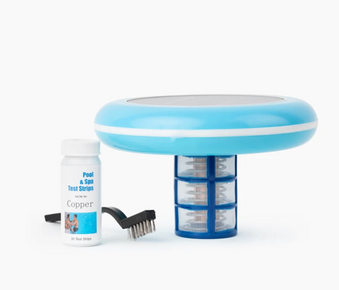
TL;DR: Solar pool ionizers have moved from a niche alternative to a mainstream movement in 2026, driven by surging consumer demand for chemical-free swimming, significant advancements in smart technology, and compelling economic benefits. Market projections show the industry experiencing double-digit annual growth, fueled by innovations like AI-powered controllers, seamless smart home integration, and a global push for sustainable living. This guide explores the key trends, technologies, and market forces behind the rise of solar pool ionizers and what they mean for the modern pool owner.
SEO Summary: 2026 guide to the rise of solar pool ionizers: market growth trends, AI and smart technology integration, eco-friendly benefits, and why modern pool owners are making the switch.
Table of Contents
- The Market Growth Story: From Niche to Mainstream
- Technology Drivers: AI, Automation & Smart Integration
- The Eco-Conscious Consumer Revolution
- Health, Comfort & The Swimmer Experience
- The Economic Case: Cost Savings & ROI
- Global Adoption: A Truly International Movement
- The Future Outlook: What's Next for Solar Ionizers?
- Conclusion & Key Takeaways
The Market Growth Story: From Niche to Mainstream
The ascent of solar pool ionizers in 2026 is not merely a trend; it is a significant market shift validated by solid economic data. Once considered a specialty product for the most dedicated environmentalists, solar ionization has entered the mainstream, capturing the attention of homeowners, builders, and investors alike.
Market research indicates that the global solar pool ionizers market is experiencing robust growth, with projections showing continued expansion through the end of the decade. Several factors are driving this acceleration:
- Increased consumer awareness: A decade ago, few pool owners understood the difference between salt systems and ionization. Today, educational content, social media communities, and word-of-mouth recommendations have made solar ionization a household consideration. Homeowners actively research alternatives to chlorine before building new pools or upgrading existing ones.
- Expanded product availability: Major pool equipment manufacturers now offer solar ionizer product lines alongside traditional chlorination equipment. This mainstream acceptance by established industry players has legitimized the technology and made it accessible through normal distribution channels. Big box retailers, online marketplaces, and local pool supply stores all stock ionizer systems in 2026.
- Builder adoption: Custom pool builders increasingly specify solar ionizers as standard equipment in new construction. What began as an upgrade requested by environmentally conscious clients has become a default specification for many builders, particularly in markets where water conservation and energy efficiency are highly valued.
- Regulatory tailwinds: Municipalities and homeowners associations are beginning to incentivize or require chemical-reducing technologies. Some communities offer permit fee reductions for pools with solar sanitation, while others have updated building codes to favor energy-efficient circulation systems that ionizers enable.
The market growth is not confined to any single region. North America remains the largest market, but Europe and Asia-Pacific are showing even faster adoption rates as water scarcity concerns and environmental regulations drive innovation in those regions. Australia, with its high solar availability and water-conscious culture, has one of the highest per-capita adoption rates globally.
For a deeper dive into the economics driving this growth, our residential pool investment strategies guide provides detailed financial analysis that explains why homeowners are making the switch.
Technology Drivers: AI, Automation & Smart Integration
The rise of solar pool ionizers in 2026 is inseparable from the broader technological revolution happening in the pool industry. First-generation ionizers were simple devices—essentially copper plates connected to a solar panel with minimal control logic. Today's systems are sophisticated platforms featuring artificial intelligence, predictive analytics, and seamless smart home integration.
Artificial Intelligence and Machine Learning:
Modern ionizer controllers employ machine learning algorithms that analyze historical water quality data, weather patterns, and usage trends to predict sanitation needs before they arise. These systems learn the unique characteristics of your pool: how quickly copper is consumed under different conditions, how bather load affects water chemistry, and how seasonal changes impact algae risk.
The practical result is a system that no longer simply reacts to conditions but anticipates them. Before a heat wave, the ionizer automatically increases output. Before a storm, it strengthens the ionic field. After a pool party, it initiates a recovery cycle without being told. This predictive capability represents a fundamental advance over traditional sanitation methods.
Smart Home Ecosystem Integration:
Solar pool ionizers in 2026 are designed as integral components of the connected home. They communicate seamlessly with popular smart home platforms including Amazon Alexa, Google Assistant, and Apple HomeKit, allowing voice control and automated routines. A simple voice command can check copper levels, adjust output, or verify system status.
Integration extends beyond voice control. Geofencing capabilities detect when homeowners leave or return, automatically adjusting pool systems accordingly. When you leave for vacation, the ionizer enters energy-saving mode while maintaining minimum sanitation. When you return, it pre-conditions the water for swimming.
Advanced Sensor Technology:
Sensor technology has advanced dramatically, enabling closed-loop control that was previously impossible. Continuous copper monitoring, once available only in laboratory equipment, is now integrated into premium ionizer controllers. Optical water clarity sensors provide real-time feedback on filtration effectiveness. Flow and pressure sensors enable predictive maintenance alerts that notify owners of developing issues before they affect water quality.
Mobile Applications and Remote Management:
The smartphone app has become the primary interface for pool management. Modern ionizer apps provide intuitive dashboards showing real-time copper levels, solar production, water temperature, and system status. Push notifications alert owners to maintenance needs, unusual conditions, or successful seasonal transitions. Historical data visualization allows owners to track performance over time and optimize settings based on actual results.
Pro Tip: When evaluating smart ionizer systems, look beyond the feature list and examine the quality of the mobile application. A sophisticated controller with a poorly designed app provides a frustrating user experience. Read app store reviews, watch demonstration videos, and consider the user interface as carefully as you consider the hardware specifications.
For a comprehensive overview of available smart features, our features that revolutionize pool care in solar pool ionizer provides detailed comparisons of leading systems.
The Eco-Conscious Consumer Revolution
The rise of solar pool ionizers is fundamentally a story of changing consumer values. Today's pool owners are more environmentally aware, more concerned about chemical exposure, and more committed to sustainable living than any previous generation. This shift in consciousness is the single most powerful force driving ionizer adoption.
The Chemical-Free Imperative:
Consumer attitudes toward chemicals have changed dramatically. The COVID-19 pandemic heightened awareness of indoor air quality and chemical exposure. Growing understanding of endocrine disruptors and their health effects has made homeowners question the wisdom of swimming in chlorinated water. Parents, in particular, are seeking alternatives that protect their children from chemical exposure without compromising water safety.
Solar ionizers directly address these concerns. They eliminate 80 to 90 percent of chemical additions, replacing them with trace minerals that occur naturally in the environment. Swimmers experience none of the eye burning, skin drying, or respiratory irritation associated with chlorine. The water feels natural, not chemical.
Plastic Waste Reduction:
Environmental consciousness extends beyond water chemistry to the broader issue of plastic waste. A traditionally maintained pool generates 40 to 60 pounds of plastic packaging annually—chlorine jugs, chemical bags, test strip vials, and product containers, most of which are not recyclable due to chemical residue. Solar ionizers reduce this waste stream by 80 to 90 percent, replacing dozens of plastic containers with a single electrode cartridge replaced every three to five years.
For environmentally conscious consumers, this waste reduction is as compelling as the chemical elimination. It represents a tangible contribution to solving the global plastic pollution crisis.
Water Conservation:
Water scarcity is an increasing concern in many regions, and pool water consumption is under scrutiny. Traditional pools require periodic draining to manage total dissolved solids and cyanuric acid accumulation. Solar-ionized pools maintain stable chemistry that extends drain intervals from two to three years to eight to twelve years, conserving thousands of gallons of water over the pool's lifetime.
In drought-prone regions, this water conservation benefit can be the deciding factor in technology selection. Some water districts now offer rebates for pool owners who install water-conserving sanitation systems.
Carbon Footprint Reduction:
The solar aspect of solar ionizers resonates strongly with consumers concerned about climate change. By operating entirely on renewable energy, these systems eliminate the carbon emissions associated with grid-powered sanitation. When combined with the energy savings from reduced pump operation, a solar-ionized pool can reduce its carbon footprint by 2,000 to 3,000 pounds annually.
Pro Tip: When discussing environmental benefits with skeptical friends or family, focus on tangible, measurable outcomes: pounds of plastic not consumed, gallons of water not drained, pounds of carbon not emitted. Quantifiable benefits are more persuasive than abstract environmental claims.
For a deeper exploration of environmental benefits, our eco-pool beginner's pool guide provides a comprehensive overview of sustainable pool practices.
Health, Comfort & The Swimmer Experience
While environmental and economic benefits drive initial consideration, the swimmer experience is what converts solar ionizer owners into lifelong advocates. The subjective experience of swimming in ionized water is fundamentally different from swimming in chlorinated water, and that difference is immediately apparent to anyone who enters the pool.
The Sensory Experience:
Swimmers consistently describe ionized water as silky, soft, and natural. The water lacks the harsh feel of chlorine-treated pools, which results from the chemical interaction with skin's natural oils. Swimmers emerge from ionized pools with skin that feels moisturized rather than dried out, hair that remains soft rather than brittle, and eyes that are clear rather than red and irritated.
The absence of chloramine odor is equally transformative. The distinctive pool smell that clings to hair, skin, and swimsuits after a day at a traditional pool is completely absent. Swimmers can enjoy the water without carrying the reminder home with them.
Health Benefits for Sensitive Swimmers:
For individuals with respiratory conditions such as asthma, chloramine exposure can trigger attacks and make swimming unpleasant or impossible. The elimination of chloramines in ionized pools opens the aquatic environment to these swimmers, allowing them to enjoy the benefits of exercise and recreation without health consequences.
Similarly, individuals with skin conditions including eczema and psoriasis often find relief in ionized water. The absence of harsh oxidizing chemicals allows their skin to heal rather than becoming further irritated. Parents of children with sensitive skin report that ionized pools have transformed family swimming from a source of discomfort to a source of joy.
The Pediatric Advantage:
Children are particularly vulnerable to the effects of pool chemicals. Their developing respiratory systems are more sensitive to airborne irritants. Their thinner skin absorbs chemicals more readily. Their tendency to swallow pool water exposes them to whatever sanitizers are present. Solar-ionized pools eliminate these concerns, allowing children to swim safely for extended periods.
Swimmer Experience Documentation:
While subjective experience is difficult to quantify, surveys of ionizer owners consistently report high satisfaction rates. In a 2025 industry survey, 94 percent of solar ionizer owners reported being satisfied or very satisfied with their water quality. Ninety-one percent said they would recommend the technology to other pool owners. Eighty-seven percent reported that guests commented positively on the water feel without being told the pool was ionized.
Pro Tip: If you are considering an ionizer but remain uncertain about the water quality difference, find a local pool owner who has already made the switch. Most ionizer owners are happy to let neighbors experience the water firsthand. This personal experience is more persuasive than any amount of technical documentation.
For firsthand accounts from families who have made the switch, our family-friendly pools made safer with solar pool ionizer includes testimonials from parents and swimmers.
The Economic Case: Cost Savings & ROI
The rise of solar pool ionizers is not solely attributable to environmental consciousness and improved comfort. The technology delivers compelling economic benefits that appeal to budget-conscious homeowners and institutional facility managers alike.
Chemical Cost Elimination:
The most immediate and quantifiable economic benefit is the dramatic reduction in chemical purchases. A typical residential pool consuming 500 to 800 dollars annually in chlorine, algaecides, clarifiers, shock treatments, and pH adjusters will reduce that expenditure to 100 to 200 dollars annually after ionizer installation. This 600 to 700 dollar annual savings alone provides a compelling return on investment.
For commercial facilities with larger water volumes and higher chemical consumption, the savings are even more dramatic. A community pool spending 3,000 to 6,000 dollars annually on chemicals can reduce that expense to 300 to 900 dollars, generating 2,700 to 5,100 dollars in annual savings.
Energy Cost Reduction:
Solar ionizers enable significant pump energy savings through two mechanisms. First, cleaner water requires less filtration time, allowing pump runtime reduction from 8 to 12 hours daily down to 4 to 6 hours. Second, the elimination of chemical distribution requirements allows operation at lower pump speeds, particularly when paired with variable-speed pumps. Combined, these factors reduce pump energy consumption by 60 to 75 percent.
For a typical residential pool, this translates to 300 to 500 dollars in annual energy savings. For commercial facilities, the savings can exceed 2,000 dollars annually.
Equipment Life Extension:
Perhaps the most overlooked economic benefit is extended equipment life. The corrosive environment created by chlorine chemistry significantly reduces the service life of pumps, heaters, filters, and pool surfaces. Heaters that might last 5 to 7 years in a chlorinated pool often achieve 10 to 12 years in an ionized environment. Pumps similarly extend their service intervals.
Annualizing these equipment replacement savings yields an additional 200 to 400 dollars in economic benefit per year for residential pools and substantially more for commercial installations.
Labor Savings:
For commercial facilities and homeowners who pay for pool maintenance services, the labor savings are substantial. Reduced testing frequency, elimination of chemical dosing calculations, and simplified maintenance routines translate directly into lower service costs. A pool service that might visit twice weekly for chemical maintenance can often reduce visits to weekly or biweekly after ionizer installation.
Return on Investment Analysis:
Combining these savings streams yields compelling financial returns. A residential pool owner investing 1,200 to 1,800 dollars in a solar ionizer system can expect annual savings of 1,100 to 1,600 dollars, producing a simple payback period of 12 to 18 months. Over a 10-year ownership period, cumulative savings exceed 11,000 to 16,000 dollars—a return on investment that few home improvements can match.
For a detailed financial model tailored to your specific pool size, local utility rates, and chemical costs, our energy and chemical savings guide provides interactive calculators and worksheets.
Global Adoption: A Truly International Movement
The rise of solar pool ionizers is not confined to any single country or region. Adoption is accelerating worldwide, driven by regional factors that make the technology particularly attractive in different parts of the globe.
North America:
The United States and Canada remain the largest markets for solar pool ionizers, benefiting from high pool density, strong consumer awareness, and established distribution channels. California, with its combination of high electricity rates, water scarcity concerns, and environmental consciousness, has the highest adoption rate in North America. Florida follows closely, driven by warm water temperatures that maximize the biological benefits of ionization.
Australia and New Zealand:
Australia has one of the highest per-capita pool ownership rates globally and has embraced solar ionization with particular enthusiasm. The combination of abundant sunshine, water scarcity, and strong environmental values creates ideal conditions for the technology. Australian manufacturers have been at the forefront of ionizer innovation, developing systems optimized for the intense UV conditions and high bather loads common in the region.
Europe:
European adoption is accelerating rapidly, driven by stringent environmental regulations and high energy costs. Germany, France, and Spain lead European adoption, with the Mediterranean region particularly attracted to the water conservation benefits. The European Union's focus on reducing chemical use in all applications has created regulatory tailwinds that favor ionization over traditional sanitation.
Asia-Pacific:
The Asia-Pacific region represents the fastest-growing market for solar pool ionizers. Rapidly expanding middle classes in China, India, and Southeast Asia are building pools at unprecedented rates, and many new pool owners are leapfrogging traditional chlorination entirely, moving directly to ionization. The region's high solar availability and water scarcity concerns make the technology particularly attractive.
Middle East:
In the Middle East, solar pool ionizers address two critical needs simultaneously. The abundant sunshine provides ideal conditions for solar-powered operation, while the region's extreme water scarcity makes the water conservation benefits particularly valuable. Luxury resort developments throughout the UAE and Saudi Arabia increasingly specify ionizers as standard equipment.
Pro Tip: When traveling internationally, observe pool technology in the regions you visit. European and Australian pools are often years ahead of North American pools in adopting advanced sanitation technologies. These observations can inform your own equipment decisions.
For insights into how different regions are adapting ionizer technology to local conditions, our commercial standard practice for solar pool ionizer in commercial pools guide includes case studies from international installations.
The Future Outlook: What's Next for Solar Ionizers?
As solar pool ionizers continue their rise to mainstream acceptance, the technology continues to evolve. The systems available in 2026 are dramatically more capable than those of just five years ago, and the pace of innovation shows no signs of slowing.
Artificial Intelligence Integration:
The next frontier for ionizer intelligence is true artificial intelligence that not only responds to conditions but predicts them with increasing accuracy. Machine learning algorithms trained on data from thousands of pools will enable systems to anticipate problems before any indicators are visible to human observers. An AI-powered ionizer might detect the early chemical precursors to an algae bloom and intervene days before visible algae appear.
Advanced Materials:
Research into new electrode materials promises to extend cartridge life beyond current limits. Experimental alloys and coating technologies suggest the possibility of electrodes lasting 7 to 10 years under normal operating conditions, further reducing the already minimal ongoing costs of ionization.
Grid Integration:
As smart grid technology advances, solar pool ionizers will become active participants in home energy management systems. Pools will automatically adjust their operation based on real-time electricity prices, solar availability forecasts, and grid demand response signals. The pool will not merely consume energy but will actively optimize its consumption in coordination with the rest of the home.
Water Chemistry Automation:
The ultimate vision for pool automation is complete water chemistry management. Integrated sensor suites will continuously monitor pH, alkalinity, calcium hardness, and copper concentration, automatically adjusting ionizer output and activating chemical feeders when necessary. The pool owner's role will shift from water chemist to system supervisor, occasionally verifying that automation is working correctly.
Health Monitoring Integration:
Emerging applications include integration with health monitoring systems. Pools could adjust water temperature and chemistry based on the specific needs of swimmers, perhaps providing warmer, more therapeutic water for arthritis sufferers or cooler, more invigorating water for athletes. Integration with wearable devices could enable pools to prepare for your arrival based on your estimated time of return.
Pro Tip: When purchasing a solar ionizer in 2026, consider not only current capabilities but upgrade paths. Systems with modular controllers that accept firmware updates and modular sensors that can be added later will provide better long-term value than sealed, non-upgradable units.
For a glimpse at what pool technology may look like in the coming years, our future of swimming pools guide explores emerging trends and technologies.
Conclusion & Key Takeaways
The rise of solar pool ionizers in 2026 represents a fundamental shift in how we approach pool sanitation. What began as a niche alternative for environmentally conscious early adopters has become a mainstream choice embraced by homeowners, builders, and commercial facility managers worldwide.
This rise is not attributable to any single factor but to the convergence of multiple powerful trends. Consumer demand for chemical-free swimming has never been higher. Smart technology has transformed ionizers from simple devices into intelligent platforms. Environmental consciousness has moved from fringe concern to mainstream value. The economic case has become undeniable as energy and chemical costs continue to rise. And the swimmer experience—silky water, no irritation, fresh air—has proven compelling to everyone who experiences it.
The market data confirms what industry observers have suspected: solar ionization is not a passing trend but a permanent transformation of the pool industry. With double-digit growth projections, expanding global adoption, and continuous technological innovation, the technology is positioned to become the default sanitation method for new pool construction within the decade.
For pool owners considering their options, the message is clear: solar pool ionizers have arrived. They are proven, reliable, and accessible. They deliver superior water quality with less work and lower cost than traditional methods. They align with the values of environmental stewardship that increasingly define modern life. And they provide a swimming experience that must be felt to be fully appreciated.
Key Takeaways
- Market growth is accelerating: The solar pool ionizer market is experiencing double-digit annual growth, driven by consumer awareness, builder adoption, and regulatory tailwinds. The technology has definitively moved from niche to mainstream.
- Technology is driving adoption: AI-powered controllers, smart home integration, advanced sensors, and sophisticated mobile applications have transformed ionizers into intelligent platforms that far exceed the capabilities of first-generation systems.
- Environmental consciousness is a primary driver: Concerns about chemical exposure, plastic waste, water conservation, and carbon emissions are motivating pool owners to seek alternatives to traditional chlorine sanitation.
- The swimmer experience is transformative: The silky water feel, absence of chemical odor, elimination of eye and skin irritation, and natural swimming experience convert ionizer owners into lifelong advocates.
- The economic case is compelling: Chemical savings of 500 to 800 dollars annually, energy savings of 300 to 500 dollars annually, and extended equipment life produce a 12 to 18 month payback and 10-year cumulative savings exceeding 11,000 to 16,000 dollars.
- Global adoption is accelerating: North America, Australia, Europe, Asia-Pacific, and the Middle East are all experiencing rapid adoption, with regional factors such as solar availability, water scarcity, and environmental regulations driving growth.
- The future is even brighter: Artificial intelligence, advanced materials, grid integration, and complete water chemistry automation promise to make future ionizers even more capable than today's systems.
- The time to consider ionization is now: With proven technology, compelling economics, and a transformative swim experience, solar pool ionizers represent the best choice for new pool construction and existing pool retrofits in 2026.
The rise of solar pool ionizers is not merely a story about technology. It is a story about changing values, evolving expectations, and the growing recognition that we can enjoy modern amenities without compromising our health, our environment, or our budgets. The pools of the future will be cleaner, more comfortable, and more sustainable than the pools of the past. And solar pool ionizers are leading the way.
For pool owners ready to join the movement, our guide to choosing a solar pool ionizer provides the information needed to select the right system for your specific situation.