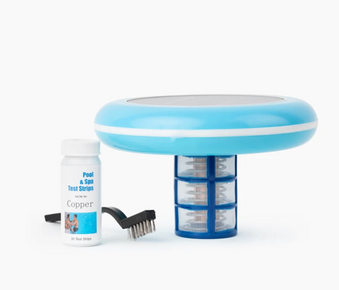
TL;DR: Next-generation pool system planning in 2026 treats solar pool ionizers not as standalone chemical alternatives but as the central platform for fully integrated, sustainable, autonomous aquatic environments. Forward-thinking planners are specifying ionizers as the primary sanitation technology while designing around their unique capabilities: zero-grid sanitation, 70-80% pump energy reduction, seamless smart home integration, and predictive maintenance ecosystems. This guide provides architects, builders, and visionary pool owners with the frameworks, specifications, and integration strategies for incorporating solar ionization into next-generation pool designs.
SEO Summary: 2026 next-generation pool system planning with solar pool ionizers: integrated design strategies, sustainable sanitation platforms, smart home ecosystems, and future-proof infrastructure specifications.
Table of Contents
- The Planning Paradigm Shift
- Integrated System Design: Ionizer as Platform, Not Add-On
- Infrastructure Specifications for Ionizer-Ready Pools
- Smart Home & Automation Ecosystem Integration
- Energy-Positive Pool Systems
- Water Conservation & Closed-Loop Chemistry
- Predictive Maintenance Infrastructure
- Architectural Integration & Aesthetic Considerations
- Commercial & Community Pool Planning
- Future-Proofing: Planning for 2030 and Beyond
- Conclusion & Key Takeaways
The Planning Paradigm Shift
For decades, pool system planning followed a predictable template: specify the largest pump the budget allows, allocate space for chemical feeders and storage, design equipment pads for manual access, and assume ongoing chemical consumption as an unavoidable operational expense. This template, refined over 50 years, produced functional but fundamentally inefficient pools machines designed to fight nature with chemicals and electricity.
Next-generation pool planning in 2026 rejects this adversarial model. Forward-thinking architects, builders, and pool owners are embracing a new paradigm: the pool as a self-regulating, sustainable ecosystem. At the center of this paradigm shift is the solar pool ionizer—not as a bolt-on chemical alternative, but as the foundational platform upon which intelligent, efficient, autonomous pool systems are built.
This shift requires rethinking every aspect of pool design:
- Equipment pad design evolves from chemical storage facilities to clean, compact, serviceable technology hubs.
- Plumbing systems optimize for low-flow, high-efficiency circulation rather than high-velocity chemical distribution.
- Electrical infrastructure accommodates solar generation and battery storage, not just grid connections.
- Control systems become predictive and autonomous, not reactive and manual.
- Water chemistry management shifts from consumable chemical inventory to durable ion exchange.
This guide provides the frameworks, specifications, and integration strategies necessary for incorporating solar pool ionizers into next-generation pool designs. Whether you're planning a custom residential sanctuary, a sustainable community amenity, or a commercial aquatic facility, these principles will help you build pools that are not only cleaner and more efficient but fundamentally more intelligent.
For a comprehensive understanding of how solar ionization transforms the swimming experience, we recommend reading our detailed analysis on designing pools for everyday comfort.
Integrated System Design: Ionizer as Platform, Not Add-On
The most critical distinction between conventional pool planning and next-generation planning is how solar ionizers are specified. In conventional thinking, ionizers are afterthoughts retrofitted after construction, added to existing equipment pads, and integrated through adapters and workarounds. Next-generation planning positions the ionizer as the central platform around which all other systems are designed.
Platform-Based Design Principles:
- Sanitation-first architecture: Ionizer sizing and placement are determined during initial hydraulic calculations, not after plumbing is complete. Chamber location is optimized for flow dynamics, not convenience.
- Flow optimization: Plumbing systems are designed for the ionizer's optimal flow range (typically 30-60 GPM for residential, 80-150 GPM for commercial), not maximum possible flow. This enables lower pump speeds from day one.
- Solar integration: Panel mounting locations are identified during site planning, not after landscaping is complete. Southern exposure, tilt optimization, and cable routing are incorporated into initial construction documents.
- Control system compatibility: Automation platforms are selected for native ionizer communication capabilities, not adapted through third-party interfaces.
Design Phase Integration Checklist:
- Conceptual design: Confirm ionizer as primary sanitation technology; size based on pool volume, bather load, and climate
- Schematic design: Locate ionizer chamber on equipment pad drawings; verify flow direction and service clearance
- Design development: Specify solar panel type, size, and mounting location; include conduit pathways for panel-to-controller wiring
- Construction documents: Include ionizer specifications, installation details, and commissioning requirements
- Permitting: Submit NSF/ANSI 50 certification (commercial) or ETL/UL listings (residential) with permit applications
Proactive Sizing Methodology:
Next-generation planners reject the "good enough" sizing approach. Instead, they calculate ionizer capacity based on:
- Peak bather load: Number of simultaneous swimmers × 25% capacity margin
- Climate factor: 1.2× for warm climates, 1.5× for marginal solar climates
- Future expansion: 20% capacity reserve for potential pool features (spas, water features, increased usage)
Pro Tip: Specify ionizer chambers with 1.5" or 2" connections, even for smaller pools. This standardizes fittings, reduces flow restriction, and provides flexibility for future system upgrades. The minimal additional cost is justified by long-term adaptability.
For detailed guidance on selecting appropriately sized equipment, our comprehensive buying guide provides essential specifications and selection criteria.
Infrastructure Specifications for Ionizer-Ready Pools
Next-generation pool planning requires updating standard construction specifications to accommodate solar ionization technology. These specifications ensure that pools are not merely compatible with ionizers but optimized for them.
Plumbing Specifications:
- Pipe sizing: Specify 2" minimum pipe diameter for all residential in-ground pools, regardless of pump size. Larger diameter reduces friction loss, enables lower-speed operation, and accommodates future flow requirements.
- Service loops: Include 18-24" straight pipe sections before and after ionizer chamber. This ensures laminar flow and accurate flow switch operation.
- Bypass provisions: Specify three-valve bypass manifold around ionizer chamber. This allows isolation for maintenance without system shutdown essential for commercial applications, valuable for residential.
- Material selection: Specify Schedule 40 PVC minimum; Schedule 80 for commercial or high-temperature applications. Avoid metal fittings upstream of ionizer to prevent galvanic corrosion.
- Flow meter ports: Include ¼" NPT ports for temporary flow measurement during commissioning and troubleshooting.
Electrical Specifications:
- Conduit pathways: Install ¾" or 1" empty conduit from equipment pad to planned solar panel location. This future-proofs for panel upgrades or relocation.
- Dedicated circuits: For integrated systems, specify dedicated 15A or 20A circuit for automation controller and ionizer power supply (where applicable).
- Battery backup provisions: Include space and wiring for future battery storage system. Even if not installed immediately, pre-wiring reduces future upgrade costs by 70%.
- Low-voltage segregation: Maintain separation between line-voltage (120/240V) and low-voltage (12/24V) wiring in conduit systems. This prevents interference and simplifies troubleshooting.
Equipment Pad Specifications:
- Pad dimensions: Minimum 4' × 6' for residential, 8' × 10' for commercial. Adequate space prevents equipment crowding and ensures service access.
- Solar panel mounting: Specify adjustable mounting brackets for ground-mounted systems. For roof mounts, specify standoffs that provide 4" minimum air gap for passive cooling.
- Controller location: Mount controllers in weatherproof enclosures with clear line-of-sight for displays and indicators. Avoid direct afternoon sun exposure to extend display life.
- Service clearance: Maintain 36" minimum clearance in front of all equipment, 18" on sides. This is often overlooked but essential for maintenance.
Structural Specifications:
- Panel mounting structure: For ground-mounted arrays, specify concrete footings or engineered ballast systems appropriate for local wind and snow loads.
- Cable routing: Include provisions for concealing panel-to-controller cables within landscaping features, equipment pads, or architectural elements.
- Future expansion: Design panel mounting structures to accommodate 50% additional capacity. Adding panels is far easier when infrastructure already exists.
Pro Tip: Include the following note in all electrical specifications: "Install empty ¾" conduit from equipment pad to south-facing roof or ground-mounted solar array location. Terminate with pull string and weatherproof junction box." This 15-minute addition during construction saves thousands in retrofit costs.
For additional guidance on modernizing pool infrastructure, modernize your pool with a solar pool ionizer offers practical retrofitting strategies applicable to new construction planning.
Smart Home & Automation Ecosystem Integration
Next-generation pools do not operate in isolation they are fully integrated members of the smart home ecosystem. Solar pool ionizers, with their inherent solar synchronization and autonomous operation capabilities, are ideally suited for this integrated future.
Ecosystem Design Principles:
- Open protocols over proprietary: Specify automation components that communicate via industry-standard protocols (RS-485, Modbus, BACnet, Wi-Fi API) rather than manufacturer-specific systems. This ensures compatibility with current and future smart home platforms.
- API-first architecture: Choose ionizer controllers and automation systems with documented APIs (Application Programming Interfaces). This enables custom integrations, voice control, and emerging AI applications.
- Data ownership: Specify systems that provide local data access, not just cloud-dependent apps. Local APIs ensure functionality during internet outages and preserve owner data rights.
- Layered intelligence: Design control architecture with distinct layers: component-level autonomy (ionizer self-regulation), system-level coordination (pump-ionizer communication), and ecosystem-level optimization (smart home integration).
Integration Capabilities to Specify:
- Voice control: Native or API-based integration with Amazon Alexa, Google Assistant, and Apple HomeKit. Allow owners to check pool status, adjust settings, and receive alerts through voice commands.
- Geofencing: Automation triggers based on homeowner proximity. Arriving home? Pool pre-cools, increases filtration, and prepares for swimming. Away for vacation? Reduces output, monitors for freeze conditions, and alerts if anomalies detected.
- Weather integration: Real-time and forecast weather data integration enables pre-storm sanitation boosts, freeze protection activation, and solar synchronization.
- Energy management: Integration with home energy monitoring systems (Sense, Emporia, Span) allows pool systems to respond to time-of-use rates, solar production, and demand response events.
- Maintenance coordination: Integration with smart home maintenance platforms (Alarm.com, IFTTT) enables predictive maintenance alerts, service scheduling, and parts reordering.
Specification Language Examples:
"Pool automation controller shall provide native two-way communication with solar ionizer system via RS-485 or Wi-Fi API. Controller shall support IFTTT integration and provide documented API for third-party smart home platforms. System shall enable geofencing, weather-responsive operation, and time-of-use energy optimization."
Pro Tip: During the design phase, create a "smart home integration matrix" listing all planned pool functions and their desired integration level. This document guides equipment selection and programming scope. Functions may include: sanitation status, water temperature, energy consumption, maintenance alerts, lighting control, and water feature synchronization.
For deeper insight into how smart integration transforms pool management, explore our article on automated seasonal adjustments enabled by solar ionizers.
Energy-Positive Pool Systems
Next-generation pool planning targets not merely energy efficiency but energy positivity pools that generate more renewable energy than they consume. Solar pool ionizers are essential components of this ambitious but achievable goal.
Energy-Positive Design Framework:
- Sanitation load elimination: Solar ionizers consume zero grid power, eliminating the 500-1,500 watt load of traditional chlorination systems. This is the foundation of energy-positive design.
- Circulation load minimization: Through runtime reduction (40-60%) and speed optimization (additional 50-70%), total pump energy consumption drops from 2,500-4,000 kWh annually to 500-1,000 kWh annually.
- Solar generation integration: Pool-dedicated photovoltaic systems (separate from ionizer panels) generate renewable electricity to offset remaining pump and heater loads.
- Thermal load reduction: Solar pool covers, solar thermal collectors, and heat pump efficiency optimization reduce heating energy requirements by 50-80%.
Pool-Dedicated Solar PV Specification:
For energy-positive systems, the ionizer's solar panel is insufficient it powers only sanitation. Additional PV capacity is required to offset pump and heater loads:
- System sizing: 1.5-2.5 kW of dedicated PV typically achieves net-zero for a residential pool in good solar climates
- Integration: Specify microinverters or dedicated string inverter with consumption monitoring
- Orientation: South-facing, latitude-angle optimal, unshaded
- Battery storage: 5-10 kWh recommended for time-shifting solar production to evening pump operation
Energy-Positive Configuration Examples:
Configuration A: Net-Zero Energy Pool
- Solar ionizer (0 kWh grid)
- High-efficiency VSP (500 kWh/year)
- 2.0 kW dedicated PV array (2,600 kWh/year production)
- Solar pool cover (50% heating reduction)
- Result: Pool generates more electricity than it consumes
Configuration B: Energy-Positive Smart Pool
- Solar ionizer with battery backup
- VSP with solar-synchronous operation
- 3.0 kW dedicated PV with microinverters
- 10 kWh battery storage
- Heat pump with smart load shifting
- Result: Pool contributes excess generation to home or grid
Pro Tip: When planning energy-positive pools, engage a certified solar designer during schematic design, not after construction. Solar array sizing, orientation, and electrical integration are far more expensive to modify than to plan correctly.
For comprehensive analysis of energy reduction strategies, our guide to cutting pool energy cost with solar pool ionizer provides detailed consumption benchmarks and savings validation methodologies.
Water Conservation & Closed-Loop Chemistry
Next-generation pool planning recognizes water as a precious resource. Solar pool ionizers enable water conservation strategies impossible with traditional chemical sanitation.
The Chemistry of Water Conservation:
Traditional pools require periodic draining for three reasons:
- Cyanuric acid accumulation: Stabilizer builds up and cannot be removed except by dilution
- Total dissolved solids (TDS): Continuous chemical addition concentrates minerals and byproducts
- Calcium saturation: Evaporation concentrates calcium, leading to scaling
Solar ionizers eliminate or dramatically reduce all three drivers:
- No CYA addition: Ionized pools require no cyanuric acid; existing levels dilute naturally
- 80-90% chemical reduction: Dramatically slows TDS accumulation
- Stable calcium chemistry: Balanced pH and lower calcium target reduce scaling risk
Water Conservation Design Specifications:
- Pool covers: Specify automated safety covers for all new residential pools. Covers reduce evaporation by 90-95%, saving 15,000-25,000 gallons annually for average pools. Covers also reduce chemical demand, heating load, and debris accumulation.
- Backwash minimization: Design filtration systems for extended runtime between backwash cycles. Specify large cartridge filters or sand filters with enhanced media for commercial applications.
- Rainwater harvesting: Integrate downspout collection systems to direct rainwater to pool for make-up water. Pre-filtration required; consult local codes.
- Greywater integration: In permitted jurisdictions, specify approved greywater systems for pool make-up water. Requires advanced treatment; consult specialists.
- Smart fill controllers: Specify automated fill valves with flow monitoring and leak detection. These systems prevent overfilling and alert owners to continuous flow conditions.
Closed-Loop Chemistry Vision:
The ultimate expression of water-conserving pool design is closed-loop chemistry pools that never require draining for chemical management. Solar ionizers make this vision achievable:
- Copper and silver ions are the only consumable sanitizers, added at rates of 200-500 grams annually
- No cyanuric acid, no chloride accumulation, minimal pH adjustment chemicals
- TDS accumulation rate reduced by 80-90%, extending drain intervals from 3-5 years to 15-20 years
Pro Tip: Specify a dedicated make-up water meter on all new commercial pool installations. This provides essential data for water conservation verification and leak detection. For residential pools, smart fill controllers with flow monitoring provide similar benefits.
For specialized guidance on maintaining optimal water chemistry while minimizing water waste, chemistry management and equipment longevity offers detailed protocols.
Predictive Maintenance Infrastructure
Next-generation pools are designed for predictive maintenance anticipating component failure before it occurs rather than reacting after water quality is compromised. This requires specific infrastructure and sensor provisions.
Sensor Infrastructure Specifications:
- Flow sensing: Specify permanent flow meters with digital output. Essential for verifying ionizer operation, detecting pump failure, and optimizing filtration efficiency.
- Pressure sensing: Install pressure transducers on filter inlet and outlet. Continuous differential pressure monitoring predicts filter cleaning needs with 95% accuracy.
- Water level sensing: Ultrasonic or pressure-based level sensors detect evaporation rates, leaks, and automate make-up water.
- Temperature sensing: Multiple sensors (water, ambient, equipment) enable comprehensive thermal monitoring and freeze protection.
- Power monitoring: Current transformers on pump and heater circuits provide real-time energy consumption data and detect mechanical issues through power signature analysis.
Data Infrastructure Specifications:
- Local data storage: Specify automation controllers with onboard data logging (minimum 30-day capacity). Cloud backup optional but recommended.
- Remote access: Secure VPN or encrypted cloud connectivity for off-site monitoring and diagnostics.
- Alerting system: Configurable alert thresholds for all monitored parameters with multiple notification channels (app, SMS, email).
- API access: Documented API for integration with third-party maintenance platforms and analytics tools.
Predictive Maintenance Algorithms:
2026 automation systems can predict failures before they occur:
- Pump bearing failure: Vibration analysis and power consumption patterns predict failure 200-400 hours in advance
- Filter loading: Pressure rise rate predicts cleaning need with ±2 day accuracy
- Electrode depletion: Resistance monitoring predicts end-of-life within ±15% of actual failure
- Heater scale accumulation: Temperature differential across heat exchanger predicts efficiency loss and cleaning requirement
Pro Tip: Specify "predictive maintenance ready" controllers that include necessary sensor inputs and data logging capabilities, even if sensors are installed in phases. This future-proofs the infrastructure and allows gradual investment in monitoring capabilities.
For practical applications of predictive maintenance, our standard practices for commercial pools with solar pool ionizer includes detailed predictive maintenance protocols adaptable for residential applications.
Architectural Integration & Aesthetic Considerations
Next-generation pool planning elevates equipment from utilitarian afterthought to integrated architectural element. Solar panels, controllers, and even ionizer chambers can be incorporated into cohesive design language rather than hidden away.
Solar Panel Architectural Integration:
- Pergola and shade structure integration: Specify solar panels as roofing material for poolside pergolas, cabanas, or shade structures. This transforms equipment into amenity, generating energy while providing functional shade.
- Fence and screen mounting: Integrate panels into pool fencing, privacy screens, or property dividers. Low-profile designs and color-matched frames minimize visual impact.
- Ground-mounted arrays as landscape features: Design panel arrays as intentional garden elements with integrated plantings, pathways, and lighting.
- Building-integrated PV: For new construction, specify solar panels as roof-integrated systems (BIPV) rather than rack-mounted afterthoughts.
Equipment Pad Aesthetic Treatments:
- Screening: Specify integrated screening solutions (louvered panels, living walls, architectural fencing) as part of initial hardscape design, not after-the-fact additions.
- Color coordination: Select equipment with color options that complement architectural palette. Many manufacturers now offer multiple finish options.
- Concealment structures: Design dedicated equipment enclosures with proper ventilation and service access, integrated into overall landscape architecture.
Controller Interface Placement:
Next-generation design recognizes that pool controllers are user interfaces, not just service tools:
- Indoor control stations: Specify secondary indoor controllers or wall-mounted tablets in living areas, kitchens, or mudrooms.
- Poolside interfaces: Weatherproof touchscreens integrated into pool coping, bar counters, or landscape features.
- Mobile-first design: Prioritize smartphone and tablet interfaces; physical controllers become secondary.
Pro Tip: During schematic design, create a "pool equipment visibility matrix" that specifies which components will be visible, which will be screened, and which will be concealed. This document guides landscape architect coordination and prevents last-minute screening add-ons.
For inspirational examples of architectural pool integration, our design-focused article on everyday comfort pools showcases projects where technology and aesthetics merge seamlessly.
Commercial & Community Pool Planning
Commercial and community pool projects require additional planning layers beyond residential applications. Next-generation commercial pool planning with solar ionizers addresses regulatory compliance, operational scalability, and public health validation.
Regulatory Compliance Planning:
- NSF/ANSI 50 certification: Specify only ionizer models appearing on NSF's official listing. Request certification documentation during bidding; include in operations manual for health department inspections.
- Redundant sanitation: Design dual-ionizer arrays or ionizer + low-output chlorine feeder configurations. Redundancy is mandatory; single-point-of-failure systems will not be approved.
- Continuous monitoring: Specify ORP/pH controllers with data logging and remote telemetry. Manual testing alone is insufficient for commercial compliance in 2026.
- Flow switch interlocks: Every commercial ionizer installation requires flow-proving switches. Specify industrial-grade paddle or thermal dispersion switches with adjustable setpoints.
- Electrical disconnects: Lockable visible disconnects within sight of equipment are required by commercial codes. Specify these explicitly; they are often overlooked.
Operational Scalability Planning:
- Multi-pool coordination: For facilities with multiple pools, specify centralized automation systems that manage ionizers across all bodies of water from single interface.
- Staff training provisions: Include manufacturer-provided training in equipment specifications. Budget for initial training and annual refresher sessions.
- Documentation systems: Specify digital log systems with tamper-resistant records and health department access portals. Paper logs are increasingly unacceptable.
- Spare parts inventory: Include recommended spare parts list in construction documents. Commercial facilities should maintain on-site electrode cartridges, flow switches, and sensor probes.
Public Health Validation:
- Third-party validation: Consider engaging independent aquatic consultants to validate system performance during commissioning.
- Pilot programs: For jurisdictions with no prior ionizer approvals, propose phased implementation with extensive monitoring and health department collaboration.
- Reference facilities: Maintain list of approved installations for regulator reference. Manufacturers can provide this documentation.
Pro Tip: Engage local health department officials during schematic design, not after construction documents are complete. Early consultation identifies concerns when they can be addressed without redesign costs. Bring manufacturer NSF certification documentation and reference facility list to initial meetings.
For comprehensive commercial pool specifications, eco-friendly community pool planning provides detailed procurement and implementation frameworks.
Future-Proofing: Planning for 2030 and Beyond
Next-generation pool planning extends beyond immediate construction to anticipate technological developments over the next 5-10 years. Solar pool ionizers, as inherently upgradeable platforms, are uniquely suited for future-proof design.
Emerging Technologies to Accommodate:
- AI-optimized sanitation: Machine learning algorithms that predict contaminant loads and preemptively adjust ion output. Requires controllers with sufficient processing capability and data logging history. Specify controllers with upgradeable firmware.
- Grid-interactive pools: Systems that respond to utility price signals and grid stability needs. Requires V2G (vehicle-to-grid) or home battery integration. Pre-wire for future battery storage.
- Autonomous water testing: Continuous, laboratory-accurate water chemistry monitoring without manual intervention. Specify sensor ports and controller inputs for future analyzer installation.
- Advanced electrode materials: Next-generation electrode alloys with 7-10 year lifespans under development. Ensure chamber designs accommodate future cartridge form factors.
- Integrated water feature control: Synchronized operation of ionizers with fountains, waterfalls, and sanitation systems. Specify spare automation outputs and conduit to water feature locations.
Infrastructure Future-Proofing Specifications:
- Conductor capacity: Oversize conduits by 50%. Install 1" rather than ¾", 2" rather than 1.5". Conduit is cheap; trenching is expensive.
- Panel mounting capacity: Design solar panel mounting structures for 2× currently planned capacity. Additional panel weight and wind load are minimal; structural provisions are not.
- Controller processing power: Specify controllers with minimum 2× current processing requirements. Look for products with demonstrated firmware update histories.
- Network infrastructure: Install CAT6 or fiber optic cabling to equipment pads, not just Wi-Fi. Wired connections provide reliability and bandwidth for future applications.
- Spare conduit capacity: Include one empty conduit from equipment pad to house and one to panel location. Label clearly. Future installers will thank you.
Design for Adaptability:
- Modular equipment pads: Design pads with expansion capability, not just current equipment footprint.
- Standardized mounting: Use universal mounting patterns where possible, not manufacturer-specific footprints.
- Accessible connections: All wiring terminations should be accessible for replacement without cutting or splicing.
Pro Tip: Create a "future-ready checklist" in your construction documents that identifies which provisions have been included for future upgrades. This document becomes valuable when owners ask, "Can we add solar heating?" or "Is the pool smart-home ready?"
For a forward-looking perspective on pool technology evolution, the vision for the future of swimming pools explores emerging trends and their implications for today's design decisions.
Conclusion & Key Takeaways
Solar pool ionizers in next-generation pool system planning represent far more than a chemical alternative they are the foundational technology enabling a complete reimagining of what pools can be. When designed as integrated platforms rather than retrofitted accessories, ionizers transform pools from chemical-dependent, energy-intensive machines into self-regulating, sustainable, intelligent aquatic ecosystems.
This transformation requires new planning frameworks, updated specifications, and expanded collaboration between architects, engineers, builders, and technology providers. The equipment pad becomes a technology hub. Plumbing systems optimize for efficiency, not maximum flow. Electrical infrastructure anticipates renewable generation and storage. Control systems evolve from reactive to predictive. Water chemistry shifts from consumable inventory to durable ion exchange.
The investment in next-generation planning is modest; the returns are substantial. Lower operating costs, reduced environmental impact, superior water quality, and enhanced owner satisfaction. Pools designed today using these principles will remain state-of-the-art for decades, while conventionally planned pools will require expensive retrofits to achieve even a fraction of their performance.
Key Takeaways
- Ionizer as platform, not add-on: Next-generation planning positions solar ionizers as the central technology around which all other systems are designed, not retrofitted after construction.
- Infrastructure specifications require updates: Plumbing, electrical, and structural specifications must be revised to accommodate ionizer-optimized operation, low-flow efficiency, and future upgrades.
- Smart home integration is foundational: Specify open-protocol controllers with API access, not proprietary systems. Plan for voice control, geofencing, weather response, and energy management from day one.
- Energy-positive pools are achievable: Solar ionizers eliminate sanitation energy; VSPs and optimized circulation reduce pump energy by 70-80%; dedicated PV arrays offset remaining loads. Net-zero and energy-positive pools are now practical.
- Water conservation is designed, not retrofitted: Pool covers, backwash minimization, smart fill controllers, and closed-loop chemistry strategies must be specified during design, not added after construction.
- Predictive maintenance requires sensor infrastructure: Flow, pressure, temperature, and power monitoring sensors enable predictive analytics that prevent failures before they occur. Install conduit and specify compatible controllers.
- Architectural integration elevates equipment to amenity: Solar panels can become shade structures, equipment pads can be screened intentionally, and controllers can be placed as user interfaces. Design for aesthetics, not concealment.
- Commercial projects require specialized planning: NSF/ANSI 50 certification, redundant sanitation, continuous monitoring, and regulatory engagement are non-negotiable. Plan for them from schematic design.
- Future-proofing is inexpensive now, expensive later: Oversize conduits, design structural capacity for expanded solar arrays, and specify upgradeable controllers. These minimal upfront costs enable maximum future adaptability.
The pools of 2030 are being designed today. Solar pool ionizers, properly integrated into next-generation system planning, ensure that these pools will be cleaner, more efficient, more sustainable, and more intelligent than anything built before. The technology exists. The design principles are established. The only remaining requirement is the vision to plan for the future rather than replicate the past.