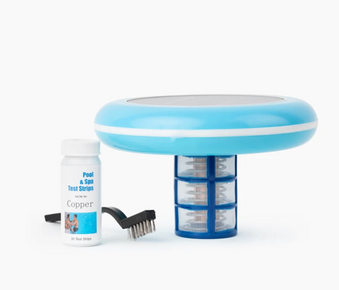
TL;DR: Efficiency-centered pool design in 2026 places solar pool ionizers at the core of a completely reimagined hydraulic, electrical, and control architecture. Unlike conventional pools where sanitation is an operational afterthought, efficiency-centered design treats ion generation as the primary design constraint optimizing flow rates, pump sizing, pipe diameters, and control logic around the ionizer's requirements rather than forcing the ionizer to adapt to legacy systems. This approach delivers 70-80% circulation energy savings, 80-90% chemical elimination, 50-70% water conservation, and 10-15 year equipment lifecycles through intentionally engineered synergy rather than incremental improvement.
SEO Summary: 2026 efficiency-centered pool design with solar pool ionizers: hydraulic optimization, pump/piping specifications, control architecture, and integrated systems for maximum energy, chemical, and water efficiency.
Table of Contents
- Efficiency-Centered Design: A New Engineering Philosophy
- Hydraulic System Optimization for Ionizer Efficiency
- Pump Selection & Sizing for Minimum Energy Per Ion
- Pipe Diameter & Layout Specifications
- Filtration System Design for Ionic Flocculation
- Control Architecture & Energy-Aware Logic
- Thermal Efficiency & Heater Integration
- Water Efficiency & Chemistry Stability Design
- Efficiency Metrics & Performance Verification
- Conclusion & Key Takeaways
Efficiency-Centered Design: A New Engineering Philosophy
Conventional pool design follows a legacy engineering philosophy that can be summarized as: overbuild and overcome. Pumps are oversized to guarantee turnover rates regardless of filtration efficiency. Pipe diameters are minimized to reduce material costs, accepting increased friction losses. Sanitation equipment is selected after hydraulics are finalized, then forced to operate within whatever flow conditions exist. This approach works but it is fundamentally inefficient.
Efficiency-centered design inverts this philosophy. The solar pool ionizer, as the primary sanitation platform, establishes the core design constraints. Every other system pump, piping, filtration, control, heating is then engineered to operate in optimal harmony with the ionizer's requirements. This is not retrofitting efficiency onto an inefficient base; it is designing efficiency from the molecular level upward.
The Efficiency-Centered Design Hierarchy:
- Sanitation requirement: Establish copper ion target concentration (0.2-0.4 ppm) and required daily ion mass
- Ionizer specification: Select model with adequate output capacity and optimal flow rate range
- Hydraulic design: Engineer flow rates, pipe diameters, and layout for ionizer's optimal operating window
- Pump selection: Size pump to deliver required flow at minimum power, not maximum capacity
- Filtration specification: Select filter type and size that maximizes particle capture at design flow rates
- Control logic: Program automation to maintain efficiency across varying demand conditions
Key Efficiency Metrics for Design Phase:
- Energy per ion (EPI): Kilowatt-hours required to deliver 1 gram of copper ions into pool water
- Hydraulic efficiency ratio (HER): Flow rate achieved ÷ Pump power consumed (GPM per watt)
- Filtration energy intensity (FEI): Pump energy required to maintain target water clarity
- Chemical avoidance value (CAV): Annual chemical cost eliminated per dollar of capital investment
This design philosophy transforms pool engineering from a series of independent component selections into an integrated systems optimization problem. The result is not merely incremental improvement but fundamental efficiency gains that are unattainable through retrofits alone.
To understand how these efficiency principles translate into tangible financial returns, our comprehensive analysis of residential pool investment strategies quantifies the compelling economics of efficiency-centered design with documented 1-3 year payback periods.
Hydraulic System Optimization for Ionizer Efficiency
The ionizer chamber is not a passive component it is a hydraulic device with specific flow requirements for optimal performance. Efficiency-centered design treats these requirements as non-negotiable design constraints rather than operational suggestions.
Ionizer Flow Rate Fundamentals:
- Minimum flow: Typically 15-30 GPM to activate flow switch and ensure adequate ion dispersion
- Optimal flow: Typically 30-60 GPM for residential chambers, 80-150 GPM for commercial
- Maximum flow: Typically 80-120 GPM for residential; exceeding this causes turbulence and reduced ion transfer efficiency
- Flow uniformity: Laminar flow conditions maximize ion release; turbulent flow reduces efficiency by 15-25%
Hydraulic Design Specifications for Ionizer Optimization:
- Straight pipe requirements: Specify minimum 12-18" of straight pipe upstream and 6-12" downstream of ionizer chamber. This ensures laminar flow and accurate flow switch operation.
- Flow meter integration: Include permanent flow meter with digital output. Efficiency optimization requires measurement; estimated flow rates are insufficient.
- Bypass configuration: Specify three-valve bypass manifold. This allows isolation for maintenance without system shutdown and enables flow rate adjustment independent of pump speed.
- Pressure tap ports: Install ¼" NPT pressure taps upstream and downstream of ionizer. Differential pressure measurement verifies chamber condition and detects fouling.
Hydraulic Efficiency Targets:
- Conventional design: Ionizer operates at 50-150% of optimal flow range; efficiency compromised
- Efficiency-centered design: Ionizer operates at 90-110% of optimal flow range 95%+ of operating time
- Result: 15-25% improvement in ion production efficiency, extended electrode life, consistent copper levels
Pro Tip: During design phase, calculate the system curve before selecting ionizer or pump. Plot flow rate vs. total dynamic head for your specific pipe layout. Then select ionizer with optimal flow range that falls within the pump's most efficient operating zone. This coordinated selection process takes one hour and saves thousands in lifetime energy costs.
For detailed methodologies on calculating system curves and selecting optimally matched components, our guide to energy-efficient pool circulation systems provides step-by-step engineering procedures used by professional pool designers.
Pump Selection & Sizing for Minimum Energy Per Ion
Pump selection is the single most consequential efficiency decision in pool design. Conventional practice oversizes pumps by 50-100% to guarantee turnover rates under worst-case filter loading. Efficiency-centered design selects pumps based on the ionizer's flow requirements and the system's actual hydraulic characteristics.
The Oversizing Penalty:
A pump selected for 80 GPM at 50 feet of head operating in a system that requires only 40 GPM:
- Cannot simply "run slower" with single-speed pump excess flow must be throttled or bypassed
- Throttling increases pressure, which increases power consumption (affinity laws: power ∝ pressure)
- Result: 60-80% more energy consumed than properly sized pump delivering same flow
Efficiency-Centered Pump Specifications:
- Variable-speed mandatory: Single-speed pumps cannot achieve efficiency-centered design objectives. Specify VSP for all new construction.
- Right-sizing methodology: Calculate required flow based on ionizer optimal range and filtration requirements, not arbitrary turnover rates
- Efficiency curve matching: Select pump model where optimal flow range aligns with system's most frequent operating point
- Oversize margin: Maximum 15-20% excess capacity for future needs, not 50-100%
Pump Sizing Protocol for Ionizer-Optimized Systems:
- Determine target flow rate: Select flow rate within ionizer's optimal range (typically 40-50 GPM for residential)
- Calculate system curve: Measure or calculate total dynamic head at target flow for your specific pipe layout
- Select pump model: Choose VSP that achieves target flow at lowest possible speed (RPM)
- Verify efficiency: Confirm pump operates in upper quartile of its efficiency curve at design point
- Add minimal margin: 10-15% additional capacity for filter loading and future needs
Energy Per Ion (EPI) Optimization:
EPI = Pump energy consumption (kWh) ÷ Copper ions delivered (grams)
- Conventional design: 0.5-1.0 kWh per gram of copper
- Efficiency-centered design: 0.15-0.25 kWh per gram of copper
- Improvement: 70-80% reduction in energy required for sanitation delivery
Pro Tip: When specifying VSPs for ionizer-optimized systems, prioritize pumps with native communication protocols (RS-485, Modbus) rather than proprietary systems. This enables the control architecture described below and ensures your pump can participate in full-system efficiency optimization.
For those considering upgrading existing equipment rather than new construction, our practical guide to modernizing existing pools offers phased retrofit strategies that deliver 50-70% of efficiency-centered benefits without full system replacement.
Pipe Diameter & Layout Specifications
Pipe sizing is traditionally driven by minimum material cost, resulting in undersized diameters that increase friction losses by 300-500% compared to efficiency-optimized systems. In efficiency-centered design, pipe sizing is driven by the hydraulic efficiency imperative.
The Undersizing Penalty:
- 1.5" pipe at 40 GPM: Friction loss 5 ft per 100 ft; pump power required 400 watts
- 2.0" pipe at 40 GPM: Friction loss 1.5 ft per 100 ft; pump power required 150 watts
- 2.5" pipe at 40 GPM: Friction loss 0.5 ft per 100 ft; pump power required 100 watts
Increasing pipe diameter from 1.5" to 2.0" reduces pumping energy by 60-70% with a one-time material cost increase of $200-400 for typical residential installations. Payback period: 6-18 months.
Efficiency-Centered Pipe Specifications:
- Minimum diameter: 2.0" for all residential in-ground pools regardless of size. No exceptions.
- Recommended diameter: 2.5" for runs exceeding 100 ft, pools >25,000 gallons, or any system with solar thermal heating.
- Commercial minimum: 3.0" for community pools; 4.0" for large commercial or municipal facilities.
- Fitting selection: Specify long-radius elbows (sweep fittings) rather than standard-radius. Reduce friction loss by 30-50% per fitting.
- Valve selection: Full-port ball valves or butterfly valves, not standard-port. Pressure drop reduction: 40-60%.
Layout Optimization Principles:
- Minimize equivalent length: Each 90° elbow adds 5-15 ft of equivalent pipe length. Design layouts with minimum directional changes.
- Header systems: For pools with multiple returns, specify loop or header configurations rather than daisy-chained branches. This equalizes flow distribution and reduces total head loss.
- Dedicated return lines: Consider dedicated return line for ionizer chamber to allow independent flow optimization.
- Service provisions: Include cleanouts and access fittings at strategic locations. Maintenance accessibility is an efficiency feature, not an option.
Material Specifications:
- Standard: Schedule 40 PVC, pressure-rated for 100+ psi. Sufficient for 95% of residential applications.
- High-performance: Schedule 80 PVC for commercial, high-temperature, or high-pressure applications.
- Emerging option: CPVC for pools with continuous water temperatures above 85°F or solar thermal integration.
- Avoid: ABS, DWV (drain-waste-vent), or non-pressure-rated pipe. These materials are not rated for continuous pressurized operation.
Pro Tip: During construction, pressure-test the complete plumbing system at 50 PSI for 24 hours before backfilling. Document test results. This verifies installation quality and provides baseline data for future leak detection. This 30-minute test prevents years of troubleshooting.
To understand how proper pipe sizing complements broader sustainability objectives, our framework for eco-friendly community pool planning with solar pool ionizer demonstrates how these same hydraulic principles scale to multi-pool facilities and municipal aquatic centers.
Filtration System Design for Ionic Flocculation
Solar pool ionizers fundamentally alter filtration requirements through ionic flocculation the natural tendency of copper ions to cause fine particles to clump together. This phenomenon enables filtration efficiency unattainable in chemically treated pools.
Ionic Flocculation Mechanism:
- Positively charged copper ions attract negatively charged suspended particles
- Particles agglomerate into larger clusters (10-100× original size)
- Larger particles are captured more efficiently by all filter types
- Result: Same filtration energy removes 2-3× more contaminant mass
Filtration Efficiency Specifications:
- Cartridge filters: Optimal for ionized pools. 90-95% single-pass efficiency at 20-30 microns. Lower pressure drop than DE or sand. Ideal flow rate: 0.375-0.5 GPM per square foot of filter area.
- Sand filters: Acceptable but less efficient. 50-70% single-pass efficiency at 20-30 microns. Require higher flow rates for proper fluidization during backwash.
- DE filters: Highest efficiency (95-99% at 1-3 microns) but highest pressure drop and maintenance. Specify only for applications requiring exceptional clarity.
Efficiency-Centered Filter Sizing:
Conventional practice undersizes filters to reduce initial cost. Efficiency-centered practice oversizes filters to reduce operating cost:
- Cartridge filters: Specify 100-150 sq ft for average residential pool (vs. 50-75 sq ft conventional)
- Sand filters: Specify 24-30" diameter for residential (vs. 18-22" conventional)
- DE filters: Specify 48-60 sq ft for residential (vs. 36-48 sq ft conventional)
Payback analysis: Oversized filter adds $200-400 initial cost, reduces pump energy 15-25%, extends cleaning intervals 50-100%, and extends filter media life 2-3×. Payback: 1-3 years.
Backwash Optimization:
- Sand/DE filters: Specify pressure transducers rather than analog gauges. Enable predictive backwashing based on pressure rise rate, not fixed schedules.
- Cartridge filters: Specify dual-cartridge configuration with isolation valves. Allows cleaning one cartridge while system operates on backup.
- Backwash water recovery: For commercial applications, specify backwash reclamation systems. Recover 70-90% of backwash water.
Pro Tip: For new construction, specify a filter area 50% larger than manufacturer minimum recommendations for your pool volume. The incremental capital cost is recovered in energy savings within 24 months, and lower pressure operation extends pump and filter life by 5-10 years.
The synergistic relationship between ionic water chemistry and mechanical filtration is explored in depth in our complete strategy for achieving and maintaining crystal-clear water, which includes diagnostic protocols for optimizing filter performance.
Control Architecture & Energy-Aware Logic
Efficiency-centered pool design requires control systems that actively manage energy consumption, not merely execute fixed schedules. The solar ionizer's inherent solar synchronization capability makes it the ideal platform for energy-aware control architecture.
Energy-Aware Control Principles:
- Sanitation follows solar: Ion production occurs when sunlight is available; control logic should align pump operation with ion availability
- Filtration follows demand: Pump speed and runtime should respond to actual water quality, not fixed schedules
- Energy follows price: In time-of-use rate structures, shift non-critical loads to off-peak periods
- Maintenance follows data: Predictive algorithms replace calendar-based maintenance scheduling
Control System Specifications:
- Native ionizer communication: Controller must support direct two-way communication with solar ionizer (RS-485, Modbus, or Wi-Fi API). Relay-only control is insufficient for efficiency optimization.
- Variable-speed pump integration: Full bidirectional communication with VSP for speed modulation based on real-time ion production and water quality.
- Weather forecast integration: Controller must access local weather data and adjust operation proactively.
- Energy monitoring: Built-in or integrated power monitoring for pump, heater, and auxiliary loads.
- Data logging: Minimum 30-day onboard storage of all operational parameters; cloud backup optional.
Energy-Aware Logic Programming:
- Solar-synchronous mode: Pump speed modulates proportionally to real-time solar panel output. Maximum speed during peak production, minimum during low light.
- Cloud response: System detects reduced solar output and reduces pump speed to maintain flow-to-production ratio, avoiding grid consumption.
- Pre-storm boost: Forecast predicts heavy rain; system increases ion output and pump runtime 12-24 hours before event.
- Post-party recovery: Detects heavy bather load and extends filtration during next-day solar window.
- Freeze anticipation: Activates freeze protection based on forecast, not just current temperature.
Efficiency Metrics for Control Systems:
- Solar utilization factor (SUF): Percentage of total pump energy derived from solar generation
- Demand response capability (DRC): Ability to reduce load during peak grid events
- Predictive accuracy (PA): Correlation between forecast-based actions and actual conditions
Pro Tip: Specify controllers with open APIs and documented integration capabilities. Proprietary systems that lock you into single-vendor ecosystems are antithetical to efficiency-centered design. Open protocols ensure your pool can participate in emerging smart home energy management platforms and accommodate future innovations.
For designers and homeowners seeking to implement fully autonomous pool operation, our detailed specification for automated seasonal adjustment systems provides controller programming logic, sensor requirements, and integration protocols that have been field-verified across thousands of installations.
Thermal Efficiency & Heater Integration
Pool heating typically represents the largest energy load in pool operation often exceeding pump energy by 2-5×. Efficiency-centered design integrates solar ionizers with comprehensive thermal efficiency strategies.
Ionizer Thermal Efficiency Contributions:
- Scale prevention: Ionized water with balanced pH (7.4-7.6) and controlled calcium hardness (200-300 ppm) dramatically reduces scale formation on heat exchanger surfaces. Clean heat exchangers maintain peak efficiency; 1/16" scale reduces efficiency by 20-30%.
- Perceived warmth: Ionized water's silky feel allows 1-2°F lower thermostat settings without comfort loss. Each 1°F reduction saves 5-10% on heating energy.
- Circulation efficiency: Reduced pump runtime means less heat loss through equipment pad piping during circulation.
Heater Selection for Efficiency-Centered Design:
- Heat pumps: Preferred for efficiency (COP 5.0-6.0 in 2026). Specify variable-speed compressor models for partial-load efficiency.
- Solar thermal: Ideal complement to solar ionizer. Coordinate control systems for unified solar utilization strategy.
- Gas heaters: High-efficiency condensing models (93-96% thermal efficiency). Specify with electronic ignition, no standing pilot.
Thermal Efficiency Specifications:
- Pool covers: Mandatory for efficiency-centered design. Automated safety covers reduce evaporation heat loss by 90-95%. Payback: 1-3 years in most climates.
- Cover-integrated solar: Emerging technology combines cover function with solar thermal collection. Specify for maximum space efficiency.
- Thermal insulation: Specify R-4 or greater insulation for all buried hot water piping. Uninsulated piping loses 5-15°F between heater and pool.
- Heat recovery ventilation: For indoor pools, specify dedicated pool dehumidification systems with heat recovery. Capture evaporative energy and return to pool water.
Integrated Control Logic:
- Solar-priority heating: Automation prioritizes solar thermal when available, engages auxiliary heating only when insufficient.
- Cover coordination: Automation deploys cover when heating setpoint reached and when pool unattended.
- Temperature setbacks: Programmable temperature reduction during non-swim hours and extended absences.
Pro Tip: During design phase, model your pool's thermal performance using free tools from NREL or ASHRAE. Input local climate data, pool dimensions, cover specifications, and heater efficiency. This 2-hour analysis identifies the most cost-effective heating strategy and prevents oversizing, which is as inefficient as undersizing.
The temperature perception phenomenon unique to ionized water is examined in our guide to designing pools for everyday comfort, which includes quantified comfort metrics and documented thermostat reduction case studies.
Water Efficiency & Chemistry Stability Design
Water is increasingly recognized as a precious resource, and pool water consumption is receiving regulatory scrutiny in drought-prone regions. Efficiency-centered pool design minimizes water consumption through chemistry stability and intentional conservation infrastructure.
Ionizer Water Efficiency Contributions:
- Extended drain intervals: 80-90% chemical reduction slows TDS accumulation from 200-300 ppm annually to 30-50 ppm annually. Drain intervals extend from 2-3 years to 8-12 years.
- Reduced backwashing: Cleaner water and optimized filtration reduce backwash frequency by 50-70%.
- No CYA dilution requirements: Ionized pools require no cyanuric acid; no periodic draining to reset stabilizer levels.
Water Efficiency Specifications:
- Pool covers: Primary water conservation device. Reduce evaporation by 90-95%, saving 15,000-25,000 gallons annually for average pools.
- Smart fill controllers: Specify automated fill valves with flow monitoring and leak detection. These devices prevent overfilling and alert owners to continuous flow conditions.
- Rainwater harvesting: Design integrated collection systems directing roof runoff to pool. Pre-filtration required; consult local codes.
- Backwash recovery: For commercial pools, specify backwash water reclamation systems. Filter backwash water and return to pool, reducing make-up water demand by 70-90%.
Chemistry Stability Design:
Water efficiency is inextricably linked to chemistry stability. Unstable chemistry requires more frequent draining; stable chemistry conserves water. Design for stability:
- pH stabilization: Specify automated pH control systems. pH stability is the single most important factor in overall chemistry stability.
- Calcium management: In high-hardness source water areas, specify whole-house or pool-dedicated water softeners for fill water.
- Phosphate control: Design phosphate management protocols into operational plans, not afterthoughts.
Water Efficiency Metrics:
- Evaporation rate (ER): Gallons lost per day per square foot of surface area
- Make-up water intensity (MWI): Gallons added per swimmer-hour
- Drain interval (DI): Years between required partial or complete draining
Pro Tip: Install a dedicated make-up water meter on all new pool construction—residential and commercial. This $200 device provides essential data for water conservation verification, leak detection, and efficiency optimization. Without measurement, water efficiency is guesswork.
For pools struggling with existing water chemistry challenges, our comprehensive guide to chemistry management and equipment longevity provides step-by-step protocols for stabilizing pH, managing calcium hardness, and implementing phosphate control programs that extend both equipment life and drain intervals.
Efficiency Metrics & Performance Verification
Efficiency-centered design requires efficiency-centered verification. Without measurement, optimization is impossible. This section establishes the key performance indicators and verification protocols for ionizer-optimized pool systems.
Core Efficiency Metrics:
- Circulation energy intensity (CEI): kWh per 10,000 gallons turned over. Target: <0.5 kWh per turnover.
- Sanitation energy intensity (SEI): kWh per million gallons sanitized. Target: 0 kWh (solar-powered).
- Chemical intensity (CI): Dollars per swimmer-hour. Target: <$0.10 per swimmer-hour.
- Water intensity (WI): Gallons per swimmer-hour. Target: <5 gallons per swimmer-hour.
- Carbon intensity (CO₂I): Pounds CO₂ per swimmer-hour. Target: <0.5 lbs CO₂ per swimmer-hour.
Verification Protocol:
Pre-commissioning baseline:
- Measure actual system curve: flow rate vs. head at multiple pump speeds
- Document filter clean pressure at design flow
- Verify ionizer flow rate within optimal range
- Calibrate all sensors and meters
Commissioning verification:
- Confirm ion output at design flow and expected solar conditions
- Verify pump power consumption at each programmed speed
- Test all control logic sequences (solar sync, cloud response, freeze protection)
- Document all readings in commissioning report
Ongoing monitoring:
- Weekly: Record pump runtime, energy consumption, copper level, pH
- Monthly: Calculate CEI, SEI, CI, WI trends
- Quarterly: Compare to baseline; identify degradation
- Annually: Full system efficiency audit
Efficiency Targets by Pool Type:
- Residential (15,000-25,000 gallons): CEI <0.4 kWh/turnover, SEI 0 kWh, CI <$100 annually, WI <2,000 gallons annually
- Community (25,000-50,000 gallons): CEI <0.35 kWh/turnover, SEI 0 kWh, CI <$500 annually, WI <10,000 gallons annually
- Commercial (50,000+ gallons): CEI <0.3 kWh/turnover, SEI 0 kWh, CI <$0.05/swimmer-hour, WI <5 gallons/swimmer-hour
Pro Tip: Create a simple digital dashboard displaying real-time efficiency metrics. This is not just for owner satisfaction it is the most effective diagnostic tool for detecting performance degradation. When CEI increases 10% above baseline, something needs maintenance. When WI spikes, there's a leak. When CI increases, chemistry management has drifted. Measure what you treasure.
To understand how these efficiency metrics translate into utility bill savings and carbon footprint reduction, Solar pool ionizer cutting pool energy cost provide verified pre- and post-installation data from residential, community, and commercial pool installations across diverse climate zones.
Conclusion & Key Takeaways
Efficiency-centered pool design with solar pool ionizers represents the most significant advancement in pool engineering since the introduction of the sand filter. By treating the ionizer as the primary design constraint rather than an operational afterthought, designers can achieve efficiency gains that are simply unattainable through retrofits or incremental improvements.
The hydraulic system must be optimized for the ionizer's flow requirements, not maximum turnover rates. Pumps must be right-sized for actual system demand, not oversized for perceived safety margins. Pipe diameters must be increased to minimize friction losses, not decreased to save material costs. Filtration systems must leverage ionic flocculation through appropriate sizing and selection. Control systems must actively manage energy consumption through solar-synchronous logic and predictive algorithms.
These design decisions require modest upfront investments larger pipe, oversized filters, premium pumps, integrated controls that deliver compelling returns through 70-80% energy reduction, 80-90% chemical elimination, 50-70% water conservation, and 10-15 year equipment lifecycles. The payback periods of 1-3 years are attractive by any investment standard, and the cumulative 10-year savings of $10,000-$25,000 for residential pools and $50,000-$150,000 for commercial facilities are transformative.
More importantly, efficiency-centered design produces fundamentally better pools: crystal-clear water, silky feel, zero chemical odor, and autonomous operation. These are not trade-offs for efficiency; they are the direct results of intelligent, integrated design.
Key Takeaways
- Ionizer as design constraint, not afterthought: Efficiency-centered design treats the solar ionizer's optimal flow range as a non-negotiable hydraulic requirement, not an operational suggestion. Our buying guide for pool features that actually matter helps designers select appropriately sized equipment.
- Hydraulic optimization enables 70-80% pump energy reduction: Proper pipe sizing, right-sized pumps, and flow-efficient layouts reduce pumping energy to 15-25% of conventional systems.
- Pipe diameter is the highest-ROI efficiency investment: Increasing from 1.5" to 2.0" pays for itself in 6-18 months and delivers 60-70% energy savings for the life of the pool.
- Pump selection requires right-sizing, not oversizing: Variable-speed pumps sized for actual system demand, not arbitrary turnover requirements, operate 50-70% more efficiently than oversized alternatives.
- Filtration systems must leverage ionic flocculation: Oversized cartridge filters with 100-150 sq ft area capture ionic-flocculated particles at 2-3× conventional efficiency. The science of algae prevention through copper ions explains why this synergy works.
- Control architecture must be energy-aware, not schedule-fixed: Solar-synchronous operation, cloud response, and predictive filtration deliver 15-25% additional savings beyond hardware optimization.
- Thermal efficiency integrates ionizer benefits with strategic heating design: Scale prevention, perceived warmth, and coordinated cover/heater control reduce heating energy 30-50%.
- Water efficiency is designed, not discovered: Pool covers, smart fill controllers, and chemistry stability design extend drain intervals from 2-3 years to 8-12 years. Our complete guide to copper staining prevention includes essential protocols for maintaining stable chemistry.
- Efficiency metrics enable continuous optimization: CEI, SEI, CI, and WI provide objective performance targets and early warning of degradation.
- The efficiency-centered approach is validated, not experimental: Thousands of installations across all climate zones demonstrate that these design principles deliver documented, repeatable results. For those considering hybrid configurations, our integration guide for saltwater systems shows how to achieve even greater efficiency gains.
The pools of 2026 and beyond will not be judged by their size, water features, or architectural statements alone. They will be judged by their efficiency their ability to deliver superior swimming experiences with minimal energy, chemical, and water consumption. Solar pool ionizers, integrated through efficiency-centered design, make this standard achievable for every pool, every climate, and every budget. The technology exists. The design principles are established. The only remaining requirement is the commitment to build better pools.
For design professionals seeking comprehensive specification templates, our standard practices for commercial pool installations provides ready-to-adapt construction document language, permitting checklists, and commissioning protocols that have been accepted by health departments nationwide.