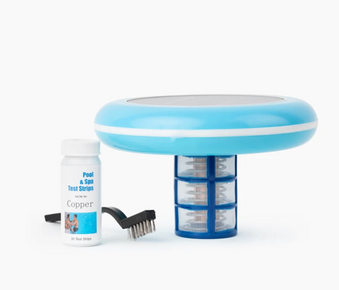
TL;DR: Solar pool ionizer systems have evolved far beyond simple electrode-and-panel combinations. In 2026, these systems integrate sophisticated controllers, advanced sensor suites, and seamless connectivity to create comprehensive water management platforms. From basic ionizer-only configurations to fully integrated hybrid systems with salt generators, ozone, and UV, today's options allow pool owners to customize their approach to sanitation, oxidation, and automation. This guide explores the complete ecosystem of solar pool ionizer systems available in 2026, helping you understand the components, configurations, and capabilities that define modern solar-powered pool care.
SEO Summary: 2026 guide to solar pool ionizer systems powering pools: complete system components, controller technology, sensor integration, hybrid configurations, and smart automation platforms.
Table of Contents
- The Evolution of Solar Pool Ionizer Systems
- Core Components of Modern Ionizer Systems
- Controller Technology: From Basic to AI-Powered
- Sensor Integration and Continuous Monitoring
- Hybrid System Configurations
- Automation Platforms and Smart Integration
- Integrated Energy Systems and Battery Storage
- Commercial-Scale Ionizer Systems
- Retrofit Systems for Existing Pools
- Conclusion & Key Takeaways
The Evolution of Solar Pool Ionizer Systems
The solar pool ionizer systems available in 2026 bear little resemblance to the first generation of copper-ion devices introduced decades ago. The evolution has been dramatic, driven by advances in electronics, sensor technology, and a growing understanding of water chemistry.
- First generation (simple ionizers): Early systems consisted of little more than copper electrodes, a basic solar panel, and minimal control electronics. They produced ions whenever the sun shone, with no adjustment for pool size, water temperature, or bather load. Owners had no visibility into system operation and little ability to fine-tune performance.
- Second generation (controlled ionizers): The next wave introduced adjustable output, allowing owners to increase or decrease ion production based on seasonal needs. Basic controllers provided rudimentary status information. Flow switches prevented operation without water circulation, improving safety and efficiency.
- Third generation (smart ionizers): Today's systems incorporate microprocessors, digital displays, and communication capabilities. They monitor water temperature and automatically adjust output. They track cumulative operating hours and predict electrode replacement. They communicate with pumps, heaters, and home automation platforms.
- Fourth generation (integrated platforms): The most advanced systems are no longer standalone ionizers but comprehensive water management platforms. They integrate with sensors for continuous chemistry monitoring, control multiple treatment devices (ionizers, chemical feeders, UV, ozone), and provide cloud-based data analytics and remote management.
This evolution has transformed solar ionization from a niche alternative into a mainstream solution capable of meeting the needs of virtually any pool owner. Our overview of pool technology advances traces this progression in greater detail.
Core Components of Modern Ionizer Systems
Understanding the components that make up a complete solar pool ionizer system helps in selecting the right configuration for your needs and in troubleshooting when issues arise.
- Solar panel array: The power plant of the system. Modern panels use monocrystalline or polycrystalline silicon cells with efficiencies of 18 to 24 percent. Sizing ranges from 10 watts for small pools to 100 watts or more for large installations or those in marginal sun climates. Panels may be integrated with the controller or separate for remote mounting.
- Ionizer chamber: The heart of the system where ion generation occurs. Chambers contain copper and silver electrodes, typically in cartridge form for easy replacement. Electrode surface area determines maximum ion output. Quality chambers feature UV-stabilized materials, O-ring seals, and clear sections for visual electrode inspection.
- Flow switch or sensor: A safety device that prevents ion generation when water is not flowing. Paddle-type switches are common; more advanced systems use electronic flow sensors that also provide flow rate data. Essential for protecting electrodes from damage and preventing gas accumulation.
- Controller unit: The brain of the system. Controllers range from simple analog devices with a single knob to sophisticated digital units with displays, communication ports, and programmable logic. Advanced controllers incorporate temperature compensation, self-diagnostics, and predictive maintenance algorithms.
- Mounting hardware: Brackets, stands, and fittings for installing the solar panel and controller. Adjustable mounts allow seasonal angle optimization. Stainless steel hardware resists corrosion in pool environments.
- Cabling and connectors: Weatherproof cables connect panel to controller and controller to chamber. Quality systems use marine-grade connectors that resist corrosion and maintain reliable connections.
The quality of these components varies significantly between manufacturers. Our resource on simpler pool chemistry discusses how component quality affects long-term reliability and performance.
Controller Technology: From Basic to AI-Powered
The controller is the most rapidly evolving component of solar ionizer systems. Today's options span a wide range of capabilities, from simple manual adjustment to artificial intelligence-driven automation.
- Basic analog controllers: These entry-level devices use a simple knob or dial to adjust output. They have no display, no sensors, and no communication capability. They are suitable for small pools or owners who prefer manual control and minimal technology. Price is low, but functionality is limited.
- Digital controllers with display: The next level adds a digital display showing output percentage, system status, and basic diagnostics. Some include temperature sensors for manual compensation guidance. These controllers represent the sweet spot for many residential owners, offering improved visibility without complexity.
- Smart controllers with temperature compensation: These units automatically adjust output based on water temperature, matching sanitation to biological demand. They may include flow sensing, electrode life tracking, and basic self-diagnostics. Some offer smartphone connectivity for remote monitoring.
- AI-powered controllers with predictive analytics: The most advanced controllers employ machine learning algorithms that analyze historical data, weather forecasts, and usage patterns to predict sanitation needs. They learn your pool's unique characteristics and optimize operation accordingly. They integrate with sensors, pumps, and home automation platforms.
- Integrated platform controllers: These units manage not just the ionizer but entire pool systems including pumps, heaters, lighting, and chemical feeders. They serve as the central intelligence for comprehensive pool automation.
Controller selection should match your comfort with technology and your desire for automation. The stability provided by solar ionization makes even basic controllers effective. Our article on smarter water systems explores how advanced controllers enable predictive water management.
Sensor Integration and Continuous Monitoring
Modern solar ionizer systems increasingly integrate with sensor networks that provide continuous, real-time water chemistry data. This integration transforms the ionizer from an open-loop device into a closed-loop system that responds to actual conditions.
- pH sensors: Continuous pH monitoring provides real-time visibility into this critical parameter. Sensors can be integrated with the ionizer controller or with a separate automation system. Data can trigger alerts when pH drifts out of range or activate automated pH adjustment systems.
- ORP sensors: Oxidation-reduction potential sensors measure the water's ability to oxidize contaminants. While not directly measuring copper, ORP provides a useful indicator of overall water quality. In hybrid systems with minimal chlorine, ORP confirms that oxidation capacity is adequate.
- Copper ion-selective electrodes: The most direct sensor for ionizer performance, these electrodes measure copper concentration continuously. When integrated with the controller, they enable true closed-loop control the system automatically adjusts output to maintain target copper levels without manual testing.
- Temperature sensors: Essential for temperature compensation and freeze protection. Multiple sensors can monitor water temperature, ambient temperature, and equipment temperature.
- Flow and pressure sensors: These provide data on circulation system performance, alerting to pump problems, filter loading, or valve misalignment. Pressure rise rate predicts when filter cleaning will be needed.
- Conductivity sensors: Total dissolved solids trends can be tracked, helping predict when water dilution may eventually be needed.
The integration of these sensors creates a comprehensive picture of pool health. Our piece on low-chemical pools discusses how reduced chemical complexity makes sensor data more meaningful.
Hybrid System Configurations
Many pool owners in 2026 choose hybrid configurations that combine solar ionization with complementary technologies. These combinations leverage the strengths of each approach while minimizing their limitations.
- Ionizer plus low-output salt generator: This is the most popular hybrid configuration. The ionizer handles primary sanitation with copper ions, maintaining 0.2 to 0.4 ppm copper. The salt generator operates at 10 to 20 percent of normal output, maintaining a barely detectable chlorine residual of 0.2 to 0.5 ppm. This low level provides oxidation capability for sunscreen, body oils, and other organics without the negative effects of full chlorination.
- Benefits of ionizer-salt hybrid: Pool owners report the silky feel of ionized water with the oxidation insurance of minimal chlorine. Salt consumption drops by 80 to 90 percent, extending cell life dramatically. pH remains more stable than with full salt operation because the low output produces minimal sodium hydroxide byproduct.
- Ionizer plus ozone: Ozone systems provide powerful oxidation at the point of contact but leave no residual. Combined with an ionizer that provides residual sanitation, this creates a completely chemical-free oxidation solution. Ozone handles organic contaminants while ions provide continuous protection throughout the pool. Higher initial cost but zero ongoing chemical consumption.
- Ionizer plus UV: UV sterilization provides pathogen inactivation without chemicals. When combined with an ionizer's residual sanitation, the system provides multiple barriers to contamination. UV addresses microorganisms at the equipment while ions protect throughout the pool.
- Ionizer plus mineral chlorine: Some manufacturers offer mineral chlorine systems that use a small amount of chlorine combined with silver ions. Adding an ionizer provides copper for enhanced algae control while the mineral chlorine handles oxidation.
- Ionizer plus enzyme treatments: For those preferring to avoid any chlorine, enzyme products can provide biological oxidation of organic compounds. Monthly enzyme treatments complement ionizer sanitation, breaking down sunscreen and body oils.
Hybrid configurations are particularly attractive for owners transitioning from existing salt systems. Our article on next-generation pool power explores how these combinations are shaping the future of pool sanitation.
Automation Platforms and Smart Integration
Solar pool ionizer systems in 2026 are designed to integrate with comprehensive automation platforms that control all aspects of pool operation.
- Centralized control hubs: These platforms serve as the command center for the entire pool ecosystem. They communicate with ionizers, pumps, heaters, lighting, water features, and chemical feeders. All components are managed through a single interface, simplifying operation and enabling coordinated responses.
- Communication protocols: Modern systems use industry-standard protocols including RS-485, Modbus, and Wi-Fi API for communication. This ensures compatibility across manufacturers and allows integration with home automation systems. Open protocols prevent vendor lock-in and enable future expansion.
- Mobile applications: Dedicated apps provide complete visibility and control from smartphones. Owners can view real-time data, adjust settings, receive alerts, and review historical trends. App interfaces have become intuitive, with graphical displays that make complex data accessible.
- Voice control integration: Integration with Amazon Alexa, Google Assistant, and Apple HomeKit allows voice commands for common tasks. "Hey Google, set pool temperature to 85 degrees" or "Alexa, ask my pool for copper level" become simple voice interactions.
- Geofencing capabilities: Using smartphone location, systems can automatically adjust operation based on homeowner presence. When you leave, the pool reduces energy consumption. When you return, it prepares for swimming. Some systems integrate with calendars to prepare for scheduled events.
- Energy management integration: Automation platforms coordinate with home energy systems, shifting pool loads to times of peak solar production or off-peak electricity rates. This transforms the pool from a fixed energy load into a flexible resource.
Automation platforms are most powerful when combined with the stable chemistry of solar-ionized water. Our reinventing backyard pools article explores how this integration transforms the pool experience.
Integrated Energy Systems and Battery Storage
Solar pool ionizer systems are increasingly part of comprehensive home energy systems that include photovoltaic generation, battery storage, and smart energy management.
- Dedicated pool solar arrays: Many installations now include solar panels dedicated to powering pool equipment. These arrays are sized to match pump consumption, enabling grid-free circulation during daylight hours. When combined with solar ionizers, the pool can operate on 100 percent renewable energy.
- Battery storage integration: Lithium battery systems store excess solar energy for use during evening hours or cloudy periods. A 5 to 10 kilowatt-hour battery can power a variable-speed pump for 10 to 20 hours, enabling 24-hour solar-powered circulation. Batteries also provide backup during grid outages.
- Energy management software: Advanced controllers optimize energy use based on solar availability, electricity rates, and anticipated demand. They learn your pool's patterns and automatically adjust operation to minimize grid consumption while maintaining water quality.
- Time-of-use optimization: In regions with variable electricity rates, systems shift non-essential loads to off-peak periods. Extended filtration, battery charging, and other discretionary operations are scheduled when electricity is cheapest.
- Grid-interactive capabilities: Some systems can participate in utility demand response programs, voluntarily reducing consumption during grid stress events in exchange for incentives. This transforms the pool from a grid burden into a grid asset.
- Net-zero energy potential: When properly configured, these integrated systems can achieve net-zero energy operation, where annual renewable generation equals or exceeds annual pool consumption. This represents the ultimate in sustainable pool ownership.
Integrated energy systems represent the cutting edge of pool technology. Our guide to solar-powered pool care provides detailed information on achieving energy independence.
Commercial-Scale Ionizer Systems
Commercial pools, community facilities, and water parks have unique requirements that demand robust, scalable ionizer systems. Manufacturers have responded with commercial-grade products designed for continuous operation and regulatory compliance.
- System sizing for commercial applications: Commercial systems are engineered based on peak bather load, not just pool volume. A 50,000-gallon public pool with 100 swimmers requires significantly more ion output than an equivalently sized residential pool. Systems may incorporate multiple ionizer chambers in parallel to achieve required capacity.
- Redundancy requirements: Health codes mandate redundant sanitation capability. Commercial ionizer systems are designed with dual chambers or integrated backup sanitation (low-output chlorine, UV, or ozone) to ensure continuous operation during maintenance or component failure.
- NSF/ANSI 50 certification: Commercial systems must carry NSF/ANSI 50 certification, verifying they meet national standards for pool equipment sanitation performance. This certification is non-negotiable for licensed public pools.
- Remote telemetry and data logging: Commercial installations require comprehensive monitoring with data logging for health department inspections. Systems provide continuous records of water chemistry, equipment status, and sanitation performance, accessible remotely by facility managers and regulators.
- Industrial-grade components: Commercial ionizers use heavy-duty chambers, industrial controllers, and commercial solar panels rated for continuous operation. Electrodes are larger and designed for extended service life under heavy use.
- Integration with building management systems: Commercial systems communicate with facility-wide BMS using BACnet, Modbus, or other standard protocols, enabling centralized monitoring and control.
Commercial systems demonstrate that solar ionization can meet the most demanding sanitation requirements. Our analysis of the rise of solar ionizers discusses their growing adoption in commercial applications.
Retrofit Systems for Existing Pools
For the millions of existing pools not originally built with solar ionization, retrofit systems provide a path to modern, low-chemical operation without major construction.
- Universal retrofit kits: Most manufacturers offer retrofit kits designed to work with any existing pool equipment. These kits include the ionizer chamber, controller, solar panel, and necessary fittings. Installation typically takes 1 to 3 hours for a handy homeowner.
- Plumbing considerations: The ionizer chamber installs in the return line after the filter and any heater. Most kits include unions and adapters to fit standard PVC pipe sizes. A straight section of pipe is required for proper flow switch operation.
- Solar panel mounting: Retrofit systems require a sunny location for the solar panel. Options include ground mounting with adjustable stands, roof mounting, fence mounting, or integration into existing structures. Extension cables allow remote mounting if the equipment pad is shaded.
- Electrical requirements: Most residential systems are completely solar-powered with no electrical connection required. The panel connects directly to the controller, which connects to the chamber. No electrician is typically needed.
- Controller placement: The controller should be mounted in a location protected from direct weather but visible for status checks. Many owners mount controllers on the equipment pad or nearby wall.
- Transitioning existing chemistry: After installation, existing chlorine use is gradually reduced over 2 to 3 weeks as the ionic field establishes. Water balancing ensures optimal conditions for the new system.
Retrofit systems have made solar ionization accessible to every pool owner. Our resource on predictable pool maintenance provides guidance for a successful transition.
Conclusion & Key Takeaways
Solar pool ionizer systems in 2026 are comprehensive water management platforms that go far beyond simple ion generation. They integrate advanced controllers, continuous sensors, hybrid treatment options, and smart home connectivity to deliver water quality that was unimaginable just a decade ago.
From basic systems for small above-ground pools to commercial-scale installations serving hundreds of swimmers, solar ionization has proven itself as a versatile, reliable, and cost-effective sanitation solution. The technology continues to evolve, with AI-powered controllers, predictive analytics, and integrated energy systems pushing the boundaries of what's possible.
For pool owners, the range of options means there is a system suited to every need and budget. Whether you seek the simplicity of a basic ionizer, the sophistication of a fully automated smart system, or the redundancy of a commercial-grade installation, solar ionization delivers the benefits of low-chemical, energy-efficient, environmentally responsible pool care.
Key Takeaways
- Solar ionizer systems have evolved dramatically: From simple electrode-and-panel combinations to sophisticated water management platforms with AI, sensors, and smart integration.
- Core components include solar panels, ionizer chambers, flow switches, and controllers: Quality varies significantly choose reputable manufacturers. Our simpler chemistry resource discusses component quality considerations.
- Controller technology ranges from basic analog to AI-powered: Select based on your comfort with technology and desired automation level. Smart controllers with temperature compensation offer the best value for most owners.
- Sensor integration enables continuous monitoring: pH, ORP, copper ion-selective, flow, and pressure sensors provide real-time data for informed management and closed-loop control.
- Hybrid configurations combine technologies for optimal results: Ionizer plus low-output salt, ozone, UV, or enzyme treatments leverage the strengths of each approach.
- Automation platforms unify pool management: Centralized control hubs, mobile apps, voice integration, and geofencing create seamless operation. Our smarter water systems article explores these capabilities.
- Integrated energy systems enable sustainable operation: Dedicated solar arrays, battery storage, and energy management software can achieve net-zero energy pools.
- Commercial systems meet demanding requirements: NSF/ANSI 50 certification, redundancy, remote telemetry, and industrial-grade components serve public and community pools.
- Retrofit systems make ionization accessible: Universal kits install in hours, allowing any existing pool to transition to solar-powered, low-chemical operation.
- The right system depends on your needs: Pool size, climate, usage patterns, budget, and desire for automation all influence the optimal choice. Our water stability resource helps match systems to your specific situation.
Solar pool ionizer systems have matured into comprehensive solutions that power pools more efficiently, more sustainably, and more intelligently than ever before. The technology is proven, the benefits are clear, and the options are abundant. Every pool owner can find a system that delivers the cleaner, more natural swimming experience that solar ionization provides.