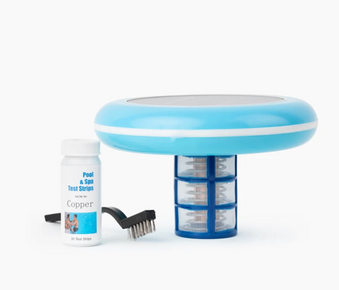
TL;DR: The modern pool upgrade movement in 2026 is being driven by solar pool ionizers, as pool owners increasingly recognize that true modernization goes beyond aesthetics and water features. Today's upgrades focus on intelligent systems, energy independence, and chemical-free operation. Solar ionization enables these transformations by replacing outdated chlorine sanitation with stable, self-regulating mineral chemistry that integrates with smart controls, variable-speed pumps, and home automation. This guide explores how solar pool ionizers are driving the most significant wave of pool upgrades in decades, from simple retrofits to complete system overhauls.
SEO Summary: 2026 guide to how solar pool ionizers drive modern pool upgrades: intelligent systems, energy independence, chemical-free operation, smart integration, and complete system transformations.
Table of Contents
The Modern Pool Upgrade Movement
The concept of pool upgrades has traditionally been associated with visible improvements: new tile, water features, lighting, or landscaping. While these remain popular, a deeper transformation is underway. Today's most meaningful pool upgrades focus on how the pool operates, not just how it looks.
- From cosmetic to systemic: The modern upgrade movement prioritizes fundamental system improvements over surface aesthetics. Pool owners are investing in smarter controls, energy-efficient equipment, and chemical-free sanitation technologies that transform the ownership experience from the inside out.
- The intelligence revolution: Just as homes have become smarter with connected thermostats, lighting, and security, pools are undergoing their own intelligence revolution. Upgrades now include AI-powered controllers, continuous water monitoring, and seamless integration with home automation platforms.
- The sustainability imperative: Growing environmental awareness has made sustainability a driving force in upgrade decisions. Pool owners seek technologies that reduce chemical consumption, lower energy use, and minimize environmental impact without compromising performance.
- The experience factor: Perhaps most importantly, owners are upgrading to improve the swimming experience itself. The harsh feel of chlorine, the red eyes, the chemical smell these are no longer accepted as inevitable. Modern upgrades deliver water that feels natural and comfortable.
- Market acceleration: These trends have created unprecedented demand for pool upgrades. The industry has responded with innovations that make modernization accessible, affordable, and compelling. Our analysis of the rise of solar pool ionizers documents this market transformation.
Why Solar Ionizers Are Driving Upgrades
Solar pool ionizers have emerged as the centerpiece of modern pool upgrades because they address the fundamental limitations of traditional chlorine sanitation while enabling a host of complementary improvements.
- Foundation for intelligence: The stable, predictable chemistry of solar-ionized water provides the foundation upon which intelligent controls can operate. Chlorine's volatility makes sophisticated automation difficult; ionized water's stability makes it possible. Without this foundation, many modern upgrades would be impractical.
- Gateway to chemical freedom: For most pool owners, the primary motivation for upgrades is reducing chemical dependency. Solar ionization delivers 80 to 90 percent chemical reduction immediately, often eliminating chlorine entirely. This transformation is the most visible and valued upgrade benefit. Our resource on low-chemical pools explains why this matters.
- Enabler of energy independence: Solar ionizers themselves consume zero grid power. When combined with variable-speed pumps and solar-synchronous scheduling, they enable dramatic energy reductions. For owners seeking true energy independence, ionizers are the essential starting point.
- Compatibility with other upgrades: Ionizers work seamlessly with variable-speed pumps, automation systems, and smart home platforms. They enhance the benefits of these upgrades rather than competing with them. A variable-speed pump in an ionized pool achieves greater savings than the same pump in a chlorinated pool.
- Future-proof investment: As pool technology continues to advance, solar ionizers provide a platform that can accommodate future innovations. Their stable chemistry and compatibility with automation ensure that today's upgrade remains relevant for years to come.
Smart Integration Upgrades
One of the most popular categories of modern pool upgrades involves integrating the pool into the broader smart home ecosystem. Solar pool ionizers are designed from the ground up to support this integration.
- Voice control activation: Upgrading to a smart ionizer controller enables voice commands through Amazon Alexa, Google Assistant, or Apple HomeKit. Owners can check copper levels, adjust output, or verify system status with simple voice requests. "Hey Google, ask my pool for the water temperature" becomes a routine interaction.
- Geofencing automation: Smart integration allows the pool to respond to homeowner presence. When the last person leaves, the system reduces pump operation to minimum levels while maintaining baseline sanitation. When someone returns, it prepares the pool for swimming. Some systems integrate with calendars to prepare for scheduled events automatically.
- Energy management coordination: Upgraded systems communicate with home energy platforms, shifting pool loads to times of peak solar production or off-peak electricity rates. This transforms the pool from a fixed energy consumer into a flexible resource that optimizes its own operation.
- Maintenance platform connectivity: Advanced integrations connect with smart home maintenance platforms that track equipment service schedules, order replacement parts automatically, and schedule professional service when needed. If the system predicts electrode replacement, it can add cartridges to your shopping list.
- Multi-property management: For owners with multiple properties, cloud-based platforms enable centralized management of several pool systems from a single interface. Whether monitoring a primary residence or vacation home, owners have complete visibility.
Smart integration upgrades transform the pool from an isolated system into a connected home component. Our article on smarter water systems explores these capabilities in depth.
Energy Independence Upgrades
Energy independence has become a primary goal for many pool owners, and solar pool ionizers are the foundation for achieving it.
- Sanitation energy elimination: The most immediate energy upgrade is replacing grid-powered sanitation with solar ionization. Salt chlorine generators consume 200 to 500 watts continuously; ionizers consume zero grid power. This upgrade alone saves 500 to 1,500 kilowatt-hours annually.
- Solar panel expansion: Many owners upgrade by adding dedicated solar panels for pump power. A 600 to 1,000 watt array can offset most or all pump consumption, enabling grid-free circulation during daylight hours. Panels can be ground-mounted, roof-mounted, or integrated into shade structures.
- Battery storage addition: For 24-hour solar operation, battery storage is the next upgrade tier. Lithium battery systems store excess daytime energy for evening and overnight pump operation. A 5 to 10 kilowatt-hour battery can power a variable-speed pump for 10 to 20 hours, enabling true energy independence.
- Time-of-use optimization: In regions with variable electricity rates, upgraded controllers automatically shift operation to off-peak periods. This reduces costs without reducing total energy consumption, maximizing the value of every kilowatt-hour.
- Energy monitoring and reporting: Upgraded systems provide detailed energy analytics, showing consumption by component, solar production, grid purchases, and carbon impact. This data enables continuous optimization and quantifies the benefits of each upgrade.
Energy independence upgrades represent a significant investment but deliver compelling returns. Our guide to solar-powered pool care provides detailed analysis of achievable savings and payback periods.
Pump and Circulation Upgrades
Pool pumps are the largest energy consumers in pool operation, making them prime targets for upgrade. Solar pool ionizers enhance the benefits of pump upgrades dramatically.
- Variable-speed pump conversion: The single most impactful circulation upgrade is replacing a single-speed pump with a variable-speed model. Variable-speed pumps use 50 to 80 percent less energy than single-speed equivalents while providing better circulation control. When combined with solar ionization, savings increase further because the stable chemistry allows lower flow rates.
- Right-sizing for ionizer operation: Traditional pools oversize pumps to guarantee turnover regardless of filter loading. Upgraded systems right-size pumps based on actual flow requirements. A properly sized variable-speed pump operating at low speed may consume only 150 to 300 watts, a fraction of conventional consumption.
- Solar-synchronous scheduling: Upgraded pump controllers coordinate operation with solar availability. During peak sun hours, pumps run at optimal speeds for ion distribution. During cloudy periods, they reduce speed to match available solar power. This coordination maximizes renewable energy use.
- Flow-optimized plumbing: Some owners upgrade plumbing alongside pumps, increasing pipe diameters and using sweep fittings to reduce friction losses. These improvements compound pump energy savings, often reducing consumption by an additional 10 to 20 percent.
- Smart pump controllers: Advanced pump controllers communicate directly with ionizer controllers, enabling coordinated operation that optimizes both sanitation and energy efficiency. The ionizer can request higher flow during peak production and reduce flow when appropriate.
Pump upgrades deliver the fastest payback of any pool improvement. Our resource on predictable pool maintenance includes guidance on optimizing pump performance.
Automation and Control Upgrades
Automation upgrades represent the intelligence layer of modern pool systems, transforming manual operation into autonomous management.
- Smart controller installation: Upgrading from a basic ionizer controller to a smart model adds temperature compensation, self-diagnostics, and communication capabilities. These controllers automatically adjust output based on water temperature, track electrode life, and provide status information through mobile apps.
- Continuous monitoring sensors: Adding pH, ORP, and copper sensors enables continuous water chemistry visibility. Sensors provide real-time data through smartphone apps, alerting owners to developing issues before they affect water quality. For those seeking maximum automation, sensors enable closed-loop control.
- Closed-loop control activation: The ultimate automation upgrade is closed-loop chemistry management. Sensors continuously monitor water parameters, and controllers automatically adjust treatment to maintain optimal ranges. Copper levels are maintained without manual testing. pH is adjusted without owner intervention. The system becomes truly autonomous.
- Weather-responsive programming: Upgraded automation integrates with local weather forecasts. Before predicted storms, the system increases ion output to strengthen the ionic field. Before heat waves, it preemptively raises copper targets. Before freezing temperatures, it activates freeze protection hours in advance.
- Mobile app integration: Modern automation platforms provide comprehensive mobile access. Owners can view real-time data, adjust settings, receive alerts, and review historical trends from anywhere. Multiple user accounts allow family members and service providers appropriate access levels.
Automation upgrades transform pool ownership from a series of tasks into an occasional oversight activity. Our overview of pool technology advances explores the capabilities of modern automation systems.
Chemical Elimination Upgrades
For many pool owners, reducing or eliminating chemical use is the primary motivation for upgrades. Solar ionization enables progressive chemical elimination through several upgrade paths.
- Chlorine reduction: The first tier of chemical upgrade is reducing chlorine use. With an ionizer handling primary sanitation, chlorine consumption drops by 80 to 90 percent. Many owners find this reduction sufficient and stop there.
- Chlorine elimination: For those seeking true chemical-free operation, the next upgrade eliminates chlorine entirely. Ionizer-only operation maintains water quality with no chlorine added. Oxidation of organics is handled through non-chlorine shock, enzyme treatments, or enhanced filtration.
- Algaecide elimination: Copper ions themselves are effective algaecides, eliminating the need for separate algaecide products. This upgrade removes an entire category of chemical testing and adjustment.
- Clarifier elimination: Ionic flocculation naturally improves water clarity, eliminating the need for clarifiers. Most ionizer owners find clarifiers completely unnecessary after the initial transition.
- pH adjuster reduction: The stable chemistry of ionized water reduces pH drift dramatically. The volume of acid or base required decreases by 50 to 70 percent, further simplifying chemical management.
- Cyanuric acid elimination: Ionized pools do not require cyanuric acid. Any CYA present from previous chlorine use gradually dilutes, eventually eliminating the need for periodic draining to reset stabilizer levels.
Chemical elimination upgrades deliver benefits beyond reduced purchases. They eliminate chemical storage hazards, reduce environmental impact, and create a more natural swimming experience. Our reinventing backyard pools article explores how chemical freedom transforms the pool experience.
Complete System Overhauls
For owners undertaking major renovations or new construction, complete system overhauls integrate all the upgrades described above into a unified, optimized platform.
- Integrated design approach: Complete overhauls treat the pool as an integrated system rather than a collection of components. Engineers design hydraulics for optimal flow, select pumps based on actual requirements, and specify automation that coordinates all functions. Solar ionization is the foundation around which everything else is designed.
- Hydraulic optimization: Plumbing is designed for efficiency from the start, with larger pipe diameters, sweep fittings, and balanced return lines. These choices reduce friction losses, enabling lower pump speeds and further energy savings.
- Equipment selection: All equipment is selected for compatibility and optimal performance. Variable-speed pumps, high-efficiency cartridge filters, solar panels, battery storage, and smart controllers are specified as a coordinated system rather than individual components.
- Automation integration: A single automation platform controls all functions: ionizer, pump, heater, lighting, water features, and chemical feeders. The platform provides unified monitoring and control through a single interface, simplifying operation and enabling coordinated responses.
- Future-proofing: Complete overhauls include provisions for future upgrades. Conduit is oversized, mounting structures accommodate additional solar panels, and controllers have spare capacity for additional sensors. These investments ensure the system can evolve as technology advances.
Complete system overhauls represent the ultimate expression of modern pool design. Our resource on next-generation pool power provides comprehensive guidance for those undertaking major projects.
Phased Upgrade Strategies
Not every pool owner is ready for a complete overhaul. Phased upgrade strategies allow incremental modernization, capturing benefits at each stage while spreading investment over time.
- Phase 1: Ionizer installation: The foundation of any upgrade path is installing a solar ionizer. This immediately delivers 80 to 90 percent chemical reduction and enables all future upgrades. Owners can optimize pump scheduling for runtime reduction while evaluating their pool's response to ionization.
- Phase 2: Pump upgrade: After experiencing the benefits of ionization, many owners upgrade to a variable-speed pump. The stable chemistry allows maximum savings from reduced speeds and optimized scheduling. Savings from Phase 1 can help fund Phase 2.
- Phase 3: Automation addition: Adding a smart controller and sensors brings intelligence to the system. Temperature compensation automates output adjustment. Continuous monitoring provides visibility. Mobile apps enable remote management. Savings from Phases 1 and 2 offset this investment.
- Phase 4: Solar expansion: With an efficient pump and smart controls in place, adding dedicated solar panels for pump power achieves grid-free daytime operation. Solar generation offsets most or all remaining energy costs.
- Phase 5: Battery storage: The final phase adds battery storage for 24-hour solar operation. Batteries store excess daytime energy for evening and overnight use, achieving true energy independence.
This phased approach makes modern pool upgrades accessible to every budget. Each phase delivers measurable benefits that help fund subsequent phases. Our water stability resource provides guidance on prioritizing upgrades based on your specific situation.
Conclusion & Key Takeaways
Solar pool ionizers are driving the most significant wave of modern pool upgrades in decades. By addressing the fundamental limitations of traditional chlorine sanitation, they enable a complete reimagining of how pools operate and how owners interact with them.
The upgrade possibilities are extensive and varied. Smart integration connects pools to the broader home ecosystem. Energy independence liberates pools from grid dependence. Pump and circulation upgrades multiply savings. Automation transforms manual operation into autonomous management. Chemical elimination creates a more natural swimming experience. Complete overhauls integrate everything into optimized systems.
Perhaps most importantly, these upgrades can be pursued in phases, allowing owners to capture benefits at each stage while spreading investment over time. Whether you start with a simple ionizer installation or embark on a complete system overhaul, the path to a modern, efficient, chemical-free pool is clear.
Key Takeaways
- Solar ionizers are driving modern pool upgrades: Their stable chemistry provides the foundation for intelligence, efficiency, and chemical freedom that other upgrades build upon.
- Smart integration connects pools to home ecosystems: Voice control, geofencing, energy management, and maintenance coordination transform isolated pools into connected home components. Our smarter water systems article explores these connections.
- Energy independence is achievable through phased upgrades: Ionizers eliminate sanitation energy; solar panels offset pump energy; batteries enable 24-hour solar operation.
- Pump upgrades deliver the fastest payback: Variable-speed pumps combined with ionizer-stabilized chemistry achieve 70 to 80 percent circulation energy reduction.
- Automation transforms pool management: Smart controllers, continuous sensors, and closed-loop control eliminate manual intervention while maintaining perfect water quality.
- Chemical elimination creates a natural swimming experience: Progressive reduction of chlorine, algaecides, clarifiers, and other chemicals transforms water feel and comfort. Our low-chemical pools resource explains the benefits.
- Complete system overhauls represent the ultimate upgrade: Integrated design, hydraulic optimization, and coordinated equipment selection create systems that outperform any collection of individual components.
- Phased approaches make upgrades accessible: Starting with an ionizer and adding improvements over time allows owners to capture benefits at each stage while spreading investment.
- Solar ionization enhances every other upgrade: Variable-speed pumps, solar panels, and automation all perform better in the stable chemical environment that ionizers provide.
- The upgrade movement is accelerating: As more owners experience the benefits of modern pool systems, demand continues to grow. Our analysis of market trends documents this acceleration.
The modern pool upgrade movement is being driven by owners who refuse to accept the limitations of traditional pool technology. They demand systems that are intelligent, efficient, and environmentally responsible. Solar pool ionizers provide the foundation for meeting these demands, and the upgrade possibilities they enable are transforming what it means to own a pool.