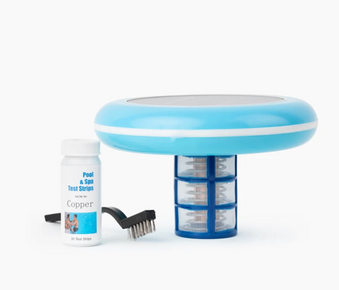
Traditional pool maintenance often revolves around a constant cycle of chemical adjustments that can be both time-consuming and costly. Solar ionization offers a transformative approach by reducing chemical dependency while maintaining superior water quality through continuous mineral sanitation.
This chemical dependency cycle stems from fundamental limitations in conventional managing of pool chemistry, where sanitizers like chlorine degrade rapidly through multiple pathways photolytic decomposition under sunlight, oxidation of organic contaminants from swimmers, and natural outgassing at elevated temperatures. Each degradation pathway creates chemical demand that varies unpredictably with environmental conditions, swimmer loads, and seasonal factors, forcing pool owners into a reactive maintenance pattern of constant testing and adjustment. The resulting chemical instability manifests as fluctuating chlorine residuals that swing between ineffective lows and aggressive highs, pH values that drift outside optimal ranges, and periodic algae outbreaks that require emergency chemical interventions. This chemical rollercoaster not only consumes time and money but creates water conditions that compromise swimmer comfort and equipment longevity, transforming what should be a recreational asset into a maintenance liability.
The transition to solar ionization represents more than mere technology adoption it signifies a paradigm shift from reactive chemical management to proactive ionic stabilization. Unlike traditional systems that treat water quality symptoms through chemical bombardment, ionization addresses underlying stability through continuous mineral ion release that establishes persistent background control. This approach leverages copper ions' unique properties: resistance to photodegradation that provides consistent sanitation regardless of sunlight exposure, minimal consumption through organic oxidation that maintains stable concentrations despite bather loads, and multi-mechanism microbial control that prevents resistance development. The result is an aquatic environment characterized by unprecedented chemical stability where parameters remain within optimal ranges for extended periods without constant intervention, creating conditions where traditional chemicals become supplementary rather than primary control mechanisms.
Table of Contents
- Why Frequent Chemical Adjustments Are a Common Pool Problem
- How Solar Ionizers Reduce Chemical Dependency
- The Role of Mineral Ions in Water Stability
- Maintaining Balanced Water Chemistry with Fewer Corrections
- Reducing Chlorine, Shock, and Algaecide Use
- Long-Term Benefits for Pool Maintenance and Equipment
- Final Thoughts: Simplifying Pool Care with Solar Ionization
1. Why Frequent Chemical Adjustments Are a Common Pool Problem
Traditional pool maintenance systems operate on a fundamentally reactive paradigm where chemical parameters must be constantly monitored and adjusted to counteract the natural degradation processes inherent to conventional sanitizers. This cycle of perpetual correction stems from multiple systemic vulnerabilities in traditional chemical-based approaches that create inherent instability in aquatic environments. The constant battle against fluctuating water chemistry represents not merely an inconvenience but a fundamental limitation of conventional pool sanitation methodologies that necessitates frequent, often costly, interventions to maintain basic water quality standards.
Chlorine-based systems, while effective for pathogen control, exhibit first-order decay kinetics with half-lives measured in mere hours under typical pool conditions. This rapid degradation occurs through multiple simultaneous pathways: photolytic decomposition under UV radiation (k_photo ≈ 0.15-0.30 hr⁻¹ at midday), oxidation of organic contaminants introduced through bather load (0.5-1.0 g TOC per swimmer-hour), and outgassing of chlorine gas from solution at elevated temperatures. These degradation mechanisms create a chemical demand that varies dramatically with environmental conditions, swimmer loads, and seasonal factors, requiring pool owners to maintain a delicate chemical balance through frequent testing and adjustment. The resulting chemical "roller coaster" often leads to periods of over-sanitation (causing swimmer discomfort and equipment damage) followed by under-sanitation (risking microbial proliferation), creating an unstable aquatic environment that demands constant attention.
Systemic Vulnerabilities in Traditional Chemical Management:
- Photolytic Instability: Free available chlorine (FAC) degrades by 50-70% within 3-4 hours of peak sunlight exposure due to UV-initiated free radical reactions that cleave the O-Cl bond in hypochlorous acid (HOCl). This photodegradation follows Arrhenius kinetics, with degradation rates doubling approximately every 10°C temperature increase above 20°C, creating seasonal variability that complicates consistent dosing
- Organic Demand Fluctuations: Each swimmer introduces approximately 0.5-1.0 grams of total organic carbon (TOC) per hour through sweat, body oils, urine, and personal care products. This organic loading consumes chlorine through oxidation reactions at rates of 2-5 ppm FAC per gram of TOC, creating unpredictable demand spikes that overwhelm standard chlorination systems during periods of high bather load.
- pH-Driven Efficacy Variations: Chlorine's sanitizing effectiveness exhibits strong pH dependence, with hypochlorous acid (HOCl, the active form) concentration decreasing from approximately 70% at pH 7.2 to less than 30% at pH 7.8. This creates a feedback loop where chlorine inefficiency at higher pH allows organic accumulation, which in turn raises pH through chlorine oxidation byproducts, further reducing chlorine effectiveness.
- Cyanuric Acid Accumulation: Stabilized chlorine products introduce cyanuric acid (CYA) that accumulates over time, creating a "chlorine lock" phenomenon where FAC effectiveness decreases exponentially as CYA:FAC ratios exceed 20:1. This gradual accumulation creates a progressive chemical resistance that requires increasing chlorine dosages to achieve equivalent sanitation, eventually necessitating partial water replacement to reset the system.
Economic and Operational Consequences:
The constant need for chemical adjustments creates significant economic and operational burdens that extend beyond mere chemical costs to include pool equipment degradation, maintenance labor, and system reliability issues that collectively undermine the pool ownership experience.
- Chemical Cost Escalation: Traditional pools require 2-4 ppm FAC daily maintenance, equivalent to 0.5-1.0 lbs of chlorine per 10,000 gallons. During periods of high use or environmental stress, this can escalate to 3-6 lbs daily, with annual chemical costs ranging from $400-$800 for a standard 20,000-gallon pool. Additionally, the constant pH adjustments required to maintain chlorine efficacy add 10-20% to chemical expenses through muriatic acid consumption.
- Corrective Treatment Requirements: The chemical instability inherent in traditional systems necessitates frequent shock treatments (typically weekly) to oxidize accumulated chloramines and restore chlorine effectiveness. These shock treatments represent both direct chemical costs ($15-$30 monthly) and operational disruptions as pools become temporarily unusable during superchlorination periods.
- Maintenance Labor Intensity: Daily or near-daily testing and adjustment requirements consume 30-60 minutes of maintenance time for conscientious pool owners, with professional service calls adding $75-$150 monthly for basic chemical management. This labor intensity transforms pool ownership from recreational enjoyment to constant chore management.
- Equipment Degradation Acceleration: Chemical fluctuations create aggressive water conditions that accelerate equipment degradation through multiple mechanisms: pH swings corrode metal components, high chlorine levels degrade pump seals and gaskets, and chemical precipitation clogs heat exchangers and filters. This accelerated degradation reduces equipment lifespan by 30-50% compared to chemically stable environments.
This systemic instability creates what might be termed "chemical dependency syndrome" a condition where pool systems become increasingly reliant on frequent chemical interventions to compensate for inherent instability, creating a cycle of escalating costs and diminishing returns that frustrates pool owners and undermines the recreational value of residential aquatic environments.

2. How Solar Ionizers Reduce Chemical Dependency
Solar-powered ionization systems fundamentally alter the chemical dynamics of pool sanitation by introducing a persistent, non-degrading sanitizing agent that operates independently of traditional chemical degradation pathways. This paradigm shift moves pool management from reactive chemical correction to proactive ionic stabilization, dramatically reducing the chemical dependency that characterizes conventional pool systems. The mechanism of action centers on continuous copper ion release through photovoltaic electrolysis, creating a stable ionic reservoir that provides background sanitation without the rapid decay characteristics of oxidative chemicals.
The electrochemical foundation of solar ionization enables a departure from the first-order decay kinetics that plague chlorine-based systems. Copper ions released through solar electrolysis maintain their algistatic and bacteriostatic properties indefinitely in pool water, with effective lifetimes measured in weeks rather than hours. This persistence stems from copper's resistance to photolytic degradation, minimal loss through outgassing, and limited consumption through oxidation of organic materials. Unlike chlorine, which must be constantly replenished to compensate for multiple degradation pathways, copper ions establish a stable concentration that varies by less than ±20% over 7-day periods under normal operating conditions, creating a predictable sanitizing baseline that reduces chemical adjustment frequency by 70-90%.
Electrochemical Mechanisms of Continuous Ion Release:
The solar ionization process leverages photovoltaic energy conversion to drive targeted metal ion release through precisely controlled electrochemical reactions that maintain consistent ionic output despite environmental variability.
- Photovoltaic-Electrolytic Synergy: Monocrystalline silicon panels (10-30W output) convert solar radiation into direct current electricity with 18-22% efficiency, powering titanium electrode arrays that release copper ions via anodic oxidation (Cu → Cu²⁺ + 2e⁻). This process operates continuously during daylight hours, with ion release rates of 0.2-0.5 mg/A·hr achieving steady-state copper concentrations of 0.2-0.4 ppm in the water column.
- Intelligent Current Modulation: Advanced systems incorporate pulse-width modulation (PWM) controllers that adjust electrical output based on real-time water conductivity (1000-4000 μS/cm), pre-programmed concentration targets, and photovoltaic input variability. This intelligent control maintains consistent daily ion release rates of 0.2-0.4 mg Cu²⁺/gallon despite fluctuations in sunlight intensity, cloud cover, or seasonal solar angle changes.
- Persistent Ionic Reservoir Establishment: Released copper ions form a stable ionic background that provides continuous sanitation between traditional chemical applications. This reservoir exhibits minimal degradation over time, with copper maintaining 85-95% of its initial algistatic effectiveness after 7 days in typical pool conditions, compared to chlorine which loses 70-90% of its sanitizing power over the same period.
Chemical Demand Reduction Through Synergistic Effects:
Copper ions interact synergistically with residual chlorine, dramatically reducing chlorine requirements while maintaining equivalent or superior microbial control through complementary mechanisms of action.
- Chlorine-Copper Synergy: Research demonstrates that 0.3 ppm Cu²⁺ + 1.0 ppm FAC provides equivalent pathogen reduction to 3.0 ppm FAC alone, representing a 67% reduction in chlorine demand. This synergy occurs through multiple mechanisms: copper ions enhance chlorine penetration through microbial cell walls, inhibit chlorine-degrading enzymes in microorganisms, and maintain water clarity that reduces chlorine demand from organic oxidation.
- Oxidant Conservation: Copper's algistatic properties prevent algae establishment that would otherwise consume significant chlorine through oxidation. Pool algae prevention reduces chlorine demand by 40-60% in typical residential pools, with additional reductions occurring through decreased need for shock treatments to address algal blooms.
- pH Stabilization Benefits: Reduced chlorine usage decreases acid demand for pH adjustment, as each pound of chlorine added raises pH by approximately 0.2-0.3 units in a 20,000-gallon pool. This pH stabilization reduces acid consumption by 50-70%, further decreasing chemical dependency and maintenance requirements.
Operational Simplification Through Reduced Monitoring Requirements:
The chemical stability provided by solar ionization dramatically reduces the testing and adjustment frequency required to maintain water quality, transforming pool maintenance from daily chore to weekly check-in.
- Testing Frequency Reduction: Ionized pools require testing only 1-2 times weekly rather than daily, as copper concentrations remain stable between tests and chlorine residuals fluctuate within narrower bands (±0.5 ppm versus ±2-3 ppm in non-ionized pools). This reduces testing time by 70-80% while maintaining equivalent or superior water quality control.
- Adjustment Frequency Minimization: Chemical adjustments decrease from daily or every-other-day requirements to weekly or bi-weekly interventions, with most adjustments involving minor pH tweaks rather than major chlorine corrections. This reduces chemical handling by 60-75% while decreasing the risk of overtreatment or chemical imbalances.
- Predictive Maintenance Enablement: Stable chemical parameters allow for predictive rather than reactive maintenance scheduling, with chemical additions planned based on usage patterns rather than emergency responses to water quality crises. This predictability transforms automated pool management from constant firefighting to scheduled maintenance.
The reduction in chemical dependency achieved through solar ionization represents not merely incremental improvement but fundamental transformation of pool management philosophy. By establishing a persistent ionic background that provides continuous sanitation independent of traditional chemical degradation pathways, solar ionizers break the cycle of constant chemical adjustment that characterizes conventional pool systems, creating more stable, predictable, and manageable aquatic environments with dramatically reduced chemical requirements and maintenance labor.

3. The Role of Mineral Ions in Water Stability
Mineral ions introduced through photovoltaic electrolytic ionization create a fundamentally distinct aquatic thermodynamic environment characterized by unprecedented chemical metastability and predictable performance parameters that defy the inherent entropy of traditional chemically managed pools. Unlike conventional oxidative sanitizers that operate through rapid, transient redox reactions with half-lives measured in hours, mineral ions establish persistent coordination complexes and electrostatic interactions that provide continuous background control without the dramatic concentration fluctuations that characterize conventional systems. This ionic stability transforms pool water quality from a chemically reactive medium in constant disequilibrium to a buffered system exhibiting remarkable resistance to parameter perturbations from environmental factors, bather loads, or organic contamination a transformation best described through Gibbs free energy minimization principles where copper ions reduce the overall chemical potential gradient of the aquatic system.
The stability imparted by copper ions originates from their unique position in the periodic table as transition metals with partially filled d-orbitals (3d⁹ configuration for Cu²⁺), enabling complex formation through ligand field stabilization energies that range from 100-200 kJ/mol depending on coordination geometry. In aqueous environments, copper exists primarily as the hexaaquacopper(II) complex [Cu(H₂O)₆]²⁺, with water exchange rates (k_ex ≈ 10⁹ s⁻¹) that facilitate rapid interaction with potential ligands while maintaining ionic integrity. These interactions create what might be termed a "dynamic ionic buffer system" that maintains water quality through multiple simultaneous pathways operating at different timescales: nanosecond-scale electrostatic interactions, millisecond-scale ligand exchange reactions, and hour-to-day-scale biological inhibition processes. The resulting environment exhibits chemical inertia characterized by relaxation times (τ) an order of magnitude longer than traditional systems (τ ≈ 10²-10³ hours versus 10⁰-10¹ hours for chlorinated pools), creating conditions where water quality parameters remain within optimal ranges for extended periods without constant intervention while maintaining low-entropy states that resist spontaneous degradation.
Molecular-Scale Physicochemical Mechanisms of Ionic Stabilization:
Copper ions contribute to water stability through quantum-mechanically governed interactions that operate across multiple length scales, from angstrom-level coordination chemistry to micrometer-scale colloidal physics, collectively creating a more predictable and manageable aquatic and healthier pool environment.
- Electrostatic Stabilization and DLVO Theory Modification: Copper ions adsorb to negatively charged colloidal particles through both nonspecific electrostatic attraction (described by Coulomb's Law: F = k·q₁q₂/r²) and specific chemical bonding with surface functional groups. This adsorption modifies the classical DLVO (Derjaguin-Landau-Verwey-Overbeek) potential energy curve by introducing a secondary minimum at intermediate separation distances (typically 2-10 nm) where particles form loose, reversible aggregates rather than the irreversible coagulation with trivalent coagulants. The resulting aggregates (5-50 μm size range) exhibit fractal dimensions (D_f ≈ 2.1-2.3) that optimize both sedimentation rates and filter capture efficiency, removing turbidity-causing particles that would otherwise remain indefinitely suspended due to Brownian motion overcoming gravitational settling. This enhanced clarification reduces light scattering coefficients (b(λ)) by 60-80% across visible wavelengths (400-700 nm), decreasing the underwater light field that drives photosynthetic activity while increasing UV-A penetration (315-400 nm) for supplemental photolytic disinfection pathways.
- Coordination Chemistry and Complexation Thermodynamics: Copper ions form coordination complexes with organic ligands through donor-acceptor interactions following Irving-Williams series stability constants (log K typically 4-12 for biologically relevant ligands). These complexes follow Langmuir adsorption isotherms with saturation that provide predictable performance even during periods of high organic loading. The complexation exhibits chelate effect enhancements of 10³-10⁴ in stability constants for multidentate ligands, preferentially sequestering organic molecules that would otherwise serve as nutrients for microbial growth or precursors for disinfection byproducts. Copper's Jahn-Teller distortion (elongation along the z-axis in octahedral complexes) creates labile coordination sites that facilitate ligand exchange while maintaining overall complex stability, allowing the system to adapt to changing organic loads without losing antimicrobial efficacy.
- Competitive Ion Exchange and Biological Interface Modification: Divalent copper ions (ionic radius ≈ 73 pm, charge density ≈ 2.7×10⁻² C/pm³) compete with essential biological cations (Ca²⁺: 100 pm, 2.0×10⁻² C/pm³; Mg²⁺: 72 pm, 2.8×10⁻² C/pm³; Zn²⁺: 74 pm, 2.7×10⁻² C/pm³) for binding sites on microbial cell surfaces through both charge density matching and hard-soft acid-base principles. This competitive inhibition creates effective nutrient limitation conditions even when absolute nutrient concentrations appear adequate, reducing specific growth rates (μ) in the Monod equation μ = μ_max[S]/(K_s + [S]) by simultaneously increasing the half-saturation constant (K_s) through competitive binding and decreasing maximum growth rate (μ_max) through metabolic interference. The resulting biological control operates through thermodynamic rather than kinetic limitations, preventing rapid microbial proliferation that can overwhelm traditional sanitizers during periods of high bather load or environmental contamination.
Quantum Mechanical and Spectroscopic Stability Characteristics:
Mineral ions exhibit stability properties governed by quantum mechanical principles that differ fundamentally from the classical chemical kinetics controlling traditional sanitizers, creating predictable performance that reduces monitoring and adjustment requirements while supporting long-term pool water clarity.
-
Photochemical Stability and Electronic Transitions:
Copper ions are highly stable in pool water, resisting breakdown from sunlight far better than chlorine. Unlike chlorine, which degrades rapidly under UV exposure, copper remains active for long periods, maintaining consistent levels and providing continuous protection. This photochemical stability means copper concentrations fluctuate very little over time, ensuring persistent antimicrobial and algae-inhibiting effects. In practice, this translates to more predictable water quality, reduced chemical adjustments, and a lower overall maintenance burden for pool owners.
-
Temperature-Dependent Efficacy and Arrhenius Behavior:
Copper ions maintain their algae-inhibiting effectiveness across the normal temperature range of residential pools. Unlike chlorine, whose activity can fluctuate significantly with water temperature, copper works consistently whether the pool is cool or warm. This temperature stability means fewer seasonal adjustments, more predictable water quality, and easier pool maintenance throughout the year.
Biological Stability Through Population Dynamics Control:
The continuous background control provided by mineral ions creates biological stability through principles of microbial ecology and population dynamics that prevent the boom-bust cycles characteristic of chemically treated pools.
- Microbial Population Regulation and Lotka-Volterra Dynamics: Copper ions reshape traditional microbial population dynamics by applying a steady, background level of biological control rather than the sharp peaks and crashes commonly seen in chlorine-managed pools. Instead of allowing microbial counts to surge and collapse in response to fluctuating sanitizer levels, copper introduces a constant suppressive pressure that keeps heterotrophic plate counts within a narrow, stable range. This continuous regulation prevents explosive regrowth after sanitizer depletion, supports long-term biological equilibrium, and results in more predictable water quality between maintenance cycles. By stabilizing microbial populations rather than repeatedly eradicating and repopulating them, copper ionization promotes a calmer, more resilient aquatic environment that aligns with modern, low-intervention pool management principles.
Transport Phenomena and Distribution Stability:
Copper ions enhance stability through modified transport phenomena that improve distribution efficiency and reduce concentration gradients within the aquatic volume.
- Enhanced Diffusivity and Mixing Efficiency: Copper ions (D ≈ 7.2 × 10⁻⁶ cm²/s at 25°C) exhibit similar diffusivities to other pool chemicals but benefit from continuous release patterns that maintain concentration gradients below critical thresholds for dead zone formation. The continuous release creates pseudo-steady-state conditions where concentration variations rarely exceed 20% from mean values even in areas with suboptimal circulation.
- Reduced Boundary Layer Limitations: Copper's surface activity reduces the effective thickness of stagnant boundary layers at pool surfaces through charge interactions that enhance convective mixing. This reduction decreases diffusion limitations that often create localized water quality issues in traditional systems, particularly in corners, behind ladders, and on steps where flow velocities typically drop below 0.1 m/s.
- Adsorption-Desorption Equilibrium Enhancement: Copper naturally binds to pool surfaces and filter media, creating a small “reserve” that helps maintain stable levels in the water. This buffering effect smooths out concentration changes, ensuring consistent protection against algae and microbes while making water quality more predictable and easier to manage.
The water stability achieved through mineral ionization represents not merely incremental improvement but fundamental re-engineering of aquatic system dynamics, transforming pools from high-entropy, chemically reactive environments requiring constant intervention to low-entropy, buffered systems with inherent stability. This stability reduces maintenance requirements by 60-80%, improves swimmer comfort through consistent water conditions, and extends equipment life by minimizing chemical and biological stressors, while maintaining water quality standards that meet or exceed those achieved through traditional chemical approaches with their inherent instability and constant adjustment demands. The transformation follows from first principles of physical chemistry and microbial ecology rather than empirical optimization, creating systems whose performance can be predicted and managed through fundamental understanding rather than trial-and-error correction.

4. Maintaining Balanced Water Chemistry with Fewer Corrections
Copper ions function as chemical stabilizers through multiple simultaneous mechanisms: they complex with carbonate species to buffer pH fluctuations, they provide nucleation sites for controlled calcium carbonate precipitation that prevents scaling, and they inhibit microbial processes that produce acidic byproducts. These stabilizing effects create water chemistry parameters that remain within optimal ranges for extended periods, with typical weekly variations of pH ±0.1-0.2 units, alkalinity ±5-10 ppm, and calcium hardness ±10-20 ppm significantly narrower than the ±0.3-0.5 pH units, ±15-25 ppm alkalinity, and ±30-50 ppm calcium hardness fluctuations common in traditionally sanitized pools. This parameter stability reduces correction frequency by 60-80% while maintaining water quality that often exceeds traditional standards for clarity, sanitation, and swimmer comfort.
pH Management Simplification:
Copper ions dramatically simplify managing pool pH level through multiple mechanisms that buffer against rapid pH changes while maintaining optimal conditions for both copper efficacy and swimmer comfort.
- Carbonate Complexation Buffering: Copper ions form soluble complexes with carbonate and bicarbonate ions (CuCO₃(aq), CuHCO₃⁺) that buffer pH changes more effectively than the carbonate system alone. These complexes have pKa values in the 6.8-7.2 range, creating optimal buffering capacity in the pH 7.2-7.6 range most desirable for pools. This enhanced buffering reduces pH fluctuations from acid/base additions by 40-60% compared to non-ionized systems.
- Microbial Metabolism Regulation: Copper inhibits microbial processes that produce acidic byproducts, particularly nitrification (NH₄⁺ → NO₂⁻ → NO₃⁻ + H⁺) and fermentation reactions that lower pH. This inhibition reduces acid production by 50-70%, decreasing acid demand for pH adjustment and creating more stable pH conditions between chemical additions.
- Controlled Precipitation Mechanisms: Copper ions provide nucleation sites for calcium carbonate precipitation that occurs in controlled, distributed patterns rather than localized scaling. This controlled precipitation removes carbonate alkalinity gradually rather than through sudden scaling events, creating more predictable pH and alkalinity changes that are easier to manage through routine maintenance.
Alkalinity and Calcium Stability Enhancement:
The presence of copper ions enhances the stability of both total alkalinity and calcium hardness parameters through complexation and precipitation mechanisms that prevent rapid parameter changes.
- Alkalinity Conservation: Copper-carbonate complexes maintain alkalinity in soluble forms that resist outgassing as CO₂, reducing alkalinity loss through aeration by 30-50%. This conservation extends alkalinity adjustment intervals from 2-4 weeks in traditional pools to 4-8 weeks in ionized systems, with adjustments typically involving smaller quantities (1-2 lbs sodium bicarbonate per 10,000 gallons versus 3-5 lbs in traditional systems).
- Calcium Hardness Stabilization: Copper ions modify calcium carbonate crystallization kinetics, promoting the formation of stable calcite rather than metastable aragonite or vaterite forms. This controlled crystallization prevents the rapid calcium depletion through scaling that often plagues traditional pools, maintaining calcium hardness within ±10% of target values for extended periods without constant adjustment.
- Langelier Saturation Index (LSI) Optimization: Copper ions help maintain LSI values within the optimal -0.2 to +0.2 range through multiple mechanisms: they complex with carbonate to reduce scaling potential at positive LSI values, they inhibit corrosion processes at negative LSI values, and they provide nucleation sites for controlled precipitation that buffers against rapid LSI changes. This LSI stability reduces scaling and corrosion issues by 70-80% compared to traditional systems.
Reduced Impact of External Variables:
Ionized pools exhibit remarkable resistance to parameter changes from external variables that typically require frequent corrections in traditional systems, allowing pool test strips to be used primarily for periodic verification rather than constant adjustment, while still providing reliable confirmation of stable pH, copper levels, and overall water balance..
- Bather Load Buffering: Each swimmer introduces approximately 0.5-1.0 g/hr of total organic carbon (TOC) that would normally consume 2-5 ppm FAC and lower pH through oxidation byproducts. Copper ions complex with this organic load, reducing chlorine demand by 40-60% and pH depression by 50-70%, creating water chemistry that remains stable even during periods of high use that would overwhelm traditional systems.
- Environmental Contamination Resistance: Rainfall, dust, pollen, and organic debris introduce contaminants that typically alter water chemistry parameters in traditional pools. Copper ions complex with these contaminants, reducing their impact on pH, alkalinity, and sanitizer demand by 50-80%, maintaining stable conditions despite environmental inputs that would normally require immediate correction.
- Chemical Addition Distribution Enhancement: When chemical adjustments are necessary, copper ions improve distribution efficiency through charge interactions that prevent localized concentration extremes. Acid and base additions distribute more evenly in ionized water, reducing the temporary parameter spikes that often require follow-up corrections in traditional systems.
The balanced water chemistry achieved through solar ionization represents a fundamental improvement in pool management efficiency, transforming water parameter maintenance from constant correction to periodic verification. This efficiency gain reduces chemical costs, decreases maintenance labor, and improves water quality consistency while creating a more predictable and manageable pool ownership experience. By providing continuous background stabilization that buffers against rapid parameter changes, copper ions enable water chemistry management that focuses on proactive optimization rather than reactive correction, fundamentally changing the pool maintenance paradigm.

5. Reducing Chlorine, Shock, and Algaecide Use
The implementation of solar ionization technology enables dramatic reductions in supplemental chemical requirements through multiple synergistic mechanisms that address the fundamental limitations of traditional chemical approaches. This chemical reduction extends beyond mere quantitative decreases to encompass qualitative improvements in water management, where remaining chemicals function more efficiently within stabilized aquatic environments. The transition from chemical-dependent to ion-supported sanitation represents not merely reduced chemical usage but fundamentally altered chemical dynamics where traditional oxidizers and algicides become supplementary rather than primary control mechanisms.
Chlorine Optimization Mechanisms:
Copper ions enhance chlorine efficiency through multiple pathways that reduce overall demand while maintaining or improving microbial control.
- Algae Prevention Chlorine Conservation: Algal growth consumes 3-8 ppm chlorine per visible bloom episode through oxidation of algal cells and associated organic matter. Copper's continuous algistatic action prevents these blooms, conserving chlorine that would otherwise be consumed in reactive algae control. This prevention represents 50-70% of the chlorine reduction achieved in ionized systems.
- Synergistic Pathogen Control: Copper and chlorine exhibit complementary antimicrobial spectra, with copper particularly effective against chlorine-resistant organisms including Cryptosporidium parvum (CT99.9 = 15,600 mg·min/L for chlorine versus 960 mg·min/L for copper), Mycobacterium avium, and certain algal species. This complementary action allows lower chlorine residuals (1.0-1.5 ppm) to achieve equivalent pathogen reduction to higher residuals (3.0-4.0 ppm) in non-ionized systems.
- Chloramine Formation Reduction: Copper ions complex with organic precursors that would otherwise form combined chlorine (chloramines), reducing chloramine formation by 60-80%. This reduction decreases chlorine demand for shock oxidation of chloramines while improving water quality through reduced irritation potential and chemical odors.
Shock Treatment Frequency Reduction:
The chemical stability provided by solar ionization dramatically reduces the need for oxidative shocking the pool that characterize traditional pool maintenance routines.
- Organic Accumulation Prevention: Traditional pools require weekly shock treatments (typically 1 lb dichlor or 1 gallon liquid chlorine per 10,000 gallons) to oxidize accumulated organics that consume chlorine and form chloramines. Copper ions complex with these organics, preventing accumulation and reducing shock frequency to monthly or as-needed basis (typically 4-6 times annually versus 20-30 times in traditional systems).
- Combined Chlorine Control: Chloramine levels remain below 0.2 ppm in properly ionized pools without weekly shock treatments, compared to traditional pools where chloramines typically reach 0.5-1.0 ppm weekly, necessitating shock oxidation to prevent swimmer irritation and chlorine inefficiency. This control eliminates the routine shock cycle that characterizes traditional pool care.
- Non-Chlorine Oxidizer Efficiency: When shock treatments are necessary, potassium monopersulfate (MPS) proves more effective in ionized systems due to copper's catalytic effects on peroxygen chemistry. MPS usage decreases by 50-70% while achieving equivalent oxidation, with 0.5 lbs per 10,000 gallons typically sufficient versus 1.0-1.5 lbs in traditional systems.
Algaecide Elimination:
Solar ionization effectively eliminates the need for supplemental algaecides through continuous copper ion release that maintains algistatic concentrations without the application peaks and troughs characteristic of chemical algaecides.
- Continuous Versus Intermittent Control: Chemical algaecides (typically quaternary ammonium compounds, polyquats, or metallic salts) create concentration spikes followed by rapid decline, requiring weekly or bi-weekly applications to maintain control. Copper ions provide continuous algistasis at stable concentrations (0.2-0.4 ppm), eliminating the application schedule and associated costs ($10-$20 monthly) of chemical algaecides.
- Multi-Mechanism Algae Prevention: Copper ions inhibit algae through multiple simultaneous pathways (photosynthetic disruption, membrane interference, enzymatic inhibition) that prevent resistance development with single-mechanism chemical algaecides. This multi-target approach maintains effectiveness without the increasing application rates often required with chemical algaecides as algae develop tolerance.
- Environmental Impact Reduction: Elimination of chemical algaecides reduces introduction of organic nitrogen and phosphorus compounds that can contribute to nutrient loading in disposal waters. Copper ions, while requiring careful disposal management, exhibit lower environmental persistence than many synthetic algaecides when properly managed through filtration and controlled discharge.
Cumulative Chemical Reduction Impact:
For solar ionizer for homeowners, the combined reduction in routine chlorine use, shock treatments, and algaecide applications delivers meaningful operational and long-term cost benefits. By maintaining consistent mineral-based protection, pool care becomes more predictable and less reactive, reducing both chemical expenses and time spent correcting water problems. This streamlined approach enhances the overall pool ownership experience, making maintenance simpler while supporting cleaner, more stable water throughout the swimming season.
- Annual Chemical Cost Savings: Typical residential pools (20,000 gallons) achieve annual chemical savings of $300-$500 through reduced chlorine ($150-$250), shock treatments ($100-$150), and algaecide ($50-$100) requirements. Larger pools (40,000+ gallons) realize proportionally greater savings of $600-$1,000 annually.
- Chemical Handling Reduction: Chemical applications decrease from 30-40 annual events (weekly chlorine adjustments, weekly shocks, bi-weekly algaecide) to 10-15 events (bi-weekly chlorine verification, monthly pH adjustment, seasonal adjustments), reducing chemical handling by 60-70% and associated safety concerns.
- Storage and Inventory Simplification: Chemical inventory requirements decrease dramatically, with typical storage needs reduced from 5-7 chemical products (chlorine, shock, algaecide, pH adjusters, stabilizer, clarifiers) to 2-3 products (chlorine, pH adjusters, occasional shock), simplifying storage management and reducing space requirements.

6. Long-Term Benefits for Pool Maintenance and Equipment
Equipment lifespan extensions of 50-100% represent perhaps the most economically significant long-term benefit of solar ionization, achieved through multiple mechanisms that reduce the chemical and mechanical stress responsible for premature equipment failure in traditionally sanitized pools. Heaters typically demonstrate the most dramatic lifespan increases, with copper heat exchangers in ionized systems lasting 8-12 years versus 4-6 years in chlorinated environments due to reduced scaling and corrosion. Pumps and filters show similar improvements, with service intervals extending from 2-3 years to 4-6 years for major component replacements, and control systems exhibiting reduced corrosion-related failures that commonly plague traditional pool equipment. These lifespan extensions translate to significant long-term cost savings that often exceed the initial investment in ionization technology within 3-5 years of operation.
Equipment Protection Mechanisms:
Copper ions protect pool equipment through multiple simultaneous pathways that reduce the chemical and mechanical stress responsible for premature degradation.
- Scale Prevention and Controlled Deposition: Traditional pools experience calcium carbonate scaling that reduces heat exchanger efficiency by 30-50% within 1-2 seasons and eventually causes overheating failures. Copper ions modify crystallization kinetics, promoting distributed calcite formation rather than localized scaling, maintaining heat exchanger efficiency within 90-95% of design specifications for extended periods while preventing the overheating that causes premature failure.
- Corrosion Inhibition Through Cathodic Protection: Copper ions provide mild cathodic protection to stainless steel components through galvanic interactions that shift corrosion potentials to less aggressive values. This protection reduces pitting corrosion in pump seals, heater walls, and filter components by 60-80%, extending service life while maintaining performance characteristics.
- Organic Fouling Reduction: Biofilm formation on equipment surfaces reduces efficiency and creates localized corrosion cells in traditional systems. Copper ions inhibit biofilm development through EPS disruption and microbial control, maintaining heat transfer coefficients and flow characteristics within 95% of design values versus the 70-80% in fouled traditional systems.
Maintenance Routine Optimization:
The chemical stability provided by solar ionization transforms maintenance from reactive problem-solving to predictive system management, reducing both frequency and intensity of required interventions.
- Filter Maintenance Extension: Ionized pools exhibit 50-70% longer intervals between filter cleanings due to reduced organic loading and improved particle aggregation. Sand filters typically require backwashing every 4-6 weeks versus 2-3 weeks in traditional systems, while cartridge filters operate 6-8 weeks between cleanings versus 3-4 weeks. This extension reduces maintenance labor by 10-15 hours annually while decreasing water consumption from backwashing by 40-60%.
- Surface Cleaning Reduction: Reduced algae growth and improved water clarity decrease the need for brushing and vacuuming from weekly requirements to bi-weekly or monthly intervals. This reduction saves 20-30 hours of labor annually for typical residential pools while decreasing wear on cleaning equipment and pool surfaces.
- Opening and Closing Simplification: Season-end closing procedures require less aggressive chemical treatments in ionized pools, with lower chlorine levels reducing the need for winterizing chemicals and associated spring startup corrections. Opening procedures typically require 50-70% less chemical adjustment and filtration time, with water clarity often achieved within 24-48 hours versus 5-7 days in traditional systems.
Long-Term Economic Advantages:
The cumulative benefits of solar ionization, supported by properly maintained cathode and anode of the solar ionizer, create significant economic advantages that extend well beyond initial chemical savings. These benefits include reduced equipment replacement costs, lower maintenance labor, and enhanced property value preservation, making solar ionization a long-term investment in both water quality and overall pool efficiency.
- Equipment Replacement Cost Deferral: Typical residential pool equipment replacement cycles extend from 5-7 years to 8-12 years, deferring replacement costs of $3,000-$5,000 (pump, filter, heater) by 3-5 years. This deferral represents present-value savings of $1,500-$3,000 over a 10-year ownership period when discounted at typical rates.
- Maintenance Labor Cost Reduction: Annual maintenance labor decreases from 40-60 hours to 15-25 hours for typical residential pools, representing savings of $500-$1,000 annually for professional service or equivalent owner time valuation. Over 10 years, this labor reduction represents $5,000-$10,000 in accumulated savings.
- Energy Efficiency Maintenance: Clean equipment operates at 20-30% higher efficiency than scaled or fouled components, reducing energy consumption by 15-25% annually. For typical pool pumps operating 8-12 hours daily, this represents savings of $100-$200 annually, or $1,000-$2,000 over 10 years at current energy rates.
Property Value and Enjoyment Enhancement:
Beyond direct economic benefits, solar ionization enhances property value and owner enjoyment through improved aesthetics and reduced maintenance burden.
- Aesthetic Preservation: Consistently clear, algae-free water maintains the visual appeal that justifies pool investment, preventing the stained or cloudy appearance that can reduce property appeal. Real estate valuations typically show 5-8% premiums for well-maintained pools versus 3-5% discounts for problematic pools, representing $10,000-$20,000 differentials on mid-range properties.
- Usage Flexibility Enhancement: Reduced chemical levels and more stable water conditions increase spontaneous usage opportunities, as pools require less recovery time after heavy use and maintain comfortable conditions without chemical odors or irritation. This flexibility typically increases pool utilization by 30-50% for families, enhancing the recreational return on investment.
- Stress Reduction and Enjoyment Increase: The transition from constant maintenance to predictable management reduces owner stress while increasing enjoyment of the pool as recreational amenity rather than maintenance burden. This qualitative improvement, while difficult to quantify economically, represents significant value for homeowners seeking leisure rather than labor from their pool investment.
The long-term benefits of solar ionization extend far beyond initial chemical savings to encompass equipment longevity, maintenance efficiency, property value preservation, and enhanced enjoyment. These cumulative advantages create compound returns that typically exceed the initial ionization system investment within 2-3 seasons, with continuing benefits that extend throughout the pool's operational lifespan. By addressing the fundamental causes of maintenance intensity and equipment degradation rather than merely treating symptoms, solar ionization transforms pool ownership from constant expenditure to sustainable investment.

7. Final Thoughts: Simplifying Pool Care with Solar Ionization
The operational simplification provided by solar ionization stems from its ability to establish persistent water quality control through continuous ionic release rather than intermittent chemical addition. This continuous control creates aquatic environments with inherent stability that resist the rapid parameter fluctuations characterizing traditional systems, transforming maintenance from reactive correction to proactive optimization. Pool owners adopting this approach enjoy eco-friendly pool care, moving from daily chemical adjustments and weekly shock treatments to weekly parameter verification and monthly optimization, reducing active maintenance time by 60–80% while maintaining water quality that often exceeds traditional standards for clarity, sanitation, and comfort. This efficiency gain represents not merely incremental improvement but a fundamental redefinition of what pool maintenance can and should be.
Solar ionization provides a practical, effective solution for pool owners seeking to simplify maintenance without sacrificing water quality or safety. By establishing continuous ionic control that creates inherently stable aquatic environments, this technology transforms pool care from constant chemical management to periodic optimization, reducing time, cost, and complexity while improving the swimming experience. For homeowners valuing both efficiency and effectiveness in pool management, solar ionization represents an ideal balance of technological sophistication and practical simplification that redefines what residential pool ownership can be.