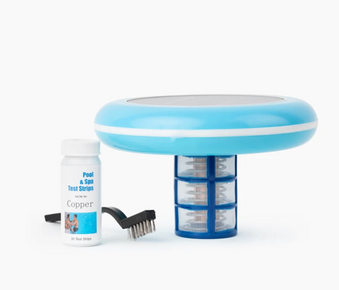
TL;DR: Multi-feature pools with attached spas, water features, fountains, slide basins, and separate play areas present unique sanitation challenges that conventional chlorine systems struggle to address. Solar pool ionizers, when properly integrated into these complex hydraulic systems, provide uniform sanitation across all features without the chemical imbalances, corrosion damage, and maintenance burdens of traditional approaches. This 2026 guide provides engineers, designers, and pool professionals with comprehensive integration strategies for ionizers in multi-feature environments: flow balancing techniques, zoning strategies, controller coordination, and water feature specific protocols that maintain crystal clear water throughout every component of the aquatic ecosystem.
SEO Summary: 2026 guide to integrating solar pool ionizers into multi-feature pool designs: spas, water features, fountains, slides, and play areas. Hydraulic balancing, zoning strategies, and coordinated control systems.
Table of Contents
- The Multi-Feature Sanitation Challenge
- Hydraulic Integration: Flow, Pressure & Balancing
- Spa Integration: High Temperature, High Bather Load
- Water Features: Fountains, Sheers, Scuppers & Cascades
- Slide Basins & Play Features
- Separate Bodies: Kiddie Pools, Lap Lanes & Exercise Areas
- Zoning Strategies: Independent Control, Common Sanitation
- Automation & Controller Coordination
- Chemical Backup Integration for Multi-Feature Systems
- Design Specifications for Ionizer Ready Multi-Feature Pools
- Conclusion & Key Takeaways
The Multi-Feature Sanitation Challenge
Multi-feature pools represent the pinnacle of residential and commercial aquatic design. A single project may incorporate an attached spa with 104 degree water, a negative edge vanishing into a catch basin, multiple deck level sheers, a fountain feature, a winding slide with its own discharge basin, and a separate shallow play area for children. Each feature enhances the user experience. Each feature also complicates water sanitation.
Conventional chlorine based systems struggle with multi-feature environments for several fundamental reasons:
- High temperature spas: The 100 to 104 degree water accelerates chlorine consumption and chemical byproduct formation. Chloramines, which cause eye burning and the characteristic pool smell, form rapidly in spa conditions. pH rises continuously due to aggressive aeration, requiring constant acid addition.
- Aerating water features: Fountains, sheers, and cascades drive chlorine gas out of solution, rapidly depleting sanitizer levels. Operators respond by adding more chlorine, which further increases off gassing and chloramine formation. pH rises continuously due to carbon dioxide release from turbulent water.
- Intermittent slide basins: Slide discharge basins receive flow only when the slide is actively in use. During off hours, these basins become stagnant, allowing algae establishment and bacterial growth. Their small water volume relative to bather load concentrates contaminants rapidly during use.
- Separate play areas: Kiddie pools and interactive play features have distinct bather load profiles and contaminant sources. Soil, sunscreen, and food residues are frequently introduced. Their shallow water and sun exposure create ideal conditions for algae growth.
- Corrosion acceleration: Chlorine chemistry is aggressive toward the metals used in water feature components, slide structures, and lighting fixtures. High temperature, aeration, and continuous chlorine exposure rapidly degrade seals, pumps, and decorative elements, causing recurring repair costs and premature equipment replacement.
Solar pool ionizers address these challenges fundamentally differently. Copper and silver ions provide continuous sanitation without the aggressive oxidation chemistry that damages equipment and creates chloramines. The ionic field is persistent and does not off gas, making it compatible with high aeration features. Temperature compensated output automatically adjusts for spa conditions. Most importantly, a properly sized and integrated ionizer system delivers uniform sanitation across all features from a single platform, eliminating the need for separate chemical management of each component.
This guide provides the engineering frameworks, hydraulic strategies, and control specifications necessary to successfully integrate solar pool ionizers into multi-feature aquatic environments. For foundational knowledge of solar ionization technology, our guide to efficient pool sanitization provides comprehensive technical background.
Hydraulic Integration: Flow, Pressure & Balancing
The foundation of successful ionizer integration in multi-feature pools is proper hydraulic design. Unlike chlorine, which can be added at any point and will eventually mix throughout the system, ion dispersion requires deliberate flow distribution to ensure uniform copper concentration across all features.
Ionizer Placement Strategies:
- Centralized placement: A single ionizer chamber installed on the main return manifold after all features have recombined. This approach treats all water equally and is simplest for systems where all features return to a common collection point before filtration. It works well for pools with attached spas that share circulation but requires careful flow balancing to ensure adequate ion exposure for all features.
- Dedicated placement: Individual ionizer chambers installed on dedicated return lines for specific features. This approach is preferred for features with dramatically different flow requirements, such as high flow slide basins versus low flow sheer descents. It allows independent optimization of each feature but increases equipment cost and complexity.
- Hybrid placement: A primary ionizer on the main circulation supplemented by secondary chambers on high demand features. This approach balances performance and cost for large commercial installations with multiple distinct water bodies.
Flow Rate Requirements:
- Residential chambers: 30 to 60 gallons per minute optimal flow range
- Commercial chambers: 80 to 150 gallons per minute optimal flow range
- Minimum flow: Flow below minimum prevents flow switch activation and adequate ion dispersion
- Maximum flow: Flow above maximum creates turbulence and reduces ion transfer efficiency by 15 to 25 percent
In multi-feature systems, individual feature flow rates vary dramatically. A spa jet system may require 80 to 120 gallons per minute. A sheer descent waterfall may operate at 10 to 20 gallons per minute. A slide basin may receive intermittent flow only when the slide is in use. These varying demands must be accommodated through appropriate ionizer placement and system design.
Balancing Strategies:
- Balancing valves: Install on each feature return line to allow fine tuning of flow distribution. Set during system commissioning using portable flow meters to verify that each feature receives adequate flow for ion dispersion.
- Dedicated booster pumps: Provide for high flow features to ensure consistent operation without starving the main circulation. Particularly important for spas with dedicated jet pumps that may operate independently of main filtration.
- Accumulator tanks or buffer vessels: Smooth intermittent flow demands from features like slide basins that operate on demand rather than continuously. Maintain flow through ionizer chambers even when individual features are inactive.
- Return manifold pressure monitoring: Continuous verification of balanced operation. Pressure sensors at key points alert operators to developing imbalances before they affect water quality.
Pro Tip: During the design phase, create a flow budget for your multi-feature system similar to an electrical load calculation. List every feature, its design flow rate, expected duty cycle, and simultaneous operation probability. This budget guides ionizer sizing, placement decisions, and balancing valve specification. A properly executed flow budget prevents 90 percent of hydraulic integration problems.
For detailed guidance on hydraulic calculations and system curve analysis, our energy efficient circulation systems guide provides engineering methodologies applicable to multi-feature environments.
Spa Integration: High Temperature, High Bather Load
Attached spas present the most demanding sanitation environment in residential and commercial aquatic design. Water temperatures of 100 to 104 degrees Fahrenheit accelerate biological activity, increase copper ion demand, and dramatically accelerate chlorine chemistry in hybrid systems. The high bather load per gallon ratio further compounds the challenge.
Solar pool ionizers are exceptionally well suited to spa integration when properly configured. Copper ion efficacy increases with temperature, providing enhanced sanitation exactly when biological demand peaks. The absence of chloramines eliminates the eye burning, lung irritating fumes that plague conventionally sanitized spas. Stable chemistry reduces the aggressive pH drift caused by high temperature aeration.
Spa Specific Configuration Requirements:
- Temperature compensation: Mandatory for spa integration. Ionizer controllers must automatically increase copper target ranges when water temperature exceeds 95 degrees Fahrenheit. Typical spa target range is 0.4 to 0.6 parts per million copper compared to 0.2 to 0.4 for pools. This elevated level provides adequate sanitation for the high temperature, high bather load environment.
- Flow verification: Critical for spa applications. Spa jet pumps often operate independently of the main filtration pump, creating periods when water flows through spa jets but not through the ionizer chamber. Interlock controls must ensure that the ionizer receives flow confirmation before operation. Flow switches with adjustable setpoints are recommended to accommodate varying spa pump speeds.
- Hybrid sanitation: Strongly recommended for attached spas. While ionizers alone can maintain spa water quality under moderate use, the extreme bather load of spa parties and continuous use scenarios benefits from supplemental oxidation. A low output salt generator or mineral chlorine system set to 0.5 to 1.0 parts per million provides oxidation reserve without compromising the ionized water experience.
Hydraulic Integration for Attached Spas:
- Shared circulation systems: Spa and pool share a common filtration pump and ionizer. Water overflows from spa to pool or returns through common piping. This configuration is simplest and most economical but requires careful flow balancing to ensure adequate spa turnover. Minimum two complete spa turnovers per day is recommended.
- Dedicated circulation systems: Spa has independent filtration pump and dedicated ionizer chamber. This configuration provides optimal sanitation control and allows independent scheduling. Strongly recommended for spas with high usage frequency or for commercial applications. The additional equipment cost is justified by superior water quality and operational flexibility.
Automation Integration:
- Temperature setpoint monitoring triggers elevated copper targets when spa heating is activated
- Occupancy detection through flow sensors or separate controls can initiate post use sanitation boost cycles
- Freeze protection coordination ensures both pool and spa equipment are protected during cold weather
Pro Tip: For spas that experience heavy use, install a separate copper test kit dedicated to spa water. Test spa copper levels independently from pool water. Spa copper consumption is typically two to three times higher than pool consumption per gallon. Independent testing prevents under sanitation of the spa or over sanitation of the pool based on blended samples.
For comprehensive spa integration protocols including startup, maintenance, and troubleshooting, our step by step pool care workflow includes dedicated spa sections.
Water Features: Fountains, Sheers, Scuppers & Cascades
Water features enhance the aesthetic and sensory experience of modern pools but create significant sanitation challenges. Fountains, sheer descents, scuppers, and cascades aerate water aggressively, increasing pH, off gassing chlorine, and creating dead zones in collection basins and catch tanks. Solar pool ionizers offer unique advantages for water feature integration.
The Aeration Challenge:
Conventional chlorine systems struggle with water features because aeration drives chlorine gas out of solution, rapidly depleting sanitizer levels. Pool operators respond by adding more chlorine, which further increases off gassing and creates the characteristic pool smell of chloramines. pH rises continuously due to carbon dioxide release, requiring frequent acid addition.
Ionized water does not off gas. Copper and silver ions remain in solution regardless of aeration intensity. Water features can operate continuously without depleting the sanitizer residual. pH remains stable because aeration does not affect copper ion chemistry. This fundamental difference eliminates the most common water feature maintenance burden.
Catch Basin and Tank Sanitation:
- Dedicated ionizer placement: A dedicated ionizer chamber on the catch basin return line ensures that water returning from the basin is properly sanitized before reentering the main pool. Alternatively, a secondary ionizer chamber can be installed directly in the catch basin recirculation loop if one exists.
- Copper targets: Catch basin copper targets should match main pool targets of 0.2 to 0.4 parts per million. However, testing frequency should be increased for catch basins during initial commissioning to verify adequate ion distribution. Debris accumulation in basins can create localized copper demand that is not apparent from main pool water samples.
Fountain and Feature Specific Considerations:
- Sheer descents and laminar flow features: These features operate at low flow rates, typically 10 to 20 gallons per minute. Dedicated ionizer chambers may not receive adequate flow for flow switch activation if plumbed exclusively on the feature line. Solution options include installing a flow restrictor to maintain minimum flow, using a pressure switch rather than flow switch, or locating the ionizer on the main return with feature water drawn after ionization.
- Fountains and aerators: Decorative fountains are often operated intermittently for visual effect. Flow switches on fountain pumps must interlock with ionizer operation to prevent ion production without water flow. Smart controllers can coordinate fountain operation with ionizer activation or rely on flow switches to provide verification.
- Cascades and rock features: These features frequently incorporate natural stone or artificial rock work that can be sensitive to chemical exposure. Ionized water is non corrosive and does not damage stone surfaces. Copper staining of light colored stone is possible if copper concentrations exceed 0.5 parts per million. Maintain copper below 0.4 parts per million for features with exposed stone or concrete.
- Lighting and feature integration: Many water features incorporate LED lighting or fiber optic illumination. These systems are vulnerable to chlorine corrosion. Ionized water significantly extends the service life of underwater lighting components by eliminating the aggressive oxidizing environment.
Pro Tip: For pools with multiple water features, consider zoning the features by flow rate and operational pattern. Group high flow continuous features on one return manifold and low flow intermittent features on another. This allows each zone to be optimized independently and simplifies troubleshooting when feature performance changes.
The relationship between water features and overall pool chemistry is explored in depth in our guide to chemistry management and equipment longevity.
Slide Basins & Play Features
Water slides and play features present unique sanitation challenges that are often overlooked in multi-feature pool design. Slide discharge basins collect water that has traveled through flumes exposed to sun, debris, and bather contamination. Play features incorporate interactive elements that introduce soil, organic matter, and high bather loads. These features require deliberate integration strategies.
Slide Basin Hydraulics:
Water slides discharge water and swimmers into a dedicated basin or the main pool. Dedicated slide basins are typically smaller than the main pool, have lower turnover rates, and may receive flow only when the slide is actively in use. This intermittent operation creates stagnation periods ideal for algae establishment and bacterial growth.
Solar ionizer integration for slide basins requires one of three approaches:
- Dedicated ionizer chamber: Install on the slide basin recirculation loop for independent sanitation control. This is the preferred approach for commercial facilities with continuous slide operation.
- Secondary ionizer chamber: Install on the slide fill line to treat water as it is supplied to the slide. This ensures that water entering the flume is properly sanitized.
- Hydraulic balancing: Ensure adequate slide basin turnover through the main pool circulation. This approach can be effective for residential applications with modest slide use.
Play Feature Considerations:
- Contamination sources: Interactive play features including dump buckets, spray guns, and zero depth entry areas introduce soil, grass, sunscreen, and food residues. Bather loads per gallon are extremely high during peak usage.
- Copper ion effectiveness: Copper ion sanitation is highly effective for play features because the continuous residual protection addresses contamination as it occurs rather than requiring chemical shock treatments.
- Staining risk: Play features present the highest staining risk because copper ions can precipitate on light colored concrete and fiberglass surfaces exposed to direct sunlight. For play features with light colored surfaces, maintain copper concentrations at 0.2 to 0.3 parts per million rather than the standard 0.4 parts per million target.
- Supplemental oxidation: Use non chlorine shock treatments after heavy use periods to provide oxidation without elevating copper levels. Test copper weekly and adjust output immediately if readings approach 0.5 parts per million.
Commercial Facility Requirements:
- Independent sanitation verification: Most health codes require that each distinct water body have independent sanitation verification. Slide basins and play features cannot rely solely on main pool water sampling to demonstrate compliance.
- Independent ionizer chambers: Specify independent ionizer chambers for each water body with separate flow switches, controllers, and copper testing protocols.
- Redundant sanitation: Each feature must have backup sanitation capability independent of the primary ionizer. Mandatory for commercial approvals.
- Remote telemetry: Continuous ORP monitoring and remote telemetry are increasingly required for commercial approvals.
Pro Tip: For slide basins and play features with light colored surfaces, install a sequestering agent feeder as part of the original equipment specification. Maintaining a low residual of sequestering agent prevents copper staining while allowing adequate sanitation levels. This preventive approach is far more effective than treating stains after they occur.
For commercial facility requirements including NSF certification and health department approvals, our standard practices for commercial pools provides comprehensive specification language.
Separate Bodies: Kiddie Pools, Lap Lanes & Exercise Areas
Many multi-feature pool designs incorporate physically separate but hydraulically connected water bodies. Kiddie pools may be adjacent to main pools with shared circulation. Lap lanes may be separated by swimmer lanes but share common water chemistry. Exercise areas with current generators or resistance jets have distinct flow characteristics. Each separate body requires thoughtful integration.
Hydraulically Connected Separate Bodies:
When separate bodies share common filtration and sanitation equipment, the primary challenge is ensuring uniform water exchange between bodies. Stagnant zones develop where circulation is inadequate, leading to localized copper depletion and algae growth.
- Dedicated return lines: Design solutions include dedicated return lines to each body with balancing valves to control flow distribution.
- Return fitting positioning: Return fittings should be positioned to promote circulation throughout each body, not merely at the connection points.
- Separate suction lines: Separate suction lines from each body ensure balanced draw and prevent one body from dominating the circulation flow.
- Copper testing: Copper testing should be performed in each body individually during system commissioning. Significant variations in copper concentration between bodies indicate inadequate hydraulic exchange. Acceptable variation is plus or minus 0.1 parts per million. Variations exceeding 0.2 parts per million require hydraulic correction.
Hydraulically Independent Separate Bodies:
When separate bodies have independent circulation systems but are expected to share common water chemistry, the integration challenge is different. These systems may be filled from the same source and drained together but do not continuously exchange water.
- Independent ionizer systems: For hydraulically independent bodies, each requires its own ionizer system sized for its specific volume and bather load. Attempting to treat independent bodies with a single ionizer through intermittent transfer pumping is rarely successful due to the slow exchange rates and rapid copper consumption in each body.
- Coordinated control: Control systems for multiple independent ionizers can be coordinated. A single master controller can monitor copper levels in all bodies and adjust individual ionizer outputs to maintain consistent targets across the facility. This allows centralized management of multiple independent sanitation systems.
Special Considerations for Exercise Areas:
- High velocity flow: Current generators and resistance jet systems create high velocity flow conditions that can affect ionizer performance. If the ionizer is located upstream of current generators, verify that chamber flow ratings are not exceeded.
- Increased organic loads: Exercise areas experience higher organic contaminant loads from increased swimmer exertion. Sweat and body oils are introduced at higher rates than in recreational swimming areas. Supplemental oxidation through non chlorine shock or minimal chlorine backup is recommended for exercise pools regardless of ionizer sanitation.
Pro Tip: For facilities with multiple separate bodies, create a water chemistry zone map that identifies each distinct hydraulic zone, its copper target range, testing frequency, and responsible personnel. This map becomes the operational reference document for maintenance staff and ensures that no body is overlooked in routine monitoring.
Zoning Strategies: Independent Control, Common Sanitation
The most sophisticated approach to multi-feature ionizer integration is zoning: dividing the aquatic environment into distinct zones with independent sanitation control while maintaining common water chemistry where appropriate. Zoning strategies balance performance, cost, and operational complexity.
When to Zone:
- Different sanitation requirements: Zoning is appropriate when features have substantially different sanitation requirements. Spas requiring higher copper levels than pools are the classic example.
- Different flow characteristics: Zoning is also indicated when features have dramatically different flow characteristics that prevent single ionizer optimization. High flow slide basins and low flow sheer descents cannot both operate at their respective optimal flow rates from a single ionizer chamber.
- When not to zone: Zoning is not appropriate when features share common water with continuous exchange. Attempting to maintain different copper levels in a pool and attached spa with shared overflow is futile; the water will continuously mix and equalize. In these cases, compromise targets must be established.
Zoning Implementation Approaches:
- Independent ionizer per zone: Each zone receives its own dedicated ionizer chamber, controller, and solar panel. This approach provides maximum control flexibility and is recommended for facilities with distinct water bodies that do not continuously exchange water. Higher equipment cost but simplified operations.
- Shared ionizer with zone specific injection: A single ionizer produces concentrated copper solution that is injected at varying rates into different zone return lines using proportional injection valves. This approach allows different copper targets in different zones from a single ionizer. Requires careful calibration and is most suitable for facilities with professional maintenance staff.
- Master slave configuration: A primary ionizer treats the main pool; secondary ionizers treat high demand zones with independent controllers that receive target adjustments from the master controller. This hybrid approach balances performance and cost for facilities with one primary water body and several secondary features.
Zone Control Parameters:
- Copper target range: Spas 0.4 to 0.6 parts per million. Pools 0.2 to 0.4 parts per million. Play features with light surfaces 0.2 to 0.3 parts per million. Catch basins 0.2 to 0.4 parts per million.
- Flow requirements: Flow requirements must be verified for each zone. If a zone cannot provide adequate flow for its dedicated ionizer chamber, alternative placement or booster pumping is required.
- Testing frequency: Testing frequency should be zone specific. Spas require more frequent copper testing than pools. Slide basins used intermittently should be tested after each use period. Catch basins require weekly testing during initial commissioning.
- Backup sanitation: Backup sanitation requirements vary by zone. Commercial spas typically require redundant sanitation regardless of primary technology. Residential spas may not. Local health codes dictate commercial requirements.
Pro Tip: When implementing zoning, label all equipment clearly with zone designations. Color coded labels, engraved tags, or digital zone maps accessible via QR code on equipment pads prevent confusion during maintenance and troubleshooting. A technician servicing a spa ionizer must know that it is the spa zone, not the main pool zone, and that its copper target is different.
Automation & Controller Coordination
Multi-feature ionizer integration cannot be successfully executed with standalone controllers operating independently. Comprehensive automation is required to coordinate sanitation across diverse features, integrate with pumps and valves, and provide centralized monitoring and control.
Automation Requirements for Multi-Feature Systems:
- Multi zone capability: The automation platform must support at least four independent control zones for residential systems and sixteen or more for commercial facilities. Each zone requires independent sensor inputs, output control, and target parameter configuration.
- Flow center integration: The automation system must communicate with all pumps, valves, and flow meters in the hydraulic network. This enables coordinated operation such as boosting flow to the spa zone when the spa ionizer is active or directing flow to the slide basin when the slide is in use.
- Weather integration: Multi-feature systems benefit significantly from weather responsive operation. Pre storm sanitation boosts, freeze protection coordination, and solar synchronization become more complex but also more valuable in multi-zone environments.
- Data logging and reporting: Commercial facilities require comprehensive data logging of all zone parameters with report generation for health department inspections. Residential systems benefit from trend analysis to optimize performance across zones.
- Remote access: Multi-feature systems generate more alarms, require more adjustments, and benefit more from remote monitoring than single body systems. Remote access should be considered mandatory rather than optional.
Controller Coordination Strategies:
- Centralized control: A single master controller manages all ionizer zones, pumps, valves, and sensors. This is the preferred architecture for new construction and major retrofits. It provides unified programming, simplified troubleshooting, and single interface operation.
- Distributed control with central monitoring: Each zone has its own dedicated controller, but all report to a central monitoring system. This approach is often necessary when integrating equipment from multiple manufacturers or when upgrading existing facilities incrementally. It provides visibility but requires more complex programming to achieve coordinated operation.
- Cloud based coordination: Individual zone controllers communicate through cloud platforms rather than direct wiring. This enables coordination across physically separated equipment pads and simplifies integration with third party systems. Requires reliable internet connectivity and robust cybersecurity measures.
Communication Protocol Selection:
- Open protocols: RS 485 and Modbus are the industry standards for pool automation. BACnet is required for integration with building management systems in commercial facilities. Wi Fi and Ethernet APIs enable cloud connectivity and third party integrations.
- Proprietary protocols: Proprietary protocols that only communicate within a single manufacturer ecosystem should be avoided. They limit future expansion, complicate integration with best in class components from other manufacturers, and create vendor lock in that increases long term costs.
Pro Tip: During the automation design phase, create a communication diagram showing every controller, sensor, pump, valve, and ionizer in the system. Document the communication protocol for each link, the data points exchanged, and the update frequency. This diagram becomes the essential reference document for programming, troubleshooting, and future expansion.
For detailed automation system specifications and controller selection criteria, our modern pool system integration guide provides comprehensive engineering guidance.
Chemical Backup Integration for Multi-Feature Systems
All commercial and many residential multi-feature pools require redundant sanitation capability. Health codes mandate that no single equipment failure can result in complete loss of sanitizer residual. This requirement becomes more complex when multiple zones have different backup requirements.
Backup Technology Options:
- Low output chlorine feeders: Peristaltic pumps or erosion feeders maintaining 0.5 to 1.0 parts per million free chlorine are the most common and cost effective backup approach. For multi-feature systems, individual feeders may be required for each zone or a single feeder can serve multiple zones if hydraulic configuration allows.
- Dual ionizer arrays: Two independent ionizer systems sized so either unit alone can maintain minimum sanitation levels. This approach provides complete chemical free operation with full redundancy. Higher initial cost but eliminates chemical handling and storage. Preferred for facilities committed to zero chemical operation.
- UV or ozone secondary systems: UV sterilization or ozone oxidation provides pathogen inactivation without chemical addition but does not maintain residual sanitizer in distribution piping. Suitable as backup when combined with residual monitoring and rapid response protocols.
Zone Specific Backup Requirements:
- Spas: Spas typically require more robust backup sanitation than pools due to higher temperature and bather load. Many health codes mandate specific backup requirements for commercial spas regardless of primary technology. Verify local requirements during design phase.
- Play features and kiddie pools: These features may have specific backup requirements related to their vulnerability to fecal contamination events. Some jurisdictions require supplemental oxidation capable of rapid sanitation recovery.
- Water features: Water features and decorative elements may not require independent backup if they are hydraulically inseparable from the main pool and the main pool has adequate backup. Verify with local health authorities.
Backup System Automation:
- Automated failover: Essential for multi-feature systems. The control system must continuously verify primary sanitation operation and automatically activate backup systems within minutes of detected failure. Notification alerts must be sent to designated personnel immediately.
- Staggered maintenance scheduling: Ensures that primary and backup systems are not simultaneously out of service. Documented monthly testing of automatic failover functionality is considered best practice and may be required by health authorities.
Pro Tip: For facilities with multiple zones, create a backup matrix that documents the primary and backup sanitation method for each zone, the failover trigger parameters, the notification protocol, and the responsible personnel. Post this matrix at the equipment pad and in the facility operations manual. When a failure occurs, clear documentation prevents confusion and ensures rapid appropriate response.
Design Specifications for Ionizer Ready Multi-Feature Pools
Successful multi-feature ionizer integration begins at the drawing board. Retrofitting ionizers into poorly designed hydraulic systems is possible but never optimal. This section provides design specifications for new construction and major renovation projects.
Hydraulic Design Specifications:
- Pipe sizing: Minimum 2.5 inch diameter for main circulation lines in residential multi-feature pools. Minimum 4 inch diameter for commercial facilities. Larger diameters reduce friction loss, enable lower pump speeds, and provide flexibility for future feature additions.
- Straight pipe sections: 12 to 18 inches upstream and 6 to 12 inches downstream of each ionizer chamber ensure laminar flow conditions and accurate flow switch operation. These sections must be specified on design drawings; they are often omitted in standard details.
- Balancing valve assemblies: Install on each feature return line to enable fine tuning of flow distribution. Specify full port ball valves or butterfly valves with position indicators. Standard port valves create unnecessary pressure drop and complicate balancing.
- Flow meter ports: One quarter inch NPT ports should be installed at strategic locations throughout the hydraulic network. Permanent flow meters with digital output are preferred for critical zones.
Equipment Pad Specifications:
- Pad dimensions: Minimum 6 feet by 8 feet for residential multi-feature systems. Commercial facilities require 10 feet by 20 feet or larger depending on feature count.
- Solar panel mounting: Must account for multiple arrays if zoning requires independent panels. Panel orientation and tilt should be optimized for the facility location, not compromised for equipment pad convenience. Remote panel mounting with extended cables is often necessary for multi-feature systems where equipment pads are shaded.
- Service clearance: 36 inches in front of all equipment and 18 inches on sides is mandatory. Multi-feature systems generate more maintenance requirements, not less. Adequate service access is an efficiency feature, not an option.
Electrical and Control Specifications:
- Dedicated circuits: Dedicated circuits for each ionizer controller and pump system prevent single breaker trips from disabling multiple zones. Label all circuits clearly with zone designations.
- Conduit capacity: Conduit capacity must be oversized by 50 percent to accommodate future sensor additions and system upgrades. Install empty conduit from equipment pad to each feature location and to potential solar panel expansion areas.
- Network infrastructure: Must support all zone controllers with reliable wired or high performance wireless connections. Commercial facilities require redundant network paths and backup power for critical control systems.
- Future expansion: Include a future expansion allowance of 20 percent in all design specifications. Pipe sizing, equipment pad dimensions, electrical capacity, and controller I O should all include margin for features not yet conceived. The cost of oversizing during construction is minimal; the cost of retrofitting after completion is prohibitive.
Pro Tip: Include a future expansion allowance of 20 percent in all design specifications. Pipe sizing, equipment pad dimensions, electrical capacity, and controller I O should all include margin for features not yet conceived. The cost of oversizing during construction is minimal; the cost of retrofitting after completion is prohibitive.
For comprehensive construction document language and specification templates, our next generation pool system planning guide provides ready to adapt engineering specifications.
Conclusion & Key Takeaways
Integrating solar pool ionizers into multi-feature pool designs is not merely possible but optimal when approached with appropriate engineering discipline. The unique characteristics of ionized water—stable chemistry, no off gassing, non corrosive nature, and temperature compensated output—address the very challenges that make multi-feature pools difficult to maintain with conventional chlorine sanitation.
Successful integration requires deliberate attention to hydraulic design, flow balancing, zone identification, and control system architecture. It demands that designers abandon the assumption that one ionizer placed anywhere in the circulation system will adequately treat every feature. It requires flow budgets, balancing valves, dedicated zones for high demand features, and comprehensive automation.
The investment in proper integration is substantial but the returns are compelling. Multi-feature pools with properly integrated solar ionization operate with 80 to 90 percent less chemical consumption than chlorine equivalents. They eliminate the corrosion damage that destroys water feature components and shortens equipment life. They provide superior water quality across all features without the constant testing and adjustment burden of conventional systems. They satisfy health department requirements with documented, verifiable sanitation performance.
The technology exists. The engineering principles are established. The design specifications are proven. The only remaining requirement is the commitment to integrate ionizers as intentional, engineered components of multi-feature aquatic environments rather than retrofitted afterthoughts.
Key Takeaways
- Multi-feature pools present distinct sanitation challenges: High temperature spas, aerating water features, intermittent slide basins, and separate play bodies each require specific integration strategies that conventional chlorine systems cannot efficiently address.
- Hydraulic design determines integration success: Ionizer placement, flow balancing, and dedicated versus shared circulation decisions must be made during design phase, not retrofitted after construction.
- Spa integration requires temperature compensation and elevated copper targets: Spas need 0.4 to 0.6 parts per million copper, independent flow verification, and strong consideration of hybrid sanitation backup. Our salt system integration guide provides specific spa configurations.
- Water features thrive with ionized water: No chlorine off gassing means fountains and sheers can operate continuously without depleting sanitizer. Stable pH eliminates constant acid adjustment. Non corrosive chemistry protects lighting and decorative components.
- Slide basins and play features need dedicated attention: Intermittent operation requires dedicated ionizer chambers or careful hydraulic balancing. Light colored surfaces require reduced copper targets and sequestering agent protection.
- Separate bodies require separate verification: Hydraulically connected bodies need flow balancing and individual copper testing. Hydraulically independent bodies need independent ionizer systems with coordinated control.
- Zoning enables optimization: Different sanitation requirements and flow characteristics can be accommodated through independent ionizer zones, zone specific injection, or master slave controller configurations.
- Automation is essential, not optional: Multi-feature systems require comprehensive automation with multi zone capability, flow center integration, weather response, data logging, and remote access.
- Redundant sanitation is mandatory: Commercial facilities and many residential systems require backup sanitation capability. Backup technology selection and zone specific requirements must be addressed during design.
- Design specifications prevent integration failures: Proper pipe sizing, straight pipe sections, balancing valves, and equipment pad dimensions must be specified during design phase, not corrected after construction.
The most beautiful multi-feature pool designs are diminished by poor water quality, chemical odors, and constant maintenance demands. Solar pool ionizers, properly integrated, transform these aquatic environments into what they were always meant to be: crystal clear, naturally comfortable, and effortlessly maintained. The technology is proven. The engineering is established. The only remaining variable is the will to design and build better pools.
For design professionals seeking comprehensive specification templates and engineering consultation resources, our eco-friendly community pool planning guide provides additional multi-feature case studies and design examples.