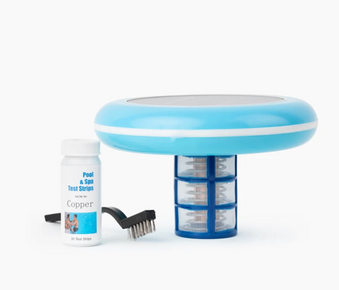
TL;DR: Pool health in 2026 encompasses far more than just killing bacteria it includes maintaining balanced water chemistry, preventing algae growth, protecting swimmers from chemical irritation, and ensuring equipment longevity. Solar pool ionizers contribute to pool health through multiple mechanisms: continuous sanitation with copper and silver ions, elimination of harmful chloramines, stable pH that prevents both corrosion and scaling, and reduction of total dissolved solids that degrade water quality. This guide explores how solar ionization supports every aspect of pool health, from the molecular level to the swimmer experience.
SEO Summary: 2026 guide to how solar pool ionizers help pools stay healthy: continuous sanitation, chloramine elimination, pH stability, algae prevention, swimmer comfort, and equipment protection.
Table of Contents
- What Pool Health Really Means in 2026
- Continuous Sanitation: The Foundation of Pool Health
- Eliminating Harmful Chloramines
- Algae Prevention Through Copper Ions
- pH Stability and Its Health Benefits
- Water Clarity and Visual Health Indicators
- Swimmer Comfort and Chemical Sensitivity
- Equipment Health and Longevity
- Environmental Health and Sustainability
- Conclusion & Key Takeaways
What Pool Health Really Means in 2026
Pool health is a term often used loosely, but in 2026 it has specific, measurable dimensions that together determine the overall quality and safety of the aquatic environment. Understanding these dimensions helps pool owners appreciate the full scope of what solar ionization delivers.
- Biological health refers to the absence of harmful microorganisms including bacteria, viruses, and algae. A biologically healthy pool is safe for swimming and free from pathogens that could cause illness.
- Chemical health describes the balance of dissolved substances in the water. Proper pH, alkalinity, calcium hardness, and minimal disinfection byproducts characterize chemically healthy water.
- Physical health encompasses water clarity, freedom from suspended particles, and the absence of stains or scale on pool surfaces. Clear, sparkling water is visually appealing and indicates effective filtration.
- Swimmer health considers the effects of pool water on those who swim in it. Water that does not irritate eyes or skin, has no unpleasant odor, and feels comfortable supports swimmer well-being.
- Equipment health reflects the condition of pumps, heaters, filters, and other components. Healthy equipment operates efficiently, lasts longer, and requires fewer repairs.
- Environmental health addresses the broader impact of pool operation on the surrounding ecosystem. Responsible chemical use, water conservation, and energy efficiency contribute to environmental health.
Solar pool ionizers contribute to every dimension of pool health. They are not merely an alternative sanitation method but a comprehensive approach to creating and maintaining a truly healthy aquatic environment. The movement toward low-chemical pools has accelerated dramatically, and our analysis of low-chemical pool trends demonstrates how these health benefits are driving adoption.
Continuous Sanitation: The Foundation of Pool Health
The primary requirement for any healthy pool is effective sanitation the continuous control of microorganisms that could harm swimmers. Solar pool ionizers provide this through a fundamentally different mechanism than traditional chlorine.
- Copper ions act as a potent algaecide through multiple mechanisms. They disrupt algal cell membranes, allowing essential cellular contents to leak out. They inhibit photosynthesis by interfering with chlorophyll production. They prevent spore germination, stopping algae before it can establish. This multi-faceted approach makes copper highly effective against all common pool algae.
- Silver ions provide complementary bacteria control. Silver binds to bacterial DNA, preventing replication. It disrupts essential enzymes, starving bacteria of energy. It creates pits in cell walls, leading to structural failure. Even at low concentrations, silver is effective against a broad spectrum of bacteria.
- Synergistic action between copper and silver enhances effectiveness beyond what either metal achieves alone. Copper's membrane disruption allows silver easier access to bacterial interiors. Silver's DNA binding prevents algae from developing copper resistance. This synergy allows effective sanitation at remarkably low concentrations.
- Persistence is the key advantage over chlorine. Copper and silver ions are not consumed by the sanitation process they remain active indefinitely. Once released into the water, they provide continuous protection without the need for constant replenishment. This eliminates the windows of vulnerability that characterize chlorine pools.
- Temperature compensation in modern controllers automatically adjusts output based on water temperature. When water warms and biological activity increases, output increases. When water cools, output decreases. This ensures that sanitation levels always match actual demand.
Continuous sanitation is the foundation upon which all other aspects of pool health are built. The principles of simpler pool chemistry that enable this continuous protection are detailed in our guide to simpler pool chemistry, demonstrating how few parameters actually require attention.
Eliminating Harmful Chloramines
Chloramines are the most significant health concern associated with traditional chlorinated pools. Their elimination in ionized pools represents a fundamental improvement in swimmer health and comfort.
- Chloramines form when chlorine reacts with ammonia and nitrogen-containing compounds from sweat, urine, and other organic matter. These compounds are responsible for the red, burning eyes that swimmers accept as normal. They cause the distinctive pool smell that clings to hair and swimsuits. They can trigger asthma attacks and respiratory irritation.
- Respiratory health effects of chloramines are well-documented. In indoor pools, chloramine levels can become high enough to cause lung damage in competitive swimmers and staff. Even outdoor pools can have significant airborne chloramine concentrations on calm days. Ionized pools produce zero chloramines, eliminating these respiratory concerns entirely.
- Eye irritation, accepted by many swimmers as inevitable, is completely eliminated in ionized pools. The absence of chloramines means eyes remain comfortable even after hours of swimming. This is particularly important for children and contact lens wearers.
- Skin health improves dramatically without chloramine exposure. Chloramines strip natural oils from skin, causing dryness and irritation. For individuals with eczema, psoriasis, or sensitive skin, ionized pools can be transformative. Parents of children with skin conditions often report that ionized pools are the only pools their children can tolerate.
- Hair and swimsuit damage from chlorine and chloramines is eliminated. Color-treated hair fades more slowly. Natural hair remains soft and manageable. Swimsuit colors stay vibrant, and elastic lasts longer.
- The absence of chloramine odor transforms the pool environment. The air around an ionized pool smells fresh and clean, not chemical. This makes the pool area more pleasant for both swimmers and non-swimmers alike.
Chloramine elimination is one of the most immediately noticeable health benefits of solar ionization. The transformation of backyard pools into genuinely healthy environments is explored in our article on reinventing backyard pools, which documents how swimmers describe the difference.
Algae Prevention Through Copper Ions
Algae are not just unsightly they can create health hazards by providing habitats for bacteria and creating slippery surfaces that pose safety risks. Solar pool ionizers prevent algae through continuous copper ion activity.
- Cell membrane disruption is the primary mechanism of copper's algicidal action. Positively charged copper ions are attracted to negatively charged sites on algal cell membranes. When copper binds to these sites, it alters membrane permeability, causing essential cellular contents to leak out. This physical disruption kills algae cells directly.
- Enzyme inhibition provides a second line of defense. Copper ions that enter algal cells bind to enzymes essential for photosynthesis and respiration. By displacing other metal cofactors, copper disables these enzymes, effectively starving the algae of energy.
- Chlorophyll degradation is a visible effect of copper activity. Affected algae lose their green color and ability to photosynthesize, essentially bleaching them. This is why copper-treated algae often turn white or gray before dying.
- Spore prevention is perhaps the most important mechanism for long-term control. Copper ions prevent algal spores from germinating, stopping algae before they can establish visible colonies. This preventive action is the key to eliminating outbreaks entirely.
- Black algae, the most difficult to control, are also susceptible to copper. The deep-rooted colonies that resist chlorine are penetrated by copper ions over time. Consistent copper levels prevent black algae from establishing and can gradually eliminate existing colonies.
- Mustard algae, which often resist chlorine treatments, respond well to copper. Maintaining copper at the higher end of the target range (0.3 to 0.4 ppm) provides effective prevention. Existing mustard algae may require brushing to expose deeper layers to copper ions.
Algae prevention through copper ions is more effective and more reliable than chlorine-based approaches. The continuous protection eliminates the windows of vulnerability that allow algae to establish in chlorinated pools. Our resource on next-generation pool power discusses how modern ionizer systems address various water quality challenges.
pH Stability and Its Health Benefits
pH stability is often overlooked in discussions of pool health, but it affects everything from swimmer comfort to equipment longevity. Solar pool ionizers provide exceptional pH stability that contributes to overall pool health.
- Swimmer comfort is directly affected by pH. Water with pH below 7.2 can cause eye irritation and skin discomfort. Water with pH above 7.8 can feel harsh and may reduce chlorine effectiveness in hybrid systems. The stable pH of ionized pools, typically maintained between 7.4 and 7.6, provides optimal comfort for swimmers.
- Copper effectiveness depends on pH. Copper solubility decreases as pH rises. At pH above 7.8, copper begins to precipitate out of solution, reducing sanitation effectiveness and potentially causing staining. Stable pH in the optimal range ensures that copper remains active and effective.
- Scale prevention is directly related to pH. High pH promotes calcium carbonate precipitation, leading to scale formation on pool surfaces and equipment. Scale not only looks unsightly but also reduces heater efficiency and can damage equipment. The stable pH of ionized pools minimizes scale formation.
- Corrosion prevention is equally important. Low pH creates aggressive water that can corrode metal components, damage plaster, and deteriorate grout. The stable, near-neutral pH of ionized water protects all pool materials.
- Chlorine effectiveness in hybrid systems is optimized at stable pH. For pools that maintain a minimal chlorine residual, the stable pH ensures that chlorine works efficiently, allowing lower chlorine levels to be effective.
- Testing frequency and chemical handling are dramatically reduced with stable pH. Where chlorinated pools require weekly or even daily pH adjustment, ionized pools often need adjustment only monthly. This reduction in chemical handling benefits both pool health and owner convenience.
pH stability is one of the most important contributors to overall pool health. The principles of water stability that enable this are explored in our resource on transforming pool water stability, which explains the science behind consistent water quality.
Water Clarity and Visual Health Indicators
Water clarity is the most visible indicator of pool health. Crystal-clear water not only looks appealing but also allows swimmers to see the bottom clearly, enhancing safety. Solar pool ionizers achieve exceptional clarity through multiple mechanisms.
- Ionic flocculation is the primary mechanism for enhanced clarity. Positively charged copper ions attract negatively charged suspended particles. When particles collide, they agglomerate into larger clusters that are 10 to 100 times larger than the original particles. These enlarged clusters are easily captured by the filter.
- Particle removal efficiency increases dramatically with flocculation. Traditional filters capture 40 to 60 percent of particles in the 1-10 micron range per pass. Ionized pools achieve 80 to 90 percent capture efficiency for the same particle range. This means that for the same filtration energy, an ionized pool removes two to three times more contaminant mass.
- Visible results include the jewel-like sparkle that characterizes well-maintained ionized pools. Water appears not just clear but brilliant, with sharp definition of bottom details and a sense of depth that comes from the absence of light-scattering particles.
- Safety benefits of exceptional clarity are significant. Swimmers can be seen more easily below the surface, enhancing drowning prevention. Debris on the bottom is visible and can be removed before it becomes a problem. The pool simply feels safer.
- Psychological benefits of clear water should not be underestimated. Crystal-clear water invites swimming and creates a sense of luxury and well-being. Cloudy or dull water, even if chemically safe, does not provide the same experience.
- Reduced chemical demand for clarifiers is another benefit. Most ionizer owners find that clarifier products become completely unnecessary, as the natural flocculation process outperforms chemical alternatives.
Water clarity is both an aesthetic benefit and a health indicator. Our resource on elevating water clarity provides detailed information on achieving and maintaining exceptional clarity.
Swimmer Comfort and Chemical Sensitivity
Swimmer comfort is perhaps the most personal dimension of pool health. How the water feels, whether it irritates sensitive individuals, and whether it provides a pleasant swimming experience all contribute to overall well-being.
- The silky feel of ionized water is consistently reported by swimmers. This is not merely subjective there is a physical basis for the difference. Chlorine reacts with skin's natural oils, stripping them away and leaving skin feeling dry and tight. Ionized water does not react with skin oils, allowing the skin to maintain its natural moisture barrier.
- No eye irritation is one of the most frequently cited benefits. Red, burning eyes are so common in traditional pools that many swimmers accept them as inevitable. They are not. The elimination of chloramines means eyes remain comfortable regardless of how long one stays in the water.
- Respiratory comfort is particularly important for individuals with asthma or other respiratory conditions. Chloramine off-gassing can trigger attacks and make swimming unpleasant. Ionized pools have no such effect, allowing everyone to enjoy the water safely.
- Children benefit enormously from the gentle water. Their developing respiratory systems are more sensitive to airborne irritants. Their thinner skin absorbs chemicals more readily. Their tendency to swallow pool water exposes them to sanitizers. Ionized pools eliminate these concerns, allowing children to swim safely for extended periods.
- Individuals with skin conditions including eczema and psoriasis often find relief in ionized water. The absence of harsh oxidizing chemicals allows their skin to heal rather than becoming further irritated. Parents of children with sensitive skin report that ionized pools have transformed family swimming from a source of discomfort to a source of joy.
- The elderly and those with compromised immune systems also benefit from gentler water. The absence of chemical irritation makes swimming more comfortable, and the reduced chemical load is easier on sensitive systems.
Swimmer comfort is not a luxury it is an essential component of pool health. The family-friendly aspects of solar ionization are explored in our article on family-friendly pools, which documents the experiences of families who have made the switch.
Equipment Health and Longevity
Healthy pool equipment is essential for maintaining overall pool health. Malfunctioning equipment can lead to water quality problems, increased chemical demand, and safety issues. Solar ionization contributes to equipment health in several ways.
- Corrosion elimination is the most significant equipment health benefit. Chlorine and its byproducts are aggressively corrosive to metals, elastomers, and plastics. Pumps, heaters, filters, and lights all suffer from chemical attack in chlorinated pools. Ionized water is non-corrosive, eliminating this degradation mechanism.
- Scale prevention protects heaters and plumbing. Calcium scale formation on heat exchanger surfaces reduces heating efficiency and can lead to premature heater failure. Scale in plumbing reduces flow and increases pump energy consumption. The stable chemistry of ionized water prevents scale formation.
- Extended equipment life is the result of reduced corrosion and scale. Pumps that might last 8 to 10 years in chlorinated pools often achieve 12 to 15 years in ionized pools. Heaters extend from 5 to 8 years to 12 to 15 years. This 30 to 50 percent extension reduces replacement costs and waste.
- Reduced maintenance requirements mean less downtime and fewer repairs. With fewer chemical attacks on seals, gaskets, and components, equipment simply needs less attention. Predictive maintenance alerts from smart controllers further reduce unexpected failures.
- Filter media lasts longer in ionized pools. Cartridge life increases by 30 to 50 percent. Sand lasts indefinitely with proper care. DE grids require less frequent replacement. This reduces both costs and maintenance time.
- Light fixture longevity improves dramatically. Seals remain intact, lenses stay clear, and housings resist corrosion. Underwater lights that might fail in 5 to 7 years in chlorinated pools often achieve 10 to 12 years in ionized pools.
Equipment health directly affects pool health and operating costs. The durability standards that ensure long-term equipment reliability are covered in our guide to ionizer durability standards, which provides detailed information on component quality and expected life.
Environmental Health and Sustainability
A truly healthy pool must also be healthy for the environment. Solar pool ionizers contribute to environmental health through reduced chemical manufacturing, lower energy consumption, and minimized waste.
- Chemical manufacturing reduction avoids significant environmental impacts. Chlorine production is energy-intensive, consuming approximately 2,500 to 3,000 kilowatt-hours per ton. By eliminating 80 to 90 percent of chemical consumption, ionized pools avoid this embedded energy and the associated carbon emissions.
- Plastic waste elimination of 80 to 90 percent addresses the 40 to 60 pounds of chemical packaging generated annually by traditional pools. A single electrode cartridge every 3 to 5 years replaces dozens of plastic containers that would otherwise end up in landfills.
- Water conservation through extended drain intervals saves tens of thousands of gallons over the pool's lifetime. Where traditional pools require draining every 2 to 3 years, ionized pools often go 8 to 12 years between drainings. This conserves water and reduces demand on municipal supplies.
- Energy efficiency reduces carbon footprint. Reduced pump runtime, lower-speed operation, and eliminated sanitation energy combine to reduce energy consumption by 60 to 75 percent. This saves 2,000 to 3,000 kilowatt-hours annually, avoiding 1,000 to 1,500 pounds of CO2 emissions.
- Ecosystem protection results from eliminating chemical discharge. When ionized pools are eventually drained, the water contains no chlorine, chloramines, algaecides, or cyanuric acid. Copper levels are well below drinking water standards, posing no threat to aquatic life.
- Sustainable operation aligns with broader environmental values. Solar ionization allows pool owners to enjoy their pools without the guilt of significant environmental impact. The pool becomes a sustainable amenity rather than an environmental burden.
Environmental health is increasingly important to pool owners. The role of solar pool ionizers in comprehensive environmental strategy is explored in our analysis of pool ionizer role in water strategy, which demonstrates how these systems support sustainability goals.
Conclusion & Key Takeaways
Solar pool ionizers help pools stay healthy in 2026 through multiple, reinforcing mechanisms. Continuous sanitation with copper and silver ions provides effective microorganism control without the harmful byproducts of chlorine. Elimination of chloramines protects swimmers from eye irritation, respiratory discomfort, and skin damage. Stable pH prevents both corrosion and scaling while optimizing swimmer comfort. Exceptional water clarity enhances safety and enjoyment. Extended equipment life reduces maintenance and replacement costs. Reduced environmental impact aligns with sustainability values.
The result is a pool that is truly healthy at every level biologically, chemically, physically, and environmentally. Swimmers experience water that feels silky, has no odor, does not irritate eyes or skin, and sparkles with jewel-like clarity. Equipment operates efficiently and lasts longer. The environment bears less burden from chemical manufacturing and disposal.
For pool owners, a healthy pool means more than just safe water it means a pool that is always ready to enjoy, that requires less time and money to maintain, and that aligns with their values. Solar ionization delivers this comprehensive health benefit.
Key Takeaways
- Pool health encompasses biological, chemical, physical, swimmer, equipment, and environmental dimensions. Solar ionization improves every dimension.
- Continuous sanitation with copper and silver ions provides effective microorganism control without harmful byproducts. The synergy between copper and silver enhances effectiveness at low concentrations.
- Chloramine elimination protects swimmers from eye irritation, respiratory discomfort, and skin damage. The absence of chloramines is immediately noticeable to anyone who swims in ionized water.
- Algae prevention through copper ions is more effective and reliable than chlorine-based approaches. Multiple mechanisms of action prevent algae from establishing or developing resistance.
- pH stability optimizes swimmer comfort, copper effectiveness, and equipment protection. Stable pH eliminates the constant adjustment required by chlorinated pools. Our water stability resource explains the science behind this benefit.
- Exceptional water clarity results from ionic flocculation, which removes particles that cloud water. Clear water enhances safety and enjoyment.
- Swimmer comfort is dramatically improved. Silky water, no eye irritation, no odor, and respiratory comfort make swimming genuinely enjoyable for everyone.
- Equipment health and longevity benefit from non-corrosive water and scale prevention. Pumps, heaters, and filters last 30 to 50 percent longer. Our performance enhancement resource quantifies these improvements.
- Environmental health is supported through reduced chemical manufacturing, plastic waste elimination, water conservation, and energy efficiency. Solar ionization aligns pool ownership with sustainability goals.
- The health benefits of solar ionization are proven and accessible. Thousands of installations across all climate zones demonstrate that these systems deliver healthier pools with less effort. For those ready to experience these benefits, our next-generation pool power resource provides guidance on selecting and implementing these systems.
A healthy pool is not a luxury it is a fundamental requirement for enjoyable and responsible pool ownership. Solar pool ionizers make genuinely healthy pools achievable for every owner, delivering results that exceed what traditional methods can achieve with far less effort and environmental impact.