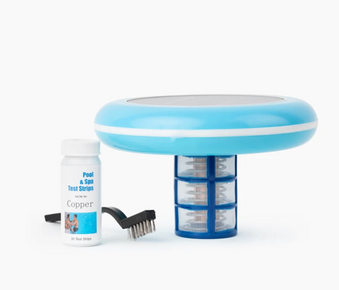
TL;DR: Les piscines d'eau salée sont devenues de plus en plus populaires pour leur sensation plus douce et la manipulation réduite du chlore, mais elles présentent leurs propres défis, notamment l'augmentation du pH, les coûts de remplacement des cellules et les effets corrosifs sur l'équipement. Les ioniseurs solaires de piscine offrent un soutien idéal aux systèmes d'eau salée en gérant l'assainissement primaire, ce qui permet aux cellules de sel de fonctionner à une puissance réduite. Cette approche hybride prolonge considérablement la durée de vie des cellules, stabilise le pH, réduit la consommation de produits chimiques et offre une qualité d'eau supérieure à celle de chaque système pris séparément. Ce guide explore comment l'ionisation solaire complète les piscines d'eau salée et pourquoi les configurations hybrides deviennent le choix préféré des propriétaires de piscine avertis.
Résumé SEO : Guide 2026 de l'ioniseur solaire pour piscines au sel : systèmes hybrides, durée de vie des cellules prolongée, stabilisation du pH, réduction de la consommation de produits chimiques et amélioration de la qualité de l'eau.
Table des matières
- Les défis de la piscine au sel
- L'approche hybride : Ioniseur et système au sel
- Prolonger considérablement la durée de vie des cellules de sel
- Stabilité du pH : Élimination de l'ajout constant d'acide
- Réduction de la consommation de produits chimiques
- Amélioration de la qualité de l'eau et de l'expérience du nageur
- Protection de l'équipement contre la corrosion
- Ajout d'un ioniseur à une piscine au sel existante
- Fonctionnement d'un système hybride
- Conclusion et points clés à retenir
Les défis de la piscine au sel
Les piscines d'eau salée ont gagné leur popularité pour une bonne raison. Elles éliminent le besoin d'acheter, de stocker et de manipuler des produits chimiques chlorés. L'eau est plus douce que celle des piscines chlorées traditionnelles. De nombreux propriétaires signalent moins d'irritations oculaires et cutanées. Cependant, les systèmes au sel ne sont pas sans leurs propres défis qui incitent les propriétaires à chercher des solutions supplémentaires.
- L'augmentation du pH est la frustration la plus persistante pour les propriétaires de piscines au sel. Les générateurs de chlore au sel produisent de l'hydroxyde de sodium comme sous-produit de l'électrolyse, ce qui augmente continuellement le pH. Les propriétaires se retrouvent à ajouter de l'acide tous les quelques jours juste pour maintenir le pH dans la plage. Cet ajustement constant crée du travail et consomme de l'acide.
- Les coûts de remplacement des cellules de sel s'accumulent avec le temps. Une cellule de sel de qualité coûte généralement entre 700 et 900 $ et dure de 3 à 7 ans selon l'utilisation et la chimie de l'eau. Cette dépense récurrente est importante et souvent inattendue pour les nouveaux propriétaires.
- Les préoccupations de corrosion sont réelles. L'eau salée est intrinsèquement plus corrosive que l'eau douce, et le chlore généré par la cellule ajoute à l'environnement agressif. Les accessoires métalliques, le couronnement en pierre et l'équipement peuvent subir une dégradation prématurée.
- Les niveaux élevés de sel contribuent à l'accumulation de solides dissous totaux. Les piscines au sel maintiennent généralement entre 2 500 et 3 500 ppm de sel, ce qui ajoute considérablement aux TDS. Cela peut nécessiter des vidanges plus fréquentes pour rétablir la qualité de l'eau.
- Les chloramines se forment toujours dans les piscines au sel. Bien que les systèmes au sel génèrent du chlore sur place, l'eau contient toujours du chlore et produit les mêmes sous-produits que la chloration traditionnelle. Des irritations oculaires et des odeurs peuvent encore se produire.
- Le nettoyage des cellules est une tâche d'entretien que les propriétaires n'avaient pas anticipée. Le tartre de calcium s'accumule sur les plaques des cellules, nécessitant un nettoyage acide périodique. Dans les zones où l'eau est dure, cela peut devenir une tâche fréquente.
Ces défis ont conduit de nombreux propriétaires de piscines au sel à chercher des améliorations. La comparaison complète des ioniseurs solaires de piscine par rapport aux systèmes traditionnels en 2026 explique pourquoi les systèmes au sel, bien que meilleurs que le chlore pur, ont toujours des limitations fondamentales.
L'approche hybride : Ioniseur et système au sel
L'approche hybride combinant un ioniseur solaire de piscine avec un générateur de chlore au sel tire parti des forces des deux technologies tout en minimisant leurs faiblesses. Cette configuration devient la norme d'or pour les propriétaires de piscines avertis qui veulent le meilleur des deux mondes.
- Le fonctionnement de l'hybride est élégamment simple. L'ioniseur gère l'assainissement primaire, maintenant le cuivre à 0,2 à 0,4 ppm pour contrôler les algues et les bactéries. Le générateur de sel fonctionne à 10 à 20 % de sa puissance normale, maintenant un résiduel de chlore à peine détectable de 0,2 à 0,5 ppm. Ce faible niveau de chlore offre une capacité d'oxydation sans les effets négatifs d'une chloration complète.
- L'assainissement versus l'oxydation est la distinction clé. Les ions excellent à tuer les organismes vivants mais n'oxydent pas les matières organiques non vivantes comme la crème solaire, les huiles corporelles et la sueur. Le chlore, même à de faibles niveaux, assure cette oxydation. L'hybride vous offre les deux.
- La sensation soyeuse de l'eau ionisée est conservée car les niveaux de chlore sont trop faibles pour provoquer la sensation agressive associée à une chloration complète. Les nageurs signalent une eau naturelle et confortable tout en bénéficiant de l'assurance d'oxydation d'un chlore minimal.
- La redondance est un avantage supplémentaire. Si un système nécessite un entretien, l'autre continue d'assurer l'assainissement de base. Cette tranquillité d'esprit est particulièrement précieuse pour les maisons de vacances ou les piscines très utilisées.
- La réduction des produits chimiques atteint 90 à 95 % par rapport à la chloration traditionnelle. La consommation de sel diminue considérablement et les ajouts d'acide deviennent beaucoup moins fréquents.
- La consommation d'énergie diminue car la cellule de sel fonctionne à puissance réduite, consommant moins d'énergie. L'ioniseur lui-même ne consomme aucune énergie du réseau, fonctionnant entièrement à l'énergie solaire.
L'approche hybride représente le summum de l'assainissement moderne des piscines. Notre guide détaillé des ioniseurs solaires de piscine pour les systèmes au sel 2026 fournit des informations complètes sur la configuration et l'optimisation de ces systèmes hybrides.
Prolonger considérablement la durée de vie des cellules de sel
La cellule de sel est le composant consommable le plus cher d'une piscine au sel, et son coût de remplacement ajoute considérablement aux dépenses d'entretien à long terme. L'ajout d'un ioniseur solaire prolonge considérablement la durée de vie de la cellule, ce qui permet de réaliser des économies substantielles.
- L'usure des cellules est directement liée à la puissance. Les cellules de sel génèrent du chlore par électrolyse, un processus qui dégrade progressivement les revêtements et les plaques de la cellule. Une puissance plus élevée et un temps de fonctionnement plus long accélèrent cette usure. En réduisant la puissance des cellules à 10 ou 20 % de la normale, l'ioniseur réduit proportionnellement le stress des cellules.
- La formation de tartre sur les plaques des cellules est une cause majeure de défaillance. Le tartre de calcium s'accumule pendant le fonctionnement, isolant les plaques et réduisant l'efficacité. La réduction du temps de fonctionnement et de la puissance dans les systèmes hybrides signifie moins d'accumulation de tartre. De nombreux propriétaires signalent que les cellules des systèmes hybrides ont rarement besoin du nettoyage acide qui était auparavant nécessaire.
- L'allongement typique de la durée de vie des cellules est spectaculaire. Une cellule de sel fonctionnant seule peut durer de 3 à 5 ans. Dans un système hybride où l'ioniseur assure l'assainissement primaire, la même cellule peut durer de 7 à 10 ans, voire plus. Cette prolongation de 50 à 100 % représente une économie de coûts importante.
- L'impact financier est substantiel. Avec des coûts de remplacement des cellules de 700 à 900 $, prolonger la durée de vie de 4 à 8 ans permet d'économiser de 350 à 450 $ par an sur une base proratisée. Sur une période de 10 ans, cette seule économie peut dépasser le coût de l'ioniseur.
- Les considérations relatives à la garantie des cellules peuvent également s'améliorer. Certains fabricants offrent des garanties prolongées lorsque les cellules sont utilisées en conjonction avec des ioniseurs, reconnaissant la réduction du stress sur l'équipement.
- La maintenance réduite est un bonus supplémentaire. Avec moins d'accumulation de tartre, les cellules nécessitent un nettoyage moins fréquent. Le temps et les efforts consacrés à l'entretien des cellules diminuent considérablement.
La prolongation de la durée de vie des cellules est l'un des avantages financiers les plus convaincants de l'ajout d'un ioniseur à une piscine au sel. L'analyse de l'impact de l'ioniseur solaire sur la stratégie budgétaire des piscines en 2026 quantifie ces économies et démontre comment l'approche hybride transforme les coûts d'entretien à long terme.
Stabilité du pH : Élimination de l'ajout constant d'acide
L'augmentation du pH est la frustration la plus persistante pour les propriétaires de piscines au sel. Le besoin constant d'ajouter de l'acide n'est pas seulement un inconvénient, il affecte également l'équilibre de l'eau et le confort du nageur. Les ioniseurs solaires s'attaquent à la source de ce problème.
- Pourquoi les piscines au sel augmentent le pH : Les générateurs de chlore au sel produisent de l'hydroxyde de sodium (soude caustique) comme sous-produit de l'électrolyse. Cette base forte augmente continuellement le pH, nécessitant l'ajout régulier d'acide pour le contrecarrer. Les propriétaires de piscines au sel ajoutent généralement de l'acide tous les quelques jours, une corvée qui ne se termine jamais.
- Comment les ioniseurs aident : En prenant en charge l'assainissement primaire, l'ioniseur permet à la cellule de sel de fonctionner à une puissance minimale. Une puissance plus faible signifie moins de production d'hydroxyde de sodium, ce qui signifie moins d'augmentation du pH. La relation est directe : moins de génération de chlore équivaut à moins d'augmentation du pH.
- Le comportement typique du pH dans les systèmes hybrides est considérablement amélioré. Alors qu'une piscine uniquement au sel peut nécessiter de l'acide tous les 3 à 4 jours, un système hybride n'a souvent besoin d'être ajusté que toutes les 2 à 4 semaines. Cette réduction de 80 à 90 % de l'ajout d'acide est l'un des avantages les plus appréciés.
- La consommation d'acide diminue en conséquence. Au lieu d'acheter de l'acide au gallon tous les mois, les propriétaires constatent qu'un seul récipient dure toute une saison. Cela permet d'économiser de l'argent et de réduire la manipulation des produits chimiques.
- La stabilité de l'eau s'améliore dans l'ensemble. Avec un pH stable, d'autres paramètres comme l'alcalinité et le calcium restent également plus constants. L'ensemble de la chimie de l'eau devient plus facile à gérer.
- Le confort du nageur bénéficie d'un pH stable. L'eau qui reste dans la plage optimale de 7,4 à 7,6 est plus agréable et provoque moins d'irritations oculaires. La combinaison d'un pH stable et d'un faible taux de chlore crée un environnement de baignade exceptionnellement confortable.
La stabilité du pH transforme l'expérience de propriété pour les propriétaires de piscines au sel. La discussion sur la transformation de la stabilité de l'eau grâce à un ioniseur solaire de piscine en 2026 explique comment cette stabilité s'étend à tous les aspects de la chimie de l'eau.
Réduction de la consommation de produits chimiques
Au-delà de la réduction de l'acide, les systèmes hybrides permettent des économies spectaculaires sur toutes les catégories de produits chimiques. Les avantages financiers et pratiques vont bien au-delà de la cellule de sel elle-même.
- La consommation de sel diminue de 80 à 90 %. La cellule de sel fonctionnant à un rendement minimal, beaucoup moins de sel est consommé. Alors qu'une piscine au sel peut nécessiter 200 à 400 livres de sel par an, un système hybride n'utilise souvent que 20 à 40 livres, principalement pour le remplissage initial et les petits appoints.
- La réduction de l'acide de 80 à 90 % a déjà été abordée, mais il convient de la répéter. Le temps et l'argent économisés sur l'acide seul justifient souvent l'investissement dans l'ioniseur pour de nombreux propriétaires.
- Les traitements choc deviennent occasionnels plutôt que réguliers. Bien que les piscines au sel nécessitent toujours un choc occasionnel pour gérer les matières organiques, la charge de chlore réduite signifie un besoin moins fréquent. De nombreux propriétaires de systèmes hybrides constatent qu'ils n'ont jamais besoin de choquer.
- Les algicides sont totalement éliminés. Les ions cuivre assurent un contrôle complet des algues, rendant les produits algicides séparés inutiles. Cela supprime toute une catégorie de dépenses et de manipulation de produits chimiques.
- Les clarifiants sont rarement nécessaires. La floculation ionique améliore naturellement la clarté de l'eau, éliminant le besoin de produits clarifiants dans la plupart des cas.
- Les agents séquestrants peuvent toujours être nécessaires pour le contrôle des métaux, mais leur consommation est souvent réduite car une chimie stable empêche la précipitation des métaux.
- Des économies totales de produits chimiques de 400 à 700 $ par an sont typiques pour les piscines résidentielles passant à un fonctionnement hybride. Pour les piscines commerciales, les économies sont encore plus spectaculaires.
La réduction des produits chimiques transforme à la fois les aspects financiers et pratiques de la possession d'une piscine. La ressource "Chimie de piscine simplifiée : ioniseur solaire de piscine 2026" démontre le peu de paramètres qui nécessitent réellement une attention dans les systèmes hybrides bien gérés.
Amélioration de la qualité de l'eau et de l'expérience du nageur
Au-delà des avantages pratiques et financiers, les systèmes hybrides offrent une qualité d'eau qui dépasse celle de chaque technologie prise séparément. Cette combinaison crée une expérience de baignade que les propriétaires décrivent comme vraiment exceptionnelle.
- La sensation soyeuse de l'eau ionisée est conservée car les niveaux de chlore sont trop faibles pour provoquer la sensation agressive associée à une chloration complète. Les nageurs signalent constamment que les piscines hybrides sont plus naturelles et confortables que les piscines entièrement au sel ou entièrement au chlore.
- Pas d'odeur de chlore signifie que l'odeur distinctive de la piscine est absente. Les chloramines, qui sont la cause de cette odeur, sont considérablement réduites car les niveaux de chlore sont minimes et l'ioniseur gère la majeure partie de l'assainissement. L'air autour de la piscine est frais et propre.
- L'irritation oculaire devient une chose du passé. La combinaison d'un faible taux de chlore et d'un pH stable signifie que les nageurs ressortent avec des yeux clairs et confortables, quelle que soit la durée de leur séjour dans l'eau.
- Les bienfaits pour la peau et les cheveux sont perceptibles. Sans les niveaux élevés de chlore qui éliminent les huiles naturelles, la peau est hydratée plutôt que sèche. Les cheveux restent doux et les cheveux colorés s'estompent plus lentement.
- La clarté dépasse souvent ce que chaque système réalise seul. La floculation ionique élimine les particules fines, tandis que le faible niveau de chlore fournit une oxydation qui maintient l'eau étincelante. La combinaison crée une eau d'une brillance éclatante.
- La constance est peut-être le bénéfice le plus apprécié. Les piscines hybrides maintiennent leur qualité jour après jour sans les fluctuations qui affectent les systèmes à technologie unique. Les propriétaires peuvent être sûrs que leur piscine sera parfaite chaque fois qu'ils voudront nager.
L'amélioration de la qualité de l'eau est l'avantage ultime des systèmes hybrides. La ressource "Élever la clarté de l'eau au quotidien grâce à un ioniseur de piscine solaire 2026" explore comment la floculation ionique contribue à cette clarté exceptionnelle.
Protection des équipements contre la corrosion
Les piscines d'eau salée sont notoirement agressives pour les équipements. La combinaison de sel et de chlore crée un environnement agressif qui attaque les métaux, dégrade les joints et raccourcit la durée de vie des équipements. Les ioniseurs solaires aident à atténuer ces dommages.
- Des niveaux de chlore réduits signifient moins d'attaque chimique. Avec la cellule au sel fonctionnant à une puissance minimale, l'environnement oxydant agressif est considérablement réduit. Les pompes, les chauffages et les autres composants subissent beaucoup moins de stress chimique.
- Un pH stable prévient les conditions corrosives qui se produisent lorsque l'eau devient agressive. Un pH bas, qui peut survenir lorsque les ajouts d'acide sont excessifs, est beaucoup moins probable avec une chimie stable.
- Une consommation de sel plus faible signifie moins de sel dans l'eau en général. Bien qu'une certaine quantité de sel soit toujours présente, la concentration est souvent plus faible que dans les piscines uniquement au sel, car moins de sel d'appoint est ajouté.
- La protection des échangeurs de chaleur est particulièrement précieuse. La combinaison d'un chlore réduit et d'un pH stable minimise l'attaque corrosive sur les composants du chauffage, prolongeant considérablement la durée de vie du chauffage.
- Les matériaux en pierre et les margelles bénéficient d'une exposition réduite au sel. La pierre naturelle est vulnérable aux dommages causés par le sel, et des niveaux de sel plus faibles aident à préserver ces finitions coûteuses.
- Les luminaires et autres équipements immergés durent plus longtemps dans un environnement moins agressif. La durée de vie des joints s'allonge et la corrosion du boîtier est réduite.
La protection des équipements offre des avantages financiers qui se cumulent au fil du temps. La ressource "Améliorer les performances de la piscine avec un ioniseur de piscine solaire 2026" quantifie les améliorations de la longévité des équipements permises par les systèmes hybrides.
Ajout d'un ioniseur à une piscine au sel existante
Pour les propriétaires de piscines au sel existantes, l'ajout d'un ioniseur solaire est un processus simple qui apporte des avantages immédiats. Comprendre le processus d'installation aide les propriétaires à planifier la mise à niveau.
- Les exigences de plomberie sont minimales. La chambre de l'ioniseur s'installe dans la ligne de retour après le filtre et le chauffage, généralement en aval de la cellule au sel. La plupart des systèmes comprennent des raccords qui simplifient l'installation. Le processus prend généralement de 1 à 3 heures pour un propriétaire bricoleur.
- Le placement du panneau solaire nécessite un endroit ensoleillé. Le panneau peut être monté sur un toit, une clôture ou un support au sol. Si la zone du local technique est ombragée, le montage à distance avec des câbles d'extension permet de placer le panneau dans un endroit plus ensoleillé.
- Aucune connexion électrique n'est nécessaire pour la plupart des ioniseurs résidentiels. Le panneau solaire fournit toute l'énergie, éliminant ainsi le besoin d'un électricien. Le contrôleur se connecte simplement au panneau et à la chambre.
- L'ajustement de la cellule au sel est l'étape clé après l'installation. Une fois l'ioniseur en fonctionnement et les niveaux de cuivre établis, réduisez la puissance de la cellule au sel à 10 à 20 % de son réglage précédent. Cela peut nécessiter d'ajuster le contrôleur de la cellule ou simplement de réduire son temps de fonctionnement.
- L'équilibrage de l'eau avant l'activation garantit des résultats optimaux. Testez et ajustez le pH, l'alcalinité et le calcium avant de démarrer l'ioniseur. Si des niveaux de cuivre sont déjà présents suite à l'utilisation précédente d'algicides, testez et tenez-en compte.
- La période de transition de 2 à 3 semaines permet au champ ionique de s'établir. Pendant ce temps, maintenez la cellule au sel à son réglage réduit et surveillez les niveaux de cuivre chaque semaine. Ajustez la puissance de l'ioniseur si nécessaire pour atteindre 0,2 à 0,4 ppm.
L'installation est simple et les avantages sont immédiats. Les directives d'utilisation de l'ioniseur solaire de piscine en 2026 fournissent des instructions détaillées étape par étape pour le processus de transition.
Fonctionnement d'un système hybride
Une fois installé, l'exploitation d'un système hybride est plus simple que la gestion de l'une ou l'autre technologie seule. Comprendre quelques principes clés garantit des performances optimales.
- Le test hebdomadaire du cuivre est la principale tâche de surveillance. Maintenez le cuivre entre 0,2 et 0,4 ppm. Si les niveaux baissent, augmentez la puissance de l'ioniseur. S'ils approchent 0,5 ppm, diminuez la puissance. L'ioniseur fait le gros du travail, donc les niveaux de cuivre sont le principal indicateur.
- La surveillance de la cellule au sel passe d'une préoccupation majeure à un contrôle occasionnel. Vérifiez que la cellule fonctionne et que les niveaux de sel restent adéquats, mais l'urgence n'est plus là. Le nettoyage de la cellule, si nécessaire, devient beaucoup moins fréquent.
- Le test du pH reste important mais beaucoup moins fréquent. Alors qu'une piscine uniquement au sel pourrait nécessiter des contrôles quotidiens du pH, un système hybride nécessite souvent des tests hebdomadaires. Ajustez avec de petits ajouts d'acide lorsque le pH approche 7,8.
- Le test du chlore devient facultatif. De nombreux propriétaires de piscines hybrides testent le chlore mensuellement juste pour vérifier que le faible résidu est présent, mais un test quotidien du chlore est inutile. L'ioniseur gère l'assainissement.
- L'ajout de sel devient rare. La cellule fonctionnant à une puissance minimale, la consommation de sel diminue considérablement. La plupart des propriétaires n'ajoutent du sel que lors du réapprovisionnement après un lavage à contre-courant ou une vidange.
- Les ajustements saisonniers sont minimes. La compensation de température de l'ioniseur ajuste automatiquement la puissance en fonction de la température de l'eau. La puissance réduite de la cellule au sel ne nécessite aucun ajustement saisonnier.
L'utilisation d'un système hybride est remarquablement simple une fois la transition initiale terminée. La ressource "Un entretien prévisible de la piscine avec un ioniseur solaire de piscine" fournit des approches systématiques pour maintenir des conditions optimales.
Conclusion et points clés
Les ioniseurs solaires de piscine offrent un soutien idéal aux piscines d'eau salée, répondant aux frustrations les plus persistantes tout en améliorant la qualité de l'eau et en réduisant les coûts. L'approche hybride combinant un ioniseur avec une cellule au sel à puissance réduite offre des avantages qui dépassent ceux de chaque technologie prise isolément.
La durée de vie de la cellule au sel est considérablement prolongée, souvent doublée ou triplée. La stabilité du pH élimine l'ajout constant d'acide qui tourmente les propriétaires de piscines au sel. La consommation de produits chimiques diminue dans toutes les catégories, ce qui permet d'économiser de l'argent et de réduire la manipulation. La qualité de l'eau s'améliore, avec une sensation plus soyeuse, sans odeur et une clarté exceptionnelle. L'équipement dure plus longtemps dans un environnement moins agressif.
L'installation est simple et le fonctionnement devient plus facile que la gestion d'une piscine au sel seule. Pour les propriétaires de piscines au sel existantes, l'ajout d'un ioniseur est l'une des améliorations les plus efficaces disponibles. Pour ceux qui construisent de nouvelles piscines, commencer avec un système hybride dès le premier jour évite entièrement les frustrations du fonctionnement uniquement au sel.
Points clés à retenir
- Les piscines d'eau salée offrent des avantages par rapport au chlore traditionnel, mais comportent leurs propres défis : dérive du pH, coûts de remplacement des cellules, problèmes de corrosion et besoins continus en produits chimiques.
- Les systèmes hybrides combinant des ioniseurs avec des cellules au sel à puissance réduite exploitent les atouts des deux technologies. L'ioniseur gère l'assainissement principal tandis que la cellule au sel assure une oxydation à faible niveau.
- La durée de vie de la cellule au sel est considérablement prolongée, souvent de 3 à 5 ans à 7 à 10 ans ou plus. Cela seul peut permettre d'économiser des milliers d'euros sur la durée de vie de la piscine. La ressource "Planification à long terme avec les systèmes ioniseurs solaires de piscine en 2026" fournit des conseils sur la prévision de ces économies.
- La stabilité du pH s'améliore de 80 à 90 %. Les ajouts d'acide passent de quelques jours à quelques semaines, ce qui permet d'économiser du temps et de l'argent tout en améliorant l'équilibre de l'eau.
- La consommation de produits chimiques diminue dans toutes les catégories. L'utilisation de sel diminue de 80 à 90 %, l'acide dans une proportion similaire, et les algicides et clarifiants sont complètement éliminés.
- La qualité de l'eau dépasse celle de chaque système seul. La sensation soyeuse de l'eau ionisée se combine à l'assurance d'oxydation d'un faible taux de chlore pour une expérience de baignade exceptionnelle.
- La protection des équipements contre la corrosion prolonge la durée de vie des pompes, des chauffages et d'autres composants. L'environnement chimique moins agressif préserve les équipements coûteux.
- L'installation est simple et peut être réalisée en quelques heures. La période de transition de 2 à 3 semaines établit le champ ionique, après quoi le fonctionnement devient plus simple qu'auparavant.
- L'utilisation d'un système hybride est remarquablement simple. Les tests hebdomadaires du cuivre remplacent les tests quotidiens du chlore, et la gestion du pH devient occasionnelle plutôt que constante.
- L'approche hybride représente l'avenir de l'assainissement des piscines. Pour les propriétaires à la recherche de la combinaison ultime de qualité de l'eau, de simplicité et de rentabilité, un système au sel assisté par ioniseur est le choix évident. Notre technologie d'ioniseur solaire de piscine faisant progresser les piscines modernes en 2026 explore comment ces systèmes intégrés façonnent l'industrie.
Chaque propriétaire de piscine d'eau salée mérite les avantages que procure l'ionisation solaire. Une durée de vie prolongée de la cellule, un pH stable, des coûts chimiques réduits et une qualité d'eau supérieure sont tous réalisables grâce à une simple mise à niveau. La technologie est éprouvée, les avantages sont clairs, et le moment d'améliorer votre piscine d'eau salée est maintenant.