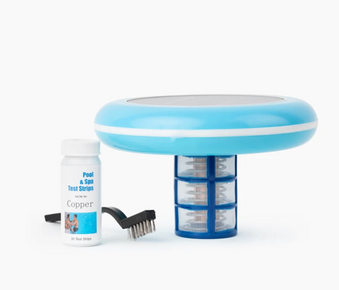
TL;DR: Pool performance encompasses far more than water clarity it includes circulation efficiency, heating effectiveness, equipment longevity, swimmer comfort, and operational simplicity. Solar pool ionizers enhance every dimension of pool performance through fundamentally better sanitation chemistry. By eliminating the corrosive, volatile nature of chlorine, ionizers enable pumps to run less and last longer, heaters to maintain peak efficiency without scale buildup, filters to capture particles more effectively, and swimmers to enjoy water that feels natural rather than chemical. This 2026 guide explores the comprehensive performance enhancements that solar ionization delivers across the entire pool ecosystem.
SEO Summary: 2026 guide to enhancing pool performance with solar pool ionizers: improved circulation efficiency, extended equipment life, better heating performance, superior filtration, and enhanced swimmer experience.
Table of Contents
- Defining Pool Performance Beyond Clean Water
- Circulation Performance: Doing More With Less Energy
- Filtration Performance: Ionic Flocculation in Action
- Heating Performance: Scale Prevention and Efficiency
- Equipment Longevity: Protection From Chemical Attack
- Chemical Performance: Stability and Predictability
- Swimmer Performance: Comfort, Safety, and Enjoyment
- Energy Performance: Reducing Consumption Across Systems
- Integration Performance: Working With Automation
- Conclusion & Key Takeaways
Defining Pool Performance Beyond Clean Water
When most pool owners think about performance, they think primarily about water clarity. Is the water clear? Can I see the bottom? These are important metrics, but they represent only a fraction of what pool performance truly encompasses.
The Multiple Dimensions of Pool Performance:
- Circulation performance: How effectively does water move through the system? How much energy is required to achieve adequate turnover? How well does circulation distribute sanitizer and prevent dead zones?
- Filtration performance: What percentage of particles are removed per pass? How long can the filter operate between cleanings? How effectively does the system handle varying particle loads?
- Heating performance: How efficiently does the heater transfer energy to water? How much heat is lost through evaporation and piping? How long does the heater maintain peak efficiency?
- Equipment longevity: How many years will pumps, heaters, filters, and other components operate before requiring replacement? What is the total cost of ownership over the pool's lifetime?
- Chemical performance: How stable is water chemistry? How frequently must chemicals be added? How predictable are chemical demands?
- Swimmer performance: How does the water feel? Does it irritate eyes or skin? Does it have unpleasant odors? How comfortable is the swimming experience?
- Energy performance: How much electricity does the pool consume? What is the carbon footprint of pool operation? How efficiently is energy converted into water quality?
- Integration performance: How well do pool systems work together? How effectively does automation coordinate components? How responsive is the system to changing conditions?
Solar pool ionizers enhance every one of these performance dimensions. They do not merely clean water they transform how the entire pool ecosystem operates. For a comprehensive overview of how solar ionization transforms the ownership experience, our article on smarter pool ownership through solar ionization explores the full range of benefits enabled by enhanced pool performance.
Circulation Performance: Doing More With Less Energy
Circulation performance is typically measured by how much water moves through the system and how much energy is required to achieve that movement. Solar pool ionizers dramatically improve both metrics.
Eliminating Chemical Distribution Requirements:
Traditional pools require turbulent, high-velocity flow for three reasons that ionizers eliminate. Chemical mixing is unnecessary because ionized water requires no dispersion of additives. Dead zone prevention becomes irrelevant as copper ions persist everywhere. Oxidant distribution is automatic since ions diffuse naturally and remain active throughout the water column.
With these requirements eliminated, circulation can focus on its essential purpose moving water through the filter. This enables fundamental improvements in circulation performance.
Reduced Flow Requirements:
Ionized pools maintain effective sanitation at flow rates 40 to 60 percent lower than chlorinated pools. Where a traditional pool might require 60 to 80 gallons per minute for adequate chemical distribution, an ionized pool achieves perfect sanitation at 30 to 40 gallons per minute. This reduction directly translates to lower pump energy consumption.
Lower Speed Operation:
Because high flow is not required, pumps can operate at much lower speeds. The affinity laws dictate that reducing pump speed by 20 percent reduces power consumption by approximately 50 percent. A variable-speed pump in an ionized pool typically operates at 1500 to 2000 RPM rather than 3000 to 3450 RPM, consuming 80 to 90 percent less energy.
Extended Runtime at Lower Cost:
With dramatically lower power consumption, ionized pools can afford to run longer while using less energy. Many owners choose to run their pumps 12 to 18 hours at low speed, providing continuous gentle circulation and filtration for less energy cost than 6 hours of high-speed operation in a traditional pool.
Improved Flow Distribution:
Lower flow rates are easier to distribute evenly through multiple returns. Balancing valves work more effectively at lower velocities. The result is more uniform circulation throughout the pool, eliminating the hot and cold spots that plague high-velocity systems.
For detailed guidance on optimizing circulation performance, our resource on energy-efficient circulation with solar ionizers provides specific recommendations for pump sizing, speed selection, and flow balancing.
Filtration Performance: Ionic Flocculation in Action
Filtration performance determines how effectively the pool removes particles and how much energy is required to do so. Solar ionizers enhance filtration through the natural process of ionic flocculation.
The Flocculation Mechanism:
Positively charged copper ions attract negatively charged suspended particles. When particles collide, they agglomerate into larger clusters that are 10 to 100 times larger than the original particles. These enlarged clusters are captured far more efficiently by all filter types.
Quantified Filtration Improvements:
- Capture efficiency: Traditional filters capture 40 to 60 percent of particles in the 1-10 micron range per pass. Ionized pools achieve 80 to 90 percent capture efficiency for the same particle range.
- Particle loading: Filters in ionized pools remove 2 to 3 times more contaminant mass per hour of operation compared to chlorinated pools.
- Extended cleaning intervals: Because filters capture particles more effectively, they load more completely before pressure rise triggers cleaning. Cleaning intervals extend by 30 to 50 percent.
- Media life: Gentler loading and reduced chemical exposure extend filter media life by 20 to 40 percent.
Filter Type Specific Enhancements:
Cartridge filters benefit particularly from ionic flocculation. The enlarged particles form a more permeable cake on cartridge surfaces, allowing longer runtime between cleanings. Cartridge life typically increases by 30 to 50 percent. Sand filters trap flocculated particles more effectively in the sand bed and remove them more completely during backwashing. Sand quality lasts longer, and channeling is reduced. DE filters achieve their highest efficiency with ionized water as flocculated particles are captured on DE-coated grids with minimal pressure increase, extending filtration cycles dramatically.
Reduced Backwash Frequency:
Sand and DE filters require less frequent backwashing in ionized pools. The more complete capture of particles means that when backwashing does occur, it removes accumulated debris more effectively. Backwash water consumption typically decreases by 30 to 50 percent.
Clarity as a Performance Metric:
The ultimate measure of filtration performance is water clarity. Ionized pools consistently achieve clarity levels that chlorinated pools reach only immediately after filter cleaning. The jewel-like sparkle of ionized water is the visible manifestation of superior filtration performance.
For a deeper dive into the science of ionic flocculation, our exploration of elevating water clarity with ionization provides comprehensive explanations of the mechanisms at work.
Heating Performance: Scale Prevention and Efficiency
Pool heating is typically the largest energy expense in pool operation, often exceeding pump energy by 2 to 5 times. Solar ionizers enhance heating performance through scale prevention and chemistry stability.
The Scale Problem in Heated Pools:
Calcium scale formation is the primary enemy of heating efficiency. As water is heated, calcium carbonate becomes less soluble and precipitates onto heat exchanger surfaces. A scale layer of just 1/16 inch reduces heat transfer efficiency by 20 to 30 percent. Over a heating season, this efficiency loss can increase energy consumption by hundreds of dollars.
Traditional pools accelerate scale formation through several mechanisms. pH fluctuations promote precipitation. Chemical additions increase calcium and carbonate levels. Inconsistent water chemistry creates precipitation conditions. Ionized water eliminates these accelerants.
How Ionizers Prevent Scale:
Ionized water maintains stable pH in the 7.4 to 7.6 range, avoiding the high pH conditions that trigger precipitation. With 80 to 90 percent fewer chemicals added, there are simply fewer scale-forming ions introduced to the water. Stable chemistry allows calcium hardness to be maintained in the optimal 200 to 300 ppm range, minimizing scale potential. Chlorine byproducts do not interact with calcium to form scale.
Quantified Heating Performance Improvements:
Heaters in ionized pools maintain peak efficiency throughout their service life, rather than degrading 2 to 5 percent annually due to scale accumulation. Heaters in ionized pools typically achieve 12 to 15 years of service compared to 5 to 8 years in chlorinated pools. Heat exchanger cleaning, a costly and labor-intensive procedure, is rarely needed in ionized pools.
Perceived Warmth Enhancement:
Beyond actual heating efficiency, ionized water provides a subjective warmth enhancement. The silky feel of ionized water is perceived as warmer than chlorinated water at the same temperature. This allows owners to reduce thermostat settings by 1 to 2 degrees Fahrenheit without sacrificing comfort, saving an additional 10 to 20 percent on heating energy.
Solar Thermal Integration:
For pools with solar thermal heating, the stable chemistry of ionized water is particularly beneficial. Solar collectors operate at higher temperatures than conventional heaters, increasing scale potential. The scale-preventing characteristics of ionized water protect these expensive collectors, preserving their efficiency and extending their life.
For pools with existing scale problems, our information on copper staining prevention and management includes protocols for descaling heat exchangers before transitioning to ionization.
Equipment Longevity: Protection From Chemical Attack
Pool equipment is designed to last 8 to 12 years under ideal conditions. In chlorinated pools, it rarely achieves that potential. The corrosive chemical environment attacks every component, shortening service life and increasing replacement costs.
How Chlorine Damages Equipment:
Pump seals and gaskets suffer as chlorine attacks elastomers, causing them to harden, crack, and leak. Heat exchanger corrosion accelerates as the combination of heat and chlorine creates an aggressively corrosive environment that eats through metal. Light fixture degradation occurs as chlorine attacks housing seals and can penetrate fixtures, causing electrical failures. Valve and fitting deterioration happens as plastic components become brittle and crack over time. Metal component corrosion affects ladders, handrails, and other fixtures, causing pitting and weakening.
How Ionizers Protect Equipment:
Copper and silver ions do not attack elastomers, metals, or plastics. The chemical environment is benign rather than aggressive. With 80 to 90 percent fewer chemicals added, there is simply less chemical exposure overall. Stable pH in the optimal range minimizes corrosive potential. Chloramines, which are particularly corrosive to some materials, are eliminated entirely.
Quantified Equipment Life Extension:
Pumps lasting 8 to 10 years in chlorinated pools extend to 12 to 15 years in ionized pools. Heaters lasting 5 to 8 years extend to 12 to 15 years. Filters lasting 7 to 10 years extend to 12 to 15 years. Light fixtures lasting 5 to 7 years extend to 10 to 12 years. Valves and fittings lasting 10 to 12 years extend to 15 to 20 years. Pool surfaces including plaster, fiberglass, and vinyl liners last 30 to 50 percent longer.
Economic Impact:
Extended equipment life translates directly to lower total cost of ownership. A pump that lasts 12 years instead of 8 represents a 50 percent reduction in annualized pump cost. A heater that lasts 15 years instead of 6 represents a 150 percent improvement. Over a 20-year ownership period, these savings can exceed $10,000 for an average pool.
For detailed financial analysis of equipment life extension, our piece on pool investment strategies and returns provides comprehensive calculations.
Chemical Performance: Stability and Predictability
Chemical performance refers to how consistently water chemistry behaves and how much effort is required to maintain it. Solar ionizers deliver chemical performance that chlorinated pools cannot approach.
pH Performance:
pH in ionized pools exhibits remarkable stability. Without chlorine additions constantly pushing pH in different directions, without continuous acid demand from salt generators, pH drifts slowly and predictably. Typical pH drift rates in ionized pools are 0.1 to 0.2 units per month, compared to 0.2 to 0.4 units per week in chlorinated pools. This stability means pH testing can be weekly rather than daily, and adjustments are measured in tablespoons per month rather than cups per week.
Sanitizer Performance:
Copper levels in ionized pools follow predictable patterns based on temperature, filtration, and bather load. Once these patterns are understood, copper management becomes a matter of weekly verification and occasional minor output adjustment. There is no equivalent of the chlorine roller coaster no over-shock followed by under-sanitation, no unexpected demand spikes, no emergency chemical additions.
Alkalinity Performance:
Total alkalinity in ionized pools remains remarkably stable because few chemicals are added to affect it. Where chlorinated pools may see alkalinity swings of 20 to 40 ppm per month, ionized pools typically vary by 5 to 10 ppm over the same period.
Calcium Performance:
Calcium hardness in ionized pools changes slowly, primarily through evaporation and fill water addition. Without the calcium inputs from certain chlorine products and without the pH swings that cause precipitation, calcium levels remain in the optimal range for extended periods.
Cyanuric Acid Performance:
Ionized pools do not require cyanuric acid. Any CYA present from previous chlorine use gradually dilutes over time and eventually reaches negligible levels. This eliminates the need for periodic draining to reset CYA levels, a major maintenance event in chlorinated pools.
Total Dissolved Solids Performance:
TDS accumulation in ionized pools is 80 to 90 percent slower than in chlorinated pools. Drain intervals extend from 2 to 3 years to 8 to 12 years or longer, conserving thousands of gallons of water and eliminating a major maintenance task.
For comprehensive guidance on achieving optimal chemical performance, our information on chemistry management for longer equipment life provides detailed protocols.
Swimmer Performance: Comfort, Safety, and Enjoyment
Swimmer performance is the dimension that matters most to those who actually use the pool. How does the water feel? Is it comfortable to swim in? Do swimmers want to stay longer or get out sooner?
Water Feel and Comfort:
Ionized water is consistently described as silky, soft, and natural. This is not merely subjective perception there is a physical basis for the difference. Chlorine reacts with skin's natural oils, stripping them away and leaving skin feeling dry and tight. Chloramines cause eye irritation and redness. The combination creates a sensation of chemical exposure that swimmers tolerate rather than enjoy.
Ionized water does not react with skin oils. It does not strip natural moisture. It does not create eye-irritating compounds. Swimmers emerge from ionized pools with skin that feels moisturized, eyes that are clear, and hair that remains soft. The difference is immediately apparent to anyone who experiences both.
Respiratory Comfort:
Chloramine off-gassing creates the characteristic pool smell that many people find unpleasant. More importantly, it can trigger respiratory issues in sensitive individuals. Children with asthma, adults with reactive airways, and anyone with respiratory sensitivities may find chlorinated pools uncomfortable or even hazardous. Ionized pools produce zero chloramines, and the air above the water is fresh and clean.
Safety Performance:
Several safety considerations favor ionized pools. Chlorine storage poses poisoning risks, particularly to children, but ionizers eliminate 80 to 90 percent of chemical storage. Mixing pool chemicals can create dangerous reactions, but ionizers eliminate most chemical handling. The exceptional clarity of ionized water makes it easier to see swimmers below the surface, enhancing drowning prevention. Some individuals have allergic reactions to chlorine, but ionized water eliminates this concern.
Extended Swim Times:
Because ionized water is more comfortable, swimmers tend to stay in it longer. Children play for hours without developing red eyes or complaining of discomfort. Adults can enjoy extended swims without the urge to rinse off immediately afterward. This enhanced enjoyment is perhaps the most valuable performance improvement of all.
For families with young children or swimmers with sensitivities, our article on making family pools safer with ionization explores the swimmer experience benefits in depth.
Energy Performance: Reducing Consumption Across Systems
Energy performance measures how much electricity the pool consumes and how efficiently that energy is converted into water quality. Solar ionizers improve energy performance across multiple systems.
Pump Energy Performance:
As discussed in the circulation section, ionizers enable dramatic pump energy reduction through 40 to 60 percent less pump runtime and 70 to 80 percent lower power consumption at reduced speeds, combining for 70 to 80 percent total pump energy reduction. For a typical residential pool, this translates to 2,000 to 3,000 kilowatt-hours saved annually, worth $300 to $500 at average electricity rates.
Heating Energy Performance:
Scale prevention and perceived warmth combine to reduce heating energy. Efficiency maintenance provides 10 to 20 percent savings through maintained peak efficiency. Temperature reduction provides 10 to 20 percent savings through lower thermostat settings. Combined savings total 20 to 35 percent total heating energy reduction.
Sanitation Energy Performance:
The ionizer itself consumes zero grid power. Unlike salt chlorine generators that draw 200 to 500 watts continuously, or ozone systems that require 100 to 300 watts, ionizers operate entirely on solar energy. This eliminates 500 to 1,500 kilowatt-hours of annual consumption that traditional sanitation systems require.
Total Energy Performance:
Combining pump, heating, and sanitation savings, a solar-ionized pool typically consumes 60 to 75 percent less energy than an equivalent chlorinated pool. This transforms the pool from one of the home's largest energy loads into a relatively minor consumer.
Carbon Footprint Performance:
Reduced energy consumption directly reduces carbon emissions. A typical solar-ionized pool avoids 2,000 to 3,000 pounds of CO2 emissions annually compared to a chlorinated pool. When combined with the embedded energy of avoided chemical manufacturing, the carbon benefit increases further.
For detailed energy savings calculations tailored to your specific situation, our resource on cutting pool energy costs with ionization provides interactive tools and worksheets.
Integration Performance: Working With Automation
Modern pools increasingly incorporate automation controllers, smart sensors, and integrated systems. Solar ionizers enhance integration performance by providing stable, predictable chemistry that automation can manage effectively.
Controller Communication:
Advanced ionizer controllers communicate with pool automation platforms through industry-standard protocols including RS-485, Modbus, and Wi-Fi API. This enables centralized control of ionizer, pump, heater, and lights from a single interface. Coordinated operation synchronizes ion output with pump speed and filtration schedules. Remote monitoring allows system status checks, alerts, and adjustments from anywhere. Data logging tracks performance trends and enables optimization over time.
Sensor Integration:
Ionizer controllers integrate with a growing array of sensors. Copper ion-selective electrodes enable closed-loop copper control, automatically adjusting output to maintain target levels. pH and ORP sensors provide continuous chemistry monitoring and can trigger alerts or adjustments. Flow and pressure sensors verify system operation and predict maintenance needs. Temperature sensors enable temperature-compensated output and freeze protection. Weather stations integrate local forecasts for pre-storm boosts and weather-responsive operation.
Smart Home Integration:
Modern ionizers connect with popular smart home platforms. Voice control allows status checks and adjustments through Amazon Alexa, Google Assistant, or Apple HomeKit. Geofencing automatically adjusts operation based on homeowner location. Energy management coordinates with home solar and battery systems for optimal energy use. Maintenance platforms integrate with systems that track service schedules and order parts.
Predictive Capabilities:
The stable chemistry of ionized water enables predictive automation that would be impossible with volatile chlorine systems. Controllers can forecast copper needs based on temperature trends and usage patterns, predict filter cleaning dates from pressure rise rates, anticipate seasonal transitions and adjust parameters automatically, and alert owners to developing issues before they affect water quality.
For pools with existing automation systems, our information on modern pool system integration provides specific compatibility information and configuration instructions.
Conclusion & Key Takeaways
Enhancing pool performance with a solar pool ionizer is not about incremental improvement it is about fundamental transformation. Every dimension of pool operation circulation, filtration, heating, equipment longevity, chemical management, swimmer experience, energy consumption, and automation integration performs better with ionization than with traditional chlorine sanitation.
Circulation does more with less energy, operating at lower speeds for longer periods while consuming 70 to 80 percent less electricity. Filtration captures 2 to 3 times more particles per pass, extending cleaning intervals and improving clarity. Heating maintains peak efficiency without scale buildup, saving 20 to 35 percent on energy and extending heater life by 50 to 100 percent.
Equipment lasts 30 to 50 percent longer in the benign chemical environment of ionized water, reducing replacement costs and maintenance headaches. Chemistry becomes stable and predictable, eliminating the roller coaster of pH swings, chlorine demand, and TDS accumulation. Swimmers enjoy water that feels natural rather than chemical, with no eye irritation, skin dryness, or respiratory discomfort.
Energy consumption drops by 60 to 75 percent across all systems, transforming the pool from an energy burden to a relatively minor consumer. And automation integration becomes truly effective, with stable chemistry enabling predictive control that would be impossible with volatile chlorine.
These performance enhancements are not theoretical they are being achieved today in thousands of residential, commercial, and public pools worldwide. The technology is proven, the benefits are documented, and the path to better performance is clear.
Key Takeaways
- Pool performance encompasses multiple dimensions: Circulation, filtration, heating, equipment longevity, chemical management, swimmer experience, energy consumption, and automation integration all contribute to overall pool performance.
- Circulation performance improves dramatically: Ionizers eliminate chemical distribution requirements, enabling 40 to 60 percent less runtime and 70 to 80 percent lower energy consumption.
- Filtration performance doubles: Ionic flocculation increases particle capture efficiency by 100 to 200 percent, extending cleaning intervals and improving clarity. Our discussion of water clarity through ionization explains this mechanism in detail.
- Heating performance benefits from scale prevention: Stable chemistry eliminates scale formation, maintaining peak efficiency and extending heater life by 50 to 100 percent.
- Equipment longevity extends 30 to 50 percent: The non-corrosive environment of ionized water protects pumps, heaters, filters, and surfaces from chemical attack.
- Chemical performance becomes stable and predictable: pH drifts monthly rather than weekly, copper follows predictable patterns, and TDS accumulation slows by 80 to 90 percent.
- Swimmer performance transforms the experience: Silky water feel, no eye irritation, no chemical odor, and respiratory comfort make swimming genuinely enjoyable.
- Energy performance improves across all systems: Combined pump, heating, and sanitation savings total 60 to 75 percent energy reduction and 2,000 to 3,000 pounds of CO2 avoided annually.
- Integration performance enables true automation: Stable chemistry allows predictive control, sensor integration, and smart home connectivity that volatile chlorine cannot support.
- The performance transformation is available now: Proven technology, documented benefits, and accessible systems make solar ionization the clear choice for enhancing pool performance. Our guidance on selecting a solar pool ionizer helps choose the system that will deliver these performance enhancements for your specific pool.
Every pool owner deserves the performance that solar ionization delivers. Cleaner water with less effort. Longer equipment life with lower replacement costs. More comfortable swimming with fewer chemicals. Lower energy bills with smaller carbon footprint. The technology exists, the benefits are proven, and the time to enhance your pool's performance is now.