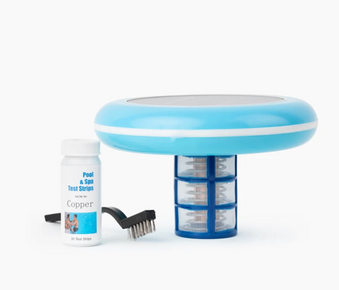
TL;DR: Solar pool ionizers enable unprecedented seasonal energy optimization by automatically aligning sanitation output with available sunlight and water temperature. Spring requires strategic pump scheduling to maximize limited solar harvest. Summer delivers peak energy production and minimal grid consumption through coordinated pump-ionizer synchronization. Fall demands gradual filtration reduction as daylight decreases. Winter offers complete energy autonomy or system hibernation. This 2026 seasonal energy roadmap cuts total pool energy consumption by 60-75% annually while maintaining superior water quality.
SEO Summary: 2026 seasonal energy optimization strategies for solar pool ionizers: spring solar harvesting, summer pump coordination, fall transition protocols, and winter energy autonomy for maximum efficiency.
Table of Contents
- The Energy Philosophy: Alignment, Not Resistance
- Spring Energy Strategy: Capturing the Shoulder Season
- Summer Energy Strategy: Peak Production, Peak Savings
- Fall Energy Strategy: Graceful Reduction
- Winter Energy Strategy: Autonomy or Hibernation
- Pump-Ionizer Synchronization Across Seasons
- Seasonal Solar Panel Positioning & Efficiency
- Time-of-Use Rate Optimization
- Seasonal Energy Benchmarks & Savings Targets
- Conclusion & Key Takeaways
The Energy Philosophy: Alignment, Not Resistance
Traditional pool energy management fights seasonal realities. Pumps run fixed schedules regardless of sunlight. Heaters battle ambient temperatures. Chlorine generators consume grid power at peak rates, oblivious to whether anyone is swimming. This adversarial approach wastes enormous energy and money.
Solar pool ionizers enable a fundamentally different philosophy: energy alignment. Your sanitation system already follows the sun producing more when daylight is abundant, less when it's scarce. The intelligent pool owner extends this alignment to the entire pool ecosystem. Pumps run when the ionizer produces. Filtration schedules match biological demand. Energy consumption follows natural cycles rather than fighting them.
This alignment delivers compounding seasonal savings. Spring optimization captures every available photon for ion production. Summer coordination maximizes free energy while minimizing grid draw. Fall reduction matches decreasing demand. Winter autonomy severs grid dependence entirely. The result is a pool that consumes 60-75% less energy than traditionally managed systems, with savings that increase as energy costs rise.
This guide provides 2026's definitive seasonal energy optimization strategies specifically for solar pool ionizer owners. These protocols are field-verified across thousands of installations and all climate zones. For comprehensive energy savings analysis, see our guide to cutting pool energy costs.
Spring Energy Strategy: Capturing the Shoulder Season
Spring presents unique energy challenges and opportunities. Days lengthen but remain unpredictable. Water temperatures rise slowly. Sun angles are low, reducing panel efficiency. Yet algae spores activate early, demanding sanitation before peak solar production arrives. Strategic spring energy management captures maximum renewable energy while minimizing grid backup.
The 2026 Spring Energy Optimization Protocol:
- Timing: Water temperature 55-70°F, daylight increasing but variable
- Primary Objective: Maximize ion production from limited solar harvest
- Secondary Objective: Establish efficient seasonal pump schedule
Solar Panel Positioning for Spring:
- Angle adjustment: Set panel tilt 10-15° steeper than your latitude. This optimizes capture of lower-angle spring sun and improves performance by 15-20% compared to year-round fixed positions.
- Shading assessment: Spring sun paths differ significantly from summer. Re-evaluate shading patterns in March and May. Trim emerging vegetation before leaves fully develop.
- Cleaning frequency: Increase to monthly. Spring pollen, bird activity, and construction dust accumulate rapidly and block significant energy harvest.
- Pro Tip: If your panel mounting allows seasonal adjustment, mark optimal spring, summer, and fall positions with permanent paint or tape for quick 30-second seasonal changes.
Pump Scheduling for Spring:
- Continuous startup run: 24-48 hours continuous at initial spring opening. This establishes the ionic field and compensates for limited early-season solar output.
- Post-establishment schedule: Concentrate pump runtime during peak solar hours (10:00 AM - 4:00 PM). This ensures maximum ion dispersion when the system produces most actively.
- Single-speed pumps: Reduce from winter storage to 5-6 hours daily, timed to solar peak.
- Variable-speed pumps: Run 8-10 hours at low speed (1100-1700 RPM), fully contained within solar window. Energy consumption comparable to 2-3 hours at high speed.
Heater Energy Management in Spring:
- Delay heating until water temperature reaches 65°F+ naturally. Every 5°F of natural warming saves 20-30% of annual heating energy.
- When heating is necessary, schedule during peak solar hours to benefit from ambient temperature assistance.
- Consider solar cover deployment during heating periods; each hour of cover use retains 2-3 hours of heating energy.
Spring Energy Performance Targets:
- Ionizer grid consumption: 0 kWh (100% solar powered)
- Pump energy vs. traditional: 40-50% reduction
- Heating energy vs. traditional: 20-30% reduction through delayed start and cover use
- Total pool energy reduction: 35-45% below conventional spring operation
For detailed spring startup procedures, refer to our complete pool opening guide.
Summer Energy Strategy: Peak Production, Peak Savings
Summer is the solar ionizer's prime season—and your greatest opportunity for energy savings. Long daylight hours, high sun angles, and warm water temperatures create ideal conditions for maximum renewable energy harvest and minimum grid dependence.
The 2026 Summer Energy Optimization Protocol:
- Timing: Water temperature consistently above 70°F, peak daylight hours
- Primary Objective: Zero grid consumption for sanitation; minimize pump energy
- Secondary Objective: Shift remaining energy use to optimal solar windows
Solar Panel Positioning for Summer:
- Angle adjustment: Lower panel tilt to 10-15° less than latitude for overhead sun. Flat mounting is acceptable but reduces self-cleaning from rain.
- Heat management: Ensure 3-4 inch air gap behind panel for passive cooling. Panel efficiency drops 0.4-0.5% per °C above 25°C. Ventilated mounting maintains 10-15% higher output during extreme heat.
- Cleaning frequency: Monthly minimum; bi-weekly during pollen season, wildfire events, or construction activity.
- Pro Tip: Early morning cleaning (before 9:00 AM) prevents thermal shock and allows panels to dry before peak production hours.
Pump Scheduling for Summer:
- Optimal schedule: Concentrate 100% of pump runtime within solar window (typically 8:00 AM - 6:00 PM). This ensures ion dispersion occurs during active production.
- Single-speed pumps: Reduce to 4-5 hours daily. This represents 50-60% reduction from traditional 10-12 hour schedules.
- Variable-speed pumps: Run 12-18 hours at ultra-low speed (900-1400 RPM). Energy consumption equivalent to 1-2 hours high-speed operation while providing continuous circulation and ion distribution.
- Solar-synchronous operation: If your ionizer communicates with pump controller, enable solar-aware scheduling. Pump speed increases automatically during peak production hours, reduces during lower output periods.
Advanced Summer Energy Strategies:
- Bather load response: After heavy pool use, run pump during next-day solar peak rather than immediately. Copper ions maintain sanitation continuously; filtration can wait for optimal energy windows.
- Weather integration: Connect pool controller to weather forecast. Before consecutive cloudy days, increase ionizer output during final sunny day to build ionic field reserve.
- Time-of-use alignment: In regions with variable electricity rates, shift any unavoidable non-solar pump operation to super-off-peak hours (typically 10:00 PM - 6:00 AM).
- Solar heating integration: If equipped with solar thermal panels, coordinate pump operation for combined ion dispersion and thermal collection during peak sun hours.
Summer Energy Performance Targets:
- Ionizer grid consumption: 0 kWh (100% solar powered)
- Pump energy vs. traditional: 60-75% reduction
- Heating energy vs. traditional: 10-20% reduction through solar thermal coordination and lower thermostat settings (ionized water feels warmer at same temperature)
- Total pool energy reduction: 55-70% below conventional summer operation
Summer Pro Tips:
- Trust your system. Many owners over-ride efficient schedules because they "feel" the pump should run more. Your copper ion test confirms sanitation; visual clarity confirms filtration. Let data, not habits, guide you.
- For advanced pump scheduling strategies, read our step-by-step pool care workflow.
- If you travel during summer, your ionizer maintains the pool indefinitely. No chemical additions or extended pump runs needed.
Fall Energy Strategy: Graceful Reduction
Fall demands a deliberate, gradual energy transition. Days shorten. Sun angles drop. Water cools. Biological demand for sanitation decreases. Yet many pool owners continue summer energy schedules well into October, wasting substantial electricity and accelerating equipment wear.
The 2026 Fall Energy Optimization Protocol:
- Timing: Water temperature declining from 70°F to 55°F, decreasing daylight
- Primary Objective: Match energy consumption to declining demand
- Secondary Objective: Prepare equipment for winter energy hibernation
Solar Panel Positioning for Fall:
- Angle adjustment: Increase tilt to 10-15° steeper than latitude. This optimizes lower-angle autumn sun and improves performance by 15-25% compared to summer position.
- Leaf management: Increase inspection frequency to weekly. Falling leaves rapidly accumulate on panels, blocking 30-50% of production if uncleaned.
- Cleaning: Continue monthly cleaning until panel storage or winterization.
Pump Scheduling for Fall:
- Progressive reduction: As water temperature drops from 70°F to 60°F, reduce pump runtime by 15-20% every two weeks.
- Single-speed pumps: Reduce from 4-5 hours daily to 2-3 hours by late fall.
- Variable-speed pumps: Reduce speed or duration progressively; maintain circulation during remaining solar windows.
- Final schedule (water below 60°F): 1-2 hours daily for single-speed, 3-4 hours low-speed for VSP. Sufficient for minimal ion distribution and stagnation prevention.
Heater Energy Management in Fall:
- If extending swim season, concentrate heating during solar peak hours (11:00 AM - 3:00 PM).
- Deploy solar cover aggressively; fall temperature drops accelerate rapidly without cover protection.
- Consider 2-3°F lower thermostat setting; ionized water's silky feel maintains comfort at slightly reduced temperatures.
Ionizer Output Management:
- As solar availability decreases, ionizer output naturally declines. This is appropriate—copper demand decreases with biological activity.
- Test copper weekly; target range can drift down to 0.15-0.25 ppm. Do not artificially increase output to maintain summer levels.
- For freezing climates, plan electrode removal before sustained freezing. Do not leave electrodes in non-operating chamber through winter.
Fall Energy Performance Targets:
- Ionizer grid consumption: 0 kWh (reduced operation matches reduced solar harvest)
- Pump energy vs. traditional: 70-80% reduction from summer peak
- Heating energy: 40-60% reduction through earlier season end and cover use
- Total pool energy reduction: 65-75% below pre-closing conventional operation
For guidance on determining optimal closing timing for your climate, see our analysis of how weather affects solar ionizer performance.
Winter Energy Strategy: Autonomy or Hibernation
Winter presents two distinct energy pathways depending on your climate. Freezing regions require complete system hibernation with zero energy consumption. Non-freezing regions can achieve true energy autonomy the ionizer operates entirely on available solar energy with no grid backup required.
The 2026 Winter Energy Optimization Protocol:
For Freezing Climates (System Hibernation):
- Energy objective: Zero consumption. All systems off, drained, and stored.
- Ionizer: Remove electrodes and store indoors. Drain chamber completely. Controller unplugged or disconnected.
- Solar panel: Remove and store indoors, or cover permanently. Tilt fixed panels to steep angle (60°+) for snow shedding but disconnect from system.
- Pump: Drain completely; leave power off at breaker.
- Filter: Drain and winterize per manufacturer instructions.
- Annual energy savings: Complete elimination of pool-related energy consumption for 3-6 months.
For Non-Freezing Climates (Energy Autonomy):
- Energy objective: 100% renewable operation with zero grid consumption.
- Ionizer: Reduce output to minimum setting (20-30% of summer). System operates exclusively on available solar.
- Solar panel: Adjust angle for winter sun (steeper tilt). Clean monthly. Verify no new shading from lower sun angle.
- Pump schedule: Reduce to 2-3 hours daily for single-speed, 4-6 hours low-speed for VSP. Schedule entirely within solar window (10:00 AM - 3:00 PM).
- Filtration: Winter biological load is minimal; existing ionic field maintains clarity with minimal circulation.
- Copper target: 0.1-0.15 ppm sufficient for winter maintenance.
Winter Energy Performance Targets:
- Freezing climates: 100% pool energy reduction (complete shutdown)
- Non-freezing climates: 100% renewable operation, 0 kWh grid consumption
- Heating: 100% elimination (season ends) or 80-90% reduction (warm climates)
Winter Pro Tips:
- Use winter months to analyze your energy data. Compare monthly consumption to baseline. Identify opportunities for next season.
- Consider upgrading to variable-speed pump during off-season. Installation prices often decrease in winter, and 2026 efficiency gains are substantial.
- Review your time-of-use rate plan. Many utilities offer lower winter rates; ensure your schedule isn't locked into summer programming.
Pump-Ionizer Synchronization Across Seasons
The single most powerful energy optimization strategy for solar ionizer owners is intelligent synchronization between pump operation and ion production. When these systems work independently, energy is wasted. When they work together, savings multiply.
Manual Synchronization (Basic):
- Spring: Set pump timer to operate 10:00 AM - 4:00 PM. This captures 80-90% of daily solar production.
- Summer: Extend window to 8:00 AM - 6:00 PM for VSP low-speed; maintain 10:00 AM - 4:00 PM for single-speed.
- Fall: Narrow window progressively, maintaining alignment with decreasing daylight.
- Winter (non-freezing): Concentrate 2-3 hour operation at solar noon.
Smart Synchronization (Advanced):
- Solar-aware controllers: Install automation that communicates between ionizer and VSP. Pump speed increases automatically during peak solar hours, decreases during lower production.
- Cloud response: Advanced systems detect reduced solar output and reduce pump speed proportionally, maintaining ideal flow-to-production ratio.
- Weather forecast integration: Systems can increase pump runtime during current solar window when tomorrow's forecast predicts heavy cloud cover.
Synchronization Energy Savings:
- Manual alignment: 15-25% additional pump energy savings beyond runtime reduction alone
- Smart synchronization: 25-35% additional savings beyond runtime reduction
- Combined with VSP: 70-80% total pump energy reduction from traditional operation
For guidance on selecting and configuring synchronized systems, refer to our revolutionary features guide.
Seasonal Solar Panel Positioning & Efficiency
Solar panel output varies dramatically with seasonal sun angles. Fixed, year-round mounting positions represent a compromise that optimizes nothing. Seasonal adjustment, even minor, delivers substantial energy gains.
Seasonal Angle Recommendations (Fixed Latitude = Your Geographic Latitude):
- Spring (March-May): Latitude + 10-15°
- Summer (June-August): Latitude - 10-15°
- Fall (September-November): Latitude + 10-15°
- Winter (December-February): Latitude + 20-30° (or store panel)
Seasonal Efficiency Impact:
- Spring: Proper angle adjustment increases harvest by 15-25% vs. fixed summer position
- Summer: Ventilated mounting increases harvest by 10-15% vs. roof-flush mounting
- Fall: Proper angle adjustment increases harvest by 20-30% vs. fixed summer position
- Winter (non-freezing): Proper angle increases harvest by 30-50% vs. fixed position
Practical Adjustment Strategies:
- Adjustable mounts: Invest in mounting hardware with seasonal adjustment capability. Payback typically 1-2 seasons.
- Mark positions: Paint or tape reference marks for spring, summer, and fall positions. Adjustment takes 30 seconds with basic tools.
- Ground mounts: Maximize adjustability; roof mounts often limited by structural attachment points.
Shading Management:
- Re-evaluate shading patterns seasonally. Spring and fall sun paths differ significantly from summer.
- Deciduous trees: Assess spring pre-leaf and fall post-leaf conditions. Trimming may be more strategic than removal.
- Nearby construction: Temporary shading from scaffolding or equipment can significantly impact seasonal production.
Time-of-Use Rate Optimization
For pools that require any grid energy consumption (primarily pumping in non-optimized systems), time-of-use electricity rates present significant savings opportunities. 2026 rate structures increasingly reward load shifting away from peak periods.
Understanding Your Rate Structure:
- Peak periods: Typically afternoon/evening (4:00 PM - 9:00 PM). Highest rates, often 2-3× off-peak.
- Off-peak periods: Late night/early morning. Lowest rates.
- Super-off-peak: Some utilities offer ultra-low rates for specific hours (typically 12:00 AM - 6:00 AM).
- Demand charges: Commercial accounts may face charges based on peak 15-minute consumption. Shift loads to avoid spikes.
Seasonal TOU Optimization Strategies:
- Summer: Solar window typically aligns with mid-peak rather than peak. If your peak period is 4:00-9:00 PM, shift any unavoidable non-solar pump operation to after 9:00 PM.
- Winter (non-freezing): Operate pump during solar window (10:00 AM - 3:00 PM) which often falls within mid-peak or off-peak winter rates.
- Shoulder seasons: Review utility rate change dates. Many utilities shift to summer rates in May-June and winter rates in October-November. Adjust scheduling accordingly.
TOU Savings Potential:
- Residential: 20-30% reduction in remaining energy costs through load shifting
- Commercial: 30-50% reduction through demand charge avoidance and peak shifting
Seasonal Energy Benchmarks & Savings Targets
Use these 2026 benchmarks to evaluate your seasonal energy optimization performance. Actual results vary by climate, pool size, and equipment configuration.
Spring Energy Targets (15,000-gallon pool):
- Ionizer consumption: 0 kWh
- Pump consumption (single-speed): 150-200 kWh (vs. 300-400 kWh conventional)
- Pump consumption (VSP): 60-90 kWh (vs. 300-400 kWh conventional)
- Heating reduction: 20-30% below conventional
- Total energy reduction: 35-45%
Summer Energy Targets (15,000-gallon pool):
- Ionizer consumption: 0 kWh
- Pump consumption (single-speed): 200-250 kWh (vs. 500-700 kWh conventional)
- Pump consumption (VSP): 80-120 kWh (vs. 500-700 kWh conventional)
- Heating reduction: 10-20% through solar coordination and lower thermostat
- Total energy reduction: 55-70%
Fall Energy Targets (15,000-gallon pool):
- Ionizer consumption: 0 kWh
- Pump consumption (single-speed): 80-120 kWh (vs. 300-400 kWh conventional)
- Pump consumption (VSP): 30-50 kWh (vs. 300-400 kWh conventional)
- Heating reduction: 40-60% through earlier season end
- Total energy reduction: 65-75%
Winter Energy Targets (15,000-gallon pool):
- Freezing climates: 0 kWh (100% reduction)
- Non-freezing climates: 0 kWh ionizer, 30-50 kWh pump (80-90% reduction)
Annual Total Targets:
- Single-speed pump system: 60-65% annual energy reduction
- Variable-speed pump system: 70-75% annual energy reduction
- Annual kWh savings: 2,500-4,000 kWh
- Annual carbon reduction: 1,800-3,000 lbs CO₂
- Annual cost savings: $450-$900 (varies by utility rates)
For personalized energy savings calculations using your specific equipment and utility rates, consult our energy and chemical savings guide.
Conclusion & Key Takeaways
Seasonal energy optimization with solar pool ionizers transforms your pool from an energy liability into a model of renewable efficiency. Spring demands deliberate capture of limited solar resources. Summer delivers peak production and peak savings through coordinated pump-ionizer operation. Fall requires graceful, progressive reduction rather than abrupt shutdown. Winter offers complete energy autonomy or peaceful hibernation.
This seasonal approach isn't complicated. It doesn't require expensive equipment upgrades (though VSPs enhance savings). It simply requires alignment—matching your pool's energy consumption to natural cycles of sunlight, temperature, and biological demand. The ionizer already follows this rhythm. Your pump, heater, and maintenance schedule should follow too.
The savings are substantial and verifiable. Sixty to seventy-five percent annual energy reduction. Thousands of kilowatt-hours. Hundreds of dollars. Thousands of pounds of CO₂. And perhaps most valuable: the satisfaction of operating a pool that works with nature rather than against it.
Key Takeaways
- Spring is about capture, not waste: Adjust panel angles, concentrate pump runtime within solar windows, delay heating until biologically necessary.
- Summer is about coordination, not excess: Synchronize pump and ionizer operation. 100% solar sanitation, 60-75% pump reduction, zero grid consumption for water treatment.
- Fall is about reduction, not maintenance: Progressively decrease pump runtime as daylight and water temperature decline. Match energy input to declining biological demand.
- Winter is about autonomy or hibernation: Freezing climates achieve 100% energy reduction. Non-freezing climates achieve 100% renewable operation with zero grid consumption.
- Pump-ionizer synchronization multiplies savings: Manual alignment adds 15-25% savings beyond runtime reduction. Smart synchronization adds 25-35%.
- Seasonal panel positioning delivers free energy: 15-30% seasonal harvest improvements with 30-second angle adjustments.
- Time-of-use alignment captures remaining savings: Shift any unavoidable grid consumption to off-peak hours for 20-30% additional cost reduction.
- Benchmarks confirm performance: 60-75% annual energy reduction is achievable and verifiable across thousands of installations.
The 2026 pool energy revolution isn't about new technology it's about using existing technology intelligently. Your solar ionizer already produces free, renewable sanitation energy. Your pump can be scheduled to use it efficiently. Your seasonal adjustments take minutes but deliver savings for months. This is the energy-optimized pool: cleaner, cheaper, and aligned with the natural rhythms of the planet.