A well-designed pool is easier to maintain, more efficient to operate, and far more consistent in water quality.
While chemicals and maintenance routines play an important role, true water stability begins with smart pool design. Modern pool design principles focus on circulation efficiency, material selection, and integrated systems that work together to maintain balanced, predictable water conditions.
This proactive approach to pool construction recognizes that water chemistry doesn't exist in isolation it's profoundly influenced by the physical environment. The shape, plumbing layout, surface materials, and equipment integration all create either a supportive or challenging context for maintaining balanced pool water. Just as a well-designed kitchen makes cooking more enjoyable, a thoughtfully designed pool makes water management simpler and more effective.
By designing pools with stability in mind, homeowners can reduce maintenance demands, minimize chemical fluctuations, and enjoy cleaner, more comfortable water throughout the season.
Table of Contents
- Why Pool Design Matters for Water Stability
- Optimized Circulation for Consistent Water Balance
- Strategic Placement of Inlets and Drains
- Material Choices That Support Stable Water Chemistry
- Integrating Sanitation Systems Into Pool Design
- Designing for Easy Maintenance and Long-Term Consistency
- Final Thoughts: Building Pools That Stay Balanced
1. Why Pool Design Matters for Water Stability
Water instability in swimming pools is not merely a chemical challenge it is fundamentally a design failure, where physical shortcomings create chemical demands that no amount of maintenance can fully overcome. The relationship between design and water stability operates on hydraulic, material, and systemic levels that together determine whether a pool will be a constant maintenance battle or a naturally balanced environment. Hydraulically, poor circulation creates "dead zones" areas receiving less than 20% of the main flow where water stagnates, sanitizer levels plummet, and algae establish beachheads that then spread and destabilize the entire pool's chemistry. Materially, incompatible surfaces can continuously leach minerals (driving up pH and hardness) or provide porous habitats for microbial colonization. Systemically, pool equipment added as afterthoughts often creates flow restrictions, heat gradients, or distribution problems that undermine chemical consistency. Modern pool design addresses these issues from the blueprint stage, treating water stability not as a maintenance goal to be achieved later, but as a design parameter to be engineered from inception.
The Hydraulic-Chemical Connection
Water chemistry cannot remain stable in a hydraulically flawed environment because sanitizers, pH balancers, and other chemicals depend on circulation for distribution. In pools with poor hydraulic design, certain areas receive continuous chemical replenishment while others languish in stagnation, creating what chemists term "chemical microclimates." These variations force owners to over-treat the entire pool to protect the weakest zones, leading to chemical swings, accelerated degradation of surfaces and equipment, and increased operating costs. Computational fluid dynamics (CFD) analysis reveals that traditional rectangular pools with simple corner returns often have dead zones comprising 15-25% of total volume. Modern design employs multiple strategically angled returns, floor-level circulation systems, and sometimes auxiliary pumps specifically for problem areas to achieve what hydraulic engineers call "laminar uniformity" flow patterns that ensure every gallon of water completes at least one full circuit through the filtration and treatment system within the target turnover time. This hydraulic efficiency then enables chemical efficiency: balanced water reaches everywhere, so chemical levels can be maintained at their optimal minimum rather than their protective maximum.
- Chemical Microclimates: Localized areas with dramatically different chemistry due to poor circulation
- Over-Treatment Necessity: The need to elevate chemical levels system-wide to protect stagnant zones
- Laminar Uniformity: Flow patterns that ensure consistent water movement throughout the entire pool volume
- Hydraulic Efficiency Enables Chemical Efficiency: Proper circulation allows optimal rather than excessive chemical use
Material Chemistry and Surface Interaction
Every material in contact with pool water engages in continuous chemical exchange, either contributing to stability or demanding constant correction. Traditional plaster finishes, through a process called dissolution, release calcium carbonate at a rate of 1-2 pounds per 10,000 gallons annually, continuously elevating pH and hardness regardless of source water quality. Certain aggregates contain minerals that stain when oxidized, while some tile grouts provide ideal habitats for black algae with their porous, nutrient-rich composition. Modern material selection focuses on chemical neutrality and biological resistance: quartz-based and polymer-modified finishes dramatically reduce dissolution rates; glass tiles and porcelain pavers offer non-porous surfaces that resist scaling and microbial attachment; and epoxy grouts prevent pool algae penetration while minimizing mineral leaching. Beyond surfaces, equipment materials matter equally copper heat exchangers can leach ions that cause staining, while certain plastics can release plasticizers that cloud water. Thoughtful material selection thus removes variables from the chemical equation, creating what materials scientists call a "passive stable environment" where the pool itself doesn't actively work against water balance.
- Dissolution Rates: How much material surfaces release into the water annually, affecting hardness and pH
- Chemical Neutrality: Materials engineered to minimize interaction with pool water chemistry
- Biological Resistance: Non-porous surfaces that prevent microbial attachment and colonization
- Passive Stable Environment: A pool where materials support rather than challenge water balance
Integrated Systems Design Philosophy
Truly stable pools emerge from an integrated design philosophy where all systems circulation, filtration, sanitation, heating, and automation—are conceived as interconnected components of a single water management ecosystem. This approach contrasts sharply with the traditional method of designing the pool shell first, then "finding room" for equipment. In integrated design, equipment placement determines plumbing layouts that minimize friction losses and ensure balanced flow to all returns. Sanitation systems are sized and positioned not as afterthoughts but as central components, often with dedicated plumbing loops that ensure optimal distribution. Automation systems receive conduits during construction rather than having wires retrofitted later. Even accessibility for maintenance becomes a design consideration, with equipment pads sized for service clearance and positioned for both functionality and aesthetics. This holistic approach creates what designers call "inherent stability" a pool that tends naturally toward balance because every component works synergistically rather than at cross-purposes. The result is predictable performance, reduced maintenance time, and water that remains consistently inviting through intelligent design rather than constant chemical intervention.
- Interconnected Ecosystem: All systems designed to work together from initial concept
- Equipment-Driven Layout: Plumbing and shell design accommodating optimal equipment placement and performance
- Dedicated Distribution: Sanitation systems with purpose-designed plumbing for maximum effectiveness
- Inherent Stability: A pool that naturally maintains balance due to synergistic system design
Understanding why design matters for water stability transforms pool construction from a primarily aesthetic exercise to an engineering discipline focused on long-term performance. The hydraulic foundation ensures chemicals reach everywhere they're needed. Material selection removes sources of chemical interference. Integrated systems design creates synergistic operation. Together, these principles establish what might be called "design-based stability" water quality that emerges naturally from the pool's physical characteristics rather than being imposed through constant chemical correction. This approach doesn't eliminate maintenance, but it fundamentally changes its nature: from reactive problem-solving to proactive monitoring, from constant adjustment to occasional fine-tuning. The well-designed pool thus becomes not just a place for swimming, but a testament to the principle that the best solutions are those engineered into existence from the very beginning.

2. Optimized Circulation for Consistent Water Balance
Optimized circulation represents the hydraulic foundation of water stability, transforming pool maintenance from constant chemical correction to natural equilibrium through sophisticated engineering of water movement. Unlike simple water motion, optimized circulation follows precise hydraulic principles that ensure every molecule completes multiple complete journeys through the filtration and treatment system daily, creating what engineers term "hydraulic homogeneity." This comprehensive movement eliminates the thermal and chemical stratification that plagues poorly circulated pools where warm, chemically depleted water layers at the surface while cold, untreated water settles at the bottom. Proper circulation begins with correctly sized hydraulic components: pumps matched to the pool's volume and plumbing resistance, pipes sized to maintain optimal velocity (4-6 feet per second to prevent debris settlement without excessive friction loss), and returns positioned to create overlapping circulation patterns that leave no stagnant zones. The result is a self-cleansing aquatic environment where contaminants are continuously carried to filters, heat distributes evenly from surface to floor, and sanitizers maintain consistent concentration from corner to corner, dramatically reducing the chemical demands and maintenance interventions required to keep water balanced.
Hydraulic System Design and Component Sizing
Effective circulation begins with precise hydraulic calculations that match every system component to the pool's specific volume, shape, and usage patterns, following what hydraulic engineers call the "continuity equation" of flow. Pump selection moves beyond simple horsepower ratings to consider performance curves how the pump operates at different flow rates against the specific resistance (head loss) of the pool's plumbing system. Modern variable-speed pumps allow dynamic adjustment: higher speeds during peak bather load when organic contamination is highest, moderate speeds for normal filtration, and low speeds for continuous overnight circulation that maintains chemical distribution without excessive energy use. Plumbing design employs the concept of "balanced hydraulics" ensuring all return lines experience similar resistance so water distributes evenly rather than taking the path of least resistance. Pipe sizing follows the Goldilocks principle: large enough to prevent excessive velocity that increases friction and energy consumption, but small enough to maintain scouring velocity that prevents debris settlement. Skimmer and main drain ratios are calculated based on pool size and shape, with multiple skimmers strategically placed in areas of natural surface flow (downwind positions) to efficiently remove contaminants before they sink and decompose.
- Performance Curve Matching: Selecting pumps based on their operational characteristics against the pool's specific hydraulic resistance
- Dynamic Speed Adjustment: Variable-speed pumps that adapt flow rates to changing contamination levels and usage patterns
- Balanced Hydraulics: Plumbing designs that ensure equal flow resistance across all return paths
- Scouring Velocity Maintenance: Pipe sizing that keeps water moving fast enough to carry debris without excessive energy use
Strategic Return and Inlet Configuration
The placement and angling of return inlets creates the circulation patterns that determine whether water moves in efficient, comprehensive paths or leaves significant areas stagnant and untreated. Modern pool design employs computational fluid dynamics (CFD) modeling to visualize flow patterns before construction, optimizing return placement to create what hydraulic engineers term "laminar sweeping motion." Returns are typically positioned to create a circular or figure-eight flow pattern that ensures water passes through all areas of the pool, with special attention to problem zones like steps, benches, and corners. The angle of return jets is carefully calculated often pointing slightly downward and tangential to the wall to create a rolling current that reaches both surface and depth. In larger or irregularly shaped pools, auxiliary circulation devices like floor returns, wall-mounted circulators, or even dedicated pump systems for specific areas ensure complete coverage. This strategic configuration ensures that water doesn't simply move, but moves purposefully along predetermined paths that guarantee every surface receives regular contact with treated, filtered water, preventing the establishment of algae colonies and biofilm that destabilize and maintain pool water chemistry.
- Computational Fluid Dynamics: Using advanced modeling to visualize and optimize flow patterns before construction
- Laminar Sweeping Motion: Circulation patterns that systematically cover every pool surface
- Angled Return Strategy: Jets positioned to create three-dimensional rolling currents rather than simple surface movement
- Auxiliary Circulation: Supplemental devices for complex pool shapes or persistent problem areas
Turnover Rate Optimization and Filtration Integration
Circulation optimization extends beyond movement to include the complete water treatment cycle, with turnover rates calculated based on actual filtration needs rather than arbitrary standards. Traditional "one turnover per day" guidelines give way to demand-based calculations: pools with heavy bather loads, abundant sunlight, or high environmental debris may require 1.5 to 2.5 turnovers daily, while lightly used indoor pools might maintain stability with 0.75 turnovers. This optimization integrates circulation with filtration efficiency the pump runs long enough to pass the entire volume through filters sized to capture the specific contaminants the pool encounters. Modern cartridge filters with larger surface areas allow longer run times at lower flow rates, improving particle capture while reducing energy consumption. The relationship between circulation and filtration creates a virtuous cycle: better circulation delivers more contaminants to filters, cleaner filters offer less resistance to flow, and reduced resistance enables more efficient circulation. Advanced systems include pressure and flow sensors that automatically adjust pump speed to maintain optimal turnover despite changing filter conditions, ensuring consistent water quality regardless of how dirty the filters become between cleanings.
- Demand-Based Turnover: Calculating circulation needs based on actual usage and environmental conditions
- Filtration-Circulation Integration: Matching pump operation to filter capacity and contamination load
- Virtuous Cycle Creation: Cleaner filters enabling more efficient circulation, which delivers more contaminants to filters
- Automated Adjustment: Sensors that modify pump operation to maintain optimal turnover despite changing conditions
Thermal and Chemical Distribution Efficiency
Beyond debris removal, optimized circulation ensures even distribution of temperature and chemicals two factors critical to water stability and swimmer comfort. In poorly circulated pools, heated water stratifies at the surface while cooler water settles at the bottom, creating uncomfortable swimming conditions and areas where sanitizers work inefficiently. Chemicals added to the skimmer or at a single return point often fail to reach all areas, leading to localized over-treatment and under-treatment. Optimized circulation creates what chemists call "complete mixing conditions" where any addition whether heat, sanitizer, or pH adjuster distributes uniformly throughout the entire volume within one turnover cycle. This is achieved through return configurations that create vertical mixing (bringing bottom water to the surface and surface water to the bottom) as well as horizontal coverage. The benefits are profound: heaters work more efficiently as they're not constantly reheating the same surface water, chemicals achieve their intended concentration everywhere rather than in isolated pockets, and swimmers experience consistent temperature from entry to deep end, making the pool more enjoyable while dramatically simplifying chemical management.
- Complete Mixing Conditions: Circulation patterns that ensure uniform distribution of heat and chemicals
- Vertical Mixing: Currents that eliminate thermal stratification by moving water between surface and depth
- Efficient Heating: Reduced energy consumption as heaters work on uniformly mixed water rather than stratified layers
- Chemical Uniformity: Sanitizers and balancers that reach effective concentrations in all areas simultaneously
Optimized circulation transforms pool water from a static chemical challenge into a dynamic, self-regulating system where balance emerges naturally from intelligent hydraulic design. Through precise component sizing, strategic return configuration, demand-based turnover rates, and efficient thermal-chemical distribution, well-circulated pools maintain stability with minimal intervention. This hydraulic foundation supports every other aspect of modern pool care practices filtration becomes more effective, sanitation works more consistently, heating operates more efficiently, and maintenance reduces to occasional monitoring rather than constant correction. The result is what experienced pool professionals recognize immediately water that feels different, not just chemically balanced but hydraulically alive, with a clarity and consistency that comes from water moving with purpose rather than merely moving. In this optimized state, the pool almost cares for itself, allowing owners to focus on enjoyment rather than maintenance, and proving that in aquatic environments, good design is indeed the ultimate time-saver.

3. Strategic Placement of Inlets and Drains
Strategic placement of inlets and drains transforms random water movement into purposeful hydraulic pathways, creating what engineers term "directed circulation" that systematically guides contaminants toward pool filtration systems while eliminating the low-flow zones where water quality problems originate. This placement follows principles of fluid dynamics rather than construction convenience, with each inlet positioned to create overlapping circulation patterns that leave no area untouched and each drain located to capture sinking debris before it can decompose and destabilize chemistry. Modern pool design employs what hydraulic specialists call "zonal circulation management" dividing the pool into sectors and ensuring each receives adequate flow through specifically positioned and angled returns. Main drains, once simple bottom outlets, now serve as active circulation components, often incorporated into floor cleaning systems that prevent dead spots. Skimmers are positioned in natural surface flow paths (typically downwind locations) to efficiently capture floating debris. This coordinated placement creates a hydraulic conveyor belt that continuously moves water from cleanest areas through treatment and back, ensuring every gallon receives regular filtration and sanitation while preventing the establishment of problem areas that demand constant chemical correction.
Inlet Positioning for Complete Surface Coverage
Return inlet placement follows the engineering principle of "overlapping coverage zones," where each jet's effective reach overlaps with adjacent jets to create continuous circulation without gaps. Traditional pool designs often place returns symmetrically but without considering actual flow patterns, resulting in attractive but ineffective layouts where water moves in predictable circles leaving corners and behind ladders stagnant. Modern strategic placement begins with computational analysis of the pool's specific shape and obstacles (steps, benches, ledges), then positions returns to create what hydraulic engineers call "controlled turbulent flow" in problem areas while maintaining laminar flow in open water. Returns are typically placed no more than 10-12 feet apart in standard rectangular pools, with closer spacing (6-8 feet) around steps, corners, and seating areas. The angle of each return is precisely calculated often 10-15 degrees downward from horizontal and 30-45 degrees from parallel to the wall to create a rolling current that reaches both surface and depth. In freeform pools, returns follow the contour while maintaining consistent spacing, with additional returns placed on inside curves where water naturally slows. This meticulous placement ensures that water doesn't just circulate randomly, but follows engineered paths that guarantee every surface receives regular contact with treated water.
- Overlapping Coverage Zones: Each return's effective reach overlapping with adjacent returns to eliminate dead spots
- Controlled Turbulent Flow: Intentional water agitation in problem areas to prevent stagnation and biofilm formation
- Precise Angular Positioning: Returns angled to create three-dimensional rolling currents rather than simple horizontal movement
- Contour-Following Placement: Returns positioned along freeform pool shapes while maintaining consistent hydraulic effectiveness
Drain Configuration for Effective Bottom Cleaning
Main drain placement and configuration have evolved from simple suction outlets to sophisticated components of comprehensive cleaning systems that actively prevent debris accumulation. Traditional center-placed single drains often create "drain shadows" areas where debris circulates around but never enters the drain due to improper flow dynamics. Modern designs employ multiple drains strategically positioned in what engineers call "debris collection zones" areas where particles naturally settle due to pool shape and circulation patterns. These are often placed in the deepest area but also may be positioned on shallow end slopes or near steps where debris accumulates. Drain covers are designed with venturi or channel configurations that create localized suction currents extending several feet outward, effectively increasing their capture radius. Advanced systems incorporate drains into automated floor cleaning networks, where sequenced valve operation creates moving suction patterns that systematically sweep the entire floor. This proactive approach to drain placement ensures that sinking contaminants are captured quickly before they can decompose, release nutrients, and create water chemistry problems that then require chemical correction.
- Debris Collection Zones: Strategic placement of drains in areas where particles naturally settle due to pool geometry and flow patterns
- Extended Capture Radius: Drain covers designed to create suction currents reaching several feet beyond the physical drain
- Automated Sequencing: Valve systems that create moving suction patterns for comprehensive floor cleaning
- Proactive Contaminant Removal: Capturing debris before decomposition can affect water chemistry
Skimmer Positioning and Hydraulic Integration
Skimmer placement represents a critical interface between surface pool water management and overall circulation efficiency, with position determining how effectively floating debris is removed before it sinks and decomposes. Traditional "opposite wall" skimmer placement often fails to account for wind patterns, bather movement, and surface current dynamics. Modern strategic placement begins with wind analysis positioning primary skimmers downwind where surface debris naturally collects. Additional skimmers may be placed in corners where surface currents create eddies that concentrate debris. The hydraulic integration of skimmers with the overall circulation system is equally important: each skimmer should have individually adjustable flow controls to balance suction with main drains, preventing excessive skimmer pull that can create dangerous entrapment situations while maintaining adequate surface cleaning. Modern designs often incorporate "channel skimmers" along entire pool edges or "overflow gutters" that provide continuous surface skimming, particularly in commercial or high-use residential pools. This integrated approach ensures that surface contaminants are removed efficiently, preventing them from sinking where they become far more difficult to remove and more chemically disruptive.
- Wind-Pattern Analysis: Positioning skimmers in natural debris collection areas based on prevailing winds
- Eddy Zone Placement: Additional skimmers in corners where surface currents concentrate floating debris
- Individual Flow Control: Adjustable skimmer suction balancing for safety and efficiency
- Continuous Surface Skimming: Channel skimmers or overflow systems for comprehensive surface cleaning
Integrated System Coordination for Maximum Efficiency
The ultimate effectiveness of inlet and drain placement comes from their coordination as a unified hydraulic system rather than as individual components. This integration creates what hydraulic engineers call "synergistic flow dynamics," where each element enhances the effectiveness of others. Returns are positioned to create currents that direct surface debris toward skimmers and sinking particles toward drains. Skimmers are placed to complement rather than compete with return-generated surface currents. Drains are positioned in areas where return currents naturally carry bottom debris. Advanced systems include automated control sequences that periodically modify flow patterns: alternating between different return configurations to prevent predictable dead spots, temporarily increasing skimmer suction after heavy use or wind events, and sequencing drain operation for systematic floor cleaning. This coordinated approach ensures the entire water column from surface to floor moves in purposeful patterns that continuously deliver contaminants to removal points while distributing treated water evenly throughout the pool, creating the hydraulic conditions that make consistent water chemistry achievable with minimal chemical intervention.
- Synergistic Flow Dynamics: Coordination between returns, skimmers, and drains to create complementary water movement
- Purposeful Contaminant Direction: Return currents intentionally designed to guide debris toward skimmers and drains
- Automated Pattern Variation: Periodic changes in flow patterns to prevent establishment of dead zones
- Comprehensive Column Management: Hydraulic systems that address the entire water volume from surface to floor
Strategic placement of inlets and drains represents the practical implementation of hydraulic theory, transforming abstract fluid dynamics into tangible water quality benefits. Through thoughtful positioning of returns that create comprehensive coverage without dead zones, intelligent drain placement that actively removes sinking contaminants, wind-informed skimmer positioning that efficiently captures floating debris, and integrated coordination that makes all components work synergistically, modern pool design creates hydraulic systems that actively support water stability rather than undermining it. This approach recognizes that chemicals can only maintain balance in water that moves with purpose water that carries contaminants to removal points and distributes treatment evenly. The result is a pool that stays cleaner with less effort, maintains more consistent chemistry with fewer adjustments, and provides clearer, more inviting water through intelligent engineering rather than constant chemical correction. In this well-designed hydraulic environment, maintenance becomes primarily monitoring rather than constant intervention, proving that in pool design as in so many things, proper placement is everything.

4. Material Choices That Support Stable Water Chemistry
Material selection in pool construction represents a fundamental pool chemicals decision that determines whether a pool will be a constant battle against water instability or a naturally balanced aquatic environment. Every material in contact with pool water engages in continuous chemical exchange some actively leaching minerals that drive pH and hardness upward, others providing porous habitats where algae and bacteria establish colonies resistant to normal sanitation. Modern pool materials science has moved beyond mere durability to create what materials engineers term "chemically inert surfaces" that minimize interaction with water chemistry while resisting biological colonization. These advanced materials include polymer-modified cementitious finishes that dramatically reduce calcium leaching, non-porous aggregates that prevent mineral dissolution, and specialized coatings that create barrier layers between water and reactive substrates. The cumulative effect of these choices is profound: pools constructed with chemically compatible materials can reduce chemical consumption by 30-50%, decrease maintenance time by 40-60%, and maintain water balance with dramatically fewer adjustments. This material-based stability creates what chemists call a "low-noise environment" where water chemistry responds predictably to adjustments rather than fighting against continuous background interference from the pool structure itself.
Finish Systems and Surface Chemistry
Pool interior finishes have evolved from simple plaster to sophisticated composite systems engineered specifically for chemical stability and minimal interaction with water. Traditional marcite plaster, while economical, undergoes continuous dissolution releasing approximately 1-2 pounds of calcium carbonate per 10,000 gallons annually, which drives pH upward and increases hardness regardless of source water quality. Modern alternatives employ what materials scientists call "passivation technology": quartz-based aggregates bound with polymer-modified cement that create non-reactive surfaces, reducing calcium leaching by 70-80%. Pebble finishes with rounded, dense stones and specialized binding agents offer even greater chemical neutrality, while also providing physical surfaces that resist algae attachment. The most advanced systems include ceramic microbead finishes that create essentially non-porous surfaces, and photocatalytic coatings that actively break down organic contaminants when exposed to sunlight. These finishes don't just look different they behave differently chemically, maintaining near-neutral pH influence rather than constantly pushing water toward scaling conditions. The selection process now includes chemical compatibility testing, with finishes rated on their "chemical demand index" a measure of how much they will affect water chemistry over time.
- Passivation Technology: Polymer-modified cement systems that create chemically inert surfaces
- Calcium Leaching Reduction: Advanced finishes that decrease mineral dissolution by 70-80% compared to traditional plaster
- Algae-Resistant Surfaces: Physical and chemical properties that prevent microbial attachment and colonization
- Chemical Demand Index: Rating system that quantifies how much a finish material will affect water chemistry over time
Tile, Coping, and Decking Material Compatibility
Beyond the pool interior, surrounding materials significantly influence water chemistry through splash-out, runoff, and direct contact, making comprehensive material compatibility essential for long-term stability. Traditional natural stone coping and decking can leach minerals that stain pool surfaces or alter water chemistry, while certain ceramic tiles may contain metallic oxides that discolor when exposed to chlorine or mineral sanitizers. Modern material selection follows what architects term "the continuity principle" using materials throughout the pool environment that share compatible chemical characteristics. Glass tiles have become increasingly popular for their complete non-reactivity and non-porous surface, eliminating concerns about mineral leaching or algae penetration. Porcelain pavers for decking offer similar chemical stability while providing cooler surfaces and better slip resistance. Coping materials are now specifically formulated for healthier pool environments, with integral water channels that prevent deck runoff from entering the pool. Even grout and caulking selections matter significantly: epoxy grouts resist chemical degradation and prevent black algae establishment in joints, while specialized pool sealants maintain flexibility without leaching plasticizers that can cloud water. This comprehensive approach ensures that every material touching or near the pool contributes to rather than challenges water stability.
- Continuity Principle: Selecting all pool environment materials with compatible chemical characteristics
- Non-Porous Surfaces: Glass tiles and porcelain materials that eliminate mineral leaching and algae habitats
- Integrated Water Management: Coping designs that prevent deck runoff from affecting pool chemistry
- Specialized Joint Materials: Epoxy grouts and flexible sealants that resist chemical and biological degradation
Equipment Material Selection and Chemical Interaction
The materials comprising pool equipment from plumbing to heaters to sanitation systems create constant, often overlooked chemical interactions that profoundly affect water stability. Traditional copper heat exchangers, while efficient, can leach copper ions that cause green hair and surface staining when water chemistry fluctuates. Certain plastics may release plasticizers over time, creating persistent cloudiness resistant to normal filtration. Even pump seals and O-rings can introduce silicone-based contaminants that interfere with filter efficiency. Modern equipment design employs what engineers call "full-system compatibility": titanium heat exchangers that eliminate metal leaching, schedule 80 PVC with stabilized formulations that resist ultraviolet degradation and chemical interaction, and equipment seals made from EPDM or Viton that maintain integrity without contaminating water. Sanitation system components are particularly critical ionization electrodes using 99.9% pure electrolytic copper, ozone generators with ceramic plates rather than metal, and salt cell components with ruthenium-coated plates that resist scaling. This equipment-level material selection prevents the slow, continuous introduction of contaminants that gradually destabilize water chemistry, creating what maintenance professionals recognize as "inherent water clarity" that emerges from compatibility rather than constant correction.
- Full-System Compatibility: Equipment materials selected for chemical neutrality throughout the entire water treatment system
- Titanium Heat Exchangers: Non-corrosive heating elements that eliminate metal ion introduction
- Stabilized PVC Formulations: Plumbing materials resistant to UV degradation and chemical interaction
- Inherent Water Clarity: Crystal clear water that emerges naturally from material compatibility rather than chemical treatment
Advanced Coatings and Surface Treatments
Beyond primary materials, specialized coatings and surface treatments provide additional layers of chemical stability, creating barrier systems that isolate water from potentially reactive substrates. Epoxy-based pool paints, while traditional, often require frequent reapplication and can introduce volatile organic compounds during curing. Modern alternatives include polymer-modified cementitious coatings that chemically bond with substrates to create monolithic, non-porous surfaces, and ceramic nano-coatings that form molecular-level barriers against mineral exchange. For existing pools with problematic surfaces, specialized treatments like magnesium hydroxide coatings can actually help stabilize pH by providing buffering capacity. The most innovative approaches involve "smart surfaces" with embedded mineral ions that provide continuous low-level sanitation, or photocatalytic coatings that use sunlight to break down organic contaminants. These advanced treatments don't just protect the pool structure they actively contribute to water stability, reducing chemical demand while extending the interval between major renovations. The selection process now includes life-cycle chemical analysis, comparing not just initial cost but the total chemical consumption and maintenance time each option will require over its service life.
- Monolithic Surface Creation: Polymer-modified coatings that bond chemically with substrates to eliminate porosity
- Molecular Barrier Systems: Nano-coatings that prevent mineral exchange at the molecular level
- Smart Surface Technology: Embedded minerals or photocatalytic properties that actively contribute to water quality
- Life-Cycle Chemical Analysis: Evaluating materials based on total chemical consumption over their service life
Material choices in pool construction represent the ultimate preventive approach to water chemistry management, addressing potential problems at their source rather than constantly correcting their symptoms. Through chemically inert finishes that minimize mineral exchange, compatible surrounding materials that prevent external contamination, equipment selections that eliminate incidental chemical introduction, and advanced coatings that create protective barriers, modern pools can achieve what was once considered impossible: water that maintains near-perfect balance with minimal intervention. This material-based stability transforms pool ownership from constant chemical management to occasional fine-tuning, creating water that feels different softer, clearer, and more consistently inviting. The additional investment in compatible materials pays compounding returns in reduced chemical costs, decreased maintenance time, and extended equipment life, proving that in pool construction as in chemistry itself, choosing the right elements from the beginning determines everything that follows.

5. Integrating Sanitation Systems Into Pool Design
Integrating smarter sanitation systems into pool design represents a fundamental shift from treating water quality as an afterthought to establishing it as a core design parameter from inception. This approach transforms sanitation from equipment added to a completed pool into a purposefully engineered component of the aquatic ecosystem, creating what designers term "inherent sanitation capacity" that operates seamlessly within the pool's hydraulic and structural systems. Traditional pool construction often relegates sanitation to whatever equipment fits available space after everything else is built, resulting in suboptimal placement, inadequate plumbing connections, and compromised performance. Modern integrated design begins with sanitation requirements driving critical decisions about equipment room location, plumbing layouts, electrical provisions, and even pool geometry. Whether planning for mineral ionization, UV/Ozone augmentation, saltwater chlorination, or advanced oxidation systems, integration ensures each technology functions at its theoretical maximum by providing optimal hydraulic conditions, proper spatial relationships, and seamless control integration. The result is what water treatment specialists recognize immediately: sanitation that works consistently with minimal adjustment, water that maintains clarity through varied conditions, and chemical management that becomes monitoring rather than constant correction.
Hydraulic Integration for Optimal Distribution
Effective sanitation depends fundamentally on proper distribution, making hydraulic integration the most critical aspect of system design. Traditional retrofitted systems often connect to whatever plumbing is convenient, resulting in what hydraulic engineers call "distribution inefficiency" where sanitizer concentrates in some areas while barely reaching others. Modern integrated design positions sanitation equipment on dedicated plumbing loops that ensure 100% of circulated water passes through treatment before returning to the pool, with flow rates precisely calibrated to contact time requirements. For UV and ozone systems, this means calculating the "dose-exposure product" ensuring water moves slowly enough through reaction chambers for proper disinfection while maintaining adequate overall circulation. For mineral ionization, integration involves positioning the cell where water temperature is most stable (typically after heating) and before any chemical feeders that might interfere with ion effectiveness. Advanced designs incorporate multiple injection points for different sanitizers: primary oxidizer introduction immediately after filtration, secondary sanitizer addition at a later point in the loop, and pH adjustment at the final return to prevent equipment corrosion. This hydraulic precision ensures that every gallon receives identical treatment, eliminating the "weak spots" where algae and bacteria traditionally establish themselves in poorly sanitized pools.
- Dedicated Plumbing Loops: Purpose-designed piping that ensures 100% of circulated water receives complete treatment
- Dose-Exposure Optimization: Flow rates calibrated to provide adequate contact time for UV, ozone, or chemical sanitizers
- Strategic Positioning: Sanitation equipment placed in optimal locations within the hydraulic sequence (after heating, before chemical feeders, etc.)
- Multiple Injection Points: Different sanitizers introduced at specific points for maximum effectiveness and minimal interaction
Spatial Planning and Equipment Room Design
The physical placement and arrangement of sanitation equipment within the equipment room determines not only initial performance but long-term maintenance accessibility and system longevity. Traditional "find space later" approaches often cram equipment into undersized rooms with poor ventilation, inadequate lighting, and difficult access conditions that accelerate corrosion, complicate maintenance, and discourage proper care. Modern integrated design dedicates specific square footage based on equipment dimensions plus maintenance clearance, with ventilation calculated to handle heat and chemical off-gassing, lighting designed for service tasks, and drainage systems for spill containment. Equipment arrangement follows logical flow patterns: filtration first, then heating, then primary sanitation, then chemical feeders, with sufficient straight pipe runs before and after each component for proper hydraulic function. Electrical provisions include dedicated circuits with appropriate amperage margins, proper grounding for sensitive electronics, and conduit systems that allow for future upgrades. This spatial planning creates what maintenance professionals appreciate: equipment rooms where everything is accessible, serviceable, and arranged for optimal performance rather than mere installation convenience.
- Maintenance-Driven Dimensions: Equipment room sizing based on equipment footprint plus required service clearance on all sides
- Logical Flow Sequencing: Equipment arranged in hydraulic order with proper straight-run requirements between components
- Environmental Control: Ventilation, lighting, and drainage systems designed specifically for equipment room requirements
- Future-Proof Electrical: Dedicated circuits with capacity margins and conduit systems for potential system upgrades
Control System Integration and Automation
Integrated sanitation achieves its full potential only when connected to comprehensive control systems that monitor, adjust, and optimize performance based on real-time conditions. Traditional add-on systems often operate independently, with separate controllers for pumps, heaters, sanitation, and chemistry creating what automation engineers call "control fragmentation," where components work at cross-purposes. Modern integrated design employs centralized automation platforms that coordinate all systems: pumps adjust speed based on sanitizer production requirements, heaters modulate based on both temperature targets and sanitizer efficiency curves, chemical feeders respond to sensor data from multiple points in the system, and return jets for pool circulation are dynamically optimized to ensure even distribution of sanitizers and minerals throughout the water body. For advanced sanitation like mineral ionization, integration includes remote monitoring capabilities that alert owners to maintenance needs before performance declines, and automatic adjustment of production based on bather load sensors or weather data. This level of integration creates what system designers term "predictive sanitation" systems that anticipate needs rather than merely reacting to measurements, maintaining water quality so consistently that chemical testing becomes verification rather than a tool for crisis management.
- Centralized Automation: Single control platforms that coordinate pumps, heating, sanitation, and chemistry management
- Component Coordination: Systems that work together pumps adjusting for sanitizer needs, heaters optimizing for chemical efficiency
- Remote Monitoring and Alerts: Connected systems that provide maintenance notifications and performance data to owners' devices
- Predictive Sanitation: Automation that anticipates needs based on usage patterns, weather, and water conditions
Multi-Barrier Sanitation System Design
The most sophisticated integrated designs employ what water treatment specialists call "multi-barrier sanitation" layering complementary technologies that work together to provide comprehensive protection with minimal chemical reliance. This approach recognizes that no single sanitizer addresses all contaminants equally, and that different technologies excel in different areas. A typical integrated multi-barrier system might combine mineral ionization for continuous background algae and bacteria control, UV treatment for immediate pathogen destruction and chlorine reduction, ozone for powerful oxidation of organic contaminants, and minimal chlorine residual for rapid response to sudden bather load. The integration occurs at both hydraulic and control levels: each technology operates in its optimal location within the water treatment loop, with control systems balancing their contributions based on real-time water quality data. This approach provides what single-system pools cannot: redundancy (if one system needs maintenance, others maintain protection), specialization (each technology does what it does best), and synergy (the combined effect exceeds the sum of individual contributions), creating water quality that remains exceptionally stable through varied conditions with minimal chemical intervention.
- Complementary Technology Layering: Multiple sanitation methods each addressing different contaminants and working synergistically
- Hydraulic Optimization: Each technology positioned within the treatment loop where it functions most effectively
- System Redundancy: Multiple sanitation methods ensuring continuous protection even during maintenance of individual components
- Specialization and Synergy: Different technologies excelling in their specific roles while creating combined effects greater than individual contributions
Integrating sanitation systems into pool design transforms water treatment from a constant maintenance challenge into a seamlessly functioning aspect of the aquatic environment. Through hydraulic integration that ensures perfect distribution, spatial planning that enables proper installation and maintenance, control system coordination that optimizes performance, and multi-barrier approaches that provide comprehensive protection, integrated sanitation creates pools that maintain themselves. The benefits extend far beyond simpler maintenance: integrated systems typically use 30-70% fewer chemicals, require 40-60% less maintenance time, provide more consistent water quality despite varying conditions, and extend the lifespan of both pool surfaces and equipment by eliminating chemical extremes. This approach represents the future of pool design where water quality is engineered in rather than added on, creating swimming environments that are not only more enjoyable but fundamentally healthier and more sustainable through intelligent design.

6. Designing for Easy Maintenance and Long-Term Consistency
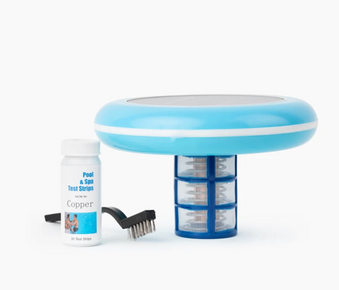
Designing for maintenance transforms pool ownership from a persistent chore into occasional monitoring by embedding accessibility, serviceability, and cleaning efficiency into the pool's very architecture. This philosophy, what pool designers term "maintenance by design," recognizes that the physical characteristics of a pool determine 80% of its maintenance requirements before the first swimmer ever enters the water. Traditional pools often prioritize aesthetics and initial cost over long-term usability, resulting in beautiful but burdensome designs: equipment hidden in inaccessible locations, surfaces that trap debris, and layouts that require specialized tools for basic cleaning. Modern maintenance-focused design reverses this equation, creating pools where every element from equipment placement to surface transitions to circulation patterns facilitates rather than hinders routine care. Integrating systems such as a solar pool ionizer at the design stage further supports this goal by providing continuous, low-maintenance sanitation that reduces reliance on reactive chemical treatments. The cumulative effect is profound: pools designed with maintenance in mind require 40–60% less weekly care time, experience fewer water quality emergencies, and maintain more consistent chemistry because problems are addressed before they escalate. This approach doesn't just make pools easier to clean; it makes them inherently cleaner, creating aquatic environments that naturally resist the accumulation and stagnation that demand constant chemical correction.
Equipment Accessibility and Service-Oriented Layouts
Equipment accessibility represents the cornerstone of maintenance-focused design, transforming equipment areas from afterthoughts into purpose-planned service centers. Traditional installations often tuck equipment into cramped corners or buried vaults where basic tasks like filter cleaning or chemical testing become difficult, discouraging proper maintenance and leading to deferred care that eventually causes water quality problems. Modern design follows what service engineers call the "three-foot rule": all equipment must be accessible from at least three sides with a minimum of three feet clearance, allowing tools to be used and parts to be removed without contortion or compromise. Equipment pads are positioned relative to house access and pool location to minimize hose runs while maintaining safe chemical handling distances. Piping employs union connections at every major component, enabling quick removal without cutting. Electrical panels include 20% spare circuit capacity for future upgrades and are positioned at eye level with proper labeling. Even storage receives dedicated planning: chemical lockers with proper ventilation, shelf space for test kits and tools, and hose reels that prevent tangling. This service-oriented approach ensures that maintenance whether daily testing or annual service becomes a straightforward task rather than an obstacle course, increasing the likelihood it will be performed properly and consistently.
- Three-Foot Service Rule: Minimum clearance on three sides of all equipment for proper tool use and part removal
- Union Connection Standardization: Piping with removable connections at every major component for service without cutting
- Strategic Pad Positioning: Equipment located to minimize hose runs while maintaining safety and accessibility
- Dedicated Maintenance Storage: Chemical lockers, tool shelves, and hose management integrated into equipment area design
Surface Design and Cleaning Optimization
Pool surfaces designed for easy cleaning eliminate the niches and textures where debris accumulates and algae establishes, dramatically reducing both cleaning time and chemical demand. Traditional pools often feature aesthetic elements that become maintenance nightmares: intricate tile patterns with dozens of grout lines that trap dirt, decorative ledges that catch leaves, and rough aggregate finishes that require aggressive brushing. Modern maintenance-focused design employs what architects call "cleanability surfaces": radiused corners instead of sharp angles that trap debris, monolithic finishes without excessive grout lines, and gradual transitions between pool areas that allow automatic cleaners to pass unimpeded. Waterline tile, while attractive, is minimized or replaced with ceramic glaze finishes that provide a cleanable transition without the maintenance of hundreds of grout lines. Bench and step designs incorporate slight slopes that encourage debris to slide toward main drains rather than collecting. Even coping selection considers maintenance: cantilevered concrete with integral drainage channels prevents deck water from washing dirt into the pool. These surface decisions might seem minor individually, but collectively they reduce weekly cleaning time by 50-70% while preventing the organic accumulation that fuels algae growth and consumes sanitizers.
- Radiused Geometry: Curved corners and gradual transitions that prevent debris accumulation and allow cleaner passage
- Monolithic Surfaces: Minimized grout lines and seamless transitions that eliminate dirt-trapping crevices
- Self-Cleaning Slopes: Bench and step designs with slight inclines that direct debris toward drains
- Integrated Drainage: Coping systems that prevent deck runoff from introducing contaminants
Circulation-Enhanced Cleaning and Debris Management
Maintenance-focused circulation design goes beyond basic water movement to create hydraulic patterns that actively assist in cleaning and debris management. Traditional circulation often moves water but doesn't necessarily direct debris toward removal points, resulting in manual netting and vacuuming as primary cleaning methods. Modern designs incorporate what hydraulic engineers call "directed debris pathways": return jets angled to create currents that sweep surface debris toward skimmers and push bottom particles toward main drains. Floor returns are positioned to prevent dead spots where dirt settles, particularly behind steps and in corners. Skimmer placement follows wind patterns and surface current analysis to ensure they're positioned where debris naturally collects. Some advanced systems include dedicated cleaning circuits with higher velocity flows during designated cleaning cycles. For larger pools, in-floor cleaning systems are integrated from design inception rather than added later, with pop-up heads positioned according to computational fluid dynamics analysis. This hydraulic assistance transforms cleaning from constant manual labor to occasional verification, with the pool's own circulation doing much of the work automatically between more thorough cleanings.
- Directed Debris Pathways: Return currents specifically designed to guide contaminants toward skimmers and drains
- Dead Spot Prevention: Strategic return placement that eliminates areas where debris naturally settles
- Wind-Pattern Integration: Skimmer placement based on analysis of how wind moves surface debris
- Integrated Cleaning Systems: In-floor or wall-mounted cleaning systems designed as integral components rather than retrofits
Monitoring and Testing Integration
Easier maintenance extends beyond physical cleaning to include simplified monitoring and testing, with design features that make water chemistry management intuitive rather than burdensome. Traditional pools often relegate testing to an afterthought, with sample collection requiring trips to the deepest part and equipment rooms located far from water sources for rinsing. Modern maintenance-focused design incorporates what water quality specialists term "testing stations": dedicated areas with proper lighting, level surfaces for test kits, nearby fresh water for rinsing, and storage for reagents. Sample points are positioned at both shallow and deep ends with easy access not just at the pool edge but sometimes as dedicated spigots in the equipment area plumbed from the main circulation line. Chemical feeders are positioned with clear visibility of settings and easy access for refilling. Automation systems include remote monitoring capabilities that send alerts to phones or computers, reducing the need for physical checks. Even lighting is considered: equipment areas with proper illumination for reading test colors accurately, and pool areas with lighting that makes visual inspection of maximizing pool water clarity meaningful. These integrated monitoring features transform water testing from a chore to be avoided to a quick verification that takes minutes rather than complicating the entire maintenance routine.
- Dedicated Testing Stations: Purpose-designed areas with proper lighting, surfaces, water access, and storage
- Strategic Sample Points: Easy-access locations at multiple depths for representative water sampling
- Visible and Accessible Feeders: Chemical equipment positioned for easy reading, adjustment, and refilling
- Remote Monitoring Integration: Automation systems that provide water quality data without physical poolside testing
Designing for easy maintenance creates pools that care for themselves and their owners simultaneously, establishing a relationship where enjoyment predominates over obligation. Through equipment layouts that make service straightforward, surfaces that resist rather than collect contamination, circulation that actively assists in cleaning, and monitoring systems that simplify water chemistry management, maintenance-focused design transforms pool ownership from a burden to a pleasure. The benefits compound over time: easier maintenance means more consistent maintenance, which leads to more stable water chemistry, which reduces equipment wear, which decreases repair frequency, which further simplifies maintenance. This virtuous cycle creates what experienced pool professionals recognize as the hallmark of intelligent design: a pool that looks better longer, performs better consistently, and costs less to maintain annually. Perhaps most importantly, it creates more swimming and less working, returning the pool to its essential purpose as a place of leisure and enjoyment rather than a source of constant demands.

7. Final Thoughts: Building Pools That Stay Balanced
Modern pool design has evolved from creating beautiful vessels for water to engineering sophisticated aquatic ecosystems that actively support their own equilibrium. This represents a fundamental paradigm shift in how we conceive of pools no longer as aesthetic objects requiring constant chemical intervention, but as intelligently integrated systems where water stability emerges naturally from thoughtful design. The principles explored throughout this guide prioritizing circulation, selecting compatible materials, integrating sanitation systems, and designing for maintenance are not isolated strategies but interconnected components of a holistic approach to aquatic design. When executed collectively, they create what industry professionals term "inherently balanced pools": aquatic environments where water tends toward rather than away from ideal conditions, where maintenance becomes monitoring rather than correction, and where the swimming experience feels consistently inviting rather than variably compromised by chemical management.
The journey from concept to completion for such pools requires a different kind of collaboration—one where designers, engineers, builders, and future owners align around long-term performance rather than merely initial appearance. This collaborative process begins with understanding that every design decision has chemical consequences: the shape determines circulation patterns, materials influence pH behavior, equipment placement affects maintenance frequency, and sanitation integration dictates chemical demand. By making these decisions consciously rather than conventionally, we create pools that don't just contain water but cultivate it, establishing environments where balance is the default state rather than a temporary achievement between chemical additions. The result is crystal clear pool water maintained through intelligent design rather than constant correction. This approach acknowledges a fundamental truth that experienced pool professionals have long understood: the best-maintained pools are those designed to be maintainable from the beginning.
Modern pool design principles focus on prevention rather than correction. By prioritizing circulation, material compatibility, integrated sanitation, and ease of maintenance, pools can maintain stable water conditions with fewer adjustments.
A well-designed pool not only looks better it performs better, providing consistent, comfortable water that enhances the swimming experience season after season.