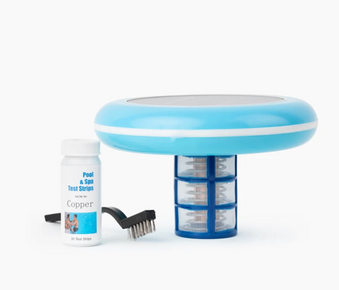
For many pool owners, keeping the water clean can feel like a never-ending cycle of testing, dosing, and correcting chemical levels. One week the pool looks perfect, and the next it's cloudy, irritating, or on the edge of turning green. Constant chemical adjustments not only consume time and money, but they can also create unstable water conditions that affect swimmer comfort and equipment longevity.
Fortunately, modern pool care no longer relies solely on frequent chemical intervention. By focusing on balanced water chemistry, efficient circulation, and mineral-based sanitation systems, it's possible to maintain a consistently clean pool with far fewer chemical corrections. The result is clearer water, simpler maintenance, and a more enjoyable swimming experience.
This evolved approach to pool maintenance represents a fundamental shift from reactive chemical management to proactive system optimization. Instead of constantly battling visible symptoms like algae blooms and cloudiness, pool owners can now address the underlying causes of water instability through integrated solutions that work continuously in the background. By establishing and maintaining stable water conditions, supporting efficient mechanical systems, and incorporating gentle mineral protection, the need for frequent chemical adjustments diminishes dramatically, transforming pool care from a weekly chore into a seasonal partnership with natural processes.
Table of Contents
- Why Traditional Pool Care Often Requires Frequent Adjustments
- The Importance of Water Stability Over Chemical Quantity
- How Mineral-Based Sanitation Supports Consistent Cleanliness
- Preventing Algae and Cloudy Water Before They Appear
- Circulation and Filtration as the Foundation of Clean Water
- Low-Intervention Maintenance Habits That Actually Work
- Final Thoughts: A Smarter Way to Keep Pool Water Clean
1. Why Traditional Pool Care Often Requires Frequent Adjustments
Smarter pool sanitation operates on what aquatic chemists describe as the "peak and valley" principle a cycle of chemical addition followed by rapid degradation that creates inherent instability in the aquatic environment. This approach centers primarily around chlorine-based oxidizers that work through aggressive chemical reactions to destroy organic contaminants, kill microorganisms, and break down swimmer waste. While chlorine's effectiveness against pathogens is well-established, its operational characteristics create a maintenance pattern characterized by constant monitoring, frequent corrections, and escalating chemical usage as pools age and accumulate total dissolved solids. The fundamental challenge lies in chlorine's dual nature as both an essential sanitizer and a fundamentally unstable compound in the aquatic environment a characteristic that makes traditional pool care feel less like maintenance and more like chemical juggling that requires constant attention to prevent the entire system from tipping out of balance.
The Chemical Degradation Cycle
Traditional pool sanitation relies heavily on chlorine and other fast-acting chemicals that operate through what environmental engineers term "first-order degradation kinetics" meaning their effectiveness diminishes predictably over time regardless of contamination levels. Ultraviolet radiation from sunlight accelerates chlorine breakdown through photolysis, with studies showing unprotected chlorine can lose up to 90% of its effectiveness within just two hours of direct sun exposure. Heat further accelerates this degradation, with each 10°F temperature increase potentially doubling chlorine consumption rates. Swimmer load introduces organic nitrogen compounds from sweat, urine, and skin cells that combine with chlorine to form chloramines less effective sanitizers that create strong odors and eye irritation while consuming additional chlorine in the oxidation process. These combined factors create what pool professionals call the "chemical treadmill" a constant cycle of addition and degradation that leaves water vulnerable to imbalance during the inevitable gaps between treatments.
- Photolytic Degradation: Sunlight breaks down chlorine molecules through UV radiation exposure
- Thermal Acceleration: Higher water temperatures increase chemical reaction and evaporation rates
- Organic Consumption: Swimmer contaminants consume chlorine through oxidation reactions
- Chemical Conversion: Chlorine transforms into less effective, more irritating chloramine compounds
The Instability Domino Effect
As a result, pool water can shift out of balance within days or even hours requiring repeated adjustments that often create secondary problems while solving primary ones. This instability follows predictable patterns: chlorine addition high pool pH balance, requiring acid addition that lowers total alkalinity, which then requires bicarbonate addition that affects calcium solubility, potentially leading to scaling that requires sequestering agents. Each correction affects multiple parameters simultaneously, creating what mathematicians call a "multivariable optimization problem" where adjusting one factor inevitably impacts others. For residential pool owners without professional testing equipment or chemical training, this complexity often results in overcorrection adding too much of one chemical, then compensating with too much of another, creating oscillations rather than stability. The result is water that never truly reaches equilibrium, always leaning toward the next correction, always vulnerable to the next visible problem.
- Cascading Corrections: Each chemical adjustment triggers need for additional adjustments
- Parameter Interdependence: pH, alkalinity, and chlorine levels affect each other simultaneously
- Overcorrection Patterns: Lack of precision leads to alternating chemical excesses and deficiencies
- Equilibrium Elusiveness: Constant adjustments prevent water from reaching stable balance
The Comfort and Safety Compromise
Frequent chemical swings increase the risk of irritation, strong odors, and inconsistent water clarity while creating conditions that can actually compromise rather than enhance safety. When chlorine levels swing from high to low, they create alternating periods of chemical aggression and microbial vulnerability water that burns eyes and dries skin one day, then potentially harbors pathogens the next. These fluctuations particularly affect vulnerable populations: children experience stronger reactions due to their higher skin permeability and developing physiological systems; elderly swimmers with thinner skin and reduced detoxification capacity absorb more chemicals; individuals with respiratory conditions react to the volatile compounds created during chlorine breakdown. The "pool smell" that many associate with swimming isn't actually chlorine it's chloramines, chemical byproducts that indicate the water is actively struggling to break down contaminants. This odor represents not cleanliness but chemical stress, signaling that the sanitation system is overwhelmed and operating inefficiently.
- Oscillating Extremes: Alternating between chemical excess and deficiency
- Vulnerable Periods: Gaps in protection allow microbial establishment between treatments
- Sensory Indicators: Strong odors signal chemical inefficiency rather than effectiveness
- Population Vulnerability: Children, elderly, and sensitive individuals experience disproportionate effects
The Reactive Maintenance Trap
Over time, this approach becomes reactive rather than preventive, making pool maintenance more stressful than necessary as owners transition from enjoying their pool to managing its problems. Reactive maintenance follows a predictable pattern: visible issue (cloudiness, algae, irritation) triggers testing, testing reveals chemical imbalance, correction addresses immediate problem but often creates new issues, temporary improvement occurs, then the cycle repeats. This pattern consumes disproportionate time and resources while delivering diminishing returns as pools accumulate total dissolved solids from repeated chemical additions. The psychological impact is significant: pool ownership shifts from a source of relaxation to a source of anxiety, with each swimming season beginning with optimism but often devolving into chemical battles. The financial cost compounds as well emergency treatments, damaged equipment from corrosive conditions, and wasted chemicals from over-adjustment transform what should be reasonable maintenance into significant expense.
- Problem-Response Cycle: Waiting for visible issues before taking action
- Resource Intensity: Constant adjustments require more time, chemicals, and attention
- Psychological Burden: Maintenance becomes a source of stress rather than simple care
- Financial Accumulation: Emergency treatments and equipment damage increase long-term costs
The Path to Alternative Approaches
- Inherent Limitations: Chemical instability creates unavoidable maintenance patterns
- Philosophical Shift: Moving from chemical management to system optimization
- Alternative Principles: Continuous protection, biological action, and equilibrium focus
- Sustainable Solutions: Methods that reduce rather than increase maintenance demands
This comprehensive understanding of traditional pool care's limitations provides the foundation for exploring more effective approaches methods that don't just temporarily solve problems but prevent them from occurring, that don't require constant adjustment but maintain consistent conditions, and that transform pool ownership from chemical management to aquatic stewardship. By recognizing the inherent instability of traditional approaches, pool owners can make informed decisions about transitioning toward systems that offer not just different chemicals, but different operational paradigms paradigms where clean, clear, comfortable water emerges naturally from stable conditions rather than aggressively from constant correction.

2. The Importance of Water Stability Over Chemical Quantity
The pursuit of clean pool water through maximum chemical application represents a fundamental misunderstanding of aquatic chemistry one that often leads to diminishing returns, increased problems, and frustrated pool owners. Clean pool water isn't achieved by adding more chemicals but rather by cultivating and maintaining chemical equilibrium, a state where water parameters exist in harmonious balance that naturally resists contamination, pool equipment, and supports swimmer comfort. This stability-based approach recognizes that water quality follows principles more akin to biological ecosystems than industrial processes, where subtle balance creates resilience while aggressive intervention often creates fragility. When pH, alkalinity, and sanitizer levels remain consistently within their optimal ranges, they form what chemists call a "buffered system" an aquatic environment capable of resisting changes from external factors like rainfall, swimmer load, or temperature fluctuations while naturally suppressing the conditions that allow algae and bacteria to thrive.
The Chemistry of Equilibrium
When pH, alkalinity, and sanitizer levels remain consistent, the pool naturally resists algae growth and contamination through multiple interconnected mechanisms that create what microbiologists term an "unfavorable growth environment." Stable pH between 7.4 and 7.6 maintains the ionization state of sanitizers at their most effective forms while preventing the conditions that either promote microbial growth or accelerate chemical degradation. Consistent alkalinity between 80-120 ppm acts as the aquatic equivalent of a chemical shock absorber, resisting rapid pH changes when acidic contaminants enter the water. Balanced sanitizer levels, when maintained steadily rather than in peaks and valleys, provide continuous protection without creating the high-concentration periods that damage equipment and irritate swimmers or the low-concentration windows that allow microbial establishment. This chemical equilibrium creates conditions where contaminants are neutralized efficiently, surfaces remain protected, and water maintains clarity not through aggressive treatment but through consistent maintenance of optimal conditions.
- pH Precision: 7.4-7.6 range maximizes sanitizer effectiveness and swimmer comfort
- Alkalinity Buffering: 80-120 ppm resists chemical fluctuations from external factors
- Sanitizer Consistency: Steady levels prevent microbial adaptation and equipment stress
- Systemic Resistance: Balanced conditions create inherent protection against contamination
Optimizing Sanitizer Performance
Understanding pool water chemistry dramatically improves sanitizer efficiency by creating conditions where disinfectants work at their maximum potential without unnecessary chemical competition or degradation. In balanced water, chlorine exists predominantly as hypochlorous acid (HOCl), the most effective form for microbial control, rather than the less effective hypochlorite ion (OCl-) that predominates at higher pH levels. This optimal ionization state means lower chlorine concentrations can achieve the same sanitizing power that higher levels provide in unbalanced water. Furthermore, stable conditions prevent the rapid chlorine degradation that occurs when pH fluctuates, when total dissolved solids accumulate, or when water becomes either scaling or corrosive. For mineral-based systems like solar ionizers, stable water chemistry ensures copper ions remain soluble and biologically active rather than precipitating out as ineffective or staining compounds. This efficiency gain means cleaner water with less chemical input a fundamental shift from quantity-based to quality-based sanitation.
- Ionization Optimization: Balanced pH maintains sanitizers in most effective forms
- Degradation Reduction: Stable conditions minimize chemical breakdown and waste
- Mineral Solubility: Proper chemistry keeps protective ions in solution and active
- Concentration Efficiency: Lower chemical levels achieve better results in balanced water
Predictable Clarity Through Prevention
Stable water chemistry reduces sudden clarity issues by addressing their underlying causes before they manifest as visible problems. cloudy pool water typically results from three preventable conditions: calcium precipitation when water becomes scaling, microbial blooms when sanitation becomes inconsistent, or fine particle accumulation when filtration becomes inefficient. Balanced water prevents all three simultaneously: proper calcium saturation prevents precipitation events, consistent sanitizer levels prevent microbial population explosions, and stable pH and alkalinity create conditions where filtration operates at peak efficiency. This preventive approach transforms clarity from something that must be constantly restored to something that is consistently maintained, eliminating the weekend emergencies where pools turn cloudy before gatherings and the frustrating cycles of clarifier treatments that provide temporary solutions to systemic problems. For families, this means water that remains reliably clear regardless of usage patterns or weather conditions.
- Precipitation Prevention: Balanced calcium levels prevent scaling cloudiness
- Microbial Control: Consistent sanitation prevents bloom-related cloudiness
- Filtration Support: Stable water chemistry enhances particle removal efficiency
- Emergency Elimination: Prevents sudden clarity issues before they require intervention
Surface and Equipment Preservation
Water stability actively protects pool surfaces and equipment by maintaining conditions that are neither corrosive nor scaling the ideal state engineers describe as "water at equilibrium with its environment." Corrosive water (with low pH, low alkalinity, or low calcium hardness) gradually dissolves plaster finishes, etches natural stone, and accelerates metal component deterioration through electrochemical processes. Scaling water (with high pH, high alkalinity, or high calcium) deposits mineral layers that reduce heat transfer efficiency, constrict water flow, and create rough surfaces that harbor bacteria. Balanced water avoids both extremes, preserving the substantial investment pool owners make in their aquatic environment. This protection extends beyond surfaces to mechanical systems: pumps last longer without corrosion, filters operate more efficiently without scaling, and heaters maintain efficiency without mineral buildup. The financial implications are significant proper water balance can extend equipment life by years and prevent costly surface repairs.
- Corrosion Prevention: Balanced water avoids acidic conditions that damage surfaces
- Scale Inhibition: Proper chemistry prevents mineral deposition on equipment
- Surface Integrity: Preserves plaster, tile, and natural stone finishes
- Equipment Longevity: Extends lifespan of pumps, filters, heaters, and automated systems
The Comfortable Swimming Environment
Perhaps the most immediate benefit of water stability is how it creates a more comfortable swimming environment through physiological compatibility rather than chemical dominance. Balanced water aligns with the human body's natural chemistry: pH matches that of human tears and skin, minimizing eye irritation; alkalinity supports stable conditions that don't trigger skin sensitivity responses; consistent sanitizer levels prevent the chloramine formation that causes respiratory discomfort. This compatibility transforms the swimming experience, particularly for families with children, elderly members, or sensitive individuals who often struggle with traditional pool environments. Water feels softer, smells fresher, and causes none of the post-swim discomfort that many associate with pool use. This comfort encourages more frequent swimming, longer sessions, and greater overall enjoyment of the pool investment transforming it from occasional entertainment to integral family lifestyle.
- Physiological Alignment: Balanced water matches human chemistry for reduced irritation
- Sensory Improvement: Eliminates chemical odors and harsh water feel
- Inclusive Accessibility: Creates environment comfortable for all family members
- Enhanced Enjoyment: Comfort encourages more frequent and extended swimming
These interconnected benefits demonstrate that stable water chemistry creates multiple positive outcomes simultaneously:
- Improves sanitizer efficiency by maintaining optimal chemical conditions that maximize disinfection power while minimizing consumption
- Reduces sudden clarity issues through preventive balance that eliminates the conditions causing cloudiness before they develop
- Protects pool surfaces and equipment by avoiding both corrosive and scaling conditions that cause gradual deterioration
- Creates a more comfortable swimming environment through water that aligns with human physiology rather than challenging it
The Philosophy of Predictable Balance
The ultimate goal of water stability isn't merely the absence of problems but the presence of predictable balance water quality becomes a reliable constant rather than a variable requiring constant correction. This philosophy represents a fundamental shift from reactive maintenance (waiting for problems, then treating them) to predictive stewardship (maintaining conditions that prevent problems). Predictive balance means understanding that small, regular adjustments maintain equilibrium while large, infrequent corrections disrupt it. It recognizes that water chemistry follows natural principles that reward consistency and punish extremes. It values system thinking over parameter management, recognizing that pH, alkalinity, and sanitizers don't operate independently but as an integrated chemical matrix. For pool owners, this philosophy transforms maintenance from a chore of constant correction to an art of gentle guidance—guiding water toward its natural state of balance where cleanliness, clarity, and comfort emerge as natural consequences rather than hard-won achievements.
- Predictive Maintenance: Small adjustments prevent large corrections
- System Thinking: Understanding chemical parameters as integrated matrix
- Natural Alignment: Working with water's tendencies rather than against them
- Artful Stewardship: Transforming maintenance from chore to skilled practice
The goal is predictable balance, not constant correction a fundamental reorientation of pool maintenance philosophy that recognizes the most effective care doesn't involve fighting water's natural chemistry but rather guiding it toward stable equilibrium. This approach delivers cleaner water with less chemical input, clearer water with less emergency treatment, longer-lasting equipment with less repair, and more enjoyable swimming with less discomfort. It represents not just a different way to maintain pools but a better way to experience them transforming what is often a source of frustration into a source of reliable pleasure, and what is frequently chemical management into aquatic stewardship that honors both the water and the people who enjoy it.

3. How Mineral-Based Sanitation Supports Consistent Cleanliness
Mineral-based sanitation represents a paradigm shift in pool maintenance, moving from the temporary chemical dominance of traditional methods to the continuous biological management of modern systems. This approach operates on fundamentally different principles than chlorine-based sanitation rather than oxidizing contaminants through aggressive chemical reactions, mineral systems create an environment where microorganisms cannot establish themselves through gentle but persistent interference with their biological processes. Systems like solar pool ionizers harness natural elements and processes to deliver protection that's both more consistent and more compatible with human physiology than traditional chemical approaches. This methodology transforms pool maintenance from a cycle of treatment and degradation to a state of continuous protection where water quality remains stable not because problems are constantly being solved, but because they're prevented from occurring in the first place.
The Science of Copper Ion Action
Mineral-based systems, such as solar pool ionizers, introduce copper ions into the water that continuously inhibit algae and bacterial growth through sophisticated biochemical mechanisms that operate at the cellular level while remaining completely safe for human exposure. These positively charged copper ions work through multiple simultaneous pathways: they penetrate microbial cell walls and bind to enzymes critical for photosynthesis and respiration, disrupt electron transport chains essential for energy production, interfere with DNA replication processes necessary for reproduction, and compromise cell membrane integrity that maintains cellular function. Unlike broad-spectrum oxidizers like chlorine that damage all organic material indiscriminately, copper ions exhibit what microbiologists call "selective toxicity" they interfere with specific biochemical pathways in microorganisms while having minimal effect on human cells. This targeted action creates what's known as a "microbiostatic environment" where algae and bacteria cannot proliferate, yet the water remains gentle and comfortable for swimmers of all ages and sensitivities.
- Cellular Penetration: Copper ions pass through microbial cell membranes
- Enzyme Inhibition: Bind to critical enzymes in photosynthesis and respiration pathways
- Reproductive Disruption: Interfere with DNA replication and cellular division
- Selective Action: Affect microorganisms while remaining safe for human exposure
The Persistence Advantage
Unlike traditional chemicals that dissipate quickly due to sunlight exposure, heat degradation, and organic consumption, mineral ions remain active for longer periods, providing ongoing protection that creates what aquatic chemists term "steady-state sanitation." Chlorine undergoes rapid photolytic degradation when exposed to UV radiation, with unprotected chlorine losing most of its effectiveness within hours. Mineral ions, in contrast, maintain their protective properties for days or even weeks, circulating through the water and gradually being replenished by the solar ionizer's continuous operation. This persistence eliminates the vulnerable periods that characterize traditional pool maintenance those gaps between chemical additions when sanitizer levels drop below effective concentrations and algae or bacteria can establish footholds. The continuous presence of protective ions means microorganisms never get the "break" they need to develop into visible problems, transforming sanitation from intermittent coverage to constant protection.
- Photolytic Stability: Copper ions don't degrade significantly in sunlight
- Extended Activity: Remain effective for extended periods without replenishment
- Vulnerability Elimination: Continuous protection prevents microbial establishment windows
- Steady-State Operation: Maintains consistent protection levels rather than peaks and valleys
The Chemical Reduction Benefit
This continuous sanitation allows pool owners to maintain cleanliness with significantly Lower chlorine levels and fewer manual adjustments are achieved by creating what sanitation engineers call “overlapping protection systems.” The mineral ions provide continuous background protection against algae and bacteria, handling the persistent microbial pressure that normally consumes chlorine. This allows chlorine to be maintained at much lower concentrations (typically 0.5–1.5 ppm instead of the traditional 2–4 ppm), reserved primarily for oxidizing organic contaminants introduced by swimmers rather than serving as the primary defense against microbial growth. The division of labor between minerals and chlorine creates a more efficient, more stable system: minerals prevent biological problems before they start, chlorine handles immediate oxidation needs, and together they provide more reliable protection than either could alone. Complemented with appropriate pool cleaning solutions for surface and filter maintenance, the result is dramatically reduced chemical consumption, fewer pH fluctuations, and elimination of chloramine formation that occurs when chlorine struggles to handle excessive organic loads.
- Chlorine Reduction: Mineral background protection allows lower chlorine levels
- Specialized Functions: Minerals handle microbial prevention, chlorine handles oxidation
- System Efficiency: Overlapping protection creates more reliable sanitation
- Byproduct Reduction: Lower chlorine use means fewer irritating chloramines
Clarity Through Prevention
The pool stays clear without relying on frequent shocks or emergency treatments because mineral-based systems address the root causes of cloudiness and algae before they become visible problems. Traditional maintenance often follows what pool professionals call the "green-to-clean cycle" waiting until algae becomes visible, then applying aggressive chemical treatments that clear the water temporarily but don't prevent recurrence. Mineral systems reverse this pattern through continuous prevention: copper ions prevent algae establishment at the microscopic level, eliminating the green water episodes that require emergency shocking. Additionally, the positive charge of copper ions causes fine suspended particles to clump together (a process called flocculation) into larger aggregates that filter out efficiently, preventing the gradual cloudiness that often develops between traditional treatments. This preventative approach means clarity becomes the default state rather than an achievement, maintained through gentle continuous action rather than aggressive periodic intervention.
- Algae Prevention: Stops growth at microscopic stage before visibility
- Natural Clarification: Copper ions cause particle aggregation for easier filtration
- Emergency Elimination: Prevents conditions that require shocking treatments
- Default Clarity: Clear water becomes maintained state rather than restored condition
The Solar-Powered Advantage
Solar-powered mineral systems add another layer of consistency through their self-regulating operation that naturally aligns with environmental conditions. Unlike electrically powered systems that operate at constant rates regardless of need, solar ionizers increase production during bright, sunny conditions when algae growth potential is highest (due to increased photosynthesis opportunity) and decrease production during cloudy periods when risk is lower. This demand-responsive operation creates what engineers call "intelligent protection" sanitation that automatically adjusts to match environmental risk factors. The solar design also ensures complete energy independence, eliminating operating costs and making the system functional even during power outages as long as sunlight is available. For pool owners, this means protection that's not only continuous but also intelligent adapting to changing conditions without manual adjustment, providing maximum protection when risk is highest, and maintaining baseline protection regardless of external factors.
- Demand-Responsive: Production increases during high-risk conditions
- Environmental Alignment: More protection when sunlight (and algae risk) is highest
- Energy Independence: Solar operation eliminates electricity costs and grid dependency
- Intelligent Adaptation: Automatically adjusts to changing conditions without input
The Maintenance Simplification
Beyond the water quality benefits, mineral-based sanitation dramatically simplifies pool maintenance by reducing both the frequency and complexity of required interventions. Traditional chemical management involves constant testing, calculating dosages, handling hazardous materials, and timing treatments around swimming schedules. Mineral systems, particularly solar-powered ones, operate autonomously once properly installed and balanced, requiring only occasional electrode cleaning and routine water testing. The reduction in chemical adjustments means fewer containers to store, less chemical handling risk, and elimination of the guesswork that often accompanies traditional pool chemistry. This simplification is particularly valuable for families with busy schedules, for vacation homeowners who can't maintain weekly chemical routines, and for anyone who wants to spend more time enjoying their pool and less time maintaining it. The system's consistency transforms modern pool care practices from a weekly chore to occasional oversight, freeing owners to focus on enjoyment rather than maintenance.
- Autonomous Operation: Once balanced, systems require minimal intervention
- Chemical Handling Reduction: Fewer products mean less storage and handling
- Schedule Freedom: Not tied to weekly chemical addition routines
- Enjoyment Focus: Transforms maintenance from chore to simple oversight
This comprehensive approach to consistent cleanliness through mineral-based sanitation represents more than just an alternative to traditional chemicals it's a fundamentally different philosophy of pool care. Rather than constantly battling water's natural tendencies with aggressive chemicals, mineral systems work with natural processes to create conditions where clean, clear water becomes the default state. Rather than oscillating between treatment and vulnerability, they provide continuous protection that prevents problems before they start. Rather than requiring constant human intervention, they operate autonomously to maintain water quality. For pool owners seeking both superior results and simpler maintenance, mineral-based systems offer a pathway to consistent cleanliness that aligns with modern values of sustainability, simplicity, and smart technology transforming pool ownership from chemical management to natural enjoyment.

4. Preventing Algae and Cloudy Water Before They Appear
The Microscopic Origins of Visible Problems
Most pool problems start small and worsen when left unchecked, following predictable biological and chemical pathways that pool professionals term the "escalation cascade." Algae typically begins as microscopic spores that enter pools through wind, rain, or contaminated equipment each spore capable of dividing exponentially under favorable conditions to create visible blooms within 24-48 hours. Cloudiness originates as fine suspended particles measuring mere microns in diameter that individually scatter light but remain invisible until they accumulate to critical concentrations. Both issues share a common characteristic: by the time they become visible to the naked eye, they've already progressed through multiple stages of development that require significantly more intervention to reverse than they would have required to prevent. This time-delayed visibility creates what maintenance experts call the "prevention window" the period between when conditions become favorable for problem development and when problems become visibly apparent. Effective pool maintenance focuses on controlling conditions during this window rather than responding to visibility after it closes.
- Exponential Growth: Algae spores multiply rapidly once conditions become favorable
- Particle Accumulation: Cloudiness develops gradually as suspended particles concentrate
- Delayed Visibility: Problems become visible only after significant development
- Prevention Window: Critical period between favorable conditions and visible problems
The Root Causes of Water Quality Issues
Algae blooms and cloudy water are often the result of inconsistent sanitation or circulation system failures that create the specific conditions microorganisms and particulates need to accumulate beyond the water's natural self-cleaning capacity. Inconsistent sanitation creates what microbiologists call "selective pressure windows" periods when sanitizer levels drop low enough to allow algae and bacteria to establish colonies but not so low that all microorganisms are eliminated. These windows typically occur between chemical additions, during equipment malfunctions, or after heavy swimmer loads that consume sanitizers faster than they can be replenished. Poor circulation creates "dead zones" areas of minimal water movement where contaminants accumulate, sanitizers don't reach effectively, and temperature variations create microclimates favorable to microbial growth. Together, these conditions form what pool professionals term the "problem triangle": contamination sources (algae spores, organic debris), favorable environment (warmth, nutrients, sunlight), and inadequate control (insufficient sanitation or circulation). Preventative maintenance addresses all three points simultaneously.
- Sanitation Gaps: Periods when protective chemical levels drop below effectiveness
- Circulation Dead Zones: Areas where water movement is insufficient for contaminant removal
- Problem Triangle: Contamination sources, favorable environment, and inadequate control
- Microclimate Formation: Stagnant areas develop conditions distinct from main pool body
The Preventative Power of Mineral Consistency
- Continuous Pressure: Steady mineral levels provide uninterrupted protection
- Vulnerability Elimination: No periods when conditions allow microbial establishment
- Chemistry Support: Balanced water maximizes mineral effectiveness
- Early Suppression: Problems are controlled at microscopic stages
The Circulation-Prevention Connection
Effective prevention requires more than just chemical consistency it demands hydraulic efficiency that ensures protective minerals reach every part of the pool while contaminants are continuously removed. Proper circulation serves as the distribution network for preventative systems, carrying copper ions to corners, behind ladders, under steps, and other areas where water movement is naturally reduced. Adequate pump run time (typically 8-12 hours daily during swimming season) ensures complete water turnover, preventing the stagnation that allows localized problem development. Strategic return jet positioning creates circular currents that eliminate dead zones where algae typically establishes first. Pool filtration system complements this circulation by removing the organic debris that would otherwise provide nutrients for microbial growth and the fine particles that contribute to cloudiness. This hydraulic support transforms prevention from a chemical concept to a systemic reality, ensuring that protective conditions exist uniformly throughout the aquatic environment rather than just in areas of natural water movement.
- Mineral Distribution: Circulation carries protective ions to all pool areas
- Stagnation Prevention: Adequate water movement eliminates dead zones
- Contaminant Removal: Filtration eliminates problem precursors before they accumulate
- Uniform Protection: Hydraulic efficiency ensures consistent conditions throughout pool
The Treatment Reduction Benefit
Proactive prevention dramatically reduces the need for aggressive chemical treatments by addressing problems at their origins rather than their endpoints. Traditional pool maintenance often follows what's called the "chemical escalation ladder" starting with basic sanitizers when problems appear mild, progressing to algaecides when green tinges develop, advancing to shock treatments when blooms become established, and sometimes resorting to drainage and refilling when problems become severe. Each step up this ladder involves stronger chemicals, higher costs, greater swimmer discomfort, and more equipment stress. Preventative systems bypass this escalation entirely by maintaining conditions where problems cannot develop to the point of requiring treatment. This approach eliminates not only the visible problems but also their associated treatments: no weekly algaecides, no monthly shocking rituals, no emergency clarifiers, and none of the post-treatment waiting periods that disrupt swimming enjoyment.
- Chemical Escalation Avoidance: Prevents progression from minor to major treatments
- Cost Reduction: Eliminates expense of emergency chemicals and professional services
- Swimmer Comfort: No post-treatment waiting periods or chemical discomfort
- Equipment Protection: Avoids the stress that aggressive treatments place on pool systems
Season-Long Clarity Through Consistency
This comprehensive preventative approach helps maintain water clarity throughout the season by creating what pool professionals term "inherent stability" water conditions that naturally resist change and quickly return to balance when perturbed. Rather than achieving clarity through aggressive treatments that provide temporary results, preventative systems maintain clarity through continuous gentle action that prevents the conditions causing cloudiness. The copper ions not only inhibit algae but also cause fine particles to clump together for more efficient filtration. Balanced chemistry prevents the calcium precipitation that causes scaling cloudiness. Proper circulation ensures even distribution of protective elements and efficient removal of contaminants. Together, these elements create water that remains clear not because problems are constantly being solved, but because the conditions for problems are constantly being prevented. This results in season-long clarity that requires minimal intervention water that looks freshly cleaned not just after treatment, but consistently throughout the swimming season.
- Inherent Stability: Water naturally resists changes that lead to cloudiness
- Multi-Mechanism Action: Minerals, chemistry, and circulation work together
- Continuous Clarity: Clear water becomes maintained state rather than restored condition
- Seasonal Consistency: Water remains clear from opening to closing without deterioration
The preventative approach to algae and cloudiness represents more than just a different maintenance technique it's a fundamentally different relationship with pool water. Rather than viewing the pool as something that must be constantly corrected, it views water as something that can be guided toward natural clarity. Rather than waiting for problems to announce themselves visibly, it addresses conditions before problems can develop. Rather than relying on aggressive interventions, it employs gentle continuous action. For families, this means pools that remain consistently inviting throughout the season, maintenance that feels more like stewardship than battle, and swimming that's never interrupted by emergency treatments or post-chemical waiting periods. It transforms pool ownership from reactive problem management to proactive enjoyment enhancement, ensuring that the water is always ready for the spontaneous moments of joy that make family pools so valuable.

5. Circulation and Filtration as the Foundation of Clean Water
The Hydraulic Distribution System
Moving water distributes sanitizers evenly throughout the pool volume, preventing the concentration gradients and localized deficiencies that plague poorly circulated systems and create what hydraulic engineers term "treatment shadows." In a perfectly circulated pool, every molecule of water passes through the treatment zone (where chemicals or minerals are introduced) and the filtration zone (where contaminants are removed) at regular intervals, creating what's known as "complete mixing kinetics." This uniform distribution is particularly crucial for mineral-based systems like solar ionizers, where copper ions must reach every surface and volume to provide comprehensive protection. Without adequate circulation, these ions concentrate near the ionizer while distant areas remain vulnerable, creating conditions where algae can establish in unprotected zones and eventually spread throughout the pool. Proper water movement ensures that protective elements don't merely exist in the water but reach everywhere they're needed, transforming spot protection into comprehensive coverage.
- Complete Mixing: Every water molecule receives equal treatment exposure
- Concentration Prevention: Eliminates localized highs and lows of protective elements
- Uniform Distribution: Protective chemicals and minerals reach all areas equally
- Comprehensive Coverage: Transforms spot protection into whole-pool defense
The Stagnation Prevention Mechanism
Effective circulation prevents stagnant areas that become breeding grounds for algae, bacteria, and biofilm formation what pool professionals often call "biological incubators." Stagnant water creates multiple problematic conditions: temperature stratification where surface layers become significantly warmer than deeper water, chemical stratification where sanitizer concentrations vary by depth, and particulate accumulation where debris settles rather than being carried to filters. These stagnant zones typically develop in pool corners, behind ladders, under steps, and in areas with poor return jet coverage. They become micro-environments with conditions distinct from the main pool body often warmer, with lower sanitizer levels, and higher nutrient concentrations from accumulated organic matter. By maintaining continuous water movement, circulation prevents these micro-environments from forming, ensuring consistent conditions throughout the pool and eliminating the protected niches where problems typically begin before spreading to other areas.
- Micro-Environment Prevention: Eliminates areas with distinct chemical and temperature conditions
- Thermal Stratification Avoidance: Prevents warm surface layers over cooler depths
- Chemical Uniformity: Maintains consistent sanitizer levels throughout water column
- Problem Containment: Prevents localized issues from becoming widespread problems
The Filtration Efficiency Connection
Proper circulation allows filters to remove debris efficiently by delivering contaminants to the filtration system rather than allowing them to settle or remain suspended indefinitely. Filters operate on what mechanical engineers call the "capture efficiency principle" their ability to remove particles depends on both the filter media's physical characteristics and the flow rate delivering particles to that media. Without adequate circulation, even the finest filter media operates at reduced efficiency because contaminants simply don't reach the filter in sufficient quantities. Proper flow ensures that suspended particles from visible debris like leaves and insects to microscopic contaminants like bacteria and algae spores are continuously delivered to the filtration system where they can be captured and removed. This continuous cleaning action prevents the gradual accumulation of particulates that leads to cloudiness, reduces the organic load that consumes sanitizers, and maximize water clarity through mechanical rather than chemical means.
- Contaminant Delivery: Circulation brings particles to filters rather than requiring settling
- Capture Optimization: Proper flow rates maximize filter media efficiency
- Accumulation Prevention: Continuous removal prevents gradual particle buildup
- Clarity Maintenance: Mechanical filtration supports chemical sanitation for clearer water
Optimal Hydraulic Practices
Implementing key circulation practices creates the foundation for consistent water quality through what hydraulic specialists term "engineered flow patterns." These practices work together to create water movement that's both sufficient in volume and intelligent in direction, ensuring complete treatment and filtration while minimizing energy consumption and equipment wear.
Running the pump long enough for full water turnover ensures that the entire pool volume passes through the filtration and treatment systems at regular intervals, typically once every 24 hours during swimming season. This turnover rate isn't arbitrary it's calculated based on pool volume and pump capacity to ensure complete processing. During periods of heavy use, higher temperatures, or visible contamination, increased turnover (1.5-2 times daily) may be necessary to maintain water quality. Strategic timing of pump operation also matters: running primarily during daylight hours ensures that protective minerals from solar ionizers are distributed when being produced, while overnight operation can focus on filtration when organic loading from swimming is minimal.
- Complete Processing: Entire pool volume receives regular filtration and treatment
- Variable Scheduling: Adjust run times based on season, temperature, and usage
- Strategic Timing: Aligns operation with sanitation production and contamination patterns
- Energy Efficiency: Balances water quality needs with reasonable energy consumption
Keeping filters clean and unobstructed maintains both flow rates and filtration efficiency, preventing what hydraulic engineers call "channeling" where water bypasses filter media through established pathways. Different filter types require specific maintenance: cartridge filters need regular rinsing and occasional deep cleaning; sand filters require periodic backwashing and media replacement every 5-7 years; DE filters demand careful grid cleaning and consistent pre-coating. Proper maintenance not only ensures contaminant removal but also prevents pressure buildup that strains pump motors, reduces flow rates that compromise circulation, and creates conditions where water finds alternate pathways that bypass filtration entirely. Clean filters operate at designed efficiency, capturing particles down to their rated micron level and maintaining the clarity that indicates effective mechanical cleaning.
- Flow Maintenance: Clean filters prevent pressure buildup and flow reduction
- Efficiency Preservation: Maintains designed particle capture capabilities
- Bypass Prevention: Eliminates channeling that allows unfiltered water circulation
- Equipment Protection: Reduces strain on pumps and other system components
Ensuring return jets promote even flow throughout the pool creates what hydraulic designers call "laminar circulation patterns" that eliminate dead zones and ensure uniform water movement. Proper jet positioning typically involves angling returns slightly downward and toward the pool's main drain to create a gentle circular current that moves surface water toward skimmers while pushing deeper water upward. This directional flow prevents stratification, ensures debris capture, and distributes treatment chemicals evenly. Strategic placement also considers pool geometry additional attention to corners, behind obstructions, and in areas naturally prone to stagnation. Adjustable return jets allow fine-tuning of flow patterns as conditions change, while regular inspection ensures they remain properly oriented and unobstructed by debris or calcium deposits.
- Directional Control: Angled jets create circular currents for complete circulation
- Dead Zone Elimination: Strategic positioning prevents stagnant areas
- Stratification Prevention: Vertical movement mixes surface and deep water
- Adaptive Adjustment: Allows modification based on seasonal or usage changes
The Corrective Treatment Reduction Benefit
Strong circulation supports consistent cleanliness and minimizes the need for corrective treatments by preventing the conditions that necessitate aggressive chemical intervention. When water moves efficiently and filters operate effectively, organic contaminants are removed before they can decompose and consume sanitizers, algae spores are filtered out or exposed to protective minerals before they can establish colonies, and chemical treatments are distributed evenly so localized deficiencies don't develop. This preventative mechanical action reduces what pool professionals call the "chemical demand load" the amount of sanitizer needed to maintain water quality. Lower demand means pool chemical additions, more stable water chemistry, reduced formation of irritating chloramines, and elimination of the emergency treatments that often follow periods of poor circulation. The result is water that maintains its quality through continuous physical processing rather than periodic chemical correction.
- Chemical Demand Reduction: Efficient contaminant removal decreases sanitizer consumption
- Stability Enhancement: Even distribution prevents localized chemical deficiencies
- Emergency Prevention: Continuous processing eliminates conditions requiring shock treatments
- Byproduct Minimization: Reduced chemical use means fewer irritating disinfection byproducts
This comprehensive approach to circulation and filtration transforms them from background mechanical processes to active partners in water quality maintenance. Rather than viewing pumps and filters as mere water movers and particle catchers, this perspective recognizes them as essential components of a holistic water quality system the physical foundation upon which chemical and biological protection systems build their effectiveness. For pool owners, this means investing attention in hydraulic systems pays dividends in water quality: cleaner water with less chemical input, clearer water with fewer emergency treatments, more comfortable water with reduced chemical byproducts, and more reliable water quality that persists through varying conditions. It represents a fundamental understanding that the cleanest pools aren't those with the strongest chemicals, but those with the smartest circulation water that's constantly moving toward cleanliness rather than periodically being shocked into it.

6. Low-Intervention Maintenance Habits That Actually Work
The transition from high-effort, chemical-intensive pool maintenance to simple, consistent routines represents not just a change in tasks, but a fundamental reorientation in how pool owners relate to their aquatic environments. Low-intervention habits operate on what efficiency experts term the "preventative maintenance principle" small, regular actions that prevent larger problems through cumulative effect rather than addressing crises through dramatic intervention. These habits leverage the power of consistency over intensity, recognizing that water quality responds better to gentle, regular attention than to aggressive, sporadic treatment. Simple, consistent habits make a significant difference by creating what system engineers call "positive feedback loops" each maintenance action supports the effectiveness of others, each prevented problem reduces the need for future interventions, and each day of good water quality makes the next day's maintenance easier. This approach transforms pool care from a collection of separate chores into an integrated system of small actions that collectively maintain ideal conditions with minimal time, effort, and chemical input.
The Organic Load Management System
Skimming debris regularly reduces contamination at its source, preventing what aquatic biologists term the "organic decomposition cascade" that consumes sanitizers, alters water chemistry, and provides nutrients for microbial growth. Organic matter entering the pool—leaves, pollen, insects, grass clippings begins decomposing immediately, releasing tannins that can stain surfaces, consuming chlorine through oxidation reactions, and providing nitrogen and phosphorus that fuel algae blooms. Daily skimming, particularly during peak organic loading periods (spring pollen, fall leaf drop, after storms), interrupts this process before decomposition advances. Morning skimming catches overnight accumulation before sunlight accelerates breakdown, while evening skimming prepares the pool for cleaner overnight filtration. This simple five-minute habit can reduce chlorine demand by up to 30%, prevent surface staining, eliminate the slippery textures that decaying organics create on steps, and maintain crystal-clear pool water by removing particles before they break down into finer, harder-to-filter components.
- Decomposition Interruption: Removes organic matter before breakdown begins
- Chemical Demand Reduction: Less organic material means lower sanitizer consumption
- Nutrient Source Elimination: Prevents algae fuel from entering the ecosystem
- Clarity Preservation: Removes visible debris before it contributes to cloudiness
The Surface Biofilm Prevention Protocol
Brushing walls and steps weekly prevents buildup of what microbiologists call "primary colonization surfaces" the initial microbial communities that establish on pool surfaces and serve as foundations for more problematic growth. Biofilms begin forming within hours of cleaning as bacteria adhere to surfaces and secrete protective polysaccharide matrices. These slimly layers then attract algae spores, provide habitat for pathogens, and create surfaces where scale and stains can adhere more readily. Weekly brushing physically disrupts these communities before they become established, sweeps settled debris into circulation for filtration, and prevents the rough textures that develop when minerals bond to surface irregularities. Special attention to problem areas shaded corners, behind ladders, along the waterline tile ensures protection reaches the most vulnerable zones. This mechanical action complements chemical and mineral sanitation by ensuring protective elements can reach surfaces directly rather than having to penetrate established biofilm layers.
- Biofilm Disruption: Physical removal prevents microbial community establishment
- Surface Preparation: Clean surfaces allow direct mineral and chemical interaction
- Texture Maintenance: Prevents roughness that harbors bacteria and collects debris
- Circulation Support: Moves settled particles into water column for filtration
The Predictive Water Quality Monitoring System
Testing water weekly instead of reacting to visible issues transforms maintenance from reactive problem-solving to predictive system management through what data scientists term "trend analysis." Weekly testing establishes baseline data that reveals patterns and trends perhaps pH consistently rises after heavy swimming weekends, or chlorine consumption increases during heat waves, or copper levels gradually decline indicating electrode scaling. Testing at consistent times (typically mornings before swimming begins) provides comparable data points, while recording results in a maintenance log creates valuable historical data for identifying seasonal patterns or usage impacts. This predictive approach allows for ounce-of-prevention adjustments: adding small amounts of acid before pH drifts too high, supplementing chlorine before a planned pool party, or cleaning the ionizer electrode when copper levels show gradual decline. Regular testing with reliable equipment (preferably digital testers rather than color-matching strips) provides the data needed for intelligent, minimal intervention rather than guesswork-based overcorrection.
- Trend Identification: Regular testing reveals patterns before they become problems
- Predictive Adjustments: Small interventions prevent larger corrections
- Data-Driven Decisions: Testing replaces guesswork with informed action
- System Optimization: Regular monitoring maintains peak efficiency of all components
The Equipment Performance Maintenance Regimen
- Efficiency Preservation: Regular cleaning maintains designed performance levels
- Component Protection: Proper techniques extend equipment lifespan
- Performance Consistency: Prevents gradual decline that requires chemical compensation
- Reliability Assurance: Well-maintained equipment provides dependable protection
The Proactive Component Replacement Strategy
Replacing worn components using proper replacement kits before failure occurs represents the ultimate expression of low-intervention philosophy preventing problems rather than responding to them. Sanitation systems have predictable lifespans: ionizer electrodes typically last 2-3 seasons, solar panels 5-7 years, floatation components 3-5 years depending on UV exposure and chemical conditions. Rather than waiting for complete failure that compromises water protection, establishing replacement schedules based on manufacturer recommendations and observed performance ensures continuous operation. Using manufacturer-approved replacement kits guarantees proper fit, maintains performance specifications, and preserves warranty coverage. This proactive approach prevents the sudden protection gaps that occur when equipment fails unexpectedly gaps during which algae can establish, water quality can decline, and swimming might need to be restricted until repairs are completed. For families who depend on daily pool access, this reliability is essential for maintaining both safety and enjoyment with minimal disruption.
- Failure Prevention: Replacing before breakdown eliminates protection gaps
- Performance Assurance: Genuine parts maintain designed system effectiveness
- Continuous Protection: Proactive replacement ensures uninterrupted operation
- System Reliability: Predictable maintenance creates dependable water quality
The Cumulative Impact of Consistent Habits
These small actions prevent larger problems and keep the pool clean with minimal chemical input through what systems theorists describe as "synergistic prevention" where each habit enhances the effectiveness of others, creating overall results greater than the sum of individual actions. Skimming reduces the organic load that would otherwise consume sanitizers and cloud water. Brushing prepares surfaces for optimal mineral interaction and prevents biofilm establishment. Testing provides data for informed, minimal adjustments. Equipment maintenance ensures systems operate at peak efficiency. Component replacement prevents unexpected failures. Together, these habits create a comprehensive maintenance ecosystem where water quality is preserved through consistent, gentle attention rather than dramatic, sporadic intervention. This approach reduces chemical input not by eliminating sanitation, but by creating conditions where lower chemical levels remain effective where prevention reduces demand rather than treatment compensating for neglect.
- Synergistic Effects: Each habit enhances the effectiveness of others
- Chemical Efficiency: Clean, balanced water requires lower sanitizer levels
- Problem Prevention: Small regular actions prevent large irregular problems
- Time Efficiency: Consistent habits require less total time than crisis management
The true power of low-intervention habits lies in their transformation of pool maintenance from a source of stress to a simple rhythm integrated into regular home care. Rather than consuming weekend hours with emergency treatments or complex chemical calculations, these habits become brief daily and weekly rituals that preserve water quality almost invisibly. They recognize that the most effective maintenance isn't the most intensive, but the most consistent that water responds better to gentle daily attention than to aggressive weekly intervention. For families, this means pools that remain consistently ready for enjoyment, maintenance that feels manageable rather than overwhelming, and water quality that emerges naturally from good habits rather than dramatically from emergency measures. It represents a sustainable approach to pool ownership where clean, clear water becomes the predictable result of simple, consistent care rather than the hard-won achievement of complex, chemical-intensive management.

7. Final Thoughts: A Smarter Way to Keep Pool Water Clean
Maintaining a clean pool doesn't have to mean constant chemical adjustments. By prioritizing water stability, incorporating mineral-based sanitation, and supporting proper circulation, pool owners can achieve long-lasting cleanliness with less effort.
This smarter, balanced approach not only saves time and money it also creates a more comfortable, healthier swimming environment that stays consistently clear throughout the season.