SeaKlear Algae Prevention and Remover is a non-metallic, non-foaming algaecide for swimming pools. Add 16 oz per 10,000 gallons initially, then 4 oz per 10,000 gallons weekly. Pour around pool perimeter with pump running, maintain proper chlorine levels, and test water regularly. This guide covers complete application procedures, dosage, and best practices for maintaining algae free pool water.
Table of Contents
What is SeaKlear Algae Prevention and Remover?
SeaKlear Algae Prevention and Remover is a professional grade, non-metallic algaecide designed for comprehensive swimming pool algae prevention and control. This polyquaternary ammonium based formula provides powerful, long lasting algae protection without the staining risks associated with copper based algaecides. SeaKlear is non-foaming, making it ideal for pools with waterfalls, fountains, or other water features.
Key Features of SeaKlear
- Non-metallic formula: No risk of staining pool surfaces
- Non-foaming: Won't create foam or bubbles
- Dual action: Prevents and treats algae
- Long lasting protection: Provides continuous algae control
- Safe for all surfaces: Compatible with vinyl, fiberglass, plaster, and tile
- Works with all sanitizers: Compatible with chlorine, salt, bromine, and mineral systems
- Professional strength: Used by pool service professionals
- Prevents all algae types: Effective against green, yellow, and black algae
What Makes SeaKlear Different
Unlike copper based algaecides that can stain pool surfaces or quaternary ammonium algaecides that may foam, SeaKlear uses a polymer based formula that provides effective algae prevention without these common side effects. The non-metallic formula makes it ideal for pools with light colored surfaces or those prone to staining.
How Does SeaKlear Work?
The Algae Prevention Process
SeaKlear works by disrupting algae cell membranes, preventing algae spores from attaching to pool surfaces and multiplying. The polymer based formula creates a protective barrier on pool surfaces that inhibits algae growth while working synergistically with your pool's sanitizer for comprehensive algae control.
Benefits of SeaKlear
- Prevents algae growth before it starts
- Treats existing algae when combined with shock
- Maintains crystal clear water
- No staining or foaming issues
- Reduces chlorine consumption
- Works in all water conditions
- Provides season long protection
- Safe for all pool types and surfaces
When to Use SeaKlear
Ideal Situations for SeaKlear
Pool Opening:
- Add at spring pool opening
- Establishes algae prevention from season start
- Protects pool during initial water balancing
Weekly Preventative Maintenance:
- Add weekly throughout swimming season
- Maintains continuous algae prevention
- Most effective use of algaecide
- Prevents problems before they occur
After Heavy Rain or Storms:
- Rainwater introduces algae spores and nutrients
- Extra dose helps prevent algae bloom
- Protects during vulnerable period
Algae Treatment:
- Use with shock to treat existing algae
- Increased dosage for active algae problems
- Prevents algae recurrence after treatment
High Temperature Periods:
- Warm water promotes algae growth
- Consistent weekly use prevents blooms
- Essential during warmest months
For severe algae problems, see how to fix green pool quickly and learn about whether solar pool ionizer is effective against mustard algae.
Step by Step Application Guide
Step 1: Test and Balance Water Chemistry
Before adding SeaKlear, ensure proper water balance:
- pH: 7.2 to 7.6
- Total Alkalinity: 80 to 120 ppm
- Free Chlorine: 1 to 3 ppm
- Calcium Hardness: 200 to 400 ppm
Learn about how to maintain your pool's pH balance and how to manage pool water hardness.
Step 2: Calculate Pool Volume
Accurate dosage depends on knowing your pool's water volume:
Rectangular Pools:
Length (ft) × Width (ft) × Average Depth (ft) × 7.5 = Gallons
Round Pools:
Diameter (ft) × Diameter (ft) × Average Depth (ft) × 5.9 = Gallons
Oval Pools:
Length (ft) × Width (ft) × Average Depth (ft) × 6.7 = Gallons
Step 3: Determine SeaKlear Dosage
SeaKlear Algae Prevention and Remover dosage guidelines:
Initial Treatment (Pool Opening or First Use)
Standard Dose: 16 oz per 10,000 gallons
Dosage Examples:
- 10,000 gallon pool: 16 oz (1 pint)
- 15,000 gallon pool: 24 oz (1.5 pints)
- 20,000 gallon pool: 32 oz (1 quart)
- 25,000 gallon pool: 40 oz (1.25 quarts)
- 30,000 gallon pool: 48 oz (1.5 quarts)
Weekly Maintenance Dose
Standard Dose: 4 oz per 10,000 gallons per week
Dosage Examples:
- 10,000 gallon pool: 4 oz weekly
- 15,000 gallon pool: 6 oz weekly
- 20,000 gallon pool: 8 oz weekly
- 25,000 gallon pool: 10 oz weekly
- 30,000 gallon pool: 12 oz weekly
Algae Treatment Dose
Treatment Dose: 8 to 16 oz per 10,000 gallons
- Use with shock for active algae
- Brush pool surfaces vigorously
- Run pump continuously
- Clean filter frequently
Step 4: Start Pool Pump
Ensure proper circulation before adding SeaKlear:
- Turn on pool pump to normal operating speed
- Verify water is circulating properly
- Check that all return jets are flowing
- Ensure skimmers are functioning
- Plan to run pump for at least 8 hours after application
Learn about how pool circulation supports proper maintenance.
Step 5: Add SeaKlear to Pool
Apply algaecide evenly around pool:
- Shake bottle well before using
- Measure correct amount using measuring cup
- Pour SeaKlear slowly around pool perimeter
- Walk around entire pool while pouring
- Distribute evenly for best results
- Pour near return jets for better mixing
- Do not add directly to skimmer
- Brush pool surfaces after adding
Use the best pool brushes for effective distribution.
Step 6: Circulate Water
Run pump for proper distribution:
- Run pump for minimum 8 hours after application
- Ensure good water circulation throughout pool
- SeaKlear will distribute evenly through water
- Safe to swim immediately after application
- No waiting period required
Ongoing Maintenance Schedule
Weekly Maintenance Routine
Every Week:
- Test water chemistry (pH, alkalinity, chlorine)
- Adjust chemistry as needed
- Add weekly maintenance dose of SeaKlear (4 oz per 10,000 gallons)
- Run pump for 8 to 12 hours
- Skim surface and empty skimmer baskets
- Brush pool walls and floor
- Vacuum pool if needed
- Check filter pressure
Follow a comprehensive pool cleaning checklist for beginners.
Monthly Maintenance Tasks
- Deep clean or backwash filter
- Test all water parameters
- Inspect pool equipment
- Clean pool tiles and waterline
- Check chemical inventory and restock
- Verify algae prevention is working
Learn how to clean pool tiles effectively.
Seasonal Considerations
Summer (High Use):
- Add SeaKlear weekly without fail
- May need extra dose after pool parties
- Monitor water clarity closely
- Test water 2 to 3 times per week
See tips for cleaning your pool after a party.
Spring Opening:
- Add initial dose at pool opening
- Begin weekly maintenance immediately
- Prevents algae during startup period
Fall/Winter:
- Continue weekly treatments if pool remains open
- Reduce frequency to every 2 weeks if usage is minimal
- Add before closing pool for winter
Pro Tips for Maximum Effectiveness
Expert Tips from Pool Professionals
- Start early: Begin using at pool opening for season long protection
- Be consistent: Weekly application is key to prevention
- Maintain chlorine: Algaecide works with chlorine, not instead of it
- Balance chemistry first: Proper pH ensures optimal algaecide performance
- Don't skip weeks: Consistency prevents algae breakthrough
- Add after rain: Extra dose after storms prevents algae blooms
- Brush regularly: Brushing helps distribute algaecide and prevents algae attachment
- Clean filter regularly: Good filtration supports algae prevention
- Remove debris: Keep pool clean with regular maintenance
- Practice eco-friendly methods: Learn eco-friendly pool cleaning practices
Avoid Common Mistakes
- Skipping weekly doses: Inconsistent use allows algae breakthrough
- Using as treatment only: SeaKlear is most effective as preventative
- Not maintaining chlorine: Algaecide supplements chlorine, doesn't replace it
- Ignoring water balance: Poor chemistry reduces algaecide effectiveness
- Overdosing: More is not better, follow dosage guidelines
- Adding to skimmer: Always add around pool perimeter
- Not brushing: Brushing helps prevent algae attachment
- Waiting for algae: Use preventatively, not reactively
Maximizing Algaecide Performance
Water Chemistry: Maintain proper balance for optimal algaecide performance. pH between 7.2 and 7.6 is critical.
Chlorine Levels: Keep chlorine at 1 to 3 ppm. Algaecide works with chlorine for complete protection.
Circulation: Good water circulation ensures algaecide reaches all areas of pool.
Prevention: Weekly use prevents algae more effectively than treating existing blooms.
Troubleshooting Common Issues
Problem: Algae Appeared Despite Using SeaKlear
Solutions:
- Verify weekly dosage is adequate for pool size
- Check chlorine levels (should be 1 to 3 ppm)
- Test and balance pH to 7.2 to 7.6
- Ensure consistent weekly application
- Shock pool to kill existing algae
- Brush pool surfaces vigorously
- Clean filter thoroughly
- Resume weekly SeaKlear after algae is gone
Problem: Water Appears Cloudy
Solutions:
- Test and balance all water chemistry
- Clean or backwash filter
- Run pump 12 to 24 hours continuously
- Add clarifier if needed
- Verify chlorine levels are adequate
- Continue weekly SeaKlear application
See how to handle cloudy water in swimming pools and learn about how to use pool clarifiers.
Problem: Foaming in Pool
Solutions:
- SeaKlear is non-foaming, so foam is from another source
- Check for other chemicals causing foam
- Reduce aeration features temporarily
- Add anti-foam product if needed
- Verify you're not overdosing algaecide
Problem: Staining on Pool Surfaces
Solutions:
- SeaKlear is non-metallic and won't cause staining
- Stains are from another source (metals, minerals, organic matter)
- Test for metals in water
- Use metal sequestrant if metals present
- Continue using SeaKlear as directed
Frequently Asked Questions
How much SeaKlear should I use?
Use 16 oz per 10,000 gallons for initial treatment, then 4 oz per 10,000 gallons weekly for maintenance. For a 20,000 gallon pool, use 32 oz initially and 8 oz weekly.
How often should I add SeaKlear?
Add weekly throughout the swimming season for best results. Consistent weekly application provides continuous algae prevention.
Can I swim immediately after adding SeaKlear?
Yes! SeaKlear is safe and you can swim immediately after application. No waiting period is required.
Will SeaKlear kill existing algae?
SeaKlear prevents algae and helps control existing algae when used with shock. For active algae, shock pool first, then use increased dosage of SeaKlear to prevent recurrence.
Can I use SeaKlear with chlorine?
Yes! SeaKlear works alongside chlorine for complete pool protection. Maintain proper chlorine levels (1 to 3 ppm) while using SeaKlear.
Will SeaKlear stain my pool?
No. SeaKlear is non-metallic and will not stain pool surfaces when used as directed.
Can I use SeaKlear in a saltwater pool?
Yes! SeaKlear is compatible with all pool types including saltwater, chlorine, bromine, and mineral systems.
Learn about cleaning and maintaining saltwater pools.
Does SeaKlear foam?
No. SeaKlear is a non-foaming formula that won't create bubbles or foam in your pool, making it ideal for pools with waterfalls or fountains.
What if I miss a weekly dose?
Add the regular weekly dose as soon as you remember, then resume your normal weekly schedule. Don't double dose to make up for missed application.
Can I use SeaKlear with a solar pool ionizer?
Yes! SeaKlear works excellently with solar pool ionizers for enhanced algae prevention. The combination provides superior protection with reduced chemical usage.
Explore pool ionizer pros and cons and the advantages of solar pool ionizers for residential pools.
How is SeaKlear different from copper algaecides?
SeaKlear is non-metallic and won't stain pool surfaces, while copper algaecides can cause staining. SeaKlear is also non-foaming, making it better for pools with water features.
Can I use SeaKlear with other algaecides?
It's best to use one algaecide at a time. If switching from another algaecide, wait one week before starting SeaKlear.
For additional algae prevention options, see how to use No Mor Problems swimming pool algaecide and how to use Pool RX algaecide.
Conclusion
SeaKlear Algae Prevention and Remover provides effective, long lasting algae prevention for swimming pools without the staining or foaming issues associated with other algaecides. By following proper dosing guidelines, maintaining balanced water chemistry, and applying weekly throughout the swimming season, you can enjoy crystal clear, algae free pool water with this professional strength, non-metallic algaecide.
Key Takeaways
- Initial dose: 16 oz per 10,000 gallons at pool opening
- Weekly maintenance: 4 oz per 10,000 gallons
- Apply weekly throughout swimming season
- Pour around pool perimeter with pump running
- Maintain proper chlorine levels (1 to 3 ppm)
- Balance pH to 7.2 to 7.6 for optimal performance
- Non-metallic formula won't stain surfaces
- Non-foaming formula ideal for water features
- Safe to swim immediately after application
- Use preventatively for best results
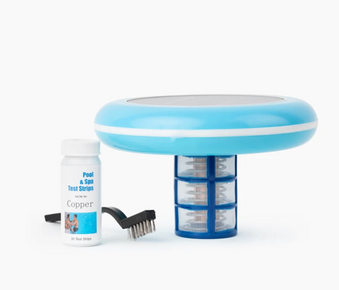
For comprehensive algae prevention that works alongside SeaKlear while reducing chlorine needs by up to 85%, consider adding a Solar Pool Ionizer which releases copper and silver ions to naturally prevent algae growth, providing dual layer protection for the clearest, healthiest pool water possible with minimal chemical usage and an eco-friendly approach to pool maintenance.