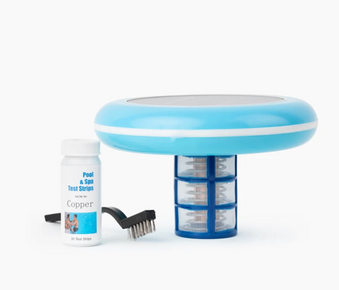
TL;DR: Pool RX 101066 6 Month Algaecide Treats 20k-30k gallons, Black is a mineral-based algaecide unit that provides 6 months of continuous algae prevention for pools up to 20,000 gallons. Simply place the unit in your skimmer basket or pump basket, ensure proper water circulation, maintain balanced chemistry (pH 7.2–7.6), and monitor copper levels monthly. Replace every 6 months for year-round protection without weekly chemical additions.
SEO Summary: This comprehensive guide covers Pool RX 101066 installation, maintenance, compatibility with mineral pool systems, copper level monitoring, troubleshooting, and comparison with traditional algaecides for effective long-term algae prevention in residential pools.
Table of Contents
What is Pool RX 101066 Algaecide?
Pool RX 101066 is a mineral-based algae prevention system designed for residential swimming pools up to 20,000 gallons. Unlike traditional liquid algaecides that require weekly or bi-weekly applications, Pool RX uses a slow-release mineral technology housed in a durable mesh unit that provides continuous algae protection for up to 6 months from a single installation.
Product Specifications
The Pool RX 101066 unit measures approximately 3 inches in diameter and contains a proprietary blend of minerals including chelated copper and other trace elements. The unit is designed to fit standard skimmer baskets or pump baskets and works passively as water flows through and around it, gradually releasing minerals into the pool circulation system supporting proper maintenance.
Pool Size Compatibility
The 101066 model is specifically formulated for pools ranging from 7,500 to 20,000 gallons. For smaller pools (under 7,500 gallons), Pool RX offers the 101055 model, while larger pools (20,000–30,000 gallons) require the 101077 unit. Using the correct size ensures optimal mineral concentration and prevents over- or under-dosing.
Key Benefits
Pool RX offers several advantages over conventional algaecide programs: elimination of weekly chemical additions, reduced overall chemical costs (typically 30–50% savings over 6 months), consistent mineral levels without manual dosing, compatibility with all sanitizer types including chlorine, bromine, and salt systems, and environmentally friendly mineral-based formulation with no harsh synthetic chemicals.
What's Included
Each Pool RX 101066 package contains one mineral unit sealed in a mesh bag, installation instructions, and a product registration card for warranty purposes. The unit arrives ready to use with no assembly or preparation required beyond removing it from the packaging.
How Pool RX 101066 Works
Understanding the science behind Pool RX helps you maximize its effectiveness and integrate it properly into your overall pool maintenance program.
Mineral Release Technology
Pool RX uses a controlled-release mechanism that gradually dissolves minerals into your pool water as circulation carries water through the unit. The dissolution rate is calibrated to maintain optimal mineral concentrations (typically 0.2–0.4 ppm copper) throughout the 6-month lifespan. Water temperature, pH, and flow rate all influence release speed, with warmer water and higher flow rates accelerating mineral distribution.
Algae Prevention Mechanism
The minerals released by Pool RX primarily chelated copper ions interfere with algae cell metabolism and reproduction. Copper ions penetrate algae cell walls and disrupt photosynthesis, preventing algae from establishing colonies. This preventive approach is more effective than reactive treatments because it stops algae before visible growth occurs, maintaining consistently clear water.
For comprehensive information on how mineral systems prevent algae, see our detailed guide on copper-silver ionization and natural algae prevention.
Continuous vs Batch Treatment
Traditional algaecides provide a spike of protection immediately after application, but their concentration decreases over days or weeks due to UV degradation, chemical consumption, and dilution. Pool RX maintains stable mineral levels continuously, providing consistent protection without the peaks and valleys of batch treatments. This steady-state approach is particularly effective for preventing stubborn algae types like mustard and black algae.
Compatibility with Sanitizers
Pool RX works synergistically with your primary sanitizer (chlorine, bromine, or salt-generated chlorine) rather than replacing it. The minerals handle algae prevention while your sanitizer focuses on bacteria and virus elimination. This division of labor often allows you to maintain lower sanitizer levels (1–2 ppm free chlorine instead of 3–4 ppm) while achieving superior water quality.
Step-by-Step Installation Instructions
Proper installation ensures Pool RX operates at peak efficiency and delivers the full 6 months of protection. Follow these steps carefully for best results.
Pre-Installation Water Preparation
Before installing Pool RX, test and balance your water chemistry. Adjust pH to 7.2–7.6, total alkalinity to 80–120 ppm, and calcium hardness to 200–400 ppm. If your pool currently has visible algae, treat it with shock and algaecide, brush thoroughly, and vacuum before installing Pool RX. The unit is designed for algae prevention, not active algae treatment, so starting with clean, balanced water is essential.
Choosing Installation Location
Pool RX can be installed in either your skimmer basket or pump basket, depending on your pool configuration and personal preference. Skimmer basket installation is most common and easiest for homeowners, as it requires no equipment access. Pump basket installation provides slightly better mineral distribution due to higher flow rates but requires opening your pump housing.
For skimmer installation, choose the skimmer with the highest flow rate (usually the one closest to your pump). If you have multiple skimmers, install the unit in the primary skimmer and ensure the weir door (flapper) moves freely to maintain proper water flow.
Installing in Skimmer Basket
Remove the skimmer basket from your pool. Place the Pool RX unit at the bottom of the basket, ensuring it sits flat and stable. Reinstall the basket in the skimmer, making sure the unit doesn't interfere with the basket seating properly. The unit should be fully submerged when the basket is in place. Replace the skimmer lid and verify that water is flowing normally through the skimmer.
Installing in Pump Basket
Turn off your pool pump and release pressure from the system. Remove the pump lid and pump basket. Place the Pool RX unit at the bottom of the pump basket, ensuring it doesn't block the impeller intake. Reinstall the basket and pump lid, ensuring the O-ring is properly seated and lubricated. Prime the pump if necessary and restart the system, checking for proper flow and no air leaks.
Initial Circulation Period
After installation, run your filtration system continuously for 24–48 hours to distribute minerals evenly throughout the pool. This initial circulation period establishes baseline mineral levels and ensures all water passes through the unit multiple times. During this period, test copper levels daily to verify the unit is releasing minerals properly (target: 0.2–0.4 ppm).
Installation Verification
After 48 hours, verify successful installation by testing copper levels (should be 0.2–0.4 ppm), checking that water flow through the skimmer or pump is normal, confirming the unit is secure and not floating or shifting, and ensuring and maximizing pool water clarity remains excellent with no algae formation. If copper levels are below 0.2 ppm, increase circulation time or check for installation issues.
Ongoing Maintenance Requirements
While Pool RX dramatically reduces maintenance compared to traditional algaecide programs, some routine care ensures optimal performance throughout the 6-month lifespan.
Weekly Water Chemistry Checks
Continue testing and balancing pH, alkalinity, and sanitizer levels weekly, just as you would without Pool RX. Maintain pH between 7.2–7.6 for optimal mineral effectiveness—pH above 7.8 can cause copper to precipitate out of solution, while pH below 7.0 can accelerate mineral release and potentially cause staining. Keep free chlorine at 1–3 ppm, which is often sufficient when Pool RX is handling algae prevention.
Monthly Copper Testing
Test copper levels monthly using a copper test kit or test strips designed for pool use. Ideal copper concentration is 0.2–0.4 ppm. Levels below 0.2 ppm indicate the unit may be depleted early or water chemistry is interfering with mineral release. Levels above 0.5 ppm suggest over-dosing, which can occur if pH is too low or circulation is excessive.
Basket Cleaning Routine
When cleaning your skimmer or pump basket (typically weekly), remove the Pool RX unit, clean the basket as normal, and reinstall the unit. Rinse the unit briefly with pool water if it has accumulated debris, but don't scrub it or use chemicals on it, as this can damage the mineral matrix and affect release rates.
Filter Maintenance
Maintain your normal filter cleaning schedule (backwashing for sand/DE filters, rinsing for cartridge filters). Pool RX doesn't increase filter maintenance requirements, but proper filtration is essential for distributing minerals evenly and maintaining water clarity. Clean filters ensure optimal water flow through the Pool RX unit.
Seasonal Adjustments
During peak swimming season (summer), you may need to run your pump longer to maintain adequate circulation and mineral distribution, especially if bather load increases. In cooler months, mineral release slows naturally, which is appropriate since algae growth also decreases. Adjust circulation time seasonally to match pool usage and temperature.
Six-Month Replacement
Replace the Pool RX unit every 6 months for continuous protection. Mark your calendar when you install a new unit so you remember the replacement date. The unit will appear physically unchanged even when depleted, so don't rely on visual inspection follow the 6-month timeline strictly. Remove the old unit and install a fresh one following the same installation procedure.
Compatibility with Solar Ionizers
Many pool owners wonder whether Pool RX can be used alongside solar pool ionizers or other mineral systems. Understanding compatibility helps you avoid over-mineralization and optimize your pool care strategy.
Dual Mineral System Considerations
Pool RX and solar ionizers both release copper (and sometimes silver) into pool water, so using them simultaneously requires careful monitoring to prevent excessive mineral levels. Total copper concentration should not exceed 0.5 ppm to avoid staining risks, hair discoloration, and water quality issues. If you're currently using a solar ionizer, test copper levels before adding Pool RX.
Recommended Approach
For pools already using solar ionizers effectively, Pool RX may be redundant and could cause over-mineralization. However, if your solar ionizer isn't maintaining adequate mineral levels (common in heavily shaded pools or during winter), Pool RX can supplement mineral output. Test copper levels weekly when using both systems and adjust solar ionizer output or remove Pool RX if levels exceed 0.4 ppm.
Learn more about optimizing mineral pool systems for reduced chemical dependency in our comprehensive guide.
Transitioning Between Systems
If you're transitioning from a solar ionizer to Pool RX (or vice versa), allow 2–3 weeks for existing mineral levels to decrease through dilution, filtration, and chemical consumption before installing the new system. Test copper levels every 3–4 days during the transition to ensure levels remain in the safe range.
Combined System Benefits
In some cases, using Pool RX during winter months when solar ionizers are less effective (due to reduced sunlight) and switching back to solar ionizers in summer can provide year-round mineral-based algae prevention while avoiding over-mineralization. This seasonal rotation strategy works well in climates with distinct seasons.
Copper Level Monitoring & Testing
Proper copper monitoring is essential for safe, effective Pool RX use. Understanding testing methods, interpreting results, and adjusting your program based on copper levels ensures optimal performance without staining or water quality issues.
Why Copper Testing Matters
Copper is highly effective for algae prevention at concentrations of 0.2–0.4 ppm, but levels above 0.5 ppm can cause problems including blue-green water staining, blonde hair turning green, metal staining on pool surfaces (especially plaster and vinyl), and potential precipitation of copper compounds if pH rises above 7.8. Regular testing prevents these issues while ensuring adequate algae protection.
Copper Test Kit Options
Several testing methods are available for measuring pool copper levels. Copper test strips provide quick, approximate readings (±0.1 ppm accuracy) and are suitable for routine monthly monitoring. Liquid drop test kits offer better accuracy (±0.05 ppm) and are recommended for initial setup and troubleshooting. Professional lab testing provides the most accurate results and is useful for confirming home test results if you suspect staining or over-mineralization.
Testing Procedure
To test copper levels accurately, collect a water sample from at least 12–18 inches below the surface, away from return jets and skimmers. Test within 30 minutes of collection for best accuracy. Follow your test kit instructions precisely, as timing and reagent amounts significantly affect results. Test at the same time of day for consistency, preferably in the morning before the pump has run for several hours.
Interpreting Results
Copper levels of 0.2–0.4 ppm indicate optimal Pool RX performance with effective algae prevention and minimal staining risk. Levels below 0.2 ppm suggest the unit may be depleted, understanding pool water chemistry is interfering with mineral release (check pH), or circulation is insufficient. Levels of 0.4–0.5 ppm are acceptable but warrant closer monitoring. Levels above 0.5 ppm require immediate action to prevent staining.
Adjusting Copper Levels
If copper levels are too low (below 0.2 ppm), verify pH is in the optimal range (7.2–7.6), increase circulation time to enhance mineral distribution, check that the Pool RX unit is properly positioned in the basket, and confirm the unit hasn't exceeded its 6-month lifespan. If copper levels are too high (above 0.5 ppm), partially drain and refill the pool to dilute copper concentration, use a metal sequestrant to bind excess copper and prevent staining, and reduce circulation time temporarily to slow mineral release.
Preventing Copper Staining
To prevent copper-related staining, maintain pH below 7.6 at all times (high pH causes copper precipitation), use a weekly maintenance dose of metal sequestrant if copper levels consistently run above 0.3 ppm, avoid shocking the pool with calcium hypochlorite when copper is present (use sodium dichlor or liquid chlorine instead), and brush pool surfaces weekly to prevent copper deposits from adhering to plaster or vinyl.
Troubleshooting Common Issues
Even with proper installation and maintenance, you may occasionally encounter issues with Pool RX performance. These troubleshooting strategies address the most common problems.
Algae Breakthrough Despite Pool RX
If algae appears even with Pool RX installed, first test copper levels if below 0.2 ppm, the unit may be depleted or malfunctioning. Verify the unit is positioned correctly in the basket with adequate water flow. Check pH levels, as pH above 7.8 reduces copper effectiveness. Ensure your sanitizer (chlorine) is maintained at appropriate levels (1–3 ppm), as Pool RX prevents algae but doesn't sanitize. If all parameters are correct, shock the pool, brush thoroughly, and consider whether the algae type requires specialized treatment.
Green or Blue-Tinted Water
Slight green or blue tinting, especially in white or light-colored pools, can indicate excessive copper levels or copper precipitation. Test copper immediately if above 0.5 ppm, partially drain and refill to dilute. Add a metal sequestrant to bind dissolved copper and prevent further staining. Adjust pH to 7.2–7.4 to keep copper in solution. If tinting persists despite normal copper levels, it may be algae (green) or copper staining (blue-green), requiring different treatments.
Blonde Hair Turning Green
Copper levels above 0.4 ppm can cause blonde or light-colored hair to develop a greenish tint after swimming. This is cosmetic and temporary but indicates copper levels should be reduced. Test and adjust copper as described above. Swimmers can prevent this by wetting hair with fresh water before swimming (reduces copper absorption) and using a clarifying shampoo after swimming to remove mineral buildup.
Pool RX Unit Floating or Shifting
If the Pool RX unit floats out of the basket or shifts position, it may not be receiving adequate water flow. Ensure the unit is placed at the bottom of the basket, not on top of debris. Clean the basket more frequently to prevent debris buildup that can dislodge the unit. If the unit consistently floats, it may be defective—contact the manufacturer for a replacement.
No Detectable Copper After Installation
If copper tests show 0.0 ppm several days after installation, verify you're using a copper-specific test kit (not a general metals test). Check that water is flowing through the basket where Pool RX is installed—blocked skimmers or pump issues can prevent mineral release. Ensure pH is in the optimal range (7.2–7.6), as extreme pH can inhibit mineral dissolution. If the unit still shows no copper release after one week, it may be defective and should be replaced under warranty.
Staining on Pool Surfaces
If you notice blue-green staining on pool walls, steps, or fittings, this indicates copper precipitation, usually caused by high pH (above 7.8) combined with elevated copper levels. Immediately test and lower pH to 7.2–7.4. Add a metal sequestrant to bind dissolved copper. Use a stain remover specifically designed for metal stains (typically ascorbic acid-based). Brush stained areas gently. For severe staining, you may need to remove Pool RX temporarily and use a sequestrant program for 2–3 weeks before reinstalling.
Pool RX vs Traditional Algaecides
Understanding how Pool RX compares to conventional algaecide programs helps you make informed decisions about your pool maintenance strategy and evaluate whether Pool RX is right for your situation.
Cost Comparison
Pool RX 101066 typically costs $60–$80 per unit, providing 6 months of protection for approximately $120–$160 per year. Traditional liquid algaecides cost $15–$30 per bottle, with weekly or bi-weekly applications requiring 12–26 bottles annually, totaling $180–$780 per year depending on pool size and product quality. Pool RX offers 25–60% cost savings for most pool owners, with greater savings for larger pools requiring higher algaecide doses.
Convenience Factor
Pool RX requires installation twice per year (every 6 months) with no weekly maintenance beyond routine water testing. Traditional algaecides require weekly or bi-weekly applications, measuring, pouring, and waiting for circulation. Over a year, Pool RX saves approximately 24–52 maintenance sessions, reducing time investment by 2–4 hours annually. For busy pool owners, this convenience is often more valuable than cost savings.
Effectiveness Comparison
Pool RX provides consistent, steady-state mineral levels that prevent algae establishment continuously. Traditional algaecides create peaks and valleys in protection, with highest effectiveness immediately after application and declining protection over days or weeks. For most algae types (green, yellow/mustard), Pool RX and quality traditional algaecides perform similarly when used correctly. For stubborn algae (black algae, pink slime), Pool RX's continuous mineral presence often provides superior prevention.
Environmental Considerations
Pool RX uses naturally occurring minerals (primarily copper) with no synthetic chemicals, making it more environmentally friendly than quaternary ammonium compounds (quats) or polyquats found in many traditional algaecides. Minerals are less toxic to aquatic life and break down naturally. However, copper can accumulate in soil if pool water is drained onto landscaping, so proper disposal practices are still important.
Compatibility with Pool Types
Pool RX works with all pool types (concrete/plaster, vinyl, fiberglass) and all sanitizer systems (chlorine, bromine, salt). However, pools with light-colored plaster or vinyl are more susceptible to visible copper staining if levels exceed 0.5 ppm, requiring more careful monitoring. Traditional algaecides have fewer staining concerns but may cause foaming in some pool types, especially with soft water or heavy bather loads.
Learning Curve
Pool RX requires understanding copper testing, monitoring, and adjustment a learning curve for pool owners unfamiliar with mineral systems. Traditional algaecides are simpler to use (just pour and circulate) but require consistent weekly discipline. Pool RX is better suited for technically minded pool owners comfortable with testing and adjusting multiple parameters, while traditional algaecides work well for those preferring simple, routine-based maintenance.
For more insights on reducing chemical dependency in your pool, explore our guide on mineral pool systems and chemical reduction strategies.
Conclusion
Pool RX 101066 offers an effective, convenient, and cost-efficient alternative to traditional weekly algaecide programs for pools up to 20,000 gallons. By providing 6 months of continuous mineral-based algae prevention from a single installation, Pool RX eliminates the need for weekly chemical additions while maintaining superior water quality and reducing overall chemical costs by 25–60%.
Success with Pool RX requires proper installation in your skimmer or pump basket, maintaining balanced water chemistry (especially pH 7.2–7.6), monthly copper level monitoring to ensure optimal concentration (0.2–0.4 ppm), and timely replacement every 6 months. When used correctly, Pool RX provides consistent algae prevention that matches or exceeds traditional algaecides while dramatically reducing maintenance time and effort.
The system works synergistically with your existing sanitizer (chlorine, bromine, or salt), allowing you to maintain lower sanitizer levels while achieving excellent water quality. For pool owners seeking to reduce chemical dependency, simplify maintenance routines, or transition to more natural pool care methods, Pool RX represents a proven, reliable solution backed by years of field use and positive user experiences.
Whether you're new to mineral-based pool care or looking to optimize an existing program, following the installation, maintenance, and monitoring guidelines in this guide will help you achieve the best possible results from Pool RX 101066 and enjoy crystal-clear, algae-free water with minimal effort throughout the swimming season.
Key Takeaways
- Pool RX 101066 provides 6 months of continuous algae prevention for pools up to 20,000 gallons using slow-release mineral technology
- Install the unit in your skimmer basket or pump basket and run circulation for 24–48 hours to establish baseline mineral levels
- Maintain pH between 7.2–7.6 for optimal mineral effectiveness and to prevent copper precipitation and staining
- Test copper levels monthly to ensure concentration remains in the optimal range of 0.2–0.4 ppm for effective algae prevention
- Replace the Pool RX unit every 6 months regardless of appearance, as mineral depletion isn't visually detectable
- Pool RX can reduce annual algaecide costs by 25–60% while eliminating 24–52 weekly maintenance sessions per year
- Use metal sequestrant if copper levels exceed 0.5 ppm to prevent staining on pool surfaces and discoloration of blonde hair
- Pool RX works best as a preventive system treat existing algae with shock and traditional algaecide before installing the unit
- Compatible with all pool types and sanitizer systems, but requires careful monitoring in light-colored plaster or vinyl pools
- Can be used alongside solar ionizers with careful copper monitoring, or as a seasonal supplement during low-sunlight months
By following these key practices, Pool RX provides reliable, long-lasting algae prevention for your pool while reducing maintenance time and chemical costs. Proper installation, circulation, pH management, and regular copper testing ensure the slow-release minerals remain effective. Replacing the unit every six months and using metal sequestrants when needed keeps your pool surfaces safe and free from staining. Combined with preventive care and compatible sanitizer systems, Pool RX offers a hassle-free, sustainable solution for keeping your pool clean, clear, and algae-free year-round.