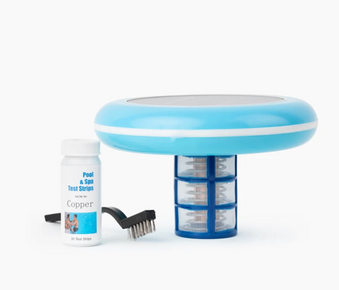
Natural Chemistry Pool First Aid is a dual-action formula that clears cloudy water and removes phosphates simultaneously. Add 1 liter per 8,000 gallons for routine treatment or 2 liters per 8,000 gallons for severe cloudiness. Pour around pool perimeter with pump running, circulate 24 to 48 hours, clean filter multiple times, retest. This guide covers complete application procedures, dosage, and troubleshooting for achieving crystal-clear, phosphate-free pool water.
Table of Contents
- What is Pool First Aid Purifier?
- How Does Pool First Aid Work?
- When to Use Pool First Aid
- Before You Begin: Preparation
- Step by Step Application Guide
- Proper Dosage and Calculations
- After Treatment: Maintenance
- Pro Tips for Maximum Effectiveness
- Troubleshooting Common Issues
- Frequently Asked Questions
What is Pool First Aid Purifier?
Natural Chemistry Pool First Aid is a unique dual-action pool treatment that simultaneously clears cloudy water and removes phosphates. This professional-grade formula combines the benefits of a clarifier with phosphate removal technology, addressing two common pool problems in one convenient treatment. Pool First Aid is ideal for pools suffering from both cloudiness and elevated phosphate levels that contribute to persistent algae growth.
Key Features of Pool First Aid
- Dual action formula: Clears cloudiness and removes phosphates simultaneously
- Fast acting: Visible results within 24 to 48 hours
- Concentrated solution: Treats up to 8,000 gallons per liter
- Professional strength: Used by pool service professionals
- Safe for all surfaces: Compatible with vinyl, fiberglass, plaster, and tile
- Works with all sanitizers: Compatible with chlorine, salt, bromine, and mineral systems
- Non-toxic: Safe for swimmers when used as directed
- Prevents algae: Removes phosphate food source for algae
What Makes Pool First Aid Unique
Unlike standard clarifiers or phosphate removers that address only one issue, Pool First Aid tackles both cloudiness and phosphates in a single treatment. This makes it particularly effective for pools with recurring algae problems accompanied by cloudy water, providing comprehensive water quality improvement.
When combined with proper weekly pool cleaning routines, Pool First Aid helps maintain pristine, algae-free water quality.
How Does Pool First Aid Work?
The Dual Action Process
Clarification Action:
Pool First Aid uses cationic polymers that bind to suspended particles causing cloudiness. These microscopic particles (0.5 to 5 microns) clump together into larger particles that your filter can capture, resulting in clear, sparkling water.
Phosphate Removal Action:
The formula contains lanthanum-based chemistry that binds with phosphates in pool water, forming insoluble particles captured by your filter. This permanently removes phosphates rather than just masking them, eliminating the primary food source for algae.
Benefits of Combined Treatment
- Clears cloudy water quickly
- Removes phosphates that feed algae
- Prevents recurring algae blooms
- Reduces chlorine consumption
- Improves overall water quality
- Saves time with single treatment
- More cost effective than separate products
- Enhances water sparkle and clarity
Understanding balanced pool water is essential for optimal Pool First Aid performance.
When to Use Pool First Aid
Ideal Situations for Pool First Aid
Cloudy Water with Algae History:
- Water is cloudy or hazy
- Pool has recurring algae problems
- Algae returns quickly after treatment
- Chlorine demand is high
- Phosphate levels are elevated
After Pool Opening:
- Spring opening reveals cloudy water
- Phosphates accumulated over winter
- Need comprehensive water treatment
- Want to prevent algae season start
Following Heavy Rain or Storms:
- Rainwater introduced phosphates and debris
- Water appears dull or cloudy
- Increased algae risk from contamination
Persistent Algae Problems:
- Algae keeps returning despite proper chlorine
- Phosphate levels above 500 ppb
- Need to address root cause of algae
- Want long-term algae prevention
For comprehensive algae prevention, see how to prevent algae growth and how to fix green pool quickly.
Before You Begin: Preparation
Pre-Treatment Checklist
- Test phosphate levels if possible (optional but helpful)
- Test and record water chemistry
- Clean or backwash filter before treatment
- Calculate pool volume accurately
- Determine appropriate dosage
- Ensure pump is functioning properly
- Remove large debris from pool
- Plan for 24 to 48 hour treatment period
- Have extra filter cleaner on hand
Water Chemistry Requirements
Balance water chemistry before adding Pool First Aid:
- pH: 7.2 to 7.6 (critical for effectiveness)
- Total Alkalinity: 80 to 120 ppm
- Free Chlorine: 1 to 3 ppm
- Calcium Hardness: 200 to 400 ppm
- Water temperature: Above 60°F for best results
If pH is high, learn what to do if pH level is high and how to reduce pH levels.
Filter Preparation
Start with clean filter for maximum effectiveness:
- Backwash sand or DE filters thoroughly
- Clean cartridge filters with filter cleaner
- Note starting filter pressure
- Replace filter media if very old or damaged
- Filter will work hard during treatment
Learn about your pool's filtration system and maintaining pool pumps and filters.
Step by Step Application Guide
Step 1: Test and Balance Water Chemistry
Ensure proper water balance before treatment:
- Test pH, alkalinity, and chlorine levels
- Adjust pH to 7.2 to 7.6 if needed
- Adjust alkalinity to 80 to 120 ppm if needed
- Ensure chlorine is 1 to 3 ppm
- Wait 4 hours after chemical adjustments
- Retest to verify proper balance
Step 2: Clean Pool and Filter
Remove debris and prepare filter:
- Skim surface to remove floating debris
- Brush pool walls and floor
- Vacuum pool if heavily soiled
- Empty skimmer baskets
- Clean or backwash filter thoroughly
- Note starting filter pressure
Use quality pool brushes and remove all leaves and debris.
Step 3: Calculate Pool First Aid Dosage
Determine proper dosage based on water condition:
Standard Dosage Guidelines
Routine Treatment (Slightly Cloudy, Moderate Phosphates): 1 liter per 8,000 gallons
- 8,000 gallon pool: 1 liter
- 16,000 gallon pool: 2 liters
- 24,000 gallon pool: 3 liters
- 32,000 gallon pool: 4 liters
Heavy Treatment (Very Cloudy, High Phosphates): 2 liters per 8,000 gallons
- 8,000 gallon pool: 2 liters
- 16,000 gallon pool: 4 liters
- 24,000 gallon pool: 6 liters
- 32,000 gallon pool: 8 liters
For Pools Between Standard Sizes:
- 10,000 gallon pool: 1.25 liters (routine) or 2.5 liters (heavy)
- 15,000 gallon pool: 1.9 liters (routine) or 3.8 liters (heavy)
- 20,000 gallon pool: 2.5 liters (routine) or 5 liters (heavy)
- 25,000 gallon pool: 3.1 liters (routine) or 6.2 liters (heavy)
- 30,000 gallon pool: 3.75 liters (routine) or 7.5 liters (heavy)
Step 4: Start Pool Pump
Ensure proper circulation before adding product:
- Turn on pool pump to normal operating speed
- Verify water is circulating properly
- Check that all return jets are flowing
- Ensure skimmers are functioning
- Plan to run pump continuously for 24 to 48 hours
Proper pool circulation is essential for treatment effectiveness.
Step 5: Add Pool First Aid to Pool
Apply product evenly around pool:
- Shake bottle well before using
- Pour Pool First Aid slowly around pool perimeter
- Walk around entire pool while pouring
- Distribute evenly for best results
- Pour near return jets for better mixing
- Do not add directly to skimmer
- Do not pre-dilute product
Step 6: Circulate Water Continuously
Run pump for proper distribution and particle capture:
- Run pump continuously for 24 to 48 hours minimum
- Do not turn off pump during treatment
- Monitor filter pressure closely (will increase significantly)
- Water may appear cloudier initially (this is normal)
- Cloudiness should begin clearing within 12 to 24 hours
- Full clarity achieved in 24 to 48 hours
Step 7: Clean Filter Multiple Times
Remove captured particles and phosphates from filter:
- Check filter pressure every 6 to 12 hours
- Clean or backwash filter when pressure rises 8 to 10 PSI
- Expect to clean filter 2 to 4 times during treatment
- This is normal and indicates product is working
- Filter is capturing both particles and phosphates
- Continue running pump after each cleaning
- Final filter cleaning after water clears
After Treatment: Maintenance
Post-Treatment Steps
After 48 Hours:
- Water should be crystal clear
- Perform final thorough filter cleaning
- Test water chemistry
- Adjust chemistry if needed
- Resume normal pump schedule
- Pool is ready for swimming
Test Water Chemistry
Verify proper water balance:
- Free Chlorine: 1 to 3 ppm
- pH: 7.2 to 7.6
- Total Alkalinity: 80 to 120 ppm
- Water Clarity: Crystal clear
- Phosphates: Should be significantly reduced
- Adjust parameters as needed
Add Metal Sequestrant (Recommended)
Prevent potential staining from treatment:
- Add metal sequestrant per product instructions
- Helps prevent any metal precipitation
- Protects pool surfaces
- Especially important if source water contains metals
Resume Normal Maintenance
- Return to regular weekly cleaning routines
- Maintain proper chlorine levels
- Keep pH balanced
- Test phosphates monthly
- Use Pool First Aid as needed for maintenance
Pro Tips for Maximum Effectiveness
Expert Tips from Pool Professionals
- Balance pH first: Proper pH is critical for both clarification and phosphate removal
- Clean filter before: Start with maximum filter capacity
- Run pump continuously: Don't turn off pump during 48 hour treatment
- Clean filter frequently: Expect to clean 2 to 4 times during treatment
- Be patient: Allow full 48 hours for complete treatment
- Don't overdose: Follow dosage guidelines for pool size
- Test phosphates after: Verify phosphate reduction effectiveness
- Use preventively: Treat before algae appears
- Combine with ionization: Use with solar ionization for healthier environment
- Maintain regularly: Monthly phosphate testing prevents problems
Avoid Common Mistakes
- Not cleaning filter enough: Filter needs frequent cleaning during treatment
- Turning off pump: Continuous circulation is essential
- Not balancing pH: Wrong pH reduces effectiveness dramatically
- Swimming too soon: Wait until treatment is complete
- Underdosing: Use adequate product for pool size and condition
- Expecting instant results: Process takes 24 to 48 hours
- Not testing after: Verify phosphate reduction and water balance
- Dirty filter before treatment: Start with clean filter
Avoid common pool cleaning mistakes that reduce treatment effectiveness.
Maximizing Treatment Results
Water Chemistry: Maintain pH between 7.2 and 7.6 for optimal clarification and phosphate removal. High pH significantly reduces effectiveness.
Filtration: Run pump continuously and clean filter frequently for maximum particle and phosphate capture.
Circulation: Good water circulation ensures Pool First Aid contacts all particles and phosphates in the pool.
Prevention: Monthly phosphate testing and treatment prevent severe buildup requiring aggressive treatment.
Troubleshooting Common Issues
Problem: Water Got Much Cloudier After Treatment
Cause: This is normal as particles and phosphates clump together.
Solutions:
- Continue running pump continuously
- Clean filter when pressure rises
- Do not add more product
- Water should begin clearing within 12 to 24 hours
- If cloudiness persists beyond 48 hours, check pH and filter operation
Problem: Filter Pressure Rising Very Rapidly
Cause: Filter is capturing large amounts of particles and phosphates (this is good).
Solutions:
- Clean or backwash filter immediately when pressure rises 8 to 10 PSI
- May need to clean filter every 6 to 12 hours
- This indicates product is working properly
- Continue running pump after each cleaning
- Expect 2 to 4 filter cleanings during treatment
Problem: Water Still Cloudy After 48 Hours
Solutions:
- Test and balance pH to 7.2 to 7.6
- Clean filter thoroughly
- Run pump continuously for another 24 hours
- Check for algae (may need shock treatment first)
- Verify filter is operating properly
- May need second treatment if severely cloudy or high phosphates
For severe cloudiness, see how to handle cloudy water.
Problem: Algae Present During Treatment
Solutions:
- Treat algae first before using Pool First Aid
- Shock pool to kill algae
- Add algaecide (like No Mor Problems Algaecide)
- Brush pool surfaces vigorously
- Once algae is dead, use Pool First Aid to clear water and remove phosphates
- See treating resistant algae types
Problem: Phosphates Still High After Treatment
Solutions:
- Verify dosage was adequate for pool size
- Ensure pump ran continuously for 48 hours
- Check that filter was cleaned multiple times
- Test pH (high pH reduces phosphate removal)
- May need second treatment for very high phosphate levels
- Identify and eliminate ongoing phosphate sources
Frequently Asked Questions
How much Pool First Aid should I use?
Use 1 liter per 8,000 gallons for routine treatment or 2 liters per 8,000 gallons for severe cloudiness and high phosphates. For a 20,000 gallon pool, use 2.5 liters for routine or 5 liters for heavy treatment.
How long does it take Pool First Aid to work?
You should see water begin to clear within 12 to 24 hours. Full clarity and phosphate removal is typically achieved in 24 to 48 hours with continuous pump operation.
Can I swim during Pool First Aid treatment?
It's best to avoid swimming during the 24 to 48 hour treatment period. Water will be cloudy as the product works, and you want maximum pump runtime for optimal results.
How often do I need to clean my filter during treatment?
Expect to clean or backwash your filter 2 to 4 times during the 48 hour treatment period. Clean whenever pressure rises 8 to 10 PSI above normal.
Does Pool First Aid remove all phosphates?
Pool First Aid significantly reduces phosphate levels, typically to below 500 ppb. Extremely high phosphate levels may require multiple treatments or additional phosphate remover.
Can I use Pool First Aid with other pool chemicals?
Yes, Pool First Aid is compatible with all pool chemicals and sanitizers. However, add it separately from other chemicals and ensure pH is balanced for best results.
Will Pool First Aid kill algae?
No. Pool First Aid removes phosphates that feed algae and clears cloudy water, but it does not kill existing algae. Treat algae with shock and algaecide first, then use Pool First Aid.
Can I use Pool First Aid in a saltwater pool?
Yes! Pool First Aid is safe for all pool types including saltwater, chlorine, bromine, and mineral systems.
Why did my water get cloudier after adding Pool First Aid?
This is normal as the product causes particles and phosphates to clump together. Continue running pump and cleaning filter. Water should begin clearing within 12 to 24 hours.
How do I prevent phosphates from returning?
Test phosphates monthly, use metal sequestrant, maintain balanced pH, test fill water for phosphates, trim vegetation near pool, and avoid phosphate-containing chemicals.
Conclusion
Natural Chemistry Pool First Aid Purifier provides comprehensive water treatment by simultaneously clearing cloudy water and removing phosphates. By following proper dosing guidelines, maintaining balanced water chemistry, running your pump continuously, and cleaning your filter frequently during treatment, you can achieve crystal-clear, phosphate-free water that resists algae growth and maintains superior water quality.
Key Takeaways
- Use 1 liter per 8,000 gallons for routine treatment
- Use 2 liters per 8,000 gallons for severe cloudiness or high phosphates
- Balance pH to 7.2 to 7.6 before treatment
- Clean filter before adding Pool First Aid
- Pour around pool perimeter with pump running
- Run pump continuously for 24 to 48 hours
- Clean filter 2 to 4 times during treatment
- Allow full 48 hours for complete treatment
- Test phosphates and water chemistry after treatment
- Use monthly for preventive phosphate control
For comprehensive pool care that prevents both algae and cloudiness while reducing chemical usage, consider adding a Solar Pool Ionizer which releases copper and silver ions to naturally prevent algae growth without introducing phosphates, while reducing chlorine needs by up to 85% for clearer, healthier pool water that's easier to maintain all season long.