Table of Contents
- What is Sodium Di-Chlor Chlorine Granular Pool Shock?
- How Does Sodium Di-Chlor Work?
- Step-by-Step Guide to Using Sodium Di-Chlor
- Proper Dosage and Application
- Ongoing Maintenance Schedule
- Pro Tips for Maximum Effectiveness
- Troubleshooting Common Issues
- Combining with Solar Pool Ionizers
- Frequently Asked Questions
What is Sodium Di-Chlor Chlorine Granular Pool Shock?
In The Swim Sodium Di-Chlor (Dichlor) is a fast-dissolving, pH-neutral chlorine shock that contains cyanuric acid (stabilizer) to protect chlorine from rapid degradation by sunlight. Unlike cal-hypo shock that raises pH and calcium levels, or liquid chlorine that can affect water balance, Dichlor maintains stable water chemistry while providing powerful sanitization.
When combined with proper pool cleaning routines and modern technology like solar pool ionizers, Sodium Di-Chlor creates a comprehensive sanitization system that maintains pristine water quality with minimal chemical imbalance.
How Does Sodium Di-Chlor Work?
Sodium Dichloro-s-Triazinetrione is a stabilized chlorine compound that dissolves quickly and releases hypochlorous acid the active sanitizing agent that kills bacteria, viruses, and algae. The built-in cyanuric acid stabilizer protects chlorine from UV degradation, making it ideal for outdoor pools.
Key Benefits:
- Fast-dissolving granules: Dissolves quickly for rapid sanitization
- pH neutral (6.8-7.0): Won't significantly raise or lower pool pH
- Contains stabilizer: Built-in cyanuric acid protects chlorine from sunlight
- Kills bacteria and algae: Powerful sanitization and oxidation
- Safe for all pool types: Compatible with plaster, vinyl, fiberglass, and tile
- Works with all systems: Compatible with chlorine, salt systems, and solar ionizers
For pool owners seeking reduced chemical usage, consider exploring how to prevent algae growth.
Step-by-Step Guide to Using Sodium Di-Chlor
Step 1: Test the Pool Water
Test water chemistry before shocking: pH 7.2-7.6, total alkalinity 80-120 ppm, free chlorine (current level), combined chlorine (below 0.2 ppm), cyanuric acid 30-50 ppm, calcium hardness 200-400 ppm. Learn more about regular pool testing.
Step 2: Calculate the Correct Dosage
Standard Dosage: 1 lb per 10,000 gallons (raises chlorine by ~10 ppm). Calculate pool volume:
- Rectangular: Length × Width × Average Depth × 7.5 = Gallons
- Round: Diameter × Diameter × Average Depth × 5.9 = Gallons
Heavy use/contamination: 1.5-2 lbs per 10,000 gallons. Algae treatment: 2-3 lbs per 10,000 gallons.
Step 3: Add the Pool Shock
Pre-Dissolution Method (Recommended): Fill 5-gallon bucket 3/4 full with pool water, add Sodium Di-Chlor while stirring until dissolved, pour around pool perimeter.
Direct Broadcasting: With pump running, broadcast granules evenly across pool surface. Apply in evening for maximum effectiveness. Avoid common pool maintenance mistakes.
Step 4: Wait and Circulate
Wait at least 15 minutes before entering pool (1-2 hours better for safety). Run filter during this time to circulate water. Minimum 15 minutes for light shocking, 1-2 hours for routine, 4-8 hours for heavy treatment. Learn about how circulation supports proper maintenance.
Step 5: Retest the Pool
Test chlorine after circulation period. Target: Free chlorine 1-3 ppm, combined chlorine below 0.2 ppm, pH 7.2-7.6. If above 5 ppm, wait longer; if below 1 ppm, add more shock. Learn how to improve pool water clarity.
Step 6: Clean and Maintain
Vacuum pool, clean filter, brush surfaces, and clean pool tiles. Learn how to use pool vacuums effectively.
Proper Dosage and Application
Routine Weekly Shocking
Shock weekly with 1 lb per 10,000 gallons during swimming season. Use for regular maintenance, prevention, and maintaining water clarity.
Heavy Use or Contamination
After pool parties, heavy rain, or when water appears dull: 1.5-2 lbs per 10,000 gallons.
Algae Treatment
For visible algae: 2-3 lbs per 10,000 gallons combined with brushing and extended filtration. May require multiple treatments. Consider prevention strategies.
Important Cyanuric Acid Consideration
CRITICAL: Sodium Di-Chlor contains cyanuric acid. Each pound adds approximately 9 ppm of CYA to your pool. Test CYA monthly, keep between 30-50 ppm. If exceeds 100 ppm, partially drain and refill pool.
Ongoing Maintenance Schedule
Weekly Tasks
- Shock with Sodium Di-Chlor (1 lb per 10,000 gallons)
- Test and adjust pH (7.2-7.6) and free chlorine (1-3 ppm)
- Brush walls, floor, steps, and corners
- Follow complete weekly cleaning routine
Monthly Tasks
- Test cyanuric acid (CYA) – Critical when using Dichlor regularly
- Deep clean pool filter
- Test for metals and phosphates
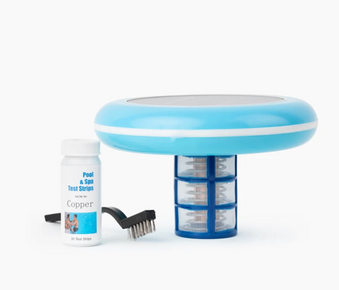
- Replace ionizer components with quality replacement kits as needed
Pro Tips for Maximum Effectiveness
Tip 1: Always Shock in the Evening
Apply Sodium Di-Chlor in the evening or at night to maximize effectiveness. While Dichlor contains stabilizer, evening application still allows chlorine to work without UV interference.
Tip 2: Monitor Cyanuric Acid Levels
This is CRITICAL with Dichlor. Test CYA monthly and keep between 30-50 ppm. If exceeds 80-100 ppm, chlorine effectiveness decreases significantly, requiring partial drain and refill.
Tip 3: Don't Use Dichlor for Daily Chlorination
Sodium Di-Chlor is best for shocking, not daily chlorination. Using it daily will quickly raise CYA to problematic levels. Use trichlor tablets, liquid chlorine, or salt systems for daily sanitization.
Tip 4: Combine with Solar Ionization
Pair Sodium Di-Chlor shocking with solar pool ionizers for comprehensive water treatment. Learn about pool ionizer pros and cons.
Tip 5: Practice Eco-Friendly Methods
Incorporate eco-friendly pool cleaning practices to reduce overall chemical usage.
Troubleshooting Common Issues
Chlorine Level Won't Stay Up
Possible Causes: High cyanuric acid, heavy organic load, algae bloom, sunlight degradation, pool leaks.
Solutions: Test CYA and partially drain/refill if above 100 ppm, shock with higher dosage, treat algae aggressively, add stabilizer if CYA below 30 ppm.
Strong Chlorine Smell
Possible Causes: High combined chlorine (chloramines), insufficient shocking, heavy organic contamination.
Solutions: Superchlorinate to 10x combined chlorine level, shock more frequently, improve filtration and circulation.
Cloudy Water After Shocking
Possible Causes: Dead algae or oxidized contaminants, filter overwhelmed, high calcium hardness, chemical imbalance.
Solutions: Run filter continuously 24-48 hours, clean or backwash filter multiple times, add clarifier, review how to handle cloudy water.
Cyanuric Acid Too High
Possible Causes: Excessive use of Dichlor for daily chlorination, years of Dichlor use without dilution.
Solutions: Partially drain and refill pool (only way to lower CYA), switch to cal-hypo or liquid chlorine for shocking, test CYA monthly.
For comprehensive troubleshooting, review our pool cleaning checklist for beginners.
Combining with Solar Pool Ionizers
Sodium Di-Chlor works exceptionally well alongside solar pool ionizers to create a comprehensive sanitization system.
Synergistic Benefits:
- Reduced Shocking Frequency: Solar ionizers provide continuous sanitization, reducing need for weekly shocking to monthly or less
- Lower Chemical Costs: Reduce Dichlor usage by up to 80%, saving hundreds annually
- Prevents CYA Buildup: Less frequent Dichlor use means slower CYA accumulation
- Continuous Algae Prevention: Copper and silver ions provide 24/7 algae control
Application Protocol with Solar Ionizers:
- Install solar ionizer per manufacturer's directions
- Monitor copper levels weekly (ideal range: 0.2-0.4 ppm)
- Shock monthly instead of weekly with Dichlor
- Keep chlorine at 0.5-1 ppm with ionizer supplementation
- Clean ionizer regularly for consistent performance
- Replace with quality replacement kits as needed
Learn more about what solar pool ionizers are and discover how to choose the right ionizer.
Frequently Asked Questions
How often should I shock with Sodium Di-Chlor?
Shock weekly during peak swimming season for routine maintenance. With a solar ionizer, you may only need monthly shocking.
Can I swim 15 minutes after adding Dichlor?
While Dichlor dissolves quickly, wait until chlorine levels drop below 5 ppm before swimming (typically 1-2 hours). Test before allowing swimmers for safety.
What's the difference between Dichlor and cal-hypo shock?
Dichlor is pH neutral and contains stabilizer, while cal-hypo raises pH and calcium but doesn't add stabilizer. Dichlor is better for routine shocking; cal-hypo for pools with high CYA.
Will Sodium Di-Chlor raise my cyanuric acid?
Yes, each pound of Dichlor adds approximately 9 ppm of CYA. Monitor CYA monthly and keep between 30-50 ppm. If it exceeds 100 ppm, partially drain and refill.
Can I use Dichlor for daily chlorination?
No, Dichlor is best for shocking, not daily chlorination. Daily use quickly raises CYA to problematic levels. Use trichlor tablets, liquid chlorine, or salt systems for daily sanitization.
Can I use Dichlor in a saltwater pool?
Yes, Sodium Di-Chlor is compatible with saltwater systems. Use it for shocking when your salt cell needs assistance or during heavy use periods. Also consider saltwater pool maintenance.
Why does my pool still smell like chlorine after shocking?
Strong chlorine smell indicates chloramines (combined chlorine), not high free chlorine. Superchlorinate to 10x the combined chlorine level to break chloramine bonds.
Do I need to remove my solar ionizer before shocking?
No, solar ionizers can remain in the pool during shocking. The chlorine won't damage the ionizer, and the combination provides superior water quality.
Conclusion
In The Swim Sodium Di-Chlor Chlorine Granular Pool Shock is an effective, pH-neutral option for keeping your pool sanitized and algae-free. By following these guidelines and maintaining proper water chemistry, you can enjoy a clean, clear swimming pool all season long.
Key Takeaways:
- Test water chemistry before shocking, especially cyanuric acid levels
- Use 1 lb per 10,000 gallons for routine shocking (increase for heavy use or algae)
- Always pre-dissolve in a bucket for best results
- Apply in evening and wait until chlorine drops below 5 ppm before swimming
- Monitor CYA monthly to prevent buildup (critical with Dichlor)
- Combine with solar ionizers for reduced chemical usage
For a comprehensive approach to pool care that reduces chemical dependency, consider pairing Sodium Di-Chlor with solar pool ionizers to maintain superior water quality while minimizing chemical adjustments and maintenance requirements.