Pool stains are a common frustration for residential pool owners. Discolored surfaces not only affect the appearance of your pool but can also indicate underlying water balance or maintenance issues. Left untreated, stains can become more difficult and expensive to remove, requiring chemical treatments, professional services, or even surface refinishing that significantly increase maintenance costs and disrupt pool enjoyment during peak swimming seasons.
Many pool owners only address staining after it becomes visible, when the problem has already established itself and requires aggressive correction. This reactive approach often leads to cycles of treatment and recurrence that consume time and resources while never fully addressing the root causes that allowed the stain to develop initially. Understanding that prevention begins long before discoloration appears is key to maintaining pristine pool surfaces year after year.
Preventing pool stains is far easier than correcting them after they appear. With the right pool cleaning solutions, proper water chemistry, and preventive strategies, homeowners can keep their pool surfaces looking clean and well-maintained year-round. This guide provides comprehensive strategies for preventing the most common pool stains, helping you maintain the visual appeal and value of your residential pool investment through proactive maintenance rather than reactive stain removal treatments that often require more time, money, and chemicals than preventive approaches.
Table of Contents
- Common Causes of Pool Stains
- Types of Pool Stains Found in Residential Pools
- How Water Chemistry Affects Pool Staining
- Preventive Cleaning and Maintenance Practices
- Using Equipment and Filtration to Prevent Stains
- Seasonal Tips to Avoid Pool Stains
- Final Thoughts: Keeping Pool Surfaces Stain-Free
1. Common Causes of Pool Stains
Understanding what causes pool stains is the first step toward prevention. Pool stains develop when specific substances in the water come into contact with pool surfaces and either chemically bond or physically embed themselves into the material. The most effective prevention strategies target these substances before they have opportunity to create visible discoloration, addressing both the sources of staining materials and the conditions that allow them to adhere to pool surfaces. This proactive approach focuses on the underlying factors that create staining potential rather than merely treating visible discoloration after it appears, saving significant time, money, and maintenance effort over the pool's lifetime while maintaining better and improved pool water quality and surface integrity.
1. Metal Contamination and Oxidation Processes
Metals such as iron, copper, and manganese represent one of the most common causes of pool staining, entering water through various sources and oxidizing to create visible discoloration on pool surfaces. Iron typically enters through well water, corroding equipment, or environmental sources, oxidizing to create brown, rust-colored stains. Copper often comes from algaecides, ionizers, or corroded plumbing, creating blue or green stains when it oxidizes. Manganese, though less common, creates dark brown or black stains and typically originates from natural water sources or certain chemical treatments. These metals remain dissolved in water until pH changes, oxidation occurs, or evaporation concentrates them to levels where they precipitate onto surfaces, bonding chemically with plaster, fiberglass, or vinyl to create stubborn stains that require specific removal approaches based on the metal involved.
- Iron staining: Rust-colored discoloration from well water, equipment corrosion, or environmental sources
- Copper staining: Blue or green stains from algaecides, ionizers, or corroded copper plumbing
- Manganese staining: Dark brown or black stains from natural water sources or certain chemicals
- Oxidation triggers: pH changes, chlorine oxidation, or evaporation that concentrates metals
- Surface bonding: Chemical adhesion to plaster, fiberglass, or vinyl materials
Preventing metal staining involves both source control (filtering incoming water, using sequestering agents) and condition management (maintaining proper pH, preventing evaporation concentration) to keep metals in solution and moving through filtration rather than allowing them to oxidize and deposit on pool surfaces where they create visible discoloration requiring chemical treatments or professional intervention for removal.
2. Organic Material Accumulation and Decomposition
Organic stains develop when leaves, grass, algae, pollen, or other plant material accumulates in pool water and decomposes, releasing tannins and organic compounds that stain surfaces. These stains typically appear as brown, yellow, or green discoloration, often following patterns of debris accumulation in corners, along steps, or behind ladders where circulation is naturally poorer. Organic staining occurs through two primary mechanisms: direct contact staining where materials rest on surfaces long enough to transfer color, and dissolved organic compounds that precipitate onto surfaces as water chemistry changes or evaporation concentrates them. The problem compounds when organic material isn't promptly removed, as decomposition accelerates staining potential and creates more stubborn discoloration that penetrates surface pores rather than merely coating them.
- Leaf and debris stains: Brown or yellow discoloration from tannins in decomposing plant material
- Algae-related staining: Green, black, or mustard-colored stains from algae colonies and residues
- Pollen staining: Yellow film that accumulates during high-pollen seasons
- Decomposition acceleration: Staining potential increases as organic material breaks down
- Pattern staining: Discoloration follows debris accumulation patterns in poor-circulation areas
Preventing organic staining requires prompt removal of debris before decomposition begins, maintaining adequate sanitation to prevent pool algae, and ensuring good circulation to prevent organic accumulation in specific areas where staining would otherwise follow predictable patterns based on water movement and debris settling behaviors.
3. Poor Circulation and Filtration Deficiencies
Poor water circulation represents both a direct and indirect cause of pool staining by allowing contaminants to settle on surfaces rather than remaining suspended for filtration removal. Directly, inadequate circulation creates "dead spots" where staining materials accumulate in specific areas, leading to patterned staining that follows circulation deficiencies rather than appearing randomly. Indirectly, poor circulation contributes to chemical imbalances (localized pH or chlorine variations) that promote staining conditions even when overall water chemistry appears balanced. Filtration deficiencies compound circulation problems by failing to remove staining particles that do remain suspended, allowing them multiple passes through the pool where they eventually settle during pump-off periods or low-flow conditions. Circulation and filtration issues often work together to create staining conditions that wouldn't exist with properly functioning equipment, making equipment maintenance a critical component of comprehensive stain prevention.
- Dead spot creation: Areas with inadequate water movement where contaminants settle
- Patterned staining: Discoloration follows circulation deficiencies rather than appearing randomly
- Chemical localization: pH or chlorine variations in poorly circulated areas promote staining
- Filtration failure: Inadequate particle removal allows multiple settlement opportunities
- Equipment interaction: Circulation and filtration deficiencies compound each other's effects
Addressing circulation and filtration issues involves both equipment maintenance (pump operation schedules, filter cleaning, return jet positioning) and system design considerations (adequate pump sizing, proper plumbing layout, strategic return placement) to ensure all pool areas receive consistent water movement and potential staining materials get captured by filtration rather than being allowed to settle and create visible discoloration on pool surfaces.
4. Chemical Imbalances and Scaling Conditions
Imbalanced water chemistry creates conditions that either directly cause staining or make surfaces more susceptible to staining from other sources. High pool pH level (above 7.8) causes metals to precipitate out of solution, creating metallic staining that might not occur at proper pH levels. Low pH (below 7.2) can etch surfaces, creating microscopic roughness that traps staining materials more easily. High calcium hardness combined with high pH and temperature creates scaling calcium carbonate deposits that appear as white, gray, or colored staining depending on what materials get trapped in the scale matrix. Improper sanitizer levels allow organic growth that leads to organic staining. Total alkalinity imbalances create pH instability that fluctuates between conditions promoting different staining mechanisms. These chemical factors often interact, creating complex staining scenarios where multiple imbalances work together to create discoloration that might not occur with any single imbalance alone.
- pH extremes: High pH causes metal precipitation; low pH creates surface etching
- Calcium scaling: White or gray deposits that can trap other staining materials
- Sanitizer deficiencies: Allow organic growth leading to organic staining
- Alkalinity instability: Creates pH fluctuations between staining-promoting conditions
- Chemical interactions: Multiple imbalances often work together to create staining
Preventing chemically-induced staining requires regular testing and adjustment of all water balance parameters not just focusing on sanitizer levels while neglecting pH, alkalinity, and calcium hardness that significantly affect staining potential even when sanitation appears adequate for bacterial control and basic water clarity maintenance throughout the swimming season.
5. Environmental and Usage Factors
Environmental conditions and pool usage patterns significantly affect staining potential by introducing staining materials or creating conditions that promote their adhesion to surfaces. Heavy rainfall can introduce metals, organic debris, and staining compounds from runoff. High bather loads introduce organic materials (sweat, oils, lotions) that can contribute to staining. Sunlight exposure affects both chemical reactions (metal oxidation, chlorine breakdown) and water temperature (evaporation rates, chemical reaction speeds). Wind carries pollen, dust, and debris that contain staining potential. Even landscaping choices affect staining certain trees drop leaves or flowers with strong staining potential, while fertilizer runoff can introduce metals and minerals. These external factors require consideration in stain prevention strategies, as even perfect pool maintenance can be overwhelmed by environmental inputs without appropriate countermeasures tailored to local conditions and usage patterns.
- Rainfall introduction: Runoff brings metals, organic matter, and staining compounds
- Bather load: Organic materials from swimmers contribute to staining potential
- Sunlight effects: Affects oxidation rates, chlorine breakdown, and evaporation
- Wind transportation: Carries pollen, dust, and debris with staining potential
- Landscaping impact: Certain plants and fertilizers introduce staining materials
Addressing environmental and usage factors involves both defensive measures (pool covers during storms, showering before swimming, strategic landscaping) and adaptive maintenance (increased testing after heavy use, seasonal adjustments, supplemental treatments during challenging conditions) to prevent external factors from overwhelming standard maintenance routines and creating staining conditions despite otherwise adequate pool care practices.
6. Surface Material and Age Considerations
The pool surface material itself and its age significantly affect staining susceptibility, requiring different prevention approaches based on these inherent factors. Plaster surfaces are porous and prone to both staining and scaling, requiring more aggressive prevention. Fiberglass has a gel coat that can stain but is less porous than plaster. Vinyl liners stain easily but some stains can be removed more readily than from other surfaces. Older surfaces typically stain more easily as microscopic pores enlarge, finishes degrade, and previous staining or treatment alters surface characteristics. Even color affects staining visibility lighter surfaces show stains more readily but may encourage more proactive prevention, while darker surfaces might hide early staining until it becomes more severe. Understanding these material characteristics allows targeted prevention that addresses the specific vulnerabilities of your pool's surface rather than applying generic approaches that might be insufficient for certain materials or unnecessarily aggressive for others.
- Plaster porosity: More susceptible to staining penetration and scaling issues
- Fiberglass characteristics: Gel coat stains but is less porous than plaster
- Vinyl considerations: Stains easily but some types allow easier stain removal
- Age effects: Older surfaces typically stain more easily as materials degrade
- Color impact: Lighter surfaces show stains earlier; darker surfaces may hide them
Prevention strategies must account for surface material and age, with more aggressive maintenance for porous or older surfaces and different approaches for materials with specific vulnerabilities or characteristics that affect both staining potential and the effectiveness of various prevention methods available for residential pool maintenance throughout the surface's operational lifespan.
Identifying these factors early helps prevent staining before it becomes visible, saving the time and expense of stain removal treatments that often require aggressive chemicals, intensive labor, or professional intervention to restore surface appearance and prevent recurrence of the underlying conditions that created the staining problem initially. Comprehensive stain prevention addresses all these causes systematically rather than focusing on single factors while neglecting others that might contribute to staining despite attention to the most obvious or commonly discussed causes in general pool maintenance guidance.

2. Types of Pool Stains Found in Residential Pools
Different stains require different prevention strategies, as the substances causing discoloration and the conditions allowing adhesion vary significantly between stain types. Understanding these differences allows you to tailor your prevention approach to the specific staining threats most relevant to your pool based on water source, local environment, pool equipment materials, and maintenance history. Targeted prevention proves more effective than generic approaches that might address some stain risks while missing others that could still develop despite general preventive measures.
1. Metal Stains: Identification and Specific Prevention
Metal stains develop when dissolved metals in pool water oxidize and precipitate onto pool surfaces, creating discoloration that varies by metal type and concentration. Iron stains typically appear as rusty brown or reddish discoloration, often in streaks or patches following water movement patterns. Copper stains present as blue, green, or teal discoloration that can range from subtle tinting to dramatic turquoise staining. Manganese stains are less common but create dark brown or black stains that resemble dirt or soot accumulation. These stains often appear after shocking with calcium hypochlorite (which can oxidize metals) or when pH rises above 7.8, causing metals to come out of solution. Prevention focuses on source control (filtering incoming water, using sequestering agents) and condition management (maintaining proper pH, avoiding sudden chemical changes) to keep metals dissolved and moving through filtration rather than allowing oxidation and deposition on surfaces.
- Iron stains: Rusty brown or reddish discoloration often following water patterns
- Copper stains: Blue, green, or teal staining from oxidized copper compounds
- Manganese stains: Dark brown or black staining resembling dirt accumulation
- Oxidation triggers: High pH, shock treatments, or chemical interactions
- Pattern recognition: Often follows water movement rather than appearing uniformly
Preventing metal stains requires both proactive measures (regular testing for metals, using metal sequesterants) and reactive responses (immediate treatment when metals are detected) rather than waiting for visible staining to develop, as once metals oxidize and bond to surfaces, removal becomes significantly more difficult than prevention would have been with proper water management and chemical balance maintenance.
2. Organic Stains: Sources and Prevention Strategies
Organic stains originate from plant materials, algae, or biological matter that decompose in pool water, releasing colored compounds that stain surfaces and often contribute to green or discolored water. Understanding these stain types is an important step when trying to fix green pool water. Leaf and debris stains typically appear as brown or yellowish discoloration where organic matter has rested, with tannins from leaves creating particularly stubborn marks. Algae stains vary by algae type green algae leaves greenish discoloration, black algae creates dark speckling, and mustard algae produces yellowish-brown staining. Pollen stains appear as a yellow film during high-pollen seasons, often accumulating in skimmer areas and along waterlines. These stains develop through both direct contact (materials resting on surfaces) and indirect action (dissolved organic compounds precipitating onto surfaces). Effective prevention focuses on prompt debris removal, consistent sanitation to prevent algae growth, and proper circulation to keep organic material from accumulating in specific areas.
- Leaf stains: Brown or yellow discoloration from tannins in decomposing leaves
- Algae stains: Green, black, or mustard-colored staining from algae colonies
- Pollen stains: Yellow film accumulation during high-pollen seasons
- Decomposition products: Staining compounds released as organic matter breaks down
- Contact patterns: Often appear where debris naturally accumulates in pool
Preventing organic stains requires diligent maintenance (daily skimming, weekly brushing, prompt algae treatment) and environmental management (strategic landscaping, pool covers during leaf-drop seasons) to minimize organic input and remove materials before decomposition creates staining compounds that can penetrate surfaces and require aggressive removal measures once established.
3. Scale Stains: Calcium and Mineral Buildup
Scale stains result from mineral precipitation when water becomes oversaturated with calcium carbonate or other minerals, creating crystalline deposits on pool surfaces and equipment. Calcium scale typically appears as white, gray, or off-white crusty deposits that feel rough to the touch. Mixed scale occurs when other minerals or debris become trapped in calcium deposits, creating colored scaling that might appear brown, green, or other hues depending on what materials are incorporated. Surface scale cale forms directly on pool surfaces, while equipment scale develops in heaters, pumps, and filters where temperature and pressure changes accelerate precipitation. These stains develop when calcium hardness, pH, and temperature combine to exceed the water's capacity to hold minerals in solution, with evaporation further concentrating minerals until they precipitate onto available surfaces.
- Calcium scale: White or gray crystalline deposits that feel rough
- Mixed scale: Colored scaling from incorporated minerals or debris
- Surface scale: Direct mineral deposition on pool walls and floor
- Equipment scale: Mineral buildup in heaters, pumps, and filtration systems
- Precipitation triggers: High calcium, high pH, high temperature, or evaporation
Preventing scale stains requires automated pool management of calcium hardness (200-400 ppm), pH (7.2-7.6), and total alkalinity (80-120 ppm) to maintain mineral solubility, plus controlling evaporation through proper water level management and considering the use of scale prevention products in areas with particularly hard water that challenges standard chemical balance approaches for maintaining mineral solubility throughout the swimming season.
4. Combination Stains: Multiple Factors Working Together
Many pool stains result from multiple factors interacting rather than single causes, creating complex staining scenarios that require comprehensive prevention strategies. Organic-metallic stains occur when organic materials trap metals against surfaces, accelerating oxidation and creating particularly stubborn discoloration. Scale-organic stains develop when organic matter becomes trapped in mineral scale, creating colored deposits that combine the challenges of both stain types. Chemical reaction stains result from interactions between different pool chemicals or between chemicals and surface materials, creating unexpected discoloration that might not occur with any single chemical alone. These combination stains often prove most challenging to prevent and remove, as they involve multiple mechanisms that must all be addressed to prevent recurrence after treatment.
- Organic-metallic stains: Organic materials trap metals against surfaces
- Scale-organic stains: Organic matter incorporated into mineral deposits
- Chemical reaction stains: Interactions between chemicals or with surfaces
- Multiple mechanisms: Stains involving more than one staining process
- Increased complexity: Prevention must address all contributing factors
Preventing combination stains requires comprehensive water management that addresses all potential staining factors simultaneously rather than focusing on single causes while neglecting others that might interact to create staining despite individual factor control, making regular comprehensive testing and balanced chemical maintenance more critical than with simpler stain types that might respond to more targeted prevention approaches.
5. Surface-Specific Staining Characteristics
Different pool surface materials exhibit distinct staining characteristics that affect both prevention strategies and removal approaches. Plaster surfaces stain most readily due to porosity but also allow some stain removal through acid washing or targeted treatments. Fiberglass surfaces resist staining better but can develop difficult-to-remove discoloration in the gel coat. Vinyl liners stain easily but some stains can be lifted with specific treatments without damaging the material. Painted surfaces present unique challenges as stains can interact with paint chemistry. Even within material categories, finish type affects staining pebble finishes might hide stains better than smooth plaster but can trap staining materials in crevices. Understanding these material-specific characteristics allows tailored prevention that addresses your surface's particular vulnerabilities rather than applying generic approaches developed for different materials.
- Plaster staining: Porous surface absorbs stains but allows some removal options
- Fiberglass characteristics: Gel coat resists staining but presents removal challenges
- Vinyl considerations: Stains easily but some allow relatively easy removal
- Painted surfaces: Unique chemistry interactions with staining materials
- Finish variations: Different finishes within material types affect staining
Prevention strategies must account for surface material, with more aggressive protective measures for porous surfaces, different chemical approaches for sensitive materials, and specific maintenance routines for surfaces with particular vulnerabilities that might not apply to other pool types despite similar staining threats from water chemistry, environmental factors, or usage patterns.
6. Geographical and Seasonal Stain Variations
Staining patterns and prevalence vary significantly by geographical location and season, requiring adjusted prevention strategies based on local conditions. Geographical factors include water source characteristics (well water often contains more metals, municipal water might have different mineral profiles), environmental conditions (desert regions face different challenges than forested areas), and climate patterns (humidity, temperature ranges, rainfall). Seasonal variations affect both stain types and prevention requirements spring brings pollen and organic staining threats, summer increases algae and scaling risks, fall introduces leaf staining, winter presents different challenges for covered or winterized pools. These variations mean effective prevention must be tailored rather than standardized, with strategies evolving through the year and differing by location even when basic pool maintenance principles remain consistent.
- Geographical water differences: Well versus municipal sources affect metal content
- Environmental variations: Desert, forest, coastal, or urban settings present different threats
- Seasonal stain patterns: Different staining threats dominate different seasons
- Climate effects: Temperature, humidity, and rainfall patterns influence staining
- Local adaptation: Prevention must address locally prevalent staining threats
Preventing geographically and seasonally influenced stains requires understanding local conditions, consulting with local pool professionals about area-specific challenges, and adapting maintenance routines through the year rather than maintaining static approaches that might be effective during some periods but inadequate during others when different staining threats emerge due to changing environmental conditions or water source variations.
Recognizing the type of stain helps guide proper maintenance and prevention, allowing you to implement specific countermeasures for each staining threat rather than applying generic approaches that might be ineffective against certain stain types or unnecessarily aggressive for others that could be prevented with simpler, less invasive maintenance strategies. This targeted approach to stain prevention addresses the unique characteristics of each stain type while considering how surface materials, geographical factors, and seasonal variations affect both staining potential and the effectiveness of various prevention methods available for residential pool maintenance.

3. How Water Chemistry Affects Pool Staining
Balanced pool water chemistry is critical for stain prevention, as chemical imbalances create conditions where staining substances either form more readily or adhere more strongly to pool surfaces. Proper chemical maintenance keeps metals in solution, prevents organic growth, and maintains surface integrity that resists staining rather than promoting it. Regular testing and small adjustments prevent the gradual chemical drift that often precedes visible staining problems, allowing you to correct imbalances before they create conditions where stains can develop and become difficult to remove without aggressive treatment. This proactive chemical management represents the foundation of effective stain prevention, addressing potential staining at the molecular level before visible discoloration appears and requires corrective measures that often involve more chemicals, more labor, and more disruption than preventive chemical balance maintenance.
1. pH Control: The Primary Factor in Stain Prevention
pH level represents the single most important chemical factor in stain prevention, directly affecting metal solubility, calcium precipitation, and surface integrity. When pH rises above 7.8, metals like iron, copper, and manganese become insoluble and precipitate out of solution, creating metallic stains on pool surfaces. Simultaneously, high pH accelerates calcium carbonate formation, promoting scale that can trap other staining materials. Conversely, pH below 7.2 increases water's corrosive potential, etching surfaces and creating microscopic roughness that makes staining materials adhere more readily. Maintaining pH between 7.2-7.6 keeps metals soluble, minimizes scale formation, and preserves surface smoothness that resists staining. Regular pH testing (2-3 times weekly) and small adjustments (using acid to lower pH, soda ash to raise it) prevent the gradual drift that often leads to staining conditions before pool owners notice the chemical imbalance through testing or visible water quality changes.
- High pH (>7.8): Causes metal precipitation and accelerated scale formation
- Low pH (<7.2): Increases corrosiveness and surface etching that promotes staining
- Ideal range (7.2-7.6): Maintains metal solubility and surface integrity
- Testing frequency: 2-3 times weekly to catch drift before staining occurs
- Adjustment approach: Small, frequent corrections rather than large, infrequent changes
Proper pH management prevents multiple staining mechanisms simultaneously, making it the cornerstone of chemical-based stain prevention that addresses both direct staining (metal precipitation) and indirect staining (surface damage that makes staining easier) through consistent maintenance within the narrow range that balances metal solubility, calcium stability, and surface protection throughout the swimming season.
2. Total Alkalinity: The pH Stabilization Buffer
Total alkalinity acts as a chemical buffer that stabilizes pH, preventing the rapid fluctuations that can trigger staining conditions even when momentary pH readings appear within acceptable ranges. When alkalinity falls below 80 ppm, pH becomes unstable and can swing dramatically with minor chemical additions, bather loads, or environmental factors, potentially passing through staining-promoting pH levels even if testing at specific times shows acceptable readings. Alkalinity above 120 ppm makes pH resistant to adjustment, potentially locking it at levels that promote staining despite chemical efforts to correct it. Maintaining alkalinity between 80-120 ppm provides sufficient buffering to prevent pH swings while remaining responsive to necessary adjustments. This stabilization is particularly important for preventing metal staining, as metals precipitate at specific pH thresholds that might be reached temporarily during pH fluctuations even if average pH remains within acceptable ranges.
- Low alkalinity (<80 ppm): Causes pH instability and dramatic fluctuations
- High alkalinity (>120 ppm): Makes pH resistant to necessary adjustments
- Ideal range (80-120 ppm): Provides stabilization while remaining adjustable
- pH protection: Prevents temporary swings through staining-promoting ranges
- Testing relationship: Test alkalinity when pH shows instability or resistance
Proper alkalinity management supports consistent pH control, preventing the temporary chemical conditions that can trigger staining even when overall water chemistry appears balanced, making it an essential component of comprehensive stain prevention that addresses not just average chemical levels but stability against fluctuations that might occur between testing intervals or in response to pool usage and environmental factors.
3. Calcium Hardness: Preventing Scale and Surface Issues
Calcium hardness directly affects scale formation and surface integrity, both of which influence staining potential and overall pool chemistry. When calcium hardness exceeds 400 ppm especially in combination with elevated pH and temperature calcium carbonate precipitates as scale, forming white or gray crystalline deposits that can trap other staining materials and create discolored buildup. Below 200 ppm, water becomes aggressive and can leach calcium from plaster surfaces, damaging the finish and creating porous areas that stain more easily. Maintaining calcium hardness between 200–400 ppm helps prevent both scaling and surface damage, with specific targets varying by surface material (higher for plaster, lower for vinyl or fiberglass). Regular testing (monthly or after significant water additions) and careful adjustment using the appropriate pool chemical such as calcium chloride to raise levels or controlled dilution to lower them maintains this balance and prevents calcium-related staining that often develops gradually as evaporation concentrates minerals over time.
- High calcium (>400 ppm): Promotes scale formation that traps staining materials
- Low calcium (<200 ppm): Causes surface damage that increases staining susceptibility
- Ideal range (200-400 ppm): Prevents both scaling and surface damage
- Surface considerations: Higher targets for plaster, lower for vinyl/fiberglass
- Evaporation effects: Concentrates minerals, requiring periodic testing and adjustment
Proper calcium management prevents both direct staining (scale formation) and indirect staining (surface damage that makes other staining easier), addressing a fundamental component of water balance that affects multiple staining pathways through different mechanisms that all relate to calcium's role in water chemistry and surface interaction throughout the pool system.
4. Sanitizer Levels: Preventing Organic Staining Sources
Proper sanitizer levels (typically chlorine or bromine) prevent organic staining by controlling algae growth and breaking down organic contaminants before they can stain surfaces. When sanitizer levels fall too low, algae spores germinate and establish colonies that create green, black, or mustard-colored staining as they grow and die on pool surfaces. Organic debris decomposes more rapidly in low-sanitizer conditions, releasing tannins and other staining compounds that discolor surfaces. However, excessively high sanitizer levels can oxidize metals, creating metallic stains, or bleach certain surfaces, creating discoloration through different mechanisms. Maintaining consistent sanitizer levels within manufacturer-recommended ranges (typically 1-3 ppm for chlorine, adjusted for cyanuric acid levels) provides sufficient protection against organic staining while avoiding chemical conditions that might promote other staining types through oxidation or surface damage.
- Low sanitizer: Allows algae growth and organic decomposition that cause staining
- Excess sanitizer: Can oxidize metals or bleach surfaces, creating different stains
- Consistent maintenance: Prevents conditions favoring organic staining development
- Cyanuric acid relationship: Stabilizer levels affect chlorine effectiveness and requirements
- Testing frequency: Daily during peak season to maintain consistent levels
Proper sanitizer management prevents the organic staining that represents one of the most common and visually obvious staining types, while balanced application avoids creating conditions that might promote other staining mechanisms through chemical excess or interaction with other water components that affect overall staining potential in healthier pool environments.
5. Cyanuric Acid: The Stabilizer-Staining Relationship
Cyanuric acid (stabilizer) affects staining potential through its relationship with chlorine effectiveness and overall chemical balance. When cyanuric acid levels are too low (below 30 ppm), chlorine breaks down rapidly in sunlight, leading to inconsistent sanitation that allows organic staining to develop. When levels are too high (above 80 ppm), chlorine becomes less effective even at normal concentrations, potentially allowing algae and organic staining despite adequate chlorine readings. Extremely high cyanuric acid (above 150 ppm) can contribute to scaling and may interact with other chemicals in ways that promote staining. Maintaining cyanuric acid between 30-50 ppm (for outdoor pools) provides optimal chlorine stabilization without reducing effectiveness or contributing to other chemical conditions that might promote staining through indirect mechanisms related to sanitizer performance and chemical interactions.
- Low cyanuric acid: Causes rapid chlorine loss, allowing organic staining
- High cyanuric acid: Reduces chlorine effectiveness, allowing staining despite adequate levels
- Extreme levels: May contribute to scaling or chemical interaction staining
- Ideal range (30-50 ppm): Balances chlorine protection and effectiveness
- Testing frequency: Monthly or after significant water replacement
Proper cyanuric acid management supports effective sanitizer performance that prevents organic staining while avoiding chemical conditions that might contribute to other staining types through the stabilizer's effects on overall water chemistry and chlorine behavior in residential pool environments exposed to varying sunlight conditions throughout the swimming season.
6. Total Dissolved Solids and Water Replacement
Total dissolved solids (TDS) represent the cumulative concentration of all dissolved substances in pool water, including minerals, salts, and organic compounds that can contribute to staining as concentrations increase. As TDS rises (typically above 2000 ppm for most pools), water becomes less able to hold additional materials in solution, increasing precipitation of staining compounds even when individual chemical parameters appear balanced. High TDS water also reduces chemical effectiveness, potentially allowing staining conditions to develop despite proper chemical maintenance. Regular partial water replacement (typically 25-50% annually depending on evaporation and splash-out) controls TDS buildup, preventing the gradual concentration of staining materials that occurs through evaporation and chemical addition over time. Monitoring TDS (monthly with a meter or through professional testing) guides replacement timing, preventing the staining conditions that often develop in older water even with diligent chemical maintenance.
- High TDS (>2000 ppm): Reduces solubility and chemical effectiveness
- Gradual concentration: Evaporation increases staining material concentrations over time
- Water replacement: Periodic refreshment prevents TDS-related staining conditions
- Monitoring importance: Guides replacement before staining develops
- Relationship to staining: Affects multiple chemical interactions simultaneously
Proper TDS management through regular water replacement prevents the gradual chemical conditions that promote staining as water ages, addressing a cumulative factor that affects multiple staining mechanisms simultaneously through overall water quality characteristics that individual chemical testing might not reveal until staining actually develops despite apparently balanced individual chemical parameters.
Regular water testing and small adjustments prevent chemical conditions that lead to stains, maintaining an environment where staining materials remain in solution and get filtered out rather than depositing on surfaces where they create visible discoloration that requires chemical treatments, brushing, or professional intervention to remove and restore original surface appearance. This comprehensive chemical management addresses all balanced pool water factors simultaneously rather than focusing on single parameters while neglecting others that might interact to create staining conditions despite individual factor control, making regular comprehensive testing and balanced adjustment more critical for stain prevention than for basic sanitation alone in residential pool environments with varying staining threats based on water source, usage patterns, and local conditions.

4. Preventive Cleaning and Maintenance Practices
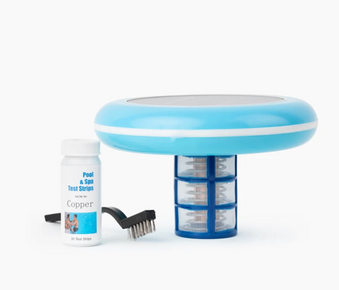
Consistent cleaning helps prevent stains from forming by removing potential staining materials before they have the opportunity to bond with pool surfaces or decompose into staining compounds, complementing the protective action of a solar pool ionizer. Regular maintenance disrupts the gradual accumulation that often precedes visible staining, addressing problems at the microscopic level before they become macroscopic discoloration requiring aggressive removal measures. Preventive cleaning, paired with the continuous mineral-based sanitation from a solar pool ionizer, represents the most cost-effective approach to stain prevention, requiring minimal time and resources compared to stain removal treatments that often involve specialized chemicals, equipment, and labor. This proactive approach transforms stain management from reactive correction into systematic prevention, integrating regular cleaning and solar ionization into overall pool maintenance rather than treating them as optional or secondary to chemical water balance, ensuring stain-free surfaces throughout the swimming season.
1. Daily Skimming: The First Line of Defense
Daily skimming removes floating debris before it sinks and begins decomposing into staining compounds, representing the most basic yet effective stain prevention practice. Leaves, pollen, grass clippings, insects, and other organic materials floating on the surface contain tannins, pigments, and organic compounds that stain surfaces as they break down. When this debris sinks, it often settles in corners, on steps, or behind ladders where it may go unnoticed until visible staining develops. Skimming each morning (or after storms or heavy winds) takes only minutes but prevents hours of stain removal work later. Using a leaf rake for larger debris and a standard skimmer for finer materials ensures comprehensive surface cleaning. For pools under trees or in windy areas, consider a solar-powered automatic skimmer that operates continuously, providing constant protection without daily manual effort while also improving water circulation and reducing chemical demand by removing organic materials before they affect water chemistry.
- Morning routine: Skim before debris has opportunity to sink and decompose
- Post-event cleaning: Additional skimming after storms, wind, or heavy usage
- Tool selection: Leaf rake for large debris, fine skimmer for smaller materials
- Automatic options: Solar skimmers provide continuous protection
- Pattern recognition: Focus on areas where debris naturally accumulates
Daily skimming prevents organic staining at its source, eliminating materials before they can release staining compounds into the water or directly contact surfaces long enough to transfer pigments that create visible discoloration requiring chemical treatments or professional intervention for removal once established.
2. Weekly Brushing: Disrupting Developing Deposits
Weekly brushing physically disrupts microscopic deposits before they bond firmly to pool surfaces, preventing the gradual buildup that leads to visible staining. Even with good circulation and filtration, some particles settle on surfaces where they begin to adhere through chemical bonding or physical embedding. Brushing with appropriate tools (pool nylon brushes for vinyl and fiberglass, stainless steel for concrete) breaks this adhesion process, keeping surfaces clean and preventing stains from establishing. Pay particular attention to corners, steps, behind ladders, and along water lines where circulation is naturally poorer and deposits accumulate more readily. Brushing also distributes water treatment chemicals more evenly and helps prevent algae establishment by disrupting potential attachment points. This weekly maintenance takes 15-30 minutes but prevents staining that might require hours of chemical treatment and multiple brushings to remove once established.
- Frequency: Weekly brushing prevents deposit establishment
- Tool selection: Appropriate brushes for your specific pool surface material
- Focus areas: Corners, steps, behind ladders, and along water lines
- Chemical distribution: Helps spread treatments evenly across surfaces
- Algae prevention: Disrupts potential attachment points for spores
Weekly brushing maintains surface integrity by preventing the gradual accumulation that leads to staining, representing proactive maintenance that addresses potential problems at the microscopic level before they become visible discoloration requiring more aggressive correction measures that often involve chemical treatments, extended brushing sessions, or professional services for complete stain removal.
3. Regular Vacuuming: Removing Settled Particles
Regular vacuuming removes settled particles before they embed in pool surfaces or decompose into staining compounds, addressing materials that escape skimming and filtration. Even with excellent circulation, some particles eventually settle, particularly after the pump shuts off overnight or during low-usage periods. These particles include organic debris (pollen, dust, fine plant material), inorganic materials (sand, silt), and precipitated minerals that can all contribute to staining if allowed to remain in contact with surfaces. Manual vacuuming provides the most thorough cleaning, while automatic cleaners offer convenience for regular maintenance. Vacuum to waste when dealing with heavy debris loads or visible sediment to prevent overloading filters. This regular removal prevents particles from becoming staining sources through direct contact, decomposition, or chemical interaction with pool surfaces and water chemistry.
- Settled particles: Remove before they embed or decompose into staining compounds
- Frequency: Weekly during peak season, adjusted based on visible accumulation
- Method choice: Manual for thorough cleaning, automatic for convenience
- Waste setting: Use when dealing with heavy debris to protect filters
- Pattern vacuuming: Systematic coverage ensures no areas are missed
Regular vacuuming complements skimming and brushing by addressing materials that reach pool surfaces despite preventive measures, preventing them from becoming staining sources through prolonged contact, decomposition, or chemical transformation that might occur if they remain in place rather than being promptly removed through systematic cleaning practices.
4. Prompt Organic Matter Removal: Preventing Decomposition Staining
Prompt removal of organic matter prevents decomposition staining by eliminating materials before they break down into staining compounds. Leaves, grass, flowers, and other plant materials begin releasing tannins and pigments immediately upon contact with water, with staining potential increasing as decomposition progresses. Materials that sink or get trapped in corners create localized staining where they rest on surfaces. Immediate removal (within hours rather than days) prevents this process, maintaining cleaner water and surfaces. Use leaf nets or deep leaf rakes for submerged materials, and consider pool covers during peak leaf-drop seasons to prevent accumulation. For accidental large organic inputs (lawn clippings, fallen branches), immediate response prevents staining that might otherwise require aggressive treatment to remove once decomposition compounds have penetrated surfaces or dispersed throughout the water.
- Immediate response: Remove organic matter within hours rather than days
- Submerged materials: Use leaf nets or deep rakes for sunken debris
- Seasonal protection: Pool covers during peak organic input periods
- Accident response: Immediate cleaning after unexpected organic inputs
- Decomposition prevention: Eliminate materials before staining compounds release
Prompt organic removal addresses one of the most common and preventable staining sources, eliminating materials before they can create the tannin-based staining that often proves particularly stubborn to remove once plant materials have decomposed and released pigments that penetrate pool surfaces or disperse throughout water to precipitate elsewhere as chemistry changes over time.
5. Tile and Water Line Maintenance: Addressing High-Risk Areas
Tile and water line areas require specific attention as they experience unique staining risks from both water chemistry and environmental factors. The water line accumulates oils, lotions, and suntan products that create a scum line which can stain if not regularly cleaned. Tile surfaces above the water collect mineral scale from splash-out and evaporation, creating white or colored deposits that become increasingly difficult to remove over time. Weekly cleaning with appropriate tile brushes and cleaners prevents buildup, while periodic professional tile cleaning (1-2 times per season) addresses more stubborn accumulation. Use automatic water line cleaners for continuous maintenance, or manually scrub with non-abrasive cleaners designed for your specific tile material. This focused maintenance prevents the distinctive staining that often develops at the water interface, where materials concentrate due to evaporation and surface tension effects.
- Water line scum: Weekly cleaning prevents oil and lotion buildup
- Tile scale: Regular brushing prevents mineral deposit accumulation
- Tool selection: Non-abrasive cleaners appropriate for tile material
- Automatic options: Water line cleaners provide continuous maintenance
- Professional periodic cleaning: 1-2 times per season for thorough maintenance
Targeted tile and water line maintenance addresses high-risk staining areas that experience unique conditions (evaporation concentration, product accumulation, splash-out minerals) requiring specific cleaning approaches different from general pool surface maintenance, preventing the distinctive staining patterns that often develop at water interfaces despite otherwise good pool maintenance practices.
6. Filter Maintenance: Supporting Clean Water Circulation
Proper maintenance of your pool filtration system supports stain prevention by ensuring efficient removal of staining particles from circulation before they can settle on surfaces. Clean filters operate at peak efficiency, capturing microscopic particles that might otherwise remain suspended until they eventually settle and potentially stain. Backwash sand or DE filters when pressure rises 8–10 psi above clean levels, and clean cartridge filters when flow visibly decreases or pressure indicates restriction. Regular filter maintenance typically weekly during peak season prevents bypass that allows unfiltered water to recirculate, carrying staining materials repeatedly past surfaces where they might eventually deposit. Upgrading filter media (higher-quality DE, specialized sand, or pleated cartridges) can further improve filtration of smaller particles that contribute to staining. This equipment upkeep represents indirect but essential stain prevention, ensuring your pool filtration system performs optimally rather than allowing gradual efficiency decline that could lead to staining despite otherwise good cleaning practices.
- Pressure monitoring: Backwash or clean when pressure indicates restriction
- Frequency: Weekly maintenance during peak swimming season
- Media consideration: Upgraded materials improve fine particle removal
- Bypass prevention: Maintain seals and proper operation to ensure full filtration
- Performance optimization: Clean filters remove staining particles more efficiently
Filter maintenance supports all other cleaning practices by ensuring efficient removal of staining materials from circulation, preventing their repeated passage past surfaces where they might eventually deposit despite skimming, brushing, and vacuuming efforts to address materials that have already settled or begun adhering to pool surfaces throughout the filtration and circulation system.
These habits prevent debris from breaking down and staining surfaces, maintaining cleaner water with fewer potential staining compounds while simultaneously improving overall pool hygiene and swimmer comfort through reduced organic contamination that can affect water quality beyond just visual appearance concerns. Implementing these preventive cleaning practices creates a comprehensive approach to stain prevention that addresses materials at every stage from initial entry through surface contact to potential decomposition before they can create visible discoloration requiring corrective treatments that often involve more time, more chemicals, and more disruption than consistent preventive maintenance requires throughout the swimming season.

5. Using Equipment and Filtration to Prevent Stains
Properly functioning equipment plays a major role in stain prevention by maintaining water movement that keeps potential staining materials suspended for filtration rather than allowing them to settle on surfaces where they can bond and create discoloration. Efficient filtration removes microscopic particles that could otherwise contribute to staining, while good circulation prevents localized conditions where stains might develop despite overall adequate water chemistry, including balanced pool water hardness. Equipment optimization represents proactive stain prevention that works continuously rather than requiring scheduled intervention, complementing manual maintenance with automated protection against staining conditions. This systematic approach addresses staining potential at the mechanical level, creating conditions where staining materials either get removed from the water or remain in suspension long enough that their chemical composition including factors affected by managing pool water hardness cannot lead to visible discoloration.
1. Pump Operation and Circulation Optimization
Proper pump operation ensures adequate water movement to prevent staining materials from settling on pool surfaces where they can bond and create discoloration. Run your pump 8-12 hours daily during swimming season to achieve complete water turnover at least once every 24 hours, keeping particles suspended until filtration can remove them. For variable-speed pumps, use higher speeds during peak daylight hours when staining risks are greatest (sunlight promotes algae and chemical reactions) and lower speeds overnight to maintain basic circulation while conserving energy. Ensure your pump is properly sized for your pool volume undersized pumps cannot create adequate flow, while oversized pumps may cause excessive turbulence that actually interferes with skimmer efficiency. Program pump operation to coincide with peak staining risks (after heavy usage, during daylight hours) rather than running continuously at low efficiency or only during convenient but ineffective time periods that don't match actual staining prevention needs.
- Daily runtime: 8-12 hours for complete water turnover and particle suspension
- Variable-speed optimization: Higher speeds during peak staining risk periods
- Proper sizing: Adequate but not excessive flow for your specific pool volume
- Timed operation: Program to address peak staining risks throughout day
- Turnover rate: Minimum once every 24 hours to prevent particle settling
Optimized pump operation creates consistent water movement that prevents staining materials from settling and bonding to surfaces, addressing the fundamental mechanical requirement for stain prevention through continuous circulation that complements chemical and manual maintenance approaches to comprehensive stain management in residential pool environments.
2. Filtration System Maintenance and Optimization
Proper filtration maintenance ensures efficient removal of staining particles from circulation before they can settle on surfaces and create discoloration. Clean or backwash filters when pressure rises 8-10 psi above clean operating pressure to maintain optimal flow and particle capture efficiency. For sand filters, consider replacing standard sand with glass media or zeolite for improved filtration of smaller particles that contribute to staining. For cartridge filters, upgrade to pleated designs with finer filtration capabilities and clean using appropriate solutions (not just hose rinsing) to restore efficiency. For DE filters, ensure proper DE amounts and consider regenerative DE that provides more consistent filtration. Regular maintenance (typically weekly during peak season) prevents gradual efficiency decline that allows increasing numbers of staining particles to pass through and eventually settle despite otherwise adequate circulation and chemical balance. This equipment maintenance represents critical support for stain prevention by ensuring your primary particle removal system operates at designed efficiency rather than allowing gradual performance degradation that might contribute to staining over time.
- Pressure monitoring: Clean when pressure indicates restricted flow
- Media upgrades: Improved materials for finer particle filtration
- Maintenance frequency: Weekly during peak season to maintain efficiency
- Cleaning methods: Appropriate for specific filter type and media
- Efficiency preservation: Prevent gradual decline that allows particle passage
Proper filtration maintenance ensures staining particles get captured and removed from circulation rather than being allowed to repeatedly pass surfaces where they might eventually settle and bond, addressing staining prevention at the particle removal level that works continuously alongside chemical prevention and manual cleaning to create comprehensive protection against discoloration from suspended materials in residential pool water.
3. Skimmer and Return System Optimization
Properly functioning and positioned skimmers and returns ensure effective water movement that prevents staining materials from accumulating in specific areas where they might create localized discoloration. Ensure pool skimmer baskets are clean and weirs operate freely to maintain surface suction that removes floating debris before it sinks. Position return jets to create circular water movement that reaches all pool areas, particularly corners, steps, and behind ladders where circulation is naturally poorer. Adjustable returns should be angled slightly downward (approximately 45 degrees) to create bottom-to-surface movement rather than just surface agitation. Multiple returns should work together to eliminate dead spots rather than working against each other. For pools with identified circulation issues, consider adding additional returns or using aimed flow devices to improve problem areas. This system optimization ensures even water movement throughout the pool, preventing localized stagnation where staining materials might settle despite overall adequate pump operation and filtration maintenance.
- Skimmer maintenance: Clean baskets and ensure proper weir operation
- Return positioning: Create circular movement reaching all pool areas
- Angle adjustment: Downward orientation for bottom-to-surface movement
- Coordination: Multiple returns should work together, not against each other
- System upgrades: Additional returns or flow devices for problem areas
Optimized skimmer and return systems create even water movement that prevents localized staining conditions by ensuring all pool areas receive consistent circulation, addressing the mechanical distribution requirements for stain prevention that might otherwise be compromised by poor system design, improper adjustment, or inadequate maintenance of water movement components in residential pool environments.
4. Automatic Cleaner Integration and Optimization
Automatic cleaners provide continuous stain prevention by removing debris and disrupting developing deposits in hard-to-reach areas that manual cleaning might miss. Suction-side cleaners work through the pool's filtration system, removing fine particles that contribute to staining. Pressure-side cleaners use dedicated pumps and bags to capture debris before it affects main filters. Robotic cleaners operate independently with their own filtration systems, providing the most thorough cleaning. Regardless of type, ensure cleaners are properly maintained (bags emptied, filters cleaned, tracks/brushes in good condition) and programmed to run during optimal times (after peak debris periods, during daylight hours). Use cleaners specifically designed for your pool surface (different models for vinyl, concrete, fiberglass) to prevent surface damage while providing effective cleaning. This automated cleaning complements manual maintenance by addressing areas and time periods that might otherwise allow staining development despite good overall pool care practices.
- Cleaner selection: Appropriate type for your pool size and surface
- Maintenance: Regular cleaning of bags, filters, and mechanical components
- Programming: Operation during optimal stain prevention periods
- Surface protection: Models designed for specific pool materials
- Comprehensive coverage: Addresses hard-to-reach manual cleaning areas
Automatic cleaner integration provides continuous mechanical stain prevention that works independently of manual maintenance schedules, addressing debris removal and surface disruption in areas and at times that might otherwise allow staining development despite otherwise good pool care practices through systematic cleaning coverage that complements rather than replaces manual maintenance approaches.
5. Water Feature and Special Equipment Considerations
Water features and special equipment require specific attention for stain prevention, as they can both contribute to and suffer from staining conditions in ways different from main pool areas. Fountains, waterfalls, and spillways often experience mineral scaling from evaporative concentration, requiring regular cleaning and possibly scale prevention systems. Heaters can accelerate chemical reactions that promote staining, particularly metal precipitation when water passes through copper heat exchangers. Salt chlorine generators can contribute to scaling if not properly balanced with calcium management. Automatic chemical feeders must be calibrated to prevent localized chemical concentration that might cause staining. Each special feature requires specific maintenance regular descaling of water features, annual heater inspection, proper salt cell maintenance, chemical feeder calibration to prevent them from becoming staining sources or suffering from staining conditions that might not affect main pool areas to the same degree due to different operating conditions and material exposures.
- Water features: Regular descaling to prevent mineral buildup
- Heaters: Annual inspection and possible anode replacement
- Salt systems: Proper cell maintenance and calcium balance
- Chemical feeders: Calibration to prevent localized concentration
- Feature-specific maintenance: Address unique staining risks of each component
Special equipment maintenance prevents these components from becoming staining sources or suffering staining damage, addressing the unique conditions (higher temperatures, chemical concentrations, material exposures) that water features and auxiliary equipment experience compared to main pool areas, ensuring comprehensive stain prevention throughout the entire pool system rather than just primary swimming areas.
6. Monitoring Systems and Automation Integration
Monitoring systems and automation integration provide proactive stain prevention by detecting conditions that might lead to staining before visible discoloration appears. ORP (oxidation-reduction potential) controllers measure water's oxidative capacity, alerting to conditions where staining might develop. pH controllers maintain consistent levels, preventing the fluctuations that trigger metal precipitation and scaling. Flow meters ensure adequate circulation, alerting to pump or filter issues before stagnation allows particle settling. Automated chemical feeders maintain consistent levels, preventing the peaks and valleys that can promote different staining mechanisms. Integration through pool automation systems allows coordinated response increasing circulation when ORP drops, adjusting chemicals when pH drifts, alerting to maintenance needs before efficiency declines affect stain prevention. This automated monitoring and response creates proactive stain prevention that addresses conditions in real-time rather than through periodic manual testing and adjustment that might miss developing issues between check intervals.
- ORP monitoring: Alerts to oxidative conditions affecting staining potential
- pH control: Maintains consistency to prevent precipitation and scaling
- Flow monitoring: Ensures adequate circulation to prevent stagnation
- Chemical automation: Maintains consistent levels preventing fluctuations
- System integration: Coordinated response to developing conditions
Automated monitoring and control systems provide real-time stain prevention by detecting and addressing conditions that might lead to staining before visible discoloration develops, creating proactive protection that complements manual maintenance through continuous oversight of the chemical and mechanical factors that affect staining potential in residential pool environments.
Good circulation reduces stagnation and surface discoloration by keeping water moving and potential staining materials in suspension until they can be captured by filtration systems or degraded by proper water chemistry that prevents them from bonding to pool surfaces and creating visible staining that requires correction after development rather than prevention before occurrence. This equipment-based approach to stain prevention creates continuous mechanical protection that works alongside chemical and manual maintenance, addressing staining potential through water movement, particle removal, and system optimization that prevents conditions where staining materials can settle, bond, and create visible discoloration despite otherwise adequate pool care practices throughout the swimming season.

6. Seasonal Tips to Avoid Pool Stains
Seasonal changes affect pool maintenance needs as temperature variations, usage patterns, and environmental conditions alter staining risks and prevention requirements. Adjusting your maintenance approach based on seasonal factors addresses the specific staining threats most relevant during different times of year, preventing problems before they develop rather than applying the same maintenance routine year-round despite changing conditions that affect staining potential. Seasonal awareness represents advanced stain prevention that anticipates rather than reacts to staining risks as they emerge throughout the annual pool maintenance cycle. This adaptive approach recognizes that staining mechanisms vary with temperature, sunlight, rainfall, usage, and environmental factors that change predictably through the year, allowing targeted prevention measures that address each season's unique challenges while maintaining consistent protection against year-round staining threats that persist despite seasonal variations.
1. Spring Preparation: Addressing Winter Accumulation and New Growth
Spring requires addressing winter accumulation while preparing for increasing temperatures that can contribute to cloudy pool water and new staining threats. Begin by removing winter covers carefully to prevent debris from entering the pool, using cover pumps or siphons to eliminate standing water that may contain concentrated staining compounds. Clean surfaces thoroughly to remove any winter buildup before refilling or adjusting chemistry. Test water extensively for metals that may have concentrated over winter, treating with sequestering agents before metals oxidize and cause stains. Gradually increase circulation as temperatures rise, running pumps longer to prevent stagnation and cloudiness during transitional periods. Monitor pollen levels and skim frequently during peak seasons to prevent yellow staining. Adjust chemical targets for rising temperatures slightly lowering pH as warmer water naturally trends higher. This spring preparation helps prevent both winter-related and emerging spring staining and cloudiness, setting the foundation for clear, stain-free water throughout the swimming season.
- Cover removal: Prevent debris entry and address standing water staining compounds
- Surface cleaning: Remove winter accumulation before adjusting chemistry
- Metal testing: Check for winter concentration and treat before oxidation
- Pollen management: Frequent skimming during peak pollen periods
- Temperature adjustment: Modify chemical targets for warming conditions
Spring stain prevention addresses both residual winter issues and emerging spring threats, creating a clean foundation for the swimming season while implementing adjustments for changing conditions that affect staining potential as temperatures rise and environmental factors shift from winter dormancy to spring growth patterns in residential pool environments.
2. Summer Peak Season: Managing High-Temperature Staining Risks
Summer presents peak staining risks from high temperatures, heavy usage, and intense sunlight that accelerate all staining mechanisms. Increase cleaning frequency to daily skimming and twice-weekly brushing to address higher organic input from increased usage and environmental activity. Monitor algae growth closely as warm water promotes rapid development, maintaining consistent sanitizer levels and considering algaecide prevention for problematic pools. Test water chemistry 2-3 times weekly as high temperatures accelerate chemical reactions and evaporation concentrates minerals more rapidly. Adjust calcium targets upward slightly as warmer water holds less calcium in solution, increasing scaling risk. Use solar covers during non-use periods to reduce evaporation and chemical consumption while maintaining more stable conditions. Increase circulation during hottest daylight hours when staining risks peak from temperature, sunlight, and chemical interaction effects. This intensive summer management prevents the rapid staining development that can occur in peak conditions despite otherwise adequate maintenance.
- Cleaning frequency: Daily skimming, twice-weekly brushing for high usage
- Algae vigilance: Consistent sanitizer with possible preventive algaecide
- Testing frequency: 2-3 times weekly to catch rapid chemical changes
- Calcium adjustment: Slightly higher targets for warm water solubility
- Circulation timing: Increased during peak daylight staining risk periods
Summer stain prevention requires intensified maintenance to match increased staining threats from temperature, usage, and environmental factors that accelerate all staining mechanisms, preventing the rapid discoloration that can develop in peak season conditions despite otherwise adequate year-round maintenance practices in residential pool environments.
3. Fall Transition: Managing Organic Input and Temperature Decline
Fall requires managing increasing organic input while addressing declining temperatures that affect chemical balance and staining mechanisms. Implement aggressive leaf management as trees shed, using leaf nets, frequent skimming, and possibly temporary pool covers during peak leaf drop to prevent organic staining from decomposing leaves. Gradually reduce chemical testing frequency as temperatures decline and usage decreases, but maintain consistent balance to prevent drift during transitional periods. Adjust chemical targets for cooling water slightly higher pH targets as cooler water naturally tends toward lower pH. Prepare for reduced circulation as temperatures drop, ensuring good water movement despite potentially shorter pump run times. Monitor for metal staining as falling temperatures can trigger precipitation of metals that remained soluble in warmer water. This fall management prevents organic staining from seasonal debris while adjusting chemical approaches for changing temperatures that affect staining potential differently than summer conditions.
- Leaf management: Aggressive removal during peak shedding periods
- Testing adjustment: Gradual frequency reduction but consistent balance
- Chemical targets: Modified for cooling water characteristics
- Circulation maintenance: Ensure good movement despite reduced run times
- Metal monitoring: Watch for precipitation triggered by temperature decline
Fall stain prevention focuses on organic management while adjusting chemical approaches for cooling conditions, preventing the leaf-based staining that characterizes autumn while addressing the changing chemical dynamics that affect metal solubility and other staining mechanisms as temperatures decline in residential pool environments transitioning from swimming season to off-season operation.
4. Winter Off-Season: Preventing Dormancy-Related Staining
Winter requires specific strategies to prevent staining during dormancy when reduced maintenance might otherwise allow problems to develop unnoticed. For closed pools, proper winterization prevents staining from concentrated chemicals, metal precipitation, or organic decomposition under covers. Balance water chemistry precisely before closing, using winterizing chemicals that prevent staining without creating their own discoloration risks. For open pools in winter climates, maintain circulation to prevent stagnation even during freezing conditions, using freeze protection systems if necessary. Monitor covered pools for debris accumulation and standing water that can create staining compounds. Check chemistry monthly even in dormant pools to prevent gradual drift that might create staining conditions before spring reopening. Consider using stain prevention products specifically formulated for winter conditions that address the unique challenges of cold water chemistry and extended dormancy periods.
- Winterization precision: Exact chemical balance before closing
- Circulation maintenance: Prevent stagnation even in cold conditions
- Cover monitoring: Check for debris and standing water accumulation
- Dormant testing: Monthly chemistry checks despite reduced activity
- Winter formulations: Specific products for cold water stain prevention
Winter stain prevention addresses the unique challenges of dormancy and cold temperatures, preventing problems that might develop unnoticed during off-season periods and ensuring stain-free conditions when pools reopen in spring without requiring aggressive correction of issues that accumulated during winter neglect in residential pool environments with seasonal operation patterns.
5. Seasonal Equipment Adjustments for Stain Prevention
Equipment operation should adjust seasonally to match changing staining prevention requirements based on temperature, usage, and environmental factors. In summer, run pumps during daylight hours when staining risks peak from sunlight and temperature effects. In spring and fall, adjust run times based on actual water temperature rather than calendar dates, extending operation during unseasonably warm periods. Winterize equipment properly to prevent damage that might reduce effectiveness next season. Adjust filter cleaning frequency based on seasonal debris loads more frequent during leaf seasons, less during winter dormancy. Modify automatic cleaner schedules to match seasonal debris patterns. Consider seasonal equipment additions like leaf traps during fall or solar covers during summer to address specific seasonal staining threats. These equipment adjustments ensure mechanical stain prevention matches seasonal requirements rather than operating on fixed schedules that might be inadequate during some seasons while excessive during others.
- Pump timing: Daylight operation in summer, temperature-based in shoulder seasons
- Filter maintenance: Frequency adjusted for seasonal debris loads
- Winterization: Proper protection to maintain next season effectiveness
- Cleaner scheduling: Matched to seasonal debris patterns
- Seasonal accessories: Added equipment for specific seasonal threats
Seasonal equipment adjustments ensure mechanical stain prevention components operate optimally for each season's specific challenges, preventing the inefficiency of fixed operation schedules that might provide adequate protection during some periods but insufficient defense against seasonal staining threats that require different mechanical approaches based on temperature, usage, and environmental conditions throughout the annual pool maintenance cycle.
6. Geographic and Climate-Based Seasonal Variations
Seasonal stain prevention must account for geographic and climate variations, which is why effective pool strategies for homeowners focus on tailoring seasonal routines to specific locations. In desert climates, summer strategies emphasize preventing scale from evaporation and high temperatures rather than organic debris. In forested areas, fall leaf management is the primary concern. Coastal regions face unique challenges from salt air or sand, while tropical climates encounter consistent threats despite less seasonal variation. Even within regions, microclimates influence staining risks pools in valleys may experience different temperature and humidity patterns than those on hills. Homeowners should consult local pool professionals about area-specific seasonal concerns and adapt general seasonal guidelines to their location. Keeping records of when staining issues occurred in previous years helps anticipate patterns unique to your pool. This localized approach ensures seasonal strategies address real-world conditions rather than relying solely on generic advice that may not match your climate, environment, or microclimate.
- Climate adaptation: Strategies modified for desert, forest, coastal, or tropical conditions
- Local consultation: Area-specific advice from local pool professionals
- Microclimate consideration: Location-specific variations within regions
- Record keeping: Track previous staining issues to anticipate local patterns
- Strategy customization: General guidelines adapted to specific local conditions
Geographic adaptation of seasonal strategies ensures stain prevention addresses actual local conditions rather than generic seasonal advice, recognizing that seasonal staining threats vary significantly by climate, environment, and even microclimate within regions, requiring customized approaches that reflect specific geographic factors affecting residential pool environments throughout the annual maintenance cycle.
Adjusting care by season helps keep stains from forming, addressing the specific challenges each season presents rather than maintaining static maintenance routines that might be adequate during some periods but insufficient during others when different staining risks emerge due to changing environmental conditions, usage patterns, or equipment operation schedules. This seasonal approach to stain prevention represents advanced pool care that anticipates rather than reacts to staining threats, integrating knowledge of seasonal patterns into proactive maintenance that prevents discoloration before it develops by addressing the specific mechanisms most active during each season while maintaining consistent protection against year-round staining threats that persist despite seasonal variations in residential pool environments.

7. Final Thoughts: Keeping Pool Surfaces Stain-Free
Preventing pool stains in residential pools comes down to consistency and awareness rather than complex treatments or expensive professional interventions. A proactive approach that combines regular maintenance, proper water balance, and equipment optimization prevents the vast majority of staining problems before they require correction, saving time, money, and frustration while maintaining the visual appeal and value of your pool investment. The most effective stain prevention happens before stains become visible through daily habits and weekly maintenance that address staining risks at their source rather than after they've created visible problems requiring aggressive removal measures.
Successful stain prevention requires understanding that different seasons, water sources, and pool materials present unique challenges that demand tailored approaches rather than one-size-fits-all solutions. By recognizing the specific staining threats relevant to your pool whether metal-rich water, heavy leaf fall, intense sunlight, or high usage patterns you can implement targeted prevention that addresses your actual risks rather than relying on generic maintenance that might miss critical vulnerabilities. Using tools like an automatic pool cleaner as part of this customized approach ensures consistent removal of debris and sediments that contribute to staining, reducing the risk of buildup in hard-to-reach areas. Combined with consistent execution of fundamental maintenance practices, this strategy creates comprehensive protection that keeps surfaces pristine through changing conditions and varying usage patterns throughout the year.
Key takeaways:
- Maintain balanced water chemistry to prevent conditions that promote staining
- Clean regularly and remove debris quickly to eliminate potential staining sources
- Ensure proper circulation and filtration to keep staining materials suspended
- Adjust maintenance routines seasonally to address changing staining risks
With proactive care, residential pool owners can avoid unsightly stains and enjoy a clean, visually appealing pool throughout the year. Prevention-focused maintenance represents the most efficient approach to pool care requiring less time, fewer chemicals, and lower costs than stain removal while providing better overall results through consistently clean, attractive pool surfaces that enhance property value and swimming enjoyment without the periodic discoloration problems that often plague reactively maintained pools despite higher overall maintenance investment in correction rather than prevention of staining issues.