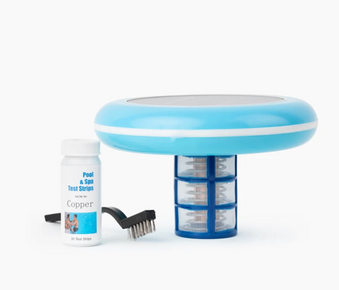
TL;DR: Efficiency goals in 2026 encompass far more than simple energy reduction they include chemical efficiency, water conservation, equipment longevity, operational simplicity, and environmental responsibility. Solar pool ionizers align with every dimension of modern efficiency goals through fundamentally better water chemistry. By eliminating the corrosive, unstable nature of chlorine, ionizers enable dramatic reductions in energy consumption, chemical use, water waste, and maintenance time while extending equipment life and reducing environmental impact. This guide explores how solar ionization supports comprehensive efficiency goals and why it has become essential for forward-thinking pool owners.
SEO Summary: 2026 guide to how solar pool ionizers align with efficiency goals: energy reduction, chemical elimination, water conservation, equipment longevity, operational simplicity, and environmental responsibility.
Table of Contents
- Defining Efficiency Goals in 2026
- Energy Efficiency: Reducing Consumption
- Chemical Efficiency: Eliminating Waste
- Water Efficiency: Conserving Resources
- Equipment Efficiency: Extending Life
- Operational Efficiency: Simplifying Management
- Time Efficiency: Reducing Effort
- Environmental Efficiency: Minimizing Impact
- Integrated Efficiency: The Whole-System View
- Conclusion & Key Takeaways
Defining Efficiency Goals in 2026
Efficiency has traditionally been measured in narrow terms primarily energy consumption. While energy remains important, a comprehensive view of efficiency in 2026 encompasses multiple dimensions that together determine the true performance and sustainability of any system.
- Energy efficiency measures the electricity required to maintain water quality, including pump operation, sanitation systems, and heating. Reducing energy consumption lowers costs and carbon footprint.
- Chemical efficiency tracks the quantity of chemicals consumed including sanitizers, algaecides, clarifiers, and pH adjusters. Minimizing chemical use reduces costs, handling, and environmental impact.
- Water efficiency accounts for consumption through evaporation, backwashing, and deliberate draining. Conserving water is increasingly critical in drought-prone regions and aligns with broader sustainability goals.
- Equipment efficiency measures the service life of pumps, heaters, filters, and other components. Longer-lived equipment reduces manufacturing energy, replacement costs, and waste.
- Operational efficiency reflects the simplicity and reliability of system management. Streamlined operations reduce errors, improve outcomes, and enhance the ownership experience.
- Time efficiency captures the hours of owner attention required. Lower time requirements free owners to enjoy rather than maintain their pools.
- Environmental efficiency encompasses the broader ecological impact including chemical manufacturing, packaging waste, and ecosystem effects. Reducing environmental footprint aligns with personal and societal values.
Solar pool ionizers align with every dimension of modern efficiency goals. They are not merely an alternative sanitation method but a comprehensive efficiency upgrade for the entire pool system. The movement toward low-chemical pools has accelerated dramatically, and our analysis of low-chemical pool trends demonstrates how these efficiency gains are driving adoption.
Energy Efficiency: Reducing Consumption
Energy efficiency is the most quantifiable and immediately noticeable benefit of solar pool ionizers. The energy savings come from multiple mechanisms that compound to deliver dramatic reductions.
- Sanitation energy is eliminated entirely. The ionizer itself consumes zero grid power, using a dedicated solar panel to generate the electricity needed for ion production. This eliminates the 500 to 1,500 watts that salt chlorine generators, ozone systems, or UV sterilizers would draw from the grid, saving 500 to 1,500 kilowatt-hours annually for a typical pool.
- Pump runtime reduction of 40 to 60 percent is achievable because ionized water stays cleaner and requires no chemical distribution. Where a traditional pool might run 10 hours daily, an ionized pool often achieves perfect clarity in 4 to 6 hours. This directly reduces energy consumption proportionally.
- Lower speed operation is possible because high flow is not required for chemical distribution. The affinity laws dictate that reducing pump speed by 20 percent reduces power consumption by approximately 50 percent. A variable-speed pump in an ionized pool typically operates at 1500 to 2000 RPM rather than 3000 to 3450 RPM, consuming 80 to 90 percent less energy at those lower speeds.
- Combined savings from runtime reduction and speed reduction reach 70 to 80 percent. A pool that previously consumed 3,000 kilowatt-hours annually for circulation might consume 600 to 900 kilowatt-hours after optimization. At average electricity rates, this saves $400 to $600 per year.
- Solar-synchronous operation further reduces grid consumption by scheduling pump operation during peak solar hours. A pump running on solar power during daylight hours consumes zero grid electricity for those hours. With modest battery storage, evening operation can also be solar-powered.
- Heating efficiency improves through scale prevention. Scale-free heat exchangers maintain peak efficiency, saving 10 to 20 percent on heating energy. The perceived warmth of ionized water also allows 1 to 2 degree lower thermostat settings, saving additional energy.
Energy efficiency gains alone often justify the investment in solar ionization within a few years. The principles of solar-powered pool care are explored in our guide to solar-powered operation, which provides detailed analysis of achievable energy savings.
Chemical Efficiency: Eliminating Waste
Chemical efficiency is perhaps the most satisfying efficiency gain for pool owners, eliminating the constant purchases, storage, and handling of pool chemicals while improving water quality.
- Chlorine elimination of 80 to 90 percent is standard. A traditional pool consumes 200 to 300 pounds of chlorine products annually. A solar-ionized pool reduces this to 20 to 40 pounds, primarily for occasional shocking or backup sanitation.
- Algaecide elimination is complete because copper ions themselves are effective algaecides. The 10 to 20 gallons of algaecide that a traditional pool might use annually are completely eliminated.
- Clarifier reduction of 90 to 100 percent results from ionic flocculation, which naturally improves water clarity. Most ionizer owners use zero clarifiers after the initial transition period.
- pH adjuster reduction of 50 to 70 percent occurs because ionized water is chemically stable. The volume of acid or base required decreases dramatically, and adjustments that were weekly become monthly.
- Shock treatment reduction of 80 to 90 percent eliminates weekly shocking. Occasional non-chlorine shock after heavy use may still be beneficial, but total shock treatments drop from 30 to 50 per year to 5 to 10.
- Cyanuric acid elimination removes a major source of water degradation. Ionized pools use no CYA, eliminating the need for periodic draining to reset stabilizer levels.
- Dollar savings from chemical reduction total $400 to $700 annually for a typical residential pool. For commercial pools, the savings are even more dramatic often $2,000 to $5,000 per year.
Chemical efficiency extends beyond direct cost savings. It eliminates chemical storage hazards, reduces trips to the pool store, and removes the mental burden of constant chemical management. The principles of simpler pool chemistry that enable these gains are detailed in our guide to pool simpler chemistry, demonstrating how few parameters actually require attention.
Water Efficiency: Conserving Resources
Water efficiency has become increasingly critical as drought conditions intensify and water costs rise. Solar pool ionizers deliver significant water conservation through multiple mechanisms.
- Extended drain intervals represent the largest water savings. Traditional pools require partial draining every 2 to 3 years to manage total dissolved solids and cyanuric acid accumulation. Ionized pools maintain stable chemistry that extends drain intervals to 8 to 12 years or longer. This saves 3,000 to 5,000 gallons per drain cycle, accumulating to tens of thousands of gallons over the pool's lifetime.
- Reduced backwashing saves additional water. Cleaner water and more efficient filtration reduce backwash frequency by 30 to 50 percent. Each saved backwash cycle conserves 200 to 500 gallons, depending on filter type.
- No CYA dilution requirements eliminate a major source of water consumption. Cyanuric acid, which accumulates in chlorinated pools and requires dilution, is not used in ionized pools.
- Rainwater harvesting integration is simplified by stable chemistry. Rainwater, which is soft and low in dissolved solids, can be used for top-ups without disrupting the careful chemical balance required by chlorine systems. This reduces demand on municipal supplies.
- Evaporation reduction through covers is enhanced because stable chemistry means covers don't interfere with sanitation. Automated covers, when used consistently, can reduce evaporation by 90 to 95 percent.
- Quantified water savings over a 20-year period can exceed 50,000 gallons for a single pool. Multiplied across thousands of installations, this represents significant water conservation.
Water efficiency gains are increasingly valued as water becomes scarcer and more expensive. The role of solar pool ionizers in comprehensive water strategy is explored in our analysis of pool water strategy, which provides context for how these systems support conservation goals.
Equipment Efficiency: Extending Life
Equipment efficiency measures how long pumps, heaters, filters, and other components last before requiring replacement. The non-corrosive environment of ionized water dramatically extends equipment life, delivering significant economic and environmental benefits.
- Pump longevity increases from 8 to 10 years in chlorinated pools to 12 to 15 years in ionized pools. This 30 to 50 percent extension results from reduced seal deterioration, impeller corrosion, and housing degradation.
- Heater longevity benefits most dramatically from scale prevention and reduced corrosion. Service life extends from 5 to 8 years to 12 to 15 years a 50 to 100 percent improvement. This alone can save thousands of dollars in replacement costs.
- Filter components including cartridges, grids, and valves last longer in the benign chemical environment. Cartridge life increases by 30 to 50 percent. Sand lasts indefinitely with proper care. DE grids require less frequent replacement.
- Light fixture longevity extends from 5 to 7 years to 10 to 12 years. Seals remain intact, lenses stay clear, and housings resist corrosion.
- Valve and fitting life increases as plastic components avoid the embrittlement caused by chlorine exposure. Plumbing systems remain reliable for decades.
- Surface longevity for plaster, gunite, and fiberglass improves by 30 to 50 percent. The absence of aggressive chemical attack preserves finishes and reduces resurfacing frequency.
- Economic impact of extended equipment life is substantial. Over a 20-year period, these savings can exceed $10,000 for an average pool, far exceeding the initial investment in ionization.
Equipment efficiency gains translate directly to lower total cost of ownership and reduced environmental impact from manufacturing replacements. The performance enhancements that enable these gains are detailed in our performance enhancement resource, which quantifies the improvements in equipment longevity.
Operational Efficiency: Simplifying Management
Operational efficiency reflects the simplicity and reliability of pool management. Solar ionization streamlines every aspect of pool operation, reducing complexity and improving outcomes.
- Testing requirements drop dramatically. Daily chlorine testing becomes weekly copper verification. Multiple eliminated tests reduce both time and mental load. The simple copper test provides clear, unambiguous results unaffected by other parameters.
- Chemical handling nearly disappears. With 80 to 90 percent fewer chemicals needed, purchasing, storage, and application become occasional rather than constant. The hazardous material storage area in the garage can be repurposed.
- Automation enables true self-management. Temperature compensation adjusts output automatically. Seasonal transitions occur without programming. Optional closed-loop control eliminates manual adjustment entirely.
- Maintenance becomes predictable. Filter cleaning, electrode replacement, and other tasks follow schedules that can be set weeks or months in advance. No more emergency responses to unexpected failures.
- Seasonal transitions become effortless. Spring opening and fall closing follow simple, chemical-minimal protocols that take hours rather than days. The stress associated with these events evaporates.
- Troubleshooting becomes calm and systematic. Stable chemistry provides time to investigate methodically. Problems are solved on a schedule, not in a panic.
Operational efficiency transforms the relationship with the pool. It becomes a source of pleasure rather than a source of work. The transformation of backyard pools into genuinely enjoyable amenities is explored in our reinventing backyard pools article, which documents how operational simplicity changes the ownership experience.
Time Efficiency: Reducing Effort
Time efficiency may be the most valued efficiency gain for many pool owners. The hours once spent testing, adjusting, and worrying about pool chemistry become minutes of simple verification.
- Daily time drops from 10 to 15 minutes to 60 seconds. A quick visual check, solar panel glance, and flow verification take less than two minutes. Daily pH testing becomes optional after the pool's pattern is established.
- Weekly time drops from 30 to 60 minutes to 5 to 7 minutes. Copper and pH tests provide quantitative verification of system performance. Filter pressure check and basket inspection add minimal time.
- Monthly time of 15 to 30 minutes covers electrode inspection, panel cleaning, and comprehensive testing. This preventive maintenance prevents small issues from becoming major problems.
- Emergency time is virtually eliminated. The stable chemistry and predictive capabilities of modern systems mean that unexpected problems requiring immediate attention are rare. No more Sunday morning green water panics.
- Pool store trips drop from weekly to monthly or quarterly. Fewer chemical purchases mean less time traveling, shopping, and hauling heavy containers.
- Mental load reduction is perhaps the most valuable time-related benefit. The nagging worry about water quality, chemical balance, and potential problems simply evaporates. The pool becomes a source of relaxation rather than anxiety.
- Vacation freedom allows owners to travel without arranging for pool service or worrying about water quality. Ionized pools maintain themselves for weeks with minimal attention.
Time efficiency gains compound over the years, freeing hundreds of hours for more enjoyable activities. The principles of predictable maintenance that enable these time savings are detailed in our guide to predictable pool maintenance, which provides systematic approaches to efficient pool management.
Environmental Efficiency: Minimizing Impact
Environmental efficiency encompasses the broader ecological footprint of pool ownership. Solar pool ionizers deliver significant environmental benefits across multiple dimensions.
- Zero-carbon sanitation eliminates the emissions associated with grid-powered sanitation. Solar panels provide all energy needed for ion production, saving 500 to 1,500 kilowatt-hours annually and avoiding 500 to 1,000 pounds of CO2 emissions per pool.
- Chemical manufacturing elimination avoids the embedded energy of chlorine production. The chlor-alkali process is energy-intensive, consuming 2,500 to 3,000 kilowatt-hours per ton of chlorine. By eliminating 80 to 90 percent of chemical consumption, ionized pools avoid this embedded energy.
- Plastic waste reduction of 80 to 90 percent addresses the 40 to 60 pounds of chemical packaging generated annually by traditional pools. A single electrode cartridge every 3 to 5 years replaces dozens of plastic containers.
- Water conservation through extended drain intervals and reduced backwashing saves tens of thousands of gallons over the pool's lifetime. In water-stressed regions, this benefit is particularly significant.
- Ecosystem protection results from eliminating chemical discharge. When ionized pools are eventually drained, the water contains no chlorine, chloramines, algaecides, or CYA. Copper levels are well below drinking water standards, posing no threat to aquatic life.
- Reduced transportation emissions from fewer chemical deliveries and fewer owner trips to pool stores contribute to overall carbon footprint reduction.
Environmental efficiency aligns pool ownership with broader sustainability goals. The eco-friendly aspects of solar ionization are explored in our eco-pool beginner's guide, which provides comprehensive information on sustainable pool practices.
Integrated Efficiency: The Whole-System View
The true power of solar ionization for efficiency becomes apparent when viewing the pool as an integrated system rather than a collection of independent components. The efficiency gains multiply when all factors are considered together.
- Energy plus chemical synergy delivers compounded savings. Reduced pump runtime saves energy directly, but also reduces the energy required to manufacture and transport the chemicals that are no longer needed. The embodied energy of eliminated chemicals adds another 300 to 500 kilowatt-hours of savings annually.
- Filtration plus energy synergy means that the energy used for circulation achieves more contaminant removal. The same pump energy produces clearer water, effectively increasing the efficiency of every kilowatt-hour consumed.
- Heating plus chemical synergy ensures that scale prevention not only maintains heating efficiency but also reduces the chemical demand for scale treatments and descalers. The heater operates more efficiently and requires less maintenance.
- Equipment plus time synergy means longer-lived equipment translates into fewer hours spent researching, purchasing, and installing replacements. The time saved compounds with the daily time savings from simplified maintenance.
- Water plus chemical synergy means extended drain intervals require fewer chemicals to rebalance fresh water, and less water is consumed overall. The efficiency gains reinforce each other.
- Quantified integrated efficiency shows that a solar-ionized pool typically achieves 60 to 75 percent reduction in total resource consumption energy, chemicals, water, and owner time compared to a traditionally managed chlorinated pool.
This integrated efficiency is what makes solar ionization a truly transformative technology. The next-generation pool systems that achieve these results are explored in our next-generation pool power resource, which provides guidance on implementing comprehensive efficiency strategies.
Conclusion & Key Takeaways
Solar pool ionizers align perfectly with the comprehensive efficiency goals of 2026. They deliver dramatic reductions in energy consumption, chemical use, water waste, and owner time while extending equipment life and minimizing environmental impact. These gains are not independent they reinforce each other, creating integrated efficiency that exceeds the sum of its parts.
Energy efficiency improves by 70 to 80 percent through eliminated sanitation energy, reduced pump runtime, and lower-speed operation. Chemical efficiency reaches 80 to 90 percent reduction, eliminating most chemical purchases and handling. Water efficiency saves tens of thousands of gallons through extended drain intervals and reduced backwashing. Equipment efficiency extends component life by 30 to 50 percent, reducing replacement costs and manufacturing impact. Operational and time efficiency transform the ownership experience, freeing hundreds of hours for enjoyment rather than maintenance. Environmental efficiency addresses carbon emissions, plastic waste, and ecosystem protection.
These efficiency gains are not theoretical they are being achieved today in thousands of residential, commercial, and public pools worldwide. The technology is proven, the benefits are documented, and the path to a more efficient pool is clear.
Key Takeaways
- Efficiency goals in 2026 encompass multiple dimensions: energy, chemicals, water, equipment, operations, time, and environment. Solar ionization improves every dimension.
- Energy efficiency improves by 70 to 80 percent through eliminated sanitation energy, reduced pump runtime, and lower-speed operation. Our solar-powered pool care guide quantifies these savings.
- Chemical efficiency reaches 80 to 90 percent reduction, eliminating most chemical purchases and handling. Annual savings of $400 to $700 are typical.
- Water efficiency saves tens of thousands of gallons through extended drain intervals and reduced backwashing. Extended drain intervals from 2 to 3 years to 8 to 12 years are standard. Our water strategy resource provides detailed analysis.
- Equipment efficiency extends component life by 30 to 50 percent. Heaters last 12 to 15 years instead of 5 to 8. Pumps last 12 to 15 years instead of 8 to 10.
- Operational efficiency simplifies management dramatically. Testing drops from daily to weekly. Chemical handling nearly disappears. Maintenance becomes predictable.
- Time efficiency saves hundreds of hours annually. Daily tasks drop from 15 minutes to 60 seconds. Emergency responses become rare. Our predictable maintenance resource provides systematic approaches.
- Environmental efficiency addresses carbon emissions, plastic waste, and ecosystem protection. Zero-carbon sanitation, 80 to 90 percent plastic waste reduction, and chemical-free discharge deliver measurable environmental benefits.
- Integrated efficiency exceeds the sum of parts. Energy, chemical, water, equipment, time, and environmental gains reinforce each other, creating total resource reduction of 60 to 75 percent.
- The efficiency gains are proven and available. Thousands of installations document these benefits. The technology is mature and accessible to every pool owner. For those ready to align their pool with modern efficiency goals, our analysis of market trends provides context for why adoption is accelerating.
Every pool owner deserves the efficiency that solar ionization delivers. Lower costs, less environmental impact, more free time, and better water quality all achievable with proven technology available today. The question is not whether you can afford to improve your pool's efficiency, but whether you can afford not to.