
Maintaining a swimming pool doesn't have to mean constant chemical adjustments and harsh treatments. Copper ionization offers a modern, mineral-based approach to pool sanitation that helps control algae, improve water clarity, and reduce reliance on traditional chemicals. When properly maintained, a copper ionization system can make pool care more consistent, comfortable, and efficient.
This innovative technology represents a paradigm shift in pool maintenance philosophy moving away from the chemical rollercoaster of traditional chlorine dependency toward a gentler, more sustainable mineral-based protection system. Copper ionization doesn't merely replace one sanitizer with another; it fundamentally changes how pools are protected by creating continuous, low-level mineral presence that prevents problems biologically rather than attacking them chemically after they appear. The copper ions released into the water work through subtle interference with algal and bacterial cellular processes, disrupting growth and reproduction at microscopic levels while remaining completely safe for swimmers. This approach offers multiple advantages: it reduces eye and skin irritation common with high chlorine levels, eliminates strong chemical odors, and creates water that feels naturally soft and refreshing rather than harsh and chemically managed.
The true power of copper ionization emerges not from the technology alone, but from its integration into a comprehensive pool care strategy that includes proper water balance, effective circulation, and consistent maintenance. When supported by these foundational elements, ionization systems provide reliable, season-long protection with minimal chemical intervention, transforming pool maintenance from a weekly chemical balancing act into a predictable system of mineral stewardship. This integration allows pool owners to maintain the protective benefits of traditional sanitation while dramatically reducing the drawbacks creating water that remains consistently clear and inviting without the constant monitoring, measuring, and adjusting that characterizes traditional chemical pool care..
Table of Contents
- Understanding Copper Ionization in Pool Care
- Setting Up the Right Water Balance for Ionization
- Maintaining Proper Copper Levels
- Supporting Ionization with Filtration and Circulation
- Preventing Algae and Cloudy Water Naturally
- Routine Maintenance for Long-Term Performance
- Final Thoughts: Smarter Pool Maintenance with Copper Ionization
1. Understanding Copper Ionization in Pool Care
Copper ionization represents a sophisticated biological intervention in smarter pool sanitation that operates on fundamentally different principles than traditional chemical oxidizers, transforming pool maintenance from constant chemical warfare to continuous biological management. This technology works by releasing positively charged copper ions into the water through a controlled electrochemical process, typically powered by solar energy in modern systems, creating what aquatic microbiologists term a "microbiostatic environment" where algae and bacteria cannot thrive. These ions remain active longer than many chemical sanitizers because they don't degrade through sunlight exposure or organic consumption like chlorine instead, they circulate through the water, attaching to surfaces and interacting with microorganisms through multiple mechanisms simultaneously. This provides continuous protection rather than short-term treatment by maintaining consistent ion concentrations that create persistent environmental pressure against microbial establishment, eliminating the vulnerable periods that characterize traditional sanitation methods where chemical levels fluctuate between additions. The system's intelligence lies in its self-regulation: solar-powered ionizers naturally increase production during bright, sunny conditions when algal growth potential is highest, and decrease output during cloudy periods, creating what engineers term "demand-responsive sanitation" that matches protection to environmental risk without manual adjustment.
💡 Tired of Buying Chemicals Every Season?
Solar pool ionizers reduce chlorine use by 85–90% — using NASA-proven copper-silver ion technology to keep your pool clean with minimal chemicals. No more weekly shock treatments. No more algaecide bills.
| Factor | Chemical Treatment | Solar Ionizer |
|---|---|---|
| Annual chemical cost | $600–$1,200+ | ~$50–$80 |
| Chlorine level needed | 1–3 ppm | 0.1–0.5 ppm |
| Skin & eye irritation | Common | Minimal |
| Ongoing effort | Weekly treatments | Set & forget |
The ionizer works alongside a small amount of chlorine — so you still shock occasionally, but far less often. Most pool owners recoup the cost within one season.
The Electrochemical Generation Process
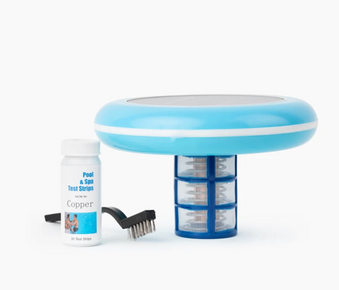
Copper ionization systems operate through precise electrochemical mechanisms that transform solid copper into biologically active ions without introducing excessive mineral concentrations. In solar-powered systems, photovoltaic panels convert sunlight into direct electrical current that passes through copper electrodes suspended in a controlled chamber. This electrical current causes copper atoms to lose electrons and enter the water as positively charged copper ions (Cu²⁺) through a process called electrolytic ionization. The system includes automatic regulation circuits that adjust current flow based on available sunlight and water conditions, ensuring consistent ion production regardless of weather variations. This electrochemical approach offers multiple advantages over simply adding copper compounds to water: it provides controlled, gradual release that prevents sudden concentration spikes; it generates ions in their most biologically active form; and it operates independently of external power sources, making it both environmentally sustainable and cost-effective. The floating design of many solar ionizers ensures natural movement across the pool surface, promoting even distribution while their self-contained operation requires no plumbing modifications or complex installation.
- Electrolytic Conversion: Electrical current transforms solid copper into active ions
- Solar-Powered Operation: Photovoltaic panels provide energy independence and sustainability
- Automatic Regulation: Systems adjust production based on sunlight and conditions
- Controlled Release: Gradual ion introduction prevents concentration spikes
The Biological Action Mechanism
Copper ions disrupt algae growth and inhibit bacteria through sophisticated biochemical interference that operates at multiple points in microbial metabolism, making resistance development extremely unlikely. When copper ions encounter algal or bacterial cells, they penetrate cell walls and membranes through various transport mechanisms, then bind to critical enzymes involved in photosynthesis, respiration, and DNA replication. In algae, copper particularly targets the photosynthetic apparatus binding to chlorophyll molecules and disrupting electron transport chains essential for converting sunlight into energy. In bacteria, copper interferes with cellular respiration by binding to cytochrome c oxidase, preventing proper oxygen utilization. Additionally, copper ions generate reactive oxygen species within cells that cause oxidative damage to proteins, lipids, and nucleic acids. This multi-target approach ensures effectiveness against diverse microorganisms including green algae, mustard algae, black algae, and various bacteria that can compromise and improve pool water quality. Unlike chemical oxidizers that indiscriminately damage all organic material, copper ions exhibit what microbiologists call "selective toxicity" they interfere with specific microbial processes while having minimal effect on human cells at the concentrations used in pool water.
- Multi-Target Action: Copper interferes with photosynthesis, respiration, and DNA processes
- Cellular Penetration: Ions pass through microbial cell walls and membranes
- Enzyme Binding: Copper attaches to critical metabolic enzymes
- Selective Toxicity: Affects microorganisms while remaining safe for humans
The Persistence Advantage
The extended activity of copper ions represents one of the technology's most significant advantages, creating what pool professionals term "steady-state protection" that eliminates the vulnerability windows characteristic of traditional sanitation. Unlike chlorine that can degrade completely within hours under strong sunlight (a process called photolysis), copper ions maintain their biological effectiveness for days or even weeks as they circulate through the water. This persistence occurs because copper ions don't break down through chemical reactions with sunlight they gradually plate out on surfaces or combine with other compounds over extended periods. The continuous ion production of properly functioning systems maintains concentrations between 0.2 and 0.4 parts per million (ppm), creating consistent background protection that prevents microbial establishment regardless of time of day, weather conditions, or swimmer load. This persistence transforms pool protection from intermittent to continuous: instead of chemical levels peaking after additions then declining to vulnerability, copper ions provide uniform protection that doesn't require constant monitoring and adjustment. For pool owners, this means water that remains protected even during vacations, after heavy rain events, or during equipment maintenance periods when traditional systems might fail.
- Photolytic Stability: Copper ions don't degrade in sunlight like chlorine
- Extended Activity: Remain effective for days or weeks rather than hours
- Steady-State Protection: Consistent concentrations eliminate vulnerability windows
- Continuous Operation: Protection continues regardless of time or conditions
The Complementary Sanitation Strategy
Copper ionization is often used alongside low levels of chlorine to ensure complete sanitation while minimizing chemical exposure through what water treatment specialists describe as "overlapping protection systems." This hybrid approach leverages the strengths of both methods: copper provides continuous background protection against algae and bacteria through biological interference, while low chlorine levels (typically 0.5-1.5 ppm instead of the traditional 2-4 ppm) handle rapid oxidation of organic contaminants introduced by swimmers. The combination creates multiple layers of defense that ensure no single point of failure compromises water safety. Copper handles the persistent microbial pressure that normally consumes chlorine, allowing chlorine to be maintained at levels that minimize formation of irritating chloramines while still providing effective oxidation. This synergy reduces overall chemical consumption by 50-70% compared to chlorine-only systems, decreases chemical handling and storage requirements, and creates water that feels softer and smells fresher. The approach also provides built-in redundancy: if chlorine levels momentarily dip, copper maintains protection; if copper production decreases temporarily, chlorine provides primary sanitation. This intelligent division of labor between minerals and chemicals represents the future of pool sanitation effective protection through multiple mechanisms rather than maximum concentration of a single chemical.
- Hybrid Approach: Combines mineral protection with low-level chemical oxidation
- Strength Leveraging: Copper for continuous biological protection, chlorine for rapid oxidation
- Chemical Reduction: Lowers chlorine requirements by 50-70% compared to traditional systems
- System Redundancy: Multiple protection layers ensure no single failure compromises safety
This comprehensive understanding of copper ionization reveals that it represents far more than an alternative sanitizer it embodies a fundamentally different approach to modern pool care that works with natural biological processes rather than against them through chemical aggression. The electrochemical generation provides controlled, sustainable mineral introduction without excessive concentration. The biological action operates through sophisticated interference with microbial metabolism at multiple points, preventing resistance development. The persistence advantage creates continuous protection that eliminates vulnerability windows. The complementary strategy with low chlorine levels ensures comprehensive sanitation while minimizing chemical exposure. Together, these characteristics transform pool maintenance from constant chemical management to intelligent mineral stewardship, creating water that remains consistently clear and comfortable through gentle, continuous protection rather than aggressive, intermittent treatment. This understanding forms the essential foundation for implementing and maintaining copper ionization systems effectively, allowing pool owners to leverage their full potential for cleaner water, simpler maintenance, and more enjoyable swimming experiences throughout the season.

2. Setting Up the Right Water Balance for Ionization
Achieving the correct water balance is the critical foundation for copper ionization, transforming it from a potential source of staining into a supremely efficient and stable sanitation system. This precise equilibrium, known in water chemistry as the Langelier Saturation Index (LSI), creates an aquatic environment where copper ions remain soluble, biologically active, and evenly distributed, preventing them from precipitating as unsightly blue-green stains or scaling. Unlike traditional chlorine systems that can function within broader chemical parameters, ionization demands meticulous water chemistry because copper's behavior is exquisitely sensitive to pH and mineral content. When properly balanced, the water acts as a stable transport medium, allowing ions to circulate freely and perform their antimicrobial function. When imbalanced, the water becomes chemically aggressive, either corroding surfaces by leaching minerals or scaling by depositing them with copper ions becoming unfortunate casualties in either scenario. This delicate balance is not merely preventative; it actively enhances the ionization process, ensuring every ion generated contributes to sanitation rather than being lost to chemical interactions or physical precipitation.
The Critical Role of pH in Copper Solubility
Maintained pool pH level is the master variable in copper ionization, directly controlling whether copper remains in solution as active ions or precipitates as inert compounds through a chemical relationship defined by the solubility curve. In the optimal range of 7.2 to 7.6, copper maintains its ionic form (Cu²⁺), allowing it to penetrate microbial cells and provide continuous sanitation. As pH rises above 7.8, copper ions begin reacting with hydroxide (OH⁻) molecules to form copper hydroxide a cloudy blue precipitate that plates out on pool surfaces as staining and loses all sanitizing power. This precipitation is not merely cosmetic; it represents a continuous drain on the ionizer's output, forcing it to work harder to maintain effective concentrations while simultaneously creating staining that requires acid washes to remove. Conversely, water with excessively low pH (below 7.0) becomes corrosive, potentially damaging the ionizer's electrodes themselves and leaching copper from other pool components, leading to unpredictable and excessive copper levels. Modern pool technology offers automated pH controllers that maintain this narrow range with precision, integrating seamlessly with ionization systems to create a self-regulating environment where pH never drifts into the danger zone for copper solubility.
- Solubility Control: pH between 7.2-7.6 keeps copper ions soluble and active
- Precipitation Threshold: pH above 7.8 triggers copper hydroxide formation and staining
- Corrosion Risk: pH below 7.0 can damage electrodes and leach excess copper
- Automated Management: pH controllers provide continuous monitoring and adjustment
Alkalinity as the pH Stabilizing Buffer
Total Alkalinity (TA), primarily composed of bicarbonates, acts as the chemical buffer that prevents pH from undergoing drastic swings that would compromise copper ionization. Maintaining TA between 80-120 ppm creates what chemists call a "buffered system" one that resists pH changes when acids or bases are introduced through rainfall, swimmers, or chemical additions. This stability is non-negotiable for ionization because rapid pH fluctuations force copper ions in and out of solution, creating inconsistent sanitation and increasing staining potential. Low alkalinity (below 80 ppm) allows pH to become volatile, potentially spiking after heavy swimmer loads or crashing after rain, with each swing risking copper precipitation. Excessive alkalinity (above 150 ppm) makes pH resistant to necessary adjustments, often causing it to "lock" at higher levels where copper solubility decreases. The relationship is synergistic: proper alkalinity reduces the frequency of pH adjustments, which in turn minimizes chemical additions that could affect copper concentration. For ionization systems, this buffering represents the difference between a set-it-and-forget-it maintenance routine and constant chemical intervention to correct problems caused by an unstable aquatic environment.
- pH Stabilization: 80-120 ppm TA prevents drastic pH swings
- Volatility Prevention: Adequate TA stops pH crashes or spikes from environmental factors
- Chemical Resistance: Balanced TA prevents pH "lock" at high levels
- Maintenance Reduction: Stable chemistry minimizes corrective chemical additions
Calcium Hardness and Surface Protection
Calcium Hardness (CH) maintains the structural integrity of pool surfaces while preventing competitive interference with copper ions, creating what surface chemists describe as a "protective saturation layer." At ideal levels of 200-400 ppm, calcium carbonate maintains a slight positive saturation state that forms an invisible protective layer on plaster, tile, and equipment surfaces. This layer serves dual purposes: it prevents corrosive water from leaching calcium (and incidentally, copper) from pool surfaces, and it provides sites for calcium rather than copper to precipitate if water chemistry temporarily shifts toward scaling conditions. When hardness falls below 200 ppm, water becomes aggressive and seeks minerals, potentially drawing copper from the ionizer's electrodes at an accelerated rate or leaching copper from heat exchangers, leading to uncontrolled copper levels and possible staining. Excessive hardness (above 500 ppm) creates scaling conditions where minerals precipitate indiscriminately copper ions can become trapped in calcium carbonate scale, effectively removing them from circulation and reducing sanitizing efficiency. Proper hardness thus acts as both a sacrificial buffer and a surface protector, ensuring copper ions remain available for their intended biological purpose rather than being consumed in chemical battles with pool surfaces.
- Surface Integrity: 200-400 ppm CH protects plaster and tile from corrosion
- Sacrificial Protection: Calcium precipitates preferentially over copper during scaling conditions
- Leaching Prevention: Adequate CH stops water from aggressively drawing copper from surfaces
- Ion Availability: Balanced CH prevents copper from being trapped in mineral scale
The Synergistic Balance: Langelier Saturation Index (LSI)
The Langelier Saturation Index represents the ultimate integration of all water balance parameters, providing a single number that predicts whether water is scale-forming, corrosive, or perfectly balanced for copper ionization. Calculated from pH, alkalinity, hardness, temperature, and total dissolved solids, the LSI quantifies water's aggressive or passive nature. For ionization systems, maintaining an LSI between -0.3 and +0.3 (perfectly balanced) ensures water is neither seeking minerals (corrosive) nor depositing them (scaling). This equilibrium allows copper ions to exist in what chemists call "meta-stable suspension" they remain in solution ready for sanitation but won't precipitate without cause. Modern digital testers and automated pool management apps automatically calculate LSI, transforming complex chemistry into simple guidance. When LSI is properly maintained, every other aspect of ionization becomes more efficient: ion distribution improves as particles don't adhere to surfaces, electrode life extends as water isn't corrosive, and sanitizing effectiveness increases as ions remain biologically available. This holistic approach to water balance transforms ionization from a finicky technology to a robust system, where chemistry supports rather than sabotages the sanitation process.
- Integrated Measurement: LSI combines all chemical factors into one predictive index
- Perfect Equilibrium: LSI of -0.3 to +0.3 creates ideal conditions for copper ions
- Meta-Stable Suspension: Balanced water holds copper ions ready for biological action
- System Optimization: Proper LSI improves distribution, electrode life, and sanitizing power
Mastering water balance for copper ionization reveals that chemistry is not an obstacle to be managed but the very foundation upon which effective mineral sanitation is built. pH control maintains copper in its active ionic form, preventing the frustrating and damaging cycle of staining. Alkalinity provides the stable chemical environment that prevents pH from swinging into precipitation territory. Calcium hardness protects surfaces and acts as a sacrificial buffer, ensuring copper remains available for sanitation. Finally, the Langelier Saturation Index integrates all factors into a holistic understanding of water's nature, guiding precise adjustments. Together, these balanced parameters create an aquatic environment where ionization can function at its theoretical best: providing continuous, effective, and trouble-free sanitation. This chemical harmony transforms pool maintenance from reactive problem-solving to proactive stewardship, where water itself becomes a partner in the sanitation process rather than an adversary to be constantly corrected.

3. Maintaining Proper Copper Levels
Maintaining precise copper concentration represents the operational heart of ionization systems, requiring a disciplined approach that balances maximum biological effectiveness against the ever-present risk of cosmetic staining. This narrow therapeutic window typically 0.2 to 0.4 parts per million (ppm) creates what aquatic microbiologists term the "microbiostatic zone," where copper ions exert continuous environmental pressure against algae and bacteria without triggering precipitation reactions. Unlike chlorine that can be maintained at higher "shock" levels temporarily, copper requires consistent moderation because its effects are cumulative rather than immediate. Within this optimal range, copper ions perform their multi-target antimicrobial function while remaining safely below the saturation point where they begin bonding with carbonates and hydroxides to form visible stains. The challenge and sophistication of copper management lies in recognizing that levels fluctuate based on multiple factors: bather load introduces organic compounds that can chelate copper, rainfall dilutes concentration, filtration removes ionic copper, and sunlight intensity affects both algal growth potential and solar pool ionizer production. Thus, maintaining proper levels becomes an exercise in dynamic equilibrium rather than static measurement, requiring understanding of both the chemistry and the unique characteristics of individual pools.
The Science of the Therapeutic Window (0.2-0.4 ppm)
The 0.2-0.4 ppm range represents a precisely calibrated intersection of biological efficacy and chemical safety, established through decades of both pool industry experience and microbiological research. At 0.2 ppm, copper ions reach the minimum inhibitory concentration (MIC) for most common pool algae and bacteria, disrupting cellular processes sufficiently to prevent reproduction while not necessarily killing all organisms instantly. As concentration approaches 0.4 ppm, the copper achieves what microbiologists call "bacteriostatic dominance," creating environmental conditions where microbial survival becomes impossible over time. This upper limit coincides precisely with copper's solubility threshold in properly balanced pool water exceeding 0.4 ppm dramatically increases the probability of copper ions encountering each other and forming nucleation sites for precipitation. Modern testing methods, particularly digital ion-specific meters, allow measurement accurate to 0.05 ppm, enabling precise maintenance within this narrow band. Seasoned pool professionals often employ a "target and maintain" strategy: aiming for 0.3 ppm as the perfect midpoint provides buffer against both upward fluctuations that risk staining and downward fluctuations that compromise sanitation. This precision transforms copper from a blunt instrument into a surgical tool, providing maximum protection with minimal risk.
- Minimum Inhibitory Concentration: 0.2 ppm prevents microbial reproduction
- Bacteriostatic Dominance: 0.4 ppm creates unsurvivable conditions for algae and bacteria
- Solubility Threshold: 0.4 ppm represents the safe upper limit before precipitation risk
- Strategic Midpoint: 0.3 ppm provides optimal buffer against fluctuations
Advanced Testing Methodologies and Frequency
Accurate copper testing requires moving beyond traditional test strips to more sophisticated methodologies capable of detecting subtle concentration changes that signal emerging problems. While test strips provide convenient screening, their typical accuracy range of ±0.2 ppm is insufficient for precise copper management in the critical therapeutic window. Professional-grade options include digital colorimeters that measure specific light wavelengths absorbed by copper compounds (accurate to 0.05 ppm) and ion-specific electrode meters that detect copper ions directly (accurate to 0.01 ppm). Testing frequency follows a strategic protocol: daily testing during initial system commissioning and after major water changes, bi-weekly testing during stable operation, and immediate testing after events that could affect levels (heavy rainfall, large swimmer loads, or pH adjustments). The most sophisticated approach involves "trend testing" documenting measurements over time to identify patterns before problems develop. For instance, a gradual upward creep from 0.3 to 0.35 ppm over several weeks might indicate decreasing water volume or reduced swimmer load, signaling the need to slightly decrease ionizer output before reaching 0.4 ppm. This data-driven approach transforms maintenance from reactive to predictive, addressing issues when they're still measurable trends rather than visible problems.
- Precision Instruments: Colorimeters and ion-specific meters provide laboratory accuracy
- Strategic Frequency: From daily commissioning tests to bi-weekly maintenance checks
- Event-Responsive Testing: After rainfall, heavy use, or chemical adjustments
- Trend Analysis: Documenting patterns to predict and prevent issues before they occur
The Art of Micro-Adjustments
Copper level management follows the pharmaceutical principle of "minimum effective dose" applied through gentle, incremental adjustments rather than dramatic chemical interventions. When levels drift below 0.2 ppm, the appropriate response is a slight increase in ionizer runtime or power setting perhaps 30 additional minutes daily or a 10% power increase followed by retesting in 24-48 hours to assess impact. Conversely, levels approaching 0.4 ppm call for equally modest reductions, combined with verification of water balance (particularly pH) that might be pushing copper toward precipitation. This gentle approach recognizes copper's persistence: ions already in the water continue working for days, so additions have cumulative rather than immediate effects. The most common adjustment error is overcorrection dramatically increasing ionizer output to quickly address visible algae, which inevitably leads to overshoot and potential staining days later. Advanced systems with proportional control capabilities automate this process, making micro-adjustments based on continuous sensor readings. For manual systems, the "10% rule" provides safe guidance: never adjust ionizer output by more than 10% at once, and always wait at least two full pool circulation cycles (typically 48 hours) before making another adjustment. This patience pays dividends in stable, trouble-free operation.
- Minimum Effective Dose: Smallest adjustment that produces the desired effect
- Incremental Changes: 10-20% adjustments in runtime or power settings
- Persistence Recognition: Accounting for copper's days-long activity in the water
- The 10% Rule: Never adjust output by more than 10% in a single correction
Managing Copper Accumulation and Reduction Strategies
Despite ideal maintenance, copper levels occasionally accumulate beyond 0.4 ppm due to system overproduction, water evaporation, or introduction from other sources (algaecides, heater corrosion). Effective reduction strategies employ chelation, dilution, or filtration rather than chemical precipitation. Partial water replacement remains the simplest method replacing 20% of pool volume typically reduces copper concentration by approximately 20%. Metal sequestrants (chelating agents) temporarily bind excess copper into soluble complexes that remain in solution but lose biological activity, allowing gradual removal through filtration; however, these require careful dosing as they can also bind active copper ions. Specialized filtration media, particularly cartridges impregnated with metal-adsorbing materials, can remove 20–30% of copper per filtration cycle when run continuously. In systems using ionization, installing a replacement kit for the ionizer at recommended intervals helps prevent overproduction at the source by restoring proper output control before copper accumulation becomes problematic. The most sophisticated approach involves understanding accumulation patterns: outdoor pools typically experience gradual copper increase during dry periods due to evaporation, suggesting preemptive partial drainage before summer peaks. Indoor pools might see accumulation from lack of splash-out dilution, indicating the need for scheduled minor water replacement. Each reduction method carries implications—water replacement affects all chemical parameters, sequestrants require ongoing maintenance, and specialized filters need regular replacement making prevention through careful monitoring always preferable to correction.
- Partial Water Replacement: The most straightforward dilution method (20% drain reduces copper ~20%)
- Chelation Chemistry: Sequestrants bind excess copper into inactive soluble complexes
- Specialized Filtration: Metal-adsorbing media removes copper during circulation
- Predictive Management: Understanding accumulation patterns to prevent rather than correct
Mastering copper level maintenance transforms ionization from a potential staining risk into the most predictable and stable sanitation method available. The therapeutic window between 0.2 and 0.4 ppm represents a scientifically validated sweet spot where copper exerts maximum biological pressure with minimum cosmetic risk. Precision testing using advanced methodologies provides the data necessary for intelligent decisions, while trend analysis identifies problems in their embryonic stages. Micro-adjustments honor copper's persistent nature, creating stable concentrations through gentle corrections rather than dramatic interventions. Finally, understanding accumulation patterns and reduction strategies provides solutions for the inevitable fluctuations that occur in any dynamic aquatic environment. Together, these principles create a comprehensive management philosophy: copper levels should be monitored with scientific precision, adjusted with artistic subtlety, and understood as part of a holistic system where water balance, usage patterns, and environmental factors all interact. This disciplined approach delivers what pool owners seek most crystal clear pool water that remains consistently inviting through gentle, continuous protection rather than aggressive, intermittent treatment.

4. Supporting Ionization with Filtration and Circulation
Effective filtration and circulation form the hydraulic backbone of copper ionization, transforming what could be localized over-concentration and dead zones into a uniformly protected aquatic environment. This mechanical support system operates on fluid dynamics principles that pool engineers term "laminar distribution" creating water movement patterns that systematically deliver copper ions to every surface while simultaneously removing the microscopic organic particles that could deactivate them. Unlike traditional chemical systems where sanitizer can be poured directly into problem areas, copper ions rely entirely on hydraulic transport to reach their targets, making circulation efficiency non-negotiable. The relationship between ionization and hydraulics is synergistic: properly distributed ions prevent pool algae and biofilm from establishing in low-flow areas that would otherwise clog filters and impede circulation, while effective circulation ensures ions don't concentrate near the ionizer only to precipitate as stains. This creates a virtuous cycle where good hydraulics enhance ionization, and effective ionization maintains clean surfaces that preserve hydraulic efficiency. Understanding this interdependence reveals that the ionizer is not a standalone device but the biological component of an integrated water management system where physics, chemistry, and biology must work in concert.
The Hydraulic Imperative: Achieving Complete Turnover
Complete hydraulic turnover the process of circulating the pool's entire volume through the filtration system represents the fundamental requirement for effective ion distribution, with timing and flow patterns being more critical than simple pump runtime. While traditional guidelines suggest one turnover daily, ionization systems benefit from more frequent circulation, ideally achieving 1.5 to 2 complete turnovers during peak season. This enhanced circulation compensates for copper's natural tendency to plate out on surfaces by continuously replenishing ions in the water column. However, turnover efficiency depends on proper hydraulic design: single-drain systems often create "short-circuiting" where water takes the path of least resistance, leaving dead zones unaffected. Advanced systems employ multiple returns strategically angled to create rotational flow, floor-level returns to lift debris, and variable-speed pumps that can pulse different flow rates to disturb stagnant areas. The calculation moves beyond simple volume-per-hour metrics to consider "contact efficiency" the percentage of water that actually passes within ion-engagement distance of all surfaces. Smart systems use computational fluid dynamics modeling to optimize return placement and flow rates, creating what hydraulic engineers call "therapeutic circulation" where every gallon receives equal exposure to both filtration and ionization.
- Enhanced Turnover Rate: 1.5 to 2 complete circulations daily during peak season
- Strategic Return Design: Multiple angled returns prevent dead zones and short-circuiting
- Variable-Speed Optimization: Pulsing flow rates to disturb normally stagnant areas
- Contact Efficiency: Measuring actual water-surface interaction rather than simple volume moved
Intelligent Pump Operation and Flow Dynamics
Modern variable-speed pump technology enables what hydraulic specialists term "demand-responsive circulation," adjusting flow rates to match ionization needs while minimizing energy consumption. Unlike single-speed pumps that operate at constant high flow, variable-speed systems can be programmed for ion distribution patterns: higher flow (typically 40-50 GPM) during daylight hours when algae growth potential is highest and ion consumption is greatest, moderate flow (25-35 GPM) during evening hours to maintain distribution, and low flow (15-20 GPM) overnight for basic filtration. This intelligent scheduling recognizes that ion distribution follows diminishing returns initial circulation provides greatest benefit, with additional turnover offering incremental improvements. Advanced systems integrate pump control with ionizer operation, increasing circulation when ion production is highest (sunny days for solar models) and decreasing when production is lower. The pump's actual flow rate must be verified against system design, as undersized plumbing or clogged filters can create the illusion of adequate runtime without actual turnover. Flow meters installed on return lines provide definitive data, revealing whether the system moves theoretical or actual gallons. This data-driven approach ensures every kilowatt-hour contributes directly to ion distribution rather than simply moving water in circles.
- Demand-Responsive Circulation: Variable speeds matched to ionization requirements
- Tiered Flow Scheduling: Higher daytime rates, moderate evening, low overnight
- System Integration: Pump and ionizer communicating for coordinated operation
- Flow Verification: Meters providing actual versus theoretical circulation data
Filtration's Dual Role: Particle Removal and Ion Preservation
Filtration systems for pool perform the critical dual function of removing organic competitors while preserving ionic copper, requiring media selection and maintenance protocols specifically optimized for ionization support. Standard sand filters, while effective for larger debris, can inadvertently remove copper ions through adsorption onto filter media surfaces, particularly if the sand hasn't been properly conditioned. Cartridge filters offer finer filtration (typically 10-20 microns versus sand's 40-50 microns) but require frequent cleaning to prevent biofilm buildup that can consume copper ions. Advanced options include regenerative media filters that can be backwashed without media replacement and pre-coat filters using diatomaceous earth for micron-level filtration. Maintenance follows a specific ionization protocol: backwashing sand filters only when pressure rises 8-10 PSI above clean pressure (to preserve beneficial biofilms while removing debris), cleaning cartridge filters with specialized solutions that remove organics without stripping surface charges that attract copper, and monitoring filter cycle times as early indicators of changing water conditions. The most sophisticated approach employs dual-stage filtration: first removing large debris through skimmer baskets and main drains, then fine-filtering through the main system. This preserves the filter's capacity for the microscopic particles that directly interfere with ionization while preventing premature clogging from larger debris.
- Media Selection Optimization: Choosing filters that remove organics without adsorbing copper ions
- Ion-Preserving Maintenance: Backwashing and cleaning protocols that maintain filtration efficiency without stripping copper
- Pressure Monitoring: Using pressure differentials as indicators rather than strict schedules
- Dual-Stage Approach: Preliminary debris removal to preserve fine-filtration capacity
Strategic Ionizer Placement and Supplemental Circulation
Physical placement of the ionization cell within the hydraulic system dramatically affects distribution efficiency, with optimal positioning following specific engineering principles rather than convenience. In-line ionization cells should be installed on the return side after filtration and heating, ensuring clean, temperature-stabilized water passes through the electrodes for consistent ion production. Solar-powered floating ionizers require strategic placement in areas of natural surface flow, often complemented by supplemental circulation devices that prevent stagnation around the unit itself. For problem areas consistently resistant to main system circulation steps, corners, behind ladders, and beneath diving boards targeted solutions include micro-circulation pumps, directed pool return jets, or even dedicated ionization units for spas connected to main pools. The concept of "hydraulic shadowing" helps identify problem areas: any surface not experiencing visible water movement represents a potential ionization dead zone. Advanced installations use dye testing during commissioning: introducing non-staining dye upstream of the ionizer and timing its distribution throughout the pool provides visual confirmation of circulation patterns. This empirical approach reveals theoretical shortcomings, allowing correction before algae establishment demonstrates the problem biologically.
- Optimal In-line Placement: On return side after filtration and heating components
- Floating Unit Strategy: Positioning in natural flow patterns with anti-stagnation measures
- Dead Zone Remediation: Supplemental pumps and directed jets for problem areas
- Dye Testing Verification: Empirical confirmation of actual versus theoretical circulation
The integration of filtration and circulation with copper ionization represents hydraulic engineering applied to biological control, creating a system where water movement becomes the delivery mechanism for continuous sanitation. Complete turnover achieved through intelligent pump operation ensures ions reach every surface, while properly maintained filtration removes the organic competitors that would otherwise consume those ions. Strategic equipment placement and supplemental circulation address the inevitable hydraulic shortcomings of even well-designed pools. This holistic approach recognizes that ionization doesn't occur in a static body of water but in a dynamic hydraulic environment where flow patterns determine effectiveness as much as chemical concentrations. The result is what pool professionals term "integrated aquatic management" a system where mechanical, chemical, and biological components work synergistically rather than independently. When properly implemented, this integration creates water that remains consistently clear and inviting with remarkably little intervention, proving that the most sophisticated solutions often work so seamlessly they become invisible, leaving only the enjoyment of perfectly maintained water.

5. Preventing Algae and Cloudy Water Naturally
Copper ionization establishes what aquatic biologists term a "microbiostatic equilibrium" an environment where algae cannot complete their reproductive cycle, preventing the explosive blooms that plague traditionally sanitized pools. This preventative approach operates on ecological principles rather than chemical warfare, creating conditions unfavorable for algal establishment while avoiding the dramatic swings in water quality that follow aggressive algaecide treatments. The copper ions work through continuous low-level interference with algal metabolism, essentially placing algae in a state of suspended animation where they cannot multiply but aren't necessarily killed instantly. This contrasts sharply with traditional shock treatments for pool that create massive oxidizer spikes, killing existing algae but leaving the water vulnerable to reinfection once chemical levels decline. The result is what experienced pool professionals call "persistent clarity" water that remains consistently clear not through periodic aggressive interventions, but through constant gentle pressure that prevents problems from developing. This natural prevention extends beyond algae to include the microscopic particles that cause cloudiness, as copper ions help coagulate colloidal particles for more effective filtration. The system creates self-reinforcing clarity: cleaner water allows better copper distribution, which maintains cleaner water, establishing a virtuous cycle of natural purification.
The Ecological Approach to Algae Prevention
Copper ionization prevents algae through sophisticated biochemical interference that targets multiple points in the algal life cycle simultaneously, creating what microbiologists describe as "reproductive disruption." Copper ions (Cu²⁺) penetrate algal cell walls and bind to critical enzymes involved in photosynthesis, particularly those in the electron transport chain that convert sunlight into energy. This binding doesn't necessarily kill mature algae immediately but prevents cell division, essentially putting algae in a state of suspended animation where they cannot reproduce. Simultaneously, copper interferes with the production of protective biofilms that algae use to anchor themselves to surfaces and shield against sanitizers. This multi-target approach is particularly effective against the three most common and problematic pool algae types: green algae (chlorophyta) that floats freely causing cloudiness, mustard algae (phaeophyta) that clings to walls with waxy coatings, and black algae (cyanobacteria) that roots deeply into surfaces. Unlike chlorine that algae can sometimes metabolize or shield against, copper's mechanism prevents adaptation what biologists term "multiple pathway inhibition" makes resistance essentially impossible. The prevention is so complete that properly maintained ionization systems often reduce algae-related maintenance by 80-90%, transforming what was weekly battle into occasional monitoring.
- Reproductive Disruption: Copper prevents algal cell division rather than only killing existing cells
- Photosynthesis Interference: Binding to critical enzymes in the photosynthetic electron transport chain
- Biofilm Prevention: Inhibiting the protective coatings algae use for surface attachment and sanitizer resistance
- Comprehensive Coverage: Effective against green, mustard, and black algae through different mechanisms
Natural Clarification Through Colloidal Agglomeration
Beyond algal prevention, copper ions naturally enhance water clarity through a physical-chemical process called colloidal agglomeration, where microscopic particles that cause cloudiness clump together for easier filtration. In typical pool water, particles smaller than 20 microns (including bacteria, algae spores, pollen, and bather waste) remain suspended indefinitely due to electrostatic repulsion they carry similar negative charges that prevent them from combining. Positively charged copper ions (Cu²⁺) act as natural coagulants, neutralizing these negative charges and allowing particles to agglomerate into larger clusters that filter traps can capture. This process occurs continuously at optimal copper concentrations (0.2-0.4 ppm), providing what water treatment engineers call "in-line clarification" without additional chemicals. The effect is particularly noticeable after heavy use or environmental events (dust storms, pollen seasons) when traditional pools might require clarifier chemicals. Ionized pools often show remarkable resilience, clearing turbidity naturally within one to two circulation cycles. This natural clarification creates a secondary benefit: cleaner water allows better light penetration, which further inhibits algae (which require light for photosynthesis) while making the pool more visually appealing. The system essentially creates a positive feedback loop where clearer water begets clearer water.
- Colloidal Agglomeration: Copper ions neutralize charges on microscopic particles, causing them to clump together
- In-line Clarification: Continuous process that eliminates need for separate clarifier chemicals
- Filtration Enhancement: Larger particle clusters are more easily captured by standard filters
- Light Penetration Improvement: Clearer water reduces available light for algal photosynthesis
Strategic Brushing and Surface Maintenance
While copper ionization dramatically reduces biofilm formation, strategic brushing remains essential for disrupting microscopic algal colonies before they become established, particularly in areas with limited circulation. This maintenance follows specific ionization-optimized protocols: brushing should be performed against the direction of return jet flow to maximize turbulence and ion contact, with particular attention to “hydraulic shadows” behind ladders, under rails, and in corners where circulation is minimal. The frequency shifts from daily necessity in chemical pools to weekly prevention in ionized pools, with the brushing action serving not to remove visible algae (which shouldn't be present) but to expose any potential attachment points to circulating copper ions. Brushing also performs the mechanical function of agitating any settled particulates into the water column where they can be filtered out and where copper’s natural clarification properties can work on them. By reducing reliance on traditional pool chemicals, this approach minimizes chemical fluctuations while still maintaining effective biological control. Specialized brush types enhance this process: stainless steel brushes for plaster surfaces physically disrupt potential biofilm anchor points, nylon brushes for vinyl and fiberglass provide gentle agitation without surface damage, and corner-specific brushes address problematic geometries. This physical maintenance complements chemical prevention, creating what pool professionals term “comprehensive surface management,” where no niche remains available for algal colonization.
- Flow-Optimized Technique: Brushing against return currents to maximize ion contact with surfaces
- Hydraulic Shadow Targeting: Special attention to low-circulation areas behind obstacles and in corners
- Preventative Frequency: Weekly brushing to disrupt potential colonies before establishment
- Surface-Specific Tools: Stainless steel for plaster, nylon for vinyl/fiberglass, specialized corner brushes
Integrated Debris Management and Nutrient Control
Effective algae prevention extends beyond the water itself to include comprehensive debris management that reduces the organic nutrients algae require for growth. Copper ionization works most effectively when combined with what ecologists call "nutrient limitation strategy" removing the phosphates, nitrates, and carbon compounds that fuel algal blooms before they enter the water. This begins with physical barriers: skimmer baskets emptied daily, pool covers used when not swimming, and landscape management to minimize plant debris entry. It continues with chemical management: using phosphate removers only when testing indicates levels above 500 ppb (rather than routinely), and avoiding fertilizers near pool areas that could wash in during rains. The most sophisticated approach involves understanding nutrient sources: swimmer load contributes urea and other nitrogen compounds, rainfall brings atmospheric contaminants, and decaying vegetation provides organic carbon. Ionized pools show particular sensitivity to phosphates, which can chelate copper ions and reduce their effectiveness, making phosphate testing and occasional removal part of optimized ionization maintenance. This integrated approach recognizes that algae prevention requires managing the entire ecosystem, not just the water chemistry, creating conditions where algae simply cannot gather the resources needed for growth even if they occasionally enter the pool.
- Nutrient Limitation Strategy: Reducing phosphates, nitrates, and organic carbon that fuel algal growth
- Physical Barrier Implementation: Skimmer maintenance, pool covers, and landscape management
- Source Understanding: Identifying and controlling nutrient inputs from swimmers, rainfall, and environment
- Phosphate Management: Testing and removal when levels exceed 500 ppb to prevent copper chelation
Natural algae and cloudy pool water prevention through copper ionization represents a paradigm shift from reactive treatment to proactive ecological management. The system operates on multiple levels simultaneously: biochemically disrupting algal reproduction at the cellular level, physically clarifying water through colloidal agglomeration, mechanically maintaining surfaces through strategic brushing, and ecologically controlling nutrient inputs. This integrated approach creates what experienced pool owners describe as "effortless clarity" water that remains pristine not through constant intervention but through continuous gentle prevention. The reduction in chemical shocks and aggressive algaecides benefits both swimmers and equipment, eliminating the irritation, odor, and corrosion associated with traditional methods. Perhaps most importantly, this natural prevention creates more stable water that doesn't swing between over-treated and under-protected states, providing consistently comfortable swimming conditions. The result is a pool that feels naturally inviting rather than chemically managed, where the water's clarity comes from biological balance rather than chemical dominance. This represents the ultimate achievement in pool care: creating an environment so perfectly balanced that problems simply don't arise, allowing the focus to remain where it belongs on enjoyment and relaxation.

6. Routine Maintenance for Long-Term Performance
Systematic maintenance transforms copper ionization from a promising technology into a reliably consistent performer, with disciplined care protocols extending system lifespan while ensuring continuous water protection. This maintenance philosophy follows what equipment engineers term "predictive preservation" addressing wear factors before they cause performance degradation, rather than reacting to failures after they occur. Unlike chemical feeders that require frequent refilling but little mechanical attention, ionization systems combine electrochemical, hydraulic, and electronic components that benefit from scheduled inspection and care. Proper maintenance achieves multiple objectives simultaneously: it maintains optimal ion production efficiency, prevents the gradual performance decline that can lead to algae breakthroughs, protects the capital investment in the pool equipment, and ensures consistent water quality that swimmers can depend on throughout the season. The most sophisticated approach integrates maintenance with seasonal patterns pre-season commissioning, in-season monitoring, and off-season preservation creating a cyclical care routine that matches system needs to usage patterns. This proactive strategy recognizes that ionization systems, while fundamentally simple in operation, benefit enormously from regular attention that prevents minor issues from becoming major problems.
Electrode Inspection and Performance Monitoring
Regular electrode inspection serves as the primary diagnostic tool for ionization system health, with visual and performance indicators revealing more about system status than any other single factor. Inspection should follow a systematic protocol: monthly visual checks through the inspection port (or by removing floating units from water), quarterly detailed examinations with electrode removal, and annual comprehensive performance assessments. During visual inspections, technicians look for progressive electrode erosion a desirable, even wear pattern that indicates proper operation versus pitting, uneven wear, or mineral bridging between electrodes that signals problems. Performance monitoring integrates both objective measurements (amperage draw, production rate) and subjective observations (water clarity, algae presence). Advanced systems include built-in performance indicators: amperage meters showing current flow (which should remain stable for given settings), production indicators that correlate with electrode condition, and diagnostic lights that signal abnormalities. The most telling maintenance metric is "ion production efficiency" the relationship between power consumed and copper ions produced. A gradual increase in amperage draw without corresponding production increase indicates mineral scaling or electrode degradation. This data-driven approach allows maintenance before performance declines affect water quality, embodying the principle that the best maintenance prevents problems rather than solves them.
- Systematic Inspection Protocol: Monthly visual, quarterly detailed, annual comprehensive assessments
- Wear Pattern Analysis: Distinguishing between desirable even erosion and problematic pitting or bridging
- Performance Metrics Integration: Monitoring amperage, production indicators, and water quality together
- Efficiency Tracking: Calculating ion production efficiency as primary maintenance indicator
Strategic Cleaning and Descaling Procedures
Mineral scale removal follows a precise chemical and mechanical protocol designed to restore electrode efficiency without damaging the active surfaces or altering their electrochemical properties. The cleaning frequency depends on water chemistry rather than fixed schedules: high calcium hardness (>400 ppm) or high pH (>7.8) conditions may require monthly cleaning, while perfectly balanced water might permit quarterly intervals. The cleaning process begins with a mild acid solution typically a 4:1 water-to-muriatic-acid mixture applied with a non-metallic brush to dissolve calcium carbonate and other mineral deposits. For stubborn scale or copper oxide buildup, specialized copper-safe descaling solutions containing phosphoric or sulfamic acid provide gentler alternatives that won't accelerate electrode erosion. The critical principle is "minimum effective cleaning": removing only the scale that impedes performance while preserving the electrode surface. After chemical treatment, electrodes should be rinsed thoroughly with clean water to prevent residual acid from entering the pool. The most advanced approach employs "cleaning cycle tracking": documenting cleaning dates and correlating them with water chemistry to predict future needs. This prevents both under-cleaning (which reduces efficiency) and over-cleaning (which shortens electrode life), finding the optimal balance that maintains performance while maximizing component longevity.
- Chemistry-Dependent Frequency: Cleaning schedules based on managing pool water hardness and pH rather than fixed intervals
- Progressive Cleaning Approach: Starting with mild acid solutions, progressing to specialized descalers only when needed
- Minimum Effective Principle: Removing only scale that impedes performance to preserve electrode material
- Cycle Tracking: Documenting cleanings to predict future needs based on water chemistry patterns
Component Replacement and System Renewal
Timely component replacement follows predictive guidelines based on both operating hours and performance metrics, ensuring the system never operates with degraded parts that compromise water quality. Electrodes typically require replacement after 12-24 months of continuous operation, but this varies dramatically based on water chemistry, usage patterns, and system design. Performance-based replacement criteria provide more accurate guidance: when electrodes have eroded to 50% of their original mass, when production efficiency declines by 30% despite proper cleaning, or when amperage draw increases by 40% without corresponding production increase. Replacement should always use manufacturer-specified kits that match the original specifications for copper purity (99.9% pure electrolytic copper is standard), electrode spacing, and connector compatibility. Beyond electrodes, other components have predictable lifespans: power supplies typically last 3-5 years, control boards 4-6 years, and sensors 2-3 years. The most effective maintenance strategy employs "staged renewal": replacing components before complete failure, often during off-season periods when system downtime is less critical. This approach maintains consistent performance while avoiding the emergency repairs that often lead to temporary returns to chemical sanitation during peak swimming season.
- Performance-Based Replacement: Using efficiency metrics rather than fixed time intervals
- Manufacturer-Specific Kits: Ensuring compatibility and maintaining system specifications
- Predictable Component Lifespans: Understanding expected longevity for power supplies, controllers, and sensors
- Staged Renewal Strategy: Proactively replacing components before failure during off-peak periods
Integrated Water Testing and System Calibration
Weekly water testing serves not only as a water quality check but as a system performance diagnostic, with specific test results providing insights into ionization efficiency that direct maintenance actions. Beyond standard copper level testing (aiming for 0.2-0.4 ppm), maintenance-focused testing includes pH consistency (indicating whether system adjustments are affecting water balance), phosphate levels (which can chelate copper and reduce effectiveness), and total dissolved solids (which affect conductivity and ionization efficiency). The most valuable maintenance test is the "copper production verification": measuring copper levels immediately before and after a known period of ionizer operation to calculate actual production rate. This simple test reveals whether the system is producing expected ion quantities or if maintenance is needed. System calibration should occur quarterly, verifying that control settings correspond to actual output a setting that previously produced 0.3 ppm might produce only 0.2 ppm as electrodes wear, requiring adjustment to maintain effectiveness. Advanced digital testers can track trends over time, creating maintenance alerts when parameters drift gradually toward limits. This integrated approach makes every water test a system health check, transforming routine pool maintenance into predictive equipment care.
- Maintenance-Diagnostic Testing: Using water test results to assess system performance, not just water quality
- Production Verification: Measuring copper level changes over known operating periods to calculate actual output
- Quarterly Calibration: Adjusting control settings to compensate for electrode wear and maintain consistent output
- Trend Analysis: Using digital testers to identify gradual drifts that signal emerging maintenance needs
Comprehensive routine maintenance elevates copper ionization from a set-and-forget device to a precision instrument requiring and rewarding disciplined care. Through systematic electrode inspection, technicians can predict maintenance needs before they affect water quality. Strategic cleaning protocols restore efficiency without unnecessarily shortening component life. Timely replacement of worn parts maintains consistent performance throughout the system's lifespan. Integrated water testing provides continuous feedback that guides both water chemistry management and equipment care. This maintenance philosophy recognizes that ionization systems, while marvelously simple in concept, benefit enormously from regular attention that respects their electrochemical nature. The reward for this disciplined approach is remarkably consistent performance: season after season of clear, comfortable water with minimal chemical intervention, supported by equipment that delivers exactly what it promises. Ultimately, proper maintenance transforms the ionization system from a purchase into an investment one that pays dividends in water quality, reduced chemical costs, and simplified pool ownership for years beyond what neglected systems could possibly deliver.

7. Final Thoughts: Smarter Pool Maintenance with Copper Ionization
Copper ionization represents a paradigm shift in aquatic management, moving beyond mere sanitizer substitution to embody what systems engineers term "biological equilibrium maintenance." This technology doesn't just replace chlorine; it reimagines the entire pool ecosystem, creating a self-regulating environment where microbial life is managed through continuous gentle pressure rather than periodic chemical aggression. The true sophistication lies in its multi-layered intelligence: electrochemical generation that matches production to environmental conditions, biological action that targets microorganisms at multiple metabolic points, chemical persistence that eliminates vulnerability windows, and mechanical integration that works in concert with filtration and circulation systems. When properly implemented, copper ionization transforms pool ownership from defensive maintenance constantly battling problems as they arise to proactive stewardship, where the system prevents problems from occurring in the first place. This shift represents more than convenience; it's a fundamental reorientation toward working with natural processes rather than against them, creating water that feels naturally inviting rather than chemically managed.
The journey through copper ionization reveals an interconnected system where water chemistry, hydraulics, biology, and equipment maintenance form a cohesive whole. Each element supports the others: proper water balance prevents staining while enhancing ion effectiveness; optimal circulation ensures even distribution while supporting filtration; strategic maintenance preserves equipment efficiency while ensuring consistent protection. This integrated approach creates what experienced pool professionals call the "virtuous cycle of ionization" a self-reinforcing system where each component's proper function enhances all others. The pool owner who masters these interrelationships discovers something remarkable: the system becomes progressively easier to maintain as it establishes equilibrium. Initial diligence in balancing water, optimizing circulation, and establishing maintenance routines yields increasing returns in reduced effort and improved results. The pool becomes not just a body of water to be managed, but a balanced aquatic ecosystem that largely manages itself, requiring only periodic monitoring and minor adjustments rather than constant intervention.
Copper ionization offers a reliable, low-maintenance way to maintain a clean swimming pool. By supporting the system with balanced water chemistry, proper circulation, and consistent maintenance, pool owners can enjoy clearer water, fewer chemical adjustments, and a more comfortable swimming experience.
2 comments
I have an above ground copper ionize pool,My 2nd year . My ph is 7.2 and alk is 60. My pool is clear but murky, not cloudy,,I did use Algae Guard Ultra. And not at same time shocked the pool and used clairifier , And in the beginning of the season started using Ultra Blu , Propel one week and then Rocket the next week.
What have I may of done that should not have been done. How can I clear the pool up? Thanks , Shelley
how to maintain pool chemistry using copper ionizer, is there a site to go to?