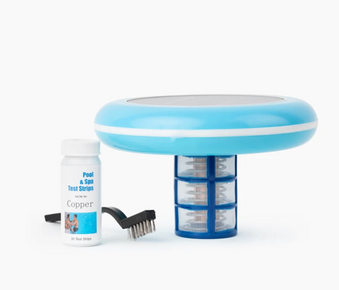
Owning a pool should feel refreshing and relaxing, but maintaining water clarity often becomes a repetitive chore. Solar ionizers help pool owners enjoy cleaner water with far less chemical use. They use sunlight to power an internal ionization system that slowly releases beneficial metal ions into the water. These ions prevent algae growth, reduce bacteria, and keep the pool cleaner in a natural way.
However, like all pool equipment, solar pool ionizers contain internal components that wear out over time. Even the best designed ionizer loses performance when the anode shrinks, when the cathode becomes coated in mineral scale, or when the protective basket becomes brittle or clogged. This is where replacement parts become essential. They restore the system to its original strength and keep it working consistently throughout every season.
Replacement parts are not simply accessories. They are the reason solar ionizers can remain dependable year after year. They maximize efficiency, ensure proper ion release, extend product life, and preserve the clarity and hygiene of the pool. In this long form article, we will explore why replacement components matter, what they include, and how they keep your ionizer functioning at peak performance.
Table of Contents
- What Happens to Solar Ionizer Components Over Time
- The Core Components and Why Each One Matters
- What a Typical Replacement Kit Includes
- How Replacement Parts Improve Ionization Performance
- Long Term Economic Benefits of Replacing Components
- Recommended Maintenance Practices and Replacement Timelines
- Final Thoughts on Reliability and Long Term Use
1. What Happens to Solar Ionizer Components Over Time
Solar pool ionizers operate through an elegantly simple yet profoundly effective electrochemical process powered directly by sunlight. At the heart of the system is a specialized photovoltaic cell that converts solar energy into a precise, low-voltage direct current (DC), typically between 1.5 and 4.5 volts. This carefully regulated electrical charge is applied across two submerged electrodes the positively charged anode and the negatively charged cathode creating a closed circuit through the conductive pool water, which serves as the electrolyte medium.
The anode, intentionally crafted from sacrificial metals like high-purity copper or a copper-silver alloy, is the ion-generating workhorse of the system. When energized by the solar circuit, copper atoms at the anode's surface oxidize, losing electrons to become positively charged copper ions (Cu²⁺). These ions are then repelled by the anode's positive charge and drift into the surrounding water. In systems employing silver, a similar process generates silver ions (Ag⁺). This electrochemical release is a continuous, controlled process as long as sunlight provides power and the anode retains sufficient mass. The "sacrificial" nature of the anode is fundamental to its design; it is engineered to be consumed, with its metal literally transferring into the water to perform its sanitizing function. This process typically releases ions at a rate of 0.2 to 0.5 parts per million (ppm), an ideal concentration for algaestatic and bacteriostatic effects without staining pool surfaces.
However, this very mechanism guarantees eventual performance degradation. As the anode continuously sacrifices its material, its physical dimensions diminish. A new anode rod might measure 12mm in diameter, but over a season, it can erode down to 6mm or less. This reduction in surface area is critical it directly reduces the number of available metal atoms that can ionize. Furthermore, the erosion is rarely perfectly even; microscopically pitted and uneven surfaces develop, creating a less efficient electrical field. As the anode shrinks, the distance between it and the cathode can increase (depending on the housing design), further weakening the electrical field strength and slowing ion migration. The result is a gradual but measurable decline in ion concentration in the clear pool water, often dropping below the effective threshold of 0.3 ppm, where algae and bacteria begin to proliferate once more.
Opposite the anode, the cathode completes the circuit. While its primary role is to receive electrons and complete the electrochemical reaction, its condition is equally vital for sustained performance. The cathode, often made of stainless steel or another inert metal, does not dissolve. Instead, it becomes a magnet for dissolved minerals present in virtually all pool water, particularly calcium and magnesium carbonates (scale) and metal oxides. As the electrical current flows, these minerals are electroplated onto the cathode's surface, forming an increasingly thick, insulating crust. This phenomenon, known as cathodic scaling, is akin to atherosclerosis in the ionizer's circulatory system. The scale layer acts as a robust electrical insulator, dramatically increasing the circuit's resistance.
The consequences of this buildup are severe. First, electrical efficiency plummets. A clean system might draw 100 milliamps to achieve optimal ionization, but a scaled cathode can reduce current flow to a mere trickle of 10-20 milliamps, even under full sun. Second, the weakened electrical field fails to provide sufficient "push" to dislodge copper ions from the anode surface efficiently. The ionization process becomes sluggish and unreliable. Third, severe scaling can create a physical barrier that disrupts the essential water flow between the electrodes, creating "dead zones" where ionization cannot occur. In hard water areas, a cathode can become completely encapsulated in rock-hard scale within a single season, rendering the ionizer almost entirely ineffective.
Encasing and protecting these delicate electrodes is the plastic housing or protective basket. This component is the unsung hero of structural integrity and hydraulic performance. Its design ensures uniform, laminar water flow across the entire surface area of both electrodes, which is crucial for consistent ion distribution. The basket also acts as a physical shield, preventing leaves, pebbles, or debris from striking and damaging the metal rods or short-circuiting the system.
The operating environment, however, is a perfect storm of degrading factors. Constant immersion, coupled with ultraviolet radiation from the sun, initiates photodegradation of the plastic polymers, making them brittle and prone to micro-cracking. Simultaneously, the chemical bath of chlorinated water, with its fluctuating pH levels, attacks the plastic at a molecular level, a process accelerated by heat. Over months and years, this leads to embrittlement, warping, and eventual fracture. A compromised basket has multiple failure modes: cracks allow debris to penetrate and abrade the electrodes; warping creates uneven flow channels, causing some areas of the anode to erode faster than others (known as channeling); and complete structural failure can allow the electrodes to collide or move, potentially breaking the electrical connection entirely. This degradation of the hydraulic environment means ions are no longer swept evenly into the pool's circulation; they may concentrate in some areas and be absent in others, leading to spot algae outbreaks.
All of these degradation pathways anode consumption, cathode scaling, and basket deterioration operate in a slow, synergistic decline. The diminished anode produces fewer ions; the scaled cathode struggles to complete the circuit; the warped basket fails to distribute those ions effectively. The result is a predictable downward spiral in water quality. Pool owners first notice they must add supplemental chlorine more frequently to maintain clarity. Then, they might see a faint green tinge or slippery spots on pool steps early signs of algae taking hold in areas with low ion concentration. Water that was once crystal clear becomes persistently hazy as the sanitizing system fails to keep up with the load of organics and microbes.
This is not a sudden failure but a creeping inefficiency. Without a program of inspection and proactive replacement of these consumable components, even a premium solar ionizer transforms from an asset into a placebo a device that appears to be working (its solar panel may still light an indicator) but is delivering only a fraction of its intended sanitizing power. The system's initial performance, often capable of reducing chlorine use by 50-80%, becomes unattainable. Ultimately, the owner is left with the choice of returning to heavy chemical dependency or investing in a complete new unit, when simple, scheduled replacement of the anode, cathode, and basket would have restored the original system to like-new efficacy for a fraction of the cost. The lesson is clear: the longevity and reliability of solar ionization are not inherent in the device itself, but in the disciplined maintenance and renewal of its sacrificial and degradable internal parts.

2. The Core Components and Why Each One Matters
The Anode: The Ion-Generating Powerhouse
The anode is unequivocally the most critical and active component within a solar ionizer, functioning as the system's consumable "fuel cell" and the direct source of its sanitizing power. Crafted from high-purity copper (99.9%+), a copper-silver alloy, or occasionally pure silver, its primary mission is to undergo controlled electrochemical dissolution. When energized by the solar panel's current, atoms on the anode's surface lose electrons (oxidize) and enter the water as positively charged ions (Cu²⁺ or Ag⁺). These ions are the active agents that disrupt cellular processes in algae and bacteria, preventing reproduction and leading to their eventual die-off.
This ion release is not a simple erosion but a finely-tuned electrochemical reaction. The rate is governed by several factors: the surface area of the anode, the strength of the electrical current (determined by sunlight intensity), and the conductivity of the clear pool water. A new, full-sized anode provides a maximum surface area, allowing for an optimal, steady-state release that maintains a consistent ion concentration between 0.2 and 0.5 ppm in the pool the sweet spot for effective control without risking metal staining.
The sacrificial nature of the anode is its defining characteristic. It is designed to be consumed, its mass literally converting into protective ions over time. This consumption follows predictable patterns. Initially, erosion is uniform, but as pits and grooves form microscopically, the electrical field concentrates at these points, accelerating localized wear. Over a single season, an anode can lose 30-50% of its diameter. This geometric reduction is devastating to performance because ion release rate is directly proportional to available surface area. Halving the diameter reduces the surface area (and thus ion output) far more dramatically often by 70% or more. Furthermore, as the anode shrinks, the gap between it and the cathode often increases, weakening the electrical field's "pull" on ions, making the release process even less efficient.
A healthy, properly sized anode is the cornerstone of low-chemical pool management. Its benefits are direct and measurable:
- Proper Copper/Silver Ion Levels: Maintains the precise 0.3-0.5 ppm concentration in the water column, creating an environment inhospitable to microorganisms.
- Effective Algae Control: Copper ions penetrate algae cell walls and interfere with photosynthesis and enzyme function, preventing slime, mustard algae, and black spot algae from gaining a foothold, even in high temperatures and sunlight.
- Less Need for Chlorine: With algae growth inhibited and bacteria populations controlled, chlorine's workload is reduced from primary sanitizer to secondary oxidizer, potentially cutting usage by 50-80% and lowering chemical costs and swimmer irritation.
- Stable Water Clarity: By preventing organic blooms and microbial clouds, the anode enables consistently sparkling water with reduced filter backwashing and less need for clarifiers or flocculants.
Replacing a worn anode is not merely maintenance; it is a complete reset of the ionizer's core sanitizing engine. Installing a new anode restores the original surface area, re-establishes a strong electrical field, and ensures the ion release rate returns to the manufacturer's designed specification. It directly reverses the creeping inefficiency that leads to green pools and chemical dependence.
The Cathode: The Silent Partner in Electrical Continuity
While the anode performs the visible work, the cathode serves as the indispensable silent partner, completing the electrochemical circuit that makes ionization possible. Typically constructed from a non-corrosive metal like 316-grade stainless steel or titanium, the cathode's role is to attract and receive electrons from the circuit, facilitating the completion of the redox reaction that drives ion release from the anode.
Unlike the anode, a cathode in proper conditions does not dissolve. However, it faces a different and equally debilitating adversary: electrolytic scaling. Pool water contains dissolved minerals primarily calcium, magnesium, and carbonates. When the low-voltage current flows, these minerals are electrostatically drawn to the negatively charged cathode. There, they precipitate out of solution, bonding to the metal surface in a hard, cement-like layer of limescale (calcium carbonate) and metal oxides.
This scaling is a progressive failure. A thin, initial layer forms a slight insulating barrier. As it thickens, it acts as a formidable resistor in the circuit. The system must work harder (requiring more sunlight to generate more voltage) to push the same current through this insulating crust. Eventually, the current flow is strangled to a negligible trickle. The weakened electrical field lacks the necessary force to efficiently "pluck" copper ions from the anode surface, causing ion production to stall even if the anode itself is still relatively fresh. In areas with very pool hard water, a cathode can become fully encased in rock-hard scale within months, rendering the entire ionizer inert.
A meticulously clean and scale-free cathode is therefore non-negotiable for peak performance. It guarantees:
- Strong Electrical Continuity: Provides a low-resistance path for electrons, allowing the solar-generated current to flow freely and powerfully between electrodes.
- Consistent Ion Release: Enables a stable, predictable electrical field that draws a steady stream of ions from the anode, preventing the cyclical dips in sanitizer levels that allow algae blooms to initiate.
- Maximum System Efficiency: Ensures that virtually all of the solar panel's generated energy is dedicated to ion production rather than being wasted overcoming electrical resistance in a scaled-up circuit.
When acid cleaning or scraping can no longer restore the cathode's bare metal surface, replacement is imperative. A new cathode eliminates all resistive scaling, instantly restoring the circuit's integrity and allowing the system to operate at its designed electrical efficiency, thereby unlocking the full potential of the anode, new or old.
The Protective Basket: Guardian of Flow and Structure
The protective basket (or housing/guard) is the unsung structural and hydraulic director of the ionization chamber. Far more than a simple debris screen, it is an engineered component designed to manage the fluid dynamics and physical environment around the electrodes. Its material usually a UV-stabilized, chemical-resistant plastic like polypropylene is chosen for durability in a hostile aquatic environment.
The basket's functions are multifaceted. First, it acts as a physical shield, preventing leaves, twigs, and airborne debris from impacting the electrodes, which could cause abrasion, misalignment, or even a direct short circuit. Second, and most critically, its internal geometry is designed to create controlled, laminar water flow. Channels or apertures direct pool water evenly across every millimeter of the anode and cathode surfaces. This uniform flow performs two vital tasks: it sweeps newly released ions away into the circulation system for distribution, and it ensures even erosion of the anode. Without this guided flow, "channeling" occurs, where water takes the path of least resistance, causing uneven anode wear and creating dead zones where ion concentration plummets.
The basket operates in an environment that accelerates its degradation. Constant UV exposure embrittles the plastic polymers. Chlorine and fluctuating pH levels cause chemical stress cracking. Thermal cycling from day/night temperature swings promotes warping. Physical stress from water pressure and occasional handling can cause fatigue. The failure modes are consequential: cracks allow debris ingress that can scratch electrodes and disrupt flow; warping distorts the carefully designed flow channels, leading to inefficient ion harvesting; severe brittleness can lead to fracture, potentially freeing the electrodes to collide or break connections.
A fresh, intact basket is fundamental to sustained performance, as it maintains:
- Even Water Circulation: Guarantees optimal hydraulic conditions for maximum ion release and harvest, preventing localized "dead zones" of poor sanitation in the ionizer cell itself.
- Proper Exposure of Electrodes: Positions the anode and cathode at their ideal fixed distance and alignment, ensuring a consistent and strong electrical field between them for the entire season.
- Protection from Physical Damage: Safeguards the relatively soft anode metal and the precision cathode from impacts, abrasion, and blockage, which could cause immediate system failure or erratic performance.
Replacing the basket is not just about fixing a broken part; it is about restoring the engineered hydraulic and structural framework that allows the electrodes to function as designed. It supports both the peak performance of the system and its long-term operational safety, ensuring no loose parts can damage pool equipment or plumbing. Together, the renewed anode and cathode, and basket form a complete rejuvenation, returning the entire ionization chamber to its original, factory-spec efficacy.

3. What a High-Quality Replacement Kit Includes: A Complete System Reset
A comprehensive, high-quality replacement kit is more than a collection of spare parts; it is a complete "service pack" engineered to systematically reverse all forms of performance degradation and restore a solar pool ionizer to its original, out-of-the-box specification. Investing in a complete kit, rather than piecemeal components, ensures compatibility, balanced performance, and addresses the synergistic wear that affects the entire ionization chamber. Here is a detailed breakdown of what each component in a superior kit provides and why it matters:
1. New Copper or Copper/Silver Alloy Anode
The centerpiece of any kit is a fresh anode. Premium kits do not offer generic metals but provide anodes that match or exceed the original equipment manufacturer (OEM) specifications in purity and composition.
- Material Specification: Look for high-purity electrolytic copper (99.9%+ Cu) or a precise copper-silver alloy (commonly 90/10 or 95/5 Cu/Ag). Silver enhances bacteriostatic properties. The metal should be free of impurities that could cause erratic erosion or staining.
- Precision Engineering: The anode rod will have exact dimensions (diameter, length) and thread patterns to fit the specific housing model. It may feature a proprietary surface treatment or shape to promote even erosion.
- Performance Guarantee: A new anode restores 100% of the ion release surface area, resetting the ion production rate to the designed ppm/hour output.
2. Professionally Restored or Brand-New Cathode
Kits vary in their approach to the cathode. The best offer a fully new cathode, while high-value kits may include a "renewed" one.
- New Cathode Advantage: A brand-new stainless steel or titanium cathode provides a perfectly clean, microscopically smooth surface with zero scaling or pitting. This offers the absolute lowest electrical resistance and optimal electron transfer.
- Restored Cathode Process: In some replacement kits for ionizer, the cathode undergoes an industrial descaling process (e.g., acid bath, abrasive blasting) and is polished to bare metal. It is then inspected for pits or corrosion that would necessitate replacement. A properly restored cathode should perform nearly identically to a new one.
- Critical Fit: Whether new or restored, it must have the precise geometry to maintain the exact gap between electrodes, which is crucial for correct electrical field strength.
3. New Protective Basket/Housing Assembly
This component is often overlooked but vital. A new basket is not just about fixing cracks.
- Material Integrity: Made from virgin, UV-stabilized engineering plastic (like ASA or premium polypropylene) resistant to chlorine degradation and sunlight. It should be flexible yet rigid, not brittle.
- Hydraulic Design: Replicates the original flow channel engineering specific inlet/outlet sizes, baffles, and internal contours to recreate the laminar water flow essential for even ion harvest and anode erosion.
- Integrated Features: May include upgraded design elements like finer debris screens, reinforced mounting points, or alignment tabs not present in older models, offering a mild performance or durability improvement.
4. New Seals, Gaskets, Screws, and Hardware
This is the hallmark of a thorough kit. Every fastener and seal is included because these small parts are often the point of failure.
- Anti-Corrosion Hardware: Stainless steel (304 or 316 grade) or nylon screws and nuts that will not rust, seize, or break during installation or future service.
- Fresh Seals and O-Rings: New Buna-N or EPDM rubber O-rings for all connection points. These seals prevent water ingress into electrical connections and ensure a tight, leak-free assembly that maintains proper water pressure through the cell.
- Prevents Damage: Providing new hardware eliminates the need to force or reuse old, corroded screws that can strip threads or break, potentially damaging the new housing.
5. Comprehensive, Model-Specific Instructions
Professional replacement kits include detailed, visual instructions, not a generic leaflet.
- Step-by-Step Guide: Includes safety warnings, tool list (usually just a screwdriver), and a sequenced procedure for disassembly, cleaning, part replacement, and reassembly.
- Torque Specifications & Alignment Tips: Advises on how tight to fasten screws to avoid cracking plastic and how to align the basket for optimal flow.
- Post-Installation Checklist: Guides the user on system restart, how to verify operation (e.g., checking for bubbles at the cathode, a sign of active electrolysis), and initial water testing recommendations.
6. Specialized Cleaning Brush or Tool
Included in many kits, this tool is for future maintenance.
- Purpose-Built Design: A small, stiff-bristled brush (often brass or stainless) sized to fit into the ionization chamber to scrub the cathode between full replacements or to clean the basket interior.
- Promotes Proactive Care: Encourages the owner to perform mid-season inspections and cleanings, extending the life of the new components.
7. Optional but Valuable Inclusions in Premium Kits
Top-tier kits may also include:
- Dielectric Grease Packet: A small amount of grease for coating electrical terminals to prevent corrosion and ensure a good connection.
- Water Testing Strips: A few test strips specifically for checking copper ion levels, helping the user verify the system is working after installation.
- Storage Bag: A resealable bag for storing the old anode for proper disposal (copper is a heavy metal) or for keeping the tools and instructions together.
The Synergistic Reset: Why a Complete Kit Matters
Installing all these components simultaneously performs a complete system reset that piecemeal replacement cannot achieve. You are not just fixing individual problems; you are renewing the entire functional ecosystem of the ionizer:
- Restores Proper Electrical Flow: The new cathode and clean connections eliminate all resistive losses. The new anode provides optimal electron donation. Together, they allow the solar panel's generated current to flow at its maximum designed amperage, creating the strongest possible electrochemical driving force.
- Restores Optimal Ion Output: The full-size anode provides maximum surface area for ion release. The strong electrical field from the renewed circuit efficiently "plucks" these ions into the water. The result is the restoration of the precise, constant ion release rate (e.g., X grams of copper per amp-hour) the system was originally engineered to deliver.
- Ensures Proper Hydraulic & Mechanical Environment: The new basket re-establishes perfect laminar flow, ensuring ions are efficiently carried away and the anode erodes evenly. New seals prevent leaks and pressure loss. New hardware ensures everything stays securely aligned for the entire season.
In essence, a complete replacement kit transforms a tired, inefficient device plagued by cumulative wear into a like-new system operating at its peak factory performance. It is the most cost-effective and reliable method to guarantee another full season of clean, clear pool water, making it a fundamental practice for informed, proactive pool maintenance.

4. How Replacement Parts Dramatically Improve Ionization Performance
Investing in replacement parts is not merely a repair; it is a direct and impactful performance upgrade for your solar pool ionizer. Each new component addresses a specific failure mode in the degradation cycle, working synergistically to restore and often enhance the system's original capabilities. The improvements are not subtle they are immediately measurable in water quality, chemical usage, and maintenance effort. Below is a detailed explanation of the four primary performance benefits gained from a complete component refresh.
1. Restored Ion Release: Recalibrating the Sanitizing Engine
A new anode directly solves the core problem of diminished sanitizing power. Ion release is governed by fundamental electrochemical principles: release rate = (surface area) x (current density) x (time). A worn anode has drastically reduced surface area. Installing a fresh anode restores the full geometric profile, instantly multiplying the number of available copper or silver atoms at the reactive surface.
- Precision Concentration Control: The renewed surface area, combined with a clean circuit (from the new cathode), allows the system to re-establish and maintain the ideal ion concentration of 0.3-0.5 ppm. This is the scientifically proven threshold where copper ions effectively:
- Penetrate algae cell walls and disrupt chlorophyll production.
- Interfere with critical enzyme functions in bacteria.
- Create a residual "protective zone" in the water that prevents spore germination.
- Elimination of Chemical Dependence: With this protective ion zone reliably reinstated, chlorine's role reverts from a daily primary sanitizer battling algae to a supplemental oxidizer dealing with swimmer waste. This can reduce chlorine use by 50-80%, lowering costs and eliminating the chlorine smell, red eyes, and faded swimsuits associated with over-chlorination.
- Predictable Performance: A new anode erodes at a known, steady rate, allowing for accurate prediction of its service life and enabling proactive replacement before performance drops, unlike a worn anode whose output is unpredictable and declining daily.
2. Improved Electrical Conductivity: Unleashing Full System Power
Think of a scaled cathode as a clogged fuel line in a car's engine. No matter how good the fuel (sunlight) or the engine (anode), power cannot get through. Scale (primarily calcium carbonate) is an excellent electrical insulator.
- The Resistance Problem: A heavily scaled cathode can increase circuit resistance by 500% or more. This forces the solar panel to generate extra voltage just to overcome this barrier, voltage that is wasted as heat instead of performing useful ionization work. The effective current reaching the anode is a fraction of what it should be.
- Restoring the Circuit: A new or professionally descaled cathode provides a pristine, conductive surface. This eliminates the insulating barrier, dropping circuit resistance to near-zero. The full milliamperage of current generated by the solar panel can now flow freely and efficiently between the electrodes.
- Maximizing Device Output: With minimal resistance, the electrical potential (voltage) is applied almost entirely to the task of ionizing copper atoms. This creates a stronger, more consistent electrical field that actively "pulls" ions off the anode surface. The result is that the ionizer operates at its true maximum rated output, often a dramatic increase over its pre-replacement, struggling state.
3. Better Water Circulation: Optimizing the Delivery System
Ions released at the anode are useless if they simply pool around the device. They must be efficiently harvested and distributed. The protective basket is the hydraulic director of this process.
- The Hydraulic Engineering: A new basket replicates the original, engineered flow path. Its channels and apertures create laminar (smooth, non-turbulent) flow that passes uniformly over every part of the anode and cathode.
-
Dual-Action Benefit: This uniform flow performs two critical functions simultaneously:
- It immediately sweeps newly released ions into the main pool return stream, ensuring they are distributed throughout the entire body of water rather than settling locally.
- It ensures even exposure of the anode surface to the flowing water, preventing "channeling" where water erodes deep grooves in soft spots, leading to premature, uneven wear and inconsistent ion release.
- Eliminating Weak Zones: A warped or clogged basket creates stagnant pockets and turbulent eddies. Areas of low flow become "dead zones" with low ion concentration perfect breeding grounds for spot algae outbreaks on pool walls or in corners. A new basket ensures balanced, whole-pool coverage, creating a uniform sanitizing field that leaves no area vulnerable.
4. Greater Stability and Reliability: Achieving Predictable, Hands-Off Operation
The ultimate goal of pool maintenance is not just fixing problems, but preventing them. This is the cumulative benefit of replacing all major components.
- Elimination of Performance Dips: A system with fresh parts operates at a consistent, known baseline. You no longer experience the mid-summer slump where algae suddenly appears because the anode has shrunk past a critical threshold or the cathode has finally scaled over. Performance is flat and reliable from the day of installation until the next scheduled service.
- Prevention of Algae Resurgences: Consistent ion levels act as a constant, invisible barrier. Algae spores are neutralized before they can colonize. There are no cyclical "windows of opportunity" for blooms to start, which means no emergency "shock" treatments, no scrubbing of green walls, and no pool closures.
- Reduction in Chemical Corrections: With the ionizer functioning as a stable, primary sanitizer, pool water chemistry becomes remarkably stable. pH swings are minimized (as chlorine use drops), calcium levels are easier to manage, and total dissolved solids (TDS) rise more slowly. You spend less time testing and adjusting and less money on balancing chemicals.
- Transformation into a Predictable Tool: The ionizer ceases to be a mysterious device you hope is working and becomes a dependable, predictable appliance in your pool care arsenal. You can confidently plan its maintenance (e.g., "replace the kit every Memorial Day"), and trust it to perform consistently through heat waves, heavy rains, and high bather loads. This reliability transforms pool maintenance from a reactive chore into a proactive, streamlined routine.
The Synergy of Complete Replacement: It is crucial to understand that these benefits are multiplicative, not additive. A new anode paired with a scaled cathode will still underperform. A new basket with a tiny anode is inefficient. Replacing all parts at once ensures that the electrical, chemical, and hydraulic systems are all renewed in concert. This holistic reset delivers a performance improvement far greater than the sum of its parts, guaranteeing a season of clean, clear, low-maintenance water and fully realizing the solar ionizer's promise of a more natural, refreshing pool experience.

5. Long Term Economic Benefits of Replacing Components: A Strategic Investment
While the immediate benefit of replacement parts is restored performance, their true value is measured in long-term economics. Viewing component replacement as a routine maintenance cost like changing the oil in a car rather than an unexpected repair bill reveals a compelling financial narrative. Proactive replacement is not an expense; it is a strategic investment that generates substantial returns by preventing larger costs, optimizing operational efficiency, and preserving your overall pool investment. The savings cascade through every aspect of pool ownership, creating a more affordable and predictable cost structure over the system's lifetime.
1. Avoiding Premature System Replacement: The Core Savings. This is the most direct economic argument. A high-quality replacement kit for the anode, cathode, and basket typically costs between $50 and $120. A brand-new solar ionizer unit, by contrast, represents an investment of $250 to $500 or more. By replacing the consumable parts as they wear, you are effectively renewing 90% of the ionizer's functional machinery for a fraction of the cost of a full replacement. This practice can extend the usable life of the core housing and solar panel indefinitely. Over a decade, this can mean spending $300-$500 on periodic kits versus $1,000+ on two or three complete new units a potential savings of 50-70% on the equipment itself.
2. Drastic Reduction in Chemical Consumption & Costs. A solar pool ionizer operating at peak efficiency can reduce chlorine demand by 50% to 80%. This is where annual savings become highly significant. For an average pool, monthly chlorine costs (tablets, liquid, or salt cell replenishment) can easily range from $30 to $60. An 80% reduction translates to $288 to $576 saved per year. Over five years, that's $1,440 to $2,880. The cost of an annual replacement kit is dwarfed by this single line-item saving. Furthermore, this reduction also decreases the need for stabilizer (cyanuric acid), chlorine shock, and pH-adjusting chemicals that are used to manage the side effects of high chlorine levels.
3. Elimination of Costly Algal Emergencies and Corrective Treatments. A struggling ionizer allows algae to gain a foothold, which triggers a cascade of expensive interventions. An emergency algae bloom often requires multiple gallons of liquid shock ($15-$25 each), algaecides ($20-$40 per treatment), clarifiers, and potentially even draining and acid-washing the pool (a $500-$1,000+ service). It also means running the filter continuously for days, spiking electricity costs. By maintaining a robust ionizer through part replacement, you proactively prevent these blooms. The few hundred dollars spent on kits over several years can prevent a single $500+ algae emergency, making it a highly cost-effective form of insurance.
4. Reduced Wear and Tear on Major Pool Equipment. Proper, stable water chemistry is gentle on your entire pool system. When an ionizer fails and chlorine use skyrockets, or when algae blooms and die-off occur, the resulting chemical imbalance and organic load are brutal on other equipment. Highly chlorinated, acidic water accelerates corrosion in pump seals, heater cores, and metal fittings. Algae and the resulting clarifiers put immense strain on the filter, requiring more frequent backwashing (wasting water and energy) and shortening the life of filter media. A consistently well-ionized pool maintains balanced, gentle chemistry. This extends the service intervals and lifespan of your pump, filter, heater, and automatic pool cleaner, delaying costly replacements that can run into thousands of dollars.
5. Preservation of the Ionizer's Own Longevity and Efficiency. Consistent performance isn't just about output; it's about operating within safe design parameters. A scaled cathode forces the solar panel to work harder, potentially stressing its electrical components. A warped basket causing uneven flow can lead to hot spots and erratic current draw. Replacing parts on schedule ensures the entire ionizer including the valuable solar panel and electronics operates smoothly and efficiently, under minimal stress, for its maximum possible lifespan. This protects your initial investment in the unit itself.
6. The Intangible Value of Predictability and Time Savings. Finally, the economic benefit includes the value of your own time and peace of mind. Reactive pool care is a time-consuming, stressful, and unpredictable cost center. Proactive maintenance through scheduled part replacement transforms pool care into a predictable, minimal routine. The hours saved not battling algae, not making emergency trips to the pool store, and not performing corrective water treatments have real value. It allows you to enjoy your pool as a leisure asset, not manage it as a part-time job.
In summary, when you replace parts on time, you are executing a powerful financial strategy. You are converting large, unpredictable, and reactive expenses (new equipment, chemical overdoses, emergency treatments, major repairs) into small, predictable, and proactive investments. You maintain ideal water conditions not by spending more, but by spending smarter. The economics are unequivocal: the modest, scheduled cost of a replacement kit is the key that unlocks years of substantial savings, enhanced equipment longevity, and the priceless enjoyment of a reliably beautiful pool.

6. Comprehensive Maintenance Practices and Replacement Timelines: A Proactive Care Guide
Maximizing the lifespan and performance of your solar pool ionizer requires moving beyond reactive fixes to a structured, proactive maintenance philosophy. A "set it and forget it" approach guarantees declining efficiency. Instead, implementing the following detailed inspection, cleaning, and replacement protocols transforms your ionizer into a consistently reliable component of your pool ecosystem. This guide breaks down the what, why, when, and how of proper solar ionizer stewardship.
1. Monthly Anode Inspection & Replacement Protocol
The anode is your consumable fuel gauge. Regular inspection is non-negotiable.
Inspection Procedure (Monthly, During Pool Season): First, power down the system by turning off the pool pump and shielding the solar panel. Remove the housing and extract the anode rod. Perform a visual and tactile assessment. Compare its diameter to a new anode or its original specs a caliper is ideal for accuracy. The critical "half-size rule" is your replacement trigger: when the anode has lost approximately 50% of its original diameter, its effective surface area has been reduced by over 70%, crippling ion output. Also, check for deep, uneven pitting or grooves (called channeling), which indicate poor water flow and accelerate failure.
Why This Matters: Proactive replacement at the 50% mark prevents you from ever operating in the sub-optimal "decline zone." You maintain a consistently high ion output, avoiding the slow creep of algae and the rising dependency on chlorine.
2. Cathode Maintenance: Cleaning vs. Replacement
The cathode requires a two-tiered approach: regular cleaning and informed replacement.
Regular Cleaning (Every 1-2 Months): Remove the cathode and use a stiff, non-metallic brush (like the nylon pool brush often included in kits) with a mild acid solution. A safe mixture is a 10:1 water-to-muriatic acid mix or white vinegar. Scrub vigorously to remove soft scale. CRITICAL SAFETY NOTE: Always add acid to water, never water to acid, and wear gloves and eye protection. Rinse the cathode thoroughly. The goal is to restore a bright, smooth, metallic surface.
Replacement Threshold: Replace the cathode when scale becomes thick, hardened, and impervious to brushing and acid. Also replace it if you see pitting or corrosion beneath the scale, or if the metal appears permanently darkened or stained this indicates deep oxidation that increases electrical resistance.
Why This Matters: A clean cathode is the linchpin of electrical efficiency. Regular cleaning is a simple, low-cost task. Allowing scale to solidify and accumulate guarantees that your solar panel's energy is wasted overcoming electrical resistance instead of producing ions.
3. Protective Basket/Housing Integrity Check
Conduct a visual and functional inspection of the basket every three months.
Inspection Points: Examine all seams, corners, and mounting holes for cracks or hairline fractures. Check for any warping or distortion from the original shape placing it on a flat surface can reveal rocking. Note significant color fading (e.g., from black to gray) and a brittle texture, which indicate advanced UV degradation. Ensure all flow holes and apertures are clear of mineral deposits or biofilm slime.
Replacement Trigger: Replace the basket at the first sign of structural compromise. This means any cracking, significant warping, or severe embrittlement. Do not attempt repairs with adhesives, as they can contaminate pool water and fail under pressure, leading to sudden failure.
Why This Matters: The basket is the hydraulic director of the entire system. A compromised basket silently sabotages performance by creating turbulent, uneven water flow. This leads directly to uneven anode wear and poor distribution of ions, creating localized "dead zones" in your pool where algae can take hold.
4. Comprehensive System Cleaning
Every 3-4 months, perform a full teardown and clean of the entire assembly.
Procedure: Completely disassemble the unit. Soak non-metallic parts in a descaling solution. Use an acid-compatible brush on all metal contacts and threads. Flush the housing internally with a garden hose to dislodge sediment. As part of this process, also inspect and clean the solar panel surface with a soft cloth and mild detergent to ensure it is free of dust, pollen, and bird droppings that can reduce its power generation.
Why This Matters: This holistic clean prevents the cumulative buildup of minerals and debris in areas that routine component checks might miss, such as in threaded connections, small internal channels, or on the power-generating panel itself. It ensures every part of the system is functioning optimally.
5. Smart Replacement Scheduling: Annual Kits & Condition-Based Triggers
Adopt a dual-layered schedule: a predictable annual baseline, intelligently adjusted for your specific pool conditions.
Standard Residential Pool (Baseline): For a typical seasonal pool with moderate use and average water hardness, a full replacement kit installed once per year at the opening of the pool season is highly recommended. This annual reset guarantees peak performance for the entire swimming season and simplifies planning.
Heavy-Use or High-Stress Pools: Pools with large families, daily use, or those in rental properties should consider replacement every 9-10 months, or potentially twice during a long season. High bather loads accelerate organic contamination, forcing the anode to work harder and erode faster. In these cases, monitor copper ion levels with pool test strips mid-season; a supplemental anode-only replacement may be necessary.
Very Hard Water Areas: In regions with calcium hardness consistently above 400 ppm, follow the annual full kit replacement but increase cathode inspection to monthly. The extreme scaling potential may necessitate a cathode replacement at the 6-month mark. Proactive use of a scale inhibitor in the pool water is also advised to protect all equipment.
Year-Round Warm Climate Pools: For systems in operation 12 months a year, schedule replacement based on runtime, not the calendar. Aim for a full kit every 10-12 months of continuous operation. Remember, anodes erode based on amp-hours of use, not simply the passage of time.
6. The Philosophy of Consistent Scheduling
Following this structured, proactive approach delivers transformative benefits that go beyond mere equipment maintenance.
Prevents Performance Dips: You systematically eliminate the "why is my pool suddenly green?" panic. By maintaining the system in its optimal operating range, you ensure consistent sanitizer output, leaving no window of opportunity for algae or bacteria.
Maximizes Cost Efficiency: This is where significant savings are realized. Spending $50-$100 on a scheduled replacement kit prevents $200-$300 in emergency algaecides, shock treatments, clarifiers, and professional service calls. More importantly, it extends the functional life of the entire ionizer unit by decades, delaying a $300+ full unit replacement indefinitely.
Simplifies Overall Pool Care: A reliably functioning ionizer becomes the stable foundation of your pool's chemistry. With it working correctly, chlorine demand remains low and predictable, pH is easier to stabilize, and water clarity is the default state. This transforms pool maintenance from a complex, daily chemical balancing act into a more manageable, mechanical, and scheduled routine.
Ensures Long-Term Clarity & Hygiene: Ultimately, this disciplined practice guarantees that the core promise of solar ionization is fulfilled season after season: a clean, clear, and inviting pool that prioritizes natural, mineral-based sanitation and minimizes reliance on harsh traditional chemicals. It protects not just your financial investment in the equipment, but your investment in leisure, health, and family time.
In essence, maintaining a solar ionizer mirrors the best practices for any precision tool. The modest, scheduled investment of a replacement kit and an hour of your time is the definitive strategy to prevent catastrophic failures and ensure smooth, reliable, and efficient operation. By adopting these practices, you transition from being a passive owner to an informed operator, fully harnessing the sustainable, effective, and elegant technology of solar pool ionization for the long term.
7. Final Thoughts on Reliability and The Philosophy of Sustainable Pool Care
A solar pool ionizer represents a significant shift toward more sustainable, manageable pool ownership. It is engineered to provide years often a decade or more of highly effective service. However, this longevity is not an inherent, unbreakable guarantee of the device itself. It is a conditional promise, predicated entirely on the ongoing health of its internal components. The anode, cathode, and protective basket are not mere accessories; they are the active, sacrificial, and structural pillars of the ionization process. Each plays a distinct, non-negotiable role: the anode as the ion source, the cathode as the electrical conduit, and the basket as the hydraulic director. As these parts inevitably wear down through their designed operation and environmental exposure, the entire system's reliability gracefully declines. This is not a flaw, but a feature of its working principle. Replacement parts are therefore not a sign of product failure; they are the essential mechanism of its renewal. Installing them breathes new life into the system, performing a precise reset that restores the original strength of the electrical field, the efficiency of ion production, and the consistency of sanitizer distribution the very trifecta that keeps pool water brilliantly clear and hygienically sound.
This relationship between maintenance and performance reveals a deeper truth: the long-term success and return on investment from a solar pool ionizer are directly proportional to the diligence of its part-replacement schedule. Viewing the ionizer as a static appliance leads to disappointment, while recognizing it as a dynamic system with serviceable components leads to profound satisfaction. With a commitment to regular updates following the annual or condition-based guidelines and proper care, the solar ionizer transcends being just another piece of pool equipment. It evolves into one of the most dependable and rewarding tools in the modern pool owner's arsenal for low-chemical maintenance. It systematically decouples pool cleanliness from large, frequent doses of harsh sanitizers.
The benefits of this disciplined approach compound over time. Season after season, the reliably functioning ionizer drastically reduces the pool's dependency on chlorine and algaecides. This reduction means lower ongoing chemical costs, a more comfortable swimming experience free from red eyes and strong odors, and less wear and tear on swimsuits, pool liners, and associated equipment like heaters and filters. It shifts the battle against algae from a reactive chemical war to a proactive, natural suppression using trace minerals. The pool water maintains a balanced, inviting clarity that doesn't swing from over-sanitized to under-protected.
Ultimately, embracing the cycle of inspection and replacement is an embrace of a smarter, more attentive form of pool stewardship. It moves the owner from a passive consumer of chemicals to an active manager of a sustainable system. The solar ionizer, when properly maintained, fulfills its core promise: it harnesses free, abundant sunlight to create a cleaner, healthier swimming environment with minimal intervention. It allows the focus to return where it truly belongs on relaxation, recreation, and the simple pleasure of a crystal-clear pool, season after season. The clarity of the water, in the end, reflects the clarity of the maintenance philosophy.