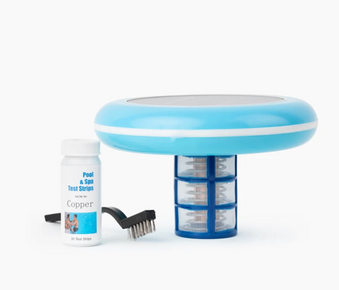
TL;DR: Using a solar pool ionizer in a liner-free pool such as concrete, gunite, plaster, or fiberglass surfaces requires specific considerations that differ from vinyl liner pools. The good news is that these surfaces are ideally suited for solar ionization, as they benefit from the non-corrosive chemistry and reduced chemical handling. However, plaster and concrete surfaces require attention to calcium management to prevent both etching and scaling, while fiberglass owners must monitor copper levels to avoid staining on light-colored gelcoat. This 2026 guide provides surface-specific protocols for successfully operating solar pool ionizers in pools without liners.
SEO Summary: 2026 guide to using solar pool ionizers without a liner: concrete, gunite, plaster, and fiberglass pools. Surface-specific protocols for calcium management, copper control, and staining prevention.
Table of Contents
- Surface Considerations for Liner-Free Pools
- Plaster and Gunite Pools: Calcium Management
- Fiberglass Pools: Staining Prevention
- Concrete Pools: Porosity and Chemistry
- The Critical Role of Calcium Hardness
- Copper Staining Risks on Light Surfaces
- pH Management for Surface Protection
- Startup Protocols for New Plaster Pools
- Maintenance Differences from Liner Pools
- Conclusion & Key Takeaways
Surface Considerations for Liner-Free Pools
Pools without liners present a different set of considerations than their vinyl-lined counterparts. The pool surface is directly exposed to the water, making water chemistry critically important for both sanitation and surface preservation. Understanding these differences is essential for successful solar ionizer operation.
- Surface types: Liner-free pools include plaster (white or colored), gunite (pneumatically applied concrete), shotcrete, poured concrete, and fiberglass. Each has distinct characteristics that affect how they interact with water chemistry.
- Porosity differences: Plaster and concrete surfaces are porous, allowing water to slowly interact with the underlying material. This affects calcium dynamics and can influence pH stability. Fiberglass is non-porous and gelcoated, making it more resistant to chemical interaction but vulnerable to staining.
- Aesthetic sensitivity: Liner-free surfaces are permanent. Stains, etching, or scale accumulation are difficult and expensive to remediate. Prevention is far more important than in liner pools, where the liner can be replaced.
- Calcium dynamics: Plaster and concrete contain calcium compounds that can dissolve into the water (if water is aggressive) or precipitate onto the surface (if water is oversaturated). This balancing act is central to maintaining these surfaces.
- Advantages of solar ionization: The stable, non-corrosive chemistry of solar-ionized water is ideally suited for liner-free pools. Without the aggressive oxidizing environment of chlorine, surfaces last longer and maintain their appearance. Our article on how solar ionizers reinvent backyard pools explores these surface protection benefits in detail.
Plaster and Gunite Pools: Calcium Management
Plaster and gunite pools represent the majority of in-ground liner-free pools. Their successful operation with solar ionizers hinges on proper calcium management.
- Calcium hardness target: For plaster and gunite pools, maintain calcium hardness between 250 and 350 parts per million. This range is slightly higher than the general pool recommendation of 200 to 300 ppm because these surfaces need adequate calcium to prevent water from becoming aggressive and dissolving the plaster.
- Aggressive water risks: If calcium hardness drops below 200 ppm, water becomes aggressive and begins to dissolve calcium from the plaster. This causes etching, pitting, and roughening of the surface. The water pulls calcium out of the plaster, weakening the surface and creating porosity that can lead to staining.
- Scale risks: If calcium hardness exceeds 400 ppm combined with high pH, calcium carbonate can precipitate onto the surface, creating unsightly white scale. Scale is particularly problematic on darker plaster finishes.
- pH stability benefits: Solar ionizers maintain stable pH, which helps prevent both etching (from low pH) and scaling (from high pH). In chlorinated pools, pH fluctuations accelerate both problems. The water stability provided by solar ionization is particularly valuable for plaster surfaces.
- New plaster curing: New plaster requires special attention during the first 30 days. The curing process involves hydration and initial hardening, during which the plaster is more reactive. See the startup protocols section for detailed guidance.
- Colored plaster considerations: Colored plaster finishes are more susceptible to staining and color fading. Maintaining copper strictly between 0.2 and 0.4 ppm is essential to prevent discoloration. Some manufacturers recommend even lower copper limits for certain colored finishes consult your plaster supplier.
Fiberglass Pools: Staining Prevention
Fiberglass pools offer a smooth, non-porous surface that is resistant to many of the chemistry issues that affect plaster. However, they present unique considerations for solar ionizer operation.
- Gelcoat sensitivity: Fiberglass pools have a gelcoat finish that provides color and gloss. While durable, gelcoat can be stained by metals, particularly copper. Once stained, removal is difficult and may require professional buffing or even refinishing.
- Copper target range: For fiberglass pools, maintain copper at the lower end of the recommended range 0.2 to 0.3 ppm. This provides adequate sanitation while minimizing staining risk. Avoid allowing copper to approach 0.5 ppm.
- Sequestering agent use: Consider routine use of sequestering agents in fiberglass pools, even without visible staining. A maintenance dose every 3 to 4 months binds any metals present and prevents them from depositing on the gelcoat.
- pH management: Maintain pH at 7.4 to 7.6. Higher pH increases copper precipitation risk. The stable pH of solar-ionized pools is advantageous here, as it avoids the spikes that trigger staining.
- Fiberglass and calcium: Unlike plaster, fiberglass does not interact with calcium. Calcium hardness can be maintained at the lower end of the general range (200 to 250 ppm) since there is no plaster to protect. This reduces scaling risk.
- Surface inspection: Periodically inspect the gelcoat for any discoloration, particularly in corners and behind ladders where circulation may be reduced. Early detection allows treatment before stains become permanent.
Concrete Pools: Porosity and Chemistry
Poured concrete pools, while less common than gunite, present their own considerations. Concrete is highly porous and reactive, requiring careful chemistry management.
- Porosity challenges: Concrete is more porous than properly applied plaster. This means water interacts with a larger surface area of the pool structure. Aggressive water can penetrate the surface, potentially causing long-term deterioration.
- Calcium hardness importance: Maintain calcium hardness at 300 to 400 ppm for concrete pools, higher than the general recommendation. The additional calcium in the water helps satisfy the concrete's demand and prevents it from leaching calcium from the structure.
- Alkalinity stability: Concrete pools sometimes experience pH rise due to alkaline components leaching from the concrete, particularly in newer pools. The stable chemistry of solar ionizers helps, but more frequent pH monitoring may be needed during the first year.
- Surface coatings: Many concrete pools are coated with plaster, paint, or epoxy. If your concrete pool has a coating, follow the recommendations for that specific coating material. Uncoated concrete is rare in modern pools but may be encountered in older installations.
- Leaching period: New concrete pools go through an initial leaching period where the water chemistry is harder to stabilize. Extended startup procedures with more frequent testing are recommended.
The Critical Role of Calcium Hardness
Calcium hardness takes on heightened importance in liner-free pools. It is not just a water chemistry parameter it directly affects the integrity and appearance of the pool surface.
- The Langelier Saturation Index (LSI): The LSI measures whether water is balanced, aggressive (corrosive), or scale-forming. For liner-free pools, maintaining LSI between -0.3 and +0.3 is critical. Calcium hardness is one of the key factors in LSI calculation, along with pH, alkalinity, temperature, and total dissolved solids.
- Aggressive water (negative LSI): When LSI is negative, water seeks calcium from any available source, including plaster, concrete, or grout. This causes etching, pitting, and surface roughening. The surface becomes more porous and prone to staining. In severe cases, structural damage can occur.
- Scale-forming water (positive LSI): When LSI is positive, calcium carbonate precipitates onto surfaces. This creates white scale that is difficult to remove. Scale can also accumulate in plumbing and on heater heat exchangers, reducing efficiency.
- Ionizer contribution to balance: Solar ionizers contribute to balanced water by maintaining stable pH and eliminating the chemical additions that throw LSI out of balance. The simpler chemistry of solar ionized pools makes LSI management more straightforward.
- Testing frequency: Test calcium hardness monthly in liner-free pools. Track results over time to identify trends. If calcium is dropping, water may be aggressive and dissolving the surface. If calcium is rising, evaporation and fill water may be concentrating it.
- Adjusting calcium hardness: To raise calcium, use calcium chloride increaser. To lower calcium, partial drain and refill with lower-hardness water is the only practical method. Prevention through source water management is ideal.
Copper Staining Risks on Light Surfaces
Copper staining is a concern for all pools, but it is particularly problematic on light-colored liner-free surfaces where stains are highly visible. Understanding and preventing copper staining is essential for successful ionizer operation.
- How copper stains form: Copper ions in solution are invisible. When conditions change (high pH, oxidizing environment), copper precipitates as copper hydroxide or other compounds that deposit on surfaces. Light-colored plaster, white gunite, and fiberglass gelcoat show these stains vividly.
- Stain appearance: Copper stains typically appear as blue-green discoloration. On white plaster, they can look like light green patches. On colored plaster, they may appear as dark spots or discoloration. Stains often start near fittings, steps, or areas with poor circulation.
- Prevention through copper control: Maintain copper strictly between 0.2 and 0.4 ppm. Never allow copper to approach 0.5 ppm. Test weekly and adjust ionizer output immediately if levels trend upward.
- pH as a prevention tool: Keep pH between 7.4 and 7.6. Higher pH dramatically increases copper precipitation risk. The stable pH of solar-ionized pools is a major advantage here.
- Avoiding oxidizers: Chlorine shocks and other oxidizers can trigger copper precipitation. Use non-chlorine shock when oxidation is needed. If you maintain a hybrid system with minimal chlorine, keep chlorine levels below 0.5 ppm.
- Sequestering agent use: Consider preventive sequestering agent applications, particularly in pools with light-colored surfaces or a history of metal issues. Apply at the beginning of swim season and mid-season. Our copper staining prevention resource provides detailed protocols.
- Ascorbic acid treatment: If light staining occurs, ascorbic acid (vitamin C) can often remove it. Apply as described in the identification section. This treats the stain but does not prevent recurrence address the underlying cause.
pH Management for Surface Protection
pH management is the most important day-to-day chemistry task for liner-free pool owners. pH affects both surface integrity and copper solubility, making it doubly important.
- Optimal pH range: Maintain pH between 7.4 and 7.6 for liner-free pools. This narrow range provides the best balance between protecting plaster (preventing etching) and preventing copper precipitation.
- Risks of low pH (below 7.2): Aggressive water attacks plaster and concrete, causing etching and surface deterioration. Low pH also increases the potential for metal corrosion, which can introduce additional metals to the water.
- Risks of high pH (above 7.8): High pH promotes calcium scaling on surfaces and equipment. It also triggers copper precipitation, leading to staining. Scale is particularly difficult to remove from plaster and fiberglass.
- pH stability advantage: Solar ionizers eliminate the pH fluctuations caused by chlorine additions and salt generator operation. In chlorinated pools, pH can swing 0.2 to 0.4 units weekly. In ionized pools, drift is typically 0.1 to 0.2 units monthly. This stability is invaluable for surface protection.
- Testing frequency: Test pH weekly, even in stable ionized pools. Early detection of drift allows small adjustments before problems develop. The predictable maintenance patterns of solar-ionized pools make pH management straightforward.
- Adjustment methods: Use muriatic acid to lower pH or soda ash to raise it. Add in small increments, retest after circulation, and repeat as needed. Record adjustments to establish your pool's pattern.
Startup Protocols for New Plaster Pools
New plaster pools require special handling during the first 30 days. The plaster is curing and remains reactive, requiring careful chemistry management. Solar ionizers can be used successfully, but the startup process differs from established pools.
- Initial filling: When filling a new plaster pool, use a hose filter to remove metals from fill water. Metals introduced during filling can cause immediate staining on fresh plaster.
- Brushing requirement: New plaster must be brushed daily for the first two weeks, then every few days for the next two weeks. This removes loose particles and helps the plaster cure properly. Brushing also prevents any initial staining from becoming permanent.
- Initial water balancing: Balance pH to 7.4 to 7.6 and alkalinity to 80 to 100 ppm. Do not add calcium increaser yet test first. New plaster will release calcium into the water as it cures.
- Calcium monitoring: Test calcium hardness every few days during the first month. Calcium levels will rise as the plaster cures. Do not add calcium increaser unless levels drop below 200 ppm after the first two weeks.
- Ionizer installation timing: Install the ionizer after initial water balancing but delay full activation. Run at 50 percent output for the first week, then increase to 70 to 80 percent. Monitor copper closely staining risk is higher on fresh plaster.
- Avoiding chlorine: Do not use chlorine-based products during the plaster curing period. Chlorine can react with fresh plaster and cause discoloration. If oxidation is needed, use non-chlorine shock.
- Extended monitoring: Test copper and pH daily during the first two weeks, then every few days for the remainder of the first month. The stable chemistry of solar ionizers helps, but new plaster requires extra attention.
Maintenance Differences from Liner Pools
While solar ionizers simplify pool maintenance overall, liner-free pools have some specific maintenance considerations that differ from vinyl liner pools.
- Brushing requirements: Liner-free pools benefit from regular brushing to prevent algae and stain accumulation. Brush walls and floor weekly, paying attention to corners and behind ladders. This is less critical in liner pools where algae can be chemically controlled.
- Scale monitoring: Inspect surfaces regularly for white scale deposits, particularly at the waterline and around returns. Scale indicates high calcium or pH issues that need correction. Liner pools do not scale in the same way.
- Waterline cleaning: The waterline in plaster and tile pools can accumulate mineral deposits and organic film. Regular cleaning with appropriate products maintains appearance. Avoid abrasive cleaners that could damage the surface.
- Grout and tile care: If your pool has tile, inspect grout regularly. Damaged grout can trap stains and allow water behind tiles. The non-corrosive chemistry of solar-ionized water helps preserve grout.
- Seasonal considerations: In freezing climates, proper winterization is essential to prevent freeze damage to plaster and concrete. Lower water level below tile line and follow professional winterization procedures.
- Professional inspections: Consider annual professional inspections of plaster or concrete surfaces. Early detection of cracking, spalling, or other issues allows repair before major damage occurs.
Conclusion & Key Takeaways
Using a solar pool ionizer in a liner-free pool is not only possible but advantageous. The stable, non-corrosive chemistry protects expensive plaster, gunite, concrete, and fiberglass surfaces from the damage caused by chlorine's aggressive oxidation and pH fluctuations.
Success requires attention to surface-specific considerations. Plaster and gunite pools need careful calcium management to balance between etching and scaling. Fiberglass pools require vigilant copper control to prevent staining on light gelcoat. All liner-free pools benefit from the stable pH and predictable chemistry that solar ionizers provide.
The maintenance routine differs slightly from liner pools, with greater emphasis on brushing, scale monitoring, and surface inspection. However, these tasks are offset by the elimination of chemical handling, reduced testing frequency, and freedom from chlorine's damaging effects.
Key Takeaways
- Liner-free pools are ideally suited for solar ionization: The stable, non-corrosive chemistry protects surfaces from the damage caused by chlorine. Our overview of how solar ionizers drive low-chemical pools explains why this matters for surface longevity.
- Calcium management is critical for plaster and gunite: Maintain calcium between 250 and 350 ppm to prevent both etching (from low calcium) and scaling (from high calcium). Test monthly and adjust as needed.
- Fiberglass pools need vigilant copper control: Keep copper at 0.2 to 0.3 ppm, use preventive sequestering agents, and inspect regularly for early staining. Our copper staining resource provides essential protocols.
- pH management is doubly important: Maintain pH between 7.4 and 7.6 to protect surfaces and prevent copper precipitation. The stability provided by solar ionizers makes this easier than in chlorinated pools.
- New plaster requires special startup protocols: Delay full ionizer activation, monitor calcium release from curing plaster, and avoid chlorine entirely during the first month.
- The Langelier Saturation Index matters: Maintain balanced water to prevent both corrosion and scaling. Calcium hardness, pH, and alkalinity all contribute to LSI.
- Regular brushing prevents problems: Weekly brushing removes debris and prevents stain accumulation. This is more important in liner-free pools than in liner pools.
- Surface inspection catches issues early: Regularly inspect for scale, staining, or surface damage. Early detection allows correction before problems become permanent.
- Solar ionization simplifies surface protection: By eliminating pH swings and chemical shocks, ionizers create the stable environment that liner-free surfaces need. The water stability provided by solar ionization is a significant advantage for surface longevity.
- Professional help is available for persistent issues: If surface problems persist despite best efforts, consult a pool professional with experience in plaster or fiberglass restoration. Early intervention is more cost-effective than major repairs.
Liner-free pools represent a significant investment in your property. Solar pool ionizers protect that investment by eliminating the damaging effects of chlorine chemistry while providing superior water quality. With proper attention to the surface-specific considerations outlined in this guide, your liner-free pool can provide decades of enjoyment with minimal chemical intervention.