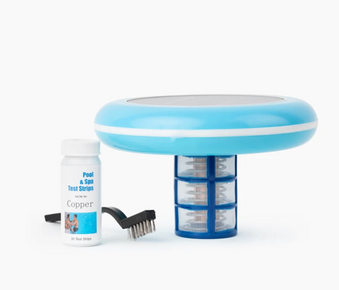
TL;DR: Metal cloudiness, often mistaken for algae or poor filtration, is a common frustration for pool owners caused by dissolved metals like copper, iron, and manganese. These metals can enter the water through source water, algaecides, or even the corrosion of pool equipment. Solar pool ionizers offer a unique two-pronged solution: they eliminate the need for copper-based algaecides that contribute to the problem and, when combined with proper water balancing and sequestering agents, create stable chemistry that prevents metals from precipitating and causing cloudiness or staining. This 2026 guide provides a complete framework for identifying, treating, and preventing metal cloudiness in solar-ionized pools.
SEO Summary: 2026 guide to solving metal cloudiness with solar pool ionizers: identify copper, iron & manganese stains, balance water chemistry, use sequestering agents, and maintain crystal-clear water.
Table of Contents
- Understanding Metal Cloudiness vs. Other Pool Problems
- Where Metals in Pool Water Come From
- Identifying the Type of Metal Stain or Cloudiness
- Copper-Specific Challenges and Solutions
- Dealing with Iron and Manganese
- The Role of Sequestering Agents
- Prevention Strategies for Metal Cloudiness
- Stabilizing Chemistry to Prevent Metal Precipitation
- Advanced Metal Removal Techniques
- Conclusion & Key Takeaways
Understanding Metal Cloudiness vs. Other Pool Problems
Cloudy water is one of the most common complaints from pool owners, but not all cloudiness is created equal. Before reaching for clarifiers or shock treatments, it is essential to distinguish between biological cloudiness (algae), particulate cloudiness (poor filtration), and metal cloudiness (oxidized metals). Misidentifying metal cloudiness can lead to ineffective treatments that waste time and money.
- Algae cloudiness: Typically appears as green, yellow, or black discoloration. Water may be cloudy with visible algae spots on walls or floor. Responds to algaecides and shock treatments. Copper ions from solar ionizers provide continuous algae prevention, making this type of cloudiness rare in well-maintained ionized pools.
- Particulate cloudiness: Caused by fine suspended particles that filters cannot capture. Water appears hazy but lacks color. Often responds to clarifiers or extended filtration. Ionic flocculation from solar ionizers naturally improves particle capture, reducing this type of cloudiness.
- Metal cloudiness: Appears as colored water (green, brown, orange, or black) that may look clear in a sample glass but discolored in the pool. Often occurs after shocking or pH fluctuations. Does not respond to algaecides or clarifiers and may worsen with chlorine addition.
Solar pool ionizers fundamentally change the dynamics of metal cloudiness. By eliminating the need for copper-based algaecides, they remove a primary source of copper introduction. Their stable chemistry also reduces the pH swings and oxidant shocks that cause metals to precipitate. For a deeper understanding of how ionizers transform water quality, our article on transforming water stability with solar ionization provides essential background.
Where Metals in Pool Water Come From
Preventing metal cloudiness begins with understanding where metals originate. Identifying the source helps determine the most effective treatment and prevention strategy.
- Fill water: Municipal water supplies and well water often contain dissolved metals. Iron is common in well water, appearing as reddish-brown staining. Manganese can cause purple-black staining. Copper may be present in source water, particularly in areas with copper plumbing.
- Copper-based algaecides: Many pool owners have historically used copper algaecides for algae prevention. These products add copper directly to the water, increasing the risk of precipitation and staining. Solar ionizers eliminate the need for these products entirely.
- Corroded plumbing or equipment: Older copper plumbing, brass fittings, or copper heat exchangers can leach copper into pool water, particularly if water is aggressive (low pH or low alkalinity). The non-corrosive nature of ionized water protects equipment, but existing corrosion may have already introduced metals.
- Pool chemicals: Some pool chemicals, particularly certain shock products and pH adjusters, may contain trace metals as impurities. While usually negligible, repeated use can contribute to accumulation.
- Environmental sources: In some regions, airborne dust or agricultural runoff can introduce metals. This is less common but should be considered in persistent cases.
The shift toward low-chemical pools, as detailed in our piece on how solar ionizers drive low-chemical pools, directly addresses many of these sources by eliminating copper-based products and stabilizing water chemistry.
Identifying the Type of Metal Stain or Cloudiness
Accurate identification is critical because different metals require different treatment approaches. Simple tests can distinguish between copper, iron, and manganese issues.
- The vitamin C test: Crush several vitamin C tablets into a powder. Place the powder in a sock or porous bag and hold it against a stained area for 30 to 60 seconds. If the stain lightens or disappears, it is likely iron or copper. Vitamin C is a reducing agent that reverses oxidation stains.
- The chlorine test: Apply a trichlor tablet or liquid chlorine directly to a stain. If the stain darkens or spreads, it is likely organic (algae) or metal that oxidizes further. If it lightens, it may be organic. This test is less reliable for metal identification but can help rule out algae.
- Color identification:
- Blue-green stains: Typically copper
- Red-brown stains: Typically iron
- Purple-black stains: Typically manganese
- Brown stains on light-colored plaster: Often iron or manganese
- Water testing: Professional laboratory testing provides definitive identification of metal types and concentrations. Test for copper, iron, and manganese specifically. Standard pool test kits do not measure these metals.
- Cloudiness patterns: Metal cloudiness often appears suddenly after shocking or pH adjustment. The water may look clear in a white bucket but discolored in the pool. This distinguishes it from particulate cloudiness, which looks equally hazy in any container.
For pools with solar ionizers, copper concerns are particularly relevant. Our complete information on copper staining prevention provides additional diagnostic techniques specifically for copper-related issues.
Copper-Specific Challenges and Solutions
Copper is the most common metal concern in pools, and it takes on special significance for solar ionizer owners because copper is the primary sanitizer. Managing copper levels is essential for both sanitation and preventing staining.
- Target copper range: For effective sanitation without staining, maintain copper between 0.2 and 0.4 parts per million. Below 0.2 ppm, algae prevention may be compromised. Above 0.5 ppm, staining risk increases significantly without corresponding sanitation benefits.
- Factors that trigger copper precipitation:
- High pH above 7.8: Copper becomes less soluble and precipitates as copper hydroxide
- Chlorine shock: Oxidizing conditions can convert copper to forms that stain
- Temperature extremes: Very warm water can decrease solubility
- High calcium hardness: Can interact with copper to form scale
- Immediate response to copper cloudiness:
- Test copper level immediately. If above 0.5 ppm, reduce ionizer output.
- Test and adjust pH to 7.4 to 7.6. Lower pH increases copper solubility.
- Apply a sequestering agent specifically formulated for copper.
- Run pump continuously for 24 to 48 hours to distribute sequestrant.
- Clean filter after treatment to remove precipitated metals.
- Ascorbic acid treatment for existing stains: For copper stains already on surfaces, ascorbic acid (vitamin C) is highly effective. Apply as described in the identification section or use a commercial stain remover containing ascorbic acid. This treatment removes stains but does not prevent recurrence.
- Long-term copper management: Modern ionizer controllers with temperature compensation automatically adjust output based on water temperature, reducing staining risk. Regular weekly testing ensures levels stay in range. For pools with persistent copper challenges, our article on bringing predictable maintenance to your pool provides systematic management protocols.
Dealing with Iron and Manganese
Iron and manganese typically enter pools through fill water, particularly from well sources. These metals can cause dramatic staining and cloudiness even at very low concentrations.
- Iron characteristics: Iron stains appear as red-brown discoloration on surfaces. In water, oxidized iron creates a rusty haze. Concentrations as low as 0.3 ppm can cause visible staining. Iron is often introduced through well water or corroded iron pipes.
- Manganese characteristics: Manganese stains appear purple-black and are more difficult to remove than iron. Manganese can cause dark water discoloration at concentrations above 0.05 ppm. It is less common than iron but more problematic when present.
- Testing for iron and manganese: Standard pool test kits do not measure these metals. Laboratory testing is required for accurate quantification. Test fill water seasonally if you suspect iron or manganese issues.
- Treatment options:
- Sequestering agents: Metal sequestrants bind to iron and manganese, keeping them in solution and preventing staining. Products containing phosphonic acid or polyacrylic acid are effective. Apply according to label directions, typically after balancing pH.
- Metal removal filters: Specialized filters containing media that adsorb iron and manganese can be installed on the pool circulation system. These are effective but require regular media replacement.
- Source water treatment: For well water, whole-house or pool-dedicated iron filters can remove metals before they enter the pool. This is the most permanent solution.
- Partial drain and refill: If metal concentrations are very high, partial dilution with metal-free water may be necessary before sequestering.
- Ascorbic acid for iron stains: Like copper, iron stains often respond to ascorbic acid treatment. The vitamin C test confirms iron involvement. Commercial stain removers containing citric or ascorbic acid are effective for existing stains.
- Prevention through chemistry stability: Iron and manganese precipitation are triggered by oxidizing conditions and pH fluctuations. The stable chemistry of solar-ionized pools reduces these triggers. By maintaining consistent pH and avoiding chlorine shocks, ionizers help keep metals in solution. The principles of water stability that prevent metal precipitation are explored in our resource on simpler pool chemistry with solar ionizers.
The Role of Sequestering Agents
Sequestering agents, also called chelating agents or stain preventers, are essential tools for managing metal cloudiness in any pool, including those with solar ionizers. Understanding how they work and when to use them is key to effective metal management.
- How sequestering agents work: Sequestering agents bind to dissolved metal ions, forming stable complexes that remain in solution. The metals are still present in the water but are prevented from precipitating onto surfaces or causing cloudiness. They remain in this bound state until they are gradually removed by filtration or water replacement.
- Types of sequestering agents:
- Phosphonic acid-based: Highly effective for calcium, iron, and manganese. Stable at pool pH and resistant to chlorine degradation. Preferred for most applications.
- Polyacrylic acid-based: Effective for calcium and some metals. Less stable than phosphonic acid but often less expensive.
- Blended products: Many commercial metal sequestrants combine multiple active ingredients for broad-spectrum protection.
- Sequesterant longevity: Sequestering agents degrade over time, particularly when exposed to chlorine or sunlight. In solar-ionized pools without chlorine, they last longer typically 3 to 6 months. In hybrid systems with minimal chlorine, they may need more frequent replenishment. Regular testing and observation guide reapplication timing.
- Compatibility with solar ionizers: Sequestering agents are compatible with solar ionizers and do not interfere with copper sanitation. However, they do bind to copper ions as well, temporarily reducing free copper levels. After applying a sequestrant, test copper after 48 hours and adjust ionizer output if needed to maintain target range.
The stable chemistry of solar-ionized pools makes sequestering agents more effective and longer-lasting. For pools transitioning to low-chemical operation, our overview of how solar ionizers reinvent backyard pools explains how this stability simplifies metal management.
Prevention Strategies for Metal Cloudiness
Preventing metal cloudiness is far easier than treating it after it occurs. A comprehensive prevention strategy addresses metal sources, water chemistry, and maintenance practices.
- Source water management:
- Test fill water for metals before adding significant volumes. If levels are high, consider alternative water sources or treatment.
- For well water with high iron or manganese, install a dedicated pool water softener or iron filter.
- Use a garden hose pre-filter for routine top-ups to remove metals before they enter the pool.
- Chemical management:
- Eliminate copper-based algaecides entirely. Solar ionizers provide all necessary algae control.
- Avoid chlorine-based shock products that can oxidize metals. Use non-chlorine shock when oxidation is needed.
- Maintain stable pH through regular monitoring and adjustment. pH fluctuations are primary triggers for metal precipitation.
- Equipment maintenance:
- Inspect older copper plumbing for signs of corrosion. The non-corrosive environment of ionized water helps, but existing corrosion may continue to release copper.
- Monitor heater heat exchangers for scale or corrosion. Scale can trap metals and release them during cleaning.
- Seasonal prevention dosing: In areas with known metal issues, apply a sequestering agent at the beginning of swim season and mid-season as a preventive measure. This maintains a residual of binding capacity that handles any metals introduced through fill water.
- Regular metal testing: Test for copper, iron, and manganese annually, or more frequently if issues arise. Laboratory testing provides accurate baseline data. Track results over time to identify trends before they become problems.
The predictive capabilities of modern pool technology can assist with prevention. Our discussion of how pool technology advances with solar ionizers explains how smart controllers and sensors can alert owners to developing chemistry issues before they trigger metal precipitation.
Stabilizing Chemistry to Prevent Metal Precipitation
The single most effective strategy for preventing metal cloudiness is maintaining stable water chemistry. Fluctuations in pH, alkalinity, and oxidant levels are the primary triggers that cause dissolved metals to precipitate. Solar pool ionizers excel at providing this stability.
- pH stability: In solar-ionized pools, pH drifts slowly and predictably typically 0.1 to 0.2 units per month compared to 0.2 to 0.4 units per week in chlorinated pools. This stability eliminates the pH spikes that cause copper hydroxide precipitation and iron oxidation. Weekly pH testing and occasional adjustment maintain optimal conditions.
- Alkalinity buffering: Maintaining alkalinity between 80 and 120 parts per million provides pH buffer capacity. Low alkalinity allows pH swings; high alkalinity can cause pH drift. Stable alkalinity supports stable pH, which supports metal solubility.
- Calcium hardness management: Calcium hardness affects metal solubility indirectly through its effect on water balance. Maintaining calcium between 200 and 300 parts per million helps prevent the aggressive water conditions that can corrode metal fixtures and release additional metals.
- Elimination of oxidant shocks: Chlorine shocks create powerful oxidizing conditions that convert dissolved metals to insoluble forms. Solar-ionized pools eliminate the need for weekly shocking. Occasional non-chlorine shock is far less oxidizing and less likely to trigger metal precipitation.
- Temperature compensation: Modern ionizer controllers automatically adjust output based on water temperature, maintaining optimal copper levels without manual intervention. This prevents the over-concentration that can occur when well-meaning owners increase output unnecessarily.
- Copper target maintenance: Keeping copper consistently in the 0.2 to 0.4 ppm range prevents both under-sanitation and over-concentration. Regular weekly testing verifies levels. Smart controllers with continuous monitoring can automate this entirely.
The relationship between chemistry stability and metal management is explored in our article on elevating everyday water clarity with solar ionizers, which explains how stable chemistry contributes to crystal-clear water.
Advanced Metal Removal Techniques
When sequestering agents are insufficient or when metal concentrations are very high, more aggressive removal techniques may be necessary. These approaches physically remove metals from the water rather than simply holding them in solution.
- Metal removal filters: Specialized filtration media can adsorb dissolved metals. These systems are installed after the main filter and before the ionizer chamber. Partial drain and dilution: When metal concentrations are extremely high, partial replacement with metal-free water may be the most practical solution. Calculate the percentage of water to replace based on current and target metal levels. For example, to reduce copper from 1.0 ppm to 0.5 ppm, replace 50 percent of pool water.
- Reverse osmosis (RO) treatment: Mobile RO units can be brought to the pool site to filter all water through membranes that remove dissolved solids including metals. This is expensive but highly effective, removing 90 to 95 percent of dissolved metals in a single treatment. RO also removes calcium, alkalinity, and other dissolved solids, requiring subsequent rebalancing.
- Chemical precipitation followed by vacuuming: In extreme cases, chemicals can be added to deliberately precipitate metals, which then settle to the pool floor for vacuuming. This approach requires careful pH management and is typically performed by professionals. It carries risk of staining if not executed properly.
- Activated carbon filtration: Passing water through activated carbon can adsorb some metals, particularly when combined with other media. Granular activated carbon filters are more effective than cartridge carbon filters.
Before pursuing advanced removal techniques, consult with a pool professional experienced in metal management. Inappropriate treatment can worsen staining or create new problems. The investment in professional assessment is often less than the cost of incorrect treatment.
Conclusion & Key Takeaways
Metal cloudiness, while frustrating, is a manageable condition with the right knowledge and tools. Solar pool ionizers provide significant advantages in both preventing and managing metal issues through their stable chemistry, elimination of copper-based algaecides, and compatibility with sequestering agents.
The key to successful metal management is accurate identification. Distinguishing between copper, iron, and manganese allows targeted treatment rather than guesswork. Simple tests like the vitamin C method provide immediate answers.
For pools with existing metal issues, a systematic approach combining pH adjustment, sequestering agents, and possibly advanced removal techniques restores water clarity. For pools without metal problems, preventive strategies including source water management, chemistry stability, and regular monitoring prevent their development.
Solar pool ionizers make metal management easier by providing the stable chemical environment that keeps metals in solution. Their self-regulating operation and compatibility with modern water treatment products give pool owners powerful tools for maintaining crystal-clear water.
Key Takeaways
- Metal cloudiness requires accurate identification: Distinguish between copper, iron, and manganese using color, the vitamin C test, and laboratory testing. Treatment differs for each metal type. Our analysis of the rise of solar pool ionizers in modern pools emphasizes the importance of precise water management.
- Metal sources must be addressed: Fill water, copper-based algaecides, corroded equipment, and chemical impurities all contribute. Eliminating copper algaecides is a critical first step.
- Copper management is central for ionizer owners: Maintain 0.2 to 0.4 ppm copper, avoid high pH, and use sequestering agents when needed. Our copper staining prevention resource provides comprehensive protocols.
- Sequestering agents are essential tools: They bind dissolved metals, preventing precipitation. Apply after pH adjustment and reapply periodically. They are compatible with solar ionizers but temporarily reduce free copper.
- Chemistry stability prevents metal issues: Stable pH, alkalinity, and calcium levels keep metals in solution. Solar ionizers excel at providing this stability. Our article on transforming water stability with solar ionization explains the underlying principles.
- Advanced removal techniques exist for severe cases: Metal removal filters, partial drain and refill, reverse osmosis, and professional precipitation treatments can physically remove metals.
- Prevention is far easier than treatment: Test fill water, maintain stable chemistry, avoid metal-containing products, and apply preventive sequestrant doses. Our piece on bringing predictable maintenance to your pool provides systematic prevention strategies.
- Solar ionizers simplify metal management: Their stable chemistry, elimination of copper algaecides, and compatibility with modern water treatment make them ideal for preventing and managing metal cloudiness.
- Regular monitoring catches issues early: Weekly copper testing, periodic laboratory analysis for other metals, and attentive observation allow early intervention before cloudiness develops.
- Professional help is available for persistent problems: If metal issues persist despite best efforts, consult a pool professional with experience in metal management. The investment in expert diagnosis often saves money and frustration.
Metal cloudiness need not be a recurring frustration. With proper identification, targeted treatment, and preventive strategies, any pool can maintain the crystal-clear water that swimmers deserve. Solar pool ionizers, with their stable chemistry and reduced chemical footprint, provide an ideal foundation for achieving this goal.