ProTeam Mustard & Black Magic is a specialized algaecide that eliminates stubborn mustard and black algae. Add 1 quart per 10,000 gallons, brush vigorously, circulate 24 hours, shock pool, brush again, vacuum. Repeat weekly for 3 weeks for complete elimination. This guide covers complete treatment procedures, dosage, and prevention strategies for maintaining algae free pools.
Table of Contents
- What is ProTeam Mustard & Black Magic?
- Identifying Mustard and Black Algae
- Before You Begin: Preparation
- Step by Step Application Guide
- Proper Dosage and Calculations
- After Treatment: Maintenance
- Preventing Algae Return
- Pro Tips for Maximum Effectiveness
- Troubleshooting Common Issues
- Frequently Asked Questions
What is ProTeam Mustard & Black Magic?
ProTeam Mustard & Black Magic is a professional strength algaecide specifically formulated to eliminate the most stubborn and resistant types of pool algae: mustard algae (yellow algae) and black algae. Unlike standard algaecides that work on common green algae, this specialized formula penetrates the protective layers of these resistant algae strains, providing effective treatment where other products fail.
Key Features of Mustard & Black Magic
- Specialized formula: Targets resistant mustard and black algae specifically
- Professional strength: More powerful than standard algaecides
- Penetrating action: Breaks through protective algae layers
- Fast acting: Visible results within 24 to 48 hours
- Safe for all surfaces: Compatible with vinyl, fiberglass, plaster, and tile
- Works with all sanitizers: Compatible with chlorine, salt, and mineral systems
- Non-foaming: Won't create excessive foam in pool
- Concentrated formula: Effective at recommended dosages
Why Mustard and Black Algae Require Special Treatment
Mustard and black algae are chlorine resistant strains that develop protective layers making them extremely difficult to eliminate with standard pool chemicals. They require specialized algaecides combined with aggressive brushing and shocking to fully eradicate. ProTeam Mustard & Black Magic is specifically designed to penetrate these protective barriers.
When combined with proper weekly pool cleaning routines, this specialized treatment helps eliminate resistant algae strains.
Identifying Mustard and Black Algae
Mustard Algae (Yellow Algae) Characteristics
Appearance:
- Yellowish, tan, or mustard colored patches
- Powdery or dusty texture
- Resembles dirt or sand
- Usually appears on shaded pool walls
- Commonly found on pool floor in corners
- Brushes off easily but returns quickly
Behavior:
- Resistant to normal chlorine levels
- Returns quickly after brushing
- Spreads rapidly if not treated
- More common in warm climates
- Often appears in shaded areas
- Can survive on pool equipment and toys
Learn more about solar ionizer effectiveness against mustard algae.
Black Algae Characteristics
Appearance:
- Dark blue, green, or black spots
- Appears as small dots or patches
- Has roots that penetrate pool surfaces
- Rough, bumpy texture
- Usually appears on plaster or concrete
- Very difficult to brush off
Behavior:
- Extremely resistant to chlorine
- Develops protective outer layer
- Roots penetrate into pool surface
- Requires aggressive treatment
- Can damage pool surfaces if left untreated
- Most difficult algae type to eliminate
Before You Begin: Preparation
Pre Treatment Checklist
- Confirm algae type (mustard or black)
- Test and record water chemistry
- Purchase adequate Mustard & Black Magic for treatment
- Have shock treatment ready (will need for treatment)
- Ensure stiff brush is available for aggressive brushing
- Clean or backwash filter before treatment
- Remove all pool toys, floats, and equipment
- Plan for 3 week treatment protocol
- Inform pool users of treatment schedule
Water Chemistry Requirements
Balance water chemistry before treating algae:
- pH: 7.2 to 7.6 (lower end better for algae treatment)
- Total Alkalinity: 80 to 120 ppm
- Free Chlorine: 1 to 3 ppm (will increase with shocking)
- Calcium Hardness: 200 to 400 ppm
- Water temperature: Treatment works at all temperatures
If pH is high, learn what to do if pH level is high and how to reduce pH levels.
Equipment Preparation
- Stiff pool brush (wire brush for plaster, nylon for vinyl)
- Pool vacuum (manual or automatic)
- Shock treatment (calcium hypochlorite or dichlor)
- Test kit or test strips
- Measuring cup for accurate dosing
- Bucket for mixing if needed
- Safety equipment (gloves, goggles)
Use quality pool brushes appropriate for your pool surface.
Step by Step Application Guide
Week 1: Initial Treatment
Day 1: First Application
Step 1: Test and Balance Water
- Test pH, alkalinity, and chlorine
- Adjust pH to 7.2 to 7.4 (lower end of range)
- Adjust alkalinity to 80 to 120 ppm
- Wait 4 hours after adjustments
- Retest to verify balance
Step 2: Clean Filter
- Backwash sand or DE filters thoroughly
- Clean cartridge filters
- Note starting filter pressure
- Filter will work hard during treatment
Step 3: Remove Pool Items
- Remove all toys, floats, and equipment from pool
- Clean items with bleach solution (1:10 ratio)
- Allow items to dry completely
- Do not return to pool until treatment is complete
- Algae can survive on these items and reinfect pool
Step 4: Add Mustard & Black Magic
Apply algaecide at proper dosage:
Standard Dosage Guidelines
Initial Treatment: 1 quart (32 oz) per 10,000 gallons
- 10,000 gallon pool: 1 quart (32 oz)
- 15,000 gallon pool: 1.5 quarts (48 oz)
- 20,000 gallon pool: 2 quarts (64 oz)
- 25,000 gallon pool: 2.5 quarts (80 oz)
- 30,000 gallon pool: 3 quarts (96 oz)
Application Method:
- Turn on pool pump for circulation
- Pour Mustard & Black Magic around pool perimeter
- Distribute evenly for best coverage
- Pour directly over visible algae areas
- Do not pre-dilute product
Step 5: Brush Pool Vigorously
Aggressive brushing is critical for success:
- Wait 15 minutes after adding algaecide
- Brush entire pool surface thoroughly
- Pay special attention to algae affected areas
- Brush walls from top to bottom
- Brush floor in overlapping strokes
- Brush steps, corners, and crevices
- For black algae, brush very aggressively to break protective layer
- Brushing should take 20 to 30 minutes minimum
Step 6: Circulate Water
Run pump for proper distribution:
- Run pump continuously for 24 hours
- Ensure good water circulation
- Monitor filter pressure
- Do not turn off pump during this period
Day 2: Shock Treatment
Step 7: Shock Pool Heavily
- 24 hours after adding algaecide, shock pool
- Use 2 to 3 times normal shock dosage
- For 10,000 gallons, use 2 to 3 pounds shock
- Dissolve shock in bucket if using cal-hypo
- Pour around pool perimeter in evening
- Run pump continuously overnight
Step 8: Brush Again
- After shocking, brush entire pool again
- Focus on algae areas
- Brush as vigorously as first time
- This helps shock penetrate algae
Day 3: Vacuum and Clean
Step 9: Vacuum Pool
- Vacuum pool thoroughly to remove dead algae
- Vacuum to waste if possible
- If vacuuming to filter, clean filter immediately after
- Remove all visible algae debris
Step 10: Clean Filter
- Backwash or clean filter thoroughly
- May need to clean multiple times
- Filter has captured dead algae
- Continue running pump normally
Week 2: Second Treatment
Repeat Entire Process:
- Add Mustard & Black Magic (same dosage)
- Brush vigorously
- Circulate 24 hours
- Shock pool (2 to 3x normal dose)
- Brush again
- Vacuum pool
- Clean filter
Second treatment eliminates any remaining algae spores and prevents regrowth.
Week 3: Final Treatment
Repeat Process One More Time:
- Add Mustard & Black Magic (same dosage)
- Brush thoroughly
- Circulate 24 hours
- Shock pool
- Brush again
- Vacuum and clean filter
Three week protocol ensures complete algae elimination and prevents return.
After Treatment: Maintenance
Post Treatment Steps
After Final Treatment:
- Test water chemistry completely
- Balance pH to 7.4 to 7.6
- Adjust alkalinity if needed
- Maintain chlorine at 1 to 3 ppm
- Clean filter one final time
- Pool is ready for normal use
Ongoing Maintenance
- Brush pool weekly to prevent algae return
- Maintain proper chlorine levels (1 to 3 ppm)
- Keep pH balanced at 7.2 to 7.6
- Clean filter monthly
- Use preventive algaecide weekly
- Test water chemistry 2 to 3 times per week
- Address any algae spots immediately
Follow comprehensive weekly pool cleaning routines for best results.
Preventing Algae Return
Ongoing Prevention Strategies
Water Chemistry Management:
- Maintain chlorine at 1 to 3 ppm consistently
- Keep pH between 7.2 and 7.6
- Test water 2 to 3 times per week
- Shock pool weekly during peak season
- Never let chlorine drop to zero
Regular Brushing:
- Brush pool walls and floor weekly
- Pay attention to shaded areas
- Brush corners and crevices thoroughly
- Use appropriate brush for pool surface
- Brushing prevents algae from establishing
Filtration and Circulation:
- Run pump 8 to 12 hours daily minimum
- Ensure proper water circulation
- Clean filter monthly or when pressure rises
- Check for dead spots in pool
- Good circulation prevents algae growth
Learn about your pool's filtration system and how circulation supports proper maintenance.
Preventive Algaecide Use
- Use weekly maintenance algaecide
- Apply after shocking pool
- Follow product dosage instructions
- Rotate algaecide types occasionally
- Prevents algae from developing resistance
Environmental Controls
- Trim trees and bushes near pool
- Improve sunlight exposure to shaded areas
- Keep pool covered when not in use
- Clean pool toys and equipment regularly
- Remove debris promptly
Remove leaves and debris to prevent algae growth.
Pro Tips for Maximum Effectiveness
Expert Tips from Pool Professionals
- Complete full 3 week protocol: Don't skip treatments even if algae appears gone
- Brush aggressively: Brushing is as important as chemicals
- Clean all equipment: Algae survives on toys, floats, and cleaning equipment
- Lower pH slightly: 7.2 to 7.4 pH enhances algaecide effectiveness
- Shock heavily: Use 2 to 3 times normal shock dosage
- Vacuum to waste: Removes algae from pool completely
- Clean filter frequently: Filter captures dead algae
- Don't swim during treatment: Allow chemicals to work undisturbed
- Address immediately: Treat algae as soon as spotted
- Consider ionization: Use solar ionization for healthier pool environment
Avoid Common Mistakes
- Stopping after one treatment: Requires full 3 week protocol
- Not brushing enough: Brushing is critical for penetrating algae
- Skipping shock treatment: Shock is necessary to kill algae
- Not cleaning equipment: Reinfection from contaminated items
- Swimming too soon: Disrupts treatment process
- Insufficient dosage: Use full recommended amount
- Not balancing pH: Wrong pH reduces effectiveness
- Giving up too early: Resistant algae takes time to eliminate
Avoid common pool cleaning mistakes that allow algae to thrive.
Maximizing Treatment Success
Water Chemistry: Maintain pH between 7.2 and 7.4 during treatment for maximum algaecide effectiveness.
Mechanical Action: Aggressive brushing breaks protective algae layers allowing chemicals to penetrate.
Persistence: Complete all three weekly treatments even if algae appears gone after first treatment.
Prevention: Ongoing maintenance and proper water balance prevent algae from returning.
Troubleshooting Common Issues
Problem: Algae Returns After Treatment
Solutions:
- Verify you completed full 3 week protocol
- Check that all pool equipment was cleaned
- Test and balance water chemistry
- Increase chlorine to 2 to 3 ppm consistently
- Brush pool more frequently (2 to 3 times per week)
- May need to repeat treatment protocol
- Consider professional algae testing
Problem: Black Algae Won't Come Off
Solutions:
- Use wire brush on plaster surfaces (nylon on vinyl)
- Brush more aggressively to break protective layer
- Apply algaecide directly to black algae spots
- Use chlorine tablets directly on spots (plaster only)
- May need to chip away at roots with pumice stone
- Increase shock dosage to 3 to 4 times normal
- Black algae is most difficult, requires patience
Problem: Mustard Algae Keeps Spreading
Solutions:
- Clean all pool toys, floats, and equipment with bleach
- Brush pool daily during treatment
- Maintain higher chlorine levels (2 to 3 ppm)
- Shock pool twice per week during treatment
- Improve circulation to shaded areas
- Test for phosphates and treat if elevated
- May need stronger initial dosage
Problem: Water Cloudy During Treatment
Solutions:
- This is normal as algae dies
- Continue treatment protocol
- Clean filter frequently
- Run pump continuously
- Add clarifier after shocking if needed
- Water should clear within 48 hours of shocking
For severe cloudiness, see how to handle cloudy water and how to fix green pool quickly.
Frequently Asked Questions
How much Mustard & Black Magic should I use?
Use 1 quart (32 oz) per 10,000 gallons for initial treatment. Repeat this dosage weekly for 3 consecutive weeks for complete algae elimination.
Do I really need to treat for 3 weeks?
Yes. Mustard and black algae are extremely resistant and have spores that can survive initial treatment. The 3 week protocol ensures complete elimination and prevents regrowth.
Can I swim during treatment?
It's best to avoid swimming during the 24 hours after adding algaecide and shocking. You can swim between treatments but avoid swimming immediately after chemical additions.
Why is brushing so important?
Brushing breaks through the protective layers that mustard and black algae develop. Without aggressive brushing, chemicals cannot penetrate to kill the algae effectively.
Will this work on green algae too?
Yes, Mustard & Black Magic will eliminate green algae, but it's more powerful (and expensive) than needed for common green algae. Standard algaecides work fine for green algae.
Can I use this with a saltwater pool?
Yes! Mustard & Black Magic is safe for all pool types including saltwater, chlorine, and mineral systems.
What if algae returns after completing treatment?
If algae returns, verify all pool equipment was cleaned, maintain proper chlorine levels (2 to 3 ppm), brush weekly, and consider repeating the 3 week treatment protocol.
Do I need to drain my pool?
No. Mustard & Black Magic eliminates algae without draining. However, if algae has severely damaged plaster surfaces, professional replastering may be needed after treatment.
Can I use other algaecides with this?
No. Use only Mustard & Black Magic during the treatment protocol. After treatment is complete, you can use standard maintenance algaecides for prevention.
How do I prevent algae from coming back?
Maintain proper chlorine levels (1 to 3 ppm), brush weekly, keep pH balanced, use preventive algaecide, clean filter monthly, and ensure good circulation.
Conclusion
ProTeam Mustard & Black Magic provides effective treatment for the most stubborn and resistant pool algae strains. By following the complete 3 week treatment protocol, brushing aggressively, shocking heavily, and maintaining proper water chemistry, you can successfully eliminate mustard and black algae and prevent their return with ongoing preventive maintenance.
Key Takeaways
- Use 1 quart per 10,000 gallons weekly for 3 weeks
- Complete full 3 week protocol even if algae appears gone
- Brush aggressively after each algaecide application
- Shock pool heavily 24 hours after adding algaecide
- Clean all pool toys and equipment with bleach solution
- Vacuum pool to waste to remove dead algae
- Clean filter frequently during treatment
- Maintain pH at 7.2 to 7.4 during treatment
- Continue preventive maintenance after treatment
- Address any new algae spots immediately
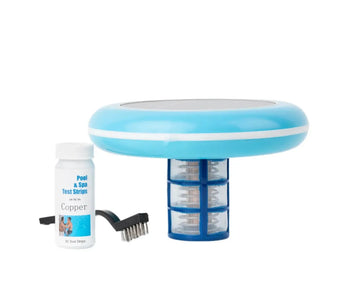
For long term algae prevention that works alongside proper chemical treatment, consider adding a Solar Pool Ionizer which releases copper and silver ions to naturally prevent algae growth while reducing chlorine needs by up to 85%, providing continuous protection against all algae types including resistant mustard and black algae strains.