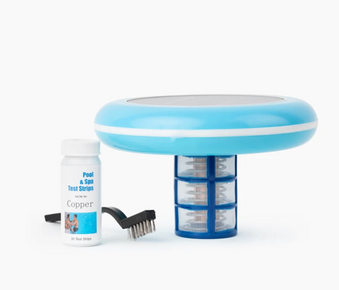
TL;DR: Pool efficiency in 2026 encompasses far more than just energy consumption it includes chemical efficiency, filtration performance, equipment longevity, and operational simplicity. Solar pool ionizers boost efficiency across all these dimensions simultaneously through fundamentally better water chemistry. By eliminating the corrosive, unstable nature of chlorine, ionizers enable pumps to run less and last longer, filters to capture more particles with less energy, heaters to maintain peak performance without scale buildup, and owners to spend dramatically less time on maintenance. This guide quantifies the efficiency gains achievable with solar ionization and provides strategies for maximizing them.
SEO Summary: 2026 guide to how solar pool ionizers boost pool efficiency: energy savings, chemical reduction, filtration improvement, equipment longevity, and operational simplicity with documented performance gains.
Table of Contents
- Defining Pool Efficiency in 2026
- Energy Efficiency: Doing More With Less Power
- Chemical Efficiency: 80-90 Percent Reduction
- Filtration Efficiency: Ionic Flocculation in Action
- Heating Efficiency: Scale Prevention and Performance
- Equipment Efficiency: Extended Service Life
- Time Efficiency: From Hours to Minutes
- Water Efficiency: Extended Drain Intervals
- Integrated Efficiency: The Whole-System View
- Conclusion & Key Takeaways
Defining Pool Efficiency in 2026
Pool efficiency has traditionally been measured in narrow terms primarily pump energy consumption. While energy remains important, a comprehensive view of efficiency in 2026 encompasses multiple dimensions that together determine the true cost and performance of pool ownership.
- Energy efficiency: The amount of electricity required to maintain water quality, measured in kilowatt-hours per day or per season. This includes pump operation, sanitation systems, and heating.
- Chemical efficiency: The quantity of chemicals consumed to maintain safe, clear water, measured in dollars per month or pounds per season. This includes sanitizers, algaecides, clarifiers, and pH adjusters.
- Filtration efficiency: The effectiveness of particle removal per unit of energy, measured by water clarity achieved versus energy consumed. Higher filtration efficiency means clearer water with less pump runtime.
- Heating efficiency: The amount of heat energy retained and effectively transferred to water, measured by temperature maintenance versus energy input. Scale-free heat exchangers and reduced heat loss contribute to heating efficiency.
- Equipment efficiency: The service life of pumps, heaters, filters, and other components, measured in years of operation before replacement. Longer-lived equipment reduces the embodied energy and cost of manufacturing replacements.
- Time efficiency: The hours of owner attention required to maintain the pool, measured in minutes per day or hours per season. Lower time requirements free owners to enjoy rather than maintain.
- Water efficiency: The volume of water consumed through evaporation, backwashing, and deliberate draining, measured in gallons per year. Water conservation is increasingly recognized as a critical efficiency metric.
Solar pool ionizers boost efficiency across every one of these dimensions simultaneously. They are not merely an alternative sanitation method but a comprehensive efficiency upgrade for the entire pool system. Our resource on enhancing pool performance explores how these efficiency gains translate into tangible benefits.
Energy Efficiency: Doing More With Less Power
Energy efficiency is the most quantifiable and immediately noticeable benefit of solar pool ionizers. The energy savings come from multiple mechanisms that compound to deliver dramatic reductions.
- Sanitation energy eliminated: The ionizer itself consumes zero grid power. A dedicated solar panel converts sunlight directly into the electricity needed for ion production. This eliminates the 500 to 1,500 watts that salt chlorine generators, ozone systems, or UV sterilizers would draw from the grid. For a typical pool, this saves 500 to 1,500 kilowatt-hours annually.
- Pump runtime reduction: Ionized water stays cleaner and requires no chemical distribution, allowing pump runtime to be reduced by 40 to 60 percent. Where a traditional pool might run 10 hours daily, an ionized pool often achieves perfect clarity in 4 to 6 hours. This directly reduces energy consumption proportionally.
- Lower speed operation: Because high flow is not required for chemical distribution, pumps can operate at much lower speeds. The affinity laws dictate that reducing pump speed by 20 percent reduces power consumption by approximately 50 percent. A variable-speed pump in an ionized pool typically operates at 1500 to 2000 RPM rather than 3000 to 3450 RPM, consuming 80 to 90 percent less energy at those lower speeds.
- Combined savings: When runtime reduction and speed reduction are combined, total pump energy savings reach 70 to 80 percent. A pool that previously consumed 3,000 kilowatt-hours annually for circulation might consume 600 to 900 kilowatt-hours after optimization. At average electricity rates, this saves $400 to $600 per year.
- Solar-synchronous operation: By scheduling pump operation during peak solar hours, owners can further reduce grid consumption. A pump running on solar power during daylight hours consumes zero grid electricity for those hours. With modest battery storage, evening operation can also be solar-powered.
Energy efficiency gains alone often justify the investment in solar ionization within a few years. Our guide to solar-powered pool care provides detailed analysis of achievable energy savings.
Chemical Efficiency: 80-90 Percent Reduction
Chemical efficiency is perhaps the most satisfying efficiency gain for pool owners, eliminating the constant purchases, storage, and handling of pool chemicals.
- Chlorine elimination: A traditional pool consumes 200 to 300 pounds of chlorine products annually. A solar-ionized pool reduces this to 20 to 40 pounds, primarily for occasional shocking or backup sanitation. This represents an 80 to 90 percent reduction.
- Algaecide elimination: Copper ions themselves are effective algaecides, eliminating the need for separate algaecide products. The 10 to 20 gallons of algaecide that a traditional pool might use annually are completely eliminated.
- Clarifier reduction: Ionic flocculation naturally improves water clarity, reducing or eliminating the need for clarifier products. Most ionizer owners use zero clarifiers after the initial transition period.
- pH adjuster reduction: Because ionized water is chemically stable, pH drift is slower and more predictable. The volume of acid or base required decreases by 50 to 70 percent. Adjustments that were weekly become monthly, and quantities drop from cups to ounces.
- Shock treatment reduction: Weekly shocking is eliminated. Occasional non-chlorine shock after heavy use may still be beneficial, but total shock treatments drop from 30 to 50 per year to 5 to 10.
- Cyanuric acid elimination: Ionized pools do not require cyanuric acid. Any CYA present from previous chlorine use gradually dilutes and eventually becomes negligible, eliminating the need for periodic draining to reset stabilizer levels.
- Dollar savings: In financial terms, chemical reduction translates to savings of $400 to $700 annually for a typical residential pool. For commercial pools, the savings are even more dramatic often $2,000 to $5,000 per year.
The chemical efficiency gains extend beyond direct cost savings. They eliminate chemical storage hazards, reduce trips to the pool store, and remove the mental burden of constant chemical management. Our resource on low-chemical pools explores these benefits in depth.
Filtration Efficiency: Ionic Flocculation in Action
Filtration efficiency measures how effectively the pool removes particles per unit of energy. Solar ionizers dramatically improve this metric through the natural process of ionic flocculation.
- The flocculation mechanism: Positively charged copper ions attract negatively charged suspended particles. When particles collide, they agglomerate into larger clusters that are 10 to 100 times larger than the original particles. These enlarged clusters are captured far more efficiently by all filter types.
- Capture efficiency improvement: Traditional filters capture 40 to 60 percent of particles in the 1-10 micron range per pass. Ionized pools achieve 80 to 90 percent capture efficiency for the same particle range. This means that for the same filtration energy, an ionized pool removes two to three times more contaminant mass.
- Extended cleaning intervals: Because filters capture particles more effectively, they load more completely before pressure rise triggers cleaning. Cleaning intervals extend by 30 to 50 percent. A cartridge filter that required monthly cleaning in a chlorinated pool might go 6 to 8 weeks in an ionized pool.
- Filter media life extension: Gentler loading and reduced chemical exposure extend filter media life by 20 to 40 percent. Cartridges last longer, sand lasts longer, and DE grids require less frequent replacement.
- Reduced backwash frequency: Sand and DE filters require less frequent backwashing in ionized pools. Backwash water consumption typically decreases by 30 to 50 percent, contributing to water efficiency as well.
- Clarity as a metric: The ultimate measure of filtration efficiency is water clarity. Ionized pools consistently achieve clarity levels that chlorinated pools reach only immediately after filter cleaning. The jewel-like sparkle of ionized water is the visible manifestation of superior filtration efficiency.
Filtration efficiency gains mean that the same pump energy produces visibly clearer water. Our article on elevating water clarity provides a deeper dive into the science of ionic flocculation.
Heating Efficiency: Scale Prevention and Performance
Pool heating is typically the largest energy expense in pool operation, often exceeding pump energy by 2 to 5 times. Solar ionizers improve heating efficiency through scale prevention and chemistry stability.
- The scale problem: Calcium scale formation on heat exchanger surfaces is the primary enemy of heating efficiency. A scale layer of just 1/16 inch reduces heat transfer efficiency by 20 to 30 percent. Over a heating season, this efficiency loss can increase energy consumption by hundreds of dollars.
- How ionizers prevent scale: Ionized water maintains stable pH in the 7.4 to 7.6 range, avoiding the high pH conditions that trigger calcium precipitation. With 80 to 90 percent fewer chemicals added, there are simply fewer scale-forming ions introduced to the water. Stable chemistry allows calcium hardness to be maintained in the optimal range.
- Peak efficiency maintenance: Heaters in ionized pools maintain peak efficiency throughout their service life, rather than degrading 2 to 5 percent annually due to scale accumulation. A heater that operates at 85 percent efficiency in year one will still be at 85 percent in year ten.
- Extended heater life: Scale-free operation dramatically extends heater life. Heaters in ionized pools typically achieve 12 to 15 years of service compared to 5 to 8 years in chlorinated pools. This represents a 50 to 100 percent improvement in equipment efficiency.
- Perceived warmth benefit: Beyond actual heating efficiency, ionized water provides a subjective warmth enhancement. The silky feel of ionized water is perceived as warmer than chlorinated water at the same temperature. This allows owners to reduce thermostat settings by 1 to 2 degrees Fahrenheit without sacrificing comfort, saving an additional 10 to 20 percent on heating energy.
Heating efficiency gains compound over the life of the pool, delivering substantial cumulative savings. Our water stability resource explains the chemistry that makes these gains possible.
Equipment Efficiency: Extended Service Life
Equipment efficiency measures how long pumps, heaters, filters, and other components last before requiring replacement. The non-corrosive environment of ionized water dramatically extends equipment life.
- Pump longevity: Pumps in chlorinated pools suffer from seal deterioration, impeller corrosion, and housing degradation. In ionized pools, pumps typically achieve 12 to 15 years of service compared to 8 to 10 years in chlorinated environments. This 30 to 50 percent extension represents significant cost avoidance.
- Heater longevity: As discussed, heaters benefit most dramatically from scale prevention and reduced corrosion. Service life extends from 5 to 8 years to 12 to 15 years a 50 to 100 percent improvement.
- Filter longevity: Filter components including cartridges, grids, and valves last longer in the benign chemical environment. Cartridge life increases by 30 to 50 percent. Sand lasts indefinitely with proper care. DE grids require less frequent replacement.
- Light fixture longevity: Underwater lights are particularly vulnerable to chlorine attack. Seals fail, lenses cloud, and housings corrode. In ionized pools, light fixtures often achieve 10 to 12 years compared to 5 to 7 years in chlorinated pools.
- Valve and fitting longevity: Plastic components become brittle and crack over time due to chlorine exposure. Ionized water eliminates this degradation, extending the life of valves, fittings, and plumbing components.
- Surface longevity: Plaster, gunite, and fiberglass surfaces last 30 to 50 percent longer without the aggressive chemical environment. This is particularly significant given the high cost of resurfacing.
Equipment efficiency gains translate directly to lower total cost of ownership. Over a 20-year period, these savings can exceed $10,000 for an average pool. Our predictable maintenance resource discusses how extended equipment life simplifies long-term planning.
Time Efficiency: From Hours to Minutes
Time efficiency may be the most valuable efficiency gain for many pool owners. The hours once spent testing, adjusting, and worrying about pool chemistry become minutes of simple verification.
- Daily time savings: Traditional pools require daily testing of chlorine and pH, often taking 10 to 15 minutes. Ionized pools require a 60-second visual check and occasional pH verification. This saves 50 to 80 hours annually.
- Weekly time savings: Weekly shocking, with its precise timing and post-shock testing, is eliminated. Weekly alkalinity and calcium testing become monthly. Another 20 to 30 hours saved annually.
- Emergency time elimination: The most unpredictable time drain is emergency response to algae outbreaks, equipment failures, or chemical imbalances. Ionized pools experience these emergencies rarely if ever. The time saved is impossible to quantify but immensely valuable.
- Pool store trips reduced: Fewer chemical purchases mean fewer trips to the pool store. What was a weekly errand becomes a monthly or quarterly visit. Time and transportation costs both decrease.
- Mental load reduction: Beyond clock time, the mental load of pool ownership decreases dramatically. The nagging worry about whether the water is safe, whether chemicals are balanced, whether an outbreak is imminent simply evaporates. This psychological efficiency is perhaps the most valued benefit.
- Vacation freedom: With traditional pools, leaving for vacation requires arranging for pool service or worrying about water quality. Ionized pools maintain themselves for weeks with minimal attention. Owners can travel with confidence.
Time efficiency gains transform the relationship with the pool. It becomes a source of pleasure rather than a source of work. Our reinventing backyard pools article explores how this transformation changes the pool ownership experience.
Water Efficiency: Extended Drain Intervals
Water efficiency is increasingly recognized as a critical metric, particularly in drought-prone regions. Solar pool ionizers conserve water through multiple mechanisms.
- Extended drain intervals: Traditional pools require partial draining every 2 to 3 years to manage total dissolved solids and cyanuric acid accumulation. Ionized pools maintain stable chemistry that extends drain intervals to 8 to 12 years or longer. This saves 3,000 to 5,000 gallons per drain cycle.
- Reduced backwashing: Cleaner water and more efficient filtration reduce backwash frequency by 30 to 50 percent. Each saved backwash cycle conserves 200 to 500 gallons, depending on filter type.
- No CYA dilution requirements: Cyanuric acid, which accumulates in chlorinated pools and requires dilution, is not used in ionized pools. This eliminates a major source of water consumption.
- Evaporation reduction (indirect): While ionizers do not directly reduce evaporation, the ability to run pumps at lower speeds for longer periods can reduce heat loss through equipment pad piping, slightly reducing evaporation demand.
- Source water quality preservation: Because ionized pools require less frequent draining, they place less demand on water supplies. In communities with water restrictions, this can be a decisive advantage.
Water efficiency gains are increasingly valued as water becomes scarcer and more expensive. Our next-generation pool power resource discusses how water conservation fits into sustainable pool design.
Integrated Efficiency: The Whole-System View
The true power of solar ionization for efficiency becomes apparent when viewing the pool as an integrated system rather than a collection of independent components. The efficiency gains multiply when all factors are considered together.
- Energy + chemical synergy: Reduced pump runtime saves energy directly, but also reduces the energy required to manufacture and transport the chemicals that are no longer needed. The embodied energy of eliminated chemicals adds another 300 to 500 kilowatt-hours of savings annually.
- Filtration + energy synergy: Improved filtration efficiency means that the energy used for circulation achieves more contaminant removal. The same pump energy produces clearer water, effectively increasing the efficiency of every kilowatt-hour consumed.
- Heating + chemical synergy: Scale prevention not only maintains heating efficiency but also reduces the chemical demand for scale treatments and descalers. The heater operates more efficiently and requires less maintenance.
- Equipment + time synergy: Longer-lived equipment means fewer hours spent researching, purchasing, and installing replacements. The time saved compounds with the daily time savings from simplified maintenance.
- Water + chemical synergy: Extended drain intervals mean fewer chemicals are needed to rebalance fresh water, and less water is consumed overall. The efficiency gains reinforce each other.
- Quantified integrated efficiency: When all factors are considered, a solar-ionized pool typically achieves 60 to 75 percent reduction in total resource consumption energy, chemicals, water, and owner time compared to a traditionally managed chlorinated pool.
This integrated efficiency is what makes solar ionization a truly transformative technology. Our overview of pool technology advances explains how modern systems are designed to maximize these synergies.
Conclusion & Key Takeaways
Solar pool ionizers boost pool efficiency in 2026 across every meaningful dimension. Energy consumption drops by 70 to 80 percent. Chemical use falls by 80 to 90 percent. Filtration removes two to three times more particles per unit of energy. Heaters maintain peak efficiency throughout their extended lives. Equipment lasts 30 to 50 percent longer. Owner time requirements shrink from hours to minutes. Water consumption decreases through extended drain intervals.
These efficiency gains are not theoretical they are being achieved today in thousands of residential, commercial, and public pools worldwide. The technology is proven, the benefits are documented, and the path to a more efficient pool is clear.
The most important insight is that these gains are not independent they reinforce each other. Energy savings compound with chemical savings. Filtration efficiency multiplies the value of circulation energy. Extended equipment life reduces the embodied energy of replacements. The integrated efficiency of a solar-ionized pool is greater than the sum of its parts.
Key Takeaways
- Pool efficiency encompasses multiple dimensions: Energy, chemicals, filtration, heating, equipment, time, and water all contribute to true efficiency. Solar ionization improves every dimension.
- Energy efficiency improves by 70 to 80 percent: Sanitation energy is eliminated, pump runtime drops by half, and lower-speed operation reduces consumption dramatically. Our solar-powered pool care guide quantifies these savings.
- Chemical efficiency reaches 80 to 90 percent reduction: Chlorine, algaecides, clarifiers, and most pH adjusters are eliminated or dramatically reduced. Annual savings of $400 to $700 are typical.
- Filtration efficiency doubles: Ionic flocculation increases particle capture by 100 to 200 percent, extending cleaning intervals and improving clarity.
- Heating efficiency improves through scale prevention: Heaters maintain peak efficiency throughout extended 12 to 15 year lifespans, saving 20 to 30 percent on heating energy.
- Equipment life extends 30 to 50 percent: Pumps, heaters, filters, lights, and surfaces all last longer in the non-corrosive environment. Our performance enhancement resource provides detailed longevity data.
- Time efficiency transforms ownership: Daily maintenance drops from 15 minutes to 60 seconds. Emergency responses become rare. The mental load of pool ownership evaporates.
- Water efficiency conserves thousands of gallons: Drain intervals extend from 2 to 3 years to 8 to 12 years. Backwash frequency drops by 30 to 50 percent.
- Integrated efficiency exceeds sum of parts: Energy, chemical, filtration, heating, equipment, time, and water gains reinforce each other, creating total resource reduction of 60 to 75 percent.
- The efficiency gains are proven and available: Thousands of installations document these benefits. The technology is mature and accessible to every pool owner. Our analysis of market trends shows accelerating adoption as more owners discover the efficiency benefits.
Every pool owner deserves the efficiency that solar ionization delivers. Lower costs, less environmental impact, more free time, and better water quality all achievable with proven technology available today. The question is not whether you can afford to upgrade to a more efficient system, but whether you can afford not to.