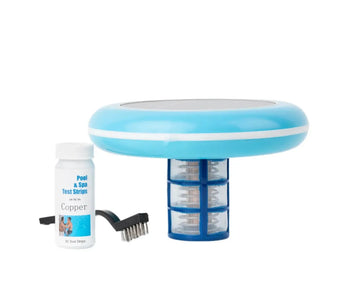
TL;DR: Long-term planning with solar pool ionizer systems extends far beyond the initial purchase decision. Unlike traditional pool equipment that requires frequent replacement and unpredictable repairs, ionizer systems demand a different kind of planning focused on electrode replacement cycles, controller upgrades, solar panel maintenance, and integration with evolving smart home technology. This 2026 guide provides comprehensive frameworks for 5-year, 10-year, and 20-year planning horizons, helping pool owners maximize their investment, anticipate future needs, and ensure their pool remains state-of-the-art for decades to come.
SEO Summary: 2026 guide to long-term planning with solar pool ionizer systems: electrode replacement cycles, controller upgrades, solar panel maintenance, technology integration, and 20-year ownership strategies.
Table of Contents
- The Long-Term Planning Framework
- Electrode Replacement Cycles and Planning
- Controller Technology Upgrades
- Solar Panel Longevity and Performance
- Plumbing and Infrastructure Considerations
- Smart Home Integration Planning
- Energy System Expansion Pathways
- Budgeting for Long-Term Ownership
- Resale Value and Property Planning
- Conclusion & Key Takeaways
The Long-Term Planning Framework
Long-term planning for solar pool ionizer systems requires a different mindset than traditional pool equipment. Chlorine-based systems follow predictable replacement cycles pumps every 8 to 10 years, heaters every 5 to 8 years, salt cells every 3 to 7 years. Ionizer systems have different components with different lifecycles, and planning for them ensures optimal performance and cost management.
- Short-term planning covers 1 to 2 years and includes routine maintenance, electrode monitoring, and seasonal preparations. This horizon focuses on day-to-day operation and immediate needs.
- Medium-term planning spans 3 to 7 years and addresses electrode replacement, controller upgrades, and solar panel evaluation. These are the predictable component replacements that keep your system current.
- Long-term planning looks 8 to 15 years ahead and considers major system components, technology integration, and infrastructure updates. This horizon ensures your pool evolves with advancing technology.
- Ultimate planning extends beyond 15 years and encompasses complete system renewal and property value considerations. At this stage, you are planning for the next generation of ownership.
- Key planning elements include electrode replacement forecasting, controller technology evolution, solar panel performance degradation, integration with smart home systems, and budget allocation for ongoing expenses.
- The planning advantage transforms pool ownership from a series of surprises into a managed, predictable relationship. Instead of emergency replacements, you have scheduled investments you can anticipate and budget for.
- Documentation foundation begins with good records. Track installation dates, component serial numbers, performance data, and maintenance history. This information becomes invaluable for forecasting future needs.
The movement toward low-chemical pools has accelerated dramatically, and solar pool ionizers are the primary technology driving this transformation. Our analysis of low-chemical pool trends provides context for why long-term planning with ionizers is becoming increasingly important for pool owners.
Electrode Replacement Cycles and Planning
The electrode cartridge is the only regularly replaced component in a solar pool ionizer system. Proper planning for electrode replacement ensures uninterrupted sanitation and optimal system performance.
- Standard electrodes with optimal water chemistry typically last 3 to 5 years before requiring replacement. This is the baseline expectation for most residential installations.
- Self-cleaning electrodes with automatic polarity reversal extend life to 4 to 6 years under the same conditions. The additional investment in this technology pays for itself through reduced replacement frequency.
- Aggressive water chemistry or poor maintenance can shorten electrode life to 1 to 2 years. This highlights the importance of proper water balance for long-term economy.
- Commercial installations with continuous heavy use typically see electrode life of 2 to 4 years depending on bather load and operating hours.
- Water chemistry directly affects electrode longevity. Balanced pH and proper calcium levels dramatically extend life while aggressive water accelerates erosion.
- Operating hours determine electrode consumption. Longer pump runtime increases ion production and accelerates electrode wear proportionally.
- Water temperature influences biological demand. Warmer water increases ion consumption, reducing electrode life during peak summer months.
- Self-cleaning technology using automatic polarity reversal dramatically extends life by preventing scale buildup that would otherwise insulate electrodes and reduce efficiency.
- Water hardness affects scale formation. High calcium levels accelerate scale buildup, potentially reducing electrode life if self-cleaning technology is not present.
- Track cumulative operating hours if your controller provides this data. This objective measure is the most accurate predictor of remaining electrode life.
- Monitor copper output consistency over time. Declining output at the same controller setting indicates electrode depletion and approaching replacement need.
- Inspect electrodes annually for visible erosion. Compare current thickness to new condition and estimate remaining life based on wear patterns.
- Most modern controllers provide predictive alerts when replacement is approaching. These alerts are based on cumulative amp-hour tracking and resistance measurements.
- Budget $80 to $150 for replacement cartridges every 3 to 5 years. This modest ongoing cost is far less than chemical expenses for traditional pools.
- Consider purchasing replacements during off-season when demand is lower and prices may be more competitive. Off-season also gives you time before peak swimming months.
- If you own a second home or rental property, keep a spare electrode on hand to ensure continuous operation during peak usage periods.
- Coordinate replacement with other maintenance activities such as spring opening to minimize downtime and simplify scheduling.
- When replacing electrodes, consider whether newer technology is available. Improved alloys or enhanced self-cleaning designs may be compatible with your existing system.
Electrode replacement planning is straightforward but essential for uninterrupted operation. For a deeper understanding of how proper water chemistry extends electrode life, our resource on pool water stability with solar pool ionizer provides detailed guidance on maintaining optimal conditions.
Controller Technology Upgrades
The controller is the intelligence of your solar pool ionizer system, and like all electronics, controller technology evolves rapidly. Planning for controller upgrades ensures your system remains current with advancing capabilities.
- First generation controllers offered basic on-off functionality with manual adjustment knobs and minimal feedback. These are now obsolete for most applications.
- Second generation controllers introduced digital displays, temperature sensors, and basic automation features. Many of these remain in service and are still functional.
- Third generation controllers added Wi-Fi connectivity, smartphone apps, and predictive analytics. These represent the current standard for smart pool management.
- Fourth generation controllers now emerging feature AI-powered learning, closed-loop sensor integration, and full smart home compatibility with voice control and automation.
- Full controller replacement provides the most comprehensive upgrade path, giving you access to all new features and capabilities in a single integrated unit.
- Module additions allow some systems to add communication capabilities to existing controllers. Check with your manufacturer for upgrade options before replacing.
- Sensor additions such as pH, ORP, or copper probes can enhance existing systems without full controller replacement. These provide valuable data for manual management.
- Software updates keep smart controllers current with new features and improvements. Regular updates are a sign of ongoing manufacturer support.
- Consider controller upgrades when new features become available that significantly improve operation or simplify management. Evaluate the value of these improvements against upgrade cost.
- When existing controllers fail or become unreliable, replacement is the obvious choice. Component-level repair is rarely economical for consumer electronics.
- When integrating with new smart home or automation systems, ensure your controller speaks the right language. Newer controllers offer broader compatibility.
- Technology advances justify investment every 5 to 8 years for owners who want to stay current. This aligns with typical consumer electronics upgrade cycles.
- Ensure new controllers are compatible with your existing ionizer chamber and electrodes. Most manufacturers maintain compatibility across generations.
- Verify communication protocols match your automation platform whether you use RS-485, Modbus, Wi-Fi, or proprietary systems.
- Check that sensor inputs are available for future expansion even if you don't add sensors immediately. This preserves upgrade options.
- Consider open-protocol systems for maximum future compatibility. Proprietary systems may limit your ability to integrate with other manufacturers' products.
- Plan $300 to $800 for controller replacement every 5 to 8 years depending on features selected. This investment keeps your system current with advancing technology.
Controller technology advances rapidly, and planning for upgrades ensures you benefit from these improvements. The evolution of pool technology with solar ionizers is explored in our overview of technological breakthroughs, which details what to expect in future controller generations.
Solar Panel Longevity and Performance
Solar panels are the most durable component of ionizer systems, with proven 25-year lifespans. However, long-term planning should account for gradual performance degradation and eventual replacement.
- Tier 1 panel manufacturers guarantee 25 to 30 years of useful life with 80 to 90 percent output remaining at the 25-year mark. This is the gold standard for quality.
- Standard panels from reputable manufacturers typically last 20 to 25 years with 80 percent output at 20 years. This is acceptable for most residential applications.
- Budget panels may only last 10 to 15 years with faster degradation rates. These are false economy for long-term installations.
- Typical degradation rate for quality panels is 0.5 to 1.0 percent per year. This gradual decline is barely noticeable in day-to-day operation.
- After 10 years, quality panels still produce 90 to 95 percent of their original output. Performance remains excellent for ionizer applications.
- After 20 years, output is still 80 to 90 percent of original. This is still adequate for most pool sanitation needs.
- Degradation accelerates in very hot climates where panels operate at higher temperatures. Consider this when planning for installations in desert regions.
- Track actual panel output compared to expected based on sun conditions. Smart controllers often provide this monitoring capability automatically.
- Annual output below 80 percent of baseline may indicate need for panel replacement or investigation of other issues such as soiling or shading.
- Regular cleaning maximizes output throughout panel life. Simple maintenance pays dividends in sustained performance.
- Inspect mounting hardware annually for corrosion or loosening. Secure mounting prevents damage and maintains optimal orientation.
- Check for physical damage after severe weather events such as hail, high winds, or heavy snow accumulation.
- Trim vegetation periodically to prevent shading as trees and shrubs grow. Shading dramatically reduces output from entire panel arrays.
- Adding panels may be more cost-effective than replacing functioning but degraded panels. Additional capacity compensates for reduced output from aging panels.
- Mixing old and new panels is possible with proper controller configuration. Ensure voltage and current ratings are compatible.
- Consider panel replacement when degradation significantly affects ion production and additional panels are not feasible due to space constraints.
- While panels rarely need replacement within typical ownership periods, planning for eventual replacement ensures no surprises for long-term owners.
- Set aside $200 to $500 for panel replacement after 20 to 25 years. This modest provision ensures funds are available when needed.
Solar panel longevity is one of the great advantages of ionizer systems. The principles of solar-powered pool care are covered in our guide to solar-powered operation, which includes detailed information on panel selection and performance monitoring.
Plumbing and Infrastructure Considerations
The plumbing and infrastructure that support your ionizer system are long-term investments that require periodic evaluation and maintenance.
- Consider future access needs when locating the ionizer chamber. Ensure enough space for electrode removal and potential future upgrades.
- Straight pipe sections before and after the chamber should allow for future sensor additions. Leave room for insertion fittings and sensor ports.
- Leave space for potential bypass loops or secondary chambers if you might expand your system in the future. This foresight simplifies later additions.
- Schedule 40 PVC properly installed typically lasts 25 years or more. This is the standard for residential pool plumbing.
- Schedule 80 PVC offers 30-plus year life for commercial applications or areas requiring extra durability. Consider for exposed or high-stress locations.
- CPVC provides 25-plus year life and is recommended for hot water lines from solar thermal systems. It handles higher temperatures better than standard PVC.
- Inspect exposed pipes for UV damage every 5 years. Sunlight degrades PVC over time, causing discoloration and brittleness.
- Paint exposed PVC with UV-resistant paint if sunlight exposure is unavoidable. This simple measure dramatically extends pipe life.
- Lubricate valve O-rings annually to prevent drying and cracking. This maintenance takes minutes and prevents leaks.
- Exercise valves periodically by operating them through their full range. This prevents seizing and ensures they work when needed.
- Inspect union fittings for signs of leakage or deterioration. Replace O-rings if they show signs of compression set.
- Check flow switch operation annually. These mechanical devices can fail over time and should be tested.
- Consider installing isolation valves that allow component replacement without draining the pool. This foresight simplifies future maintenance.
- Document your plumbing layout with photos and diagrams. This information is invaluable for future troubleshooting and modifications.
- Label valves and components clearly. Clear labeling prevents confusion during maintenance and emergency situations.
Proper plumbing infrastructure planning ensures your ionizer system remains serviceable for decades. The principles of modern pool system integration are explored in our performance enhancement resource, which includes guidance on plumbing design for long-term flexibility.
Smart Home Integration Planning
As homes become smarter, pool systems must evolve to integrate seamlessly. Long-term planning should account for integration with broader home automation and energy management systems.
- Voice control integration through Amazon Alexa, Google Assistant, and Apple HomeKit is now standard for modern controllers. Plan for these capabilities in your system selection.
- Geofencing capabilities allow your pool to respond to homeowner presence automatically. When you leave, the pool reduces energy use. When you return, it prepares for swimming.
- Energy management coordination with home solar and battery systems optimizes renewable energy use. Your pool can shift operation to times of peak solar production.
- Maintenance platform integration connects with services that track equipment schedules and order replacement parts automatically when needed.
- Multi-property management through cloud platforms enables centralized control of pools at primary residences, vacation homes, and rental properties.
- API access allows custom integrations with home automation systems beyond standard platforms. Open APIs future-proof your investment.
- Consider communication protocols carefully. RS-485 and Modbus are industry standards with broad compatibility. Wi-Fi offers convenience but may be less reliable.
- Plan for future sensors that may become available. Leave space in your equipment pad and conduit for additional wiring.
- Ensure your home network can support connected pool devices. Strong Wi-Fi coverage at the equipment pad is essential for wireless systems.
- Consider cybersecurity when connecting pool systems to the internet. Choose systems with regular firmware updates and security features.
- Plan for integration with whole-home energy monitors that track consumption and identify optimization opportunities.
Smart home integration transforms your pool from an isolated system into a connected home component. The evolution of pool water control and smart integration is covered in our analysis of pool water control evolution, which explores how modern systems communicate with broader home ecosystems.
Energy System Expansion Pathways
Many solar ionizer owners eventually expand their systems to achieve greater energy independence. Planning for these expansions from the beginning makes future upgrades simpler and more cost-effective.
- Dedicated solar panels for pump power can be added to existing systems. Plan panel mounting locations with expansion in mind from the start.
- Battery storage integration enables 24-hour solar operation. Leave space in your equipment area for future battery installation.
- Time-of-use optimization requires controllers that can schedule operation based on electricity rates. Ensure your controller supports this capability.
- Net-zero energy pools combine ionizers, efficient pumps, solar panels, and sometimes battery storage to achieve annual energy balance.
- Grid-interactive capabilities allow pools to participate in utility demand response programs. This can generate revenue or reduce costs.
- Plan conduit capacity for future wiring needs. Oversize conduits now to accommodate additional conductors later.
- Consider panel mounting structures that can support additional panels. Design for 50 percent expansion capacity.
- Choose controllers with expansion ports and spare capacity. Future sensors and control points will need connection points.
- Document your electrical system thoroughly. Future installers will need to understand existing circuits and capacity.
Energy system expansion pathways allow your pool to evolve with advancing technology and changing priorities. The concept of solar-powered pool care is explored in our next-generation pool power resource guide, which provides comprehensive guidance on energy independence strategies.
Budgeting for Long-Term Ownership
Long-term budgeting transforms unpredictable expenses into planned investments. Understanding the true cost of ownership helps you make informed decisions and avoid financial surprises.
- Initial system cost typically ranges from $900 to $1,500 for complete residential systems. This investment covers components that will last for decades.
- Electrode replacement every 3 to 5 years costs $80 to $150. This is the only recurring component cost for most systems.
- Controller upgrades every 5 to 8 years add $300 to $800. These investments keep your system current with advancing technology.
- Solar panel replacement after 20 to 25 years may cost $200 to $500. Most owners will not need this within typical ownership periods.
- Annual chemical costs of $80 to $150 compare to $600 to $900 for traditional pools. The savings accumulate significantly over time.
- Energy savings of $300 to $500 annually from reduced pump operation add to the financial benefits. These savings continue year after year.
- Create a sinking fund for predictable expenses. Set aside $50 to $100 annually for future electrode and controller replacements.
- Track actual expenses against your budget. Adjust projections as you gain experience with your specific system.
- Consider inflation when planning long-term budgets. Component costs will likely rise over decades of ownership.
- Factor in energy cost increases when projecting savings. Rising electricity rates make efficiency investments more valuable over time.
Budgeting transforms pool ownership from a series of financial surprises into a predictable, manageable expense. The economic case for solar ionization, including detailed financial analysis, is presented in our analysis of market trends, which documents why homeowners are making the switch.
Resale Value and Property Planning
A well-planned solar pool ionizer system can enhance property value and appeal to future buyers. Planning with resale in mind ensures you capture this value when it's time to sell.
- Documentation of system age, maintenance history, and upgrades provides confidence to potential buyers. Keep comprehensive records organized and accessible.
- Transferable warranties add value. Ensure warranties are registered and transferable to new owners.
- Energy efficiency features appeal to environmentally conscious buyers. Document energy savings with before-and-after utility bills.
- Low-chemical operation attracts families with young children or chemically sensitive individuals. This can be a significant selling point.
- Smart home integration capabilities appeal to tech-savvy buyers. Demonstrate voice control, remote monitoring, and automation features.
- Professional inspection before listing identifies any issues that should be addressed. A clean inspection report builds buyer confidence.
- Include system information in property disclosures. Transparency about age and condition prevents surprises during negotiations.
- Consider future buyers when planning upgrades. Widely compatible systems appeal to broader audiences than proprietary solutions.
- Balance investment in upgrades against expected recovery at sale. Not all improvements yield full return on investment.
- Consult with real estate professionals familiar with your market. They can advise which features add most value locally.
Resale value planning ensures your investment in solar ionization pays dividends both during ownership and at time of sale. The transformation of backyard pools into modern, appealing amenities is explored in our reinventing backyard pools article, which discusses how these systems enhance property appeal.
Conclusion & Key Takeaways
Long-term planning with solar pool ionizer systems transforms pool ownership from a series of unpredictable expenses into a managed, predictable relationship. By understanding the lifecycles of each component electrode cartridges, controllers, solar panels, and supporting infrastructure you can anticipate needs, budget accordingly, and ensure your pool remains state-of-the-art for decades.
The planning horizons short-term, medium-term, long-term, and ultimate each have their own considerations. Short-term planning focuses on routine maintenance and monitoring. Medium-term planning addresses component replacement cycles. Long-term planning considers technology evolution and system expansion. Ultimate planning looks at complete system renewal and property value.
Key planning elements include electrode replacement forecasting, controller technology upgrades, solar panel performance monitoring, plumbing infrastructure maintenance, smart home integration, energy system expansion, and comprehensive budgeting. Each element contributes to the overall goal of maximizing your investment and minimizing surprises.
The financial benefits of solar ionization compound over time. Chemical savings of $500 to $700 annually, energy savings of $300 to $500 annually, and extended equipment life all contribute to a total cost of ownership far below traditional pool systems. These savings fund the periodic investments needed to keep your system current.
Key Takeaways
- Long-term planning transforms pool ownership from reactive crisis management to proactive investment. Understanding component lifecycles eliminates surprises and enables confident decision-making.
- Electrode replacement cycles of 3 to 5 years are predictable and budgetable. Self-cleaning technology extends life to 4 to 6 years and reduces maintenance. The principles of simpler pool chemistry, which directly affect electrode life, are covered in our resource on simplified pool chemistry management.
- Controller technology evolves rapidly, with upgrades every 5 to 8 years keeping your system current. Smart controllers with AI, predictive analytics, and voice control represent the current standard.
- Solar panels deliver 25-year service life with gradual degradation. Tier 1 panels with 25-year warranties are the best long-term investment.
- Plumbing infrastructure lasts 25-plus years with proper installation and maintenance. Planning for future access and expansion preserves upgrade options.
- Smart home integration requires planning for communication protocols, network connectivity, and future sensors. Open-protocol systems offer maximum flexibility. The evolution of pool water control systems is detailed in our analysis of water control evolution.
- Energy system expansion pathways allow progression toward net-zero operation. Planning conduit capacity and panel mounting now enables future additions.
- Budgeting for long-term ownership transforms unpredictable expenses into planned investments. Creating a sinking fund for periodic replacements ensures funds are available when needed.
- Resale value considerations influence upgrade decisions. Well-documented, transferable systems with modern features appeal to future buyers. The transformation of backyard pools into desirable amenities is explored in our reinventing backyard pools article.
- The cumulative benefits of long-term planning compound over decades. Lower operating costs, fewer surprises, and better water quality make solar ionization the superior choice for forward-thinking pool owners. For those new to this technology, our guide to predictable pool maintenance provides an excellent starting point for understanding day-to-day operations.
Solar pool ionizer systems are designed for the long haul. With proper planning, your investment will deliver superior water quality, lower operating costs, and greater enjoyment for decades to come. The time to start planning is now, whether you are installing a new system or optimizing an existing one.