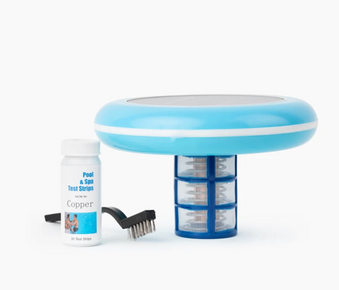
TL;DR: The evolution of pool water control represents a journey from reactive chemical management to intelligent, autonomous system oversight. Solar pool ionizers have been central to this transformation, evolving from simple mineral dispensers to sophisticated platforms featuring AI-powered predictive analytics, seamless smart home integration, and closed-loop water chemistry management. This 2026 guide traces the technological progression from manual testing to automated control, exploring how modern ionizers communicate with pumps, heaters, and controllers to create truly self-regulating aquatic environments that anticipate problems before they occur.
SEO Summary: 2026 guide to the evolution of pool water control with solar pool ionizers: from manual chemical management to AI-powered automation, smart sensors, predictive analytics, and integrated ecosystem management.
Table of Contents
- The Historical Perspective: From Manual to Automated
- First Generation: Basic Ion Dispersion
- Second Generation: Integrated System Control
- Third Generation: Predictive Intelligence
- Closed-Loop Chemistry Management
- The Evolution of Pool Water Sensors
- Ecosystem Integration: The Pool as Smart Home Component
- Data Analytics & Performance Optimization
- The Future: Autonomous Water Management
- Conclusion & Key Takeaways
The Historical Perspective: From Manual to Automated
To appreciate where pool water control stands in 2026, we must first understand where it began. The evolution spans barely three decades but encompasses a technological transformation as profound as any in home automation.
- The Manual Era (Pre-2000s): In the early days of residential pools, water control was entirely manual and entirely reactive. Pool owners tested water with unreliable color-matching kits, interpreted results subjectively, and added chemicals based on rough estimates. There was no communication between equipment, no data logging, and no predictive capability. Pools were maintained, not controlled.
- The Timer Era (2000-2010): The introduction of mechanical timers represented the first step toward automation. Pumps could be scheduled to operate at consistent intervals, eliminating the need to manually start and stop equipment daily. However, timers were blind to actual conditions pumps ran whether the pool was clean or dirty, whether the water was warm or cool, whether anyone was swimming.
- The Controller Era (2010-2020): Electronic controllers brought programmability and basic sensor integration. pH and ORP probes could trigger chemical feeders, and pumps could be controlled remotely through early smartphone apps. These systems reduced manual intervention but remained fundamentally reactive responding to problems after they developed rather than preventing them.
- The Intelligent Era (2020-Present): Today's pool water control systems are proactive rather than reactive, predictive rather than responsive, and autonomous rather than merely automated. Solar pool ionizers have been central to this evolution, providing the stable chemical foundation upon which intelligent control is built. By eliminating the volatility of chlorine chemistry, ionizers enable the precise, predictable control that modern automation demands.
For a foundational understanding of how solar ionization works, our guide to efficient pool sanitization with solar pool ionizer provides comprehensive technical background on the technology driving this evolution.
First Generation: Basic Ion Dispersion
The first generation of solar pool ionizers, introduced in the late 2000s and early 2010s, were simple devices focused on one task: releasing copper and silver ions into pool water. They represented a significant conceptual advance chemical-free sanitation but offered minimal control functionality.
Core Characteristics:
- Fixed output: First-generation ionizers operated at constant output whenever sunlight was available. There was no adjustment for pool size, bather load, or water temperature. Users could not increase or decrease ion production based on actual needs.
- No sensing capability: These early units had no way to measure copper concentration in the water. Owners had to test manually using test strips and adjust ionizer placement or operating time based on those readings. The ionizer itself provided no feedback.
- Standalone operation: First-generation ionizers operated independently of other pool equipment. They did not communicate with pumps, heaters, or controllers. Pump scheduling was managed separately, often with simple mechanical timers.
- Manual maintenance: Electrode cleaning and replacement were entirely manual processes. Owners had to remember to inspect electrodes, clean scale deposits, and track approximate replacement timing.
Control Limitations: The control limitations of first-generation ionizers were significant. Without output adjustment, pools could be under-ionized during periods of high demand or over-ionized during cool weather, risking algae outbreaks or copper staining. Without sensing, owners operated blindly, reacting to problems rather than preventing them. Without integration, the ionizer could not coordinate with filtration to optimize ion distribution.
Despite these limitations, first-generation ionizers demonstrated the fundamental viability of solar-powered mineral sanitation. They proved that pools could be maintained with dramatically reduced chemicals, setting the stage for the control evolution to follow. The modern equivalent of these early units, such as the basic floating ionizers still available today, serve as entry-level options for pool owners seeking simple chemical reduction.
Second Generation: Integrated System Control
The second generation of solar pool ionizers, spanning roughly 2015 to 2022, introduced the first meaningful control capabilities. These systems moved beyond simple ion dispersion to become integrated components of broader pool automation platforms.
- Variable Output Control: The most significant advance was adjustable output. Second-generation ionizers allowed owners to set ion production levels based on pool size, seasonal conditions, and observed water quality. This adjustment might be manual through a dial on the controller or digital through a basic interface, but it provided unprecedented control over copper concentrations.
- Flow Switch Integration: These systems incorporated flow switches that prevented ion generation when the pump was not operating. This seemingly simple feature had profound implications for control. It ensured that ions were only released when water was circulating to distribute them, preventing localized over-concentration and improving overall system efficiency.
- Basic Automation Communication: Second-generation ionizers began communicating with pool automation controllers through simple interfaces. An ionizer might receive a signal to increase output when the spa was activated or to reduce output during freeze protection cycles. This coordination improved system performance and prevented conflicts between different operational modes.
- Remote Monitoring (Early Stage): Some premium second-generation systems offered basic remote monitoring through smartphone apps. Owners could check system status, view approximate ion production, and receive alerts for certain fault conditions. While primitive by today's standards, this capability represented the first step toward remote pool management.
- Integration with Salt Systems: A particularly important development was the recognition that ionizers could work synergistically with salt chlorine generators. Second-generation systems were designed with this compatibility in mind, allowing pool owners to combine technologies for enhanced results. As our guide to salt system pool integration explains, this combination allows the ionizer to handle algae control while the salt cell operates at reduced output, extending equipment life and improving water quality.
- Control Improvements: The control improvements of second-generation ionizers translated directly into better water quality. Owners could fine-tune output to match changing conditions. Integration with pumps ensured proper ion distribution. Basic automation coordination prevented operational conflicts. These advances reduced the frequency of algae outbreaks and copper staining incidents while further lowering chemical consumption.
Third Generation: Predictive Intelligence
The third generation of solar pool ionizers, which began emerging around 2022 and defines the market in 2026, represents a quantum leap in control capability. These systems are not merely automated they are intelligent, using data analytics, machine learning, and predictive algorithms to anticipate problems before they occur.
- AI-Powered Predictive Analytics: Modern ionizer controllers employ artificial intelligence that analyzes historical water quality data, weather patterns, and usage trends to predict sanitation needs. These systems learn the unique characteristics of your pool: how quickly copper is consumed under different conditions, how bather load affects water chemistry, and how seasonal changes impact algae risk. The practical result is a system that no longer simply reacts to conditions but anticipates them. Before a forecasted heat wave, the ionizer automatically increases output to strengthen the ionic field. Before a storm, it preemptively boosts sanitation to handle incoming contaminants. After detecting patterns of heavy use, it initiates recovery cycles without being told. This predictive capability represents a fundamental advance over reactive systems.
- Weather-Responsive Operation: Third-generation ionizers integrate with local weather services to access hyperlocal forecasts. This enables operation that responds not just to current conditions but to conditions that will exist in 6, 12, or 24 hours. The system might increase output before predicted heavy rain, reduce pump speed during forecasted cloud cover, or activate freeze protection based on overnight temperature predictions rather than waiting for freezing to occur.
- Self-Diagnostic Capabilities: Modern ionizers continuously monitor their own performance, tracking electrode efficiency, solar panel output, and system health. When performance degrades below expected levels, the system not only alerts the owner but often identifies the likely cause. A notification might read: Solar panel output 18% below expected. Cleaning recommended. or Electrode efficiency declining. Replacement predicted in 60 days. This self-diagnostic capability transforms maintenance from reactive guesswork to scheduled certainty.
- Learning Algorithms: The most sophisticated third-generation systems employ machine learning algorithms that continuously improve their understanding of your specific pool. After a year of operation, the system knows how your pool responds to different conditions far better than any human could. It has learned the optimal copper level for your water chemistry, the most efficient pump schedule for your circulation system, and the ideal response to seasonal transitions. This learning capability compounds over time, with system performance improving throughout its service life.
- Integration with Variable-Speed Pumps: Third-generation ionizers communicate bidirectionally with variable-speed pumps, enabling coordinated operation that optimizes both sanitation and energy efficiency. The ionizer can request higher flow rates during peak production hours to maximize ion distribution. It can reduce pump speed during low-demand periods to save energy. It can even coordinate with solar thermal systems to prioritize renewable heating when available.
Closed-Loop Chemistry Management
The ultimate expression of pool water control evolution is closed-loop chemistry management systems that automatically maintain target chemical parameters without human intervention. While still emerging in 2026, these systems represent the frontier of pool automation.
- Continuous Sensor Monitoring: Closed-loop systems employ an array of continuous sensors that monitor water chemistry in real time. pH sensors, ORP sensors, copper ion selective electrodes, and conductivity sensors provide continuous data streams that feed into central controllers. Unlike manual testing, which provides snapshots of water chemistry at specific moments, continuous monitoring reveals trends, patterns, and developing issues before they become visible.
- Automatic Chemical Adjustment: When sensors detect deviations from target ranges, closed-loop systems can automatically activate chemical feeders to restore balance. If pH rises above 7.8, the system injects acid. If copper drops below 0.2 ppm, it increases ionizer output. If chlorine falls below 0.5 ppm in hybrid systems, it activates a supplemental feeder. These adjustments occur continuously, maintaining water quality within narrow bands that manual methods cannot achieve.
- Predictive Chemical Dosing: Advanced closed-loop systems don't just respond to current conditions they predict future needs based on trend analysis. If the system detects that copper consumption has been increasing for three consecutive days, it may increase output preemptively rather than waiting for levels to drop below target. If it observes that pH consistently rises during afternoon swimming hours, it may schedule acid addition before those hours rather than after.
- Integration with Ionizer Control: Closed-loop chemistry management integrates seamlessly with modern solar ionizers. The ionizer controller receives continuous copper concentration data from sensors and adjusts output dynamically to maintain optimal levels. This eliminates the need for manual copper testing and adjustment, transforming the ionizer from a device that requires periodic attention into a truly autonomous system.
- Benefits of Closed-Loop Control: The benefits of closed-loop chemistry management are substantial. Water quality becomes more consistent, with chemical parameters held within tighter ranges. Chemical consumption decreases because adjustments are precise rather than approximate. Equipment life extends because water chemistry remains consistently balanced rather than fluctuating between extremes. Owner involvement reduces from weekly testing to occasional system verification.
The Evolution of Pool Water Sensors
The evolution of pool water control has been enabled by parallel evolution in sensor technology. Without accurate, reliable, affordable sensors, the control systems described above would be impossible.
- Early Sensors: ORP and pH Only: The first generation of pool sensors, still common in basic automation systems, measured only ORP (oxidation-reduction potential) and pH. While useful for chlorine-based systems, these sensors provided limited information for ionizer control. They could not measure copper concentration, the primary parameter for ionizer performance.
- Ion-Selective Electrodes: The development of affordable ion-selective electrodes for copper represented a breakthrough for ionizer automation. These sensors can measure copper concentrations as low as 0.1 ppm with accuracy approaching laboratory instruments. When integrated with ionizer controllers, they enable the closed-loop control described above, automatically adjusting output to maintain target copper levels.
- Multiparameter Sensors: Modern sensor suites measure multiple parameters simultaneously. A single probe might measure pH, ORP, copper concentration, temperature, and conductivity. This multiparameter capability reduces installation complexity and provides a more complete picture of water chemistry. Some advanced sensors use optical or electrochemical arrays that can detect specific contaminants or predict developing problems.
- Wireless and Self-Cleaning Sensors: Recent sensor advances include wireless communication and self-cleaning mechanisms. Wireless sensors can be placed at multiple points in the circulation system, providing data on chemical distribution throughout the pool. Self-cleaning sensors use ultrasonic vibration or mechanical wipers to prevent biofilm buildup that would otherwise degrade accuracy. These features reduce maintenance requirements and improve long-term reliability.
- Sensor Calibration and Drift Management: Despite advances, sensors still require periodic calibration and are subject to drift over time. Modern control systems address this through automatic calibration routines and drift compensation algorithms. Some systems can detect when a sensor is drifting out of specification and alert the owner before accuracy degrades significantly.
Ecosystem Integration: The Pool as Smart Home Component
The evolution of pool water control extends beyond the pool itself to encompass the entire smart home ecosystem. In 2026, solar pool ionizers are designed as integral components of connected homes, communicating with a wide range of devices and platforms.
- Voice Control Integration: Modern ionizer controllers integrate with popular voice assistants including Amazon Alexa, Google Assistant, and Apple HomeKit. Owners can check system status, adjust settings, or verify water quality through simple voice commands. "Hey Google, ask my pool what the copper level is" returns an immediate response. This voice integration makes pool management accessible to all household members, not just the designated pool operator.
- Geofencing Capabilities: Geofencing uses smartphone location data to trigger automated responses when owners leave or approach the home. When the system detects that all residents have left, it may reduce pump operation to minimum levels while maintaining baseline sanitation. When it detects that someone is returning, it may increase output to ensure perfect water quality upon arrival. Some systems even coordinate with calendars, preparing the pool for scheduled events or parties.
- Energy Management Integration: As homes incorporate solar panels, battery storage, and smart meters, pool systems can coordinate with home energy management platforms. The pool may automatically shift operation to times of peak solar production, store thermal energy in the water for later use, or reduce consumption during grid peak periods. This integration transforms the pool from a fixed energy load into a flexible resource that contributes to overall home efficiency.
- Maintenance Coordination: Some advanced systems integrate with smart home maintenance platforms that track equipment service schedules, order replacement parts automatically, and schedule professional service when needed. If the system predicts electrode replacement in 30 days, it may add replacement cartridges to your shopping list or schedule a service appointment through connected platforms.
- Multi-Property Management: For owners with multiple properties, cloud-based control platforms enable centralized management of multiple pool systems from a single interface. Whether monitoring a primary residence, vacation home, or rental property, owners can check status, adjust settings, and receive alerts for all properties through one application.
Data Analytics & Performance Optimization
The evolution of pool water control has created unprecedented amounts of operational data. Modern solar ionizer systems generate continuous streams of information about water chemistry, equipment performance, energy consumption, and system health. The challenge has shifted from data collection to data analysis and application.
- Historical Performance Tracking: Modern controllers maintain comprehensive historical records of all operational parameters. Owners can review trends in copper consumption, pH stability, pump runtime, and energy use over days, weeks, months, or years. This historical data provides context for current performance and enables identification of long-term trends that might otherwise go unnoticed.
- Comparative Analytics: Some platforms compare your pool's performance against anonymized data from similar pools in your region. This comparative analysis can reveal optimization opportunities you might not have considered. If similar pools in your area achieve target copper levels with 20 percent less pump runtime, the system may suggest schedule adjustments.
- Predictive Maintenance Algorithms: By analyzing performance data over time, predictive algorithms can forecast when components are likely to fail. These algorithms might detect that a pump's power consumption has increased gradually over six months, suggesting bearing wear, or that electrode efficiency has declined at an accelerating rate, predicting end-of-life within a specific timeframe.
- Optimization Recommendations: Advanced systems don't just report data they provide actionable recommendations based on that data. The system might suggest adjusting ionizer output seasonally, modifying pump schedules based on usage patterns, or addressing water chemistry trends before they become problems. These recommendations become more accurate and personalized as the system learns your specific pool's characteristics.
- ROI Tracking: For owners interested in the financial aspects of pool ownership, some systems track return on investment by calculating chemical savings, energy savings, and avoided equipment replacement costs. These calculations can be compared against initial investment and ongoing operating costs to quantify the financial benefits of solar ionization and intelligent control.
The Future: Autonomous Water Management
As we look beyond 2026, the evolution of pool water control points toward complete autonomy systems that manage all aspects of pool operation without any owner involvement beyond occasional oversight.
- Self-Optimizing Algorithms: Future systems will employ increasingly sophisticated algorithms that continuously optimize all operational parameters. Rather than simply maintaining target ranges, these systems will actively seek the most efficient operating points within those ranges. They might determine that running the pump at slightly higher speed for slightly less time achieves the same water quality with lower total energy consumption, or that maintaining copper at the lower end of the target range during cool weather provides adequate sanitation with extended electrode life.
- Integrated Water Chemistry Management: Future systems will manage not just sanitation but complete water chemistry including pH, alkalinity, calcium hardness, and total dissolved solids. Automated testing and dosing systems will maintain all parameters within optimal ranges, eliminating manual chemistry management entirely. Some experimental systems are already demonstrating this capability in commercial installations.
- Health Monitoring Integration: Emerging applications include integration with health monitoring systems. Pools could adjust water temperature and chemistry based on the specific needs of swimmers, perhaps providing warmer, more therapeutic water for arthritis sufferers or cooler, more invigorating water for athletes. Integration with wearable devices could enable pools to prepare for your arrival based on your estimated time of return.
- Grid-Interactive Operation: As utilities evolve toward dynamic pricing and demand response programs, future pools will participate actively in grid management. When electricity prices spike, pools will automatically reduce consumption, relying on stored thermal energy or battery reserves. When renewable generation exceeds demand, pools may increase operation to soak up excess energy. This grid-interactive capability could generate revenue or reduce costs beyond the savings already achieved.
- Predictive Problem Prevention: The ultimate expression of autonomous water management will be systems that prevent problems so effectively that owners rarely see any indication of issues. Rather than receiving alerts when problems occur, owners will receive occasional summaries confirming that all systems are operating optimally. The pool will be managed so effectively that the absence of problems becomes the norm, and the only indication that something was wrong is that the owner never experienced it.
Conclusion & Key Takeaways
The evolution of pool water control from manual testing to intelligent automation represents one of the most significant transformations in residential technology. Solar pool ionizers have been central to this evolution, providing the stable chemical foundation upon which intelligent control is built.
First-generation ionizers demonstrated the fundamental viability of mineral sanitation but offered minimal control. Second-generation systems introduced adjustable output, flow integration, and basic automation communication. Third-generation ionizers employ AI-powered predictive analytics, weather-responsive operation, and self-diagnostic capabilities that anticipate problems before they occur.
The frontier of this evolution is closed-loop chemistry management continuous sensor monitoring with automatic adjustment that maintains optimal water quality without human intervention. As sensors improve, algorithms advance, and integration deepens, we move toward fully autonomous water management where pools maintain themselves perfectly while owners simply enjoy the results.
For today's pool owners, this evolution means unprecedented control over water quality, dramatic reductions in maintenance effort, and swimming experiences that were unimaginable just a decade ago. The technology is mature, the benefits are proven, and the future promises even greater capability.
Key Takeaways
- Control evolution spans three generations: From basic ion dispersion to integrated system control to predictive intelligence, each generation has expanded the capabilities of solar pool ionizers and the quality of pool water management.
- Third-generation systems use AI and predictive analytics: Modern ionizers analyze historical data, weather patterns, and usage trends to anticipate problems before they occur, representing a fundamental advance over reactive systems.
- Closed-loop chemistry management is the emerging frontier: Continuous sensor monitoring with automatic adjustment enables water quality that manual methods cannot match, with potential for complete automation.
- Sensor evolution has enabled control advances: Ion-selective electrodes for copper, multiparameter sensors, and wireless communication have made sophisticated control practical and affordable.
- Ecosystem integration connects pools to smart homes: Voice control, geofencing, energy management, and maintenance coordination transform pools from isolated systems to integrated home components.
- Data analytics optimize performance continuously: Historical tracking, comparative analytics, and predictive maintenance algorithms improve system performance over time and provide actionable recommendations.
- Hybrid systems with salt generators demonstrate integration benefits: Combining ionizers with reduced-output salt systems extends equipment life, reduces energy consumption, and improves water quality through coordinated control.
- Future systems will achieve full autonomy: Self-optimizing algorithms, integrated chemistry management, health monitoring, and grid-interactive operation will eliminate owner involvement in routine pool management.
- The foundation of intelligent control is stable chemistry: Solar ionizers provide the predictable, non-volatile sanitation that makes sophisticated automation possible, enabling the entire evolution of pool water control.
- Today's owners benefit from decades of evolution: The control capabilities now available represent the accumulated advances of three generations of technology, delivering water quality and ease of use that early adopters could only imagine.
The evolution of pool water control is far from complete. As sensors become more capable, algorithms become more sophisticated, and integration becomes more seamless, the pools of tomorrow will manage themselves with a level of precision and efficiency that today's systems can only approximate. Solar pool ionizers, having enabled this evolution from the beginning, will continue to serve as the foundation for autonomous water management in the years ahead.
For pool owners interested in experiencing the benefits of modern water control, our guide to choosing a solar pool ionizer provides the information needed to select a system with the control capabilities that match your preferences and needs.